
Research article · 2025 · Full text
International Journal of Agriculture and Food ScienceDevelopment of a direct type solar dryer for preparation of mango leather
Volume 7(5) · Pages 173–178 · DOI: 10.33545/2664844x.2025.v7.i5c.393 ↗
Research areasFood Drying and ModelingPlant Surface Properties and TreatmentsTextile materials and evaluations
Abstract
Author-writtenThe solar dryer is designed to prepare mango leather by reducing the moisture content of mango pulp to a range of 12-20%, which effectively preserves the product by inhibiting microbiological growth. The dryer operates by heating air within the chamber to facilitate moisture extraction from the mango pulp placed on trays. The drying chamber of the solar dryer is constructed using an 18-gauge galvanized iron sheet with dimensions of 90 × 30 × 30 cm. The sheet has a thickness of 2 mm, and the interior is coated with a black nano-coating to enhance heat absorption. To improve the reflection of solar radiation, aluminium foils are arranged inside the chamber. The top of the drying chamber is covered with a 4 mm thick transparent glass panel set at a 45° inclination from the rear to the front, maximizing solar radiation incidence. The exhaust vent is positioned at the top right of the chamber, at a height of 10 cm from the tray surface, to facilitate moisture release. The tray, made of 16-gauge stainless steel with dimensions of 88 × 28 cm, is divided into two sections to simultaneously dry different formulations of mango pulp. The tray is positioned inside the chamber to prevent direct sunlight exposure, preserving the nutritive value and flavor of the mango leather. The entire solar dryer assembly is mounted on a supporting stand made from a 2×2 cm square rod with a height of 45 cm. The drying process operates within a temperature range of 45-65°C, with the solar dryer designed to function efficiently at full load conditions. The average heat requirement for drying under dry day conditions is approximately 6601.7 kJ. This design ensures effective solar energy utilization while maintaining the quality of the dried mango product.
Summary
Source-checkedPlain-language reading of the full paper, prepared with AI and checked against the text. Each point links to the authors' own words.
Why it matters
- Mangoes are highly perishable due to a high moisture content of 78-82%, which can lead to significant post-harvest losses. View evidence ↗
- Reducing the moisture content of mango pulp to between 12% and 20% inhibits microbial growth and preserves the product. View evidence ↗
- Solar dryers are preferred over conventional sun drying because they protect the food from contamination and better preserve nutritional quality. View evidence ↗
The question
- The study aimed to develop a direct-type solar dryer capable of reducing mango pulp moisture to 12-20% to create preserved mango leather. View evidence ↗
What they did
- The drying chamber was built from 1.6 mm thick 18-gauge galvanized iron (90 x 30 cm) with a 45° incline to maximize solar absorption. View evidence ↗
- The dryer featured a 4 mm transparent glass cover and an interior with black nano-coating and aluminum foil to enhance heat absorption and reflection. View evidence ↗
- A 12V battery-powered exhaust fan (4 x 4 x 2 cm) was installed to maintain airflow and remove moisture. View evidence ↗
- Four formulations were tested: sugar-based (S1: 67% pulp/33% sugar at 1.5mm; S2: 70% pulp/30% sugar at 3mm) and jaggery-based (J1: 67% pulp/33% jaggery at 1.5mm; J2: 70% pulp/30% jaggery at 3mm). View evidence ↗
- Samples were dried in the cabinet dryer at temperatures between 49-60°C for a duration of 12 to 16 hours. View evidence ↗
What they found
- All samples started with 87% moisture and were reduced to 18-20%, with moisture removed ranging from 2.450 kg (J1) to 4.190 kg (J2) depending on sample mass. View evidence ↗
- Jaggery-based samples tended to retain slightly more moisture than sugar-based samples, likely due to the hygroscopic nature of jaggery. View evidence ↗
- The total heat required for drying was 6601.7 kJ, with the vast majority (6083.3 kJ) coming from the latent heat of vaporization. View evidence ↗
- The total cost to fabricate the developed direct solar dryer was 4,720 INR. View evidence ↗
What it means
- The authors conclude that the developed solar dryer is an effective tool for producing high-quality mango leather by providing a controlled environment superior to traditional sun drying. View evidence ↗
Visual summary
1 visualsIllustrations explain the paper; they do not show study data.
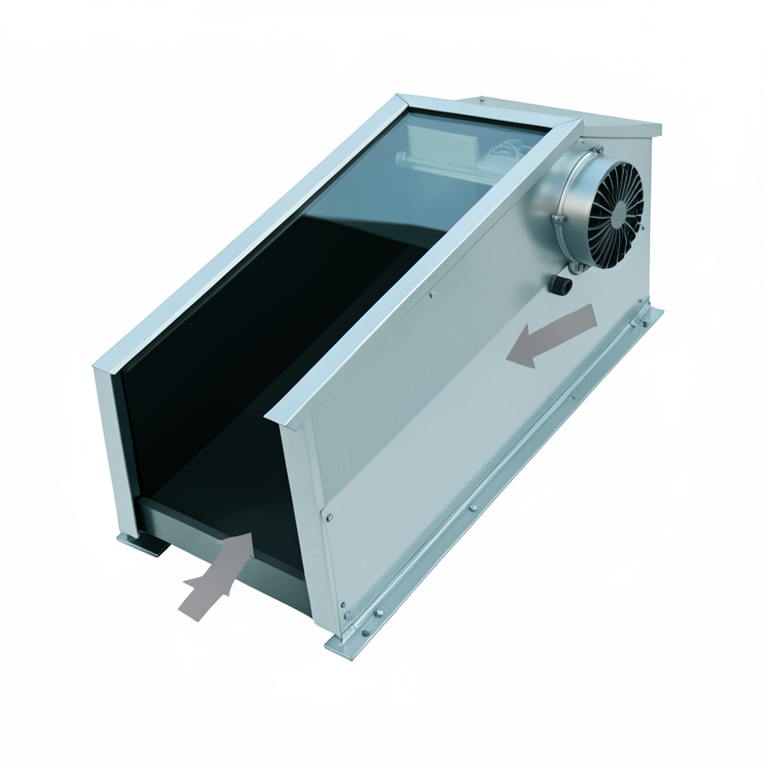
Solar Dryer Components
AI-generated conceptual illustration (direct type solar dryer for mango leather). It explains the idea and does not show study data.
View source evidence ↗Figures & tables
From the original paper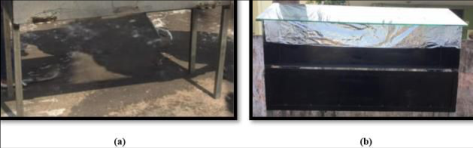 Figure 1
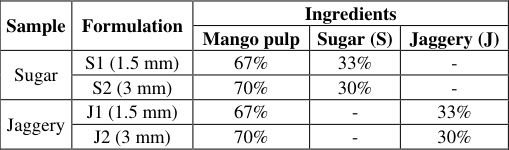 Table 1
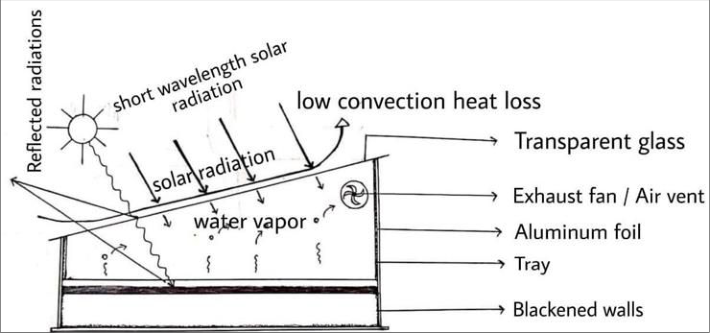 Figure 2
 Table 2
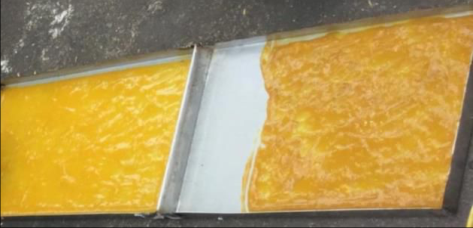 Figure 3
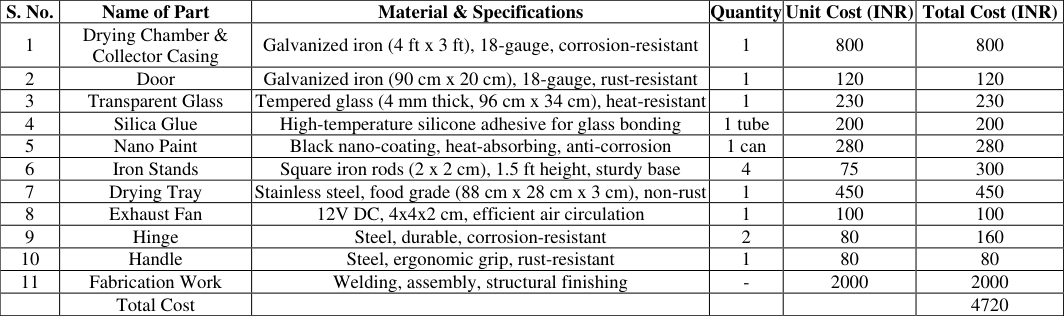 Table 3
Introduction
Mango (Mangifera indica L.) is often referred to as the king of fruits due to its excellent flavor, attractive fragrance, vibrant color, and numerous health benefits. As one of the most important fruit crops in tropical and sub-tropical regions, it holds significant economic value, particularly in countries like India, the world's largest mango producer, followed by China. Mangoes are seasonal, with peak availability from mid-February to mid-July (Venkatesh, 2024) [10] . Due to their high moisture content (78-82%), mangoes are highly perishable, leading to substantial post-harvest losses if not processed or preserved promptly (Krishna et al., 2021) [14] . To extend the shelf life and utilize surplus produce, mango leather, a traditional dried product, is prepared using solar drying methods. Mango leather, also known as a fruit bar or fruit slab, is a dehydrated fruit-based product often consumed as a snack or dessert. It is chewy, flavourful, naturally low in fat, and high in fiber and carbohydrates. Solar drying is one of the oldest and most economical methods of food preservation, enabling farmers to reduce spoilage and add value to their produce. By reducing the moisture content of mango pulp to 12-20%, the growth of microorganisms is inhibited, effectively preserving the product. Solar dryers, specifically designed for this purpose, can significantly improve the quality and shelf life of mango leather. A direct solar dryer typically consists of a drying chamber where mango pulp is placed on trays, allowing hot air to circulate and gradually remove moisture (Krishna et al., 2024) [13] . Unlike conventional sun drying, solar dryers offer protection from contamination and maintain better nutritional quality. The drying temperature usually ranges from 45 °C to 65 °C, with drying times varying based on the type and design of the dryer. Several studies have demonstrated the efficiency of solar dryers in food preservation. Garg (1974) reported that drying chilies in a solar cabinet dryer reduced drying time by half compared to conventional methods, with superior quality outcomes. Peterson (1977) found that coating the steel walls of grain storage bins with black paint significantly increased the internal temperature, enhancing drying efficiency. Ahmed (1982) emphasized the nutritional value of mangoes, particularly their vitamin A content, while Khollier (1982) highlighted the dual-purpose use of solar fruit dryers for both drying and as hot houses during winter. Sengar (2012) developed a multi-rack solar dryer that improved drying efficiency for mango flakes, demonstrating the potential of solar technology in agricultural processing. By harnessing solar energy, solar dryers can reduce economic losses, generate income through value-added products, and improve food security. The development and optimization of solar drying techniques for mango leather are crucial for rural communities, enabling them to utilize abundant seasonal produce while maintaining quality and nutrition.
Materials and Methods
Materials and Methods
Sample Collection
Mango samples were collected from local fruit and vegetable markets, ensuring diversity by sourcing from multiple vendors. This approach aimed to capture variations in mango quality, enhancing the reliability of the drying process and the applicability of the developed solar dryer.
Design Considerations
The solar dryer was designed to enhance drying efficiency while preserving the quality of mango leather. The primary components include the supporting stand, drying chamber, exhaust fan, tray, and air vent.
Supporting Stand
The supporting stand was fabricated using four iron square rods, each measuring 2 × 2 cm in cross-section and having a height of 45.6 cm. These rods were welded at the bottom of the drying chamber, providing stability and elevation to the structure.
Drying Chamber
The drying chamber was constructed using an 18-gauge galvanized iron sheet with dimensions of 90 × 30 cm (length × width) and a thickness of 1.6 mm. The chamber's front height was 20 cm, while the rear height was 30 cm, forming an inclined plane of 45° for optimal solar radiation absorption. The top cover consisted of a 4 mm thick transparent glass sheet attached using silicone glue. To enhance heat absorption, the interior of the chamber was coated with black nano-coating and lined with aluminium foil for improved reflection (Kumar et al., 2024). A stainless-steel tray, resistant to rust from moisture, was placed inside for holding the mango pulp. A small vent, 1 cm in diameter, was positioned at the top right to facilitate moisture escape.
Exhaust Fan
A 4 × 4 × 2 cm exhaust fan, powered by a 12V battery, was installed at the top right of the drying chamber to remove excess moisture and maintain airflow.
Tray: A 16-gauge stainless steel tray with dimensions of 88 × 28 cm was fabricated, featuring a two-partition design.
The tray was positioned at a height of 10 cm from the chamber's base to maintain even airflow and support efficient drying.
Air Vent
The air vent was constructed from galvanized metal, shaped into a circular opening with a diameter of 1 cm. Positioned at the top right of the chamber, the vent height was set at 20 cm, allowing for optimal moisture release while preventing external contamination.
Methodology
Ripe Banganapalli mangoes were washed thoroughly and peeled. The pulp was manually separated by squeezing and then blended using an electric blender to obtain a uniform consistency. The prepared pulp, containing approximately 15.1% total solids, was stored at -18°C until further processing. The pulp was heated at 80-90°C to increase the Total Soluble Solids (TSS) from 15.1% to 30%. The pulp was divided into two portions, each treated with different formulations by mixing with sugar or jaggery. After blending, the mixture was cooled and applied as a thin layer on the stainless-steel tray, pre-coated with ghee or oil to prevent sticking. The mango pulp mixture was placed inside the drying chamber, and the temperature was maintained between 49-60 °C using the cabinet dryer. The drying duration was approximately 12-16 hours until the final moisture content of 12-20% (w. b.) was achieved. After drying, the mango leather was cut into bars and stored in aluminium foil at room temperature. The preparation of mango leather involved four formulations using mango pulp as the primary ingredient, combined with either sugar or jaggery. The formulations were categorized based on ingredient composition and thickness as follows: The mango pulp was thoroughly blended and mixed with the respective ingredients (sugar or jaggery) according to the formulation. The mixture was then spread on stainless steel trays to the specified thickness (1.5 mm or 3 mm) and dried in a solar dryer at a temperature of 49-60°C for 14-16 hours. After drying, the mango leather was cut into bar form, packed in aluminium foil, and stored at room temperature.
Principle of Solar Drying in Cabinet Dryer
The cabinet dryer operates as a direct solar drying system. Solar radiation transmitted through the glass cover heats the interior, while the black-coated surfaces absorb the energy, increasing the internal temperature. Moisture from the drying product is carried away by airflow, which enters from the bottom and exits through the vent at the top right. The cabinet dryer is effective for drying small quantities of fruit at domestic and household scales.
Experimental Design
Independent variables influencing the drying process include drying time, moisture content, relative humidity inside the chamber, and chamber temperature. Observations include measurements of temperature, relative humidity, moisture content, and drying duration.
Design Calculations Projected Area of Tray
The projected area of a rectangular tray is given by:
Where, A = Area of the tray (m²) l = Length of the tray (m) b = Width of the tray (m)
Selection of Drying Chamber Volume
The drying chamber has a trapezoidal shape, and the volume is calculated as: The design of the solar dryer ensures optimal drying conditions while maintaining the quality of mango leather.
The efficient airflow and temperature control reduce the drying time and enhance the product's shelf life.
Amount of moisture to be removed: The amount of moisture to be removed in kg(𝑀𝑅) from a fresh sample was given as (Mohan Raj and Chandrasekar, 2008) [17] :
Where, 𝑀𝑅= Amount of moisture to be removed (kg) M = Dryer capacity per batch (kg) 𝑄 1 = Initial moisture content of the product (%) 𝑄 2 = Final moisture content of the product (%)
Quantity of heat required for drying
The quantity of heat required (S) for drying in kJ is given by (Akpan et al., 2016) [2] . S = Sensible heat of product + sensible heat of moisture + latent heat of moisture S = {M𝑝 x C𝑝 x (T 2 -T 1 )} + {M𝑤 x C𝑤 x (T 2 -T 1 )} + {M𝑤 x λ}
Where, S = Sensible heat required for drying (kJ) S1=Sensible heat of the product (kJ) S2=Sensible heat of the water in the product(kJ) C𝑝 = Specific heat of the product (kJ. kg -1 K -1 ) M𝑝= Dryer capacity per batch (kg) M𝑤= Amount of moisture to be removed (kg) C𝑤 = Specific heat of the water (kJ. kg -1 K -1 ) T1 = Ambient temperatures (°C) λ = Latent heat of vaporization (kJ. kg -1 ) T𝑤 = Water temperature inside mango pulp (°C) T𝑝 = Product temperature (°C)
Determination of drying rate
It should be proportional to the difference in moisture content between material to be dried and equilibrium moisture content (M e ) and calculated as follows (Mohan Raj and Chandrasekhar, 2008) [17] .
Results and Discussion
The dryer is developed for drying 4 kg of mango pulp to prepare the mango leather; hence the details of each parameter are considered and calculated accordingly.
Design Calculations:
The moisture removal process is a crucial step in the preparation of mango leather, as it directly impacts the shelf life and quality of the final product. The initial moisture content (Q1) of mango pulp was approximately 87%, which was significantly reduced after drying to around 18-20%. The objective was to lower the moisture content to a safe level where microbial growth is inhibited, thus preserving the mango leather. The results indicate that the amount of moisture removed (MR) varied depending on the formulation and the mass of the sample. The samples prepared using sugar (S1 and S2) exhibited slightly different moisture removal compared to those prepared with jaggery (J1 and J2). The data shows that the jaggery-based samples (J1 and J2) generally retained a slightly higher moisture level compared to the sugar-based samples, even though the final moisture contents were within the safe range. This difference may be attributed to the hygroscopic nature of jaggery, which tends to hold onto moisture more than sugar. Additionally, the increase in sample mass (from 3 kg to 5 kg) proportionally increased the moisture removal, as seen in both sugar and jaggery formulations.
Quantity of heat required for drying
The quantity of heat required for drying mango leather was calculated using the formula proposed by Akpan et al.
(2016) [2] , considering the sensible heat of the product, the sensible heat of the moisture, and the latent heat of vaporization. The calculated values for sensible heat of the product, sensible heat of moisture, and latent heat of vaporization were 228.6 kJ, 289.8 kJ, and 6083.3 kJ, respectively, resulting in a total heat requirement of 6601.7 kJ. Similar trend was observed by Krishna and Mathew, 2018, while drying coconut in a forced convection solar dryer.
The high latent heat of vaporization, which accounts for the majority of the total heat required, indicates that most of the energy consumption during drying is associated with the phase change of water from liquid to vapor. The sensible heat of the product and moisture contributes only a small fraction of the total energy requirement, suggesting that increasing the drying temperature may not significantly reduce the overall drying time, as the primary energy demand comes from moisture evaporation. The total heat requirement of 6601.7 kJ reflects the significant energy input needed for moisture removal, which is expected due to the high-water content in mango pulp (approximately 87%). Therefore, optimizing energy utilization is crucial for the efficient design and operation of solar dryers. Incorporating energy-saving methods, such as using phase change materials and improving solar energy capture, can enhance drying efficiency, particularly for high-moisture agricultural products like mango pulp.
Development of direct Solar dryer for Mango leather
The solar dryer for mango leather fabrication involves carefully selected materials that ensure durability, efficiency, and cost-effectiveness. The primary structure of the drying chamber and collector casing is made from galvanized iron, which measures 4 ft x 3 ft and is crafted using an 18-gauge sheet. Galvanized iron is chosen for its superior resistance to corrosion and rust, making it suitable for prolonged exposure to heat and moisture. The chamber is designed with a robust door made of galvanized iron with dimensions of 90 cm x 20 cm. This material choice provides structural integrity while minimizing maintenance needs, ensuring the longevity of the dryer. A 4 mm thick tempered transparent glass is used as the top cover of the drying chamber, measuring 96 cm x 34 cm. The glass cover allows maximum solar radiation to enter while withstanding high temperatures and maintaining safety. To secure the glass to the frame, high-temperature silica glue is used, which ensures a leak-proof and secure bond. Inside the chamber, a layer of black nano paint is applied to enhance solar absorption, thereby increasing the drying temperature. The nano paint is specially formulated to withstand high temperatures and resist fading, thereby maintaining its heatabsorbing properties throughout the drying process. The dryer is supported by four iron stands made of square rods (2x2 cm) with a height of 1.5 ft. These sturdy stands provide stability, especially during operation. The drying tray is crafted from food-grade stainless steel (88 cm x 28 cm x 3 cm) to prevent rusting and contamination, making it ideal for direct contact with mango pulp. An exhaust fan, measuring 4x4x2 cm and operating at 12V DC (Elumalai, 2023) [6] , is installed to facilitate air circulation and moisture removal from the drying chamber. The dryer door is fitted with durable steel hinges for smooth operation and a steel handle for ease of access. Fabrication work, including welding and assembly, ensures that all components are securely integrated, enhancing the overall efficiency and functionality of the solar dryer (Krishna et al., 2021) [14] .
Conclusion
The solar dryer was designed and developed to improve the drying process for mango leather preparation. The primary structure was fabricated using galvanized iron sheets (16 gauge) to form a drying chamber of dimensions 90 × 30 × 20 cm. The chamber's inclination of 45° from the rear to the front side allowed for optimal sunlight exposure through a 4 mm thick transparent glass cover. Inside the chamber, a drying tray made of stainless steel (16 gauge) with dimensions of 88 × 28 cm was incorporated, featuring a partition for simultaneous drying of two different samples.
To ensure efficient air circulation, a vent and exhaust fan were positioned at the top right of the chamber, 8 cm above the tray. The entire assembly was mounted on a sturdy iron stand, constructed from 2 × 2 cm square tubes with a height of 45 cm. Mango pulp from the Banganapalli variety was used for sample preparation. The pulp was combined with either sugar or jaggery to form four formulations based on thickness: S1 (1.5 mm, 67% pulp and 33% sugar), S2 (3 mm, 70% pulp and 30% sugar), J1 (1.5 mm, 67% pulp and 33% jaggery), and J2 (3 mm, 70% pulp and 30% jaggery). These formulations were dried in the developed solar dryer, achieving a reduction in moisture content from 87% to 18-19% on a wet basis within 14-16 hours.
In conclusion, the developed solar dryer proved to be an effective method for preparing mango leather, offering a controlled drying environment that enhances product quality compared to traditional sun drying methods. The standardized design, material selection, and optimized airflow facilitated efficient drying, making the dryer suitable for producing high-quality mango leather.
Figures and tables from the paper
| Sample | Formulation | Ingredients | — | — |
|---|---|---|---|---|
| Mango pulp | Sugar (S) | Jaggery (J) | ||
| Sugar | S1 (1.5 mm) | 67% | 33% | - |
| S2 (3 mm) | 70% | 30% | - | |
| Jaggery | J1 (1.5 mm) | 67% | - | 33% |
| J2 (3 mm) | 70% | - | 30% |
Table text extracted from the original PDF; superscript letters are shown inline. The original table image is below.
View original table image
| Sample | Initial Moisture Content (Q1) | Final Moisture Content (Q2) | Mass of Sample (M) (kg) | Moisture Removed (MR) (kg) |
|---|---|---|---|---|
| S1 | 87% | 19% | 3 | 2.528 |
| J1 | 87% | 18% | 3 | 2.450 |
| S2 | 87% | 20% | 5 | 4.188 |
| J2 | 87% | 19% | 5 | 4.190 |
Table text extracted from the original PDF; superscript letters are shown inline. The original table image is below.
View original table image
| S. No. | Name of Part | Material & Specifications | Quantity | Unit Cost (INR) | Total Cost (INR) |
|---|---|---|---|---|---|
| 1 | Drying Chamber & Collector Casing | Galvanized iron (4 ft x 3 ft), 18-gauge, corrosion-resistant | 1 | 800 | 800 |
| 2 | Door | Galvanized iron (90 cm x 20 cm), 18-gauge, rust-resistant | 1 | 120 | 120 |
| 3 | Transparent Glass | Tempered glass (4 mm thick, 96 cm x 34 cm), heat-resistant | 1 | 230 | 230 |
| 4 | Silica Glue | High-temperature silicone adhesive for glass bonding | 1 tube | 200 | 200 |
| 5 | Nano Paint | Black nano-coating, heat-absorbing, anti-corrosion | 1 can | 280 | 280 |
| 6 | Iron Stands | Square iron rods (2 x 2 cm), 1.5 ft height, sturdy base | 4 | 75 | 300 |
| 7 | Drying Tray | Stainless steel, food grade (88 cm x 28 cm x 3 cm), non-rust | 1 | 450 | 450 |
| 8 | Exhaust Fan | 12V DC, 4x4x2 cm, efficient air circulation | 1 | 100 | 100 |
| 9 | Hinge | Steel, durable, corrosion-resistant | 2 | 80 | 160 |
| 10 | Handle | Steel, ergonomic grip, rust-resistant | 1 | 80 | 80 |
| 11 | Fabrication Work | Welding, assembly, structural finishing | - | 2000 | 2000 |
| Total Cost | 4720 |
Table text extracted from the original PDF; superscript letters are shown inline. The original table image is below.
View original table image
References
24 in the original paper- Tripathi AK. Multi-objective optimization of a hybrid electricity generation system based on waste energy of internal combustion engine and solar system for sustainable environment. Chemosphere. 2023 Sep;336:139222.
- Akpan GA, Onwe DN, Fakayode OA, Offiong UD. Design and Development of an Agricultural and Biomaterials cabinet tray dryer. Int J Food Eng Technol. 2016;2(1):34-42.
- Basumatary B, Roy M, Basumatary D, Narzary S. Design, Construction and Calibration of Low Cost Solar Cabinet Dryer. Int J Environ Eng Manag. 2013;4(4):351-358.
- John C, Domingo A. Preparation and Consumer acceptance of Indian mango leather and osmodehydrated Indian mango. Asian Pac Multidiscip Res. 2017;5(3):123-127.
- Elumalai PV. Investigation of nano composite heat exchanger annular pipeline flow using CFD analysis for crude oil and water characteristics. Case Stud Therm Eng. 2023 Dec;49:103455.
- Forson FK, Nazha MAA, Akuffo FO, Rajakaruna H. Design of Mixed-Mode Natural Convection Solar Crop Dryers: Application of Principles and Rules of Thumb. J Renew Energy. 2007 Nov;32(14):2306-2319.
- Garg HP, Krishnan A, Thanvi KP, Pande PC. Development of a low-cost solar agricultural dryer for arid regions of India. Energy Agric. 1987 Jul;6(1):3540.
- Bishwash H, Bobadi S, Nikam M. Design & Material optimization of a solar dryer-Tray section [Document on ResearchGate]. 2017 [cited 2025 May 13]. p. 27-34. Available from: https://en.wikipedia.org/wiki/Missing_%282023_film% 29.
- Venkatesh JD. Shot peening effects on Cr-Mo-V steel: a comprehensive study of microstructure, surface roughness, residual stress, and mechanical behaviour. Eng Res Express. 2024 Sep;6(3). doi:10.1088/26318695/ad777f.
- Tshimenga K, Mwamba I, Kayola J, Mulumba L, Gitago G, Tshibad CM, et al. Comparision of two drying methods of mango (oven and solar drying). MOJ Food Process Technol. 2017;5(1):240-243.
- Krishna VS, Mathew G. Development of a Solar Copra Dryer Incorporated with Evacuated Tubes. Int J Curr Microbiol App Sci. 2018 Jun;7(6):2457-2465. DOI: 10.20546/ijcmas.2018.706.292.
- Krishna VS, Jain SK, Panwar NL, Sunil J, Wadhawan N, Kumar A. Emergence of Internet of Things technology in food and agricultural sector: A review. J Food Process Eng. 2024 Aug;47(8):e14698. DOI: 10.1111/jfpe.14698.
- Krishna VS, Sagili JL, Dikkala PK, Sridhar K. Functional, thermal, pasting, and rheological properties International Journal of Agriculture and Food Science https://www.agriculturaljournals.com of gluten-free maize composite flour: Effect of moth bean flour and hydrocolloid addition. J Food Process Preserv. 2021 Oct;45(10):e16104. DOI: 10.1111/jfpp.16104.
- Kumar J, Rajesh GM, Singh G, Sambasiva Rao P, Kumar P. Monitoring Land Use Dynamics and Agricultural Land Suitability in Samastipur District, Bihar Using Landsat Imagery and GIS. J Climate Change. 2024;10(4):43-53. Available from: https://content.iospress.com/articles/journal-of-climatechange/jcc240031.
- Diamante LM, Bai X, Busch J. Fruit Leathers: Method of Preparation and Effect of Different Conditions on Qualities. Int J Food Sci. 2014;2014:135427.
- Mohanraj M, Chandrasekar P. Comparison of Drying Characteristics and Quality of Copra Obtained in a Forced Convection Solar Drier and Sun Drying. J Sci Ind Res. 2008 May;67(5):381-385.
- Mustayen AGMB, Mekhilef S, Saidur R. Performance Study of Different Solar Dryers: A Review. J Renew Sustain Energy Rev. 2014 Jun;34:463-470.
- Rajeshwari N, Ramalingam A. Low cost material used to construct effective box type solar dryer [Document on ResearchGate]. 2012 [cited 2025 May 13]. Available from: https://en.wikipedia.org/wiki/Missing_%282023_film% 29.
- Onigbogi IO, Sobowale SS, Ezekoma CL. Design, Construction and Evaluation of a Small-Scale Solar Dryer. J Eng Appl Sci. 2012;4(1):7-21.
- Pakhare VV, Salve SP. Design and development of solar dryer cabinet with thermal energy storage for drying chilies. Int J Curr Eng Technol. 2016 Apr;5(2):358-362.
- Panchal VS, Pandey AA, Kharche S, Pathan F. Heating of air with the help of the solar evacuated tube. Int J Adv Res Dev. 2018 Apr;3(4):156-158.
- Singh PK, Logesh K, Kumar SS, Kannan S, Tejaswini V, Soudagar MEM, et al. Revolutionizing the material performance of AZ64/ZrB2 composites for engineering applications. Rev Mater. 2024;29:e20240356. DOI: 10.1590/1517-7076-rmat-2024-0356.
- Kalogirou SA. Solar drying systems: A review of recent developments. Renew Energy. 2014 Aug;68:256-266.
- Paul SC. Comparative study of mango leather. J Food Technol Rural Ind. 2011;2(1):10-13.
Cited by 3
From OpenAlex, OpenCitations and reference lists read by Scinovex
- Impact of farm mechanization on rice productivity at river delta in Andhra Pradesh state
Gayam Sujatha, Vedantam Sai Krishna, Maddukuri Vijaya Lahari, Pasagada Gayatri, Tirunagari Kranthi Priya, Pedagadi Varshitha · International Journal of Geography Geology and Environment · 2026
Rice remains a cornerstone of food security in India, particularly in irrigated ecosystems such as the Krishna-Godavari delta of Andhra Pradesh. This review synthesizes recent literature (2016-2025) on the role of farm mechanization in enhancing rice productivity, reducing labor dependency, and improving energy efficiency. The study critically evaluates constraints in traditional systems and highlights the transition toward mechanized agriculture. Evidence suggests that mechanization significantly improves timeliness, input-use efficiency, and yield levels, though challenges related to cost, a
- A review on advanced sensing technologies for real-time monitoring of grain loss
Manish Kumar, V. G. Krishna · International Journal of Agriculture and Food Science · 2025
Grain loss during combine harvesting is a critical issue influenced by various factors. Since the 1960s, researchers have developed automated detection systems using piezoelectric sensors to monitor grain wastage. However, existing sensors struggle with saturation at high impact rates. To improve detection accuracy in rice harvesting, laboratory experiments were conducted to refine the structure and placement of the instrumented plate. The optimal plate (150×40×1 mm) successfully measured grain loss with an error margin of less than 3.83%. From 2017 to 2020, field experiments in Northeast Chin
- A brief review on novel applications of phase change materials
V. G. Krishna, M. Sathish Kumar · International Journal of Agriculture and Food Science · 2025
Solar dryers have potential to preserve various agricultural commodities. All the existing dryer has a common limitation of constant energy production and distribution in plenum chamber. The optimum temperature required for drying a commodity with superior quality is 70°C. Depending upon the availability of solar radiation (Global and Beam, W/m2), relative humidity (ϕ, %) and air flow rate (m3.s-1), the area of heat collecting source is determined. This technology is one of the prime and green renewable sources of energy. It is abundantly available over the surface of the earth with maximum da