
Research article · 2025 · Full text
International Journal of Agriculture and Food ScienceA brief review on novel applications of phase change materials
Volume 7(5) · Pages 357–359 · DOI: 10.33545/2664844x.2025.v7.i5f.424 ↗
Research areasChalcogenide Semiconductor Thin FilmsPhase-change materials and chalcogenides
Abstract
Author-writtenSolar dryers have potential to preserve various agricultural commodities. All the existing dryer has a common limitation of constant energy production and distribution in plenum chamber. The optimum temperature required for drying a commodity with superior quality is 70°C. Depending upon the availability of solar radiation (Global and Beam, W/m2), relative humidity (ϕ, %) and air flow rate (m3.s-1), the area of heat collecting source is determined. This technology is one of the prime and green renewable sources of energy. It is abundantly available over the surface of the earth with maximum day length in summer and minimum day length in winter seasons. Due to intermittent nature of solar availability, the energy produced is non-uniform and irregular, hence introduction of Phase Change Material (PCM) in the field of solar dryers helped to produce uniform temperature throughout the drying period. Organic PCMs are observed to be non-corrosive, chemically stable and exhibit little or no sub-cooling. Inorganic PCMs have the advantageous of high latent heat per unit volume, high thermal conductivity and are non-inflammable. Among various available PCM, Neo-pentyl-glycol (NPG) and Tris (hydroxymethyl) Amino-Methane (TRIS) are promising PCMs for heat storage system applications. The major fringe benefit of applying PCM is that drying time could be extended to off sunshine hours which help in performance enhancement of the developed solar dryer. Hence, the present review was focused on the novel application of thermal storage system using Phase Change Material (PCM) integrated solar air heater for drying of agricultural commodities with consistent heat generation and distribution inside the drying chamber.
Summary
Source-checkedPlain-language reading of the full paper, prepared with AI and checked against the text. Each point links to the authors' own words.
Why it matters
- Solar dryers are useful tools for the preservation of various agricultural products. View evidence ↗
- A common limitation of current solar dryers is the lack of constant energy production and distribution within the plenum chamber. View evidence ↗
- To achieve superior quality in dried commodities, an optimum temperature of 70°C is required. View evidence ↗
- Solar energy production is irregular and non-uniform because solar availability is intermittent. View evidence ↗
The question
- The review focuses on the use of Phase Change Material (PCM) integrated solar air heaters to achieve consistent heat generation and distribution for drying agricultural commodities. View evidence ↗
What they did
- The authors drafted the review by analyzing research articles based on a set of specific keywords. View evidence ↗
What they found
- Integrating PCM into solar dryers helps maintain a uniform temperature during the drying process. View evidence ↗
- A significant benefit of using PCM is the ability to extend drying operations into non-sunshine hours, enhancing overall dryer performance. View evidence ↗
- PCM allows for temperature regulation that protects sensitive products, such as aromatic commodities, spices, and leafy greens, from thermal degradation. View evidence ↗
- The use of PCM reduces the need for fossil fuels or electric heaters, which lowers carbon emissions and operational costs. View evidence ↗
- Solar energy systems provide benefits across three main areas: environmental pollution reduction, energy savings, and job creation. View evidence ↗
What it means
- The authors conclude that PCM is vital for solar dryers because it improves energy efficiency, regulates temperature, preserves quality, and extends drying hours. View evidence ↗
- The authors suggest that PCM-equipped dryers will become more common as technology advances, providing cost-effective and eco-friendly drying solutions. View evidence ↗
Visual summary
1 visualsIllustrations explain the paper; they do not show study data.

PCM Thermal Buffering Concept
AI-generated conceptual illustration (Solar crop dryer with phase change material (PCM) storage). It explains the idea and does not show study data.
View source evidence ↗Figures & tables
From the original paper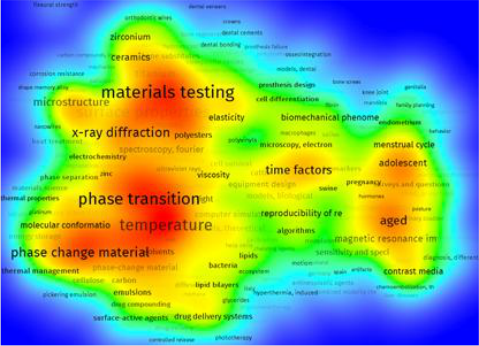 Figure 1
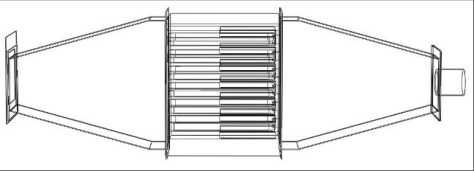 Figure 2
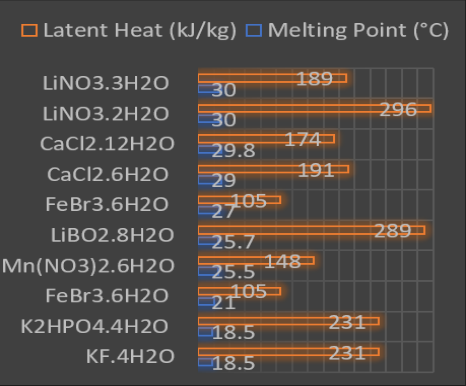 Figure 3
Introduction
Solar energy is the most promising source of energy for drying. Phase Change Material (PCM) plays a pivotal role in optimizing indirect forced convection solar dryers, revolutionizing the efficiency and reliability of these systems (Abi Mathew & Thangavel, 2021) [1] . With the help of phase change material, available solar energy can give constant drying air temperature (Shringi et al., 2014) [9] . These dryers represent a significant advancement in drying technology, particularly for food, industrial and agricultural applications where effective drying is necessary (Mukherjee et al, 2023) [5] . By associating solar energy and PCM, these dryers offer a sustainable and cost-effective solution for drying various products while minimizing energy consumption and environmental impact. These dryers operate by utilizing solar radiation to heat up heat transfer fluid generally air or any other which is then circulated through the plenum chamber to remove moisture from the commodity being dried. PCM, in this context, acts as a thermal energy storage medium, absorbing and releasing heat energy during its phase change process. The integration of PCM into these dryers enhances their thermal performance and operational flexibility (Elarem et al., 2021) [3] . Figure 1 represents all the keywords of the research articles which were reviewed for drafting this paper.
Phase Change Material
Firstly, PCM effectively absorbs heat energy from the hot air passing over it during high solar radiation. As the heat is absorbed, it undergoes change in phase solid to liquid, thereby maintaining a relatively constant temperature within the drying unit. This mitigates temperature fluctuations and maintains uniform drying temperature irrespective of changes occurring in solar radiation, which can adversely affect the quality of the dried product. Also, PCM enables the extension of drying hours beyond day length, allowing for continuous drying even during periods of limited solar availability. This is particularly advantageous in regions with variable weather patterns or seasonal changes in solar radiation. Storage of solar energy during peak sunshine hours facilitates continuous drying during bad weather or at night, maximizing drying time and capacity (Akeiber et al., 2016) [2] .
PCM Mould
Generally, PCM facilitates temperature regulation within the drying chamber, which helps drying sensitive products like leafy, spice, and aromatic commodities that are susceptible to thermal degradation (Rehman et al., 2023) [8] . Hence, it helps in preserving the quality, nutritional value, and shelf life. This is especially important in industries where product quality and consistency are paramount. PCM minimizes the reliance on auxiliary heating sources such as electric heaters or fossil fuels, thereby lowering operational costs and carbon emissions. This aligns with the growing demand for sustainable and eco-friendly drying solutions that prioritize energy conservation. Figure 2 represents the container which holds the PCM material intact (Krishna et al., 2024) [4] .
Types of PCM
Commonly used PCM materials include organic, inorganic, and eutectic mixtures, each offering unique properties and performance characteristics suitable for specific drying applications (Mehla & Kumar, 2021) [7] . Organic PCMs are observed to be non-corrosive, chemically stable and exhibit little or no sub-cooling. Inorganic PCMs have the advantageous of high latent heat per unit volume, high thermal conductivity and are non-inflammable. Among various available PCM, Neo-Pentyl-Glycol (NPG) and Tris (hydroxymethyl) Amino-Methane (TRIS) are promising PCMs for heat storage system applications. The major fringe benefit of applying PCM is that drying time could be extended to off sunshine hours which help in performance enhancement of the developed solar dryer. (Akeiber et al., 2016) [2] . Figure 3 illustrates the latent heat and melting point of few PCMs. Hence, drying of agricultural commodities with consistent heat generation and distribution inside the drying chamber is possible by incorporating the novel application of thermal storage system using phase change material (PCM) in convective solar dryers (Elarem et al., 2021) [3] . The benefits from the installation and operation of solar energy systems can be divided into three categories: energy saving, generation of job opportunities and a decrease in environmental pollution (Krishna and Mathew, 2018) [13] .
Conclusion
In conclusion, PCM plays a vital role in solar dryers by optimizing thermal performance, extending drying hours, regulating temperature fluctuations, preserving product quality, and enhancing energy efficiency. The integration of PCM into these dryers represents a sustainable and innovative approach to drying technology, offering numerous benefits for agricultural, industrial, and commercial applications. As research and development efforts continue to advance PCM technology and its applications, dryers equipped with PCM are poised to become increasingly prevalent in the quest for efficient, cost-effective, and environmentally friendly drying solutions.
References
13 in the original paper- Mathew AA, Thangavel V. A novel thermal storage integrated evacuated tube heat pipe solar air heater: Energy, exergy, economic and environmental impact analysis. Solar Energy. 2021;220:828-842.
- Akeiber H, Nejat P, Majid MZA, Wahid MA, Jomehzadeh F, Famileh ZI, et al. A review on phase change material (PCM) for sustainable passive cooling in building envelopes. Renew Sustainable Energy Rev. 2016;60:1470-1497. https://doi.org/10.1016/j.rser.2016.03.036
- Elarem R, Alqahtani T, Mellouli S, Aich W, Khedher BN, Kolsi L, et al. Numerical study of an evacuated tube solar collector incorporating a nano-PCM as a latent heat storage system. Case Studies in Thermal Engineering, 2021, p. 24. International Journal of Agriculture and Food Science https://www.agriculturaljournals.com https://doi.org/10.1016/j.csite.2021.100859
- Krishna VS, Jain SK, Panwar NL, Sunil J, Wadhawan N, Kumar A. Emergence of Internet of Things technology in food and agricultural sector: A review. J Food Process Eng. 2024 Aug;47(8):e14698. DOI: 10.1111/jfpe.14698.
- Mukherjee S, Pramanik P, Chatterjee D, Pradhan S. Application of solar energy in food processing: An update. J Curr Res Food Sci. 2023;4(2):49-51.
- Krishna VS, Mathew G. Development of a solar copra dryer incorporated with evacuated tubes. Int J Curr Microbiol App Sci. 2018;7(06):2457-2465. https://doi.org/10.20546/ijcmas.2018.706.292
- Mehla N, Kumar A. Experimental evaluation of used engine oil based thermal energy storage coupled with novel evacuated tube solar air collector (NETAC). J Energy Storage, 2021, p. 39. https://doi.org/10.1016/j.est.2021.102656
- Rehman HU, Naseer F, Ali HM. An experimental case study of solar food dryer with thermal storage using phase change material. Case Stud Therm Eng, 2023, p. 51. https://doi.org/10.1016/j.csite.2023.103611
- Shringi VV, Kothari S, Panwar NL. Experimental investigation of drying of garlic clove in solar dryer using phase change material as energy storage. J Therm Anal Calorim. 2014;118:533-539. DOI 10.1007/s10973-014-3991-0
- Singh PK, Logesh K, Kumar SS, Kannan S, Tejaswini V, Soudagar MEM, et al. Revolutionizing the material performance of AZ64/ZrB2 composites for engineering applications. Rev Mater. 2024;29:e20240356. DOI: 10.1590/1517-7076-rmat-2024-0356.
- Tripathi AK. Multi-objective optimization of a hybrid electricity generation system based on waste energy of internal combustion engine and solar system for sustainable environment. Chemosphere. 2023;336:139222.
- Krishna VS, Pavani J. Development of a direct type solar dryer for preparation of mango leather. Int. J Agric Food Sci. 2025;7(5):173-178. https://doi.org/10.33545/2664844X.2025.v7.i5c.393
- Krishna VS, Sagili JL, Dikkala PK, Sridhar K. Functional, thermal, pasting, and rheological properties of gluten-free maize composite flour: Effect of moth bean flour and hydrocolloid addition. J Food Process Preserv. 2021 Oct;45(10):e16104. DOI: 10.1111/jfpp.16104.