
Research article · 2021 · Full text
International Journal of Agriculture and Food ScienceA review on impact of ceramic fertilizers with slow release of nutrient elements for agriculture applications
Volume 3(1) · Pages 01–04 · DOI: 10.33545/2664844x.2021.v3.i1a.42 ↗
Research areasPhosphorus and nutrient managementWater and Wastewater TreatmentVaried Academic Research Topics
Abstract
Author-writtenVitreous materials find wide spread application in modern civilization. This review examines the role of vitreous fertilizers towards the agricultural aspects and its related complexity. This review article emphasizes particularly the role of vitreous fertilizers which are actually known as slow or controlled release fertilizers having the latest concept of fertilizer technology in which plant roots undergo extraction of ions by certain chemical exchange reaction through hydrolysis. It is thus a new challenge for ceramic researchers and engineers to design or formulate some useful glass compositions for these agriculture challenges coming before the world community by the over use of chemical fertilizer for enhancing the agriculture production. This kind of attempt helps in solving the issues in respect of the removal of non-fertility and improving the current situation related to fertilizers.
Summary
Source-checkedPlain-language reading of the full paper, prepared with AI and checked against the text. Each point links to the authors' own words.
Why it matters
- While chemical fertilizers help increase food production, their excessive use can be dangerous to the environment. View evidence ↗
- Overuse of chemicals has led to nutrient deficiencies in soil, causing agricultural land to lose its fertility. View evidence ↗
- The excessive use of agricultural chemicals is linked to various human health issues, including cancer and heart attacks. View evidence ↗
The question
- The review aims to examine the role and complexities of using vitreous (glass) fertilizers in agriculture. View evidence ↗
What they did
- The authors focus on vitreous fertilizers, which act as slow or controlled-release systems where plants extract ions via hydrolysis. View evidence ↗
- Vitreous fertilizers are formulated using network formers (e.g., SiO2, P2O5), modifiers (e.g., Na2O, K2O), stabilizers (CaO), and additives (ZnO, MnO, Fe2O3). View evidence ↗
- In these glass compositions, P2O5 and K2O serve as macronutrients, while Fe2O3, ZnO, and MnO act as micronutrients. View evidence ↗
What they found
- Glass fertilizers release micronutrients slowly through hydrolysis, allowing plant absorption without causing contamination. View evidence ↗
- Unlike standard chemical fertilizers, glass fertilizers are sparingly soluble and resist being washed away by rain. View evidence ↗
- The release rate of nutrients depends on their charge: monovalent cations diffuse most easily, while divalent and trivalent cations are more tightly bound. View evidence ↗
- Vitreous fertilizers maintain soil fertility over time, whereas chemical fertilizers often dissolve and wash out within a few hours. View evidence ↗
- Glass fertilizers create a localized acidic environment around particles, which improves the efficiency of nutrient uptake by plants. View evidence ↗
What it means
- The authors conclude that ceramic fertilizers should be used in a controlled manner to reverse the soil degradation caused by decades of chemical overuse. View evidence ↗
- The authors recommend adopting vitreous fertilizer technology as a superior substitute for frequent chemical applications. View evidence ↗
- A stated challenge is the difficulty in fabricating glass with the precise low solubility required to prevent the premature release of nutrients. View evidence ↗
Visual summary
1 visualsIllustrations explain the paper; they do not show study data.
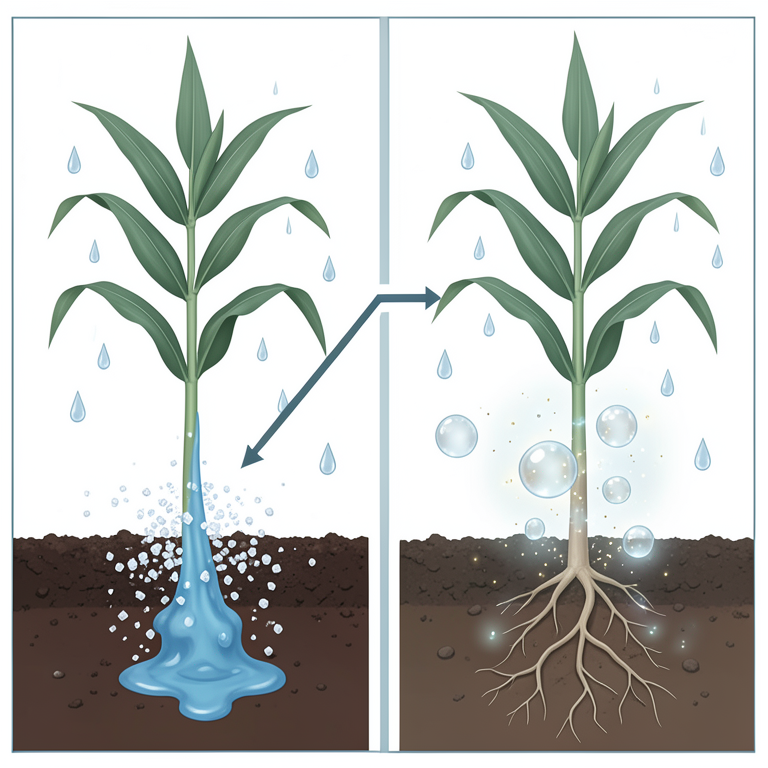
Comparison of Nutrient Release
AI-generated conceptual illustration (corn plants in soil with ceramic fertilizer granules). It explains the idea and does not show study data.
View source evidence ↗Figures & tables
From the original paper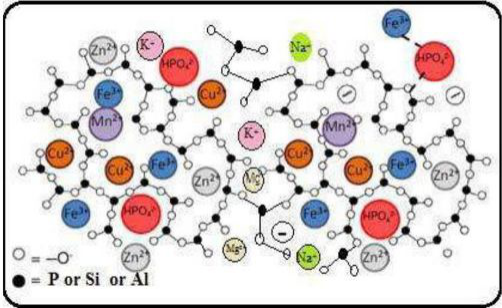 Figure 1
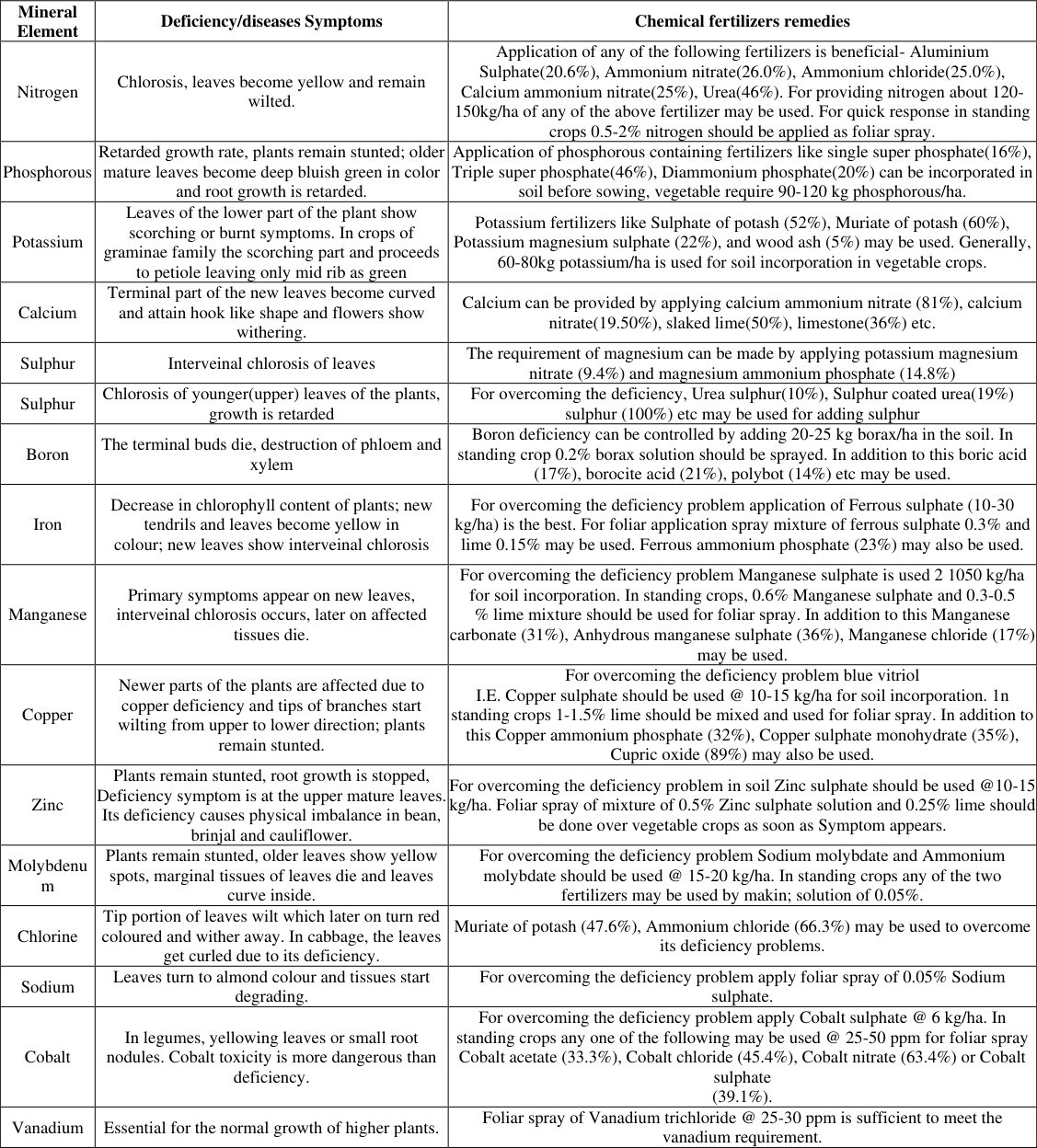 Table 1
Introduction
The environmental protection is very important in an industrial world. Using of fertilizes in agriculture is useful for enhancing food production but on the other side it may be very dangerous for environment because of over and over use of chemical fertilizers, insecticides, herbicides, pesticides and oxytocin. In last two and three decades when hybrid varieties of crops were developed in which 80% chemical fertilizers were being used. It has been reported by various agencies that our soil is facing a deficiency of many nutrient elements in different parts of country. Due to which our agricultural land is turning towards nonfertility. Our soil may be considered healthy only when there must be a balance of all nutrient elements. In this way one can understand that our plants require 17 elements for completing their life cycle and the following division is based on the amount of element absorbed by the plants for their balanced growth (Chaturvedi et al, 2014 and Takker et al, 1978) [1,2] On the other hand over use of these agricultural chemicals may cause many diseases like-cancer, heart attack, blood pressure, Tuberculosis, paralysis and many skin diseases are become most common in human beings. If we really love our motherland, environment and body (health), we have to take some preventive measures to regain natural smell and taste in our fruits, flowers, vegetables and crops. The researchers and technologists (Stoch et al., 2003, Torrisi et al, 2013 and Trenkel, 2010) [3,4,5] all around the world are experienced about the pollution of soil, ground water contamination, non-fertility of soil due to imbalance of nutrient elements. The efforts made in the direction towards the development of glass frits containing plant nutrients but the efforts have not yet yield a viable technology. The fritting technology having advantages that allows adding a wide variety of features by changing the raw materials in the glass compositions is utilized in agriculture. Further, these glass compositions allow nutrient elements to be delivered steadily over a long period of time to the plants without danger of toxicity if applied in excess to the agriculture fields.
Agricultural aspect of plant nutrients
It is known that N, P, K, Ca, Mg, S, Cl, B, Cu, Fe, Mn, Zn and Mo are essential for the growth and reproduction of the plants. N, P, K, Ca, Mg and S are required by the plants in comparatively large amounts and are called as "Major" and "Macro" nutrient elements. But the elements such as Zn, Mn, Cu, Mo, Fe, B and Cl are required in very small amounts and are known as "Minor" or "Micronutrients". These are taken up by the plants as anions or cations depending on their mobility from the soil or water in which the plants grow (Chaturvedi et al., 2008) [6] . It is necessary to understand specific nature of mentioned basic plant nutrients which play an important role in the physiological functioning of plants. The role and function of each micronutrient, whose deficiency impact and its remedial measures with respect to chemical fertilizers and glass nutrients may be definitely a part of studied. The following is the step-wise study of each macro and micro nutrient element from agricultural point of view. The macronutrients nitrogen, phosphorous and potassium wash out of the soil over time requiring soil enrichment with chemical fertilizer to restore the balance and help plants attain their best growth potential. Different plants have different preferences regarding optimum levels of these nutrients particularly in regards to nitrogen. For example, too much Nitrogen will stunt tomato production while Spinach and Broccoli feed heavily on this nutrient and require higher level to grow well. Calcium, magnesium and sulphur are rarely low enough to cause concern but if the soil is missing these key ingredients, they can also be added as soil amendments. The micronutrients like boron, copper, iron, zinc, molybdenum, sodium, cobalt and vanadium are required in such minute amounts for the plant growth and function (Ali et al.,2013 and Yaduvanshi et al.,2013) [7,8] . The lacking of trace elements may be particularly a problem. The best way to ensure a good supply of these plant nutrients is to feed our soil with the help of glass network which may be proved a better and cheaper substitution of chemical fertilizers because of its controlled leaching behavior. Considering the scientific aspect related to the solubility of vitreous fertilizers, the glass matrix shall combined through its constituents with a number of minerals present in the soil to form various percipients which are not rapidly absorbed by the plant roots. These are available within the soil for maintain further fertility of the soil while the residual of chemical fertilizer cell dissolve in water and is washed out after few hour of application leaving their one time reaction. On the other hand vitreous fertilizer do not have this weak point, thus these are not washed out easily, not disintegrate in the soil and provide continuous supply of the nutrient elements for a longer time with effect of increasing the fertility of the soil.
Role of vitreous fertilizers and their related leaching mechanism
Glass fertilizers are a new type of advance and controlled release fertilizers which are made of glass matrixes containing most useful macro elements and also incorporate some other micro nutrient elements required for the balance growth and development of crops and plants (yaduvanshi et al, 2013) [8] . For this purpose conventional glasses are made of oxides network formers such as SiO2, B2O3 and P2O5, oxide glass modifiers such as Na2O, K2O etc., glass stabilizers such as CaO and other oxide additives such as ZnO, MnO and Fe2O3. Among these oxides that conform the structure and composition of a glass, P2O5 and K2O are considered as macro nutrient elements whereas Fe2O3, ZnO and MnO and other oxides are micro nutrients for plant growth. Keeping this aspect in mind a glass fertilizer can be formulated with P2O5 as glass former, K2O as glass modifier, CaO as glass stabilizer and other additives such as ZnO, MnO and Fe2O3 etc. A model network structure of glass along with various nutrient elements has been suggested by researchers (Pyare, et al, 1996) [9] and is illustrated in fig. 1. It is well-Known fact that a glass has hydrophilic nature and have a tendency to attract other foreign and external species or constituents in terms of moisture, water and chemicals. This behavior of glasses give rise the further leaching of species and constituents from the formulated glass network when it comes in contact with water and moisture present in the agriculture fields. Micro-nutrients glass fertilizers release a limited amount of micronutrients into the soil through hydrolysis which can be absorbed by the plants without any contamination. Since these glass granules /powder form are sparingly soluble because of their sluggish leaching and mix with the soil (Bansal et al., 1986 and Hazra et al., 2014) [10,11] . They are not easily washed away by the rains as chemical fertilizers. These glass fertilizers continue to feed the plants year after year. It is important to consider here the hydrolysis process through which dissolution of glass takes place by leaching (via ion exchange) of some weak bonded species from the glass net-work (Chaturvedi et al, 1995 and Paul, 1990) [12,13] after coming in contact with soil and water. Further, the mono valent cations are more easily diffused because of their mobility in comparison to doubly charged (divalent cations) and triply charged (trivalent cations) which are tightly bound with the glass net-work. In the similar way divalent cations and trivalent cations may also migrate out from the glass net-work which results slow leaching of glass nutrients. It may be due to the fact that increase in charge on cations decrease its mobility. Finally tetravalent cations will be leached out from the glass net-work (Chaturvedi et al., 2008 and Mellott, 2001) [6,14]. In the dissolution mechanism of glass net-work, it is important to outline the types of chemical reactions that may take place between glass net-work and water. The release of micronutrients and other constituents of glass net-work in water may be due the following hydrolysis reactions (Cox et al., 1992) [15] .
≡Si -OR + H2O
The non-bridging oxygen formed in above reaction interacts with further molecules of water producing a hydroxyl ion which is free to repeat chemical reaction over again.
≡Si -O -+ H2O = ≡ Si -OH + OH - Several other hydrolysis reactions to understand dissolution mechanism of glass net-work has been suggested by researchers (Burnie et al., 1981, Burnie et al., 1983 and Pyare, 2003) [16,17,18] regarding the leaching behavior of monovalent, divalent, trivalent and tetravalent cations present in glass network. The action of these micronutrients is very specific and its action towards plants is similar to that of vitamins in human body. These elements are essential for proper physiological functioning of plants and must be supplied to the plants. Even where the soil contains sufficient amounts of these micronutrients, deficiencies of these elements may occur in plants growing in that soil, due to chemical and physiological processes which render such elements unavailable to the plants or make them inactive in the physiological functioning within the plant. A deficiency of these micronutrients causes diseases to the plants and affects the yield adversely. The functions of different micro-nutrients in the plants and the diseases caused by their deficiency along with exiting chemical remedies are shown in Table-1.
A fair idea about the roles of various agriculture chemicals which are using frequently in last few decades for enhancing the production while preparing these new kinds of glass fertilizers. This will help a great to achieve better formulation of glass compositions. Application of any of the following fertilizers is beneficial-Aluminium Sulphate(20.6%), Ammonium nitrate(26.0%), Ammonium chloride(25.0%), Calcium ammonium nitrate(25%), Urea(46%). For providing nitrogen about 120-150kg/ha of any of the above fertilizer may be used. For quick response in standing crops 0.5-2% nitrogen should be applied as foliar spray.
Phosphorous
Retarded growth rate, plants remain stunted; older mature leaves become deep bluish green in color and root growth is retarded.
Application of phosphorous containing fertilizers like single super phosphate(16%), Triple super phosphate(46%), Diammonium phosphate(20%) can be incorporated in soil before sowing, vegetable require 90-120 kg phosphorous/ha.
Potassium
Leaves of the lower part of the plant show scorching or burnt symptoms. In crops of graminae family the scorching part and proceeds to petiole leaving only mid rib as green Potassium fertilizers like Sulphate of potash (52%), Muriate of potash (60%), Potassium magnesium sulphate (22%), and wood ash (5%) may be used. Generally, 60-80kg potassium/ha is used for soil incorporation in vegetable crops.
Calcium
Terminal part of the new leaves become curved and attain hook like shape and flowers show withering.
Calcium can be provided by applying calcium ammonium nitrate (81%), calcium nitrate(19.50%), slaked lime(50%), limestone(36%) etc.
Sulphur Interveinal chlorosis of leaves
The requirement of magnesium can be made by applying potassium magnesium nitrate (9.4%) and magnesium ammonium phosphate (14.8%)
Sulphur
Sulphur
Chlorosis of younger(upper) leaves of the plants, growth is retarded
For overcoming the deficiency, Urea sulphur(10%), Sulphur coated urea(19%) sulphur (100%) etc may be used for adding sulphur
Boron
The terminal buds die, destruction of phloem and xylem Boron deficiency can be controlled by adding 20-25 kg borax/ha in the soil. In standing crop 0.2% borax solution should be sprayed. In addition to this boric acid (17%), borocite acid (21%), polybot (14%) etc may be used.
Iron Decrease in chlorophyll content of plants; new tendrils and leaves become yellow in colour; new leaves show interveinal chlorosis
For overcoming the deficiency problem application of Ferrous sulphate (10-30 kg/ha) is the best. For foliar application spray mixture of ferrous sulphate 0.3% and lime 0.15% may be used. Ferrous ammonium phosphate (23%) may also be used.
Manganese
Primary symptoms appear on new leaves, interveinal chlorosis occurs, later on affected tissues die.
For overcoming the deficiency problem Manganese sulphate is used 2 1050 kg/ha for soil incorporation. In standing crops, 0.6% Manganese sulphate and 0.3-0.5 % lime mixture should be used for foliar spray. In addition to this Manganese carbonate (31%), Anhydrous manganese sulphate (36%), Manganese chloride (17%) may be used.
Copper
Newer parts of the plants are affected due to copper deficiency and tips of branches start wilting from upper to lower direction; plants remain stunted.
For overcoming the deficiency problem blue vitriol I.E. Copper sulphate should be used @ 10-15 kg/ha for soil incorporation. 1n standing crops 1-1.5% lime should be mixed and used for foliar spray. In addition to this Copper ammonium phosphate (32%), Copper sulphate monohydrate (35%), Cupric oxide (89%) may also be used.
Zinc
Plants remain stunted, root growth is stopped, Deficiency symptom is at the upper mature leaves. Its deficiency causes physical imbalance in bean, brinjal and cauliflower.
For overcoming the deficiency problem in soil Zinc sulphate should be used @10-15 kg/ha. Foliar spray of mixture of 0.5% Zinc sulphate solution and 0.25% lime should be done over vegetable crops as soon as Symptom appears.
Molybdenu m
Plants remain stunted, older leaves show yellow spots, marginal tissues of leaves die and leaves curve inside.
For overcoming the deficiency problem Sodium molybdate and Ammonium molybdate should be used @ 15-20 kg/ha. In standing crops any of the two fertilizers may be used by makin; solution of 0.05%.
Chlorine
Tip portion of leaves wilt which later on turn red coloured and wither away. In cabbage, the leaves get curled due to its deficiency.
Muriate of potash (47.6%), Ammonium chloride (66.3%) may be used to overcome its deficiency problems.
Sodium
Leaves turn to almond colour and tissues start degrading.
For overcoming the deficiency problem apply foliar spray of 0.05% Sodium sulphate.
Cobalt
In legumes, yellowing leaves or small root nodules. Cobalt toxicity is more dangerous than deficiency.
For overcoming the deficiency problem apply Cobalt sulphate @ 6 kg/ha. In standing crops any one of the following may be used @ 25-50 ppm for foliar spray Cobalt acetate (33.3%), Cobalt chloride (45.4%), Cobalt nitrate (63.4%) or Cobalt sulphate (39.1%).
Vanadium Essential for the normal growth of higher plants.
Foliar spray of Vanadium trichloride @ 25-30 ppm is sufficient to meet the vanadium requirement.
When these micro-nutrients added as water soluble salts or numerous chemical applications as requirements in the soil and the agriculture field is required only a small portion of the total nutrients added is taken up by the roots and rest goes waste as it percolates pretty deep in the soil beyond the reach of the roots and is fixed in the soil in the insoluble forms. During the floods and heavy rains micronutrients are washed away. Thus the use of chemical fertilizers containing micronutrients elements have been generally unsatisfactory and of limited application, since conditions existing in the soil that caused the original deficiencies still exist.
During the past two decades micronutrients have come to occupy an important position in agriculture and many elements have become indispensable to the health and production of plants, animals and human beings. Keeping the aspect of subject in mind vitreous fertilizers carry a wide range of advantages. These glasses are good metal nutrient solubility in aqueous media, including an aqueous media of alkali pH. These glasses provide an acid extract in water which creates a less alkaline and even acidic environment around each frit particles in the soil, enabling more efficient pick up of the nutrient metal by the plants. These glasses provide a good source of nutrient elements in adequate amounts and melting glasses having a low overall cost with nontoxicity and controlled leachability.
Conclusion
In this review paper author has tried to explore the attention towards vitreous fertilizers rather than commercially available chemical fertilizers which are frequently using in agriculture along with their over dosages for enhancing the production and other related aspects. This kind of current practice is leaving an adverse impact with the soil health. As a result, deficiencies of many nutrient elements have been observed in agriculture fields. Therefore, it is necessary to use ceramic fertilizers in a control manner as per agricultural requirements to overcome this kind of problem which is slowly being developed in agriculture fields by the over use of numerous chemicals in last few decades. In this way glass can offers an excellent opportunity because of its composition and solubility, the use of such products that will supply sufficient amounts of plant nutrients having a desired ionic mix over a long duration i.e. sustained release of the nutrients and every constituents of the glass should be used for the growth of the plants throughout their life cycle and also to fulfill the need for maintaining the fertility of the soil by specific and multi-nutrient glass compositions. However it is not so simple to fabricate such a glass for this purpose. Considering these important aspects glass compositions need to be prepared that the solubility of glass in water should be relatively small in order to prevent a quick release of micro-nutrient elements so that these vitreous fertilizers can be worked year after year in various types of soil having both an acidic and basic pH. Finally this can be proved a better substitution over chemical fertilizers by adopting this as a viable technology instead of numerous chemicals applications from time to time as per agricultural requirements which are frequently using in agriculture for enhancing the production. This practice is leaving a side effect towards fertility of soil.
Considering the future aspect of agriculture, ceramic fertilizers may be a good replacement of chemical fertilizers with several advantages like toxicity, overdose application and control leaching of nutrient elements from the glass network along with its usefulness towards the removal of soil in-fertility with specific agricultural requirements.
Figures and tables from the paper
References
18 in the original paper- Chaturvedi RK, Pyare R, Majhi MR. 'Role of low solubility glasses as a source of plant nutrient', Caribbean journal of science and technology. 2014; 2:457-463.
- Takkar PN, Randhawa NS. "Micronutrients in Indian agriculture" Fertilizers News. 1978; 23(8):3-26.
- Stoch L, Stoch Z, Waclawska I. Silicate glass fertilizer. Patent PL. 2003; 185(229):B1.
- Torrisi B, Trinchera A, Rea E, Allegra M, Roccuzzo G, Intrigliolo F et al. "Effect of organo-mineral glass matrix based fertilizers on citrus Fe chlorosis, European journal of Agronomy. 2013; 44:32-7.
- Trenkel ME. " Slow and controlled release and stabilized fertilizers for enhancing nutrient use efficiency in agriculture", International fertilizer industry association (IFA), Paris, France, 2010.
- Chaturvedi RK, Singh VK, Kumar A." Chemical corrosion of Glass". Indoceram. 2008; 45(4):93-103.
- Ali J, Singh SP, Singh S. "Response of Fababean to Boron, Zinc and Sulphur application in alluvial soil", j. of Indian society of Soil Sciences, 2013; 61(3):202-206.
- Yaduvanshi NPS, Sharma DR, Swarup A." Impact of integrated nutrient management on soil properties and yield of rice and wheat in a long term experiment on a reclaimed sodic soil", J. of Indian society of Soil science. 2013; 61(3):188-194.
- Pyare R, Lal LJ, Joshi VC, Singh VK. "Leachability of molybdenum ions from ternary phosphate glasses", J Am Ceram Soc. 1996; 79(5):1329-1334.
- Bansal P, Doremus RH. Handbook of glass properties, Academic press, Newyork, 1986, 648.
- Hazra G, Das T. " A review on controlled release advance glassy fertilizer", Global journal of science frontier research chemistry. 2014; 14(4):33-44.
- Chaturvedi RK, Kumar D. "Corrosion behaviour of window glasses in water", Transaction of Indian ceramic society. 1995; 54(1):16-18.
- Paul A. Chemistry of glasses, 2 nd edn. Chapman and Hall, London, 1990, 179.
- Mellott Nathan P. 19 th international congress on glass, Edinburgh, Scottland, 2001.
- Cox GA, khooli AR. Glass Technol, 1992; 33(2):60-62.
- Burnie J, Gilchrist T, Fuff S, Drake C, Harding N, Malcom A et al. " Controlled release glasses (C.R.G.) for biomedical uses '' Biomaterials. 1981; 2(4):244-45.
- Burnie J, Gilchrist T. "Controlled release glass (C.R.G.) -A new biomaterial in ceramic in surgery. Edited by P. Vincenzini, Elsevier Scientific Publishing, Amesterdam, Netherlands, 1983, 169-76.
- Pyare R. "leachability of zinc ions from ternary phosphate glasses", Journal materials science. 2003; 38:2079-2086.
Cited by 5
From OpenAlex, OpenCitations and reference lists read by Scinovex
- Role of geo informatics in achieving sustainable agriculture and it’s scenario in Haryana: An overview ↗
Jyoti Devi, Sandeep Kumar, Sunil Kumar · International Journal of Communication and Information Technology · 2023
Agricultural sustainability is founded on the belief that we must meet the demands of the present without affecting future generations' ability to fulfill their demands. Sustainable agriculture attempts to maintain equilibrium between the requirement for food production and the conservation of the ecosystem. Geo informatics technologies are helping in many ways like find out the current scenario of anything like…
❝ 1PDF - Development and evaluation of agri-glasses as slow release fertilizers
Rupesh Chaturvedi, Adit Kumar Kerketta, Bipin K. Singh · International Journal of Agriculture and Food Science · 2022
A number of Agri-glass compositions were designed and formulated along their related scientific investigations in the laboratory. The prepared glass compositions were divided as solid samples for different investigations and remaining were powdered after a ball milling for 30 minutes (approximately) for the agriculture applications. Rate of leaching of various constituents present in the prepared glass composition had also been carried out immersion test method. FTIR and SEM techniques have also been employed to explain the data obtained.
- Effect of blended NPS fertilizer on food barley varieties in Gurawa district Ethiopia
Kasim Ahmed, Debela Bekele · International Journal of Horticulture and Food Science · 2022
Food barley is one of the major staple crops in Ethiopia. In Gurawa district, the productivity of food barley is low due to poor agronomic practice. Most of the farmers in these areas do not use fertilizer and few others use very much below the optimum rate and inappropriate NPS fertilizer applications rate are among the most important agronomic factors that hinders productivity of food barley around the study area. An experiment was conducted in the Gurawa district in 2020 main cropping season to examine the responses of different NPS fertilizer rates on yield and yield components of food bar
- Potential of water hyacinth compost and N, P, K, S fertilizers on K-available, K-uptake, and quality of shallots (Allium ascalonicum L.) in inceptisols of Jatinangor
Emma Trinurani Sofyan, Ade Setiawan, Ilham Fajar Ardiansyah, Abdul Rahmi · International Journal of Agriculture and Nutrition · 2023
Compost is the organic matter derived from plants, animals, and waste organic decomposition or fermentation subjected to the process. The addition of organic matter to the soil is very important so that plants get enough nutrients for growth. One of the materials in making compost is water hyacinth. Inorganic fertilizers are deliberately created by human beings in factories and contain high levels of certain. As for some commonly used inorganic fertilizers such as urea, SP-36, KCl, and ZA (Ammonium Sulphate). The research aimed to determine the effect of water hyacinth compost and N, P, K, and
- Development of prescription based fertilizer recommendation for Brinjal (Solanum melongena L.) in mid hills of Himachal Pradesh
Shaifali Rana, Naveen Datt · International Journal of Advanced Chemistry Research · 2022
The present investigation was conducted at the Experimental Farm of the Department of Soil Science, Chaudhary Sarwan Kumar Himachal Pradesh Krishi Vishvavidyalaya, Palampur (32 6' N latitude and 76 3' E longitude). The soil of the experimental site was Typic Hapludalf, silty clay loam in texture, acidic in reaction, medium in available N, high in available P and low in available K at the initiation of the experiment. The experiment was conducted as per the technical programme and methodology of AICRP on Soil Test Crop Response. The experiment was conducted in two phases. In first phase soil fe