
Research article · 2022 · Full text
International Journal of Agriculture and Food ScienceDevelopment and evaluation of agri-glasses as slow release fertilizers
Volume 4(2) · Pages 01–06 · DOI: 10.33545/2664844x.2022.v4.i2a.66 ↗
Research areasGrowth and nutrition in plantsPlant Physiology and Cultivation StudiesPlant Growth Enhancement Techniques
Abstract
Author-writtenA number of Agri-glass compositions were designed and formulated along their related scientific investigations in the laboratory. The prepared glass compositions were divided as solid samples for different investigations and remaining were powdered after a ball milling for 30 minutes (approximately) for the agriculture applications. Rate of leaching of various constituents present in the prepared glass composition had also been carried out immersion test method. FTIR and SEM techniques have also been employed to explain the data obtained.
Summary
Source-checkedPlain-language reading of the full paper, prepared with AI and checked against the text. Each point links to the authors' own words.
Why it matters
- Vitreous fertilizers can provide a controlled release of essential macro-nutrients (K, P, Mg, S, Ca) and micro-nutrients (B, Fe, Mo, Cu, Zn, Mn, V) necessary for plant growth and physiological function. View evidence ↗
- There is a need for environmentally friendly, non-toxic, and cost-effective alternatives to chemical fertilizers that can maintain agricultural productivity. View evidence ↗
The question
- The study aims to develop and evaluate agri-glasses as a slow-release, environmentally friendly alternative to chemical fertilizers. View evidence ↗
What they did
- Glass compositions were prepared by melting batches in 100 ml alumina crucibles using an electric furnace at 900 ± 5 °C. View evidence ↗
- Half of the prepared glass was processed into micro- to nano-sized particles using a planetary ball mill and sieved to a particle size of 45 μm for field application. View evidence ↗
- Solid glass samples were suspended by threads in natural water at a constant temperature of 35 °C to evaluate the leaching of constituents over time. View evidence ↗
- The researchers used Fourier-transform infrared spectroscopy (FTIR) to analyze bond formations and Scanning Electron Microscopy (SEM) to examine surface morphology before and after leaching. View evidence ↗
What they found
- Leaching rates were highest at the start and decreased over time, with the NG4 composition consistently showing the best leaching rate. View evidence ↗
- The superior leaching rate of NG4 is attributed to its lower density, which suggests weaker bond formation within its glass network. View evidence ↗
- SEM analysis after 60 days of water exposure showed that NG4 experienced the greatest destruction of surface morphology, correlating with its high leaching rate. View evidence ↗
- FTIR analysis of NG0, NG1, and NG4 showed a disappearance or reduction of peaks, indicating a loss of constituents and weakening of bonds due to water penetration. View evidence ↗
- In field trials on ladyfinger after 60 days, the ceramic fertilizer NG4 produced the greatest plant height (28 cm), surpassing chemical fertilizer (27 cm) and the control without fertilizer (19 cm). View evidence ↗
What it means
- The authors conclude that glass fertilizers are superior to chemical fertilizers because they are non-toxic and more durable. View evidence ↗
- Based on leaching, density, SEM, FTIR, and field data, the authors identify NG4 as the most effective glass composition among the six tested. View evidence ↗
Visual summary
2 visualsIllustrations explain the paper; charts are replotted from the paper's own table values.
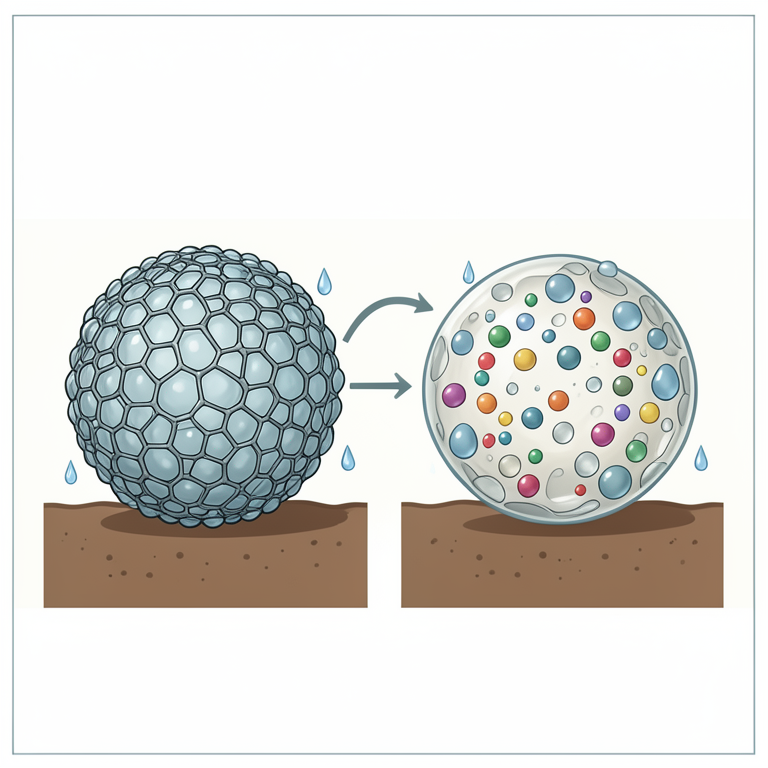
Leaching Mechanism Concept
AI-generated conceptual illustration (agri-glass fertilizer granules in soil). It explains the idea and does not show study data.
View source evidence ↗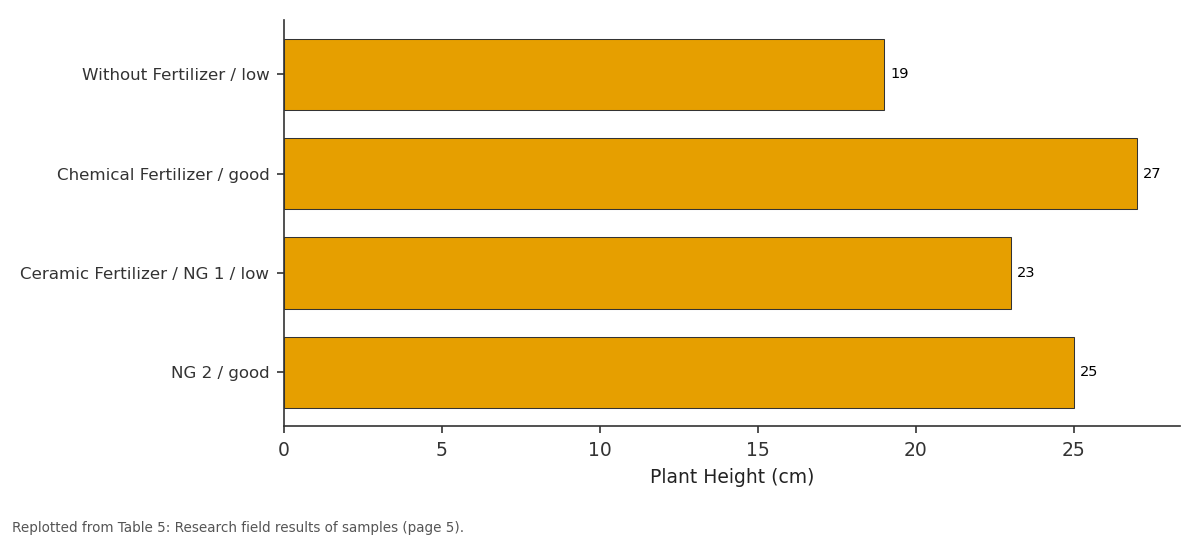
Plant Height (cm): Without Fertilizer / low vs Chemical Fertilizer /... vs Ceramic Fertilizer / NG... vs NG 2 / good
Replotted from Table 5 (page 5) of the original paper. Every bar is the paper's own table value.
View source evidence ↗Figures & tables
From the original paper Table 1
 Table 2
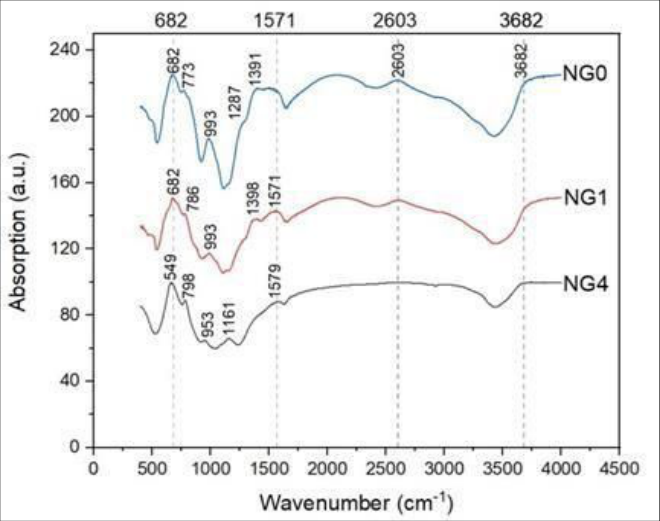 Figure 1
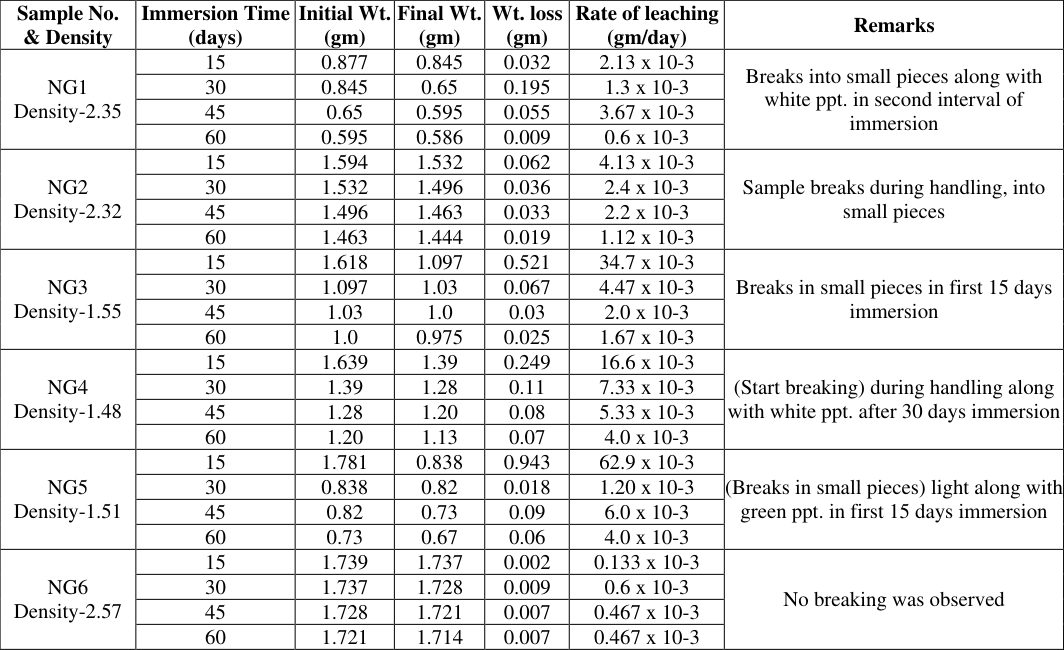 Table 3
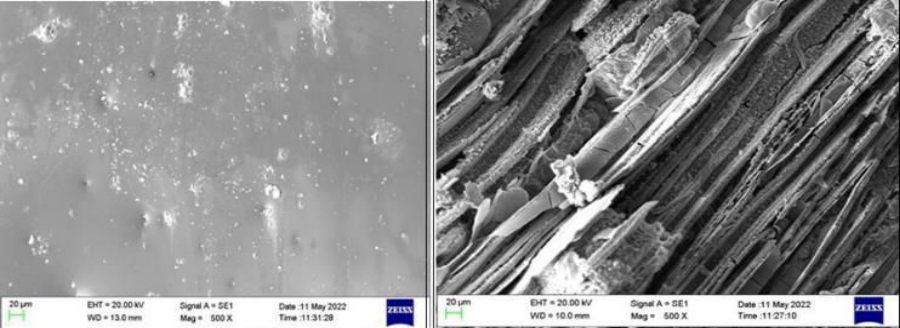 Figure 2
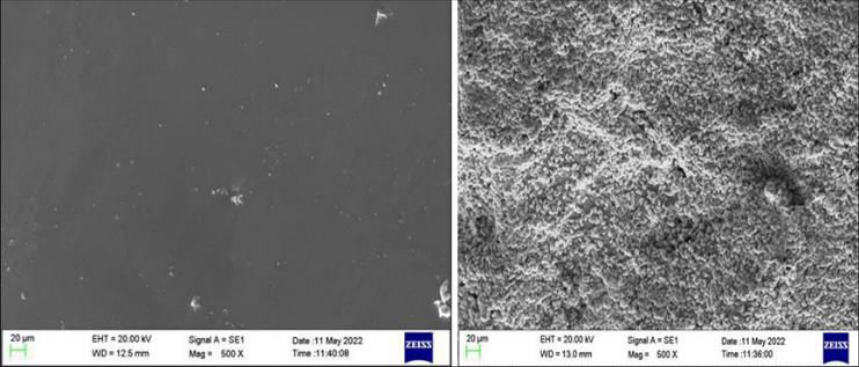 Figure 3
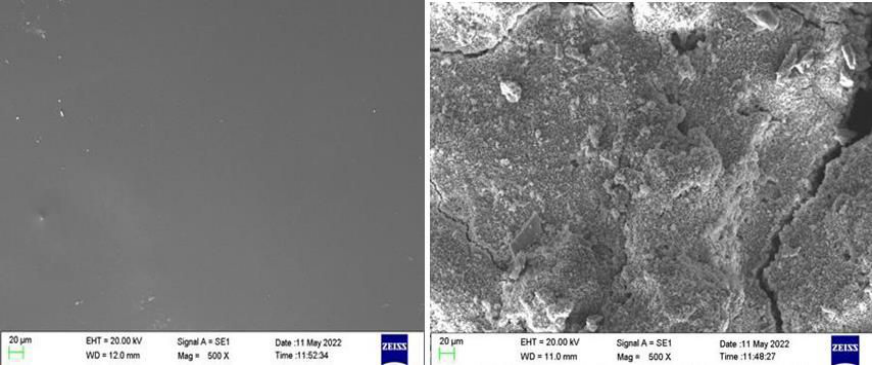 Figure 4
 Table 4
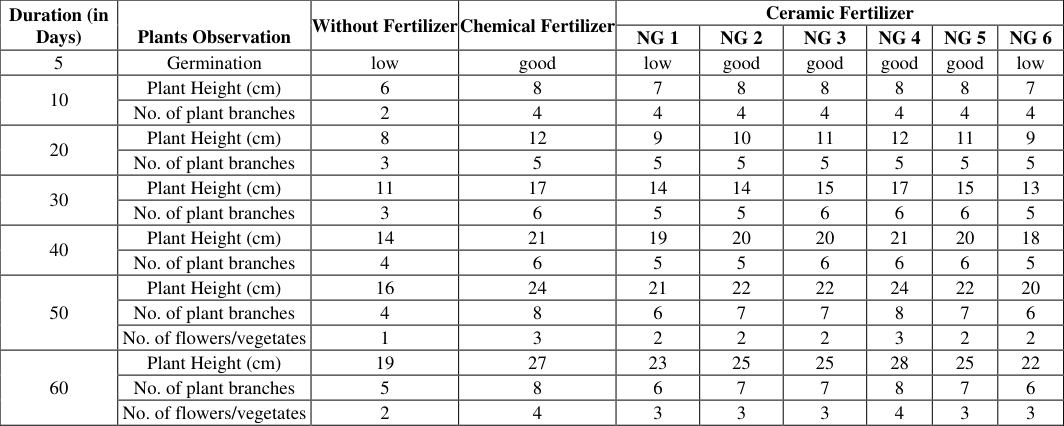 Table 5
Introduction
Vitreous fertilizers are advanced and having a tendency of controlled released of a number of elements like -K, P, Mg, S, Ca along with a micronutrient like B, Fe, Mo, Cu, Zn, Mn, V, which are essential not only for growth of the plant but also helpful to complete their physiological functioning and addition in the quantity of micronutrients addition in the glass networks in their oxide form and other required chemical forms ranges from 5 to 10 moles per cent as per agriculture requirement (Chaturvedi et al., 2014,Takker et al, 1978) [1,2] . The role of different plant nutrients is very specific considering the aspect in terms of agriculture (Waclawska and Szumera, 2009; Torrisi et al., 2013; Chaturvedi et al., 2008; Javed et al., 2013) [3,4,5,6] . The objective of the research is to minimize the use of various types of chemical fertilizers applications and provide a parallel environmental friendly fertilizer through glass matrix with enhancing the agriculture productivity as usual without leaving any kind of toxicity and cost effective also (Stoch et al., 2003, and Trenkel, 2010) [7,8] .
Experimental
Analytical and reagent grade chemicals as raw materials were used for the preparation of glass compositions. Batches of glass compositions were melted in alumina crucibles of 100 ml capacity in an electric furnace at 900 C±5 C. The melts were then poured on aluminum plate (as base) within a metal made mould. After getting it dried, stored in a desiccator. The half portion of glass prepared was separated for getting powder with the help of planetary ball mill upto micro to nano-size particles for agriculture field applications. After ball milling the powder passed through sieves of 45 μm particle size. Another half portion of prepared glass composition in the form of solid samples were utilized for leaching experiments. These samples were hanging with help of a thread to get maximum exposure of all the surfaces of the samples which provide an easy passage for release the species/constituents present in the glass network. After immersion in natural water for different period of time in a digital hot air chamber maintaining the temperature at 35 C throughout the period of investigations.
Results and Discussions
During the required duration of time weight losses were measured after 15, 30, 45, 60 days immersion of glass samples into water system and their related observations are summarized in the table 3. The weight of the samples before and after leaching can help to find out the absolute weight loss of the glass samples and the rate of leaching per day due to loss of various species/ constituents from glass network. Naturally, this kind of leaching behavior investigated at laboratory level having a direct scientific significance with the agriculture scientific parameters observed.
| Sample No. & Density | Immersion Time (days) | Initial Wt. (gm) | Final Wt. (gm) | Wt. loss (gm) | Rate of leaching (gm/day) | Remarks |
|---|---|---|---|---|---|---|
| NG1 Density-2.35 | 15 | 0.877 | 0.845 | 0.032 | 2.13 x 10⁻³ | Breaks into small pieces along with white ppt. in second interval of immersion |
| 30 | 0.845 | 0.65 | 0.195 | 1.3 x 10⁻³ | ||
| 45 | 0.65 | 0.595 | 0.055 | 3.67 x 10⁻³ | ||
| 60 | 0.595 | 0.586 | 0.009 | 0.6 x 10⁻³ | ||
| NG2 Density-2.32 | 15 | 1.594 | 1.532 | 0.062 | 4.13 x 10⁻³ | Sample breaks during handling, into small pieces |
| 30 | 1.532 | 1.496 | 0.036 | 2.4 x 10⁻³ | ||
| 45 | 1.496 | 1.463 | 0.033 | 2.2 x 10⁻³ | ||
| 60 | 1.463 | 1.444 | 0.019 | 1.12 x 10⁻³ | ||
| NG3 Density-1.55 | 15 | 1.618 | 1.097 | 0.521 | 34.7 x 10⁻³ | Breaks in small pieces in first 15 days immersion |
| 30 | 1.097 | 1.03 | 0.067 | 4.47 x 10⁻³ | ||
| 45 | 1.03 | 1.0 | 0.03 | 2.0 x 10⁻³ | ||
| 60 | 1.0 | 0.975 | 0.025 | 1.67 x 10⁻³ | ||
| NG4 Density-1.48 | 15 | 1.639 | 1.39 | 0.249 | 16.6 x 10⁻³ | (Start breaking) during handling along with white ppt. after 30 days immersion |
| 30 | 1.39 | 1.28 | 0.11 | 7.33 x 10⁻³ | ||
| 45 | 1.28 | 1.20 | 0.08 | 5.33 x 10⁻³ | ||
| 60 | 1.20 | 1.13 | 0.07 | 4.0 x 10⁻³ | ||
| NG5 Density-1.51 | 15 | 1.781 | 0.838 | 0.943 | 62.9 x 10⁻³ | (Breaks in small pieces) light along with green ppt. in first 15 days immersion |
| 30 | 0.838 | 0.82 | 0.018 | 1.20 x 10⁻³ | ||
| 45 | 0.82 | 0.73 | 0.09 | 6.0 x 10⁻³ | ||
| 60 | 0.73 | 0.67 | 0.06 | 4.0 x 10⁻³ | ||
| NG6 Density-2.57 | 15 | 1.739 | 1.737 | 0.002 | 0.133 x 10⁻³ | No breaking was observed |
| 30 | 1.737 | 1.728 | 0.009 | 0.6 x 10⁻³ | ||
| 45 | 1.728 | 1.721 | 0.007 | 0.467 x 10⁻³ | ||
| 60 | 1.721 | 1.714 | 0.007 | 0.467 x 10⁻³ |
Table text extracted from the original PDF; superscript letters are shown inline. The original table image is below.
View original table image
It is evident from the table 3 that leaching aspects related to various constituents/ species present in the formulated glass network is taking place by the penetration water molecules for different duration of time his is indeed a good resemblance with motives of research. It is also clear here that in the beginning the leaching rate is high which gradually becomes slower in later course of investigation and finally, better rate of leaching was observed for NG4 consistently. This may be due to the lowest density which indicates about weak bond formation of glass network in this particular composition. After overall study of the FTIR analysis plots, it can be observed that the bond formations are initially taking place during the glass network formations which are losing their intensity after leaching because of the mobility of some species from glass networks during their exposure in water system. While comparing the FTIR analysis plots, particularly in the wave number range from 900-1300 cm -1 , 2500-2650 cm -1 and 3500-3700 cm -1 the specimens investigated for glass compositions NG0, NG1and NG4, there is a disappearance of peaks or being shorter in their size is clearly indicated that there is a loss of some species/constituents from glass network along with weaken of bonds present in the network after the penetration of water molecules during their exposure time.
These observations have a good resemblance with the results obtained by other processes carried out of the study.
In aqueous media the dissolution may takes place by the following reaction due to breaking of silicon-oxygen network (Bansal and Doremus, 1986) [9] . H2O + -Si-O--------> -SiOH.HOSi-Similar investigation have reported by other researchers (Cox and Khooli, 1992; Cox and Ford, 1989) [10,11] when glass specimens were exposed in soil and water for a long duration of time initially, dissolution of glass will start (via ion exchange) of some weak bonded species from the glass network (RK Chaturvedi et al, 2021) [12] . Further, the monovalent cations present in network are more easily diffused because of their mobility in comparison doubly charged (divalent) and triply charged (trivalent cations) which are tightly bound with the glass network. In the similar way divalent and trivalent cations may migrate out from the glass network and finally tetravalent will be leached out with ultimate destruction of network (Chaturvedi et al., 2020) [13] . Considering the surface morphology among the micrographs before and after leaching for exposure to water system for 60days, it is clear from the comparison of the micrographs that some species have migrated out from the glass network in the case of both samples of vitreous fertilizers. ( [14,15,16] In addition to this, it is also evident while going through the micrographs that the greater destruction in the surface morphology was observed in case of NG4 which has an almost good resemblance with the results obtained for rate of leaching research. It is also evident from the figure 3.
The objective of the research is to minimize the use of various types of chemical fertilizers applications and provide a parallel environmental friendly fertilizer through glass metric with enhancing the agriculture productivity as usual without leaving any kind of toxicity and cost effective also. A testing of soil has been carried out to know the existing nutrient position before application of glass compositions prepared in the agricultural research field. For this purpose, soil sample was taken randomly at a depth of 15 cm and get it air dried. There after the soil sample was sieved through 2.0mm sieve packed in polythene bags and stored. By using DTPA extractable method with AAS for Fe, Zn, Cu, Mn, calorimetric method for B, available N by Kjeldahl method, and available P by Olsen's method and available k by Flame photometric method have been employed for carrying out the macro and micro elements analysis for the soil of our research field and related results are summarized in Table 4.
| pH 7.94 | TDS 390 | Organic carbon% | N (kg/ha) | P (kg/ha) | K (kg/ha) | B (ppm) | Fe (ppm) | Cu (ppm) | Zn (ppm) | Mn (ppm) | S (ppm) |
|---|---|---|---|---|---|---|---|---|---|---|---|
| Observed Values | 0.41 | 140.0 | 34.28 | 189.17 | 0.62 | 12.11 | 1.56 | 0.79 | 7.32 | 12.36 | |
| Std. Range | 0.10-1.11 | 40-245 | 3-90 | 70-600 | 0.10-11.5 | 2-80 | 1-6.50 | 0.10-5.37 | 2-28 | 2-59 |
Table text extracted from the original PDF; superscript letters are shown inline. The original table image is below.
View original table image
The field trial has also been conducted during the spring season in small research field which has been developed for testing the prepared glass compositions and their related observations are illustrated in Table 5. The glass compositions were applied on ladyfinger for seeding and plantations. By doing a comparative study among all the segments in terms of germination, plant height, plant branches and number of vegetative, it has been observed that among all six compositions only three compositions are giving water germinations (quick and more plants in numbers) rather than without ceramic and chemical nutrient segment. It is also evident from the table of agriculture parameters investigated that both the glass compositions show better and consistent results throughout the course of investigation and provide almost relatively similar and better response in comparison to chemical nutrients fertilizer used for study. While studying the experimental data observed from table 5, the effect of the vitreous fertilizers (NG4 for ladyfinger) show an evident influence along with maintaining their physiological functioning and nutrients deficiencies occur from time to time in agriculture fields.
| Duration (in Days) | Plants Observation | Without Fertilizer | Chemical Fertilizer | Ceramic Fertilizer | — | — | — | — | — |
|---|---|---|---|---|---|---|---|---|---|
| NG 1 | NG 2 | NG 3 | NG 4 | NG 5 | NG 6 | ||||
| 5 | Germination | low | good | low | good | good | good | good | low |
| 10 | Plant Height (cm) | 6 | 8 | 7 | 8 | 8 | 8 | 8 | 7 |
| No. of plant branches | 2 | 4 | 4 | 4 | 4 | 4 | 4 | 4 | |
| 20 | Plant Height (cm) | 8 | 12 | 9 | 10 | 11 | 12 | 11 | 9 |
| No. of plant branches | 3 | 5 | 5 | 5 | 5 | 5 | 5 | 5 | |
| 30 | Plant Height (cm) | 11 | 17 | 14 | 14 | 15 | 17 | 15 | 13 |
| No. of plant branches | 3 | 6 | 5 | 5 | 6 | 6 | 6 | 5 | |
| 40 | Plant Height (cm) | 14 | 21 | 19 | 20 | 20 | 21 | 20 | 18 |
| No. of plant branches | 4 | 6 | 5 | 5 | 6 | 6 | 6 | 5 | |
| 50 | Plant Height (cm) | 16 | 24 | 21 | 22 | 22 | 24 | 22 | 20 |
| No. of plant branches | 4 | 8 | 6 | 7 | 7 | 8 | 7 | 6 | |
| No. of flowers/vegetates | 1 | 3 | 2 | 2 | 2 | 3 | 2 | 2 | |
| 60 | Plant Height (cm) | 19 | 27 | 23 | 25 | 25 | 28 | 25 | 22 |
| No. of plant branches | 5 | 8 | 6 | 7 | 7 | 8 | 7 | 6 | |
| No. of flowers/vegetates | 2 | 4 | 3 | 3 | 3 | 4 | 3 | 3 |
Table text extracted from the original PDF; superscript letters are shown inline. The original table image is below.
View original table image
Conclusions
The study of the glass nutrients was done to make an alternative of the chemical fertilize was a major reason for the depletion in the quality of the soil. The results produced during the experiment of the glass fertilizers clearly justify its superiority over chemical fertilizers in terms of durability and non-toxicity. The leachability results show that the important nutrients are leached out from the glass matrix in a slow and controlled manner. The process was also continuous and hence supports it durability purpose. The pH result didn't show any permanent increase or decrease in the pH of soil and the value of pH was moving more towards the alkaline atmosphere which is very supportive for the vegetation purpose. Apart from this the characterization used supported our basic objective of slow and continuous leaching. The change in absorption spectrum of different bonds clearly establishes the fact the leaching was going on. The release of elements from the matrix was based on the principle discussed in the literature review that release of cations will be in order of monovalent, divalent, trivalent and tetravalent respectively. The field test completely established the fact by the data produced that glass fertilizers are much better than the chemical fertilizers in term of production. The present work was successful in the preparation of glass powders to be used for enhancing food production and in maintaining soil fertility. Immersion test method showed that the leaching span was higher in the beginning and became slower in later course of investigation. Finally, a rate of leaching was observed for NG4 and its rate of leaching was throughout the course of study. Surface morphology of the glass samples also confirmed the results obtained during leaching experiments. The prepared glass compositions were successfully applied on the ladyfinger which provided a better germination along with other agriculture parameters investigated throughout the course of study. It is important to mention that both the tested glass compositions may be a better substitution of chemical fertilizers for enhancing the production as well as removal of non-fertility in Indian agricultural situations. On the basis of various studies, it is concluded among all six samples NG4 is having more effectiveness which has been supported by the data from their analysis of leaching behavior, density, SEM, FTIR analysis and agriculture field trials.
Figures and tables from the paper
| Sample | P2O5 | SiO2 | B2O3 | K2O | CaO | MgO | FeO | ZnO | CuO | MnO |
|---|---|---|---|---|---|---|---|---|---|---|
| NG1 | 35 | 10 | 10 | 25 | 10 | 10 | - | - | - | - |
| NG2 | 35 | 10 | 10 | 25 | 5 | 5 | 10 | - | - | - |
| NG3 | 35 | 10 | 10 | 25 | 5 | 5 | - | 10 | - | - |
| NG4 | 35 | 10 | 10 | 25 | 5 | 5 | - | - | - | 10 |
| NG5 | 35 | 10 | 10 | 25 | 5 | 5 | - | - | 10 | - |
| NG6 | 35 | 10 | 10 | 15 | 5 | 5 | 5 | 5 | 5 | 5 |
Table text extracted from the original PDF; superscript letters are shown inline. The original table image is below.
View original table image
| Sample | P2O5 | SiO2 | B2O3 | K2O | CaO | MgO | FeO | ZnO | CuO | MnO |
|---|---|---|---|---|---|---|---|---|---|---|
| NG1 | 51.88 | 6.26 | 7.31 | 24.53 | 5.85 | 4.18 | - | - | - | - |
| NG2 | 50.61.06 | 6.11 | 7.13 | 23.93 | 2.85 | 2.04 | 7.33 | - | - | - |
| NG3 | 50.15 | 6.05 | 7.07 | 23.71 | 2.83 | 2.02 | - | 8.17 | - | - |
| NG4 | 50.66 | 6.12 | 7.14 | 23.96 | 2.85 | 2.04 | - | - | - | 7.24 |
| NG5 | 50.22 | 6.06 | 7.07 | 23.74 | 2.83 | 2.02 | - | - | 8.08 | - |
| NG6 | 51.34 | 6.2 | 7.23 | 14.57 | 2.89 | 2.07 | 3.72 | 4.18 | 4.13 | 3.67 |
Table text extracted from the original PDF; superscript letters are shown inline. The original table image is below.
View original table image
References
16 in the original paper- Chaturvedi RK, Pyare R, Majhi MR. 'Role of low solubility glasses as a source of plant nutrient', Caribbean journal of science and technology. 2014:2:457-463.
- Takkar PN, Randhawa NS. Micronutrients in Indian agriculture Fertilizers News.1978:23(8):3-26.
- Waclawska I, Szumera M. Reactivity of silicate - phosphate glasses in soil environment. Journal of Alloys and Compounds, 2009:468:246-53.
- Torrisi B, Trinchera A, Allegra E, Rea M, Roccuzzo G, Intrigliolo F. Effect of organo-mineral glass matrixbased fertilizers on citrus Fe chlorosis, European journal of Agronomy. 2013:44:32-37.
- Chaturvedi RK, Singh VK, Kumar A. Chemical corrosion of Glass. Indoceram. 2008;45:93-103.
- Javed A, Singh SP, Sandeep S. Response of fababean to boron,zinc and sulphur application in alluvial soil. Journal of the Indian Society of Soil Science. 2013:61:202-206.
- Stoch L, Stoch Z, Waclawska I. Silicate glass fertilizer. Patent PL. 2003:185(229):B1.
- Trenkel ME. Slow and controlled release and stabilized fertilizers for enhancing nutrient use efficiency in agriculture, International fertilizer industry association (IFA), Paris, France, 2010.
- Bansal NP, Doremus RH. Handbook of glass properties, Acedemic press, New York., 1986 p 648.
- Cox GA, Khooli AR. The natural corrosion of glass; the formation of plugs. Glass Technology,1992:33:60-62. International Journal of Agriculture and Food Science https://www.agriculturaljournals.com
- Cox GA, Ford BA. The influence of in homogeneities in glass on the morphology of the weathering layers Glass Technology, 1989, 113-114.
- A review on impact of ceramic fertilizers with slow release of nutrient elements for agriculture applications RK Chaturvedi* Bipin Singh, VK Singh. International Journal of Agriculture and Food Science. 2021:3(1):0104.
- Leaching behavior of vitreous fertilizers for application as plant nutrients, Raj Kumar Chaturvedi*, Vijay Kumar, Vinay Kumar Singh, Journal of Food, Nutrition and Agriculture. 2020:3:14-18.
- Burnie J, Gilchrist T, Fuff S, Drake C, Harding N, Malcom A et al. Controlled release glasses (C.R.G.) for biomedical uses Biomaterials. 1981:2(4):244-45.
- Burnie J, Gilchrist T. "Controlled release glass (C.R.G.) -A new biomaterial in ceramic in surgery. Edited by P. Vincenzini, Elsevier Scientific Publishing, Amesterdam, Netherlands, 1983, 169-76.
- Pyare R. leachability of zinc ions from ternary phosphate glasses, Journal materials science. 2003:38:2079-2086
Cited by 1
From OpenAlex, OpenCitations and reference lists read by Scinovex
- Indigenous agroecological knowledge and practices for climate change adaptation in the forest-savanna transition zone at Batchenga in the Centre Region of Cameroon ↗
Pierre Marie Chimi, William Armand Mala, Bienvenu Léonnel Tchonang Djoumbi, Jean Louis Fobane, Franck Ulrich Fankam Kenmoe, Karimou Ngamsou Abdel et al. · Discover Environment · 2025
This study elucidates how local communities' ecological knowledge can enhance resilience and adaptation in the face of changing climatic conditions. This study collected both quantitative and qualitative data. Quantitative data from household questionnaires were carefully analyzed, while qualitative data from interviews and focus groups were coded and indexed to identify key themes. The study also used Excel's pivot table function…
❝ 27PDF