
Research article · 2026 · Full text
International Journal of Horticulture and Food ScienceStudying the sensory evaluation and mass consumer acceptability of developed gluten free biscuits using millets
Volume 8(3) · Pages 01–05 · DOI: 10.33545/26631067.2026.v8.i3a.485 ↗
Research areasFood composition and propertiesSeed and Plant BiochemistrySensory Analysis and Statistical Methods
Abstract
Author-writtenThe increasing prevalence of celiac disease and gluten intolerance has heightened the demand for gluten-free products. The present study was carried out to develop gluten free biscuits using millets (barnyard millet, finger millet, buckwheat and pearl millet). This study investigates the sensory evaluation and mass consumer acceptability of gluten-free biscuits developed using various millets. Millets, known for their nutritional benefits and gluten-free properties, are explored as alternative ingredients in biscuit production. Sensory evaluation was conducted through a structured panel involving trained judges who assessed texture, flavor, appearance, and overall acceptability. Additionally, a consumer survey was carried out to gauge mass acceptability. The findings indicate that millet-based gluten-free biscuits were generally well-received, with certain millet varieties showing higher acceptance due to their favorable sensory attributes. The study contributes valuable insights into the potential of millets as a viable ingredient for gluten-free biscuit production and highlights consumer preferences in this niche market.
Summary
Source-checkedPlain-language reading of the full paper, prepared with AI and checked against the text. Each point links to the authors' own words.
Why it matters
- There is a growing demand for gluten-free food products due to the rising prevalence of gluten intolerance and celiac disease. View evidence ↗
- Millets are considered promising ingredients for gluten-free products because they are rich in minerals, vitamins, and fiber. View evidence ↗
The question
- The study aims to evaluate how consumers perceive and accept gluten-free biscuits made from different types of millets. View evidence ↗
What they did
- The researchers developed gluten-free biscuits using four types of millets: pearl, finger, barnyard, and buckwheat. View evidence ↗
- The developed millet biscuits were compared against a control group consisting of existing market-available biscuits. View evidence ↗
- A panel of 10 semi-trained judges evaluated the biscuits' aroma, taste, texture, appearance, and overall acceptability. View evidence ↗
- Mass consumer acceptability was tested using feedback forms collected from 50 students and staff members. View evidence ↗
What they found
- Finger millet biscuits scored highest for texture (7.10), while buckwheat biscuits scored lowest (6.30). View evidence ↗
- The control biscuits had a significantly higher aroma score than the millet-based biscuits, likely due to commercial additives. View evidence ↗
- In consumer testing, 64% rated pearl millet biscuits as excellent and 32% rated finger millet as excellent, compared to only 6% for the control. View evidence ↗
- The control biscuits were poorly received by consumers, with 58% rating them as fair and 28% as poor. View evidence ↗
- Nutritional analysis showed that the millet-based biscuits had lower fat and higher fiber and protein content than the control. View evidence ↗
- The millet-based biscuits were found to be more economically viable due to lower production costs than the commercial control. View evidence ↗
What it means
- The authors conclude that millet-based gluten-free biscuits are promising due to their nutritional benefits and sensory acceptability. View evidence ↗
- The authors suggest that future work should focus on expanding the variety of millets used and optimizing the recipes. View evidence ↗
Visual summary
3 visualsIllustrations explain the paper; charts are replotted from the paper's own table values.
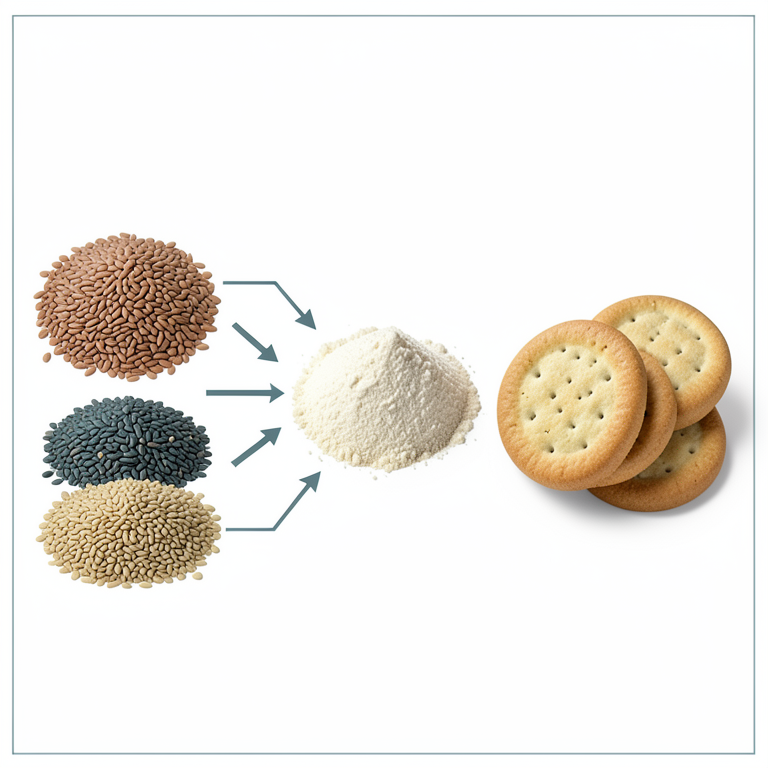
Experimental Setup
AI-generated conceptual illustration (millet-based gluten-free biscuits). It explains the idea and does not show study data.
View source evidence ↗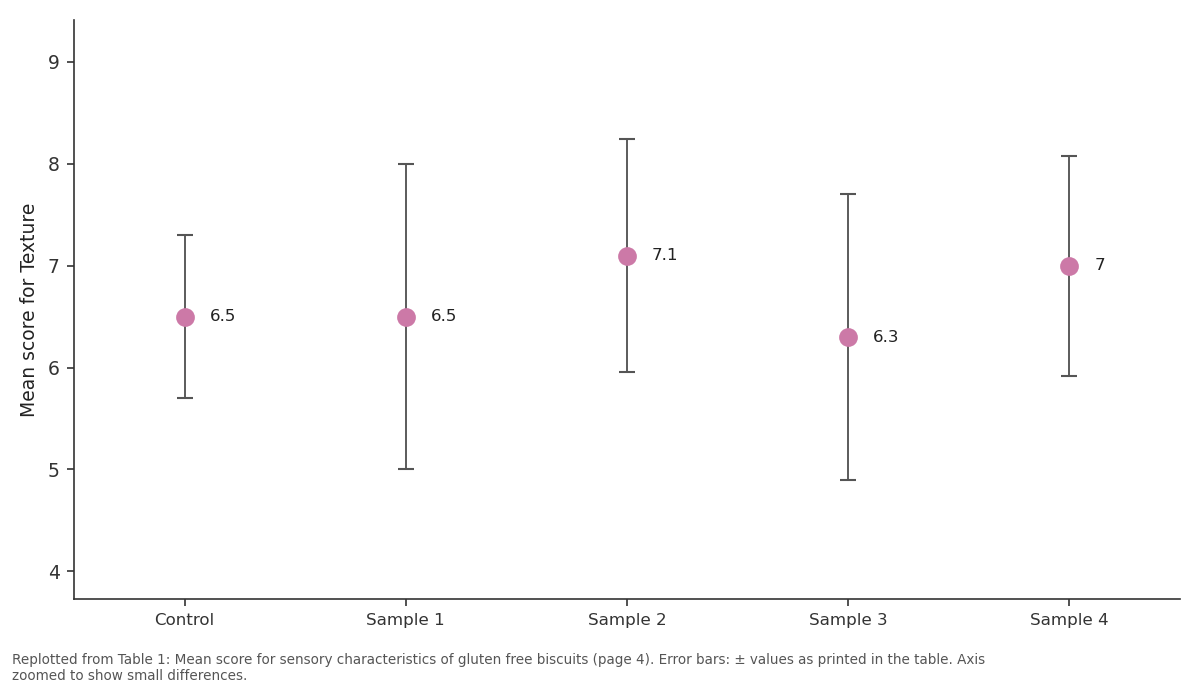
Texture: Control vs Sample 1 vs Sample 2 vs Sample 3 vs Sample 4
Replotted from Table 1 (page 4) of the original paper. Every bar is the paper's own table value.
View source evidence ↗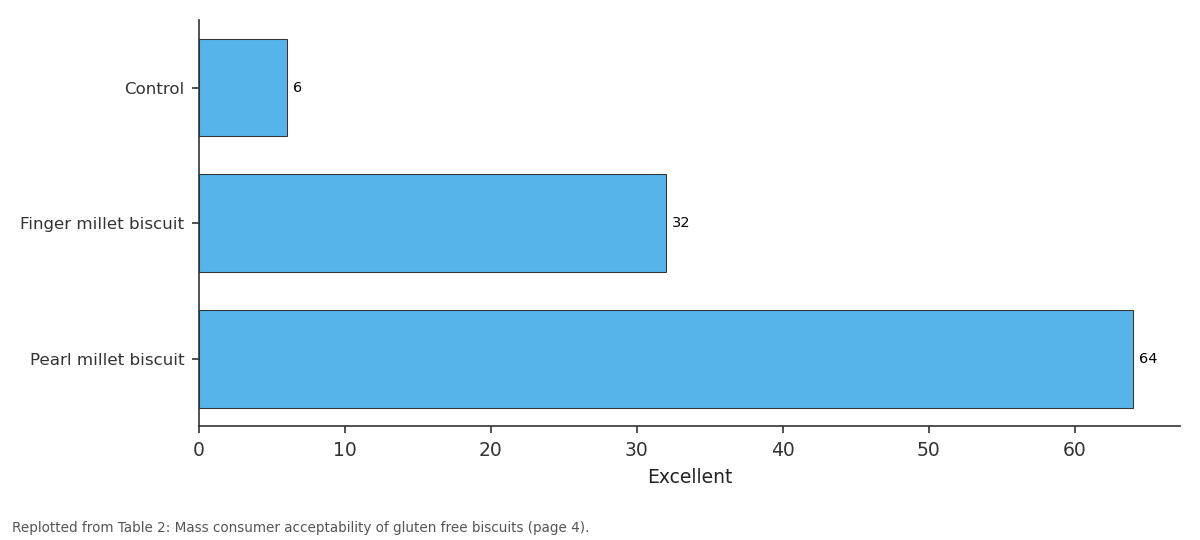
Excellent: Control vs Finger millet biscuit vs Pearl millet biscuit
Replotted from Table 2 (page 4) of the original paper. Every bar is the paper's own table value.
View source evidence ↗Figures & tables
From the original paper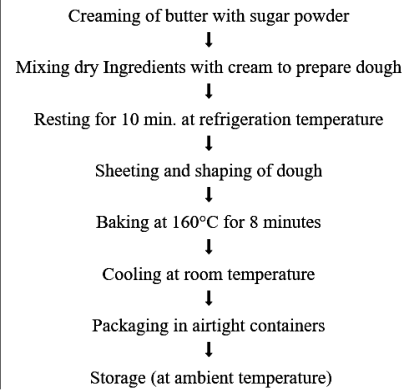 Figure 1
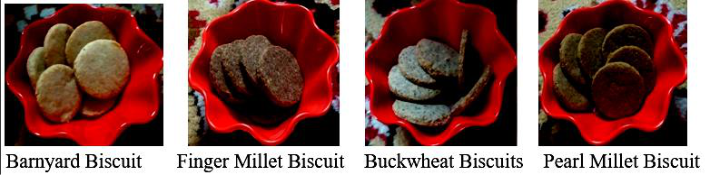 Figure 1
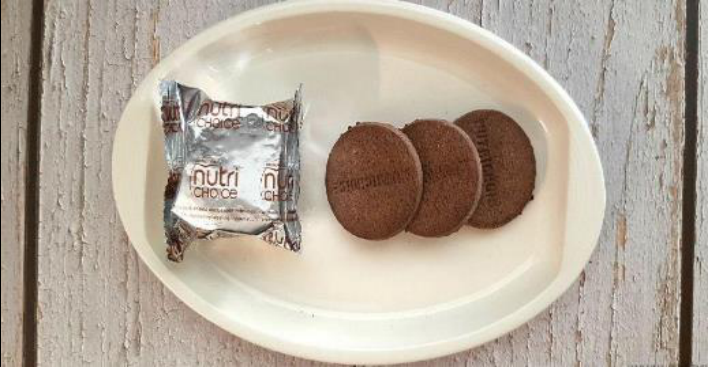 Figure 2
 Figure 3
 Figure 3
 Table 1
 Table 2
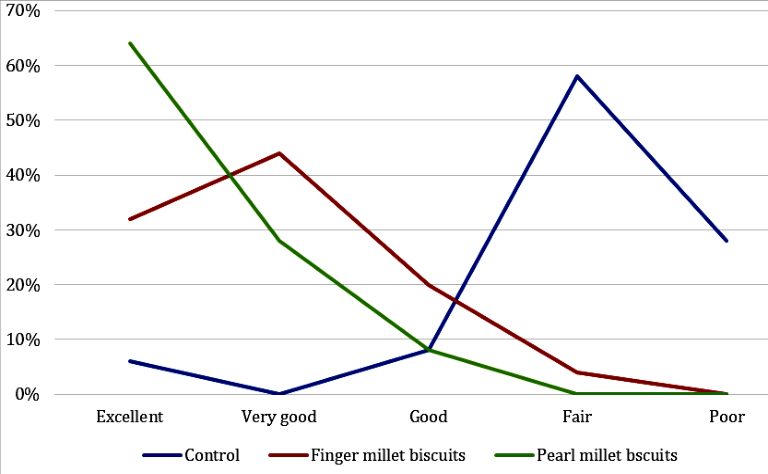 Figure 4
Introduction
With the rising awareness of celiac disease and gluten intolerance, there is an increasing demand for gluten-free products (Singh et al., 2019) [27] . Gluten-free diets necessitate the use of alternative grains and flours that do not contain gluten, a protein found in wheat, barley, and rye (Miller et al., 2019) [16] . Among the various alternatives, millets have garnered attention due to their nutritional benefits and their suitability for gluten-free formulations (Gull et al., 2020) [11] . Millets are small-seeded grasses that are rich in fiber, vitamins, and minerals, making them a promising ingredient in gluten-free products (Patel et al., 2017) [18] . This study aims to evaluate the sensory properties and consumer acceptability of gluten-free biscuits made from different types of millets. Sensory evaluation is critical for understanding how product attributes such as taste, texture, and appearance affect consumer preferences (Stone & Sidel, 1993) [30] . Additionally, assessing mass consumer acceptability provides insights into market viability and consumer preferences (Lawless & Heymann, (2010) [15] . Previous research has demonstrated that millet-based products can offer a nutritious alternative to traditional wheat-based foods (Rao et al., 2015) [21] . However, consumer acceptance of these products varies, making it essential to explore how different millet varieties impact the sensory characteristics and overall appeal of gluten-free biscuits (Sanjay & Venkatesh, 2021) [24] . This study addresses this gap by combining sensory analysis with consumer preference data to provide a comprehensive evaluation of millet-based gluten-free biscuits.
Materials and Methods
Developed gluten free biscuits using millets were packaged in recyclable plastic boxes and aluminum foil and compared with control (the existing market ones). Attention as an integral component of sustainable and integrated nutrient management 2.1 Sensory Characteristics: Developed Gluten free biscuits were evaluated for their sensory characteristics (color & appearance, texture, taste, aroma, and overall acceptability etc.) using 9-point hedonic scale.
Mass consumer acceptability of gluten free biscuits:
Consumer acceptability of gluten free biscuits was checked by selling acceptable products to the students and staff at the sale counter (Jugaad) of DEI. Feedback forms were filled by consumers (students & staff) at the same time using the product rating scale as presented in given pictures below (Appendix II). Pictures of checking mass consumer acceptability are given in Fig 3.
Results and Discussion
Results and Discussion
Sensory characteristics of gluten free biscuits prepared by using millets
Gluten free biscuits were evaluated for organoleptic characteristics (color & appearance, texture, taste, aroma, and overall acceptability) by 10 semi trained panelists. Mean scores for sensory characteristics of gluten free biscuits are presented in table 1. Mean score for sensory characteristics i.e. color & appearance, texture, taste, aroma and overall acceptability of control biscuits were 6.60, 6.50, 5.80, 6.80, and 6.30 respectively as given in table 1. Mean score for sensory characteristics i.e. color & appearance, texture, taste, aroma and overall acceptability of gluten free biscuits prepared by using barnyard millet, finger millet, buckwheat and pearl millet flour is ranged from 7.00-7.30, 6.30-7.10, 6.30-7.10, 6.10-6.70 respectively. Mean score for color & appearance of gluten free biscuits prepared by using barnyard millet, finger millet, buckwheat and pearl millet flour are ranged from 7.00-7.30. Barnyard biscuits got the highest score (i.e.7.30) whereas buckwheat biscuits got lowest score (i.e. 7.00) for color & appearance. Mean score for texture of gluten free biscuits prepared by using barnyard millet, finger millet, buckwheat and pearl millet flour are ranged from 6.30-7.10. Finger millet biscuits got the highest score (i.e. 7.10) whereas buckwheat biscuits got lowest score (i.e. 6.30). Texture of the barnyard biscuit was liked equally as control (i.e. 6.50). These changes in texture might be due to the higher fiber content of buckwheat flour as given here. (Onipe et al. 2021) [29] . Mean score for taste of gluten free biscuits prepared by using barnyard millet, finger millet, buckwheat and pearl millet flour are ranged from 6.30-6.75. Finger millet biscuits got the highest score followed by pearl millet biscuit, barnyard biscuit and buckwheat biscuit respectively. Mean score for aroma of gluten free biscuits prepared by using barnyard millet, finger millet, buckwheat and pearl millet flour ranged from 6.10-6.70. Mean score for aroma of control is significantly higher than the prepared gluten free biscuits this might be due to the presence of added flavors and additives in it. Mean score for overall acceptability of gluten free biscuits prepared by using barnyard millet, finger millet, buckwheat and pearl millet flour ranged from 6.40-7.70. Mean score for over acceptability of prepared gluten free biscuits are significantly higher than control and pearl millet biscuit got highest score (i.e.7.70) followed by finger millet biscuit, buckwheat biscuit, and barnyard biscuit. It is observed that gluten free biscuits prepared using barnyard millet flour has highest score for color & appearance and aroma (i.e. 7.30 and 6.70) whereas gluten free biscuits prepared using finger millet flour has highest mean score for taste and texture (i.e. 7.10 and 7.40). Gluten free biscuits prepared using pearl millet flour and finger millet flour have the highest mean score for overall acceptability (i.e. 7.50 and 7.70) as compared to that of control. This means the samples were liked moderately and liked very much by the consumers. It was observed that 64% of consumers rated pearl millet biscuit as excellent, 32% of consumers rated finger millet biscuit as excellent. However only 6% of consumers rated control (Britannia nutri-choice high fiber finger millet biscuit) as excellent (Table 2). 44% of consumers rated finger millet biscuits as very good and 28% of consumers rated finger millet biscuits as very good, whereas, no one marked control (Britannia nutrichoice high fiber finger millet biscuits) as very good.
| Product Ratings | Control | Finger millet biscuit | Pearl millet biscuit |
|---|---|---|---|
| Excellent | 6% | 32% | 64% |
| Very Good | 0% | 44% | 28% |
| Good | 8% | 20% | 8% |
| Fair | 58% | 4% | 0% |
| Poor | 28% | 0% | 0% |
Table text extracted from the original PDF; superscript letters are shown inline. The original table image is below.
View original table image
| Sample | Color & Appearance | Texture | Taste | Aroma | Overall Acceptability |
|---|---|---|---|---|---|
| Control | 6.60 ± 0.84 | 6.50 ± 0.80 | 5.80 ± 1.25 | 6.80 ± 0.92 | 6.30 ± 0.82 |
| Sample 1 | 7.30 ± 0.48 | 6.50 ± 1.50 | 6.70 ± 1.42 | 6.70 ± 1.16 | 6.40 ± 1.78 |
| Sample 2 | 7.10 ± 1.52 | 7.10 ± 1.14 | 7.40 ± 1.36 | 6.70 ± 1.16 | 7.50 ± 0.97 |
| Sample 3 | 7.00 ± 1.15 | 6.30 ± 1.40 | 6.30 ± 2.15 | 6.10 ± 1.79 | 6.40 ± 2.12 |
| Sample 4 | 7.25 ± 1.10 | 7.00 ± 1.08 | 6.75 ± 1.51 | 6.50 ± 1.27 | 7.70 ± 1.42 |
| CD at 5% | NS | NS | NS | NS | NS |
Table text extracted from the original PDF; superscript letters are shown inline. The original table image is below.
View original table image
Almost half percent of consumers (58%) rated control biscuits as fair and 28% of consumers rated control as poor. Hence, it was observed from results of table 2 that gluten free biscuits prepared using millets are more acceptable to the consumers as compared to the control (Britannia nutrichoice high fiber finger millet biscuit). Only 4% of consumers rated finger millet biscuit as fair and no one marked gluten free biscuits as poor.
Conclusion
In conclusion, this study on the development and evaluation of gluten-free biscuits using various millets demonstrates promising results in terms of both sensory acceptability and nutritional benefits. The standardized procedure for preparing gluten-free biscuits yielded products with varying physical and sensory attributes. Notably, biscuits made from pearl millet and finger millet achieved the highest scores for overall acceptability, surpassing the control (Britannia nutrichoice high fiber finger millet biscuits) in consumer preference.
Sensory evaluations revealed that gluten-free biscuits, particularly those made from pearl millet and finger millet, were rated more favorably in terms of taste, texture, and overall acceptability compared to the control. This was further supported by consumer feedback, where a significant majority preferred the taste and quality of the gluten-free options. Additionally, the nutritional analysis highlighted that gluten-free biscuits have a higher protein and fiber content, while their fat content is lower compared to the control, making them a healthier alternative. The cost analysis indicated that gluten-free biscuits are more economically viable, with lower production costs than the commercially available control product. This aspect, combined with their enhanced nutritional profile and consumer preference, underscores the potential of milletbased gluten-free biscuits as a beneficial and affordable snack option. Overall, the findings suggest that gluten-free biscuits made from millets not only meet consumer expectations but also offer health benefits and cost advantages, making them a viable and preferable choice in the snack market. Further research and development could focus on optimizing recipes and expanding the range of millet varieties to enhance these benefits even further.
Figures and tables from the paper
References
35 in the original paper- AACC. Approved methods of the American Association of Cereal Chemists. 13th ed. St Paul (MN): American Association of Cereal Chemists; 2002.
- Aggarwal. Determination of moisture in food products by hot air oven-drying method. 2013.
- AOAC. Official methods of analysis. 18th ed. Arlington (VA): Association of Official Analytical Chemists; 2005.
- Anonymous. Biscuit and cake (batter) faults. Bakers Digest. 1987;1-3.
- Saric BM, Nedeljkovic NM, Simurina OD, Pestoric MV, Kos JJ, Mandic AI, et al. Influence of baking time and temperature on gluten-free cookies enriched with blueberry pomace. Novi Sad (Serbia): Institute of Food Technology, University of Novi Sad; 1994.
- Joshi CP. Phenomics and genomics of finger millet: current status and future prospects. New Delhi: Epub; 2019.
- Doweidar M, Abd El-Motaleb N, Bedeir S. Production and evaluation of low calorie and high fiber hard biscuits. Egypt J Nutr. 2010;25:1-24.
- Arora DK. Plant science: exploration of millet models for developing nutrient-rich graminaceous crops. Karnal: Vishal Publication; 2016.
- Singh E. Potential of millets: nutrient composition and health benefits. J Sci Innov Res. 2016;5(2):46-50.
- Fasariyo SB, Arowora KA. Chemical, pasting and sensory properties of fermented maize (ogi) fortified with pigeon pea flour. Int J Food Agric Vet Eng. 2013;7:218-220.
- Gull A, Bhat ZF, Bhat HF. Nutritional, functional, and health benefits of millets. Food Rev Int. 2020;36(4):339-366.
- Giuberti G, Gallo A. Reducing the glycaemic index and increasing the slowly digestible starch content in gluten-free cereal-based foods: a review. Int J Food Sci Technol. 2018;53(1):50-60.
- Jamale S, Sahoo A, Patil S, Jamdar J. Formulation of ragi and whole wheat flour supplemented nutri cookies. Pharma Innov J. 2022;11(12):101-104.
- Upraity J, Chaudhary C. Development of gluten-free biscuits using millets. Int Res J Manag Sci Technol. 2023;11(14):1-5.
- Lawless HT, Heymann H. Sensory evaluation of food: principles and practices. 2nd ed. New York: Springer; 2010.
- Miller JM, Thomas SM, Schwartz SA. Advances in gluten-free foods and beverages. J Food Sci. 2019;84(1):16-26.
- Kalaiselvi N. Food biochemistry. New Delhi: Epub; 2019.
- Patel PR, Patel VA, Patel KM. Millets: nutritional and health benefits. Int J Res Pharm Chem. 2017;7(3):448454.
- Radhika, Virk A, Kaur M, Thakur P, Chauhan D, Rizvi QUEH, et al. Development and nutritional evaluation of multigrain gluten-free cookies and pasta products. Curr Res Nutr Food Sci. 2019;7(3):1-10.
- Mahna R, Puri S, Khanna K, Gupta S, Passi SJ, Seth R. Textbook of nutrition and dietetics. New Delhi: 2016. p.43-50.
- Rao KS, Narayan SS, Reddy RS. Gluten-free cereal products and their health benefits. Int J Food Sci. 2015;2015:832451.
- Sablani SS, Marcotte M, Baik OD, Castaigne F. Modeling of simultaneous heat and water transport in the baking process. LWT Food Sci Technol. 1998;31:201-209.
- Dhak S. Finger millet: a certain crop for an uncertain future and a solution to food insecurity under stressful environments. New Delhi: Epub; 2017.
- Sanjay B, Venkatesh K. Sensory and nutritional attributes of millet-based products. Food Sci Technol. 2021;42(6):1661-1670.
- Sharma S, Saxena DC, Riar CS. Nutritional, sensory and in vitro antioxidant characteristics of gluten-free cookies prepared from flour blends of minor millets. J Cereal Sci. 2016;72:153-161.
- Silky MPG, Tiwari A. Development of high protein biscuits using pigeon pea broken flour. Int J Eng Innov Technol. 2014;4:84-89.
- Singh S, Singh P, Singh M. Celiac disease and glutenfree diet: a review. J Gastroenterol Hepatol Res. 2019;8(1):286-293.
- Shibukawa S, Sugiyama K, Yano T. Effects of heat transfer by radiation and convection on browning of cookies during baking. J Food Sci. 1989;54(3):621-624.
- Ramashia SE, Mashau ME, Onipe OO. Millets cereal grains: nutritional composition and utilisation in SubSaharan Africa. Venda (South Africa): 2021.
- Stone H, Sidel JL. Sensory evaluation practices. 2nd ed. San Diego: Academic Press; 1993.
- Gupta S. The history of baking. Baking Times. 2017;27.
- Thorvaldson K, Janestad H. A model for heat, water and vapour diffusion. J Food Eng. 1999;40:167-172.
- Whitley PR. Arnotts biscuits: a history of the biscuit. Gandhinagar: Wheat Food Council; 2017. p. 43-50.
- Whitley PR. Biscuit manufacture: fundamentals of inline production. London: Elsevier Publishing Co Ltd; 1971.
- Zydenbos S, Humphrey-Taylor V. Biscuits, cookies and crackers: nature of the products. In: Encyclopaedia of Food Sciences and Nutrition. Cambridge: Woodhead Publishing; 2003. p. 1-8.