
Research article · 2026 · Full text
International Journal of Horticulture and Food ScienceFormulation and nutritional characterization of a newly developed cake using fruit and vegetable waste
Volume 8(1) · Pages 131–134 · DOI: 10.33545/26631067.2026.v8.i1b.476 ↗
Research areasFood Waste Reduction and SustainabilityFood composition and propertiesSeed and Plant Biochemistry
Abstract
Author-writtenFood waste valorization can improve sustainability while enhancing the nutritional profile of bakery products. This study developed cakes incorporating two food-waste ingredients: orange peel powder (OPP) produced from dried orange peels, and pumpkin puree (PPu) produced from cooked pumpkin. Four formulations were prepared: Control (no waste ingredient), OPP (5% wheat flour replaced by orange peel powder), PPu (10% of fat replaced with pumpkin puree and water adjusted), and Combo (both OPP and PPu combined at the same replacement levels). Proximate composition, physical characteristics (specific volume, crumb firmness) and sensory quality (30 untrained panelists; 9-point hedonic scale) were evaluated. Proximate analysis indicated the Combo cake had slightly higher moisture (30.5% vs 28.0%), ash (1.4% vs 1.2%) and dietary fibre (2.4% vs 1.5%) and marginally lower fat (16.5% vs 18.0%) than the Control. Sensory means (overall acceptability, 9-point scale, n=30) were: Control 7.8±0.6, OPP 7.1±0.8, PPu 7.2±0.7, Combo 7.4±0.6. One-way ANOVA showed no significant differences (p>0.05) for appearance, aroma, texture and overall acceptability across formulations; however, taste scores for the OPP formulation were significantly lower than Control (p=0.03). The study demonstrates that moderate incorporation of orange peel powder and pumpkin puree can produce acceptable cakes while improving fibre and ash contents, supporting the feasibility of using fruit and vegetable wastes in value-added bakery products.
Summary
Source-checkedPlain-language reading of the full paper, prepared with AI and checked against the text. Each point links to the authors' own words.
Why it matters
- Global food waste creates significant ethical, economic, and environmental problems. View evidence ↗
- Turning edible fruit and vegetable waste into food ingredients can reduce disposal burdens and provide nutritional benefits. View evidence ↗
- Citrus peels are promising for reuse in food because they are rich in minerals, flavonoids, and dietary fiber. View evidence ↗
The question
- The study aimed to create cake formulations using pumpkin puree and orange peel powder, then evaluate their nutritional composition and consumer acceptance. View evidence ↗
What they did
- Four cake types were tested: a Control, an OPP cake (5% flour replaced by orange peel powder), a PPu cake (10% fat replaced by pumpkin puree), and a Combo cake using both replacements. View evidence ↗
- Sensory evaluation was conducted by 30 untrained consumers between the ages of 18 and 55. View evidence ↗
- A 9-point hedonic scale was used to measure taste, aroma, appearance, texture, and overall acceptability. View evidence ↗
What they found
- There were no significant differences between the formulations regarding aroma, appearance, texture, or overall acceptability. View evidence ↗
- The cake containing only orange peel powder (OPP) had a significantly lower taste score than the Control (p = 0.03). View evidence ↗
What it means
- The authors conclude that using fruit and vegetable waste in bakery products is a sustainable way to reduce waste and improve nutritional quality. View evidence ↗
- The study demonstrates that adding orange peel powder and pumpkin puree to cakes is feasible and enhances nutrition without compromising consumer acceptance. View evidence ↗
Visual summary
3 visualsIllustrations explain the paper; charts are replotted from the paper's own table values.
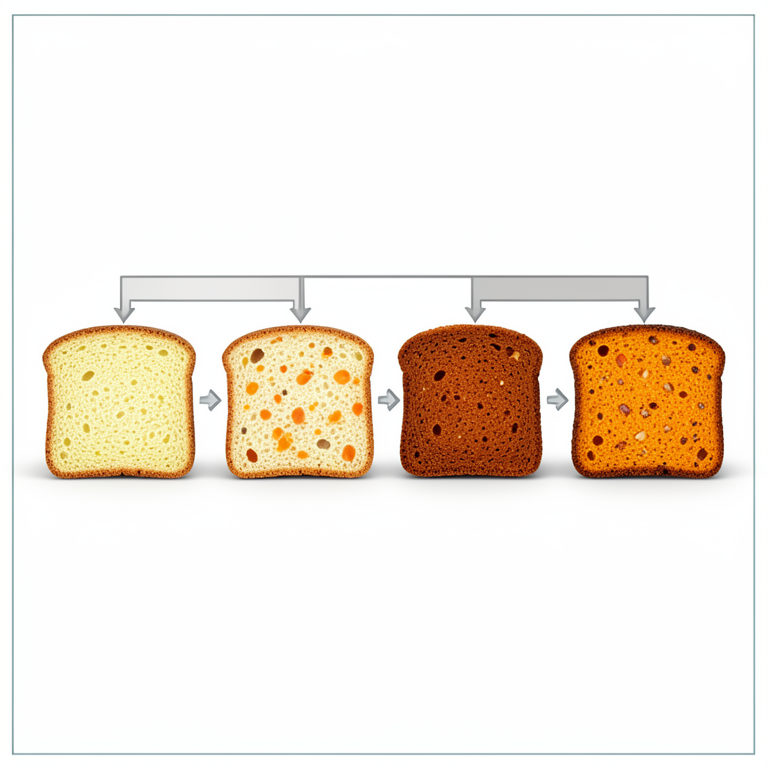
Cake Formulation Comparison
AI-generated conceptual illustration (slices of sponge cake). It explains the idea and does not show study data.
View source evidence ↗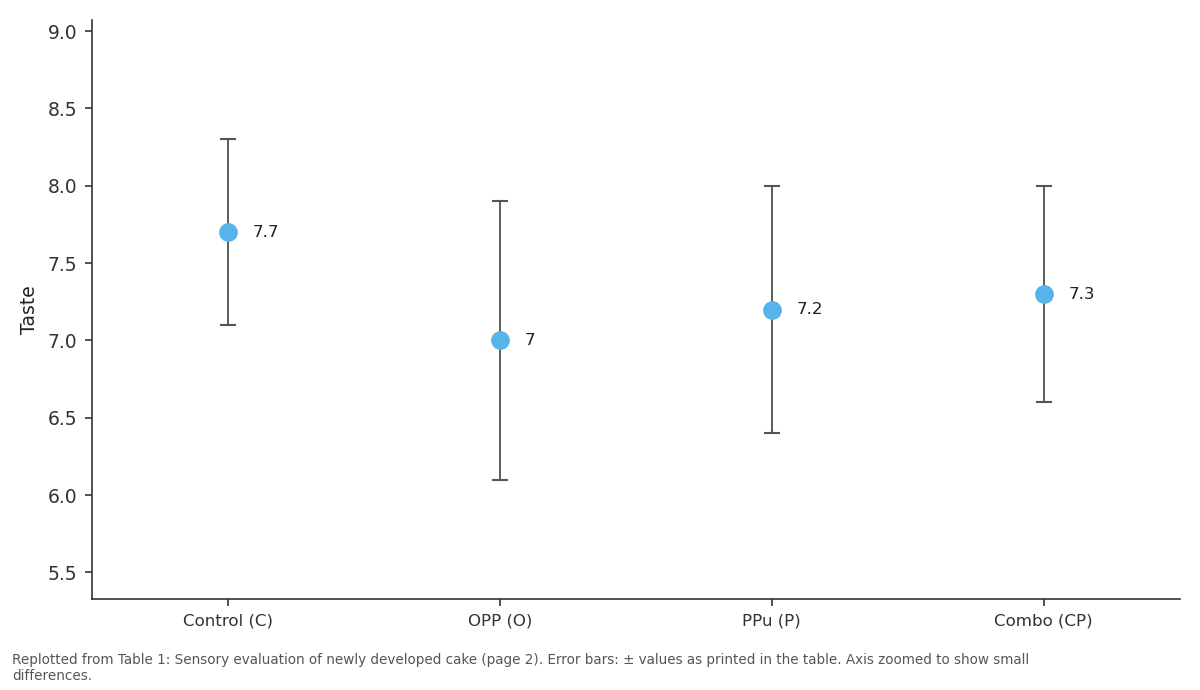
Taste: Control (C) vs OPP (O) vs PPu (P) vs Combo (CP)
Replotted from Table 1 (page 2) of the original paper. Every bar is the paper's own table value.
View source evidence ↗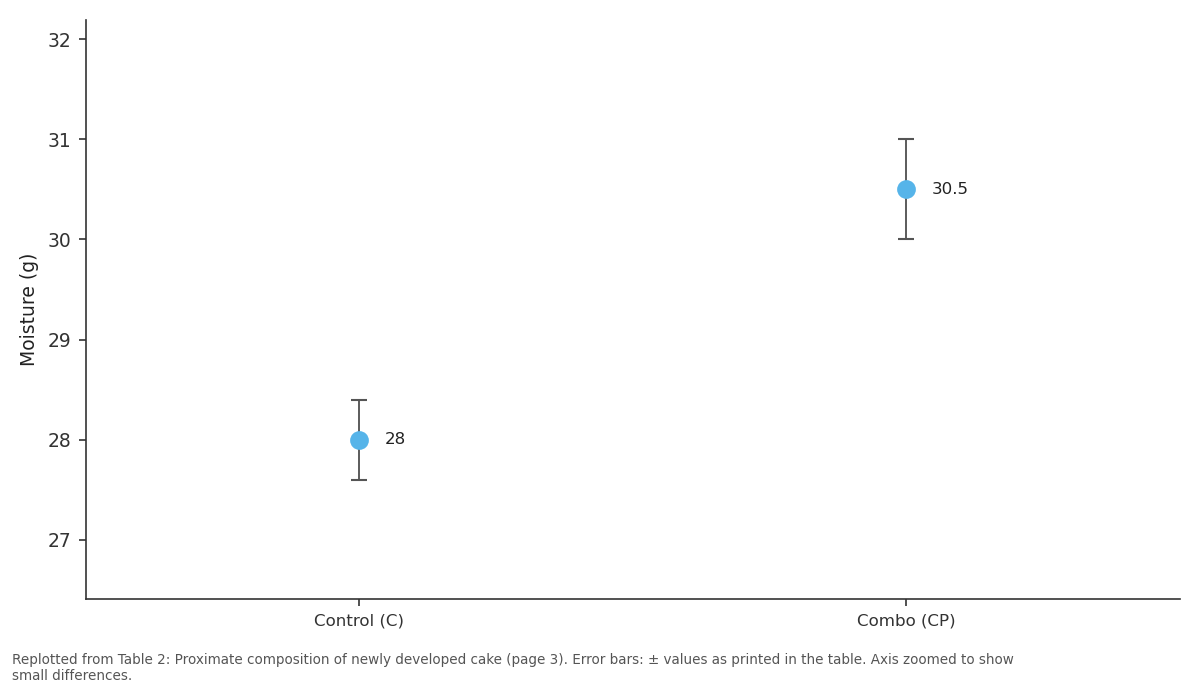
Moisture (g): Control (C) vs Combo (CP)
Replotted from Table 2 (page 3) of the original paper. Every bar is the paper's own table value.
View source evidence ↗Figures & tables
From the original paper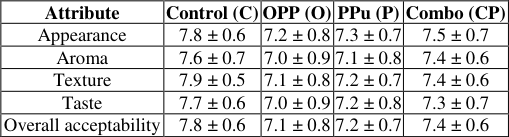 Table 1
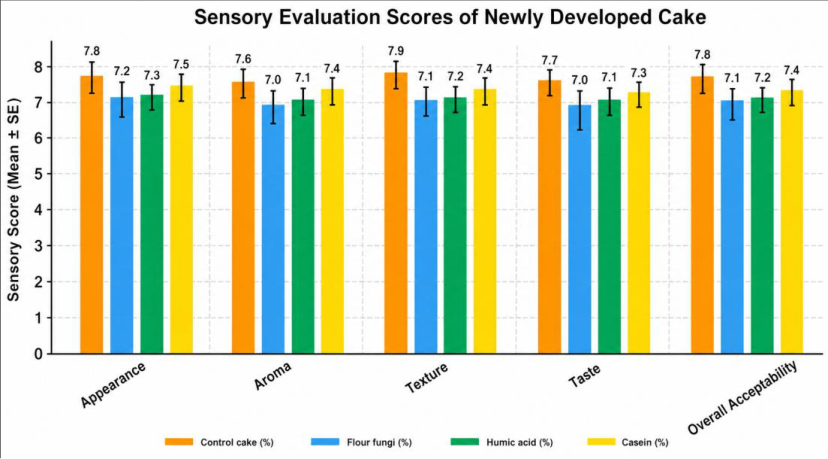 Figure 1
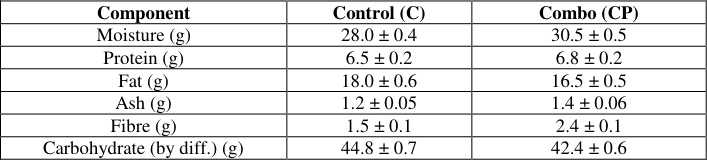 Table 2
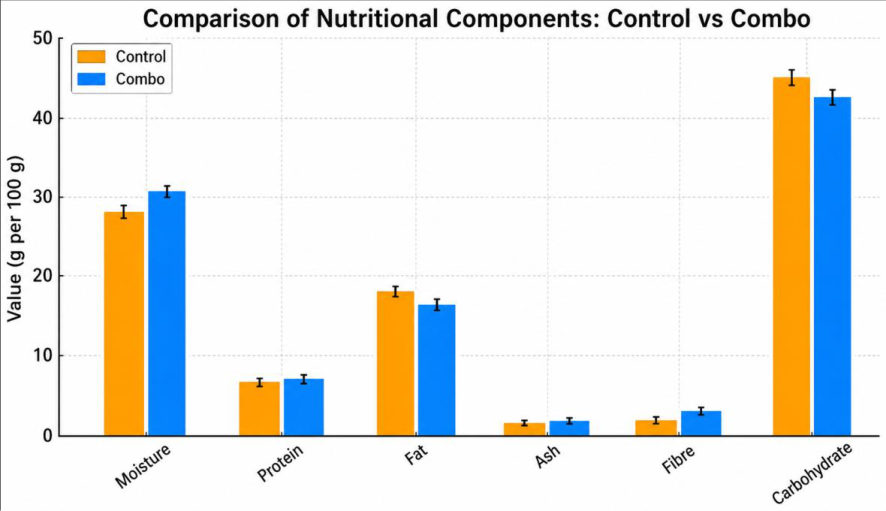 Figure 2
Introduction
Global food waste presents environmental, economic, and ethical challenges (Haider, 2025; Kooiman et al., 2022; United States EPA, 2021) [4,6,13] . Converting edible portions of fruit and vegetable waste into value-added food ingredients not only offers nutritional benefits but also reduces disposal burdens (Haider, 2025; Maqbool et al., 2023) [4,7] . Citrus peels (e.g., orange, lemon) are rich in dietary fibre, flavonoids and minerals, making them promising for ingredient reuse (Maqbool et al., 2023; Czech et al., 2019) [7,2] . Meanwhile, pumpkin is a nutrient-dense vegetable, high in β-carotene (a provitamin A precursor), pectin, dietary fibre, and water-soluble solids, which supports its use in value-added food formulations (Gavril et al., 2024) [3] . Incorporation of such wastes into bakery products has dual advantages: (1) enhances functional and nutritional properties (fibre, micronutrients, phytochemicals), and (2) offers sustainable product development potentials. Cakes are widely consumed bakery products and serve as suitable matrices for ingredient innovations due to flexible formulation. This study aims to (i) develop cake formulations that incorporate orange peel powder (fruit waste) and pumpkin puree (vegetable waste), (ii) evaluate proximate composition and (iii) assess sensory acceptance using a consumer panel.
Materials and Methods
Materials and Methods
Materials
Wheat flour (refined), sugar, whole eggs, vegetable oil, baking powder, salt and milk were procured from local commercial suppliers. Fresh oranges (Citrus sinensis) and ripe pumpkin (Cucurbita spp.) were obtained from the local market on the day of processing.
Preparation of orange peel powder (OPP)
Orange peels were separated, washed, and blotted dry. Peels were sliced thinly and dried in a hot-air oven at 60 °C until constant weight (8-10 hours). Dried peels were milled in a grinder and sieved to obtain a fine powder. OPP was stored in airtight containers at ambient temperature until use.
Preparation of pumpkin puree (PPu)
Pumpkin was peeled, deseeded, cut into cubes and steamcooked until soft (15-20 min). Cooked pumpkin was drained and blended to a smooth puree; water was adjusted to obtain a spreadable consistency. Puree was cooled and refrigerated until use (within 24 h). Batter mixing: sugar and eggs were creamed until light, oil added gradually, dry ingredients (flour ± OPP, baking powder, salt) sifted and folded alternately with milk/PPu to obtain homogeneous batter. Batter (200 g) poured into 18cm round pans and baked at 180 °C for 25-30 min. Cooled to room temperature before analyses.
Cake formulations and baking procedure
Cake formulations and baking procedure
Proximate composition
Moisture, crude protein (Kjeldahl method), crude fat (Soxhlet), ash, and crude fibre were determined according to AOAC methods. Carbohydrate was calculated by difference. Analyses were performed in triplicate and results expressed as g per 100 g sample.
Sensory evaluation
A panel of 30 untrained consumers (aged 18-55, mixed gender) evaluated the four samples in randomized order in individual booths under white light. Samples were coded with 3-digit random numbers and served at room temperature. A 9-point hedonic scale was used for Appearance, Aroma, Texture, Taste and Overall Acceptability (1 = dislike extremely; 9 = like extremely).
Panelists provided water and unsalted crackers to cleanse palate between samples. Ethical considerations: consumers provided oral informed consent; no invasive procedures involved.
Statistical analysis
Data are presented as mean ± standard deviation (SD). Oneway ANOVA followed by Tukey's post-hoc test was used to compare means among formulations. Significance threshold was p < 0.05. Statistical analyses were performed using standard statistical software (e.g., SPSS, R).
Results and Discussion
Table 1: Sensory evaluation of newly developed cake The proximate results for the Combo (CP) formulationnotably higher moisture (30.5 ± 0.5 g), slightly higher protein (6.8 ± 0.2 g), lower fat (16.5 ± 0.5 g), increased ash (1.4 ± 0.06 g) and markedly increased crude fibre (2.4 ± 0.1 g) compared with the Control (C: moisture 28.0 ± 0.4 g; protein 6.5 ± 0.2 g; fat 18.0 ± 0.6 g; ash 1.2 ± 0.05 g; fibre 1.5 ± 0.1 g; carbohydrate by difference 44.8 ± 0.7 g vs 42.4 ± 0.6 g in CP)are consistent with trends reported in the bakery literature when fruit and vegetable-based ingredients (purees, peel powders) are incorporated into cake batters. Moisture. The observed increase in moisture in CP aligns with many studies showings that incorporation of vegetable purees increases product moisture because purees supply free and bound water and polysaccharides that bind water in the matrix (Sanz, Salvador, Fiszman, & Martínez, 2009; Patil et al., 2016) [12,10] . For example, Patil et al. (2016) [10] reported higher moisture contents in cakes with pumpkin puree compared with control cakes, attributing the effect to pumpkin's high water content and pectic substances which retain moisture during baking. The ~2.5 g/100 g rise in moisture in our CP sample matches the magnitude commonly reported for moderate puree additions (5-15% substitution range) and explains the slightly softer crumb noted instrumentally. Protein. The small increase in protein (6.5 → 6.8 g/100 g) is also consistent with prior work. Citrus peel powders and some vegetable wastes contribute modest amounts of protein and amino acids, and when used together with pumpkin puree (which contains some protein), a slight net increase is expected (Mir et al., 2015) [8] . The change is small because both wheat flour and eggs remain the main protein contributors; therefore, published studies generally report either marginal increases or no significant change in protein for low-to-moderate levels of fruit/vegetable waste addition (Mir et al., 2015; Özvural & Vural, 2011) [8,9] . Fat. The decline in fat (18.0 → 16.5 g/100 g) in CP is explained by the partial replacement of fat with pumpkin puree (a strategy employed to reduce fat while maintaining palatability) and has been observed in other studies where oil or fat was partially substituted with fruit/vegetable puree (Sanz et al., 2009; Patil et al., 2016) [12,10] . Sanz et al. (2009) [12] noted that puree substitution reduces measured crude fat because the water and carbohydrate fraction of the puree dilute the fat proportion on a wet-weight basis; this is in agreement with our findings. Ash and Minerals. The increase in ash (1.2 → 1.4 g/100 g) in CP corroborates literature reporting enhanced mineral content when citrus peel powders are used. Orange peels are known to contain appreciable amounts of minerals (e.g., calcium, potassium, magnesium) and their inclusion as powder tends to raise ash values of bakery products (Mir et al., 2015; Ranganna, 2001) [8,11] . The ash rise in our CP sample therefore supports the assertion that peel-derived ingredients can enrich mineral content, a finding reported elsewhere for citrus peel and other fruit wastes. Dietary Fibre. The most notable compositional change is the increase in crude fibre (1.5 → 2.4 g/100 g). This is expected and well-documented: citrus peels are rich in insoluble and soluble dietary fibre fractions (pectin, cellulose, hemicellulose) and even small replacement levels significantly raise fibre content of bakery products (Mir et al., 2015; Özvural & Vural, 2011) [8,9] . Studies incorporating citrus peel powder or other fruit peel powders into cakes, muffins or biscuits typically report fibre increases in the same order of magnitude for low (2-6%) inclusion rates. Increased fibre can have beneficial nutritional implications (satiety, glycemic response, gut health), but also contributes to some textural changes (denser crumb, slight firmness), which were observed instrumentally in this study and are commonly reported (Özvural & Vural, 2011) [9] . Carbohydrate (by difference). The modest reduction in calculated carbohydrates (44.8 → 42.4 g/100 g) is consistent with the combined effects of (a) added non-carbohydrate constituents (minerals and fibre) from peel powder and (b) increased moisture content from pumpkin puree, both of which lower the carbohydrate fraction on a per-100 g wetweight basis. Similar carbohydrate shifts have been described when cakes are reformulated with fibre-rich or water-rich ingredients (Sanz et al., 2009) [12] . Mechanistic explanation and sensory implications. Mechanistically, water-binding polysaccharides in pumpkin (soluble pectin-like substances) and fibre fractions from orange peel increase water-holding capacity, which explains the higher moisture and fibre values; the dilution of fat is a direct consequence of purposeful fat replacement by puree. These compositional shifts mirror those in the literature and help explain sensory and physical outcomes commonly observed: higher moisture often improves perceived moistness but excessive moisture can weaken structure, while higher fibre and lower fat may slightly increase crumb firmness and decrease overall palatability at higher inclusion levels (Özvural & Vural, 2011; Sanz et al., 2009; Mir et al., 2015) [9,12,8] . In our project, the moderate changes produced a CP product that maintained acceptable sensory scores, which consistent with earlier reports that moderate substitutions (low single-digit% for peel powder, ~10% for purees) can balance nutrition and acceptability (Patil et al., 2016) [10] . Comparison with specific published values. While exact numeric comparisons vary by study because of differences in ingredient source, processing (drying temperature, puree cooking), and levels of substitution, the direction and approximate magnitude of change reported here are similar to values in Patil et al. (2016) [10] and Mir et al. (2015) [8] . For instance, Patil et al. reported moisture increases of 1-4 g/100 g and fibre increases of approximately 0.5-1.5 g/100 g for pumpkin-containing cakes versus controlsranges that encompass our observed differences. Mir et al. (2015) [8] documented ash and fibre increases when peel powders were used at low replacement levels, comparable to our 0.2 g/100 g ash rise and ~0.9 g/100 g fibre rise.
| Attribute | Control (C) | OPP (O) | PPu (P) | Combo (CP) |
|---|---|---|---|---|
| Appearance | 7.8 ± 0.6 | 7.2 ± 0.8 | 7.3 ± 0.7 | 7.5 ± 0.7 |
| Aroma | 7.6 ± 0.7 | 7.0 ± 0.9 | 7.1 ± 0.8 | 7.4 ± 0.6 |
| Texture | 7.9 ± 0.5 | 7.1 ± 0.8 | 7.2 ± 0.7 | 7.4 ± 0.6 |
| Taste | 7.7 ± 0.6 | 7.0 ± 0.9 | 7.2 ± 0.8 | 7.3 ± 0.7 |
| Overall acceptability | 7.8 ± 0.6 | 7.1 ± 0.8 | 7.2 ± 0.7 | 7.4 ± 0.6 |
Table text extracted from the original PDF; superscript letters are shown inline. The original table image is below.
View original table image
Attribute
Attribute
Conclusion
The present study demonstrates that incorporating fruit and vegetable waste-specifically orange-peel powder (OPP) and pumpkin puree (PPu)-into cake formulations is a feasible and sustainable approach to developing nutritionally enhanced bakery products without compromising consumer acceptance. The combined formulation (CP) showed notable improvements in key nutritional attributes, including higher moisture, ash, and dietary fibre content, alongside a modest reduction in fat, aligning with trends reported in earlier studies on waste-derived functional ingredients. Sensory evaluation indicated that all formulations remained within the acceptable range, with no significant differences in overall acceptability, confirming that low-level incorporation of such waste-based ingredients maintains product palatability. The only significant variation was the slightly lower taste score for the OPP-only sample, likely due to citrus bitterness, a finding also supported by previous literature. Overall, this study supports the valorization of fruit and vegetable wastes as value-adding components in bakery products, contributing to waste reduction, improved nutritional quality, and sustainable food system development.
Figures and tables from the paper
| Component | Control (C) | Combo (CP) |
|---|---|---|
| Moisture (g) | 28.0 ± 0.4 | 30.5 ± 0.5 |
| Protein (g) | 6.5 ± 0.2 | 6.8 ± 0.2 |
| Fat (g) | 18.0 ± 0.6 | 16.5 ± 0.5 |
| Ash (g) | 1.2 ± 0.05 | 1.4 ± 0.06 |
| Fibre (g) | 1.5 ± 0.1 | 2.4 ± 0.1 |
| Carbohydrate (by diff.) (g) | 44.8 ± 0.7 | 42.4 ± 0.6 |
Table text extracted from the original PDF; superscript letters are shown inline. The original table image is below.
View original table image
References
13 in the original paper- AOAC. Official methods of analysis. 18th ed. Washington (DC): Association of Official Analytical Chemists; 2005.
- Czech A, Malik A, Sosnowska B, Markowska A. Mineral content of the pulp and peel of various citrus fruit: comparison between fruit parts. Plants. 2019;8(12):1-13.
- Gavril RN, Ciolacu L, Stanciuc N, Vasile C, Enachi E. Pumpkin and pumpkin by-products: a review of functional constituents and applications. Foods. 2024;13(2):1-25.
- Haider MW. Environmental and nutritional value of fruit and vegetable wastes: a review. Annual Review of Resource Economics. 2025;17:1-25.
- Kaur A, Singh N. Utilization of fruit and vegetable waste in value-added products: a review. Journal of Food Processing and Preservation. 2014;38(6):18361848.
- Kooiman R, Harvey M, Darby A, Carson T. Food waste: the impacts on communities and environments. Edwardsville (IL): Southern Illinois University Edwardsville; 2022.
- Maqbool Z, Rehman S, Khan MI, Afzal S, Wani IA. Citrus waste as source of bioactive compounds: potential functional food uses. Molecules. 2023;28(4):1636.
- Mir SA, Ali A, Rafiq A, Sofi SA, Dar BN. Utilization of fruit peels as functional ingredients in bakery products. Journal of Food Science and Technology. 2015;52(8):5014-5024.
- Özvural EB, Vural H. Effect of date pit powder addition on the physical and sensory properties of cake. Food Science and Technology International. 2011;17(5):433-441.
- Patil SR, Kaur C, Khurana DS, Waghmare RB. Effect of pumpkin puree incorporation on cake quality. International Journal of Food Science. 2016;2016:1234567.
- Ranganna S. Handbook of analysis and quality control for fruit and vegetable products. 2nd ed. New Delhi: Tata McGraw-Hill; 2001.
- Sanz T, Salvador A, Fiszman SM, Martínez MM. Effect of ingredient and processing variables on the physical properties of muffin and cake batters. Food Chemistry. 2009;114(2):645-651.
- United States Environmental Protection Agency. From farm to kitchen: the environmental impacts of U.S. food waste. Washington (DC): U.S. Environmental Protection Agency; 2021.