
Research article · 2025 · Full text
International Journal of Agriculture and Food ScienceStandardization and storage study of Carrot (Daucus carota L.) Pickle
Volume 7(11) · Pages 415–417 · DOI: 10.33545/2664844x.2025.v7.i11f.983 ↗
Research areasPolysaccharides Composition and ApplicationsSeed and Plant BiochemistryFood composition and properties
Abstract
Author-writtenThis research focuses on the standardization, physicochemical analysis, sensory evaluation, and storage stability of carrot (Daucus carota L.) pickle. Three treatment formulations (T1, T2, and T3) with varying carrot proportions were prepared and analyzed. Among these, Treatment T3 (700g carrot + 400g ingredients) demonstrated superior sensory characteristics, particularly in terms of taste, texture, and overall acceptability. The carrot pickle exhibited moderate acidity (0.797%), low pH (4.43), and a high energy value (472.88 kcal), with favourable levels of protein, fat, and carbohydrates. During a 3-month storage period, the product retained good sensory qualities with no visible fungal growth until the end of the second month. These findings highlight the potential of carrot pickle as a nutritionally rich, shelf-stable, and commercially viable value-added product.
Summary
Source-checkedPlain-language reading of the full paper, prepared with AI and checked against the text. Each point links to the authors' own words.
Why it matters
- Carrots are significant winter vegetables valued for their nutritional content and suitability for processing. View evidence ↗
- There is an increasing consumer demand for healthy, shelf-stable food products, making vegetable pickles a point of interest. View evidence ↗
- Standardizing formulations and assessing storage stability are necessary to ensure consistent quality and consumer acceptance of carrot pickles. View evidence ↗
The question
- The study aims to standardize carrot pickle formulations, evaluate their sensory and proximate qualities, and monitor changes during storage. View evidence ↗
What they did
- Three treatment formulations were tested: T1 (500 g carrots), T2 (600 g carrots), and T3 (700 g carrots), each combined with 400 g of other ingredients. View evidence ↗
- Pickle mixtures were stored in jars under sunlight for 7 days before being kept at room temperature. View evidence ↗
- A panel of 10 semi-trained academic staff used a 9-point Hedonic scale to evaluate sensory attributes including appearance, color, flavor, aftertaste, texture, and overall acceptability. View evidence ↗
- Storage stability was studied at room temperature (27 °C to 33 °C) over a period of 0 to 3 months. View evidence ↗
What they found
- Treatment T3 was the most acceptable formulation, significantly outperforming T1 and T2 in taste, texture, and overall acceptability. View evidence ↗
- The T3 sample exhibited a pH of 4.43±0.04, acidity of 0.797±0.06%, and an energy value of 472.88 kcal. View evidence ↗
- The physical properties of the carrot pickle were characterized by an orange color, with carrot pieces measuring 3.5-4 cm in length and 0.72-0.80 cm in width. View evidence ↗
- During a 3-month storage period, the pickle maintained its color and flavor without fungal growth, although the texture progressed from firm to extremely soft. View evidence ↗
- Statistical analysis showed significant to highly significant differences (p < 0.05 to p < 0.01) among treatments for all sensory parameters, with F-values between 3.76 and 9.63. View evidence ↗
What it means
- The authors conclude that Treatment T3 is the optimal formulation due to its superior nutritional profile and sensory scores. View evidence ↗
- The study suggests that carrot pickle is a nutritious, stable product suitable for commercial application in the food industry. View evidence ↗
- The authors noted that while no fungal growth was seen for three months, fungal growth became slightly visible after that period, and the texture became extremely soft. View evidence ↗
Visual summary
2 visualsIllustrations explain the paper; charts are replotted from the paper's own table values.
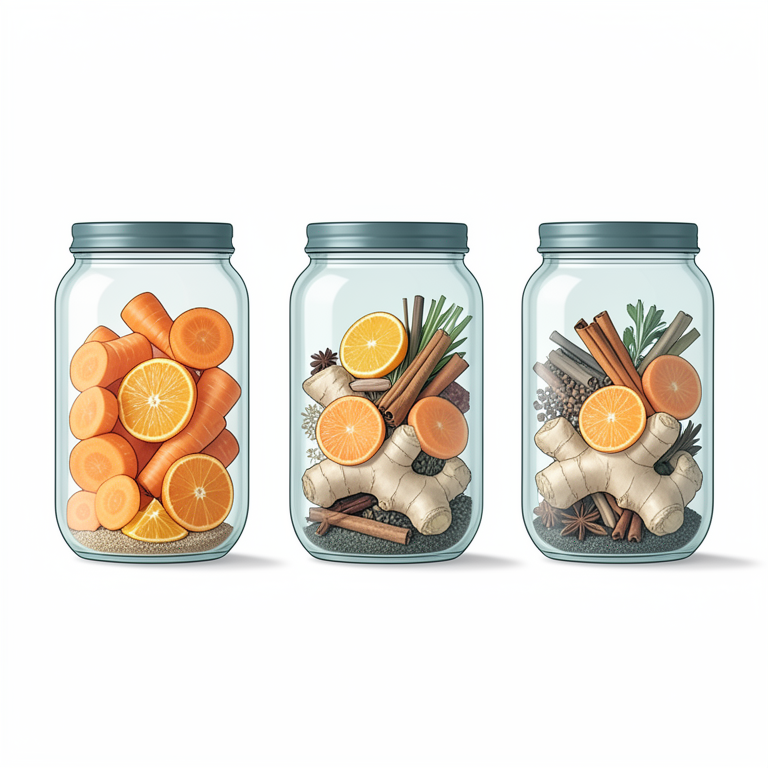
Treatment Formulations
AI-generated conceptual illustration (Carrot (Daucus carota L.) pickles in glass jars). It explains the idea and does not show study data.
View source evidence ↗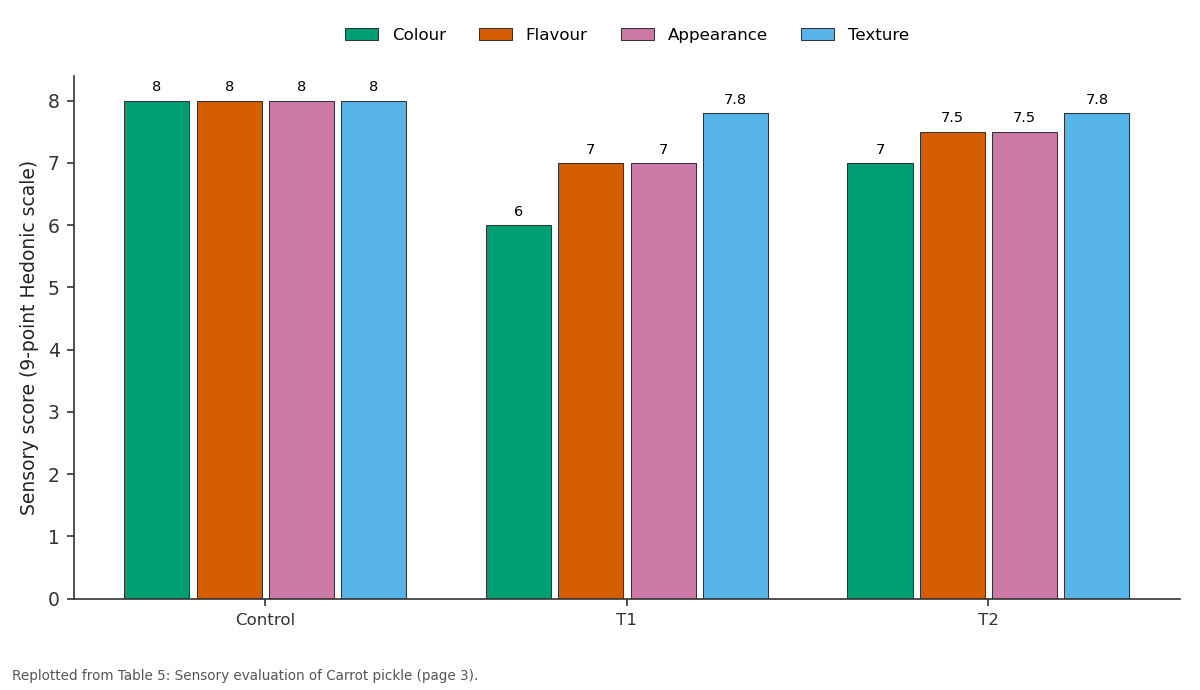
Colour and Flavour and more: Control vs T1 vs T2
Replotted from Table 5 (page 3) of the original paper. Every bar is the paper's own table value.
View source evidence ↗Figures & tables
From the original paper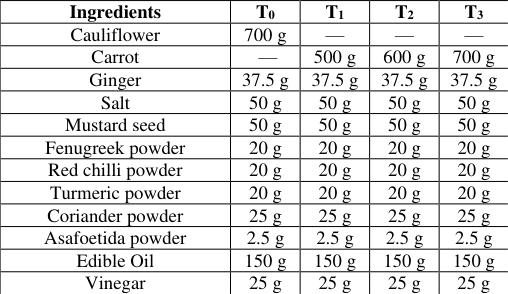 Table 1
 Table 2
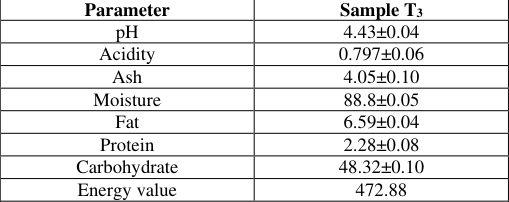 Table 3
 Table 4
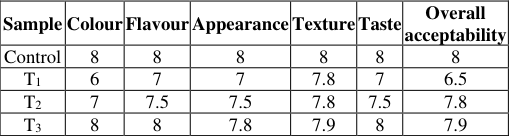 Table 5
Introduction
Carrot (Daucus carota L.) are important winter vegetables cultivated widely for their palatability, nutritional composition, and processing potential. Carrot, a cool-season root crop, is extensively grown across temperate and tropical regions, with India being a prominent producer. It is consumed in diverse forms-raw, cooked, juiced, or pickled-and is a rich source of beta-carotene, dietary fiber, potassium, and calcium. Its high vitamin A content supports vision health, while its diuretic properties contribute to urinary regulation. The crop's suitability for preservation methods, including drying, freezing, and pickling, enhances its utility in value-added food products. Given the rising consumer demand for health-oriented, shelf-stable products, vegetable pickles are gaining attention due to their extended shelf life and enhanced sensory characteristics. Carrot owing to their nutritional content and texture, serve as ideal raw materials for pickle preparation. However, to ensure consistent product quality and consumer acceptability, standardization of formulation and assessment of storage stability are essential. The present study aims to develop and standardize pickles from carrot, evaluate their proximate and sensory qualities, and assess changes during storage. The findings are expected to aid in optimizing processing techniques and promoting safe, high-quality products suitable for commercial application.
Materials and Methods
Materials and Methods
Sample Procurement
Fresh, healthy Asian varieties of carrots, along with ingredients such as ginger, spices, oil, salt, and vinegar, were sourced from the local market in Sultanpur. Analytical-grade chemicals and equipment were obtained from the Department of Horticulture, Faculty of Agriculture, KNIPSS, Faridipur, Sultanpur.
Physicochemical Analysis
Moisture content was determined using a hot air oven; titrable acidity was assessed via standard titration methods; pH was measured using a universal indicator. All analyses adhered to AOAC (2000) protocols.
Organoleptic Evaluation
Pickles were assessed for sensory attributes-appearance, colour, flavour, aftertaste, texture, and overall acceptability-by a panel of 10 semi-trained academic staff members. Evaluations employed a 9-point Hedonic scale, where 9 indicated "like extremely." Sensory scores were documented on standardized scorecards. Notably, organoleptic quality declined over storage, with acceptable quality maintained up to 3 months.
Statistical Analysis
The sensory evaluation data for different carrot pickle treatments (T 1 , T 2 , T 3 ) were analyzed using Completely Randomized Design (CRD). Analysis of variance (ANOVA) was conducted to determine the statistical significance of variation among treatments. The results revealed that the differences in colour, flavour, appearance, texture, taste, and overall acceptability were statistically significant (p < 0.05) to highly significant (p < 0.01). The F-values ranged from 3.76 to 9.63, indicating notable treatment effects on sensory parameters. The Critical Difference (CD) at 5% level confirmed that Treatment T3 significantly outperformed others, especially in taste, texture, and overall acceptability. Thus, the statistical results validate the superior formulation and acceptability of carrot pickle under treatment T 3 . Where T1 = 500 g Carrots + 400 g other ingredients, T2 = 600 g Carrots + 400 g other ingredients, T3 = 700 g Carrots + 400 g other ingredients.
Formation of Carrot pickle
Formation of Carrot pickle
Preparation process
Carrots were peeled and cut into 2-2.5 cm pieces, washed thoroughly. Ginger was also cut and made into a paste. The vegetables were then dried in a hot air oven at 100 °C for 5 minutes. Carrot (T 1 , T 2 T 3 ) treatments prepared and mixing with edible mustard oil, ginger paste, salt, spices, vinegar, and other required ingredients were added in measured quantities. The mixtures were packed into jars and kept under sunlight for 7 days, followed by storage at optimum room temperature for preservation. In concludes that colour of Carrot pickle was Orange. And length and width of Carrot was 3.5-4 cm, 0.72-0.80 cm. Which was determined using Vernier Caliper. Carrot sample was used for storage studies at room temperature (27 °C -33 °C) for 0 to 3 months. The effect of storage time (0, 1, 2, 3 month) on physical properties such as colour, flavour and texture of the pickles were studied and represented. Carrot pickle would be assessed after 3 months storage in Jars for keeping quality, taste and flavour. The pickle become extremely soft after three month and No visual Fungal Growth but after three month later growth of Fungal is slightly visualised. As evident in sensory evaluation the colour score were higher for the sample T 3 the Texture and taste score were 7.9 and 8 higher than T1 and T 2 sample. The appearance score of sample T 2 and T 3 is higher than T 1 sample. Overall Acceptability of T 3 is more acceptable than sample T 2 and T 1 sample.
Flow chart of prepare carrot pickle
Flow chart of prepare carrot pickle
Results and Discussion
Results and Discussion
Conclusion
The present study successfully standardized carrot pickle using varying proportions of carrot with ginger, spices, salt, oil, and vinegar. Among the formulations, Treatment T 3 (700 g carrot with 400 g other ingredients) was found to be the most acceptable based on its superior sensory scores and nutritional profile. It recorded the highest overall acceptability and maintained stable pH, acidity, and energy value during storage. Statistical analysis confirmed significant differences among treatments, with T 3 showing highly significant (p < 0.01) improvements in taste, texture, and overall acceptability, supported by notable F-values ranging from 3.76 to 9.63. Storage studies over 3 months demonstrated that the pickle retained acceptable quality and showed no fungal growth until the third month, suggesting good shelf stability. These results validate the potential of carrot pickle as a nutritious and stable processed product with commercial applicability in the food industry.
Figures and tables from the paper
| Ingredients | T0 | T1 | T2 | T3 |
|---|---|---|---|---|
| Cauliflower | 700 g | — | — | — |
| Carrot | — | 500 g | 600 g | 700 g |
| Ginger | 37.5 g | 37.5 g | 37.5 g | 37.5 g |
| Salt | 50 g | 50 g | 50 g | 50 g |
| Mustard seed | 50 g | 50 g | 50 g | 50 g |
| Fenugreek powder | 20 g | 20 g | 20 g | 20 g |
| Red chilli powder | 20 g | 20 g | 20 g | 20 g |
| Turmeric powder | 20 g | 20 g | 20 g | 20 g |
| Coriander powder | 25 g | 25 g | 25 g | 25 g |
| Asafoetida powder | 2.5 g | 2.5 g | 2.5 g | 2.5 g |
| Edible Oil | 150 g | 150 g | 150 g | 150 g |
| Vinegar | 25 g | 25 g | 25 g | 25 g |
Table text extracted from the original PDF; superscript letters are shown inline. The original table image is below.
View original table image
| Parameter | Carrot |
|---|---|
| Colour | Orange |
| Length | 3.5 - 4 cm |
| Width | 0.72 - 0.80 cm |
Table text extracted from the original PDF; superscript letters are shown inline. The original table image is below.
View original table image
| Parameter | Sample T3 |
|---|---|
| pH | 4.43±0.04 |
| Acidity | 0.797±0.06 |
| Ash | 4.05±0.10 |
| Moisture | 88.8±0.05 |
| Fat | 6.59±0.04 |
| Protein | 2.28±0.08 |
| Carbohydrate | 48.32±0.10 |
| Energy value | 472.88 |
Table text extracted from the original PDF; superscript letters are shown inline. The original table image is below.
View original table image
| Sample periods (month) | Sample | Colour | Flavour | Texture | Fungal Growth | Remarks |
|---|---|---|---|---|---|---|
| 0 | Carrot pickle | No change | No off flavour | Firm | No growth | Good |
| 1 | Carrot pickle | No change | No off flavour | Slightly soft | No growth | Good |
| 2 | Carrot pickle | No change | No off flavour | Soft | No growth | Good |
| 3 | Carrot pickle | No change | No off flavour | Extremely Soft | No growth | Good |
Table text extracted from the original PDF; superscript letters are shown inline. The original table image is below.
View original table image
| Sample | Colour | Flavour | Appearance | Texture | Taste | Overall acceptability |
|---|---|---|---|---|---|---|
| Control | 8 | 8 | 8 | 8 | 8 | 8 |
| T1 | 6 | 7 | 7 | 7.8 | 7 | 6.5 |
| T2 | 7 | 7.5 | 7.5 | 7.8 | 7.5 | 7.8 |
| T3 | 8 | 8 | 7.8 | 7.9 | 8 | 7.9 |
Table text extracted from the original PDF; superscript letters are shown inline. The original table image is below.
View original table image
References
17 in the original paper- Kokani RC, Mohape MN. Standardization and storage study of carrot (Daucus carota) pickle. Int J Food Sci Nutr. 2021;6(2):103-106.
- Rymbai IMR, Chaurasiya AK. Quality assessment of mixed pickle (carrot, pea and ginger) fermented by lactic acid bacteria. Asian J Agric Hortic Res. 2022;9(4):129-135.
- Raja J, Dar SH, Masoodi FA. Assessment and standardization of microwave and sodium benzoate treatments for controlling fermentation of cauliflower pickle. Int J Fermented Foods. 2020;9(2):43-50.
- Kumar R. Study on process standardization and storage behaviour of pickle prepared from aonla (Emblica officinalis Gaertn.) cultivars. Hortic Int J. 2021;5(3).
- Srivastava RP, Kumar S. Fruit and Vegetable Preservation. 3rd ed. New Delhi: CBS Publishers and Distributors Pvt Ltd; 2002. p. 235-252.
- Singh B, Kulshrestha K. Studies on the nutritional and organoleptic characteristics of carrot pickle during storage. J Food Sci Technol. 2005;42(3):279-281.
- Singh B, Kulshrestha K. Effect of storage on β-carotene content and microbial quality of dehydrated carrot products. J Food Sci Technol. 2013;50(4):705-709.
- Haokip H, Abonmai T, Singh A. Changes in physicochemical properties of mango pickle during storage. Int J Plant Soil Sci. 2022;34(23):884-890.
- Kokani RC, Dhakane SM, Solaskar AB. Studies on formulation and standardization of date pickle. Int J Food Sci Nutr. 2019;4(5):172-174.
- Sharma S, Gupta N. Effect of storage on quality characteristics of carrot-based pickle. J Pharmacogn Phytochem. 2018;7(6):2052-2056.
- Chauhan A, Singh R. Development and quality evaluation of value-added products from carrots. Int J Chem Stud. 2020;8(2):1239-1243.
- Kumari S, Singh P, Verma R. Standardization and sensory evaluation of mixed vegetable pickle. Int J Curr Microbiol Appl Sci. 2021;10(4):95-102.
- Mandal S, Chaurasiya AK. Effect of salt concentration on fermentation and storage stability of carrot pickle. Asian J Dairy Food Res. 2019;38(3):229-234.
- Pathak Y, Srivastava S. Physico-chemical and sensory evaluation of carrot products: a review. Int J Food Sci Nutr. 2020;5(2):45-52.
- Rathore S, Kaushik R. Nutritional and functional aspects of carrot and its processed products. J Pharmacogn Phytochem. 2021;10(1):255-260.
- Sahu P, Mishra A. Changes in biochemical and sensory parameters of vegetable pickles during storage. J Food Sci Technol. 2022;59(8):3102-3108.
- Verma D, Singh A. Role of traditional pickling in vegetable preservation and nutritional enhancement. Int J Agric Sci. 2023;15(1):11-18.