
Research article · 2025 · Full text
International Journal of Agriculture and NutritionA systematic review of nutritional enhancement through agricultural by-products utilization
Volume 7(10) · Pages 96–101 · DOI: 10.33545/26646064.2025.v7.i10b.307 ↗
Research areasFood composition and propertiesFood Waste Reduction and SustainabilitySeed and Plant Biochemistry
Abstract
Author-writtenThe growing global population and increasing demand for food underscore the need for innovative approaches to enhance nutritional quality while minimizing waste. The study explores the potential of agricultural by-products as a resource for improving nutrition in food systems. By analyzing evidence from various studies, the study examines how by-products from different agricultural sectors, such as weeds, fruits, vegetables, grains, and livestock, can be repurposed to boost food products with vital nutrients, bioactive compounds, and dietary fiber. Furthermore, the review emphasizes the nutritional profiles of key by-products, their processing methods, and how agricultural by-products are integrated into food matrices. The results indicate significant opportunities to improve food security and nutrition through the strategic use of agricultural by-products. This review aims to guide policymakers, researchers, and industry stakeholders on the benefits and challenges of this innovative approach of effective utilization of agricultural by-products to enhance nutrition and also minimize waste
Summary
Source-checkedPlain-language reading of the full paper, prepared with AI and checked against the text. Each point links to the authors' own words.
Why it matters
- Global food waste is a significant issue, with approximately 1.3 billion metric tons generated annually, utilizing nearly 28% of available agricultural land. View evidence ↗
- The high volume of agricultural waste threatens the environment through soil degradation and the pollution of air and water. View evidence ↗
- Food security is a critical global challenge, especially with the world population projected to reach about 10 billion by 2050. View evidence ↗
The question
- The study aims to synthesize existing literature on how agricultural by-products can be repurposed to enhance the nutritional quality of food. View evidence ↗
What they found
- Certain edible weeds, specifically nettles and dandelion greens, provide high levels of iron, calcium, and vitamins A, C, and K. View evidence ↗
- Incorporating potato peel powder into bread increases the product's antioxidant activity and fiber content. View evidence ↗
- Rice bran is a nutrient-dense by-product containing antioxidants, vitamins B and E, and unsaturated fats. View evidence ↗
- Drying and powdering are used to preserve by-products like fruit skins and vegetable leaves, allowing them to be used as seasonings or flours. View evidence ↗
- Fermentation can convert whey, spent grains, and fruit peels into probiotic foods, bioethanol, or vinegar. View evidence ↗
- A significant challenge to the use of by-products is market acceptance, as consumers may view these products as inferior to conventional foods. View evidence ↗
- Economic viability is hindered by the high initial cost of processing facilities for small enterprises and farmers. View evidence ↗
What it means
- The authors recommend that governments support the circular economy by investing in R&D to optimize the nutritional benefits of agricultural by-products. View evidence ↗
- The authors suggest a collaborative approach involving policymakers, nutritionists, manufacturers, and farmers to integrate by-products into food systems. View evidence ↗
Visual summary
2 visualsIllustrations explain the paper; charts are replotted from the paper's own table values.
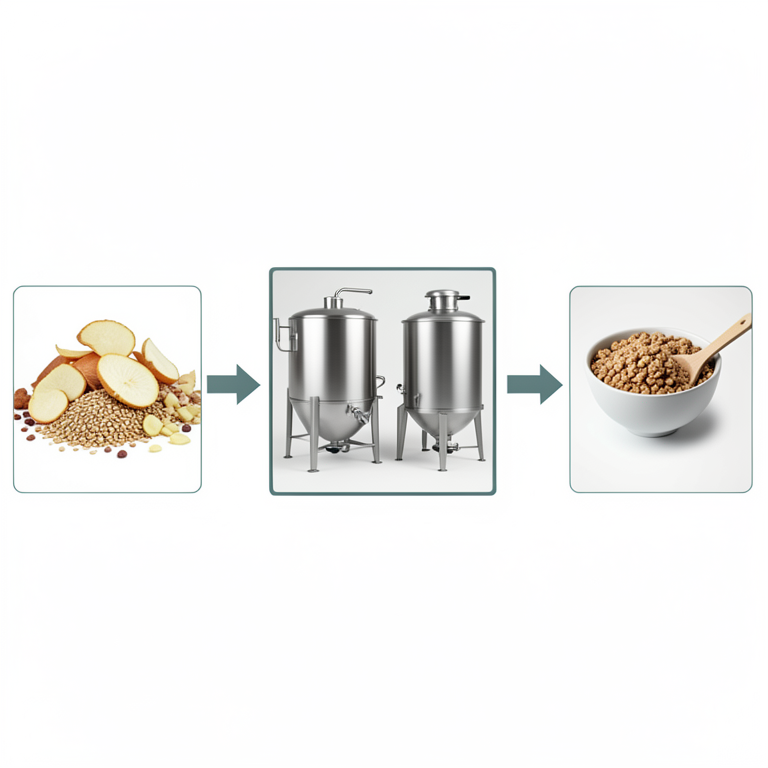
Agricultural By-product Cycle
AI-generated conceptual illustration (Agricultural by-products including fruit peels, grain husks, and vegetable scraps). It explains the idea and does not show study data.
View source evidence ↗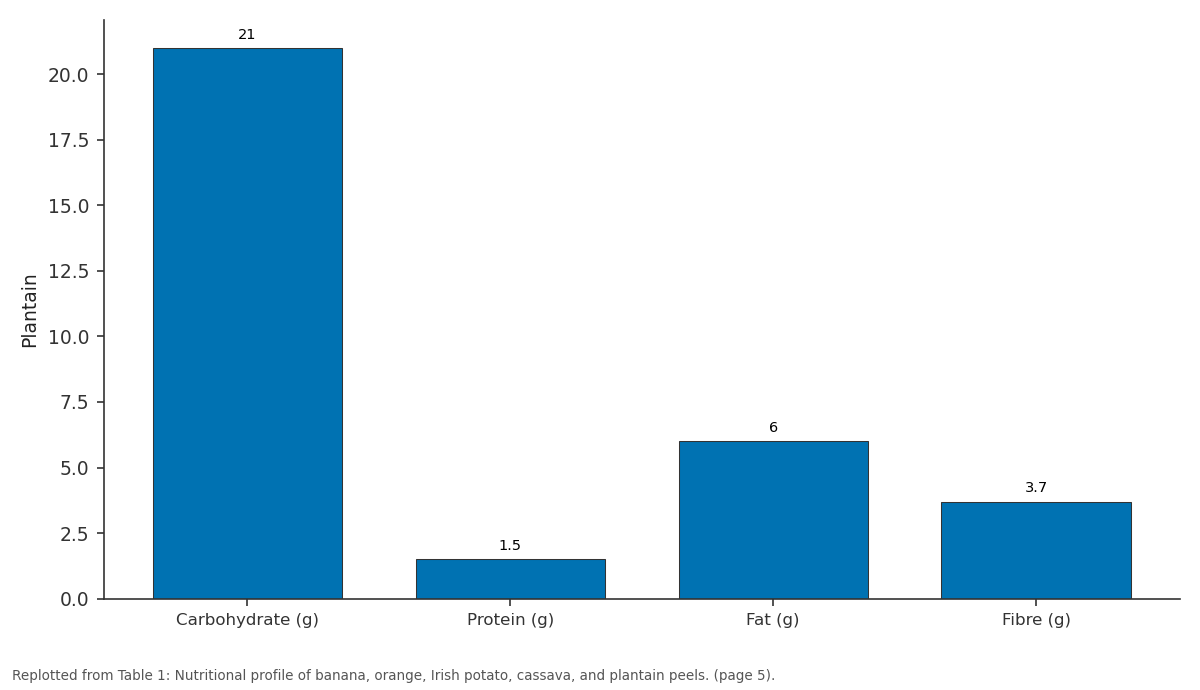
Plantain: Carbohydrate (g) vs Protein (g) vs Fat (g) vs Fibre (g)
Replotted from Table 1 (page 5) of the original paper. Every bar is the paper's own table value.
View source evidence ↗Figures & tables
From the original paper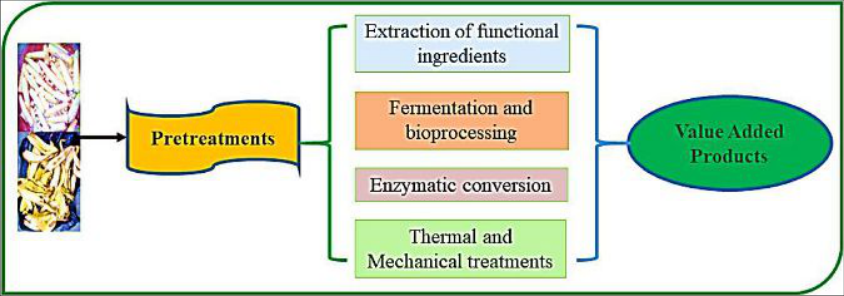 Figure 1
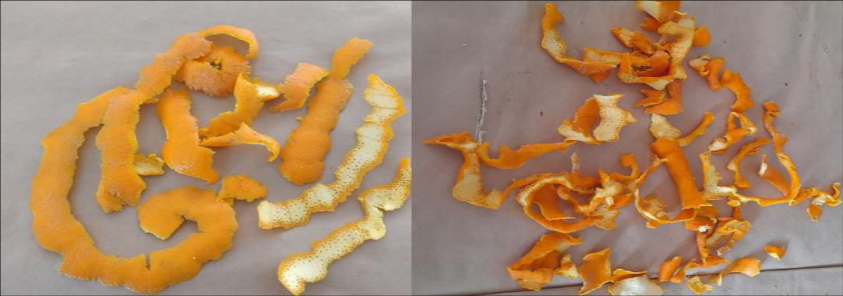 Figure 2
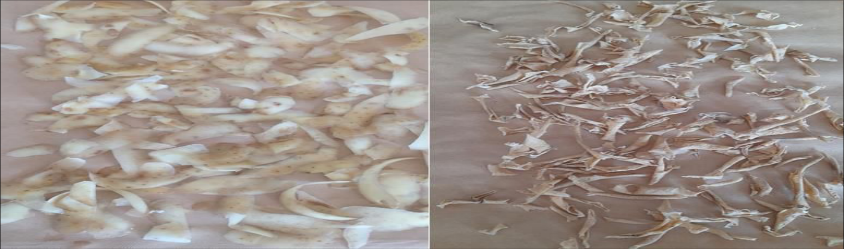 Figure 3
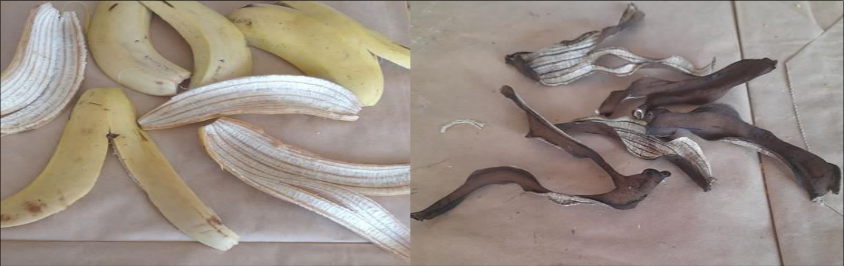 Figure 4
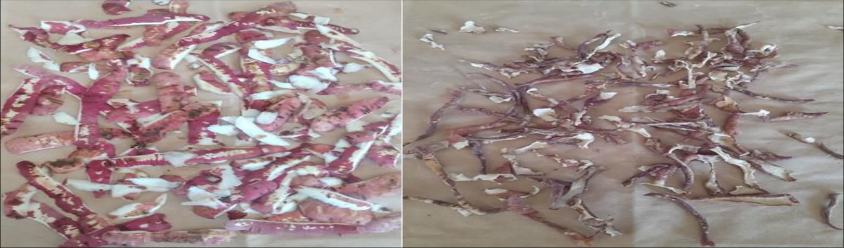 Figure 5
 Table 1
Introduction
Agricultural activities produce a significant number of by-products that were previously considered waste. Every year, approximately 1.3 billion metric tons of food waste are generated globally, accounting for nearly 28 % of all agricultural land available for cultivation. The production and waste of food by-products pose a serious concern. In addition to being a reflection of inefficiencies in food systems, this astounding amount of waste poses a severe threat to the environment, posing a risk to water pollution, air pollution, and soil degradation (Areti et al., 2024) [1] . Thus, food security remains one of the most significant global challenges, particularly as the world's population is expected to reach approximately 10 billion by 2050 (United Nations, 2019) [25] . This demographic shift exacerbates the demand for food, necessitating innovative approaches to enhance the nutritional quality of food systems while simultaneously addressing the issue of agricultural waste. Agricultural by-products, which are often viewed as waste, are produced in substantial quantities across various sectors, including crop cultivation and livestock production. Despite their potential, these by-products are frequently underutilized and overlooked in discussions about nutritional enhancement (Kumar et al., 2021) [11] . Research has shown that agricultural by-products, such as fruit peels, vegetable scraps, and crop residues, are rich sources of essential nutrients, bioactive compounds, and dietary fiber (Bhat et al., 2020) [3] . For example, citrus peels are recognized for their high content of flavonoids and dietary fiber, which can significantly contribute to improved health outcomes when incorporated into food products (Khan et al., 2022) [9] . In addition, spent grains from brewing processes have been demonstrated to enhance the protein and fiber content of baked goods, offering a practical application for these by-products (Zhao et al., 2021) [28] . The strategic repurposing of agricultural waste not only mitigates environmental concerns but also provides substantial opportunities to improve the nutritional profiles of various food products. This systematic review aims to conceptualize nutritional enhancement and agricultural byproducts, compile and synthesize existing literature on the repurposing of agricultural byproducts for nutritional enhancement. By examining studies across diverse agricultural sectors, including weeds, fruits, vegetables, grains, and livestock, this review highlights successful case studies and processing methods employed to integrate these by-products into food matrices. Furthermore, it addresses the challenges faced in effectively utilizing these resources. The insights gained from this review will be valuable for policymakers, researchers, and industry stakeholders, emphasizing the dual benefits of enhancing nutrition and minimizing waste through the innovative use of agricultural by-products. As the global community confronts the challenges of food security and sustainability, harnessing these underutilized resources offers a promising pathway toward developing healthier food systems while promoting environmental responsibility (Thompson et al., 2023) [23] .
Conceptual clarifications Nutritional enhancement
Nutritional enhancement refers to the process of improving the nutritional quality of food products through various means, such as fortification, biofortification, and the incorporation of underutilized ingredients. This concept is increasingly important in addressing global health challenges, including malnutrition, obesity, and diet-related chronic diseases (Areti et al., 2024) [1] . The authors further explain that fortification involves adding essential vitamins and minerals to food products to prevent deficiencies in specific populations. For instance, the addition of iodine to salt has significantly reduced the incidence of goitre in many regions. In a similar development, the fortification of flour with folic acid has been widely implemented to reduce neural tube defects (Cawley et al., 2018) [4] . Biofortification, on the other hand, focuses on enhancing the nutritional content of crops through agricultural practices or biotechnology. This method aims to increase the levels of micronutrients in staple foods that are commonly consumed by populations at risk of deficiency. For instance, biofortified varieties of sweet potatoes have been developed to contain higher levels of vitamin A, which can help combat vitamin A deficiency in regions where these crops are a dietary staple (Hawkes, 2015) [7] . Another approach to nutritional enhancement involves utilizing underutilized agricultural by-products and ingredients that are rich in nutrients but often discarded. Research by Areti et al. (2024) [1] highlights the potential of fruit and vegetable peels, including weeds, which are often high in dietary fiber and antioxidants. Incorporating these by-products into food products can enhance their nutritional profiles while also reducing waste. For example, citrus peels are known for their high flavonoid content, which has been associated with various health benefits, including anti-inflammatory and antioxidant properties (Khan et al., 2022) [9] . By integrating such ingredients into food formulations, manufacturers can create products that not only taste good but also contribute positively to health.
Agricultural by-products
Agricultural by-products are materials generated during the production, processing, and consumption of agricultural products that are not the primary product. These by-products often include residues from crops, such as stems, leaves, and peels, as well as waste from livestock farming, such as manure and feathers. While these materials are frequently considered waste, they hold significant potential for various applications, including animal feed, bioenergy production, and food ingredient enhancement (Kumar et al., 2017; Pame, 2023) [9,18] . Agricultural by-products can be broadly classified into two categories: primary by-products, which are directly related to the main agricultural product, and secondary by-products, which arise from processing activities. For instance, wheat straw is a primary by-product of wheat production, while bran is a secondary by-product resulting from milling (Kumar et al., 2021) [10] . Studies have shown that many agricultural by-products are rich in nutrients and can be repurposed for animal feed or human consumption. For example, fruit and vegetable peels are often discarded despite their high fiber and antioxidant content. A study by Bhat et al. (2020) [3] highlights the nutritional potential of these peels, suggesting that they can be incorporated into food products to enhance their health benefits. Moreover, agricultural by-products can serve as valuable sources of dietary fiber. According to a review by Kaur (2021) [8] , incorporating fibers from by-products such as rice bran and corn husks into food formulations can improve their nutritional profile while also promoting sustainability by reducing waste. Utilizing agricultural byproducts can significantly reduce environmental impacts associated with waste disposal and promote sustainable agricultural practices. The conversion of by-products into bioenergy is one promising avenue. For instance, anaerobic digestion of livestock manure can produce biogas, which serves as a renewable energy source (Zhao et al., 2019) [29] . This process not only helps manage waste but also reduces greenhouse gas emissions. Additionally, the use of agricultural by-products in composting can enhance soil fertility and structure. Research by Dixion et al (2019) [5] demonstrates that composting crop residues, including weeds, improves nutrient availability in soil, thereby supporting sustainable farming practices
Repurposing agricultural by-products to enhance the nutritional quality of food products
Agricultural by-products, often dismissed as waste, can be valuable sources of essential nutrients, bioactive compounds, and dietary fiber. By repurposing materials from various sectors, such as weeds, fruits, vegetables, grains, and livestock, we can enhance the nutritional quality of food products while promoting sustainability. This review compiles evidence from different studies showing how these by-products can be effectively utilized.
Weeds as Nutritional Resources
Weeds are commonly viewed as agricultural nuisances; however, many possess significant nutritional value. For instance, dandelion greens and nettles are rich in vitamins A, C, K, and minerals such as calcium and iron. A study by Dixon et al. (2019) [5] found that incorporating edible weeds into salads and smoothies can significantly increase the intake of essential nutrients. Additionally, Mabhaudhi et al. (2019) [12] highlighted that certain weeds contain high levels of antioxidants and polyphenols, which contribute to health benefits such as anti-inflammatory effects.
Fruit by-products
Fruit processing generates substantial by-products, including peels, seeds, and pulp. These by-products are often rich in dietary fiber and bioactive compounds. For example, apple peels have been shown to contain high levels of dietary fiber and antioxidants. According to Bhat et al. (2020) [3] , incorporating apple peels into baked goods can enhance their fiber content and antioxidant properties, leading to improved health benefits for consumers. Similarly, the seeds of fruits such as grapes and pomegranates are rich in polyphenols and flavonoids. Ranjan et al. (2020) [18] demonstrated that grape seed extract could be used as a natural preservative in food products while also boosting their antioxidant capacity.
Vegetable by-products
Utilization of vegetable residues is a key area of interest in the food industry, aiming to reduce waste and create valueadded products as well as utilize vegetable by-products as functional ingredients in the food sector (Ravindran & Jaiswal, 2016) [19] . Vegetable by-products, including stems, leaves, and peels, are often discarded but can be repurposed for their nutritional benefits. Carrot tops, for example, are rich in vitamins A and K and can be used in pesto or salads. A study by Kumar et al. (2021) [11] indicated that incorporating vegetable tops into soups and sauces not only reduces waste but also enhances the nutritional profile of these dishes. Another notable example is the utilization of potato peels, which are high in dietary fiber and phenolic compounds. Research by Babu et al. (2020) [2] showed that adding potato peel powder to bread increases its fiber content and antioxidant activity, making it a healthier option for consumers.
Grain by-products
By-products from grain processing, such as bran and germ, are excellent sources of dietary fiber and essential nutrients. For instance, wheat bran is rich in insoluble fiber, which aids digestion and helps prevent chronic diseases. A review by Slavin (2013) [21] emphasized the health benefits of whole grains and their by-products, noting that incorporating wheat bran into baked goods can improve their overall nutritional value. Similarly, rice bran, a byproduct of rice milling, is high in unsaturated fats, vitamins B and E, and antioxidants. According to Martínez et al. (2020) [13] , rice bran can be incorporated into snacks and cereals to enhance their nutrient density while providing health benefits such as cholesterol reduction.
Livestock by-products
Livestock farming generates various by-products that can be repurposed for human consumption or animal feed. For instance, animal bones can be used to produce bone broth, which is rich in collagen and minerals. A study by Zhao et al. (2019) [29] discussed how bone broth has gained popularity for its health benefits, including joint support and gut health improvement
Processing strategies for integrating agricultural by-products into food matrices
Source: Areti et al. (2024) [1] Fig 1 : The cutting-edge strategies for utilizing by-products to extract bioactive compounds from agricultural and food industry waste materials.
Fermentation
Fermentation is a biological process that utilizes microorganisms to convert organic compounds, such as sugars, into alcohol or acids. Agricultural by-products like fruit peels, spent grains, and whey can be fermented to produce value-added products like vinegar, bioethanol, or probiotic-rich foods. (Pandey et al, 2015) [16] .
Extrusion
Extrusion is a high-temperature and high-shear processing technique that transforms raw materials into a continuous product. Agricultural by-products such as corn bran or rice husks can be extruded to create snacks or fortified food products, enhancing their nutritional profile while minimizing waste (Oduro et al., 2016) [14] .
Enzymatic Treatment
Enzymatic treatment involves using specific enzymes to modify the properties of agricultural by-products. For instance, pectinase can be used to extract juice from fruit pomace, and proteases can help in tenderizing meat by utilizing by-products such as soybean meal or fish waste (Tiwari and Mullen, 2017) [24] .
Drying and Powdering
Drying is a common method for preserving agricultural byproducts and making them easier to incorporate into food products. By-products like vegetable leaves or fruit skins can be dried and powdered to create flour or seasoning blends that enhance the nutritional value of processed foods (Teboho and Oluwabiyi, 2022) [22] .
Source: Teboho and Oluwabiyi, (2022) [22] Fig 2 : Sweet orange peels before and after drying Source: Teboho and Oluwabiyi, (2022) [22] Fig 3 : rish potato peels before and after drying Source: Teboho and Oluwabiyi, (2022) [22] Fig 4 : Banana peels before and after drying Source: Teboho and Oluwabiyi, (2022) [22] Fig 5 : Sweet potato peels before and after drying Additionally, agricultural residues play a vital role in the food industry by serving as valuable sources of nutrients and beneficial ingredients that promote health. (15) Challenges of these innovative approaches to the effective utilization of agricultural by-products 1. Technological barriers: Technological challenges include the development of efficient extraction methods to recover bioactive compounds from by-products and the optimization of processing techniques to maintain product quality (Areti et al., 2024) [1] . Thus, one of the primary challenges in the innovative utilization of agricultural by-products is the lack of appropriate technologies for processing and converting these materials into usable forms. As highlighted by Areti et al. (2024) [1] , many smallholder farmers lack access to advanced processing technologies that could enhance the nutritional value of agricultural by-products. This technological gap limits the ability to transform waste into valuable products.
Economic viability:
The economic aspect of utilizing agricultural by-products poses another challenge. The initial investment required for processing facilities can be very expensive for many farmers and small enterprises. According to a study by Weber et al. (2020) [27] while there is potential for profitability in the long term, the upfront costs and risks associated with developing new products from by-products can deter investment. The authors in their study examines the practical and financial feasibility of repurposing sweet potato waste to create bioethanol and distilled beverages. This research not only aims to minimize food waste but also aims to advance the principles of a circular economy. This study underscores the importance of exploring innovative ways to utilize agricultural by-products efficiently.
Market Acceptance: Consumer acceptance of products
derived from agricultural by-products is crucial for their success in the market. Research by Areti et al. (2024) [1] indicates that consumers often perceive these products as inferior or less desirable compared to conventional food items. Overcoming this stigma requires effective marketing strategies and education about the nutritional benefits of these by-products.
Regulatory frameworks:
The regulatory environment surrounding food safety and product labelling can also hinder innovation in this area. As noted by Tiwari et al.
(2020) [24] , stringent regulations may restrict the use of certain agricultural by-products in food products, even if they are safe and nutritious. Navigating these regulations can be complex, particularly for small-scale producers.
Conclusion and recommendations
In conclusion, the pressing challenges posed by the expanding global population and the rising demand for food necessitate creative solutions to enhance nutritional quality while reducing waste. This study has investigated the potential of utilizing agricultural by-products as valuable resources for improving nutrition within food systems. Through a comprehensive analysis of existing research, it has been demonstrated that by-products from various agricultural sector including weeds, fruits, vegetables, grains, and livestock can be effectively repurposed to enrich food products with essential nutrients, bioactive compounds, and dietary fiber. The findings highlight the promising opportunities for enhancing food security and nutritional outcomes through the strategic incorporation of agricultural byproducts. By examining the nutritional characteristics of key by-products and their processing techniques, this review provides insights into how these resources can be integrated into food matrices. Finally, this study serves as a guide for policymakers, researchers, and industry stakeholders, outlining both the advantages and challenges associated with the innovative utilization of agricultural by-products. By embracing this approach, we can not only improve nutritional quality but also contribute to waste reduction in our food systems, paving the way for a more sustainable future. Based on these findings, the study recommended the following; Engaging local communities in the development and utilization of agricultural by-products can foster acceptance, thereby reducing waste Government at all levels should support the circular economy and encourage investment in research and development initiatives focused on identifying and optimizing the nutritional benefits of various agricultural by-products. There should be a collaboration between farmers, food manufacturers, nutritionists, and policymakers to create a streamlined approach for integrating agricultural byproducts into food systems. These partnerships can facilitate knowledge sharing, improve supply chain logistics, and promote best practices for sustainable utilization, ultimately leading to increased acceptance and implementation of by-product use in food production and environmental waste management.
Figures and tables from the paper
| Peel type | Calories per 100g | Carbohydrate (g) | Protein (g) | Fat (g) | Fibre (g) | Key nutrients Mg | Source of information |
|---|---|---|---|---|---|---|---|
| Banana | 89 | 23 | 1.1 | 0.3 | 2.6 | Potassium 358 & magnesium 37 | Shuka and Gupta, (2015) (20) |
| Orange | 97 | 24 | 0.9 | 0.2 | 10.6 | Vitamin C 136 | Wang, et al (2017) (26) |
| Irish Potato | 77 | 12 | 2 | 0.1 | 2.2 | Potassium 425 | Ghosh and Ghosh (2018) (6) |
| Plantain | 82 | 21 | 1.5 | 0,6 | 3.7 | Potassium 450 | Osei et al (2020) (15) |
Table text extracted from the original PDF; superscript letters are shown inline. The original table image is below.
View original table image
References
29 in the original paper- Areti HA, Muleta MD, Abo LD, Hamda AS, Adugna AA, Edae IT, Daba BJ, Gudeta RL. Innovative uses of agricultural by-products in the food and beverage sector: A review. Food Chemistry Advances. 2024;5:113. https://doi.org/10.1016/j.focha.2024.100838
- Babu P, Sreeramulu J, Reddy K. Nutritional enhancement of bread using potato peel powder: A functional approach. Journal of Food Science and Technology. 2020;57(5):2048-2056.
- Bhat R, Kumar P, Sharma A. Nutritional potential of agricultural by-products: A review. Journal of Food Science and Technology. 2020;57(4):1234-1245.
- Cawley J, Meyerhoefer C. The medical care costs of obesity: An instrumental variables approach. Journal of Health Economics. 2018;27(5):1286-1300.
- Dixon M, O'Connell M, Rojas R. The nutritional value of edible weeds: A review of their potential uses in food systems. Food Research International. 2019;116:10051014.
- Ghosh S, Ghosh A. Potato peel: A potential source of bioactive compounds. Journal of Food Science and Technology. 2018;55(10):3901-3910.
- Hawkes C, et al. The role of food systems in health: A review of the evidence. Global Health Action. 2015;8(1):1-12.
- Kaur S, et al. Nutritional properties and health benefits of dietary fibers from agricultural by-products: A review. Critical Reviews in Food Science and Nutrition. 2021;61(18):3061-3083.
- Khan MI, Ali S, Usman M. Valorization of citrus peels for health benefits: A review. Food Chemistry. 2022;367:130724.
- Kumar P, Singh S, Gupta R. Agricultural waste management and its role in sustainable development: A review. Waste Management. 2017;120:1-12.
- Kumar V, Singh R, Kumar S. Nutritional properties of vegetable by-products: A review on their utilization in food formulations. Critical Reviews in Food Science and Nutrition. 2021;61(12):2051-2067.
- Mabhaudhi T, Chibarabada TP, Modi AT. Edible weeds: An underutilized resource for food security and nutrition. Sustainability. 2019;11(6):1613.
- Martínez J, Ceballos A, García C. Health benefits of rice bran oil: A review on its composition and properties. Food Chemistry. 2020;310:125883.
- Oduro I, Ellis WO, Afuape SO. Utilization of agricultural by-products in food processing. Food Science and Nutrition. 2016;4(2):151-163.
- Osei D, Osei A, Afoakwah C. Nutritional composition and health benefits of plantain peel. International Journal of Food Science and Technology. 2020;55(3):1234-1241.
- Pandey A, Negi S, Soccol CR. Fermentation of agricultural waste: A review. Bioresource Technology. 2015;188:1-10.
- Pame K, Laskar SK, Borah S. Utilization of processed animal byproducts as a raw material to develop shelfstable and cost effective pet food. Int J Vet Sci Anim Husbandry. 2023;8(3):31-34. DOI:10.22271/veterinary.2023.v8.i3a.516.
- Ranjan R, Kaur S, Rani P. Valorization of fruit seeds: Nutritional and functional aspects for food applications. Journal of Food Science. 2020;85(2):456-467.
- Ravindran R, Jaiswal AK. Exploitation of food industry waste for high-value products. Trends in Biotechnology. 2016;34(1):58-69. https://doi.org/10.1016/j.tibtech.2015.10.008
- Shukla S, Gupta A. Nutritional and medicinal properties of banana peel. Journal of Food Science and Technology. 2015;52(10):6887-6895.
- Slavin JL. Whole grains and health: A review of the evidence. American Journal of Clinical Nutrition. 2013;98(2):443S-449S.
- Teboho J, Oluwabiyi O. Proximate composition and mineral profile of some agro-allied by-products wastes in the Kingdom of Lesotho. Journal of Agriculture and Crops. 2022;9(1):114-121. https://doi.org/10.32861/jac.91.114.12
- Thompson J, Smith R, Anderson L. Innovations in food systems: Addressing waste and enhancing nutrition through agricultural by-products. Sustainability. 2023;15(2):456-472.
- Tiwari BK, Mullen AM. Enzymatic processing of food by-products. Trends in Food Science and Technology. 2017;68:1-12.
- United Nations. World Population Prospects 2019: Highlights. New York: United Nations Department of Economic and Social Affairs; 2019.
- Wang Y, Zhang L, Liu Y, Wang Y. Nutritional and health benefits of citrus peel. Food Chemistry. 2017;215:1-10.
- Weber CT, Trierweiler LF, Trierweiler JO. Food waste biorefinery advocating circular economy: Bioethanol and distilled beverage from sweet potato. Journal of Cleaner Production. 2020;268:121788. https://doi.org/10.1016/j.jclepro.2020.121788
- Zhao H, Chen Y, Wang J. Nutritional enhancement of bread using spent grains: A study on functional properties. Journal of Cereal Science. 2021;97:103118.
- Zhao Y, et al. Anaerobic digestion of livestock manure: A review on the role of microbial communities in biogas production. Renewable and Sustainable Energy Reviews. 2019;102:322-335.
Cited by 1
From OpenAlex, OpenCitations and reference lists read by Scinovex
- Pasting Properties, Digestibility, and Nutritional Enhancement of Cassava, Yam, and Maize-Based Composite Flours Enriched with Potato Peel Powder ↗
Lydia Oluwatoyin Ajayi, David Tolulope Oluwole, Ayodeji Folorunsho Ajayi · Research Square · 2026
❝ 0PDF