
Research article · 2024 · Full text
International Journal of Horticulture and Food ScienceImpact of mulching with sawdust, charcoal and spraying with growth regulator salicylic on some vegetative growth characteristics of two cultivars of grape vines (Halwani and Kamali)
Volume 6(1) · Pages 55–61 · DOI: 10.33545/26631067.2024.v6.i1a.191 ↗
Research areasHorticultural and Viticultural ResearchPlant Physiology and Cultivation StudiesSeedling growth and survival studies
Abstract
Author-writtenThis study was\\r\\nconducted at the Agricultural Research and Experiments Station of the Faculty\\r\\nof Agriculture/ Department of Horticulture and Garden Engineering-University of\\r\\nKirkuk/Iraq, during the growing season 2023. The study aims at studying the\\r\\neffect of mulching with three types (Non mulching, Sawdust and Charcoal) where\\r\\nthe mulching was done once with a thickness of 5 cm and on a circular area with\\r\\na radius of 30 cm. The vegetative total was sprayed with three concentrations\\r\\nof salicylic acid (0, 100 and 150) mg liter and on five sprays with an interval\\r\\nof 15 days between each spray starting from 20/4 to 20/6 for two varietiesof young vines (Halwani and Kamali). The experiment\\r\\nwas carried out according to the design of the complete random sectors\\r\\n(R.C.B.D) as a factor experiment and with three replicates. The results showed\\r\\nthat the mulching levels were affected significantly, as the mulching with\\r\\ncharcoal led to a significant superiority in all the studied characteristics\\r\\n(Stem length, Stem diameter, area of one leaf and the percentage of total\\r\\nchlorophyll in the leaves). The mulching reached 114.89 cm, 6.66 mm, 88.51 cm2,\\r\\n7.316% respectively compared to the comparison treatment, while the number of\\r\\nleaves was significantly affected when covering with sawdust. It rose to\\r\\n134.556 vine leaves-1. The effect of spraying treatment with\\r\\nsalicylic growth regulator is significant in all characteristics when spraying\\r\\n150 mg L-1. In terms of the varieties, the Kamli variety outperformed\\r\\nthe Halwani (stem length, number of leaves and area of one leaf), while the\\r\\nHalwani outperformed the percentage of total chlorophyll. Also, the varieties\\r\\ndid not differ among themselves in the characteristic of the diameter of the\\r\\nmain stem. Bilateral and triple overlap between factor levels included in the\\r\\nstudy had significant effects on most of the characteristics examined.
Summary
Source-checkedPlain-language reading of the full paper, prepared with AI and checked against the text. Each point links to the authors' own words.
Why it matters
- Mulching is a critical agricultural practice that can increase soil moisture by 57% compared to uncovered plants by reducing surface evaporation. View evidence ↗
- Salicylic acid is a plant hormone that helps improve a plant's ability to tolerate biotic stress. View evidence ↗
- Halwani and Kamali are common local edible grape varieties. View evidence ↗
The question
- The study aimed to determine if soil mulching and salicylic acid spraying could promote the vegetative growth of young Halwani and Kamali grape vines. View evidence ↗
What they did
- The research was conducted during the 2023 growing season at the University of Kirkuk's Agricultural Research and Experiments Station in Iraq. View evidence ↗
- Three mulching treatments were tested: no mulch, sawdust, and charcoal, applied at a thickness of 5 cm over a circular area with a 30 cm radius. View evidence ↗
- Young vines were treated with salicylic acid at concentrations of 0, 100, or 150 mg/L, applied via five sprays every 15 days from April 20 to June 20. View evidence ↗
- The experiment used a randomized complete block design (RCBD) as a factor experiment with three replicates. View evidence ↗
What they found
- Charcoal mulching produced the highest main stem length at 114.89 cm, compared to 95.74 cm for non-mulched vines. View evidence ↗
- Charcoal mulching resulted in the greatest stem diameter, reaching 6.66 mm. View evidence ↗
- Sawdust mulching led to the highest number of leaves, averaging 134.556 leaves per vine, while the lowest was 110.778. View evidence ↗
- Charcoal mulching increased the average leaf area to 88.51 cm², compared to 81.15 cm² for non-mulched plants. View evidence ↗
- Charcoal mulching resulted in the highest total chlorophyll percentage at 7.316 mg/g soft weight, compared to 4.830 mg/g for non-mulched vines. View evidence ↗
- Spraying with 150 mg/L of salicylic acid significantly improved all measured growth characteristics. View evidence ↗
- The Kamali variety showed superior stem length, leaf number, and leaf area, whereas the Halwani variety had a higher total chlorophyll percentage. View evidence ↗
Visual summary
1 visualsIllustrations explain the paper; they do not show study data.
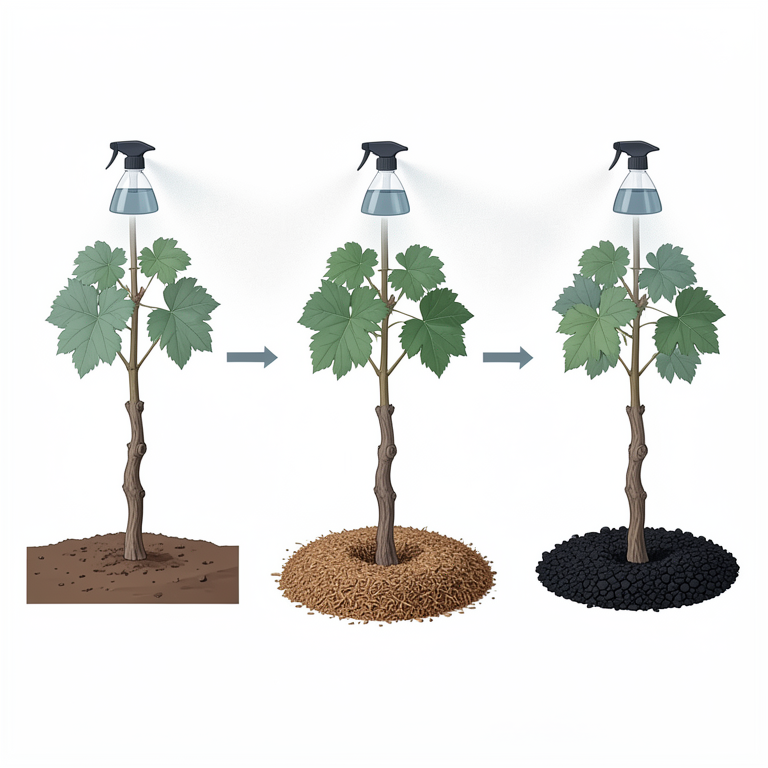
Experimental Setup Diagram
AI-generated conceptual illustration (young grape vines). It explains the idea and does not show study data.
View source evidence ↗Figures & tables
From the original paper Table 1
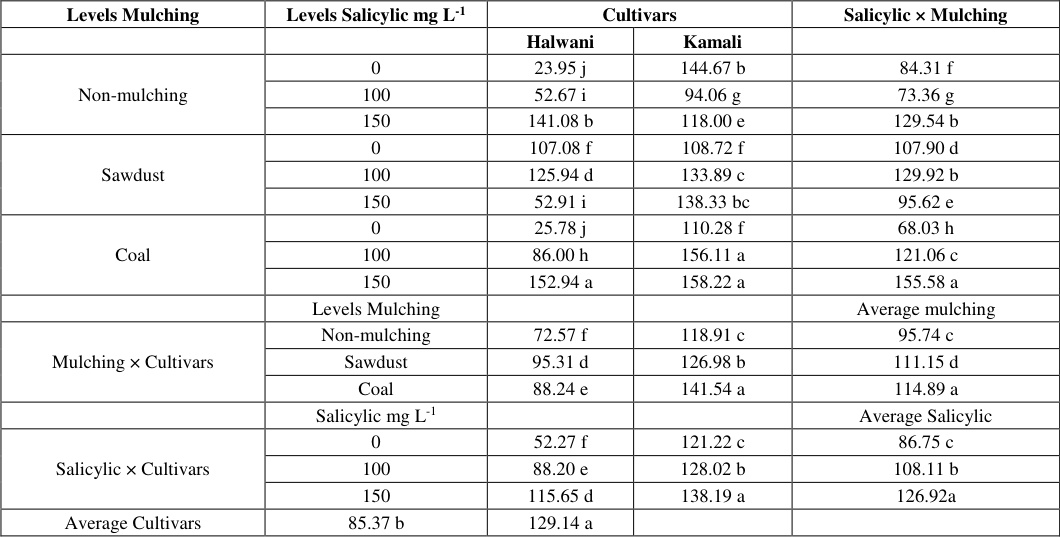 Table 2
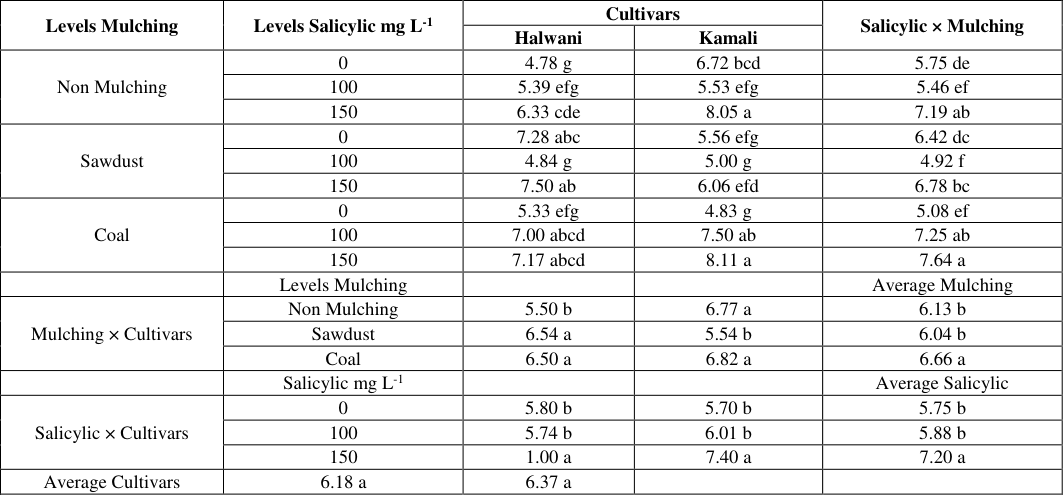 Table 3
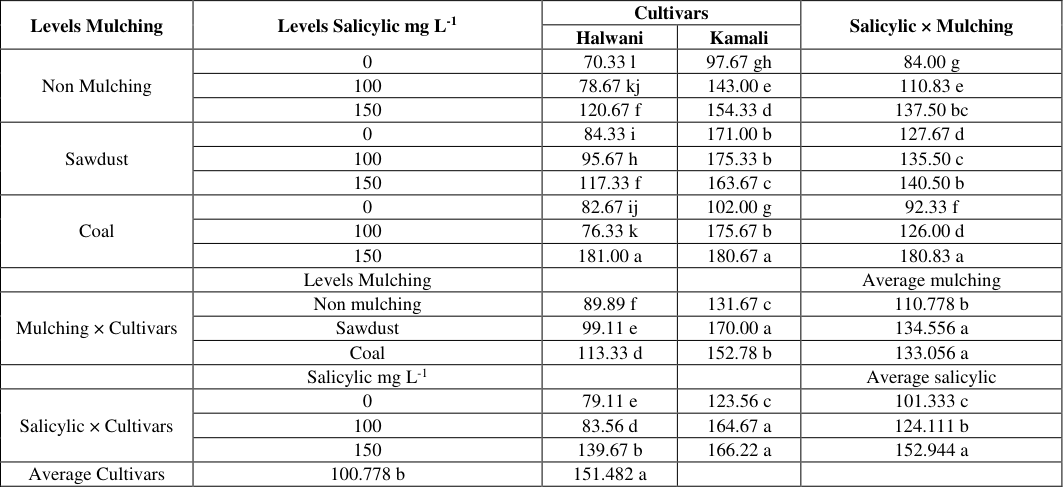 Table 4
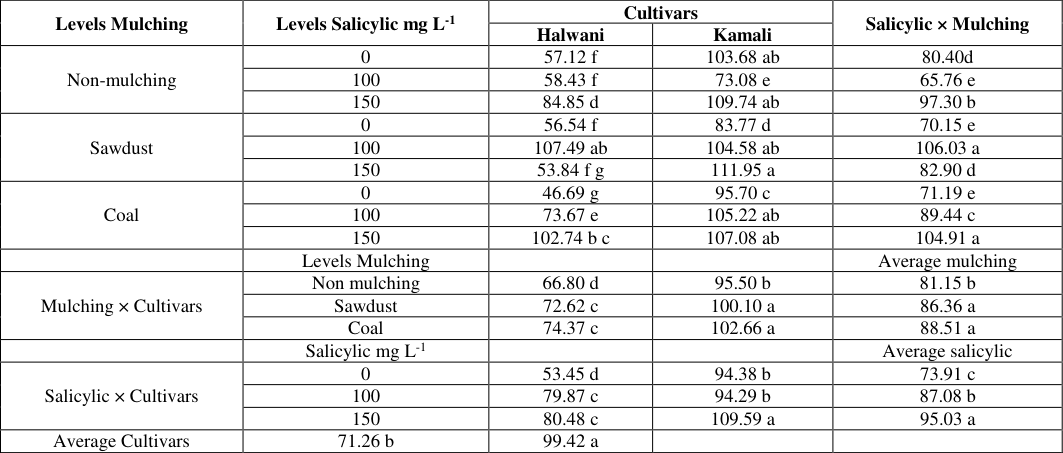 Table 5
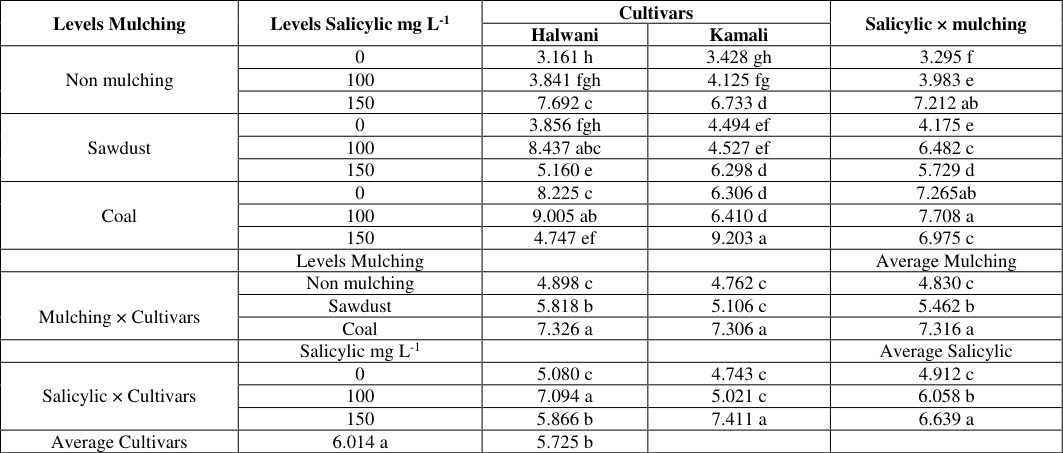 Table 6
Introduction
The grapes Vitis vinifera L. belong to the genus Vitis, which is one of the 14 genera spread in cultivation in the world and belongs to the family Vitaceae, has attracted the interest of humans for more than six thousand years to cultivate grapes and production and manufacture of fruits and juice. Grapes ranked first among fruit trees in terms of production, and it is believed that the original homeland of grapes is Central Asia, especially in the area between the southern Black Sea and the Caspian Sea and northern Persia. All varieties were produced before the North American continent was discovered and then cultivation spread east and west and throughout the region, between latitudes (20-50) north of the equator and (20-40) south of the equator is one of the best places to grow it (Saidi, 2000 and Hussein et al., 2000) [23, 11] . The mulching process is one of the important processes that increase the moisture content of the soil by 57% compared to plants not covered due to the lack of evaporation from the soil surface and increase the ability of the soil to conserve water (Al-Rawi et al., 1995) [4] . Also, Land cover contributes to horizontal and vertical salinity reduction (Janabi, 2005) [12] . The covering materials may be organic or inorganic (industrial in nature) they change the temperature and moisture balance at the soil surface, creating more favorable conditions for plant growth, in addition to their role in maintaining soil moisture, reducing weed growth and increasing soil productivity, soil heating systems can be improved with various types of mulch materials (Pramanik et al., 2015) [20] .
Coal is a heterogeneous Material that contains organic material consisting of carbon, hydrogen, oxygen, sulfur and nitrogen in addition to inorganic components (metals) with a quantity of water, and carbon constitutes 60-95% of its total volume, while hydrogen constitutes 5% and may decrease to about 2% (Rees, 1966) [22] . Van Donk et al. (2012) [25] have shown that sawdust is used to reduce soil water evaporation, weed competition and cooling, the degree of effect required on the quality, quantity, durability of the mulching material, soil type and climate conditions (Pramanik et al., 2015) [20] . Némethy et al. (2006) [15] noted that soil coverage affects organic plant residues. On the growth of grapes during the two growing seasons, the results showed that it was the most effective in terms of nutrient distribution in grapes and yield and had a positive effect on soil structure and moisture. Salicylic acid is an internal plant hormone made from amino acids and was first isolated from tree bark in 1828, it plays an important role in improving plant tolerance to biotic stress conditions. It enters into many physiological processes including floral induction, regulation of ion absorption, hormonal balance, stomata movement, photosynthesis, cellular metabolism, protein synthesis, stomata closure and gas exchange (Popova et al., 1997; Raskin, 1992) [19,21] . Al-Hamidawi (2012) [3] the effect of spraying four concentrations (0, 50, 75 and 100) mg L -1 of the Halawani variety was studied, which exceeded the concentration (100 mg L -1 ) of salicylic 185.00 mg 100 g -1 compared to the control treatment. It exceeds the leaf area allocated to each cluster of vines sprayed with concentration (100 mg -1 ) salicylic acid, as it gave the largest paper area to the cluster reaching (3943.00 cm 2 ) during the study season. When Al-Atrushy (2021) [1] studied the effect of salicylic acid spraying on the vegetative growth of grapes, the Halawani variety affected the leaf area, when the spray concentration was 150 mg L -1 , its performance was significantly better than that of salicylic acid, and the highest leaf area rate 164.43 cm 2 was obtained in the first season. The overall chlorophyll properties of leaves sprayed with salicylic acid at a concentration of 150 mg L -1 were also significantly superior to 188.48 mg g -1 soft weight compared to the comparative treatments. Among the local varieties spread for grapes is Halwani and Kamali, which are good edible varieties and are characterized by the pastry variety with its regular hermaphrodite flowers. They are one of the good pollinated varieties of the Kamali, and the variety Kamali is characterized by hermaphrodite flowers, but functionally feminine (stamens short hanging down) and thus need a pollinator because pollen is fertilized (Saidi, 2000) [23] . In a study conducted by Othman et al. (2018) [16] explored the effect of spraying with ascorbic acid on some vegetative growth characteristics of the two grape varieties, where the Kamali variety excelled in leaf area and number of leaves, stem diameter, the highest moral value amounted to 90.78 cm, 1395 leaves per vine, 17.29 mm, respectively. Yet, the Halwani variety excelled in stem length, reaching 1.87 cm. The Kamali variety outperformed the Halwani variety significantly in the leaf area of the vine, as the Kamali variety achieved the highest rate in the paper area of the vine reaching 20.83 and 21.55 m 2 compared to the Halwani variety, which became 19.31 m 2 and 20.72 m 2 respectively for both seasons of study. Because there are no studies in this area, especially on vines inside Iraq, this study was conducted with the aim of promoting the vegetative growth of young vines of Halwani and Kamili varieties by covering the soil and spraying with salicylic acid. This was to show the impact of these factors in building a strong structure for vines in the early years of breeding.
Materials and Methods
This study was carried out at the Agricultural Research and Experiments Station of the College of Agriculture / Department of Horticulture and Garden Engineering / University of Kirkuk / Iraq, during the growing season of 2023, to study the mulching of the soil of grape vines with three types (NON-mulching, Sawdust and Charcoal). At the beginning of the experiment, a circular area with a radius of 30 cm was covered once with a thickness of 5 cm and sprayed with three concentrations (0, 100 and 150) mg L -1 of the growth regulator salicylic acid. Additionally, add Tween 0.1 m L -1 as a dispersion to reduce the surface tension of water molecules, for two varieties of young vines (Halawani and Kamali) at the age of 5 years and planted with dimensions of 2 m between one vine and another and 2.5 m between one line and another and bred by wire breeding. The vines were pruned at the end of February for the study season. When clearing brush from the field, all necessary service work (such as irrigation and fertilization) is carried out equally in all operations. Pools of water were then built around the trees. Install a drip irrigation system and take samples at different locations in the trial plot, for the purpose of conducting some chemical and physical analyzes in addition to the coal and mulch used in the experiment.
Table 1: Some chemical and physical properties of field soil, sawdust and charcoal used in mulching
Properties EC mmho cm -1 PH TDS mg kg -1 N mg kg -1 P mg kg -1 K mg kg
Studied characteristics
All measurements were taken on 1/9/2023. 1. Rate of increase in leg length (cm).
2. Rate of increase in stem dimeter (mm).
3. The rate of increase in the number of leaves (vine leaf - 1 ). 4. Area of one leaf (cm 2 ) is calculated according to the method mentioned by Saieed (1990) [24] and 10 full-grown leaves were taken from each young vine and painted on egg leaves known weight and area. Then the drawn papers were cut and weighed with a sensitive electric balance. This weight was compared with the weight and area of the white leaves that were painted on it to extract its area, which represents the area of plant leaves according to the following equation: Area leaf = large sheet area × weight of the cut part / weight of a large leaf. 5. The percentage of total chlorophyll in the leaves. It was estimated by cutting the leaves into small pieces with sterile scissors and weighing 0.25 g of the cut leaves, placing them in an opaque container and adding 15 ml of 95% concentrated ethanol (Knudson et al., 1977) [14] . In a dark place 24 hours. The process was repeated three times and the solution was measured using a spectrophotometer (100 v -1 Laboratory EMC) at wavelengths of 665 and 649 nm. The values with similar letters for each factor or its interactions individually do not differ significantly according to the Dunkin' polynomial test below the probability level 0.05%"
Results and
Results and
The results shown in Table (3) showed that the diameter of the main leg was significantly affected by the levels of coverage. The highest rate of stem diameter was when the covering with charcoal reached 6.66 mm compared to the rest of the coefficients. The spraying with a salicylic growth regulator has been affected significantly. The spraying exceeds the concentration of 150 mg L -1 On the rest of the concentrations, it amounted to 7.20 mm compared to the comparison treatment of 5.75 mm, and the varieties did not differ among themselves in the characteristic of the diameter of the main stem. The bilateral overlap between the levels of coverage and salicylic was significantly affected in the characteristic of the diameter of the main stem if the coverage with charcoal overlapped with spraying at a concentration of 150 mg L -1 of salicylic significantly at 7.64 mm compared to the rest of the interactions of salicylic of the Kamali variety significantly over the rest of the overlaps and reached 7.40 mm. As for the triple overlap, the charcoal treatment overlapped with spraying at a concentration of 150 mg L -1 of salicylic for the Kamali variety producing the highest value in the main stem diameter of 8.11 mm.
The rate of increase in the number of leaves (vine leaf -
The rate of increase in the number of leaves (vine leaf -
1
): The results in Table (4) showed that the number of leaves has been significantly affected by the levels of coverage, as the coverage with sawdust produced the highest rate of 134.556 leaves per vine compared to the lowest rate, which was to 110.778 cm. The spraying with a salicylic growth regulator was affected significantly if the concentration of 150 mg liter -1 exceeded the rest of the concentrations at 152.944 leaf per vine compared with the comparison treatment at 101.333 leaves per vine. In terms of the effect of varieties, the Kamali variety significantly outperformed the Halwani variety, as it rose to 151.482 leaves per vine. The bilateral overlap between the levels of coverage and salicylic had a significant effect on the diameter of the main stem if it exceeded the coverage with charcoal overlapping with spraying at a concentration of 150 mg L -1 of salicylic significantly at 180.83 leaves per vine compared with the rest of the treatments. The coverage with sawdust for the Kamali variety significantly exceeded the rest of the overlaps peaked to 170.00 leaves per vine. As for the triple overlap, the charcoal treatment overlapping with spraying at a concentration of 150 mg L -1 of salicylic for the Halwani variety had the highest value in the characteristic of increasing the number of leaves and amounted to 181.00 leaves per vine.
The results in Table (5) showed that the area of one leaf has been significantly affected by the levels of coverage increasing the average area of the leaf when covering with charcoal, which increased 88.51 cm 2 compared to the lowest rate of 81.15 cm 2 when treated without coverage. the spraying with a salicylic growth regulator has been affected significantly if the concentration of 150 mg liter -1 exceeds the rest of the concentrations and amounted to 95.03 cm 2 compared with the comparison treatment, which rose to 73.91 cm 2 , and as for the effect of the varieties, the Kamali variety significantly outperformed the Halwani variety because of its values at 99.42 cm 2 . The interaction between the levels of coverage and the varieties had a significant effect on this trait, as the coverage with charcoal for the Kamali variety was significantly superior to the rest of the interactions and amounted to 102.66 cm 2 . As for the bilateral interaction between the levels of spraying with the salicylic growth regulator and the varieties, spraying with a concentration of 150 mg L -1 of salicylic for the Kamali variety was significantly superior to the rest of the interactions at 109.59 cm 2 . The triple interaction between the treatments was covering with sawdust mixed with spraying at a concentration of 150 mg L -1 of salicylic for the Kamali variety, which was the highest in terms of increasing leaf area and amounted to 111.95 cm 2 . Yet, the treatment with charcoal mixed with a concentration of 0 mg L -1 of salicylic acid for the Halwani variety had the lowest value and amounted to 46.69 cm 2 . The values of similar letters for each factor or its interactions individually do not differ significantly according to the Dunkin' polynomial test below the probability level 0.05. %" 5. The percentage of total chlorophyll in the leaves (mg g -1 soft weight): The results of the statistical analysis showed that the percentage of total chlorophyll was significantly affected by the levels of coverage increasing the percentage of total chlorophyll when covering with charcoal of 7.316 mg g -1 soft weight compared to the lowest rate of 4.830 mg g -1 soft weight when treated without coverage, Spraying with a salicylic growth regulator had a significant effect if the concentration was 150 mg L -1 exceeded the rest of the concentrations and amounted to 6.639 mg g -1 soft weight compared to the comparison treatment at 4.912 mg g -1 soft weight, as for the varieties, as the Halwani variety significantly outperformed the Kamali variety because it reached 6.014 mg g -1 soft weight. The bilateral interaction between the levels of coverage and salicylic was significantly affected in the percentage of chlorophyll if the coverage with charcoal overlapped with spraying at a concentration of 100 mg litres -1 of salicylic significantly and amounted to 7.708 mg g -1 soft weight compared to the rest of the treatments. As for the triple overlap, we note that the treatment of charcoal coverage overlapping with spraying at a concentration of 150 mg liters of salicylic variety has given the highest value in this trait and amounted to 9.203 mg g -1 soft weight. The increase in vegetative growth characteristics in tables (5, 3, 2 and 6) is attributed to the high nitrogen content of coal as shown in Table (1). Keller and Nussbaumer (1993) [13] pointed to the volatilization of oxides gas when burning wood, which indicates the presence of nitrogen within the chemical content of wood, where part of the nitrogen in wood is converted through burning to HCN, NH3 and nitrogen oxide and remains 20% in charcoal. Nitrogen plays an important role in many of the vital processes that occur in the plant, such as the formation of amino acids, proteins and enzymes, which encourage cell divisions and cell elongation, which is reflected in an increase in the rate of plant height, leaf area and number of leaves (Emongor and Emongor, 2023) [6] . Its role increases the number and size of leaf cells and the formation of chlorophyll, which leads to an increase in the effectiveness of the leaves in photosynthesis and thus increase vegetative growth (Popov, 1978 and Al-Doori and Hussein, 2023) [18,2] . Spraying the growth regulator salicylic acid 150 mg L -1 has a significant effect on significantly improving the growth quality of vegetative bodies because salicylic acid accelerates the photosynthesis process and improves the activity of important enzymes, which has been positively reflected. Thesis area (Hayat et al., 2007) [8] . It plays an important role in regulating ion absorption, hormonal balance, and stomatal movement. It also accelerates the formation of chlorophyll and carotene pigments, accelerates the photosynthesis process and increases the activity of some important enzymes that have a positive impact on certain physiological processes of plants, and salicylic acid is one of the phenolic compounds (Popova et al., 1997) [19] . All of this is reflected in an increase in the content of leaves of chlorophyll and other growth traits. These results are consistent with Hussein et al., (2019) [9] Hadidi and Shahwani (2020) [7] and Hussein and Al-Doori (2021) [10] . The increase in vegetative growth traits between varieties is due to genetic differences between the two varieties resulting from differences genetic factors controlling the size and shape of the leaf for each variety and its breadth. Also, good nutrition of the leaves and increased bio metabolism of chlorophyll increases the leaf area of the vine (Carbonneau, 1976) [5] . These results are consistent with Othman et al., (2018) [16] , Saidi )2000) [23] and Othman and Hawezy (2022) [17] .
Conclusion
This study demonstrated that mulching with charcoal significantly enhances the vegetative growth characteristics of grapevines, including stem length, stem diameter, leaf area, and chlorophyll content. The use of sawdust also significantly increased the number of leaves. Additionally, the application of salicylic acid at a concentration of 150 mg L^-1 significantly improved all measured growth parameters. Between the two varieties studied, Kamali generally outperformed Halwani in terms of stem length, number of leaves, and leaf area, while Halwani had a higher chlorophyll content. These findings suggest that combining specific mulching practices with salicylic acid application can effectively promote the growth of young grapevines, potentially leading to better yields and quality in grape production.
Figures and tables from the paper
| Properties | EC mmho cm-1 | PH | TDS mg kg-1 | N mg kg-1 | P mg kg-1 | K mg kg-1 | Organic Carbon % | Tissue | Clay % | Silt % | Sand % |
|---|---|---|---|---|---|---|---|---|---|---|---|
| Soil | 1.294 | 7.3 | 730 | 420.300 | 25.930 | 132.447 | 0.276 | Sandy mixture | 2 | 46 | 52 |
| Charcoal | - | - | - | 4763.4 | 79.644 | 3973.410 | 4.137 | - | - | - | - |
| Sawdust | 0.11 | 6.18 | 20 | 39 | 43 | 60 | 0.44 | - | - | - | - |
Table text extracted from the original PDF; superscript letters are shown inline. The original table image is below.
View original table image
| Levels Mulching | Levels Salicylic mg L-1 | Cultivars | — | Salicylic × Mulching |
|---|---|---|---|---|
| Halwani | Kamali | |||
| Non-mulching | 0 | 23.95 j | 144.67 b | 84.31 f |
| 100 | 52.67 i | 94.06 g | 73.36 g | |
| 150 | 141.08 b | 118.00 e | 129.54 b | |
| Sawdust | 0 | 107.08 f | 108.72 f | 107.90 d |
| 100 | 125.94 d | 133.89 c | 129.92 b | |
| 150 | 52.91 i | 138.33 bc | 95.62 e | |
| Coal | 0 | 25.78 j | 110.28 f | 68.03 h |
| 100 | 86.00 h | 156.11 a | 121.06 c | |
| 150 | 152.94 a | 158.22 a | 155.58 a | |
| Levels Mulching | Average mulching | |||
| Mulching × Cultivars | Non-mulching | 72.57 f | 118.91 c | 95.74 c |
| Sawdust | 95.31 d | 126.98 b | 111.15 d | |
| Coal | 88.24 e | 141.54 a | 114.89 a | |
| Salicylic mg L-1 | Average Salicylic | |||
| Salicylic × Cultivars | 0 | 52.27 f | 121.22 c | 86.75 c |
| 100 | 88.20 e | 128.02 b | 108.11 b | |
| 150 | 115.65 d | 138.19 a | 126.92a | |
| Average Cultivars | 85.37 b | 129.14 a |
Table text extracted from the original PDF; superscript letters are shown inline. The original table image is below.
View original table image
| Levels Mulching | Levels Salicylic mg L-1 | Cultivars | — | Salicylic × Mulching |
|---|---|---|---|---|
| Halwani | Kamali | |||
| Non Mulching | 0 | 4.78 g | 6.72 bcd | 5.75 de |
| 100 | 5.39 efg | 5.53 efg | 5.46 ef | |
| 150 | 6.33 cde | 8.05 a | 7.19 ab | |
| Sawdust | 0 | 7.28 abc | 5.56 efg | 6.42 dc |
| 100 | 4.84 g | 5.00 g | 4.92 f | |
| 150 | 7.50 ab | 6.06 efd | 6.78 bc | |
| Coal | 0 | 5.33 efg | 4.83 g | 5.08 ef |
| 100 | 7.00 abcd | 7.50 ab | 7.25 ab | |
| 150 | 7.17 abcd | 8.11 a | 7.64 a | |
| Levels Mulching | Average Mulching | |||
| Mulching × Cultivars | Non Mulching | 5.50 b | 6.77 a | 6.13 b |
| Sawdust | 6.54 a | 5.54 b | 6.04 b | |
| Coal | 6.50 a | 6.82 a | 6.66 a | |
| Salicylic mg L-1 | Average Salicylic | |||
| Salicylic × Cultivars | 0 | 5.80 b | 5.70 b | 5.75 b |
| 100 | 5.74 b | 6.01 b | 5.88 b | |
| 150 | 1.00 a | 7.40 a | 7.20 a | |
| Average Cultivars | 6.18 a | 6.37 a |
Table text extracted from the original PDF; superscript letters are shown inline. The original table image is below.
View original table image
| Levels Mulching | Levels Salicylic mg L-1 | Cultivars | — | Salicylic × Mulching |
|---|---|---|---|---|
| Halwani | Kamali | |||
| Non Mulching | 0 | 70.33 l | 97.67 gh | 84.00 g |
| 100 | 78.67 kj | 143.00 e | 110.83 e | |
| 150 | 120.67 f | 154.33 d | 137.50 bc | |
| Sawdust | 0 | 84.33 i | 171.00 b | 127.67 d |
| 100 | 95.67 h | 175.33 b | 135.50 c | |
| 150 | 117.33 f | 163.67 c | 140.50 b | |
| Coal | 0 | 82.67 ij | 102.00 g | 92.33 f |
| 100 | 76.33 k | 175.67 b | 126.00 d | |
| 150 | 181.00 a | 180.67 a | 180.83 a | |
| Levels Mulching | Average mulching | |||
| Mulching × Cultivars | Non mulching | 89.89 f | 131.67 c | 110.778 b |
| Sawdust | 99.11 e | 170.00 a | 134.556 a | |
| Coal | 113.33 d | 152.78 b | 133.056 a | |
| Salicylic mg L-1 | Average salicylic | |||
| Salicylic × Cultivars | 0 | 79.11 e | 123.56 c | 101.333 c |
| 100 | 83.56 d | 164.67 a | 124.111 b | |
| 150 | 139.67 b | 166.22 a | 152.944 a | |
| Average Cultivars | 100.778 b | 151.482 a |
Table text extracted from the original PDF; superscript letters are shown inline. The original table image is below.
View original table image
| Levels Mulching | Levels Salicylic mg L-1 | Cultivars | — | Salicylic × Mulching |
|---|---|---|---|---|
| Halwani | Kamali | |||
| Non-mulching | 0 | 57.12 f | 103.68 ab | 80.40d |
| 100 | 58.43 f | 73.08 e | 65.76 e | |
| 150 | 84.85 d | 109.74 ab | 97.30 b | |
| Sawdust | 0 | 56.54 f | 83.77 d | 70.15 e |
| 100 | 107.49 ab | 104.58 ab | 106.03 a | |
| 150 | 53.84 f g | 111.95 a | 82.90 d | |
| Coal | 0 | 46.69 g | 95.70 c | 71.19 e |
| 100 | 73.67 e | 105.22 ab | 89.44 c | |
| 150 | 102.74 b c | 107.08 ab | 104.91 a | |
| Levels Mulching | Average mulching | |||
| Mulching × Cultivars | Non mulching | 66.80 d | 95.50 b | 81.15 b |
| Sawdust | 72.62 c | 100.10 a | 86.36 a | |
| Coal | 74.37 c | 102.66 a | 88.51 a | |
| Salicylic mg L-1 | Average salicylic | |||
| Salicylic × Cultivars | 0 | 53.45 d | 94.38 b | 73.91 c |
| 100 | 79.87 c | 94.29 b | 87.08 b | |
| 150 | 80.48 c | 109.59 a | 95.03 a | |
| Average Cultivars | 71.26 b | 99.42 a |
Table text extracted from the original PDF; superscript letters are shown inline. The original table image is below.
View original table image
| Levels Mulching | Levels Salicylic mg L-1 | Cultivars | — | Salicylic × mulching |
|---|---|---|---|---|
| Halwani | Kamali | |||
| Non mulching | 0 | 3.161 h | 3.428 gh | 3.295 f |
| 100 | 3.841 fgh | 4.125 fg | 3.983 e | |
| 150 | 7.692 c | 6.733 d | 7.212 ab | |
| Sawdust | 0 | 3.856 fgh | 4.494 ef | 4.175 e |
| 100 | 8.437 abc | 4.527 ef | 6.482 c | |
| 150 | 5.160 e | 6.298 d | 5.729 d | |
| Coal | 0 | 8.225 c | 6.306 d | 7.265ab |
| 100 | 9.005 ab | 6.410 d | 7.708 a | |
| 150 | 4.747 ef | 9.203 a | 6.975 c | |
| Levels Mulching | Average Mulching | |||
| Mulching × Cultivars | Non mulching | 4.898 c | 4.762 c | 4.830 c |
| Sawdust | 5.818 b | 5.106 c | 5.462 b | |
| Coal | 7.326 a | 7.306 a | 7.316 a | |
| Salicylic mg L-1 | Average Salicylic | |||
| Salicylic × Cultivars | 0 | 5.080 c | 4.743 c | 4.912 c |
| 100 | 7.094 a | 5.021 c | 6.058 b | |
| 150 | 5.866 b | 7.411 a | 6.639 a | |
| Average Cultivars | 6.014 a | 5.725 b |
Table text extracted from the original PDF; superscript letters are shown inline. The original table image is below.
View original table image
References
16 in the original paper- Al-Atrushy SM. Effect of foliar application of zinc and salicylic acid on vegetative growth and yield characteristics of Halawani grape cultivar (Vitis vinifera L.). Iraqi Journal of Agricultural Sciences. 2021;52(4):989-998.
- Al-Doori MF, Hussein SA. Effect of adding organic nutrient (Complex-Groop) and spraying with kinetin on some characteristics of vegetative growth and yield of pomegranate trees Punica granatum L. Cv. Salimi. IOP Conf. Series: Earth and Environmental Science. 2023;1252:012079. DOI:10.1088/1755-1315/1252/1/012079
- Al-Hamidawi AMSZ, AL-Shammari ZAHA. Effect of nutrient and acid salicylic solution spraying on vegetative growth characteristics of grape variety (Vitis vinifera L.) confectioner. Kufa Journal of Agricultural Sciences. 2012;4(1):65-80.
- Al-Rawi AAA, Azab NH, Khalaf KMT. The effect of soil covering with polyethylene foil on some soil properties and tomato growth and production. Journal of Mesopotamia Agriculture. 1995;27(3):24-27.
- Carbonneau A. Analysis of the growth of the leaves of grape. Estimation of Foliar Surface for Grape. 1976;10(2):141-159.
- Hadidi SHA, Shahwani HAS. Effect of watering periods and treatment with proline and salicylic acid concentrations on some characteristics of vertical cypress seedlings Cupressus sempervirens var pyramidalis. Kirkuk University Journal of Agricultural Sciences. 2020;11(4):182-194.
- Hussein SA, Al-Doori MF. Effect of spraying with benzyl adenine and licorice root extract on some vegetative growth characteristics and chemical content of strawberry (Fragaria ananassa Duch) CV. Rubygem. IOP Conf. Series: Earth and Environmental Science. 2021;923:012004. doi:10.1088/1755-1315/923/1/012004
- Hussein SA, Noori AM, Kanber HS. Stratification period with different agricultural media roll on seeds germination ratio and humic acid fertilization on apricot seedlings Prunus armeniaca L. growth. Plant Cell Biotechnology and Molecular Biology. 2020;21(71&72):23-29.
- Knudson LL, Tibbitts TW, Edwards GE. Measurement of ozone injury by determination of leaf chlorophyll concentration. Plant Physiology. 1977;60(4):606-608.
- Némethy L, Májer J, Varga P, Németh C, Fenyvesi L, Szabó I. Mulching in grape plantations. International Journal of Horticultural Science. 2006;12(4):25-31.
- Othman AK, Khaled NAA, Ibrahim FTQ. Effect of spraying with seaweed extract 600 Alga and ascorbic acid on some vegetative growth characteristics of the grape variety (Vitis vinifera L.) Halwani and Kamali. Iraqi Agriculture Research Journal. 2018;32(2):124132.
- Othman DN, Hawezy SMN. Rooting of hardwood cuttings of grape (Vitis vinifera L.): Response to pretreatments and rooting media. Kirkuk University Journal of Agricultural Sciences. 2022;13(1):27-47.
- Popova L, Pancheva T, Uzunova A. Salicylic acid: properties, biosynthesis and physiological role. Bulgarian Journal of Plant Physiology. 1997;23(12):85-93.
- Pramanik P, Bandyopadhyay K, Bhaduri D, Bhattacharyya R, Aggarwal P. Effect of mulch on soil thermal regimes: A review. International Journal of Agriculture, Environment and Biotechnology. 2015;8(3):645-658.
- Raskin I. Salicylate, a new plant hormone. Plant Physiology. 1992;99(3):799.
- Van Donk SJ, Lindgren DT, Schaaf DM, Petersen JL, Tarkalson DD. Wood chip mulch thickness effects on soil water, soil temperature, weed growth and landscape plant growth. Journal of Applied Horticulture. 2012;13(2):91-95.
Cited by 16
From OpenAlex, OpenCitations and reference lists read by Scinovex
- Development of a simple data-monitoring system to track growth responses of grapevines under different mulching treatments ↗
Samira Al-Khatib, Reza Mahdavi, Lütfi Demir · International Journal of Computing Programming and Database Management · 2025
The efficiency of vineyard management relies heavily on continuous monitoring of vine growth responses under varying field conditions. Mulching has emerged as a promising practice for improving soil moisture conservation, regulating temperature, and enhancing nutrient availability in grapevine systems. However, real-time evaluation of vine growth under different mulch treatments remains limited, particularly in regions where resource-efficient monitoring tools are essential.…
❝ 0PDF - Biochemical response of Halwani and Kamali grapevines to salicylic acid foliar sprays under different mulching conditions
Rasha Al-Mutairi, B Abdullah, Necmettin Yılmaz · International Journal of Advanced Biochemistry Research · 2025
Mulching and foliar bio stimulant applications have emerged as important components of sustainable viticulture, particularly for cultivars grown under semi-arid and drought-prone conditions. Halwani and Kamali grapevines are widely cultivated in West Asian and Mediterranean environments where rising soil temperatures, intermittent moisture stress, and reduced soil organic matter negatively affect canopy physiology and biochemical homeostasis. Salicylic acid (SA), a phytohormone known for mediating systemic acquired resistance, plays a significant role in modulating oxidative stress, enhancing
- Homeopathic perspective on natural growth enhancers: Case research using salicylic acid and organic mulches in grapevines ↗
Elif Karadeniz, Mehmet Arslan, Aylin Gökçen · Journal of Homeopathy Studies · 2025
Homeopathic approaches to plant growth management have gained increasing interest as sustainable, low-residue alternatives to synthetic agrochemicals. This research evaluates the influence of homoeopathically potentized salicylic acid (SA) and organic mulching materials on the vegetative growth and physiological performance of grapevines (Vitis vinifera L.). While SA is widely recognized for its role in modulating systemic acquired resistance and enhancing stress…
❝ 0PDF - Chemical changes in soil and plant tissues of grapevines under different mulching and salicylic acid treatments
E. Martínez Montes, Maria Madalena Rinaldi, L. Karaman · International Journal of Advanced Chemistry Research · 2025
Mulching and salicylic acid (SA) application have emerged as widely adopted viticultural strategies for improving soil chemical properties, nutrient uptake, and overall physiological performance of grapevines cultivated under diverse agro-ecological conditions. However, the combined influence of different mulch types and SA concentrations on the chemical composition of both soils and plant tissues remains insufficiently characterized. This research examines the chemical changes occurring in vineyard soils and grapevine tissues when exposed to organic mulches and exogenous SA treatments, focusi
- Use of charcoal and sawdust mulches in home gardening for enhancing grape vine growth ↗
Marı́a M. López, C.M. Rivera, P.J. Muller · International Journal of Home Science · 2025
The use of mulches in home gardening has gained significant attention as a means to enhance plant growth by modifying the microenvironment around the plants. This research investigates the application of charcoal and sawdust mulches in promoting the growth of grapevines, particularly focusing on their impact on vegetative growth parameters such as leaf area, stem diameter, and root length. Grape
- Chemical interaction of salicylic acid with soil organic mulches and its impact on grape vine nutrient uptake ↗
Selin Arıkan, Murat Doğan, Lale Yılmaz · Journal of Research in Chemistry · 2025
The interaction of salicylic acid (SA) with soil organic mulches plays a pivotal role in shaping nutrient bioavailability, root signaling responses, and overall physiological performance of grapevines. Despite extensive literature on the independent roles of SA and mulching, limited research has examined their combined chemical dynamics within soil matrices and their influence on nutrient uptake efficiency in Vitis vinifera. This…
❝ 0PDF - Effect of mulching and salicylic acid on aroma-related essential compounds in grapes ↗
Elena Márquez Santos, José Fernando Ortega Álvarez, Ana Herrera · American Journal of Essential Oils and Natural Products · 2025
Aroma formation in grapes is a key determinant of fruit quality, consumer preference, and suitability for winemaking, with essential volatile compounds such as monoterpenes, nor isoprenoids, esters, and aldehydes contributing to characteristic flavour notes. Agronomic interventions including mulching and salicylic acid (SA) treatments have been increasingly explored to enhance stress resilience and biosynthesis of quality-related metabolites in diverse horticultural crops.
- Impact of soil mulching materials on vineyard microclimate and soil properties in grapevine cultivation
Elena Marquez, Yusuf Demiral, Cláudia Romano · International Journal of Geography Geology and Environment · 2025
Mulching has emerged as a significant component of vineyard soil and canopy management due to its ability to regulate microclimate, preserve soil moisture, and enhance soil biological activity. In grapevine cultivation, microclimatic stability plays a crucial role in physiological processes such as transpiration, photosynthetic efficiency, and berry metabolism. However, variations in mulch type, thickness, and durability often influence their efficiency in modifying vineyard temperature, humidity, and soil chemical properties. This research investigates the impact of different soil mulching ma
- Effect of organic mulches on vineyard microhabitat and associated insect diversity in Halwani and Kamali grapes ↗
Layla Hassan Al-Rubaye, Omar Youssef Al-Khouri, Sara Mahmoud Al-Sayegh · Journal of Entomology and Zoology Studies · 2025
Organic mulching has emerged as an ecologically sound vineyard practice capable of modifying soil temperature, moisture balance, and microclimatic conditions that directly influence grapevine physiology and the diversity of beneficial and harmful insects. Despite the increasing adoption of mulches in perennial fruit crops, limited research has examined how different organic mulching materials alter the vineyard microhabitat and shape insect assemblages
- Chemical influence of charcoal and sawdust mulches on soil pH and nutrient composition in grape vineyards ↗
Leyla Karaman, Arman Hosseini, Samira Al-Rikabi · International Journal of Chemical Research and Development · 2025
Mulching has emerged as a fundamental soil management strategy in perennial fruit crops, particularly in grape vineyards where maintaining stable soil chemistry is essential for sustained productivity and vine longevity. The application of organic mulches such as charcoal and sawdust can substantially alter soil pH, nutrient availability, microbial processes, and water retention, thereby influencing vine growth and grape quality. This
- Evaluation of salicylic acid in improving phytochemical profile of grape leaves from Halwani and Kamali cultivars ↗
Selin Kara, Mehmet Arda Yilmaz, Ayşe Nur Demir · Journal of Medicinal Plants Studies · 2025
The application of salicylic acid (SA) as an elicitor to enhance secondary metabolite biosynthesis in plants has gained increasing attention in sustainable viticulture. Grape leaves, particularly from Halwani and Kamali cultivars, are known to contain bioactive phytochemicals with antioxidant, anti-inflammatory, and therapeutic relevance. However, environmental stressors, inconsistent cultivation practices, and genotypic variations often lead to fluctuations in phytochemical concentrations, necessitating…
❝ 0PDF - Statistical modeling of vegetative growth parameters of halwani and kamali grapevines under mulching and salicylic acid treatments
Elena Marques, Antonio Silva, Carlos Ramirez · International Journal of Statistics and Applied Mathematics · 2025
This research aims to investigate the effects of mulching and salicylic acid treatments on the vegetative growth parameters of Halwani and Kamali grapevines. These treatments are critical in improving vine growth, especially under challenging environmental conditions. The research utilizes statistical modeling to analyze the impact of mulching and salicylic acid on key growth parameters such as shoot length, leaf area, stem diameter, and vine biomass. The research employed a randomized complete block design with four treatments: mulching with organic materials, salicylic acid foliar spray, a c
- Role of salicylic acid spray in enhancing phytochemical and antioxidant properties of Halwani and Kamali grapes ↗
Samir Al-Rashid, Leyla Oztürk, Reza Mahdavi · The Pharma Innovation · 2025
Salicylic acid (SA) has emerged as an important phytohormone involved in regulating plant physiological responses, stress tolerance, and metabolic expression, particularly in fruit crops such as grapevine. Grapevines cultivated under semi-arid and warm climatic conditions often face oxidative stress, reduced phytonutrient accumulation, and variability in berry quality. Enhancing phytochemical and antioxidant profiles through foliar applications of regulatory compounds such as
- Integrated influence of mulching and salicylic acid on growth and productivity of Halwani and Kamali grapevines ↗
Lina Mahmoud Al-Rashidi, Omar Hassan Al-Khafaji, Selin Yıldırım · International Journal of Multidisciplinary Trends · 2025
Mulching and salicylic acid (SA) application have emerged as complementary strategies for mitigating abiotic stress and enhancing crop resilience, particularly in perennial fruit crops such as grapevines. The cultivars Halwani and Kamali widely cultivated in semi-arid regions are highly sensitive to moisture fluctuations, soil thermal instability, and oxidative stress, all of which restrict vine Vigor and productivity. This research investigated…
❝ 0PDF - Application of electronic soil sensors in researching mulch-induced changes in grape vine growth ↗
Sofia Marqués, Luca Ferranti, Eleni Papadopoulou · International Journal of Research in Advanced Electronics Engineering · 2024
The increasing adoption of digital agriculture has positioned electronic soil sensors as essential tools for monitoring spatiotemporal changes in vineyard soil environments. Mulching, widely practiced in grape cultivation, alters soil temperature, moisture, and nutrient availability, thereby influencing vine physiology and overall productivity. However, the interaction between mulch-induced soil modifications and vine growth responses remains insufficiently quantified under real-time field conditions.…
❝ 0PDF - Design of a low-cost sensor-based monitoring model for evaluating mulching effects in vineyards ↗
María Estela González, Luca Giovanni Ferraro, Eleni Papadopoulou · International Journal of Advances in Electrical Engineering · 2024
Mulching has long been recognized as a pivotal practice in vineyard management because of its role in improving soil moisture retention, moderating temperature fluctuations, and enhancing vine vigor under diverse climatic conditions. However, traditional approaches to evaluating mulching effects often rely on manual observations that are time-consuming, inconsistent, and limited in precision. The present research proposes a low-cost, sensor-integrated monitoring…
❝ 0PDF