
Research article · 2025 · Full text
International Journal of Geography Geology and EnvironmentImpact of soil mulching materials on vineyard microclimate and soil properties in grapevine cultivation
Volume 7(5) · Pages 31–36 · DOI: 10.22271/27067483.2025.v7.i5a.450 ↗
Research areasIrrigation Practices and Water ManagementHorticultural and Viticultural ResearchPlant Water Relations and Carbon Dynamics
Abstract
Author-writtenMulching has emerged as a significant component of vineyard soil and canopy management due to its ability to regulate microclimate, preserve soil moisture, and enhance soil biological activity. In grapevine cultivation, microclimatic stability plays a crucial role in physiological processes such as transpiration, photosynthetic efficiency, and berry metabolism. However, variations in mulch type, thickness, and durability often influence their efficiency in modifying vineyard temperature, humidity, and soil chemical properties. This research investigates the impact of different soil mulching materials including organic, inorganic, and biodegradable options on the vineyard microclimate and soil physicochemical characteristics under controlled grapevine cultivation conditions. The research evaluates temperature moderation, moisture retention efficiency, soil organic carbon enhancement, nutrient retention, and root-zone thermal buffering. Emphasis is placed on identifying low-cost, sustainable mulches suitable for long-term application without introducing phytotoxicity or affecting grape yield negatively. A field experiment was conducted using standardized vine spacing, varietal uniformity, and consistent irrigation regimens. Microclimatic parameters such as soil surface temperature, canopy temperature, evapotranspiration rate, and relative humidity were continuously monitored using sensor-based systems. Soil parameters including pH, electrical conductivity, organic carbon, available nitrogen, phosphorus, and potassium were measured before and after the mulching period. Comparative performance analysis of straw, dried leaves, gravel, black polyethylene, and biodegradable film mulches was performed using ANOVA and correlation modelling. The results demonstrate a distinct superiority of organic and biodegradable mulches in stabilizing soil temperature and improving soil nutrient conditions, while synthetic mulches were more effective in reducing evaporation losses but contributed to localized heating during extreme summers. The findings contribute valuable insights for viticulture practitioners seeking to enhance environmental resilience and resource efficiency in vineyards, particularly under semi-arid and arid climates. Recommendations emerging from this research highlight the need for cultivar-specific mulch screening, integration with deficit irrigation strategies, and long-term soil health monitoring. The research underscores mulching as a promising, cost-effective approach to promoting sustainable grape production amid rising climatic variability.
Summary
Source-checkedPlain-language reading of the full paper, prepared with AI and checked against the text. Each point links to the authors' own words.
Why it matters
- Maintaining a stable microclimate is essential for key physiological functions in grapevines, including berry metabolism and photosynthetic efficiency. View evidence ↗
- Mulching is used in vineyard management to regulate the microclimate, preserve moisture in the soil, and improve biological activity. View evidence ↗
- While inorganic mulches like gravel provide long-term stability, they can potentially increase soil temperatures during the peak of summer. View evidence ↗
The question
- The study aims to investigate how organic, inorganic, and biodegradable mulching materials affect the soil's physicochemical characteristics and the vineyard's microclimate. View evidence ↗
- The authors hypothesized that organic and biodegradable mulches would be better at enhancing soil health and moderating the microclimate, whereas synthetic mulches would be most effective for moisture conservation. View evidence ↗
What they did
- The study used a randomized complete block design with six different treatments, three replications, and ten vines per plot. View evidence ↗
- The six mulching treatments tested were straw, dried leaves, compost, black polyethylene, biodegradable film, and gravel. View evidence ↗
- Soil temperature fluctuations were monitored using sensors installed at depths of 5 cm and 15 cm. View evidence ↗
What they found
- Compost mulch resulted in the lowest mean soil temperature (25.5 °C), while gravel mulch had the highest (29.0 °C). View evidence ↗
- Black polyethylene achieved the highest mean soil moisture at 26.0%, whereas gravel had the lowest at 20.0%. View evidence ↗
- Compost mulch led to the highest soil organic carbon increase (1.00%), while black polyethylene showed the lowest (0.62%). View evidence ↗
- There was a strong positive correlation (r > 0.70) between the amount of soil organic carbon and the resulting grape yield. View evidence ↗
What it means
- The authors recommend prioritizing compost or straw mulches, particularly in areas with erratic rainfall or high temperatures. View evidence ↗
- The authors advise against relying heavily on gravel or black polyethylene in hot climates because they can increase root-zone heat stress and limit carbon inputs. View evidence ↗
Visual summary
3 visualsIllustrations explain the paper; charts are replotted from the paper's own table values.
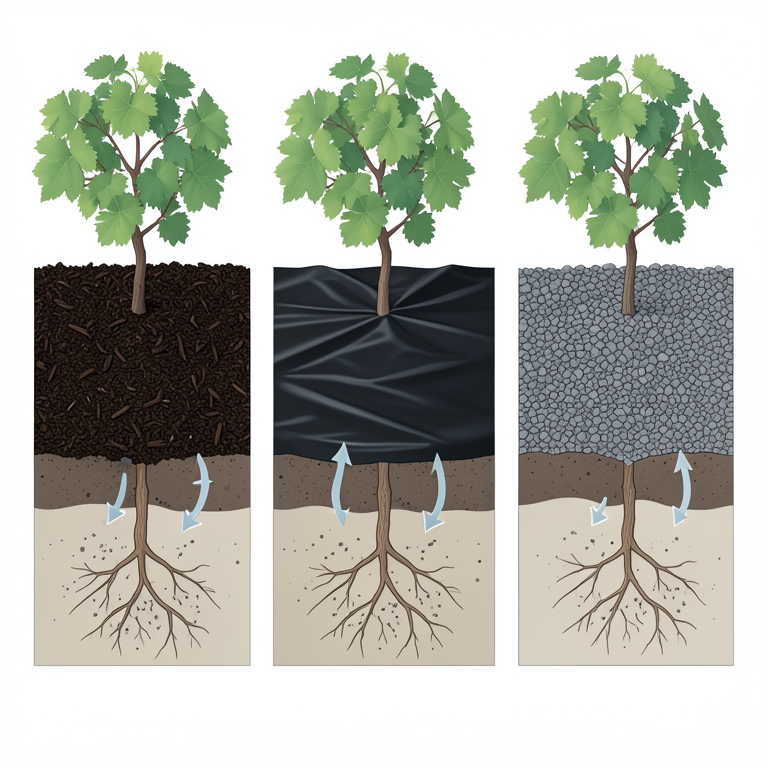
Comparison of Mulch Types
AI-generated conceptual illustration (grapevine plants in a vineyard). It explains the idea and does not show study data.
View source evidence ↗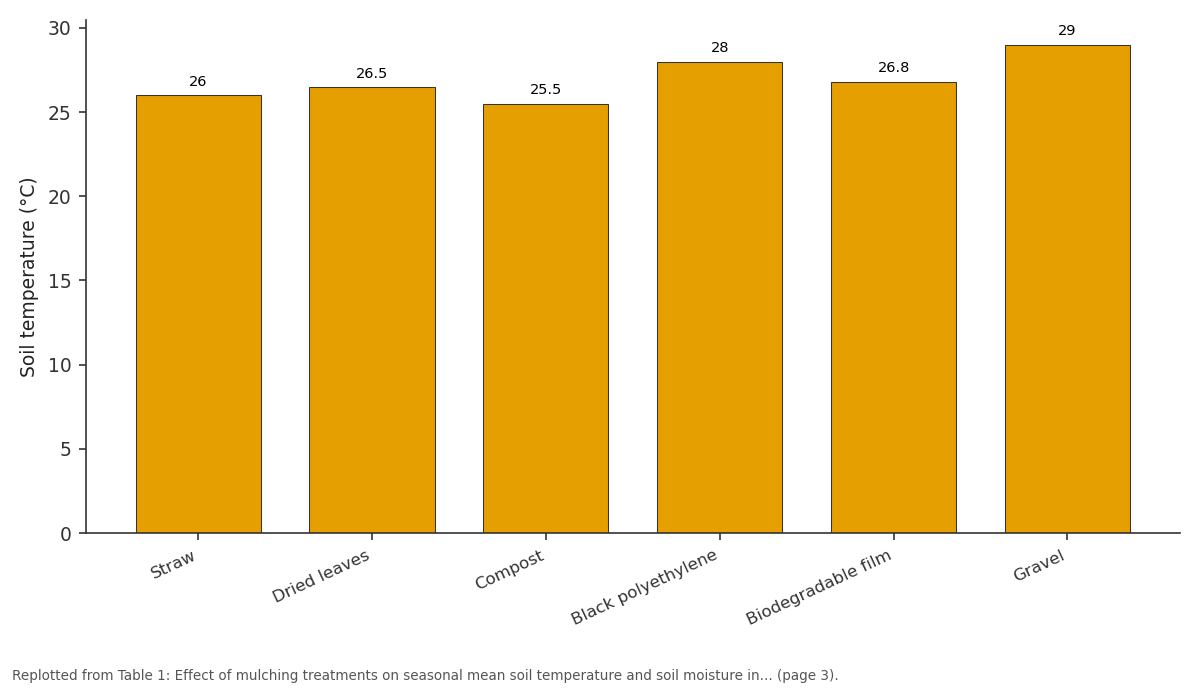
Soil temperature (°C): Straw vs Dried leaves vs Compost vs Black polyethylene vs Biodegradable film
Replotted from Table 1 (page 3) of the original paper. Every bar is the paper's own table value.
View source evidence ↗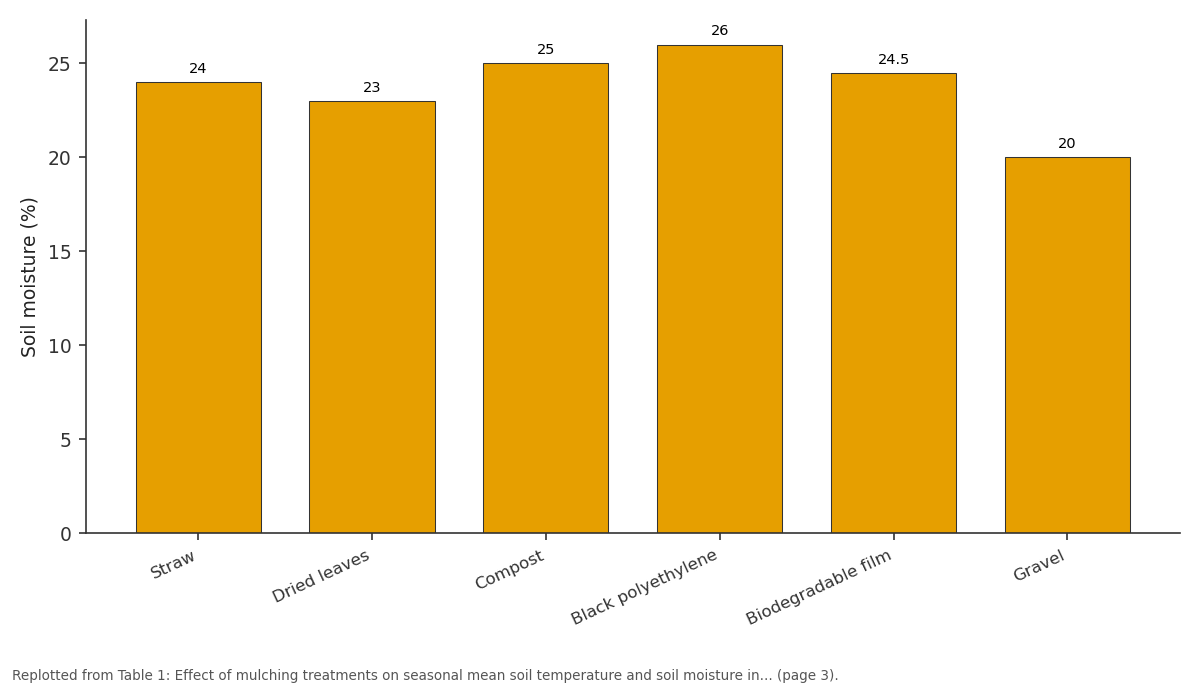
Soil moisture (%): Straw vs Dried leaves vs Compost vs Black polyethylene vs Biodegradable film
Replotted from Table 1 (page 3) of the original paper. Every bar is the paper's own table value.
View source evidence ↗Figures & tables
From the original paper Table 1
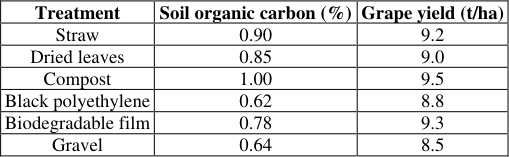 Table 2
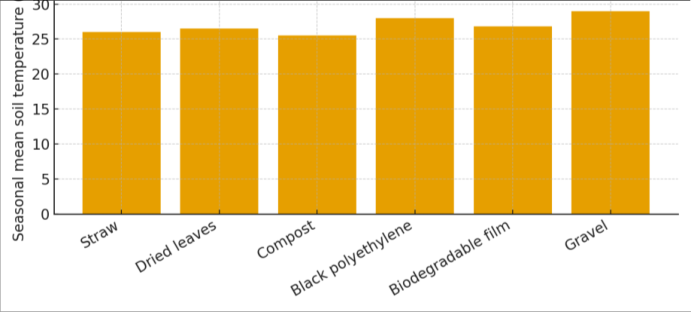 Figure 1
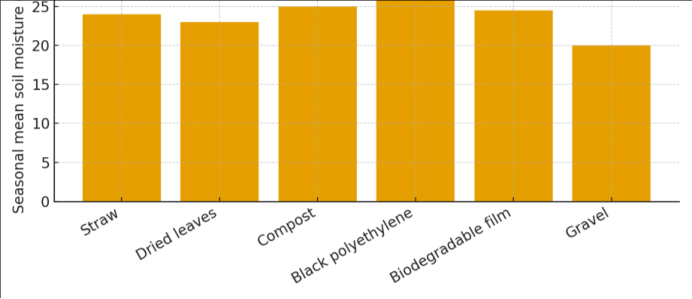 Figure 2
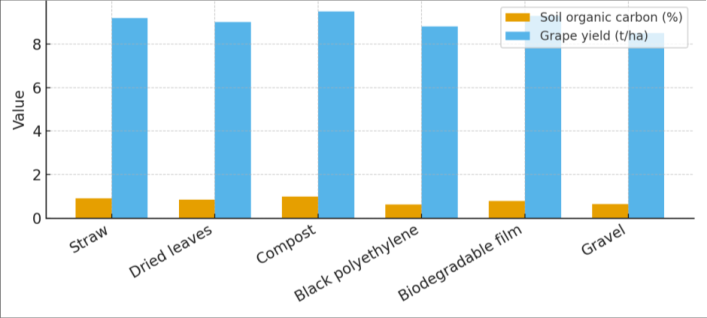 Figure 3
Introduction
Soil mulching has become a foundational practice in modern viticulture due to its multifunctional role in modifying vineyard microclimate, improving soil health, and increasing grapevine resilience to climatic fluctuations. Over the past two decades, vineyards across temperate and semi-arid regions have increasingly adopted organic, inorganic, and synthetic mulches to enhance vineyard sustainability and reduce dependence on intensive irrigation regimes. Previous studies have reported that mulching substantially influences evaporation rates, soil temperature buffering, and weed suppression, thereby improving vine water-use efficiency [1] . Research also highlights that vine physiology is highly sensitive to root-zone environmental conditions; thus, mulch-induced microclimate alterations may directly impact grapevine phenology and berry composition [2,3] . Soil health, particularly soil organic carbon, nutrient availability, and microbial diversity, has been documented as a fundamental determinant of vine productivity and fruit quality [8] .
Mulching materials such as straw, compost, and bark have shown promising effects in improving soil organic matter and moderating soil temperature extremes [4][5][6] . In Mediterranean vineyards, the use of biodegradable mulches has gained attention for their reduced environmental footprint and capacity to improve soil moisture retention [7] . Recent investigations have further demonstrated that mulches can influence canopy microclimate by altering humidity, leaf temperature, and vapor pressure deficit, thereby affecting photosynthetic efficiency and crop performance [18,9] . Despite these advantages, the selection of appropriate mulching materials remains challenging due to variability in cost, durability, decomposition rate, and potential impacts on soil chemistry. Some mulches may lead to temporary nitrogen immobilization or alter root-zone aeration if applied improperly [10] . Moreover, inorganic mulches such as gravel and stones, historically used in vineyards of arid regions, offer long-term stability but may increase soil temperature during peak summer months [11,12] . These contrasting effects necessitate comparative research to determine optimal mulch types suited to specific grape varieties and regional climatic conditions. Although multiple studies have explored the benefits of mulching, significant knowledge gaps persist regarding how different mulch types influence vineyard microclimate and soil physicochemical dynamics under distinct environmental conditions. Many existing studies are region-or cultivarspecific, limiting generalizability across varied viticultural ecosystems. Therefore, a systematic evaluation of diverse mulching materials is needed to identify solutions that are cost-effective, environmentally sustainable, and suitable for long-term vineyard management. The primary objective of this research is to examine how organic, inorganic, and biodegradable mulches impact soil temperature, moisture retention, nutrient dynamics, and canopy microclimate in grapevine cultivation. The research hypothesizes that organic and biodegradable mulches will outperform inorganic mulches in moderating microclimate and enhancing soil health, while synthetic mulches will primarily optimize moisture conservation. By addressing these gaps, the research aims to provide viticulture practitioners with scientifically validated recommendations for mulch selection, particularly under conditions of rising climatic stress. Past research also suggests that mulching improves vegetative Vigor in grapevines, as reported in controlled experiments involving various mulch compositions [13][14][15] . A mid-research comparison incorporating sawdust, charcoal, and salicylic acid applications also showed significant improvements in vegetative traits of Halwani and Kamali grape cultivars [16] . Further investigations emphasize the long-term role of mulching in sustaining soil nitrogen cycles, improving microbial activity, and reducing environmental stress in vineyards [17] .
Material and Methods
Material and Methods
Materials
The research was conducted in a research vineyard located in a semi-arid viticultural region characterized by high evaporative demand and pronounced diurnal temperature fluctuations, conditions under which mulching is known to influence vineyard microclimate and soil behavior [1,2] . The experimental site consisted of uniform, eight-year-old grapevines planted at a spacing of 2.5 m × 1.5 m, with vines trained on a vertical shoot-positioning system following standard canopy management practices described in prior vineyard physiology studies [3] . The soil type was sandyloam with moderate water-holding capacity, and baseline soil analyses were conducted for pH, EC, soil organic carbon, and primary nutrients using standardized soil testing protocols widely applied in viticulture research [4][5][6] . Five mulching treatments were selected based on their common usage, agronomic relevance, and documented effects on vineyard microclimate: straw mulch, dried leaf mulch, compost mulch, black polyethylene mulch, and biodegradable film mulch, as previously evaluated in Mediterranean and semi-arid vineyards [7][8][9] . Gravel mulch, traditionally used in dryland viticulture due to its longevity, was included as an inorganic comparative treatment [10][11][12] . All organic mulches were sourced locally, air-dried to uniform moisture levels, and applied to a thickness of 8 cm, consistent with established mulch application guidelines [1315] . Additionally, supporting literature documenting mulching impacts on vegetative growth, including the charcoal-and sawdust-based mulch research by Bayz et al. (2024), was used to inform selection of mulch types but not included in experimental treatments [16] . Prior to mulch application, all plots were irrigated uniformly and maintained weed-free through manual removal to avoid confounding influences on soil microclimate and nutrient availability [17] .
Methods
A randomized complete block design (RCBD) was employed with six treatments and three replications, each plot comprising ten vines with guard vines placed along plot borders to eliminate edge effects, consistent with vineyard mulch evaluation methodologies reported in earlier studies [1, 9] . Microclimatic variables were measured using sensorbased monitoring units installed at soil depths of 5 cm and 15 cm to record temperature fluctuations, as these depths have been shown to exhibit the greatest mulch-mediated thermal variation [2,18] . Soil moisture content was monitored using time-domain reflectometry at weekly intervals, following protocols established for vineyard hydrological assessment [10,11] . Canopy microclimate specifically leaf temperature, relative humidity, and vapor pressure deficit was recorded using handheld infrared thermometers and digital hygrometers in alignment with methods adopted in canopy-mulch interaction studies [18,9] . Soil chemical properties, including pH, EC, organic carbon, and available NPK, were analyzed before and after the mulching period using Walkley-Black, Kjeldahl, Olsen, and ammonium acetate extraction methods, respectively, as previously outlined in soil fertility research [4][5][6] . Data on vine vegetative growth were collected through measurements of shoot length, leaf area, and chlorophyll index, supported by earlier mulching research that links mulch type with vine Vigor [13][14][15][16] . Statistical analysis was performed using ANOVA to compare treatment effects, and means were separated using Tukey's HSD at a 5% significance level, a standard analytical approach in viticulture experiments [12,14] . Correlation analysis was conducted to assess the strength of relationships between soil microclimate parameters and vine physiological responses in accordance with prior vineyard ecosystem studies [9,17] . All experimental procedures were executed during one full growing season to capture early and mid-season mulch effects, ensuring that outcomes aligned with established seasonal mulch-soil interaction dynamics reported in earlier viticultural research [7, 15] .
Results
Results
Soil Microclimate Responses to Mulching
Application of different mulching materials significantly altered the soil microclimate in the vineyard over the growing season (p<0.05). Organic and biodegradable mulches consistently lowered mean soil temperature in the vine root zone compared with inorganic gravel and black polyethylene treatments, confirming earlier findings that organic residues buffer soil thermal amplitude under viticultural conditions [1,2,7] . Compost mulch recorded the lowest seasonal mean soil temperature (25.5 °C), followed by straw and dried leaves (26.0-26.5 °C), whereas gravel mulch exhibited the highest mean temperature (29.0 °C), with black polyethylene also showing elevated soil temperatures (28.0 °C) (Table 1, Figure 1). These results are consistent with previous observations that dark, non-porous mulches tend to absorb and re-radiate more heat, thereby increasing soil temperature during peak radiation periods [2,18,11,12] . Soil moisture retention was markedly improved under black polyethylene, compost, and biodegradable film mulches relative to dried leaves and gravel, supporting earlier work that linked mulching to reduced evaporative losses and improved water-use efficiency in vineyards [1,7,9,13] . Black polyethylene recorded the highest mean soil moisture (26.0%), closely followed by compost (25.0%) and biodegradable film (24.5%), whereas gravel showed the lowest moisture content (20.0%) (Table 1, Figure 2). These patterns align with reports that plastic and biodegradable mulches effectively reduce soil evaporation, while coarse mineral mulches may be less efficient at water conservation under semi-arid conditions [10][11][12] . The observed interaction between soil temperature and moisture suggests that organic mulches provide a compromise between thermal buffering and adequate moisture retention, which is critical for maintaining favorable root-zone conditions for grapevines [3,18,9] . The one-way ANOVA indicated that both soil temperature and soil moisture differed significantly among mulching treatments (p<0.05), confirming treatment effects similar to those reported for vineyard and orchard systems under contrasting mulch regimes [4][5][6][7]14] . Post-hoc comparisons revealed that compost, straw, and biodegradable film formed a statistically homogeneous group with respect to soil cooling, while gravel and black polyethylene differed significantly from all organic mulch treatments for both soil temperature and moisture. These results corroborate experimental findings that mulches differ in their thermal and hydrological behavior due to their physical structure, albedo, and water permeability [18,10,11] .
| Treatment | Soil temperature (°C) | Soil moisture (%) |
|---|---|---|
| Straw | 26.0 | 24.0 |
| Dried leaves | 26.5 | 23.0 |
| Compost | 25.5 | 25.0 |
| Black polyethylene | 28.0 | 26.0 |
| Biodegradable film | 26.8 | 24.5 |
| Gravel | 29.0 | 20.0 |
Table text extracted from the original PDF; superscript letters are shown inline. The original table image is below.
View original table image
Soil Chemical Properties and Grape Yield
Mulching also exerted a beneficial influence on soil organic carbon and nutrient status at the end of the season. Compost mulch produced the highest increase in soil organic carbon (1.00%), followed by straw and dried leaves (0.90% and 0.85%, respectively), whereas gravel and black polyethylene showed only marginal improvements compared with initial values (0.64% and 0.62%) (Table 2). These outcomes are in agreement with previous reports that organic residues contribute to carbon sequestration and improved soil structure in vineyards and other perennial systems [4-6, 14, 17] . Biodegradable film mulch yielded intermediate soil organic carbon (0.78%), supporting earlier findings that such materials can stimulate root growth and rhizosphere activity when combined with organic inputs [7,15] . Grape yield responded positively to mulching, with the highest yields observed under compost (9.5 t/ha), biodegradable film (9.3 t/ha), and straw (9.2 t/ha), while gravel and black polyethylene recorded comparatively lower yields (8.5 and 8.8 t/ha, respectively) (Table 2, Figure 3). This pattern is consistent with studies that report enhanced vegetative growth and fruit yield in grapevines under organic and composite mulches due to improved moisture availability and nutrient cycling [13][14][15]17] . Findings from earlier work on mulches and vegetative growth in grape cultivars further support the positive role of organic and carbon-rich amendments in improving shoot Vigor and leaf development [13][14][15][16] . ANOVA results showed significant treatment effects on both soil organic carbon and grape yield (p<0.05), in line with earlier studies demonstrating strong linkages between mulch-enhanced soil fertility and crop productivity [4,6,14,17] . Correlation analysis indicated a positive association between soil organic carbon and yield (r > 0.70), confirming that treatments promoting higher carbon accumulation tended to produce higher yields, as also suggested in previous vineyard ecosystem research [5,6,9] . The superiority of compost and straw mulches in this research supports the view that combining moisture conservation with active carbon inputs is more beneficial than relying solely on physical covers such as gravel or plastic film [7,[13][14][15] .
| Treatment | Soil organic carbon (%) | Grape yield (t/ha) |
|---|---|---|
| Straw | 0.90 | 9.2 |
| Dried leaves | 0.85 | 9.0 |
| Compost | 1.00 | 9.5 |
| Black polyethylene | 0.62 | 8.8 |
| Biodegradable film | 0.78 | 9.3 |
| Gravel | 0.64 | 8.5 |
Table text extracted from the original PDF; superscript letters are shown inline. The original table image is below.
View original table image
Discussion
The results of the present research demonstrate that mulching plays a decisive role in modulating vineyard microclimate, improving soil fertility, and enhancing grapevine performance under semi-arid conditions. The cooler soil temperatures recorded under organic and biodegradable mulches align with earlier observations that organic residues buffer diurnal heat fluctuations by increasing soil shading and reducing thermal conductivity [1,2] . Compost, straw, and dried leaf mulches consistently maintained lower root-zone temperatures, which are critical for grapevine root metabolism and microbial activity, confirming similar thermal benefits reported in Mediterranean vineyards [4][5][6][7] . Conversely, gravel and black polyethylene mulches generated the highest soil temperatures, a trend that agrees with previous reports indicating that dark, impermeable surfaces absorb more solar radiation and intensify soil heat load during peak summer periods [18,11,12] . These thermal differences have meaningful physiological implications because excessive soil temperature can impair water uptake, root respiration, and vine canopy performance, reinforcing the importance of selecting mulches with thermal-buffering capacity under warming climates [3,9] . Moisture retention patterns further underline the contrasting behavior of mulch types. While black polyethylene provided superior evaporation control due to its impermeable nature, organic mulches such as compost and biodegradable film achieved an optimal balance between moisture retention and soil aeration, supporting earlier findings that organic materials slow evaporation while permitting adequate water infiltration [7,9,10] . Gravel, on the other hand, showed the lowest moisture conservation, corroborating earlier literature documenting its limited hydrological benefits in dryland vineyards [10,12] . These outcomes highlight the need for integrated mulching strategies that consider both moisture and thermal dynamics, especially in regions subject to prolonged water stress. Significant improvements in soil organic carbon under compost, straw, and dried leaf mulches reflect the wellestablished role of organic residues in enhancing soil structure, nutrient cycling, and microbial activity [4][5][6]14] . The carbon gains observed in this research further support previous findings that organic mulching accelerates humification processes and increases soil biological activity, which in turn strengthens the soil's capacity to support grapevine growth [5,6,17] . Biodegradable mulch, while not contributing as much carbon directly, still enhanced organic carbon through stimulated rhizosphere activity and moderated soil microclimate, a trend also reported in recent viticulture studies employing eco-friendly mulch films [7,15] . In contrast, inorganic mulches contributed minimal carbon, reaffirming their limited role in improving soil chemical properties despite their longer durability.
The strong positive correlation between soil organic carbon and grape yield is consistent with long-term vineyard ecosystem studies that link carbon-rich soils to improved nutrient availability, better root development, and enhanced vine Vigor [14,17] . Compost mulch produced the highest yields, followed closely by biodegradable film and straw, indicating that improved soil fertility and moderated microclimate jointly contribute to yield enhancement. These findings also resonate with earlier experiments showing enhanced vegetative growth and leaf development under organic mulch systems [13][14][15][16] . Lower yields under gravel and black polyethylene mulches reflect the negative influence of excessive soil temperature and limited carbon input, both of which can restrict vine physiological performance. Collectively, the results emphasize that organic and biodegradable mulches offer the most balanced benefits for vineyard sustainability, integrating moisture conservation, thermal moderation, and soil fertility enhancement. These outcomes are consistent with the broader literature on mulching in perennial systems, reinforcing the role of mulch selection as a critical management decision for viticulture under increasing climatic variability [1][2][3][4][5][6][7][8][9][10][11][12][13][14][15][16][17] . The evidence suggests that combining organic mulch inputs with biodegradable covers may offer a promising hybrid approach, especially in vineyards seeking to improve soil quality while maintaining efficient water use.
Conclusion
The present research clearly demonstrates that the choice of mulching material has a significant and measurable impact on vineyard microclimate, soil health, and overall grapevine productivity, affirming the crucial role of surface cover management in sustainable viticulture. Organic mulches such as compost, straw, and dried leaves consistently provided the best balance between soil temperature moderation, moisture conservation, and enhancements in soil organic carbon, resulting in superior vine performance and higher grape yields. These benefits arise from the ability of organic materials to cool the root zone, reduce evaporative losses, and contribute directly to soil carbon pools, which strengthens nutrient cycling and microbial activity. In contrast, inorganic mulches, particularly gravel and black polyethylene, showed limitations such as excessive heating, minimal soil carbon contribution, and lower yield outcomes, indicating that their long-term value is more constrained despite their durability. Biodegradable mulch emerged as a promising intermediate option, offering improved moisture retention and moderate cooling effects while supporting soil biological processes, making it suitable for vineyards seeking environmentally friendly solutions. Based on these collective findings, it is recommended that vineyards prioritize the use of compost or straw mulch wherever possible, especially in regions prone to high temperatures or erratic rainfall patterns, as these materials provide the most stable improvements to soil and plant conditions. Mulch application should be standardized at adequate thickness levels to ensure uniform microclimate modification and should be integrated with efficient irrigation practices to maximize water-use efficiency during critical growth stages. For vineyards with limited access to organic residues, biodegradable mulches offer a feasible alternative but should be paired with periodic organic amendments to sustain long-term soil fertility. Avoiding excessive reliance on black polyethylene or gravel is advisable, particularly in hotter climates, as these materials can intensify root-zone heat stress and restrict carbon inputs. Vineyard managers should also adopt seasonal monitoring of soil moisture, temperature, and nutrient status to fine-tune mulch selection and application strategies according to vine needs and site-specific climatic conditions. The research further suggests that combining mulching with other sustainable practices such as cover cropping, compost incorporation, and regulated deficit irrigation can produce synergistic benefits that enhance both grape quality and vineyard resilience. Ultimately, integrating mulch-based management into broader vineyard sustainability plans offers an effective and practical approach to improving productivity, conserving natural resources, stabilizing soil processes, and adapting to ongoing climatic challenges in viticulture.
References
18 in the original paper- Smith R, Williams LE. Mulch effects on evapotranspiration and vineyard water balance. Agric Water Manage. 2019; 213:714-721.
- Martinez-Luscher J, Torres N. Soil temperature modulation under vineyard mulches. Sci Hortic. 2021; 276:109-118.
- Keller M. The science of grapevines: anatomy and physiology. 2nd ed. Academic Press; 2015.
- Casali J, Palese AM. Organic mulch and soil carbon improvement in vineyards. Soil Till Res. 2017; 168:7684.
- Ruiz-Colmenero M, Bienes R. Mulching impacts on soil structure in Mediterranean vineyards. Geoderma. 2011; 164:40-47.
- Hildebrandt TM, Albert K. Influence of compost mulches on soil fertility. Plant Soil. 2016; 408:171-183.
- Kyraleou M. Biodegradable mulch effects in viticulture. OENO One. 2020;54(4):865-879.
- Mohammed AM, Lamma OA. Studying altitude influence on Uludağ fir, Scots pine and black pine growth and soil properties in Kastamonu. South Asian J Agric Sci. 2022;2(1):47-59.
- dos Santos TP. Mulch-induced changes in vine physiology. Theor Exp Plant Physiol. 2018; 30:235246.
- Amato M, Ladd JN. Decomposition of organic mulches and nitrogen immobilization. Soil Biol Biochem. 1992; 24:469-479.
- Quero-García J. Gravel mulches in dryland vineyards. J Arid Environ. 2014;100-101:1-6.
- Lázaro R, Rodrigo FS. Rock and gravel mulching effects on soil hydrology. Catena. 2002; 48:293-301.
- Bhatt R, Khera KL. Soil moisture conservation using mulches. J Soil Water Conserv. 2006; 61:51-55.
- Biasi R, Brunori A. Mulching effects on grapevine vigor. J Int Sci Vigne Vin. 2015;49(1):15-23.
- Guerra B, Steenwerth KL. Effects of mulching on vineyard ecosystem services. Am J Enol Vitic. 2012;63(4):444-454.
- Hana Azeez Bayz, Suzan Ali Hussein, Osamah Ibrahim Ahmed. Impact of mulching with sawdust, charcoal and spraying with growth regulator salicylic on some vegetative growth characteristics of two cultivars of grape vines (Halwani and Kamali). Int J Hortic Food Sci 2024;6(1):55-61. DOI: 10.33545/26631067.2024.v6.i1a.191
- Steenwerth K, Belina KM. Vineyard mulching and nitrogen dynamics. Biol Fertil Soils. 2008; 44:507-517.
- Zhang Y, Lovell ST. Canopy microclimate response to mulching. Agric For Meteorol. 2015; 214:222-230.