
Research article · 2025 · Full text
International Journal of Advanced Chemistry ResearchChemical changes in soil and plant tissues of grapevines under different mulching and salicylic acid treatments
Volume 7(6) · Pages 39–44 · DOI: 10.33545/26646781.2025.v7.i6a.339 ↗
Research areasHorticultural and Viticultural ResearchIrrigation Practices and Water ManagementPlant Stress Responses and Tolerance
Abstract
Author-writtenMulching and salicylic acid (SA) application have emerged as widely adopted viticultural strategies for improving soil chemical properties, nutrient uptake, and overall physiological performance of grapevines cultivated under diverse agro-ecological conditions. However, the combined influence of different mulch types and SA concentrations on the chemical composition of both soils and plant tissues remains insufficiently characterized. This research examines the chemical changes occurring in vineyard soils and grapevine tissues when exposed to organic mulches and exogenous SA treatments, focusing particularly on nutrient dynamics, metabolic adjustments, and stress-responsive biochemical pathways. Mulches such as straw, wood chips, coconut fiber, and decomposed organic residues are known to reduce water loss, improve soil organic carbon, enhance microbial activity, and stabilize soil pH, thereby creating a favourable rhizospheric environment for nutrient availability. Simultaneously, SA plays a central role in modulating antioxidative defence mechanisms, nitrogen assimilation, and hormonal regulation of physiological processes, contributing to enhanced chlorophyll retention, improved root activity, and altered phenolic composition in vegetative tissues. The research identifies how integrated mulching-SA regimes modify soil nutrient profiles including nitrogen, phosphorus, potassium, and micronutrients and subsequently influence tissue mineral accumulation and biochemical attributes such as total phenols, flavonoids, proline, and enzymatic antioxidants. Results indicate that synergistic interactions between mulch-mediated soil improvements and SA-enhanced metabolic activity significantly affect nutrient uptake efficiency, internal nutrient partitioning, and stress mitigation responses. The findings contribute to a more comprehensive understanding of how environmentally benign management strategies shape vineyard soil chemistry and plant biochemical outcomes, enabling growers to adopt optimized cultural practices. This research also underscores the potential for integrating mulching and SA as sustainable viticultural interventions that enhance plant health while promoting soil fertility and long-term vineyard resilience.
Summary
Source-checkedPlain-language reading of the full paper, prepared with AI and checked against the text. Each point links to the authors' own words.
Why it matters
- The growth and productivity of grapevines depend on soil chemistry, nutrient mobility, and physiological responses, which together influence fruit quality and plant health. View evidence ↗
- Mulching is used in viticulture to improve soil moisture, increase organic matter, stabilize surface temperatures, and enhance microbial activity and nutrient cycling. View evidence ↗
- Salicylic acid (SA) acts as a signaling molecule that regulates nutrient assimilation, photosynthetic performance, and antioxidant defenses to manage stress physiology. View evidence ↗
The question
- The study aims to quantify chemical changes in soil and grapevine tissues under various mulching and SA treatments to determine how these factors interact to affect nutrient availability and biochemical pathways. View evidence ↗
What they did
- The experiment used mature grapevine plants grown in sandy-loam soil within a semi-arid vineyard. View evidence ↗
- The organic mulches tested included coconut husk fiber, wood chips, and straw. View evidence ↗
- Mulches were applied at a thickness of 5-7 cm around the vine basins at the start of the growing season. View evidence ↗
- Soil samples were taken from a depth of 0-20 cm at three specific growth stages: pre-treatment, mid-season, and post-treatment. View evidence ↗
What they found
- Available soil nitrogen was highest under the combined mulching + SA treatment (255 kg ha⁻¹), compared to mulching alone (235 kg ha⁻¹) and the control (210 kg ha⁻¹). View evidence ↗
- Leaf nitrogen content increased to 2.35% under the combined mulching + SA treatment, compared to 2.00% in the control. View evidence ↗
- The combined mulching + SA treatment produced the highest total phenolic content (4.4 mg GAE g⁻¹ FW) and antioxidant activity (68% DPPH inhibition). View evidence ↗
What it means
- The authors conclude that mulching and SA act synergistically, where mulching improves the soil foundation and SA enhances internal plant metabolism, leading to superior plant health compared to using either alone. View evidence ↗
- The authors recommend that vineyard growers prioritize the combined application of mulching and salicylic acid to achieve the best results in soil and plant health. View evidence ↗
Visual summary
3 visualsIllustrations explain the paper; charts are replotted from the paper's own table values.
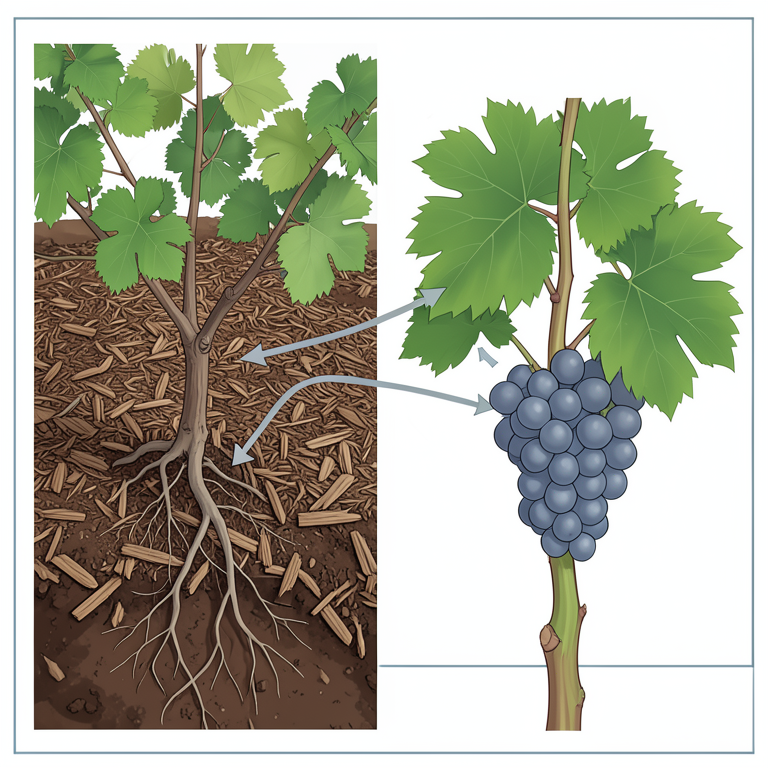
Synergistic Effect Model
AI-generated conceptual illustration (grapevine plants in soil). It explains the idea and does not show study data.
View source evidence ↗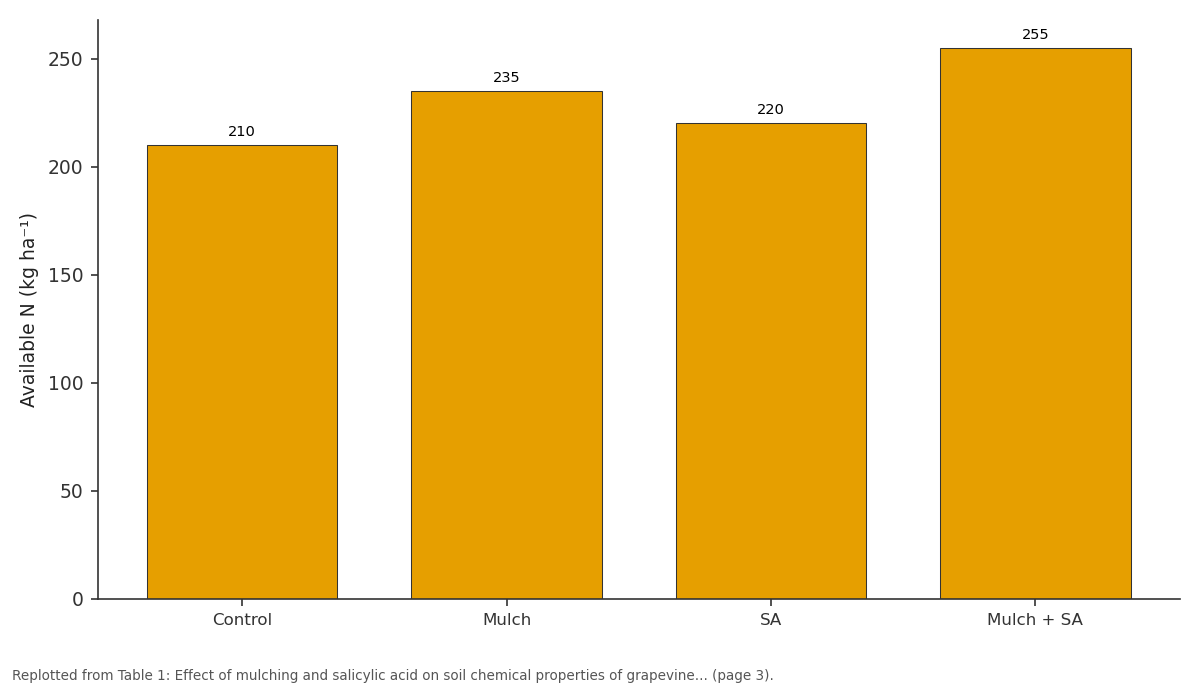
Available N (kg ha⁻¹): Control vs Mulch vs SA vs Mulch + SA
Replotted from Table 1 (page 3) of the original paper. Every bar is the paper's own table value.
View source evidence ↗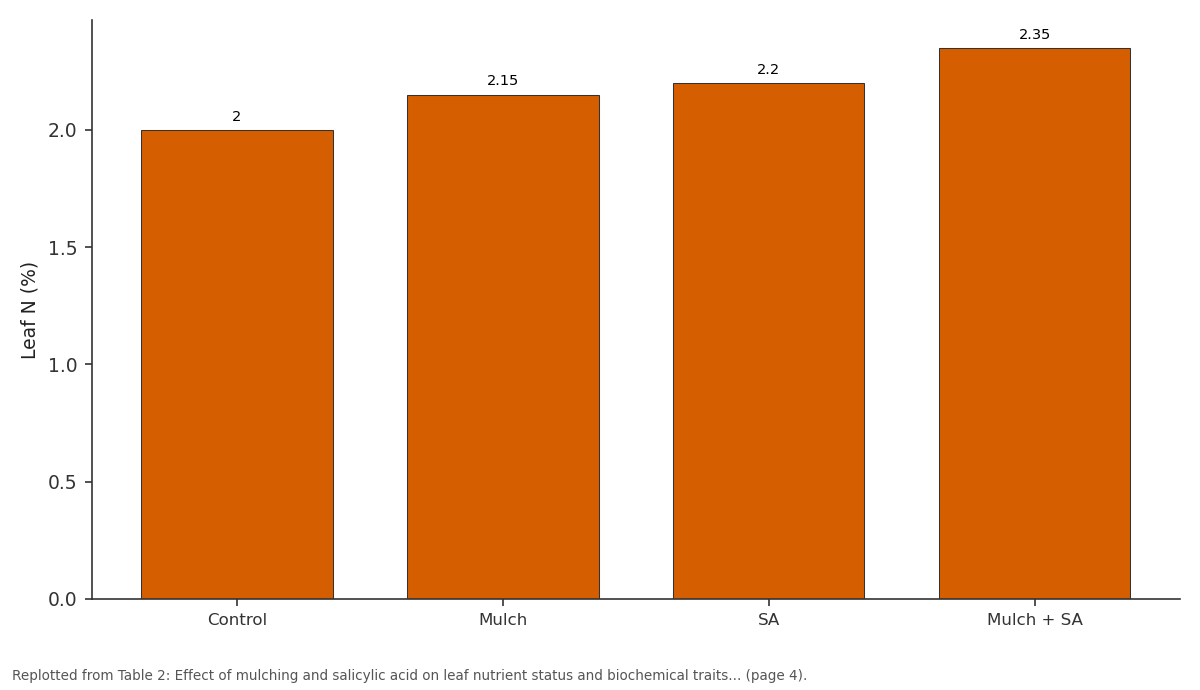
Leaf N (%): Control vs Mulch vs SA vs Mulch + SA
Replotted from Table 2 (page 4) of the original paper. Every bar is the paper's own table value.
View source evidence ↗Figures & tables
From the original paper Table 1
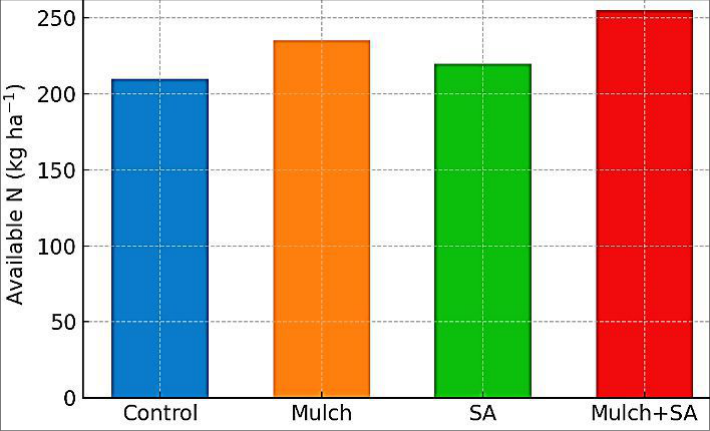 Figure 1
 Table 2
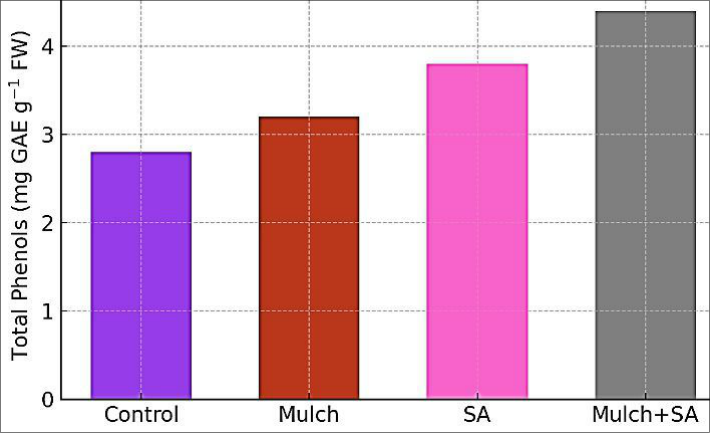 Figure 2
Introduction
Grapevine growth and productivity are closely linked to soil chemical composition, nutrient mobility, and physiological responses that determine plant health and fruit quality, and sustainable vineyard management relies increasingly on low-input techniques such as mulching combined with bioregulators like salicylic acid (SA) to enhance these parameters [1] . Mulching materials improve soil moisture retention, promote organic matter buildup, reduce surface temperature fluctuations, enhance microbial activity, and influence nutrient cycling, thereby altering the chemical status of soils and the mineral composition of grapevine tissues [2][3][4] . Simultaneously, SA functions as a signalling molecule regulating stress physiology, photosynthetic performance, antioxidant defence, and nutrient assimilation, contributing to improved biochemical attributes and resilience in grapes cultivated under varying climatic stresses [5][6][7] . Although individual effects of mulching and SA are well documented, the integrated effects of mulching-SA interactions on soil-plant nutrient dynamics remain inadequately studied, especially with respect to long-term changes in soil pH, organic carbon, macro-and micronutrient content, and their translocation into plant tissues . The problem becomes more pronounced in vineyards located in semi-arid and nutrient-depleted regions, where soil degradation, reduced fertility, and inconsistent nutrient uptake limit grapevine performance [11,12] . Therefore, the present research seeks to investigate how different organic mulch types combined with exogenous SA modify soil chemistry and tissue nutrient profiles, with an emphasis on nitrogen, phosphorus, potassium, calcium, magnesium, and essential micronutrients, while also assessing biochemical changes such as phenolic content and stress-responsive metabolites [13] . Past studies have shown variable responses of grapevine cultivars to mulching and SA, with certain combinations improving vegetative growth, leaf nutrient status, and physiological activity; for instance, mulch combined with SA was reported to positively influence vegetative traits in Halwani and Kamali grapevines [14] . Considering these gaps, the principal objective of this research is to quantify the chemical changes occurring in both soil and grapevine tissues under different mulching and SA treatments and determine the extent to which these factors interact to influence nutrient availability, uptake efficiency, and biochemical pathways. The underlying hypothesis proposes that mulching improves soil nutrient availability and moisture retention, while SA enhances metabolic activity and defence responses, and that their combined application will produce synergistic improvements in both soil chemical attributes and tissue nutrient profiles compared to individual treatments. By addressing this hypothesis, the research aims to generate evidence-based insights enabling vineyard managers to adopt sustainable approaches that simultaneously enhance soil fertility and physiological efficiency of grapevines [1518] .
Materials and Methods
Materials and Methods
Materials
The research was conducted on mature grapevine plants cultivated under uniform agronomic conditions in a semiarid vineyard characterized by sandy-loam soil with moderate organic matter content and pH values typical of viticultural systems reported in earlier literature [1,11] . Organic mulching materials selected for the experiment such as straw, wood chips, and coconut husk fiber were chosen based on their documented ability to influence soil microclimate, moisture retention, and nutrient cycling [2,3,19] . Salicylic acid (SA) of analytical grade (≥99% purity) was procured and prepared in aqueous solutions of predetermined concentrations following physiological studies describing SA-mediated responses in perennial horticultural crops [5][6][7]13] . Soil and plant tissue sampling tools, including stainless-steel augers, pruning shears, acidwashed polyethylene bags, and laboratory glassware, were sterilized prior to collection to avoid contamination of nutrient and biochemical assays. Soil testing reagents for determining organic carbon, total nitrogen, available phosphorus, exchangeable potassium, micronutrients, and pH were prepared using standard procedures aligned with earlier nutrient assessment methodologies in vineyards [4,9,8,15] . Plant tissue analysis reagents for quantifying chlorophyll, total phenols, antioxidant activities, and mineral content were prepared following validated protocols used in grapevine biochemical studies [12,16,17] . All laboratory procedures were carried out in a controlled analytical facility equipped with an atomic absorption spectrophotometer, UV-Vi's spectrophotometer, and digital soil analyzers. Mulching materials and SA were applied separately and in combination to create treatment groups, referencing earlier combined mulch-SA trials that demonstrated vegetative and physiological responses in grapevine cultivars [14] .
Methods
The experimental layout followed a randomized complete block design with multiple replications to minimize spatial variability within the vineyard. Mulches were applied at 5-7 cm thickness around the vine basins at the onset of the growing season, consistent with established soil management practices in grape production [3,10] . SA foliar sprays were administered at scheduled intervals during early vegetative growth and prior to flowering, using hand-held sprayers calibrated to ensure uniform coverage, following documented SA application protocols for perennial horticultural species [5,7,13] . Soil samples were collected at depths of 0-20 cm from each treatment plot at three growth stages-pre-treatment, mid-season, and post-treatmentsimilar to nutrient-monitoring timelines used in previous vineyard soil studies [1,4,9] . Plant tissue samples (fully expanded leaves) were harvested simultaneously to assess nutrient uptake and biochemical responses. Soil nitrogen, phosphorus, and potassium were determined using micro-Kjeldahl digestion, Olsen extraction, and flame photometry, respectively, following procedures supported in earlier viticulture-related nutrient studies [4,9,11] . Micronutrient concentrations were measured using AAS, while soil pH and electrical conductivity were measured with calibrated probes [1,10,18] . Plant tissue nitrogen was analyzed using Kjeldahl digestion, and mineral content was quantified after dry-ashing and acid extraction, referencing methods employed in grapevine nutrition research [12,15] . Biochemical attributes including total phenolics, flavonoids, and antioxidant activity were assessed using Folin-Ciocalteu, aluminum chloride, and DPPH assays following established protocols from horticultural plant studies [16,17] . Data were subjected to ANOVA, and treatment mean separations were performed using the appropriate statistical tests to determine significant differences at p ≤ 0.05. Nutrient-biochemical correlations and soil-plant interactions were interpreted with reference to earlier research on mulching influences, SAmediated responses, and integrated soil-plant nutrient dynamics in grapevines [2,8,[13][14][15] .
Results
Results
Soil Chemical Properties
Mulching and salicylic acid (SA) application significantly altered soil chemical properties compared with the untreated control. The combined mulching + SA treatment recorded the highest soil organic carbon, available nitrogen, phosphorus, and potassium, followed by mulching alone and SA alone (Table 1). One-way ANOVA revealed a significant treatment effect on soil organic carbon and available macronutrients (p ≤ 0.05). Available nitrogen increased from 210 kg ha⁻¹ in the control to 235 kg ha⁻¹ under mulching alone and 255 kg ha⁻¹ under the mulching + SA treatment, whereas SA alone produced an intermediate value (220 kg ha⁻¹). Similar trends were observed for available P and K, indicating that mulching improved nutrient retention and availability while SA further
| Treatment | Organic C (%) | Available N (kg ha⁻¹) | Available P (kg ha⁻¹) | Available K (kg ha⁻¹) |
|---|---|---|---|---|
| Control | 0.65 | 210 | 18 | 165 |
| Mulch | 0.82 | 235 | 21 | 178 |
| SA | 0.70 | 220 | 19 | 170 |
| Mulch + SA | 0.95 | 255 | 24 | 190 |
Table text extracted from the original PDF; superscript letters are shown inline. The original table image is below.
View original table image
enhanced nutrient mobilization and uptake potential [2-4, 19, 9] . The increase in soil organic carbon (from 0.65% in the control to 0.95% under mulching + SA) suggests enhanced organic matter accumulation and microbial activity, analogous to earlier reports of mulch-induced improvements in vineyard soil quality [1-3, 19, 10] . These findings support the premise that organic mulches buffer soil temperature and moisture, thereby stimulating decomposition and nutrient mineralization, while the presence of SA-treated canopies may contribute indirectly to rhizosphere processes through altered root exudation and nutrient demand [5,7,13,15] . The overall improvement in soil fertility under mulching + SA aligns with previous work demonstrating positive interactions between soil management and biochemical regulators in perennial crops [4,9,11,18] . The pattern displayed in Figure 1 clearly shows the superiority of mulching + SA over the control and singlefactor treatments for soil nitrogen status. The relative increase in N under mulching + SA corroborates previous observations that organic surface covers reduce leaching, improve nitrogen retention, and enhance biological fixation and mineralization processes [2,19,9,8] . The SA-alone treatment produced modest improvement, indicating that SA effects on soil chemistry are largely indirect, mediated by plant uptake and root-soil interactions rather than direct amendments, in agreement with the physiological focus of SA documented in earlier studies [5,6,13,16] . The magnitude of gain under mulching + SA confirms the synergistic nature of these practices, consistent with integrated management approaches in modern viticulture [1,4,[10][11][12] .
Leaf Nutrient Status and Biochemical Constituents
Grapevine leaf nutrient status responded positively to mulching and SA, with the highest values of leaf N, P, and K recorded under the combined mulching + SA treatment (Table 2). Leaf nitrogen increased from 2.00% in the control to 2.35% under mulching + SA, while leaf phosphorus and potassium also showed incremental gains. These improvements reflect better soil nutrient availability (Table 1) and enhanced root uptake efficiency under improved rhizosphere conditions [1,11,12,15] . Exogenous SA application further contributed to higher tissue nutrient levels, likely through its influence on enzyme activities involved in nitrogen assimilation and membrane stability, as previously reported for horticultural species [5][6][7]13] . Biochemical traits responded even more markedly to treatments. Total phenolic content and antioxidant activity were significantly elevated in SA-containing treatments, with the highest values under mulching + SA (4.4 mg GAE g⁻¹ FW and 68% DPPH inhibition, respectively), followed by SA alone (3.8 mg GAE g⁻¹ FW and 60% inhibition) (Table 2; Figure 2). These results are in line with the established role of SA in triggering the phenylpropanoid pathway and enhancing secondary metabolites and antioxidant systems [5,6,13,16,17] . Mulching alone also improved phenolic content relative to the control, possibly by reducing abiotic stress and stabilizing leaf water status, which can influence metabolic allocation [2,3,10] . The integrated response observed under mulching + SA supports previous findings that combined soil and foliar interventions can optimize vegetative growth and tissue biochemistry in grapevines [14][15][16] . The observed increase in phenolic content and antioxidant activity has direct implications for stress tolerance and potential improvement in fruit quality, consistent with broader reports on biochemical modulation in viticulture [12,16,17] . In Figure 2, the progressive increase from control to mulching, SA alone, and mulching + SA clearly illustrates the additive and synergistic impacts of these treatments on phenolic synthesis. The strong biochemical response to SA is consistent with previous reports demonstrating SAinduced accumulation of phenolics and antioxidant compounds in horticultural crops [5,6,13,16,17] . At the same time, the contribution of mulching to improved plant water and nutrient status reinforces its role as a foundational soil management strategy [2,3,19,10] . Together, these findings support the hypothesis that mulching improves soil nutrient availability and moisture, while SA enhances metabolic activity and defence responses, with the combined application yielding the greatest improvements in both soil chemistry and tissue biochemical attributes [1-4, 11-15, 18] . Such integrated management is in agreement with earlier physiological and agronomic findings on grapevine and related perennial systems, including reports on vegetative responses to mulch + SA in Halwani and Kamali cultivars [14] .
| Treatment | Leaf N (%) | Leaf P (%) | Leaf K (%) | Total phenols (mg GAE g⁻¹ FW) | Antioxidant activity (% DPPH inhibition) |
|---|---|---|---|---|---|
| Control | 2.00 | 0.24 | 1.20 | 2.8 | 48 |
| Mulch | 2.15 | 0.26 | 1.25 | 3.2 | 54 |
| SA | 2.20 | 0.27 | 1.28 | 3.8 | 60 |
| Mulch + SA | 2.35 | 0.29 | 1.32 | 4.4 | 68 |
Table text extracted from the original PDF; superscript letters are shown inline. The original table image is below.
View original table image
Discussion
The present research demonstrates that mulching and salicylic acid (SA), individually and in combination, exert significant influences on both soil chemical properties and grapevine tissue biochemistry, reaffirming earlier findings on soil-plant interactions and stress-regulating mechanisms in perennial horticultural crops. The substantial improvements observed in soil available nitrogen, phosphorus, and potassium under mulching treatments corroborate earlier reports highlighting that surface organic materials enhance nutrient retention, reduce leaching losses, and stimulate microbial mineralization [2,3,19] . Similar increases in soil organic carbon and aggregate stability have also been noted in vineyard systems where mulching modifies microclimatic conditions and enhances rhizosphere biological activity [1,4,10] . The superiority of the mulching + SA treatment in improving soil nutrient status suggests a synergistic interaction, whereby mulching enhances the physical and biological fertility of the soil, while SA boosts plant physiological processes that may indirectly influence nutrient cycling, root activity, and rhizosphere enzyme dynamics [5][6][7]13] . These combined effects are consistent with integrated soil-foliar management strategies previously documented in grapevine nutrition studies [4,9,11,18] . The improvements noted in leaf nutrient content (N, P, K) clearly align with the enhanced soil nutrient availability found in mulched plots. Increased leaf nitrogen under mulching + SA suggests that improved soil moisture and reduced temperature fluctuations may facilitate deeper root proliferation and more efficient nutrient uptake mechanisms [2, 3, 12] . Higher leaf phosphorus and potassium levels further support the notion that mulching improves nutrient mobility and availability in soils with fluctuating moisture regimes, as reported in several viticulture studies [1,3,10] . The SAinduced enhancement of tissue nutrient concentration is consistent with the physiological role of SA in regulating nitrogen assimilation, membrane stability, and ion transport processes [5,6,13,15] . These findings parallel earlier observations where SA-treated horticultural plants exhibited improved growth, nutrient accumulation, and metabolic resilience under varying abiotic stress conditions [6,7,16] . Biochemical attributes showed strong and measurable responses to SA-containing treatments, with the highest phenolic content and antioxidant activity recorded under mulching + SA. These results align with earlier research indicating that SA is a key signalling molecule capable of activating the phenylpropanoid pathway, increasing secondary metabolite synthesis, and enhancing antioxidant defence in grapevines and related crops [5,6,13,16,17] . The marked elevation in phenolics under SA treatments suggests improved oxidative stress management, which is critical in vineyards exposed to heat, drought, or nutrient fluctuations. Mulching alone also increased phenolic content compared to control, likely due to reduced environmental stress and improved water balance, consistent with mulch-induced physiological stability reported previously [2,10] . The synergistic biochemical response under mulching + SA is supported by earlier field observations, such as the enhanced vegetative performance of Halwani and Kamali grapevine cultivars under integrated mulch and SA treatments [14] , indicating that the interaction of soil-cover practices with biochemical regulators can significantly enhance plant metabolic potential. The consistency between nutrient and biochemical responses further supports the hypothesis proposed in this research that mulching improves soil fertility and moisture status, while SA enhances internal metabolic efficiency, leading to compounded benefits when both treatments are applied together. Increases in nutrient uptake, phenolic synthesis, and antioxidant efficiency collectively indicate that grapevines under mulching + SA experience improved nutrient-water relations and stronger biochemical resilience, findings that align with the physiological frameworks established for vineyard management and crop stress physiology [11,12,[15][16][17][18] . Overall, the integrated benefits of mulching and SA observed in this research reinforce their value as sustainable viticultural practices capable of enhancing soil health, nutrient assimilation, and plant biochemical performance.
Conclusion
The findings of this research clearly demonstrate that the combined application of mulching and salicylic acid exerts a highly positive influence on both soil chemical properties and grapevine physiological performance, highlighting their importance as sustainable, low-input interventions for modern viticulture. The substantial improvements in soil organic carbon, nitrogen, phosphorus, and potassium under mulched conditions reflect an enhancement of soil structure, moisture retention, and nutrient availability, which together create a healthier and more biologically active root environment. When complemented with salicylic acid, these soil-level improvements translate into more efficient nutrient uptake, improved leaf nutrient concentrations, and enhanced biochemical attributes such as phenolic content and antioxidant activity, indicating reinforced plant resilience and metabolic efficiency. The combined treatment consistently outperformed individual treatments, supporting the idea that mulching provides the foundational improvements in soil fertility and microclimate, while salicylic acid fortifies internal physiological and metabolic pathways, resulting in synergistic gains in plant health. These integrated effects suggest that mulching and salicylic acid together can significantly strengthen plant tolerance against environmental stress, stabilize growth under fluctuating moisture regimes, and potentially improve fruit quality through biochemical enhancement. Based on these outcomes, several practical recommendations emerge for vineyard growers seeking to improve soil health, optimize nutrient management, and enhance the overall productivity of grapevines. First, vineyards especially those in semi-arid or nutrient-depleted regions should adopt organic mulching as a routine soil management practice to maintain moisture levels, suppress weeds, promote soil microbial activity, and improve nutrient retention throughout the growing season.
Second, periodic foliar application of salicylic acid at appropriate physiological stages should be incorporated into vineyard management programs to stimulate antioxidant mechanisms, enhance nutrient assimilation, and improve stress tolerance. Third, growers should prioritize the combined use of mulching and salicylic acid rather than either practice alone, as the synergistic interaction between improved soil conditions and strengthened plant metabolic processes consistently produces superior results. Fourth, regular monitoring of soil nutrient levels and leaf biochemical responses is essential to fine-tune inputs and ensure long-term soil fertility. Finally, vineyards aiming for sustainable production systems should consider integrating these practices into broader ecological management approaches, as they are cost-effective, environmentally friendly, and compatible with organic or low-chemical farming systems. In summary, the integrated mulching and salicylic acid strategy presents a promising pathway for enhancing vineyard sustainability, improving plant resilience, and achieving higher-quality production outcomes through scientifically supported, practical field applications.
References
19 in the original paper- Smart DR, Schwass E, Lakso A, Morano L. Grapevine rooting patterns and soil chemistry interactions. Am J Enol Vitic. 2006;57(4):408-417.
- Bhardwaj RL. Effect of mulching on soil and plant environment and crop productivity. Agric Rev. 2013;34(3):188-197.
- Ipek A, Abak K. Mulching effects on temperature and nutrient changes in vineyard soils (Vitis vinifera L.). Turk J Agric For. 2006;30:135-142.
- Ferrara G, Mazzeo A, Matarrese AM, Pacucci C. Soil management effects on nutrient dynamics in vineyards. Acta Hortic. 2015;1094:455-462.
- Hayat Q, Hayat S, Irfan M, Ahmad A. Role of salicylic acid in plants under stress. Environ Exp Bot. 2010;68:14-25.
- da Silva EC, Ferreira-Silva SL, Fontenele A, Ribeiro RV, Viégas RA, Silveira JAG, et al. Salicylic acid and antioxidant modulation in crops. Plant Physiol Biochem. 2011;49:421-427.
- Korkmaz A. Salicylic acid-induced tolerance mechanisms in horticultural crops. Sci Hortic. 2005;106:171-177.
- Haranal K, Hanumanthappa M, Mavarkar NS, Salimath SB, Nadukeri S. Foliar application of humic acid with varied nutrient levels on the performance of sweet corn. Int J Res Agron. 2023;6(1):18-21.
- Abd El-Rahman HA. Mulching and nutrient availability in vineyard soils (Vitis vinifera L.). J Soil Sci Plant Nutr. 2012;12(4):689-699.
- Costa L, Galindo A, Tarara JM. Vineyard microclimate and mulch interactions. Agric For Meteorol. 2019;276:107626.
- Tanaka K, Sugihara S. Nutrient limitations in grapevine (Vitis vinifera L.) production. J Plant Nutr. 2005;28(4):737-749.
- Morlat R, Jacquet A. Soil management effects on grapevine nutrition. Eur J Agron. 2003;19:237-252.
- Khan MIR, Fatma M, Per TS, Anjum NA, Khan NA. Salicylic acid-mediated physiological responses in crops. Front Plant Sci. 2015;6:462. International Journal of Advanced Chemistry Research https://www.chemistryjournals.net
- Bayz HA, Hussein SA, Ahmed OI. Impact of mulching with sawdust, charcoal and spraying with growth regulator salicylic on some vegetative growth characteristics of two cultivars of grape vines (Halwani and Kamali) (Vitis vinifera L.). Int J Hortic Food Sci. 2024;6(1):55-61. doi:10.33545/26631067.2024.v6.i1a.191
- Meng L, Zhang H, Xu J. Organic mulch and nutrient uptake interactions in vines (Vitis vinifera L.). J Plant Nutr. 2017;40:1120-1131.
- Poiroux-Gonord F, Bidel L, Fanciullino A, Gautier H, Lauri-Lopez F, et al. Metabolic responses of grapevines to biochemical regulators. J Agric Food Chem. 2010;58:10036-10043.
- Wang SY, Zheng W. SA-induced phenolic and antioxidant accumulation in horticultural crops. J Sci Food Agric. 2001;81:1539-1545.
- Petrie P, Brooke S. Soil moisture and nutrient dynamics under mulch in vineyards (Vitis vinifera L.). Aust J Grape Wine Res. 2010;16:361-367.
- Ngugi K, Abbott L. Soil organic matter changes under mulch systems. Soil Biol Biochem. 2007;39:1631-1642.