
Research article · 2022 · Full text
International Journal of Agriculture Extension and Social DevelopmentTransforming livelihoods through irrigation and water-use efficiencies in semi-nomadic agropastoral system: A case of Kalobeyei community, Turkana County, Kenya
Volume 5(1) · Pages 54–58 · DOI: 10.33545/26180723.2022.v5.i1a.126 ↗
Research areasRangeland Management and Livestock Ecology
Abstract
Author-writtenThe study aimed at assessing how the Kalobeyei community in Turkana County, Kenya is adopting crop farming in an agropastoral system. Specifically, it sought to determine irrigation and other water-use efficient strategies used in building resilience in growing crops in the community. The study adopted a descriptive survey design. Data was collected from key informants working with the Dan Church Aid (DCA) and the local community leaders. Similarly, qualitative observations were also used to inform the study conclusions. Pastoralism alone cannot sustain livelihoods due to climatic vagaries, animal pests and diseases. The County government of Turkana is collaborating with Non-governmental Organizations (NGO’s) in teaching the locals on ways of building resilience in crop farming using shade nets, cone gardens and vertical gardens. These techniques are not only addressing food security in the area but also diversifying diet of the locals where acute malnutrition among children under the age of five is prevalent. The study concluded that the study area has great untapped potential in adoption of crop farming despite harsh climatic conditions and unsettled nomadic lifestyle. Therefore, there is a need to promote multi-sectoral engagement to effect synergy in the change. This study recommends targeted and deliberate agriculture extension that is guided by the remapping and designing of feasible and sustainable integrated outreaches.
Summary
Source-checkedPlain-language reading of the full paper, prepared with AI and checked against the text. Each point links to the authors' own words.
Why it matters
- Turkana County in Kenya is an arid and semi-arid land (ASAL) facing severe socioeconomic turmoil due to climate-related disasters, pests, and conflict. View evidence ↗
- Traditional pastoralism is no longer sufficient to sustain livelihoods because of animal diseases, pests, and unpredictable climate patterns. View evidence ↗
- Improving food security and diversifying diets is critical in this region, as acute malnutrition is common among children under five years old. View evidence ↗
The question
- The study aimed to assess the adoption of crop farming within the agropastoral system of the Kalobeyei community. View evidence ↗
- The research specifically sought to identify water-use efficient strategies and irrigation methods used to build resilience for crop growth. View evidence ↗
What they did
- The researchers employed a descriptive survey design for the study. View evidence ↗
- Data was gathered through qualitative observational methods to inform the study's conclusions. View evidence ↗
- Information was collected from local community leaders and key informants from Dan Church Aid (DCA). View evidence ↗
- The study was conducted within the Kalobeyei community of Turkana West sub-county, Kenya. View evidence ↗
What they found
- Locals use shade-house gardens made of nets or perforated clothing to regulate light, air, and moisture for crops. View evidence ↗
- Crops grown under shade nets were reported to have lower rates of pest and disease infestation than those grown in open fields. View evidence ↗
- Cone gardening is widely practiced in the Kalobeyei community and is water-efficient, requiring 20L of water every 7 days. View evidence ↗
- Vertical sack gardening is space and water efficient, allowing approximately 100 crops to be grown in a 1-meter long sack. View evidence ↗
- Sack gardening has increased self-reliance and diet diversification while reducing the cost of purchasing vegetables for locals. View evidence ↗
What it means
- The authors conclude that despite the nomadic lifestyle and harsh climate, there is significant untapped potential for adopting crop farming in the area. View evidence ↗
- The study recommends implementing targeted agricultural extension services based on the redesign of sustainable and feasible integrated outreaches. View evidence ↗
Visual summary
1 visualsIllustrations explain the paper; they do not show study data.
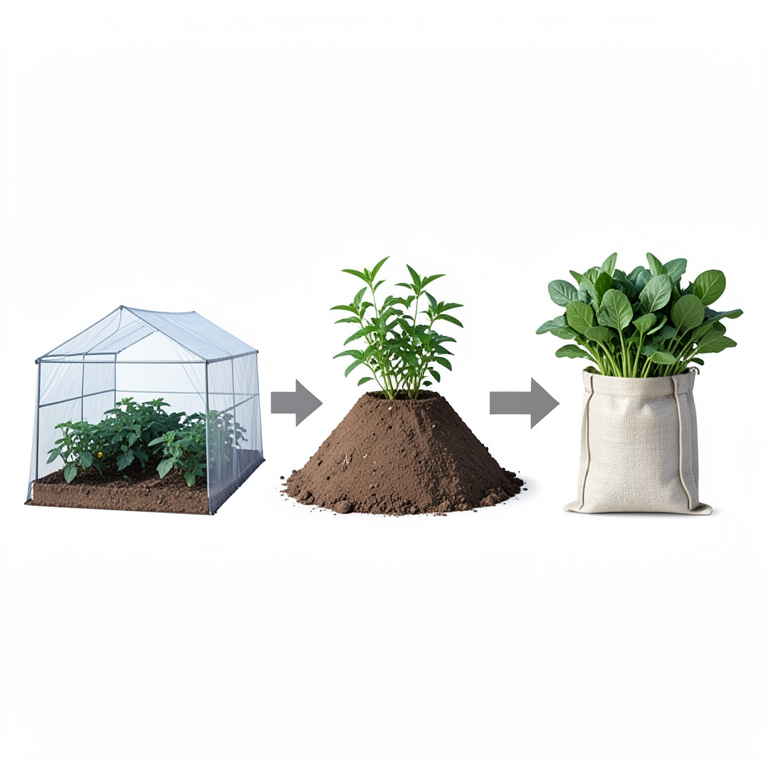
Water-Efficient Gardening Techniques
AI-generated conceptual illustration (small-scale vegetable gardens in a semi-arid landscape). It explains the idea and does not show study data.
View source evidence ↗Figures & tables
From the original paper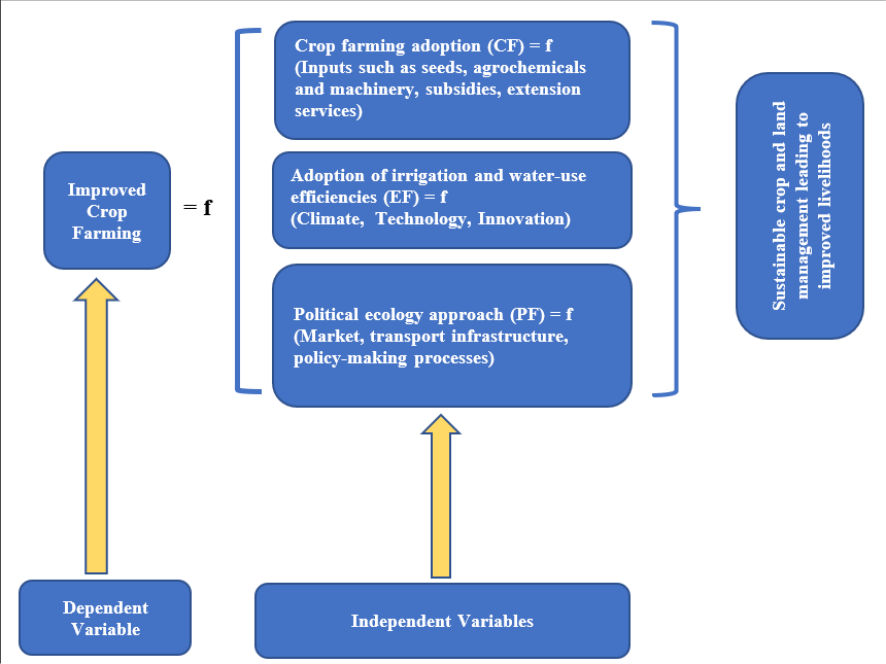 Figure 1
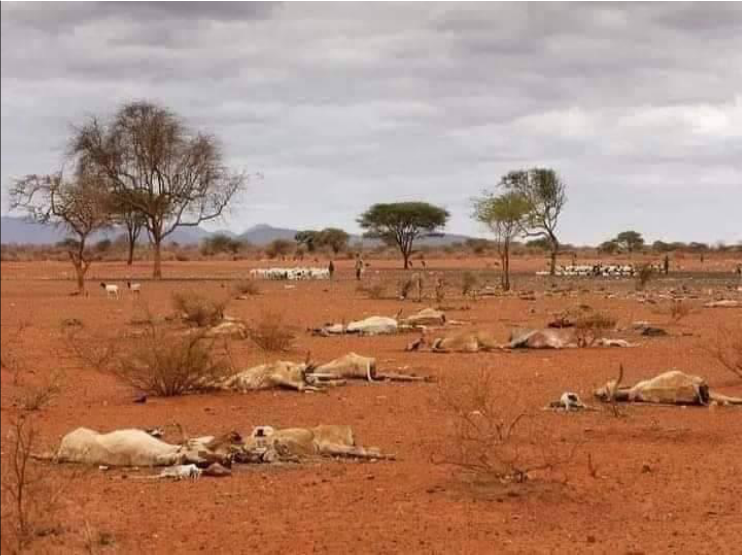 Figure 2
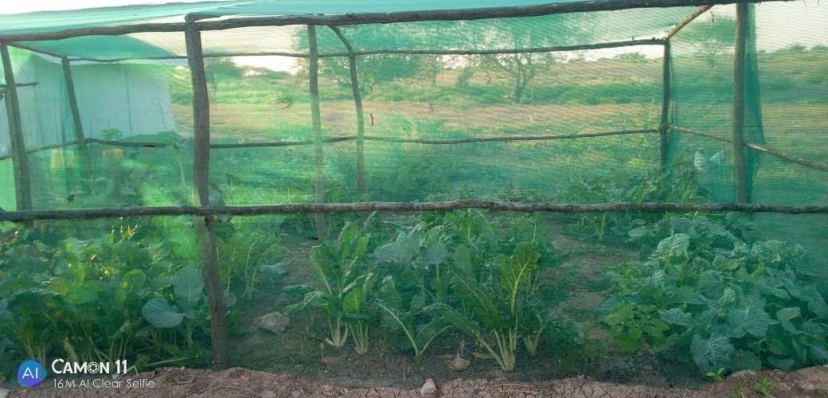 Figure 3
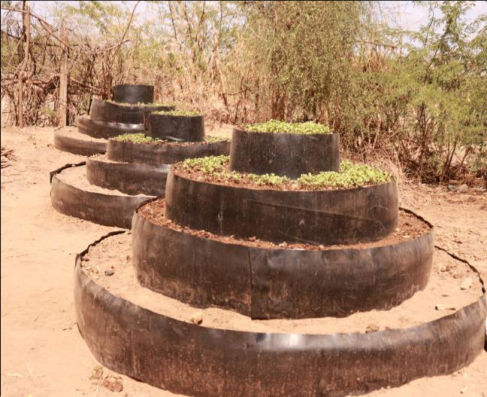 Figure 4
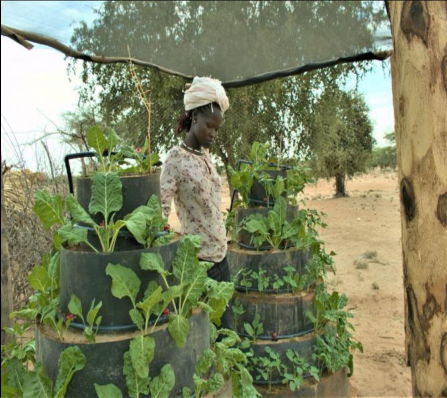 Figure 4
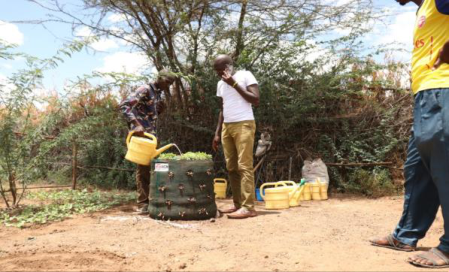 Figure 5
Introduction
Investing in food security is a national and global agenda, as discussed in the Millennium Development Goals (MDGs) and Sustainable Development Goals (SDGs). As the world embrace global partnerships in fighting climate change in the quest for zero hunger, food security remains a top priority, with insecurities becoming more prevalent in the developing countries. Historically, the Turkana community, part of the larger Nilotic group, is predominantly known for pastoralism. Mutai (2020) [7] noted that although pastoralism among the Turkana community is a culture-centred livelihood activity, it has failed to guarantee food security among the Turkana community. Kalobeyei, found in the west of Turkana County, lies in an arid and semi-arid lands (ASALs) of the Northwestern part of Kenya, where nomadic pastoralism is predominant. Turkana county, typical in any Africa's ASALs, is affected by gradual and sudden climate-related disasters such as animal and crop pests, droughts, famine, small arms proliferation, floods, and armed conflicts arising from cattle rustling which lead to socioeconomic turmoil (Simula et al., 2020; Mkutu et al., 2019; Lind, 2018) [10,6,3] .
In Turkana West, the government has for long been www.extensionjournal.com allocating resources in terms of relief aid interventions, building resilience in both animal and crop production with the aim of increasing food security. However, significant resilience has not been built in the study area and this has led to a vicious cycle of government aid and relief. The Turkana County Government (2013) noted that while majority of the people in Turkana (62%) practiced pastoralism, only 20% of the remaining population practiced agro-pastoralism. Cattle rustling, insecurity, droughts and farming and effects of devolved government functions are some of the factors that are pushing the locals to transit from pure pastoralism to semi-nomadic agropastoral system, where crop farming is being practiced. Water is a scarce resource in Turkana West and therefore to support this transition, the locals have to device irrigation and water-use efficiencies that can support crop farming.
1.1 Objectives a. To assess irrigation and water-use efficiencies adopted by the community in their semi-nomadic agricultural systems, and b. To give recommendations and policy implications of such transformation.
Conceptualization of Crop Farming in Turkana County
Crop farming (CF) in Turkana County was conceptualized based on a set ecological factors (EF), cultural factors (CF), and political factors (PF). Thus, Crop Farming = f (EF, CF, PF) as indicated in Figure 1 below. Ecological factors are environmental factors that affect crops such as temperature, precipitation, humidity, and edaphic factors. Cultural factors are related to the historical orientation of people based on their traditions and norms which deter or encourage people of same culture to take part in crop farming. Mutai (2020) [7] noted that most people in Turkana county are not able to shift from unsustainable pastoralism to crop farming due to their cultural inclination, and not their technical feasibility. The unsettled life of the Turkana pastoralists makes it hard for them to settle for crop cultivation (Sirma, 2013) [11] . Political factors include leadership and governance systems that support crop farming in the area. The political ecology approach expounds the relationship between man and nature through analyzing forms of utilization, regulation and impacts on environmental health and sustainable livelihood of the people (Pankaj, 2016) [9] . The Northern part of Kenya, where Kalobeyei is situated, has been greatly considered in the country's infrastructure development (Lind et al., 2020; Mossley & Watson, 2016) [4] . [6,5,8] . All these projects compete for community land and therefore proper policies are needed to ensure no land-based disputes, land grabbing as well as ensuring highly potential areas are conserved for agricultural purposes.
Materials and Methods
The study used a descriptive survey design. Lukesh (1994) noted that descriptive survey research is used to get precise state of affairs concerning variables as it exists at present. Kothari (2004) adds that this type of design provides precise description of information about the variables in the study. Data collection was done using a qualitative observational method where phenomena of interest were observed and whose findings informed the study conclusions. The study was conducted in Kalobeyei community, Turkana West subcounty, in Turkana County, Kenya.
Results and Discussions 3.1 Resilience building towards agricultural activities
Resilience is the crop system's ability to withstand climatic shocks which leads to long-term adaptation to a fastchanging environment. It is estimated, through modelling, that there will be a sharp decline in the number of days for crop farming in some parts of the East African region and changing biomes will cause fluctuations in yield (Thompson et al., 2015) [12] . However, climate-smart strategies can help to build intrinsic resilience within their agro-pastoral systems. For instance, Kenya Seed Company is responsible for providing suitable planting seeds for the locals. Some of the major crops grown in these agropastoral system include;vegetables, maize, and sorghum. Unavailability of water is one of the main challenges facing the Kalobeyei community. However, the locals have improvised innovative technologies to address the challenge. The following three irrigation and water-use efficiencies were identified to be key in the facilitation of crop farming in the agropastoral system within the study area.
a. Shade-house gardens
In Turkana, the hot dry winds create very harsh conditions for vegetables because they increase the rate of transpiration. Within the study area, conserving water for animals and plants is their top priority. To achieve this, the locals are using shade-house gardens, which are structures made of perforated clothing or nets to allow the needed amount of light, air, and moisture. The structures are normally covered with shade cloths to keep off excessive heat, dryness, and destructive pests. Several advantages of these shade houses were reported among the locals. They are easy to construct and inexpensive as they use locally available materials. Besides, they conserve water and can be used for a variety of crops. The locals reported low disease and pest infestation in crops grown under shade nets as compared to those in the open. Elad et al., (2007) [1] noted that disease development is negatively affected by intensity of shading and light quality. www.extensionjournal.com The principle behind the shade nets is that they create a suitable and controlled microclimate for the grown crops by regulating environmental variables such as air temperature, solar radiation, leaf temperature, and relative humidity. In a controlled trial, shade nets were found to reduce harvest losses caused by tomato cracking by 50% as compared to those without nets (Kittas et al., 2012) [2] .
b. Cone gardens/ Multi-storey gardens
Cone gardens involve profiling of soil layers in a conical shape above the ground to create more surface where crops can grow. Normally, cone gardens are made up of polythene or plastic sheeting/materials. Cone gardens offer more space for planting crops, and they are easy to manage such as weeding. Also, they are economical as they save water in water-stressed areas such as Turkana. In addition, conegardens have high concentration of nutrients and ensures diversification because different vegetables can be grown in different layers.
c. Vertical sack gardening
Sack gardens are economical as they save water and space as a sack 1-meter long can be used to grow about 100 crops vertically at ago. They also utilize nutrients efficiently and are easy to manage for example they ensure easy weeding.
This strategy for water-use efficiency is substantially practiced in Kalobeyei community and uses 20L in 7 days.
It is less labor-intensive and utilizes locally available materials. www.extensionjournal.com Within the study area, sack gardening has played a key role in diet diversification and has ensured self-reliance from among the locals cutting down cost of buying vegetables.
Conclusion and Policy Implications
Conclusion and Policy Implications
Figures and tables from the paper
References
8 in the original paper- Elad Y, Messika Y, Brand M, David DR, Sztejnberg A. Effect of colored shade nets on pepper powdery mildew (Leveillula taurica). Phytoparasitica. 2007;35(3):285299.
- Kittas C, Katsoulas N, Rigakis V, Bartzanas T, Kitta E. Effects on microclimate, crop production and quality of a tomato crop grown under shade nets. The Journal of Horticultural Science and Biotechnology. 2012;87(1):712.
- Lind J. Devolution, shifting centre-periphery relationships and conflict in northern Kenya. Political Geography. 2018;63:135-147.
- Mkutu K, Mkutu T, Marani M, Ekitela AL. New oil developments in a remote area: Environmental justice and participation in Turkana, Kenya. The Journal of Environment & Development. 2019;28(3):223-252.
- Opiyo F, Wasonga O, Nyangito M, Schilling J, Munang R. Drought adaptation and coping strategies among the Turkana pastoralists of northern Kenya. International Journal of Disaster Risk Science. 2015;6(3):295-309.
- Pankaj. Political Ecology. International Journal of Research and Scientific Innovation (IJRSI). 2016;3(9):102-103. Retrieved from: https://www.rsisinternational.org/IJRSI/Issue31/102103.pdf
- Simula G, Bum T, Farinella D, Maru N, Mohamed TS, Taye M, et al. COVID-19 and pastoralism: reflections from three continents. The Journal of Peasant Studies. 2021;48(1):48-72.
- Turkana County Government. County Integrated Development Plan 2013-2017. Lodwar: Republic of Kenya, Turkana County Government; c2013. Retrieved from: https://repository.kippra.or.ke/bitstream/handle/123456 789/731/20132017%20Turkana%20County%20CIDP.pdf?sequence= 1&isAllowed=y
Cited by 7
From OpenAlex, OpenCitations and reference lists read by Scinovex
- Ethnobotanical survey of the cultural uses, threats and conservation status of flora in Kiptogot sub-location, Endebess subcounty, western Kenya ↗
Dominic Baraka Murumba, Pascaline Jeruto, Nyamwamu Nyarang’o Charles · Journal of Medicinal Plants Studies · 2025
Despite the critical role of ethnobotanical knowledge in preserving cultural heritage and supporting sustainable practices, most plant species face increasing threats from environmental changes and human activities. Thus, this study sought to carry out ethnobotanical survey of the flora of Kiptogot sub-location, Endebess subcounty, Western Kenya. A household survey was carried out for collection of primary data. Seventy-two households were
- Horticultural techniques to mitigate the effects of climate change on rice cultivation
Kristian Holm · International Journal of Horticulture and Food Science · 2025
Rice is the staple food for more than half of the global population, yet its cultivation faces unprecedented threats from climate change. Rising temperatures, irregular rainfall, salinity intrusion, and pest-disease surges undermine productivity and increase vulnerability in both irrigated and rainfed systems. Conventional responses such as breeding and chemical inputs are insufficient in isolation. Horticultural techniques—broadly understood as agronomic practices that manipulate soil, water, canopy, and ecological interactions—offer pragmatic and locally adaptable pathways for resilience. Th
- Analysis of pest management strategies among sweet potato farmers: Insights from a study in Homa Bay County, Kenya
L. A. Ochieng · International Journal of Horticulture and Food Science · 2024
This research investigated the pest management strategies among sweet potato farmers in Homa Bay County, Kenya. The study focused on how farmers managed the Sweet potato weevil (Cylas puncticollis.). Using a participatory rural appraisal methodology, the study involved 269 farmers through focus group discussions, transect walks, and pairwise ranking to identify and improve Integrated Pest Management strategies suitable for the specific context. The primary method identified was re-ridging during weeding. This method was used by 26.2% of the farmers in Rachuonyo and 15.3% in Ndhiwa Sub-counties
- Developing a conceptual framework for maternity apparel manufacturing in Kenya ↗
Nelima Barasa, Rose Otieno · International Journal of Home Science · 2024
This study explores the need for appropriately fitted maternity clothing for pregnant women, emphasizing the significant physical changes they experience. Regular clothing becomes unsuitable due to varying anthropometric changes across trimesters, necessitating maternity apparel that accommodates the changes. Previous research highlights the challenges in accommodating diverse body morphologies and stresses the importance of anthropometric data in creating effective size charts.
- Promoting improved forages for increased livestock productivity in the Arid and Semi-Arid Lands (ASALs) of Kenya: A case of Kajiado, Narok and Taita Taveta county
Maweu AN, Korir BK, Kuria SG, Ogillo BP, Bosco Kidake Kisambo, Wambulwa LM · International Journal of Veterinary Sciences and Animal Husbandry · 2023
Inadequate nutrition is a major constraint that negatively impacts the growth and viability of cattle farming in Kenya's arid and semi-arid lands (ASALs). This is hastened by the adverse effects of climate change that lead to feed scarcity and poor-quality feed. However, these impacts can only be checked with the use of improved technologies hence the need to disseminate adaptation strategies and technologies. In an attempt to resolve the situation, Kenya Agricultural and Livestock Research Organization (KARLO) in partnership with SNV Netherlands Development Organization agencies instituted a
- Coping strategy for curbing wood fuel scarcity in Nyamache sub-county, Kisii County, Kenya
Marube Justin Ochenge, Ambia Anncletas Atamba · International Journal of Geography Geology and Environment · 2023
Wood fuel shortage has existed worldwide since the 1970s during oil energy crisis; accelerating wood fuels scarcity hence coping strategies. This study on local community based strategy for curbing wood fuel shortages was conducted in Nyamache Sub-county, Kisii County, Kenya. The study assessed the establishment of woodlots as an affordable strategy adopted by the households for wood fuel availability. The specific objective analyzed the coping strategies adopted by the households for curbing wood fuel shortages in the study area. Descriptive research design was adopted in gathering informatio
- Determinants of household dietary diversity score in food insecure areas of West Amhara region, Ethiopia
Birhanu Ayalew, Tewodros Tefera, Almaz Giziew, Amanuel Lulie · International Journal of Agriculture and Nutrition · 2023
This study examined the factors influencing dietary diversity among farm households in the Amhara region of Ethiopia, where low dietary diversity is prevalent. Data from 300 households were collected and analyzed using descriptive statistics and an ordered probit model. The findings indicated that 26.8% of households had low dietary diversity, 66.9% had medium dietary diversity, and 6.3% had high dietary diversity. The most commonly consumed food groups were cereals (100%) and pulses (86%). The average household dietary diversity score was 4.42 food items out of 12 food groups. The ordered pro