
Research article · 2024 · Full text
International Journal of Horticulture and Food ScienceAnalysis of pest management strategies among sweet potato farmers: Insights from a study in Homa Bay County, Kenya
Volume 6(1) · Pages 69–73 · DOI: 10.33545/26631067.2024.v6.i1a.193 ↗
Research areasInsect behavior and control techniquesInsect Pest Control Strategies
Abstract
Author-writtenThis research investigated the pest management strategies among sweet potato farmers in Homa Bay County, Kenya. The study focused on how farmers managed the Sweet potato weevil (Cylas puncticollis.). Using a participatory rural appraisal methodology, the study involved 269 farmers through focus group discussions, transect walks, and pairwise ranking to identify and improve Integrated Pest Management strategies suitable for the specific context. The primary method identified was re-ridging during weeding. This method was used by 26.2% of the farmers in Rachuonyo and 15.3% in Ndhiwa Sub-counties. Re-ridging is a physical adjustment of the soil around the crops to bury the sweet potato weevil eggs and larvae. The main observation was that the use of re-ridging to combat pests was prevalent based on the simplicity and efficiency of the approach to matching the farmer’s operational capabilities. It was observed that an average of 64.5% of the farmers in Ndhiwa did not adopt any control measure, highlighting a significant gap in knowledge and resource availability for pest management. Other less prevalent methods included early harvesting and the use of clean planting vines. The study recommends the strengthening of Agricultural Extension Services in the county to bridge the knowledge gap among the invincibly vulnerable farmers. The research identified that some farmers use innovative methods with a possible high potential for positive outcomes to address the pests. However, many farmers remain ignorant or lack access to critical measures due to various constraints. The study, therefore, recommends increased investment in research and engagement with community workers to educate farmers. Additionally, policy intervention is required to ensure effective use and resource availability to all farmers. This would ensure sustainable agricultural practices and promote food security combining the traditional processes with modernity.
Summary
Source-checkedPlain-language reading of the full paper, prepared with AI and checked against the text. Each point links to the authors' own words.
Why it matters
- Sweet potato cultivation is essential for food security and the agricultural economy in Homa Bay County, Kenya. View evidence ↗
- The sweet potato weevil (Cylas puncticollis) is a major threat to this crop, causing significant yield losses during both growth and storage. View evidence ↗
- The heavy use of chemical pesticides to manage these pests has created health concerns for agricultural workers. View evidence ↗
The question
- The study aimed to evaluate the different pest management strategies used by farmers in Homa Bay County to promote sustainable agriculture. View evidence ↗
What they did
- The research was conducted in the Rachuonyo and Ndhiwa sub-counties of Homa Bay County, Kenya. View evidence ↗
- The study used a Participatory Rural Appraisal approach, which included pairwise ranking, transect walks, and focus group discussions. View evidence ↗
- The study sampled 269 sweet potato farmers from the target population. View evidence ↗
- Participants were selected via purposive sampling, specifically targeting farmers with over five years of experience. View evidence ↗
What they found
- Re-ridging (earthing up ridges during weeding) was the most common control method, used by 26.2% of farmers in Rachuonyo and 15.3% in Ndhiwa. View evidence ↗
- A significant gap in pest management was found in Ndhiwa, where 64.5% of farmers did not adopt any control measures. View evidence ↗
- Other less common practices across both sub-counties included early harvesting (10.8%) and the use of clean planting materials (8.2%). View evidence ↗
- The use of pesticides was very low, practiced by only 1.5% of the total respondents across both sub-counties. View evidence ↗
- The majority of the farmers involved in the study were women, accounting for 70.3% of participants. View evidence ↗
What it means
- The authors conclude that Agricultural Extension Services must be strengthened to provide vulnerable farmers with the knowledge needed for pest management. View evidence ↗
- The authors recommend transitioning from single-method pest control to a multi-pest control (Integrated Pest Management) approach. View evidence ↗
- The study was limited by its local scope and the exclusion of certain technological and economic factors. View evidence ↗
Visual summary
3 visualsIllustrations explain the paper; charts are replotted from the paper's own table values.
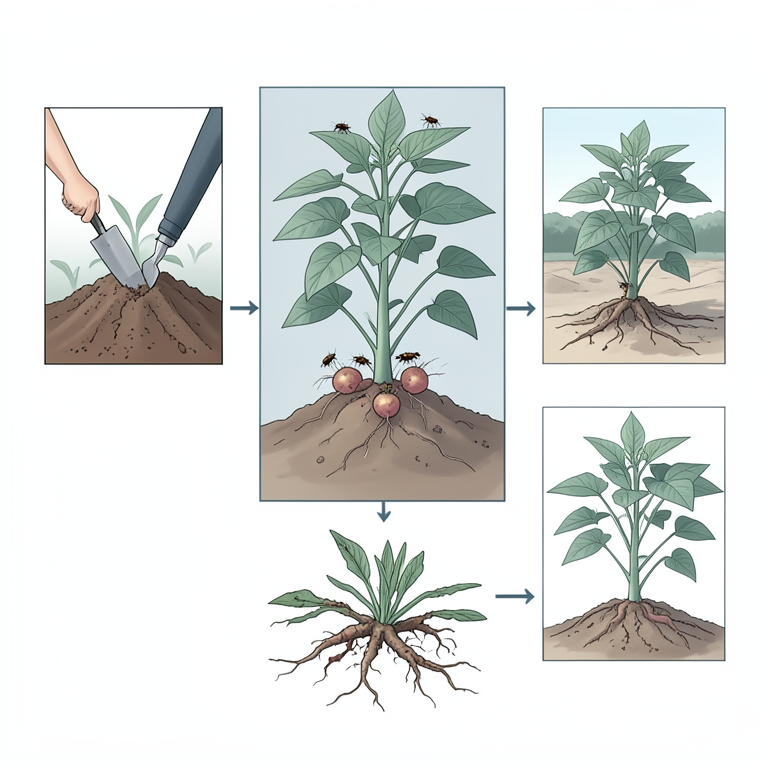
Pest Management Landscape
AI-generated conceptual illustration (sweet potato plants in a field). It explains the idea and does not show study data.
View source evidence ↗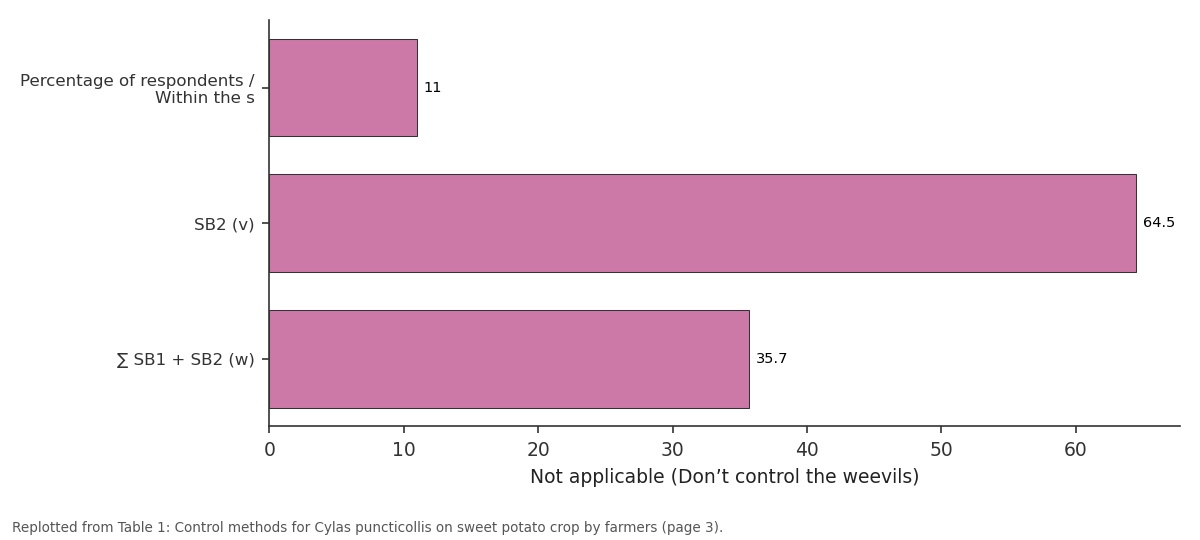
Not applicable (Don’t control the weevils): Percentage of... vs SB2 (v) vs ∑ SB1 + SB2 (w)
Replotted from Table 1 (page 3) of the original paper. Every bar is the paper's own table value.
View source evidence ↗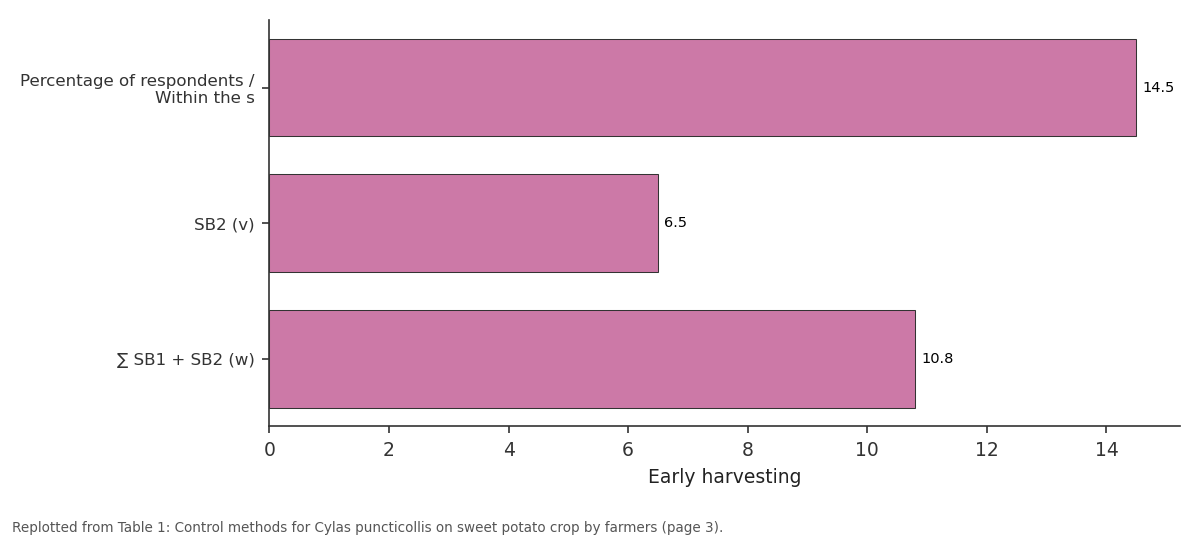
Early harvesting: Percentage of... vs SB2 (v) vs ∑ SB1 + SB2 (w)
Replotted from Table 1 (page 3) of the original paper. Every bar is the paper's own table value.
View source evidence ↗Figures & tables
From the original paper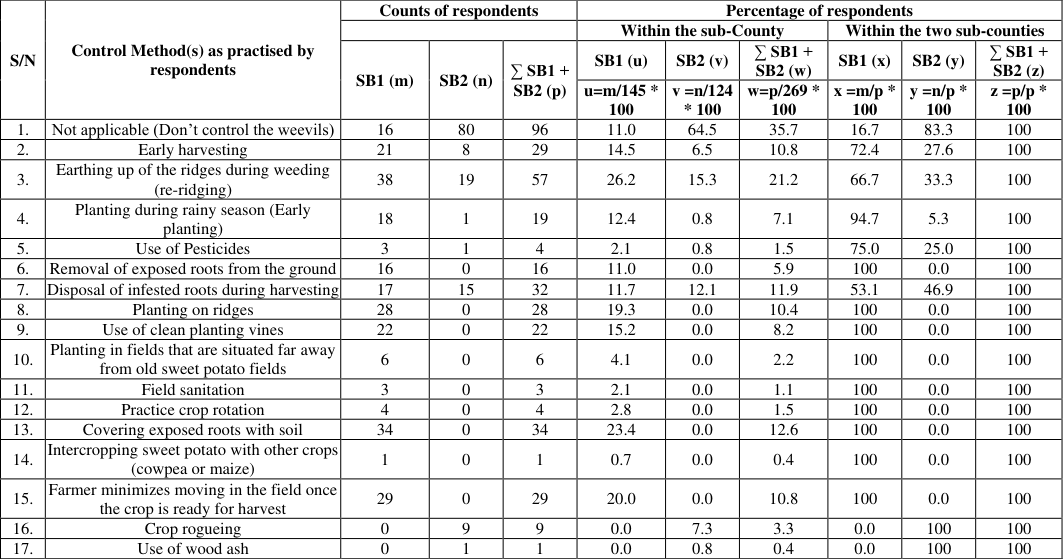 Table 1
Introduction
The challenge of pest management in sweet potato cultivation is a crucial issue drawing global research attention. Studies spotlight the adaptability and resilience of pests like the sweet potato weevil, Cylas puncticollis. Emphasizing the use of barrier plants as part of integrated pest management strategies to combat pests such as Cylas formicarius threatening sweet potato yields. Additionally, Gurr et al. (2016) [3] emphasize applying ecological and traditional practices in sweet potato production systems in Papua New Guinea's highlands, showcasing the importance of culturally specific pest management strategies. In Africa, research delves into the complexities of pest management in agricultural ecosystems, emphasizing the need for sustainable solutions. Kwadha et al. (2021) [7] highlight the spread of the spotted wing drosophila, Drosophila suzukii, in Sub-Saharan Africa, prompting a reassessment of monitoring and management strategies. Concurrently, Concurrently, Chepchirchir's studies (Chepchirchir, F. 2023) [1] in Kenya and Uganda reveal the economic, health, and environmental burdens posed by pests like Tuta absoluta on tomato production, advocating for integrated pest management practices over reliance on chemical pesticides. Skendžić et al. (2021) [11] stress the impact of climate change on agricultural insect pests in East Africa, calling for modified integrated pest management practices to address these evolving challenges. Furthermore, Khamis et al. (2021) [6] suggest that understanding genetic variations in whitefly pests in Kenya is essential for sustainable management and control measures.
In Homa Bay County, Kenya, sweet potato cultivation plays a vital role in the local agricultural sector and food security framework. However, this essential crop is under significant threat from pests like the sweet potato weevil (Cylas puncticollis). Research reveals that these pests cause substantial yield losses, both in the fields and during storage after harvest (Jaoko et al., 2021) [4] . Excessive use of pesticides in response to these issues has raised concerns about the well-being of agricultural workers (Marete et al., 2021) [9] , highlighting the necessity for transitioning to sustainable pest control methods. Given the economic impact of pest infestations, it is crucial to develop effective and environmentally friendly pest management strategies (Rosmiza et al., 2021) [10] . This study aims to explore and assess various pest management approaches to address these challenges and promote sustainable agriculture in Homa Bay County. Building upon prior research findings, such as those by Karuri et al. (2016) [5] that underscored the impact of plant parasitic nematodes on yield losses, this research highlights a critical gap in our knowledge of comprehensive pest management in the region.
Research Objective
The study objective was to evaluate different pest management strategies used by sweet potato farmers in Homa Bay County, Kenya.
Significance of the Study
This research on pest management strategies among sweet potato farmers in Homa Bay County, Kenya, significantly enriches the existing body of knowledge in agricultural practices and integrated pest management (IPM). By investigating the effectiveness of various pest control methods in a specific socio-economic and ecological setting, the study offers vital insights that can be utilized to enhance crop productivity and sustainability in similar regions globally. The findings hold particular importance for local communities, policymakers, and educational institutions by providing evidence-based recommendations that can lead to increased agricultural output, improved food security, and reduced poverty. Additionally, this study contributes to academic curricula in agricultural sciences, offering a realworld example of how localized pest management strategies can be implemented effectively.
Scope and Limitation of the Study
The study was conducted to explore the management strategies for a pest used by sweet potato farmers in the Rachuonyo and Ndhiwa sub-counties of Homa Bay County, Kenya. The research was based on the farmers' activities performed between 2019 and 2020 related to the common weevil Cylas puncticollis to ensure a more holistic understanding of agricultural processes and management. Therefore, the project was planned to take into account a broad range of aspects, yet, it was local, and such technological and economic factors were excluded from consideration. To reduce potential bias and improve the research's significance, Participatory Rural Appraisal was used to ensure proper contact with farmers and obtain informative data reflecting their practices. As one might notice, the outcomes' presentation was conducted thoroughly, taking into account potential fallacies and involving an expanded range of aspects. As a result, the research methodology, including both the data collection techniques, considerably favored the study of a unique area such as Homa Bay.
Statement of Problem
The prevailing problem was the vulnerability of sweet potato crops to pest infestations, which if not checked affects the livelihoods of local farmers. Globally, sweet potato crops endure significant yield and quality impairments due to pests, with the sweet potato weevil, Cylas puncticollis, identified as causing extensive damage in various production regions (Khamis et al., 2021) [6] . The issue of managing these pests effectively is a common challenge, particularly highlighted in regions with limited resources and access to sustainable pest management solutions. Focusing on East Africa, and specifically Homa Bay County, the study found that changes in climate conditions potentially increase pest populations and their impact on sweet potato yields (Skendžić et al., 2021) [11] . Furthermore, the prevalent use of chemical pesticides among farmers in the area posed not only health risks (Marete et al., 2021) [9] but also raised concerns about environmental hazards. The study's findings indicated that the most affected demographic were smallholder farmers who relied on sweet potato cultivation as a pillar of their food security and income. The study addressed the need to explore and potentially redefine pest management strategies. By examining the methods employed by the sweet potato farmers in Homa Bay County, the study is expected to contribute to ways of improving both the productivity and sustainability of agricultural practices, thus supporting the broader goals of community development and food security.
Methodology Study area
Homa Bay County, Kenya, specifically Rachuonyo and Ndhiwa sub-counties, was visited during the research. This study area was chosen because it has a high proportion of sweet potato farming. The county has diverse agroecological zones characterized by different altitudes and soil types which inform the farming practices and pest management needs.
Research design
A Participatory Rural Appraisal approach comprising farmers' knowledge and perceptions through focus group discussions, transect walks, and pairwise ranking guided the research. The research design was descriptive and participatory, with research oriented toward guiding the development of contextual pest management strategies for resource-poor farmers.
Target population, sample size, and sampling techniques
The target population for the study was sweet potato farmers in the Homa Bay County area, and a total of 269 respondents were selected. According to standard estimates, various sampling techniques were used to calculate the sample size, taking into account the known number of sweet potato farmers. Purposive sampling was carried out with specific targets on only those farmers with more than five years of experience farming sweet potatoes based on informed agricultural extension officers (Gilbert Ndutu Munywoki et al, 2022) [13] .
Data collection methods
Data was collected using a semi-structured questionnaire that was administered to collect information from the targeted respondents. Various colored photographs showing various pests and pest damage on sweet potatoes facilitated proper pest identification. The focus group discussions were guided by the local extension officers, which yielded further insights into the perspectives of farmers on pest management strategies, associated constraints, and opportunities or gaps for upscaling the management strategies.
Results and Discussion
The section elaborates on the findings attained from the evaluation of production constraints and the effectiveness of pest control methods applied by local farmers in Homa Bay County, Kenya. The central purpose of the research was to examine the perception and management of farmers concerning the sweet potato weevil, and the threat to crop productivity.
Participant Demographics
A total of 269 sweet potato producers from Rachuonyo subcounty and Ndhiwa sub-county were involved in the study. The vast majority of the participants were women, making up 70.3%, and many of them received primary education, which is essential for the successful application of pest
Analysis of Pest Management Strategies
The extensive analysis of the pest control practices utilized by farmers in Homa Bay County, Kenya, demonstrates a dynamic where traditional strategies continue to dominate, along with varying levels of awareness and usage. The data presented in Table 1 not only portray dominating strategies but also showcase the gaps in the adoption rates between various approaches and regions. Re-ridging remains the most practiced control method, being reported by 26.2% of farmers in Rachuonyo and 15.3% in Ndhiwa. The method consists of physically adjusting the soil around crops, which buries the potential eggs and larvae, stopping them from transforming into an adult that can cause crop destruction. The unique popularity of the mentioned method is believed to be driven by the combination of two factors. First, the method can be labelled among easy and efficient means. Secondly, it is especially beneficial for small-scale farmers, which is relevant for both studied regions. Thus, the high indication of the method is characterized by a cultural approach to the inclusion of shown control into crop care routines. At the same time, the reported 64.5% of Ndhiwa farmers who do not use any control methods is a concern. No implementation can stem from various reasons, including lack of knowledge, lack of resources, and economic barriers to investing in controlling practices. Thus, the high indicator once again pointed to the weakness of the extension services, which indicates the room for intervention regarding information provision and equipping farmers with appropriate tools and knowledge to control pests like Cylas puncticollis.
| S/N | Control Method(s) as practised by respondents | Counts of respondents | — | — | Percentage of respondents | — | — | — | — | — |
|---|---|---|---|---|---|---|---|---|---|---|
| Within the sub-County | Within the two sub-counties | |||||||||
| SB1 (m) | SB2 (n) | ∑ SB1 + SB2 (p) | SB1 (u) | SB2 (v) | ∑ SB1 + SB2 (w) | SB1 (x) | SB2 (y) | ∑ SB1 + SB2 (z) | ||
| u=m/145 * 100 | v =n/124 * 100 | w=p/269 * 100 | x =m/p * 100 | y =n/p * 100 | z =p/p * 100 | |||||
| 1. | Not applicable (Don’t control the weevils) | 16 | 80 | 96 | 11.0 | 64.5 | 35.7 | 16.7 | 83.3 | 100 |
| 2. | Early harvesting | 21 | 8 | 29 | 14.5 | 6.5 | 10.8 | 72.4 | 27.6 | 100 |
| 3. | Earthing up of the ridges during weeding (re-ridging) | 38 | 19 | 57 | 26.2 | 15.3 | 21.2 | 66.7 | 33.3 | 100 |
| 4. | Planting during rainy season (Early planting) | 18 | 1 | 19 | 12.4 | 0.8 | 7.1 | 94.7 | 5.3 | 100 |
| 5. | Use of Pesticides | 3 | 1 | 4 | 2.1 | 0.8 | 1.5 | 75.0 | 25.0 | 100 |
| 6. | Removal of exposed roots from the ground | 16 | 0 | 16 | 11.0 | 0.0 | 5.9 | 100 | 0.0 | 100 |
| 7. | Disposal of infested roots during harvesting | 17 | 15 | 32 | 11.7 | 12.1 | 11.9 | 53.1 | 46.9 | 100 |
| 8. | Planting on ridges | 28 | 0 | 28 | 19.3 | 0.0 | 10.4 | 100 | 0.0 | 100 |
| 9. | Use of clean planting vines | 22 | 0 | 22 | 15.2 | 0.0 | 8.2 | 100 | 0.0 | 100 |
| 10. | Planting in fields that are situated far away from old sweet potato fields | 6 | 0 | 6 | 4.1 | 0.0 | 2.2 | 100 | 0.0 | 100 |
| 11. | Field sanitation | 3 | 0 | 3 | 2.1 | 0.0 | 1.1 | 100 | 0.0 | 100 |
| 12. | Practice crop rotation | 4 | 0 | 4 | 2.8 | 0.0 | 1.5 | 100 | 0.0 | 100 |
| 13. | Covering exposed roots with soil | 34 | 0 | 34 | 23.4 | 0.0 | 12.6 | 100 | 0.0 | 100 |
| 14. | Intercropping sweet potato with other crops (cowpea or maize) | 1 | 0 | 1 | 0.7 | 0.0 | 0.4 | 100 | 0.0 | 100 |
| 15. | Farmer minimizes moving in the field once the crop is ready for harvest | 29 | 0 | 29 | 20.0 | 0.0 | 10.8 | 100 | 0.0 | 100 |
| 16. | Crop rogueing | 0 | 9 | 9 | 0.0 | 7.3 | 3.3 | 0.0 | 100 | 100 |
| 17. | Use of wood ash | 0 | 1 | 1 | 0.0 | 0.8 | 0.4 | 0.0 | 100 | 100 |
Table text extracted from the original PDF; superscript letters are shown inline. The original table image is below.
View original table image
Two other identified practices were early harvesting and the use of clean planting materials. Although they were less practised than re-ridging, 10.8% and 8.2% of farmers, respectively, across the two sub-counties still implemented these practices as part of the full set of IPM measures reported. The general idea is also to avoid the peak weevil window through early harvesting (Agutu et al., 2022) [8] .
The method with clean materials also aims to avoid weevil entry and distribution. However, two other control measures revealed farmers' awareness and the trend of diversified IPM use. Table 1 analysis of the listed pest control practices provides the final information on the existing gap and challenges concerning the issue. Some farmers are increasingly using alternative and potent practices to fight Cylas puncticollis, while others are either unaware or unable to access them due to various reasons. The gap demonstrates the opportunity for farmer-oriented extension aiming to bridge the knowledge gap and provide the required knowledge and tools to fight pests effectively.
The immediate IPM implication is the necessity of an integrated approach to the problem. The integrated supplement to this approach should also include modern biological and chemical strategies to support farmers in promoting resilience to pests. The policy implication is in the existence of revealed barriers to such implementation, which should be addressed. The findings are in line with Tipu et al.'s (2021) [12] recommendation on the centrality of the solution diversity and complexity for efficient sweet potato weevil combating.
Importance of Research Findings
Another level of significance in the evidence presented is the significantly high reliance on re-ridging and other traditional management methods. This may indicate a gap in the available modern pest management methods accessible to farmers. It explains that a reasonable percentage of farmers still lack the necessary resources, knowledge, or access to solutions that are possible for smallholders.
Implications for Pest Control
Others' responses and options cited in Table 1 exhibit the multi-dimensionality of pest management in Kenyan smallholders' farming systems. It shows that although some farmers are innovating their management methods, a large percentage lacks awareness or the ability to bridge the information gap due to a lack of resources (Agutu et al., 2022) [8] .
Conclusion
The analysis included herein presents compelling evidence of the challenges and coping strategies of fighting the pervasive threats of the sweet potato weevil (Cylas puncticollis) amongst sweet potato farmers in Homa Bay County, Kenya. It argues that Cylas puncticollis is the key pest of the farmers based on its high incidence and correlation to significant yield losses. The findings indicate that more than 80% of the community has for instance identified and is using partially resistant sweet potato varieties but differ significantly in management practices otherwise. Some farmers are using cultural practices such as many re-ridging, and early planting, and others are using minimal amounts of pesticides. Many have turned to numerous unverified traditional methods, showing the urgent need for extension services to translate sustainable, researched technologies into affordable and accessible practices for smallholders. By relating to the continuous reliance of certain communities on unverified management systems, the evidence echoes the meaning of sustainable assessments. The mixed methods of evidence firm in this section imply that an integrated pest management system is necessary.
Recommendations
Based on the findings of this research, the study makes the following recommendations to improve pest management practices in Homa Bay County: Based: 1. Extend the extension services to enable farmers to adequately build their knowledge on integrated pest management (IPM) techniques. The emphasis is on teaching farmers to reliably address this pest issue through an innovative integration of all cultural, biological, and chemical tools. 2. Make research on and conserve varieties of the right species of sweet potatoes having resistance to Cylas puncticollis. Promote breeding systems that develop pest resistance and improve yield and nutrients in parallel.
Conduct certified programs and informative field work
to make more individuals understand the merits of Integrated Pest Management techniques. The focus is to move away from mono applications of pest control techniques which often fail and replace them with a multi-pest control approach designed to reduce pest counts. 4. Campaign for the policy changes that support such sustainable agriculture practices as the introduction of subsidies for bio-insecticides and also offering awards to the farmers for the adoption of IPM systems which will minimize pest impact in a sustainable manner.
References
13 in the original paper- Chepchirchir F. Economic, health, and environmental burden of Tuta absoluta (Lepidoptera: Gelechiidae), in tomato production in Kenya and Uganda. Journal of Economic Entomology. 2023;116(5):1529-1539. https://doi.org/10.1093/jee/toad163
- Dada T, Liu J, Johnson A, Rehman M, Gurr G. Screening barrier plants for reducing crop attack by sweet potato weevil (Cylas formicarius). Pest Management Science. 2019;76(3):894-900. https://doi.org/10.1002/ps.5594
- Gurr G, Liu J, Johnson A, Woruba D, Kirchhof G, Fujinuma R, et al. Pests, diseases, and crop protection practices in the smallholder sweetpotato production system of the highlands of Papua New Guinea. Peer Journal. 2016;4:e2703. https://doi.org/10.7717/peerj.2703
- Jaoko V, Taning C, Backx S, Motti P, Mulatya J, Vandenabeele J, et al. Laboratory and greenhouse evaluation of Melia volkensii extracts for potency against African sweet potato weevil, Cylas puncticollis, and fall armyworm, Spodoptera frugiperda. Agronomy. 2021;11(10):1994. https://doi.org/10.3390/agronomy11101994
- Karuri H, Olago D, Neilson R, Njeri E, Opere A, Ndegwa P. Plant parasitic nematode assemblages associated with sweet potato in Kenya and their relationship with environmental variables. Tropical Plant Pathology. 2016;42(1):1-12. https://doi.org/10.1007/s40858-016-0114-4
- Khamis F, Ombura F, Ajene I, Akutse K, Subramanian S, Mohamed S, et al. Mitogenomic analysis of diversity of key whitefly pests in Kenya and its implication to their sustainable management. Scientific Reports. 2021;11(1):6348. https://doi.org/10.1038/s41598-02185902-2
- Kwadha C, Okwaro L, Kleman I, Rehermann G, Revadi S, Ndlela S, et al. Detection of the spotted wing drosophila, Drosophila suzukii, in continental subSaharan Africa. Journal of Pest Science. 2021;94(2):251-259. https://doi.org/10.1007/s10340021-01330-1
- Agutu FO, Ondiek JO, Mbuku SM, Bebe BO. Willingness to pay for assisted reproductive technologies by pastoral herd owners in Southern Rangelands of Kenya. Int J Vet Sci Anim Husbandry. 2022;7(1):26-31. DOI:10.22271/veterinary.2022.v7.i1a.401.
- Marete G, Lalah J, Mputhia J, Wekesa V. Pesticide usage practices as sources of occupational exposure and health impacts on horticultural farmers in Meru County, Kenya. Heliyon. 2021;7(2):e06118. https://doi.org/10.1016/j.heliyon.2021.e06118
- Rosmiza MZ, Samion M, Zainal MZ, Rosmi MS. Nematode attacks and their influence on farming economics. Asian Journal of Agriculture and Rural Development. 2021;11(1):105-112. https://doi.org/10.18488/journal.ajard.2021.111.105.11 2
- Skendžić S, Zovko M, Živković I, Lešić V, Lemić D. The impact of climate change on agricultural insect pests. Insects. 2021;12(5):440. https://doi.org/10.3390/insects12050440
- Tipu M, Jahan R, Rahman J, Rahman M, Islam M, Apu M. Development of efficient integrated management package against sweet potato weevil (Cylas formicarius [Fabricius, 1798]). Acta Agriculturae Slovenica. 2021;117(4):01-04. https://doi.org/10.14720/aas.2021.117.4.2066
- Munywoki GN, Ekapolon JE, Munywoki JM. Transforming livelihoods through irrigation and wateruse efficiencies in semi-nomadic agropastoral system: A case of Kalobeyei community, Turkana County, Kenya. Int J Agric Extension Social Dev. 2022;5(1):5458. DOI:10.33545/26180723.2022.v5.i1a.126