
Research article · 2023 · Full text
International Journal of Agriculture and Food ScienceDevelopment and quality evaluation of cookies fortified with Spirulina
Volume 5(1) · Pages 162–166 · DOI: 10.33545/2664844x.2023.v5.i1b.137 ↗
Research areasPotato Plant Research
Abstract
Author-writtenThe present study was undertaken to assess the nutritional composition of Spirulina powder, development of Spirulina based value added products and their nutritional composition and shelf life. Value added biscuits were prepared by using Spirulina, Flour mixture, Amul butter, Sugar, Baking powder and 5,10 and15 percent level of Spirulina powder. Mean score for overall acceptability of value for 10% spirulina added cookies was 6.2 against the control sample on nine point hedonic ranking scale. The developed value added cookies contained 4.29 percent moisture, 12.43 g protein, 27.26 g fat, 1.99 g ash on dry weight basis. Spirulina supplemented biscuits contain β-carotene, vitamin C, iron and potassium contents. Fat acidity revealed satisfactory quality of the value added biscuit at the end of three months of storage period. Thus, Spirulina based value added products may be beneficial for vulnerable populations due its high nutritive value. These would also be advantageous for those who are suffering from degenerative diseases because of its therapeutic properties.
Summary
Source-checkedPlain-language reading of the full paper, prepared with AI and checked against the text. Each point links to the authors' own words.
Why it matters
- Spirulina is a safe, non-toxic food made from filamentous cyanobacteria (Arthrospira) with a long history of human use. View evidence ↗
- Spirulina is of interest for its high nutritional value, containing proteins (55-70%), essential amino acids, minerals like iron, vitamins, and pigments. View evidence ↗
- Cookies are a globally popular baked good that are resistant to microbial spoilage due to their low moisture content. View evidence ↗
The question
- The study aimed to evaluate the nutritional composition of Spirulina powder and develop value-added products using it, assessing their nutrition and shelf life. View evidence ↗
What they did
- Cookies were developed using four treatments: a control (0%) and three levels of Spirulina powder as a flour replacement (5%, 10%, and 15%). View evidence ↗
- The cookies were baked in a convection oven at 170 °C for 10 minutes. View evidence ↗
- The researchers measured protein, dry ash, and moisture content, and performed sensory analysis to evaluate the cookies. View evidence ↗
- For shelf-life testing, cookies were stored in polyethylene containers at room temperature without light for nine weeks. View evidence ↗
What they found
- Protein content increased with Spirulina addition, rising from 4.75% in the control to 15.41% in the 15% Spirulina sample. View evidence ↗
- The ash content, representing total minerals, was higher in all Spirulina-fortified cookies (1.99% to 4.52%) compared to the control (0.47%). View evidence ↗
- Fat content remained comparable across samples, ranging from 27.26% (T2) to 29.51% (T3), relative to the control's 27.23%. View evidence ↗
- On a nine-point hedonic scale, the 15% Spirulina cookies (T3) had the highest overall acceptability score of 8.2, compared to 7.2 for the control. View evidence ↗
- The strength of the cookie structure increased linearly as the concentration of Spirulina increased. View evidence ↗
- Fat acidity tests indicated that the value-added biscuits maintained satisfactory quality after three months of storage. View evidence ↗
What it means
- The authors concluded that cookies fortified with 10% Spirulina are acceptable based on their nutritional and sensory properties. View evidence ↗
- The study concludes that Spirulina-fortified cookies are significantly more nutritious than standard control cookies. View evidence ↗
Visual summary
3 visualsIllustrations explain the paper; charts are replotted from the paper's own table values.
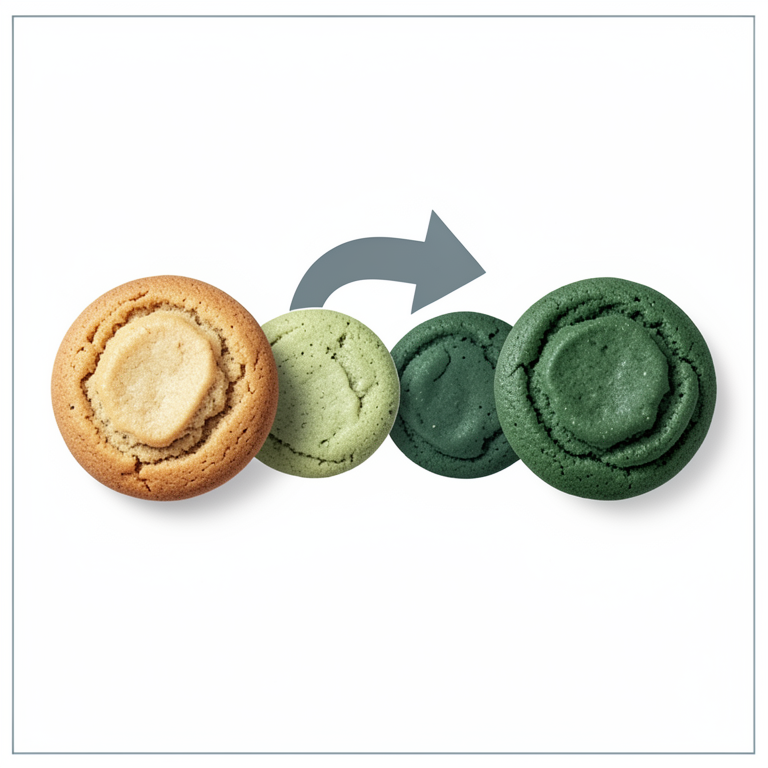
Nutritional Impact of Spirulina Fortification
AI-generated conceptual illustration (baked cookies fortified with Spirulina powder). It explains the idea and does not show study data.
View source evidence ↗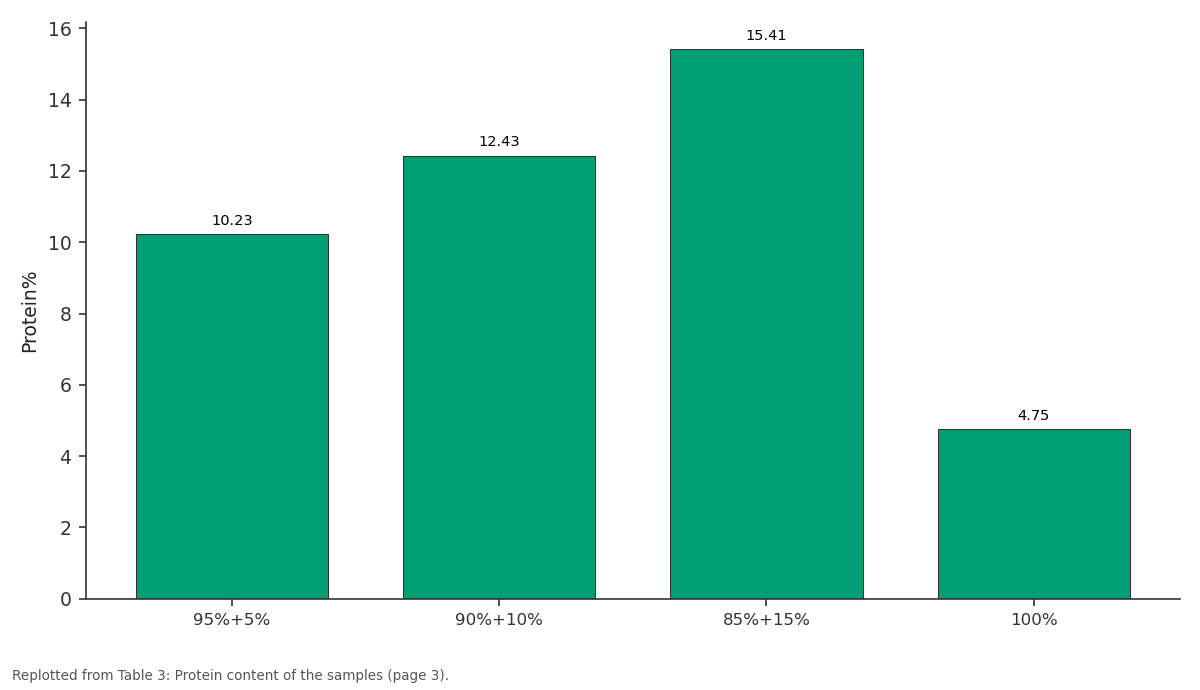
Protein%: 95%+5% vs 90%+10% vs 85%+15% vs 100%
Replotted from Table 3 (page 3) of the original paper. Every bar is the paper's own table value.
View source evidence ↗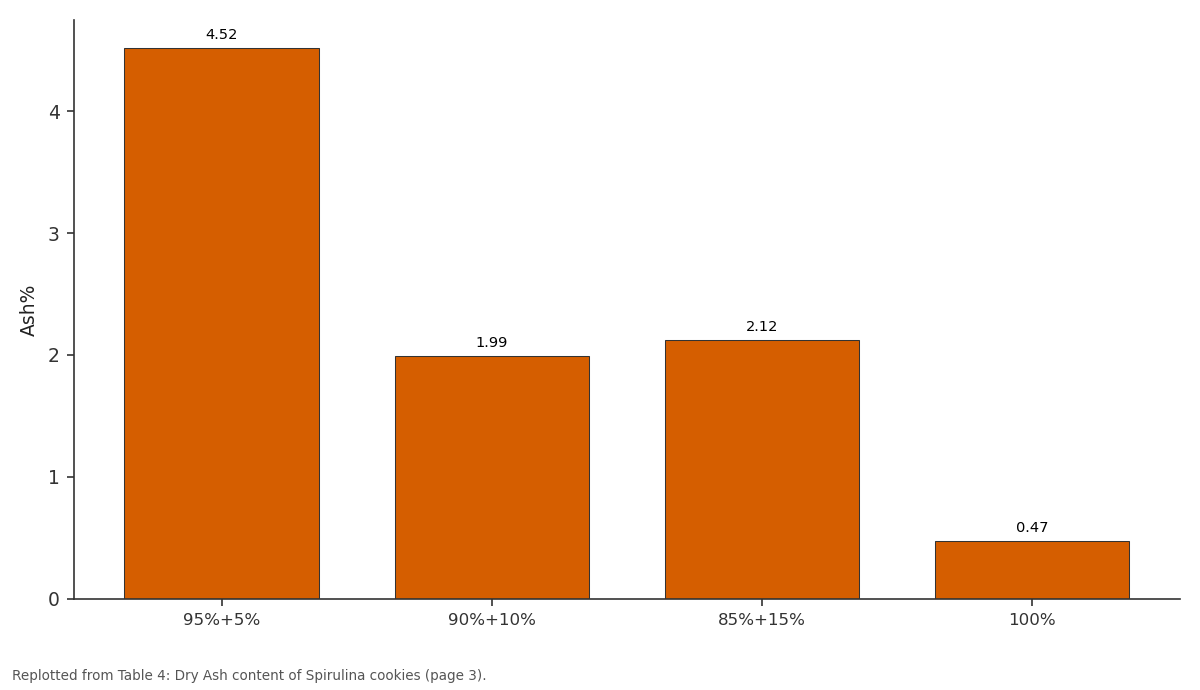
Ash%: 95%+5% vs 90%+10% vs 85%+15% vs 100%
Replotted from Table 4 (page 3) of the original paper. Every bar is the paper's own table value.
View source evidence ↗Figures & tables
From the original paper Table 1
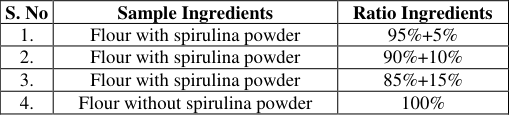 Table 2
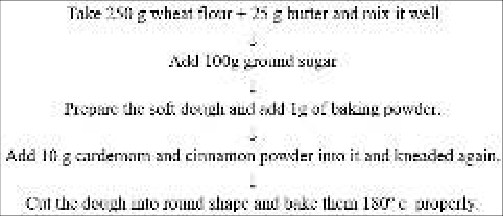 Figure 1
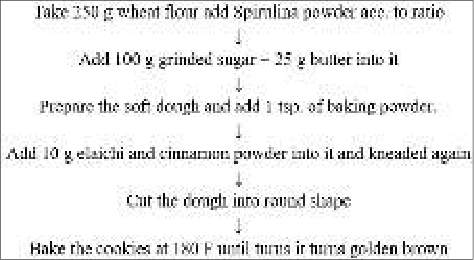 Figure 2
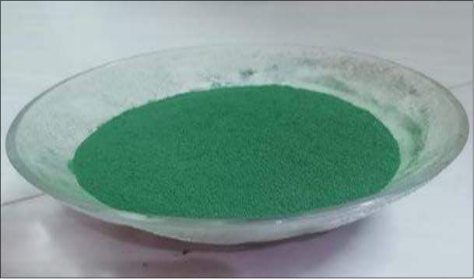 Figure 3
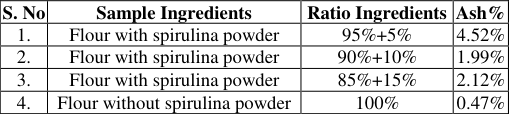 Table 4
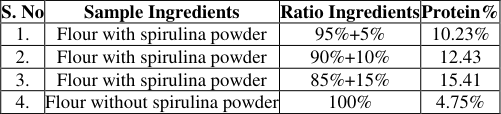 Table 3
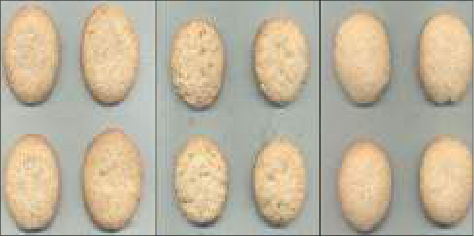 Figure 4
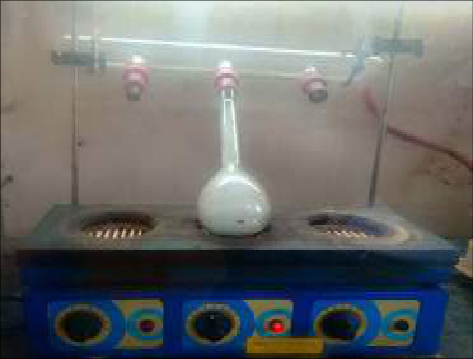 Figure 5
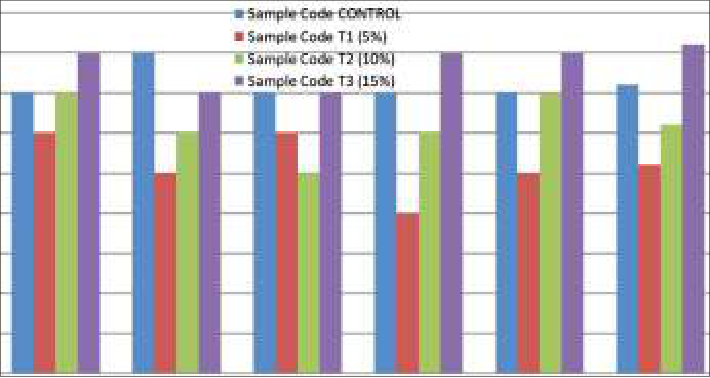 Figure 6
Introduction
The term cookie is derived from the Dutch words "Koekje" or "koekie" and refers to "small cakes." Cookies contain many of the same constituents as cakes, with the exception of a higher proportion of sugar and fat to flour and a lower proportion of liquid. Cookies, which contain a high amount of sugar and fat and a low amount of water, are a globally popular baked good. Cookies with a lower moisture content are resistant to microbial spoilage and have an extended shelf life. Unlike bread, pastries and biscuits require only a minimal amount of gluten development. The resulting dough is cohesive but not overly elastic, and it can be readily rolled out and cut. ( [2,11,12,13,14,15] have published scientific articles on gluten-free cookie dough/batters and the resulting baked products. Spirulina, a non-toxic, safe food composed of microscopic, filamentous cyanobacteria currently known as Arthrospira, has a lengthy history of consumption. The chemical composition of Spirulina, which consists of proteins (The highest concentration of any natural food, 55-70%), carbohydrates, essential amino acids, minerals (Especially iron), essential fatty acids, vitamins, and pigments, has recently sparked interest in its potential health effects and nutritional benefits. Children who were chronically malnourished during their formative years would have been shorter as adults. Spirulina is one of the most nutritious nutrients. It contains between 65 and 71 percent complete protein in its natural state. This is higher than virtually all other unprocessed foods. It is essential to consume a sufficient amount of complete proteins. Spirulina is a nutrient-dense super-food that promotes exceptional health. In addition to their typical nutritional value, super-foods are distinguished by their additional health benefits and disease-preventing properties. It is the most nutrient-dense natural dietary source in its entirety. Spirulina, a type of blue-green algae, can be consumed as a dietary supplement. Due to its high nutritional value and numerous health benefits, spirulina is considered a super-food. Spirulina is an excellent nutritional supplement for vegetarians and vegans due to its high protein and vitamin content. This article discusses eleven potential health benefits of consuming spirulina.
Spirulina is utilized in food technology processes due to its unique biochemical composition and high concentrations of proteins, essential amino acids, vitamins (Especially B12), mineral salts, and pigments (carotenoids, phycocyanins, and xanthophylls). (Colla et al., 2007; Mazokopakis et al., 2008; Oliveira et al., 2010) [1,6,16] Other biologically active substances include chlorophylls and polyunsaturated fatty acids, especially Omega-3 fatty acids. Iron, manganese, zinc, and copper are the micronutrients that stand out. (Moreira et al., 2013) [8] . Carrots contain ten times as much beta-carotene as any other nutrient. (Mohammed and Mohd, 2011) [7] . In the past 60 years, there has been a significant increase in interest in the production of algal biomass due to the global food shortage. Consider the following two factors when determining the role of spirulina biomass in the human diet: the rate of microorganism reproduction and the extent to which their growth conditions can be manipulated. (Sassano et al., 2010; Kim et al., 2013) [9,17] .
Materials and Methods
Materials and Methods
Raw materials
Spirulina powder used in this study was purchased from amazon shopping. & other ingredients like wheat flour, sugar, baking soda, butter, milk powder was purchased from local market Satna. The experiment was conducted in the research laboratory of the Department of Food Technology, Aks University, Satna (Madhya Pradesh) Flour with spirulina powder 95%+5% 2.
Flour with spirulina powder 90%+10% 3.
Flour with spirulina powder 85%+15% 4.
Flour without spirulina powder 100%
Preparation of control Sample
Preparation of control Sample
Results and Discussion
Results and Discussion
Protein analysis
Johann Kjeldahl, a Danish brewer, created the Kjeldahl method in 1883. The protocol is based on the premise that strong acid aids in the metabolism of food, releasing nitrogen that can be measured using an appropriate titration technique. Upon observing the food's nitrogen concentration, the protein content is then calculated. This method is optimal for insoluble proteins, proteins in foods, and proteins immobilized covalently on chromatographic supports.
Calculation for Dry Ash content Ash Content:
The ash content measures the total amount of minerals present in a food, whereas the mineral content measures the amount of specific inorganic components, such as Ca, Na, K, and Cl, present in a food. It is essential to determine the ash and mineral content of foods for a variety of reasons:
Nutritional labeling: Frequently, the concentration and type of minerals present must be specified on the label of a food product.
Quality:
The concentration and type of minerals in many foods determine their flavor, appearance, texture, and stability, among other qualities.
Microbiological stability: Sometimes, high mineral content is used to inhibit the proliferation of certain microorganisms.
Nutrition: Some minerals, such as calcium, phosphorus, potassium, and sodium, are necessary for a healthful diet, whereas others can be toxic. (e.g., lead, mercury, cadmium and aluminum).
Processing: During processing, it is often crucial to know the mineral content of foods because this impacts their physicochemical properties.
% Ash Content = weight of ash Weight of sample x 100
Calculation of Fat content
Fat content of control biscuits was 27.23 per cent. The fat level of the biscuits containing spirulina was found to be comparable to the control sample. T3 had the highest fat content, whereas T2 had the lowest. T1, T2, and T3 have respective fat contents of 28.39, 27.26, and 29.51 percent.
S. No Sample ingredients Sample ratio Fat%
S. No Sample ingredients Sample ratio Fat%
Sample Code
Sample Code
Conclusion
On the basis of organoleptic parameters and proximate analysis, spirulina-enriched biscuits containing 10% spirulina were deemed acceptable in the present study. The results indicate that the developed cookies were significantly more nutritious than the samples used as controls. Thus, this valuable product has a high extrusion potential and increased acceptability on organoleptic parameters; consequently, the improved quality of spirulinaenhanced cookies confers substantial benefits to the community.
Figures and tables from the paper
| Variables | Levels | Description |
|---|---|---|
| Product | 1 | Spirulina Fortified cookies |
| Constituents | 4 | Spirulina, Flour mixture, Amul butter, Sugar Baking powder |
| Treatment | 4 | T0 – control T1,-5% of spirulina T2, -10% of Spirulina T3 – 15% of Spirulina |
| Replicates | 3 | Each of four treatments |
| Total no. of samples | 9 | 3 treatment, 3 replicates |
| Physico-chemical properties | 8 | Protein analysis, Dry Ash content, Moisture content and sensory analysis |
| Storage condition | - | Room temperature |
Table text extracted from the original PDF; superscript letters are shown inline. The original table image is below.
View original table image
| S. No | Sample Ingredients | Ratio Ingredients |
|---|---|---|
| 1. | Flour with spirulina powder | 95%+5% |
| 2. | Flour with spirulina powder | 90%+10% |
| 3. | Flour with spirulina powder | 85%+15% |
| 4. | Flour without spirulina powder | 100% |
Table text extracted from the original PDF; superscript letters are shown inline. The original table image is below.
View original table image
| S. No | Sample Ingredients | Ratio Ingredients | Ash% |
|---|---|---|---|
| 1. | Flour with spirulina powder | 95%+5% | 4.52% |
| 2. | Flour with spirulina powder | 90%+10% | 1.99% |
| 3. | Flour with spirulina powder | 85%+15% | 2.12% |
| 4. | Flour without spirulina powder | 100% | 0.47% |
Table text extracted from the original PDF; superscript letters are shown inline. The original table image is below.
View original table image
| S. No | Sample Ingredients | Ratio Ingredients | Protein% |
|---|---|---|---|
| 1. | Flour with spirulina powder | 95%+5% | 10.23% |
| 2. | Flour with spirulina powder | 90%+10% | 12.43 |
| 3. | Flour with spirulina powder | 85%+15% | 15.41 |
| 4. | Flour without spirulina powder | 100% | 4.75% |
Table text extracted from the original PDF; superscript letters are shown inline. The original table image is below.
View original table image
References
15 in the original paper- Colla LM, Reinehr CO, Da Cruz Reichert C, Costa JAV. Production of biomass and nutraceutical compounds by Spirulina platensis under different temperature and nitrogen regimes. Bio-resource Technology. 2007;98(7):1489-1493. https://doi.org/10.1016/j.biortech.2005.09.030
- De La Barca AMC, Rojas-Martínez MV, Islas-Rubio AR, Cabrera-Chávez F. Gluten-Free Breads and Cookies of Raw and Popped Amaranth Flours with Attractive Technological and Nutritional Qualities. Plant Foods for Human Nutrition. 2010;65(3):241-246. https://doi.org/10.1007/s11130010-0187-z
- De Oliveira EM, Da Rosa GS, De Moraes MO, Pinto L. Phycocyanin content of spirulina platensis dried in spouted bed and thin layer. Journal of Food Process Engineering. 2008;31(1):34-50. https://doi.org/10.1111/j.1745-4530.2007.00143.x
- Franz MJ, Bantle JP, Beebe C, Brunzell JD, Chiasson J, Garg A, et al. Nutrition Principles and Recommendations in Diabetes. Diabetes Care. 2004;27(1):s36. https://doi.org/10.2337/diacare.27.2007 .s36
- Gouveia L, Coutinho C, Mendonça E, Batista AP, Sousa I, Bandarra NM, et al. Functional biscuits with PUFA-ω3 from Isochrysis galbana. Journal of the Science of Food and Agriculture. 2008;88(5):891-896. https://doi.org/10.1002/jsfa.3166
- Mazokopakis EE, Karefilakis CM, Tsartsalis AN, Milkas A, Ganotakis ES. Acute rhabdomyolysis caused by Spirulina (Arthrospira platensis). Phytomedicine. International Journal of Agriculture and Food Science https://www.agriculturaljournals.com 2008;15(6-7):525-527. https://doi.org/10.1016/j.phymed.2008.03.003
- Moreira LL, Del Sacramento Behling B, Da Silva Rodrigues R, Costa JAV, De Souza Soares LA. Spirulina as a protein source in the nutritional recovery of Wistar rats. Brazilian Archives of Biology and Technology. 2013;56(3):447-456. https://doi.org/10.1590/s1516-89132013000300013
- Sassano CEN, Gioielli LA, De Souza Ferreira LC, Rodrigues M, Sato S, Converti A, et al. Evaluation of the composition of continuously-cultivated Arthrospira (Spirulina) platensis using ammonium chloride as nitrogen source. Biomass & Bioenergy. 2010;34(12):1732-1738. https://doi.org/10.1016/j.biombioe.2010.07.002
- Sharma V, Dunkwal V. Development of Spirulina Based Biscuits: A Potential Method of Value Addition. Studies on Ethno-Medicine. 2012;6(1):31-34. https://doi.org/10.1080/09735070.2012.11886417.
- Torbica A, Hadnađev M, Hadnađev TD. Rice and buckwheat flour characterisation and its relation to cookie quality. Food Research International. 2012 Aug 1;48(1):277-283.
- Rai AB, Halder J, Kodandaram MH. Emerging insect pest problems in vegetable crops and their management in India: An appraisal. Pest Management in Horticultural Ecosystems. 2014;20(2):113-22.
- Duta DE, Culetu A. Evaluation of rheological, physicochemical, thermal, mechanical and sensory properties of oat-based gluten free cookies. Journal of Food Engineering. 2015;162:1-8.
- Inglett GE, Chen D, Liu SX. Physical properties of gluten-free sugar cookies made from amaranth-oat composites. LWT-Food Science and Technology. 2015;63(1):214-20.
- Mancebo CM, Picón J, Gómez M. Effect of flour properties on the quality characteristics of gluten free sugar-snap cookies. LWT-Food Science and Technology. 2015;64(1):264-269.
- Kim SM, Hsu A, Lee YH, Dresselhaus M, Palacios T, Kim KK. The effect of copper pre-cleaning on Graphene synthesis. Nanotechnology. 2013;24(36):365602.
Cited by 10
From OpenAlex, OpenCitations and reference lists read by Scinovex
- Effect of Spirulina platensis on Textural, Sensory and Some Physicochemical Characteristics in Gluten-free Functional Biscuit Production ↗
Elif Çakır · Çukurova Üniversitesi Ziraat Fakültesi dergisi/Çukurova tarım ve gıda bilimleri dergisi :/Çukurova tarım ve gıda bilimleri dergisi · 2024
This study aims to investigate the impact of Spiriluna platensis powder (SPL), from microalgaes, on the technological, nutritional, and sensory properties of gluten-free functional biscuits. Biscuits were formulated with different rates of SPL powder (0%, 0.5%, 1%, and 5%) and evaluated for their physical, chemical, and sensory attributes. The inclusion of SPL significantly increased the protein, dietary fibre, phenolic, and…
❝ 2PDF - Development and quality assessment of chicken meat cookies enriched with various levels of rice flour
SB Sakhare, SV Londhe, AM Chappalwar, SN Rindhe, R.N. Waghamare, VK Munde · International Journal of Veterinary Sciences and Animal Husbandry · 2024
The present study was conducted to evaluate the physico-chemical properties and sensory evaluation of different levels of rice flour added chicken meat cookies. The chicken meat cookies were formulated by replacement of wheat flour with different levels (10%, 20%, and 30%) of rice flour. Sensory analysis showed that control and T2 had similar scores in appearance, flavor, texture, crispiness, taste, and overall acceptability. No significant differences (p>0.05) were found in appearance, flavor, and texture between control and T1, T2, and T3. Crispiness and taste scores showed no significant di
- Innovations, Applications, and Current Research Trends in Spirulina Based Value Added Products- A Review ↗
S.M.Mhatre S.M.Mhatre · INTERNATIONAL JOURNAL OF CREATIVE RESEARCH THOUGHTS · 2025
UGC-CARE, UGC CARE, UGC CARE list, ugc approved journal, UGC CARE, UGC CARE list, UGC CARE list of Journal, UGCCARE, care journal list, UGC-CARE list, New UGC-CARE Reference List, New ugc care journal list, Research Journal, Research Journal Publication, Research Paper, Low cost research journal, Free of cost paper publication in Research Journal, High impact factor journal, Journal, Research paper…
❝ 0PDF - Characterization of phenolic compounds and antioxidant activity in spirulina-enriched cookies
Anelia Dimitrova, Kristiyan Zhelev · International Journal of Advanced Chemistry Research · 2025
This study explores the phenolic profile and antioxidant potential of cookies enriched with Spirulina platensis, a microalga known for its functional bioactivity. The growing demand for health-enhancing bakery products has driven interest in incorporating natural antioxidants into widely consumed formats like cookies. Using spectrophotometric and chromatographic techniques, we quantified total phenolic content (TPC), identified individual phenolic compounds, and evaluated antioxidant activity via DPPH and ABTS assays in control and spirulina-fortified samples. Our findings demonstrate a marked
- Bioactive peptides and antioxidant potential in spirulina-enriched bakery products
Laila K. Hassan · International Journal of Advanced Biochemistry Research · 2025
The incorporation of microalgal species such as Arthrospira platensis (commonly known as Spirulina) into bakery products is emerging as a functional food innovation aimed at addressing oxidative stress and nutritional deficiencies. Spirulina is rich in bioactive peptides and exhibits considerable antioxidant potential, characteristics that make it highly suitable for health-oriented baked goods. This review critically examines the role of Spirulina in the generation of antioxidant biopeptides, the impact on physicochemical and sensory properties of bakery products.
- Biological risk management in agricultural supply chains
Olufemi Akinlolu, Olufemi Akinlolu · International Journal of Biology Sciences · 2025
Biological risks are a fundamental concern in agricultural production systems, affecting both the quality and quantity of agricultural outputs. In agricultural supply chains, these risks can significantly disrupt the continuity of production, distribution, and market supply. This paper explores the concept of biological risk management within agricultural supply chains, focusing on key risks such as pests, diseases, and climatic variations. It also investigates strategies for managing these risks effectively, including integrated pest management (IPM), genetic resistance, and advanced forecast
- In vitro digestion of cake, biscuit and peanut balls infused with Spirulina using dynamic models ↗
Saravanan Chinnadurai, Keerthivarman Kumar, Akash Raj Ramu, Stalin Selvaraj · Scientific Reports · 2025
The formulations were prepared using standard protocols, with 4% (w/w) spirulina powder added to each product. After each digestion phase, the samples were analyzed for carbohydrates, protein, carotenoids, and phycocyanin. The results showed that the formulated food products had altered nutritional compositions compared to their spirulina-free counterparts, with increased protein and decreased carbohydrate levels. Our findings indicated that spirulina-infused formulation…
❝ 0PDF - Evaluation of physico-chemical parameters in Spirulina supplemented shrimp culture pond ↗
Jitendra Patel, Kapila Manoj, Meghnathi Dhruvgiri, Tirthraj Patel · International Journal of Fisheries and Aquatic Studies · 2025
This study investigates the impact of Spirulina spp. supplementation on water quality parameters in Litopenaeus vannamei (Pacific white shrimp) culture in earthen pond at Dantrai village, Bharuch, Gujarat. Shrimps were fed with a Spirulina-supplemented diet (0.5-1% inclusion level). Physico-chemical parameters were evaluated using standardized protocols. Results demonstrated that all water quality parameters remained within optimal ranges for shrimp culture. The
- Impact of algal-derived functional foods on animal health and performance ↗
Nathan Harris · Journal of Entomology and Zoology Studies · 2024
Algal-derived functional foods, particularly Spirulina (Arthrospira platensis), are gaining global recognition in animal nutrition for their dual role in providing high-quality nutrients and enhancing physiological functions. Rich in protein (55-70%), carotenoids, ?-linolenic acid (GLA), phycocyanin, vitamins, and minerals, Spirulina contributes to antioxidant defense, immune modulation, pigmentation, and gut stability. Evidence demonstrates improved growth, feed efficiency, and product quality in poultry,
- Glycemic response and lipid profile modulation by spirulina-fortified cookies in pre-diabetic individuals: A critical review ↗
Svetlana Georgieva · International Journal of Clinical Biology and Biochemistry · 2024
Pre-diabetes is a growing public health concern marked by elevated blood glucose levels and dysregulated lipid profiles. As the search for natural dietary solutions intensifies, Spirulina platensis, a blue-green microalga, has attracted interest due to its promising metabolic benefits. This review critically examines the available literature on the efficacy of spirulina-fortified cookies in modulating glycemic response and lipid parameters among