
Research article · 2022 · Full text
International Journal of Agriculture and NutritionReview on the influence of NaCl on the quality parameters of soft wheat dough
Volume 4(1) · Pages 17–20 · DOI: 10.33545/26646064.2022.v4.i1a.48 ↗
Research areasFood composition and propertiesWheat and Barley Genetics and PathologyAgriculture, Plant Science, Crop Management
Abstract
Author-writtenThe presence or absence of Sodium Chloride on the quality parameters of soft wheat dough samples was identified. 176 flour samples were analyzed for their protein content, Zeleny sedimentation value and by means of the Chopin Alveograph and Brabender Farinograph, with no salt and with 1.5% salt addition. Aubusson, Boleroand Blasco were studied by means of the Rapid Visco Analyzer at three levels of salt addition (0%, 1.5% and 3.0%). The results of the study confirmed the role of salt in strengthening the wheat gluten network and thus the gas retention of dough and in affecting yeast activity. Protein content, sedimentation value according to Zeleny, Alveograph and Farinograph parameters were analyzed. The protein content (% d.m.) were ranged from 8.2 to 15.0 covering the range of values that are commonly found in wheat commercialized for bakery products manufacturing and Zeleny sedimentation Index value ranges from 18 to 68 mL indicating that values below 20 mL are unsuitable for bread baking. Considering the Alveograph parameters obtained with salt ranges from 72 to 413 whereas values ranged from 42 to 342 in the absence of salt. T-test resulted in significant difference (p < 0.01) between all Farinograph and Alveograph parameters with or without salt. Two way analysis of variance showed that all parameters are influenced by the cultivar (p < 0.01), but did not confirm an interaction between the two factors (salt × cultivar). Differences between parameters with and without salt resulted to be of quite variable extent between samples.
Summary
Source-checkedPlain-language reading of the full paper, prepared with AI and checked against the text. Each point links to the authors' own words.
Why it matters
- High sodium intake is a significant public health concern because it is linked to hypertension, which contributes to 62% of strokes and 49% of coronary heart diseases. View evidence ↗
- Cereal products are the primary contributors to overall salt intake among processed foods, particularly in regions where they are staple foods. View evidence ↗
- Beyond taste, salt is technologically critical in bread making; reducing it can lead to processing issues like sticky dough and altered rheological behavior. View evidence ↗
The question
- The study aimed to analyze how wheat doughs from various genetic backgrounds behave with or without salt to help the industry and breeders select genotypes suitable for low-salt bakery products. View evidence ↗
What they did
- The researchers analyzed 176 soft wheat samples from 41 different Italian cultivars collected between 2011 and 2013. View evidence ↗
- Dough rheological properties were measured using the Chopin Alveograph and Brabender Farinograph, comparing salt-free dough to dough with 1.5% salt. View evidence ↗
What they found
- Salt addition increased Alveograph parameters, with values ranging from 72 to 413 compared to 42 to 342 without salt. View evidence ↗
- In 95% of the samples, adding salt led to a decrease in water absorption by a few percentage points. View evidence ↗
- Salt addition increased development time in 78% of samples and stability in 70% of samples, while decreasing softening in 72% of samples. View evidence ↗
- Increasing salt concentrations led to higher peak, through, and end viscosities and a slight delay in peak time across all three tested cultivars. View evidence ↗
- Adding salt decreased gas production during fermentation, with a more significant drop observed at 3.0% salt than at 1.5%. View evidence ↗
- For Aubusson flour, total gas volume decreased from 1518 mL (no salt) to 1487 mL (1.5% salt) and further to 1272 mL (3.0% salt). View evidence ↗
- Adding 1.5% salt strengthened the weak Aubusson dough, preventing it from deflating significantly and delaying the time it reached maximum height. View evidence ↗
- At a high salt concentration of 3.0%, the strong Blasco dough became overly tenacious and showed reduced rising compared to lower salt levels. View evidence ↗
What it means
- The authors conclude that 1.5% salt is sufficient to improve the quality of medium-strength flours, allowing for longer mixing and fermentation. View evidence ↗
- Because strong flours perform well without salt and excessive salt (3.0%) can be detrimental, the authors suggest that salt use in bread making can be reduced to support public health. View evidence ↗
Visual summary
1 visualsIllustrations explain the paper; they do not show study data.
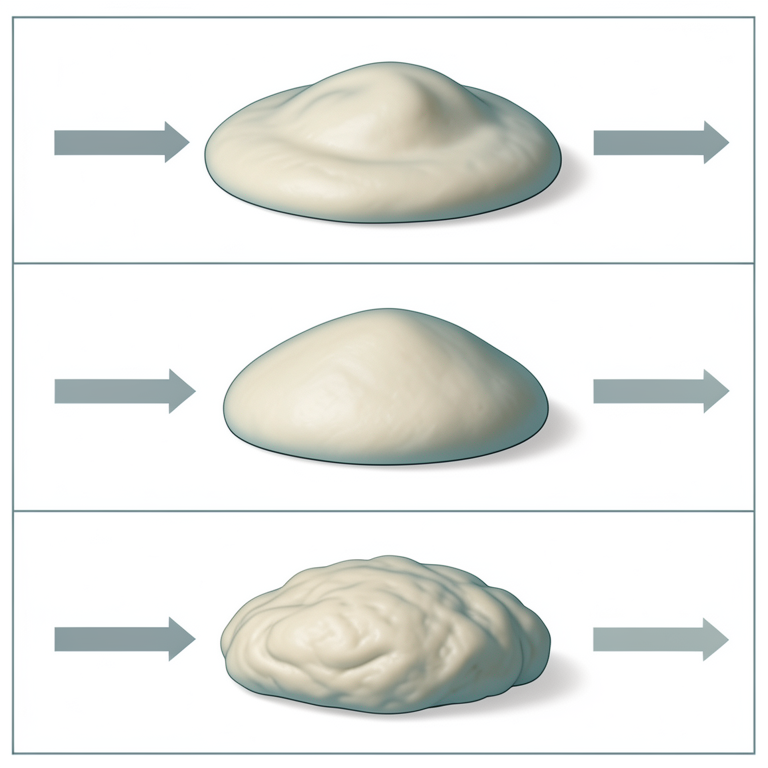
Differential Effect of Salt on Wheat Strength
AI-generated conceptual illustration (soft wheat dough). It explains the idea and does not show study data.
View source evidence ↗Introduction
Sodium is essential for the human metabolism. Excess sodium intake is associated with hypertension, which is a major risk factor for cardiovascular diseases; it has been estimated that 62% of strokes and 49% of coronary heart diseases are caused by high blood pressure [1] . Moreover, high sodium intake has also been associated with several other negative health effects, including renal disease, renal stones [2] , decreased bone mineral density [3] , gastric cancer [4] , asthma [5] , and possibly obesity [6] . In industrialized countries, 10-15% in average of sodium intake is naturally occurring in foods, 10-15% comes from discretionary use of salt (sodium chloride) during home cooking or at the table and the remaining 70-75% comes from processed foods [7] . WHO recommends a maximum adult salt intake of 5 g/day [8]. Different strategies and policy options have been proposed to achieve this goal and several initiatives have been implemented especially in the European region, aiming at reaching this level of salt consumption [7,[9][10][11] . Salt reduction in processed products has been proposed as a high-impact intervention for reducing the sodium intake at population level. Amongst processed foods, cereal products contribute the most to the overall salt intake, especially in those countries where they are staple foods [12][13][14][15] . Salt has critical technological functions in dough and bread other than sensory contribution and its reduction can create significant processing challenges that the bread manufacturing industry has yet to face, for example, salt influences dough rheological behavior and at reduced salt levels dough handling can be affected due to sticky dough phenomena, creating major processing issues and a poor quality final product [16] . Several salt substitutes have been experimented in bread to reduce sodium, but they often have negative effects on sensory properties [17] . A study on the behavior of wheat doughs belonging to many different genetic backgrounds in the presence or absence of salt and it could be used in guiding food industry and breeders in the selection of suitable genotypes for reduced salt bread and bakery products manufacturing.
Materials and Methods Wheat Samples
176 soft wheat (Triticum aestivum L.) grain samples belonging to 41 cultivars of different bread making quality and representing the Italian genetic soft wheat panorama currently used in bakery products, were collected at the farm over the harvest years 2011-2013 in Italy For each cultivar, a minimum of 3 up to a maximum of 6 samples were collected, in different geographical locations whenever possible. Grain samples were tempered to 15.5-17.5% moisture depending on their hardness measured by means of the SKCS 4100 instrument (Perten Instruments, Stockholm, Sweden) and subsequently milled in a Bühler MLU 202 pilot mill (Canton St. Gallen Bühler, Uzwil, Switzerland) equipped with three break rolls, three reduction rolls, and six screens, according to method 26-10.02 of the AACCI [18] to obtain commercial type white flours with an ash content of 0.55-0.65% (flours of 0 type according to the Italian official classification).
Chemical composition analyses
Grain samples were analyzed for moisture by means of the Aquasearch P600 instrument (Kett Electric Laboratory, Tokyo, Japan). Flours were analyzed for moisture according to the ICC Method N.110⁄1 [19], for total protein by the Kjeldahl method according to AOAC Official Method 2001.11 [20] using 5.70 as conversion factor and for Zeleny sedimentation index according to the ICC Method 116/1 [19] . Ash content in flours was checked in a muffle furnace according to ICC Method N. 105/2 [19] . The effect of salt addition on the rheological properties of dough produced from the flour samples was investigated by means of the Chopin Alveograph (Chopin Technologies, Paris, France) and the Brabender Farinograph, equipped with a Sigma mixer S50 (50 g of flour) (Brabender, Duisburg, Germany). The Brabender Farinograph test was run a first time according to the standard ICC Method n. 115/1 [19] without salt addition, then it was repeated by modifying the procedure in this way: a sodium chloride solution was used instead of pure distilled water, to obtain a dough containing 1.5% salt with respect to flour weight. The measured parameters were: water absorbance 14%, development time, stability and softening. The flours of Aubusson, Bolero and Blasco, which are widely used in bread making in Italy and considered respectively as possessing weak, intermediate and strong gluten were also tested for their pasting properties by means of a RVA (Rapid Visco Analyzer) (Perten Instruments, Stockholm, Sweden) according to ICC Method n. 162, Standard 1 profile [19] . The test was repeated according to a modified Standard by using 1.5% or 3.0% salt and the parameters of peak time, peak viscosity, through viscosity, viscosity breakdown, set back and final viscosity were measured.
Results
Protein content, sedimentation value according to Zeleny, Alveograph and Farinograph parameters were analyzed. The Alveograph and the Farinograph parameters were reported for salt-free dough and for dough containing 1.5% salt. The protein content (% d.m.) were ranged from 8.2 to 15.0 covering the range of values that are commonly found in wheat commercialized for bakery products manufacturing and Zeleny sedimentation Index value ranges from 18 to 68 mL and values below 20 mL are indicative of a flour unsuitable for bread baking. Considering the Alveograph parameters obtained with salt ranges from 72 to 413 whereas values ranged from 42 to 342 in the absence of salt. Farinographic water absorbance (14% m.b.) is reported for a dough without salt and with 1.5% salt; values ranged respectively from 48.6 to 62.8% and from 47.5 to 61.5%. The development time was also measured under the same conditions and it was between 1.0 and 20.0 min for the dough without salt and between 0.9 and 22.0 min for the dough with salt. The stability was also measured in the Farinograph curve and it ranged between 0.9 and 21.4 min in the dough without salt and between 0.7 and 20.5 in the dough with salt. Considering the Farinograph parameters, salt addition produced a decrease in water absorption of a few percent points in 95% of samples. It also resulted in an increase generally small, but high for certain samples of development time (78% of samples and stability (70% of samples). This was accompanied by a decrease in softening (72% of samples). The farinogram of strong flours like Blasco looked as if it was not affected that much by salt addition, whereas the curve of medium bread making quality flours as Aubusson was clearly improved and the curve of poorquality flours was only slightly improved. Aubusson, Bolero and Blasco were selected to study the behaviour of flours in the Rapid Visco Analyzer (RVA), with three levels of salt addition i.e., 0%, 1.5% and 3.0%. Aubusson and Bolero are classified in Italy as bread-making quality and the Blasco as superior bread-making quality, with Bolero being intermediate between Aubusson and Blasco. Total proteins of these flours were Aubusson 11.6% d.m., Bolero 10.0% d.m. and Blasco 9.9% d.m. The Alveograph with salt was 367 for Blasco, 192 for Bolero and 110 for Aubusson whereas it was 336, 147 and 73 respectively, without salt. At each salt concentration, viscosity at peak, through and end, together with breakdown and setback, were higher for Aubusson, intermediate for Bolero and lower for Blasco. Progressive increase of salt concentration induced in all three cvs. A corresponding increase of viscosity at peak, through and end and a slight delay of peak. The highest peak and final viscosities were reached for the maximum salt addition (i.e., 3.0%) whereas the 1.5% salt addition produced noticeable differences in the RVA curve with respect to no salt addition only for the Aubusson and Bolero whereas in the Blasco the strongest quality one, the 0% salt curve and the 1.5% salt curves were almost superimposed. Salt addition to the dough resulted in a decrease of gas production during fermentation and the dropping was much more pronounced at 3.0% salt concentration than at 1.5%. For the Aubusson flour, dough made without salt produced a total gas volume of 1518 mL. The addition of 1.5% NaCl led to a total volume of 1487 mL, whereas at 3.0% salt total volume dropped to 1272 mL. Similarly, for the Blasco flour, total volume was 1584 mL without salt, 1519 mL with 1.5% NaCl and 1242 mL at 3.0% NaCl, respectively. The dough development profiles during fermentation of the Aubusson and Blasco flours show that without salt, the dough made from the weak Aubusson cv. rose to a maximum height first and then deflated sensibly. The dough made from the strong Blasco cv. rose continuously, with a pause (shoulder) but without deflating and reached a final height that was also its maximum height. The addition of 1.5% salt strengthened the Aubusson dough, that did not deflate sensibly anymore and its maximum height, which was like the one without salt, occurred later. On the contrary, there was no appreciable effect on the final height of the Blasco dough (The shoulder was slightly delayed and increased). At 3.0% salt addition, the profile of the Aubusson dough changed completely and became like that of the Blasco dough with no salt or 1.5% salt, whereas the Blasco dough became too tenacious and rose less than with no salt or 1.5% salt.
Discussion
By using Farinograph and Alveograph instruments flours coming from 41 different genotypes were analyzed in the absence and in the presence of 1.5% salt to understand how the presence of such an amount of salt influences the flour behavior compared to no salt. The Zeleny index spanning a wide range of values was a clear confirmation of the different bread making quality of our flours. The comparison of rheological parameters determined with varying salt content in the dough suggests that the presence or absence of salt does influence these parameters. T-test resulted in significant difference (p< 0.01) between all Farinograph and Alveograph parameters with or without salt. Two-way analysis of variance confirmed this result and as expected showed that all parameters are influenced by the cultivar (p< 0.01), but did not confirm an interaction between the two factors (salt × cultivar). Differences between parameters with and without salt resulted to be of quite variable extent between samples. Several authors have investigated on the addition of salt to wheat dough and how it affects its Farinograph parameters. Kojima et al. [21] reported a decrease in water absorption and an increase in the development time of the dough at a 1.5% salt level. When salt was added to the dough the protein association was increased, water absorption decreased but resistance to extension and extensibility increased. Beck at al. [22] also report that their Farinograph studies indicated that decreasing NaCl concentration increased water absorption and explained that this tendency confirms the assumption of decreasing protein hydration capacity due to the competition of sodium and chloride ions and water molecules on the protein surface. When salt is added to dough, Na+ and Cl-ions can interact with polar binding sites of gluten protein and compete with water for them. When salt was added as a solid to dough ingredients before mixing, the first part of the farinogram (dough development) was less smooth than when salt was previously dissolved in water, indicating that salt participates to the process of dough formation. Full-charged ions Na+ and Cl-probably establish strong polar interactions with gluten proteins that lead to a stabilized gluten network, so that strength and machinability of dough is improved. It seems, however, that this effect can improve technological quality of flours of medium strength, but cannot change too weak flour, whereas strong flour would not need it. Tuhumury et al. [23] studying two commercial wheat flours with different levels of total proteins in the presence or absence of NaCl by using transmission electron microscopy and chemical analysis of disulfide bond linkages and the ratio of polymeric glutenins and monomeric gliadins, confirmed the fact that NaCl caused gluten to form fibrous structures and NaCl presence increased non-covalent interactions and β-sheet structure in gluten proteins.
So, the presence of salt during dough mixing results in different molecular conformation and network structure of gluten proteins which contributed to the differences in the rheological properties. Recently, Chen at al. [24] investigated on the disulfide, sulfhydryl groups, surface hydrophobicity, secondary structure and extractable gliadin and glutenin of gluten in hard wheat flour doughs prepared with five different levels of NaCl. They found that the presence of salt decreased the free sulfhydryl content but increased the βsheet structure of gluten. The extractable level of gliadin greatly decreased while glutenin increased with NaCl implying that more polymeric and less soluble protein networks were formed. More recently a paper by Avramenko et al. [25] investigated on the role of NaCl level on the handling and water mobility in dough prepared from four different wheat cultivars.
Conclusions
176 samples from 41 different genotypes were studied possessing a wide range of qualities. Salt influences dough behavior and in general all flours improve their baking quality. Salt is used in strengthening the gluten network and thus the gas retention of dough and in affecting yeast activity. Part of this dough strengthening effect is due to the decrease in the water absorption of the flour when NaCl is present. A small quantity of salt (1.5%) is enough to improve the technological quality of medium bread making quality flours, so that they can sustain longer fermentations and can be mixed for a longer time. Strong flours perform well without adding salt and too much salt (3.0%) can make them too tenacious. This certainly opens to the reduction of salt use in bread making, in line with recommendations to improve public health by reducing salt intake in the diet.
References
23 in the original paper- Tsirimiagkou C, Basdeki ED, Argyris A, Manios Y, Yannakoulia M, Protogerou AD, et al. Current Data on Dietary Sodium, Arterial Structure and Function in Humans: A Systematic Review. Nutrients. 2020;12:5.
- Hosohata K. Biomarkers for Chronic Kidney Disease Associated with High Salt Intake. Int. J. Mol. Sci. 2017:18:2080.
- Wang X, Kim D, Tucker KL. Effect of Dietary Sodium and Potassium Intake on the Mobilization of Bone Lead among Middle-Aged and Older Men: The Veterans Affairs Normative Aging Study. Nutrients. 2019:11:2750.
- Kim J, Park S, Nam BH. Gastric cancer and salt preference: A population-based cohort study in Korea. Am. J. Clin. Nutr. 2010:91:1289-1293.
- Mickleborough TD. Fogarty, A. Dietary sodium intake and asthma: An epidemiological and clinical review. Int. J. Clin. Pract. 2006:60:1616-1624.
- He FJ, MacGregor GA. A comprehensive review on salt and health and current experience of worldwide salt reduction programmes. J. Hum. Hypertens. 2009:23:363-384.
- Kloss L, Meyer JD, Graeve L, Vetter W. Sodium intake and its reduction by food reformulation in the European Union-A review. NFS J. 2015:1:9-19.
- WHO. Guideline: Sodium Intake for Adults and Children; World Health Organization: Geneva, Switzerland. Availableonline: https://www.ncbi.nlm.nih.gov/books/NBK133309/ (accessed on 15 June 2020), 2012.
- WHO. Regional Office for Europe. Mapping Salt Reduction Initiatives in the WHO European Region; International Journal of Agriculture and Nutrition https://www.agriculturejournal.net WHO Regional Office for Europe: Copenhagen, Denmark; c2013. Available online:http: //www.euro.who.int/ data/assets/pdf_file/0009/186462/Mapping-saltreduction-initiatives-in-the-WHO-European-Region.pdf (accessed on 15 June 2020).
- Dötsch-Klerk M, Goossens WP, Meijer GW, Van Het Hof KH. Reducing salt in food; setting product-specific criteria aiming at a salt intake of 5 g per day. Eur. J. Clin. Nutr,2015:69:799-804.
- Trieu K, Neal B, Hawkes C, Dunford E, Campbell N. Rodriguez-Fernandez, R. Salt initiatives around the world-A systematic review of progress towards the global target. PLoS ONE. 2015:10:e0130247.
- WHO. Reducing salt intake in populations. In Report of a WHO Forum and Technical Meeting; World Health Organisation Document Production Services: Paris, France, 2006.
- Lynch EJ, Dal Bello F, Sheehan EM, Cashman KD, Arendt EK. Fundamental studies on the reduction of salt on dough and bread characteristics. Food Res. Int. 2009:42:885-891.
- Quilez J, Salas-Salvado J. Salt in bread in Europe: Potential benefits of reduction. Nutr. Rev. 2011:70:666678.
- Daugirdas JT. Potential importance of low-sodium bread and breakfast cereal to a reduced sodium diet. J. Ren. Nutr. 2013:23:1-3.
- Avramenko NA, Tyler RT, Scanlon MG, Hucl P, Nickerson MT. The chemistry of bread making: The role of salt to ensure optimal functionality of its constituents. Food Rev. Int. 2018:34:204-225.
- Silow C, Axel C, Zannini E, Arendt EK. Current status of salt reduction in bread and bakery products-A review. J. Cereal Sci. 2016:72:135-145.
- ICC. Methods No. 110/1, 116/1, 105/2, 121, 115/1, 162. In ICC Standards; International Association for Cereal Science and Technology: Vienna, Austria, 2003.
- AOAC International. Method No. 2001.11. In Official Methods of Analysis of AOAC International, 17 th ed.; Association of Analytical Communities: Gaithersburg, MD, USA; c2002.
- Kojima M, Togawa T, Murase M, Totani S, Sugimoto M, Kaishi NS. Effects of addition of water and sodium chloride on microstructure and rheological properties of noodles. Food Feed Chem. 1995:42:899-906.
- Beck M, Jekle M, Becker T. Impact of sodium chloride on wheat flour dough for yeast leavened products. Rheological attributes. J Sci. Food Agric. 2012:92:585592.
- Tuhumury HCD, Small DM, Day L. The effect of sodium chloride on gluten network formation and rheology. J. Cereal Sci. 2014:60:229-237.
- Chen G, Ehmke L, Sharma C, Miller R, Faa P, Smith G. Physicochemical properties and gluten structures of hard wheat flour doughs as affected by salt. Food Chem. 2019:275:569-576.
Cited by 8
From OpenAlex, OpenCitations and reference lists read by Scinovex
- Calcium chloride priming reverses the effect of salinity stress on α-amylase activity during seed germination in Vigna radiata ↗
Kadam Sunil Mohanrao, Phadtare Aniket Pramod, Masurkar Ajit Sopan · Journal of Entomology and Zoology Studies · 2023
Farmland salinization is a global issue that is causing significant agricultural losses. Seeds of Vigna radiata were treated 200 mM NaCl, CaCl2 + 200 mM NaCl and control (distilled water). 200 mM NaCl treatment had a considerable negative impact on seed germination and seeds were unable to germinate. Reduction in seed germination was correlated with low α-amylase activity after 96
- Synthesis and characterization of superabsorbent hydrogels based on carboxymethyl cellulose and agar: Agar for smart swelling and controllable delivery ↗
Marshal Soni, Diksha Gautam, Pawan Raj Shakya · Journal of Research in Chemistry · 2023
The current study described a thorough analysis of the adsorption characteristics of a hydrogel that was chemically connected and built on agar and carboxymethyl cellulose (CMC). With regard to swelling %, the Agar-Agar/ECH/CMC hydrogel was created under ideal conditions. In order to achieve the highest percentage of swelling, different response parameters were changed. The structure and morphology of the hydrogels
❝ 2Found by Scinovex - Growth of Escherichia coli K-12 on L-proline in the absence of known proline transporters ↗
Charles E. Deutch · Journal of Advances in Microbiology Research · 2023
Three transport systems have been implicated in the uptake of L-proline by the Gram-negative bacterium Escherichia coli. A triple mutant containing deletions of the putP, proP, and proW genes was constructed from strain BW25113 of the Keio collection. This mutant still grew slowly in a minimal salts medium with L-proline as the sole nitrogen source. Growth was dependent on the…
❝ 1 - Impact of soya protein isolate and Fonio flour on the rheological and microstructural properties of bread ↗
Emily Wilson, Liam Harris, Sophia Turner · International Journal of Chemical Research and Development · 2025
This study investigates the impact of Soya Protein Isolate (SPI) and Fonio Flour (FF) on the rheological and microstructural properties of bread. As bread is a staple food consumed globally, there is a growing interest in enhancing its nutritional value, particularly for gluten-sensitive and plant-based diets. SPI, a plant-based protein rich in essential amino acids, and FF, a gluten-free flour…
- Biochemical impact of sodium chloride on soft wheat dough: A comprehensive review of rheological and nutritional parameters
Aisha Olufunke Adeyemi, Chinedu Emeka Okonkwo, Zainab Ibrahim Danjuma · International Journal of Biology Sciences · 2025
This study investigates the biochemical impact of sodium chloride (NaCl) on the rheological properties, nutritional content, and sensory characteristics of soft wheat dough. Various NaCl concentrations (0. 5%, 1. 0%, 1. 5%, and 2. 0%) were tested to assess their effects on dough elasticity, viscosity, water absorption, sodium content, and consumer acceptability. Rheological analysis using farinograph and dynamic rheometer techniques revealed significant increases in both elastic and viscous moduli with higher NaCl concentrations, indicating enhanced dough rigidity. However, excessive NaCl (1.
- Evaluation of physical grain characteristics in diverse wheat varieties/genotypes
Anuj Kumar Yadav, CL Maurya, Vikas Gautam, Mamta Rathore, Nidhi Singh, Ravi Dixit · International Journal of Advanced Biochemistry Research · 2024
This study aimed to evaluate the grain quality characteristics of 20 wheat genotypes/varieties (17 varieties and 3 genotypes) grown at the EBR section of rabi cereals at Chandra Shekhar Azad University of Agriculture and Technology, Kanpur. A varietal trial was conducted over two years, and grain quality traits such as test weight, moisture content, grain size, bulk density, and grain texture were analyzed using standard methods. The results revealed significant variations among the wheat genotypes/varieties for all the tested parameters. K-9533 recorded the highest 1000-grain weight and bulk
- The biochemical role of sodium chloride in wheat dough ↗
Aissatou Ndiaye, Mamadou Fall, Fatoumata Diop · International Journal of Bioscience and Biochemistry · 2024
This study investigates the biochemical role of sodium chloride (NaCl) in wheat dough, with a focus on its effects on dough rheology, gluten network formation, and enzymatic activity. The research explores the impact of varying NaCl concentrations (0.5% to 3.0% by flour weight) on dough properties, using a range of analytical techniques, including farinograph and extensograph testing, scanning electron microscopy
- Characterization of rhizobia isolates from chickpea (Cicer arietinum L.) root nodules of Ethiopia
Zehara Mohammed Damtew · International Journal of Agriculture and Food Science · 2022
Chickpea (Cicer arietinum L.) is a legume crop that serves as a vital source of protein nutrition in many food insecure regions of the world, including Ethiopia. Chickpea is an important pulse crop grown widely in Ethiopia for grain production and amelioration of soil fertility for the succeeding cereal crops. The ability of the crop to enrich nitrogen poor soils due to biological nitrogen fixation with different isolate of endosymbiotic Mesorhizobium spp. However, the effectiveness of the isolate varies due to inherent Physiological and biochemical characteristics of the endo-symbionts and th