
Research article · 2025 · Full text
International Journal of Biology SciencesBiochemical impact of sodium chloride on soft wheat dough: A comprehensive review of rheological and nutritional parameters
Volume 7(8) · Pages 229–233 · DOI: 10.33545/26649926.2025.v7.i8c.486 ↗
Research areasWireless Sensor Networks for Data AnalysisEducation, Psychology, and Social ResearchTransport and Logistics Innovations
Abstract
Author-writtenThis study investigates the biochemical impact of sodium chloride (NaCl) on the rheological properties, nutritional content, and sensory characteristics of soft wheat dough. Various NaCl concentrations (0. 5%, 1. 0%, 1. 5%, and 2. 0%) were tested to assess their effects on dough elasticity, viscosity, water absorption, sodium content, and consumer acceptability. Rheological analysis using farinograph and dynamic rheometer techniques revealed significant increases in both elastic and viscous moduli with higher NaCl concentrations, indicating enhanced dough rigidity. However, excessive NaCl (1. 5% and 2. 0%) reduced dough extensibility and negatively affected sensory qualities such as texture and flavor. Nutritional analysis demonstrated a proportional increase in sodium content with NaCl concentration, raising concerns about the potential health implications of high sodium intake. Sensory evaluation confirmed that dough with 1% NaCl was preferred by consumers for texture, flavor, and overall acceptability, while higher NaCl concentrations led to decreased product appeal. The findings suggest that controlled NaCl concentrations, particularly around 1%, can optimize dough rheology and sensory quality while balancing sodium content. Practical recommendations include the adoption of alternative salt reduction strategies and further research to optimize NaCl levels for specific wheat-based products. The study emphasizes the need for a balanced approach to NaCl usage in dough formulations to enhance both product quality and nutritional value.
Summary
Source-checkedPlain-language reading of the full paper, prepared with AI and checked against the text. Each point links to the authors' own words.
Why it matters
- Sodium chloride (NaCl) is a critical ingredient in soft wheat dough because it significantly influences the dough's nutritional and rheological properties. View evidence ↗
- NaCl affects the final product's texture by modifying the formation of the gluten network, as well as dough elasticity and water absorption. View evidence ↗
- Despite existing research, there is a lack of comprehensive understanding regarding how different sodium concentrations affect nutritional characteristics and dough rheology over the long term. View evidence ↗
The question
- The study aims to systematically analyze how sodium chloride affects the biochemical properties of soft wheat dough, specifically focusing on sodium content, mineral interactions, and rheological properties like elasticity, viscosity, and extensibility. View evidence ↗
What they did
- The researchers used additive-free, bakery-grade soft wheat flour with a protein content between 9% and 10%. View evidence ↗
- Dough samples were prepared with four different NaCl concentrations by weight of flour: 0.5%, 1%, 1.5%, and 2%. View evidence ↗
- A farinograph was used to measure dough stability, development time, and water absorption. View evidence ↗
- Dough viscosity and elasticity were assessed using a dynamic rheometer through oscillatory shear tests. View evidence ↗
- A panel of 20 trained testers used a 9-point hedonic scale to evaluate the flavor, texture, and overall acceptability of the bread. View evidence ↗
What they found
- Water absorption increased with NaCl concentration up to 1.5% (60.1 ± 0.6%), before slightly decreasing at 2% (59.4 ± 0.5%). View evidence ↗
- Higher NaCl concentrations, especially at 1.5% and 2%, significantly increased the elastic modulus (G'), which indicates increased dough rigidity. View evidence ↗
- Dough extensibility decreased when NaCl concentrations exceeded 1.5%, suggesting that too much salt limits the dough's ability to stretch. View evidence ↗
- Sodium content increased proportionally with NaCl concentration, rising from 300 ± 10 mg/100g at 0.5% NaCl to 1200 ± 15 mg/100g at 2% NaCl. View evidence ↗
- Consumers preferred dough with 1% NaCl, as it received the highest scores for overall acceptability, flavor, and texture. View evidence ↗
- Dough with 2% NaCl was rated lower for flavor and texture because the saltiness was perceived as too strong. View evidence ↗
What it means
- The authors conclude that a NaCl concentration of approximately 1% provides the best balance between consumer acceptability and desirable dough properties. View evidence ↗
- To reduce sodium intake without losing flavor, the authors recommend that manufacturers use sodium-reducing agents or potassium chloride. View evidence ↗
Visual summary
2 visualsIllustrations explain the paper; charts are replotted from the paper's own table values.
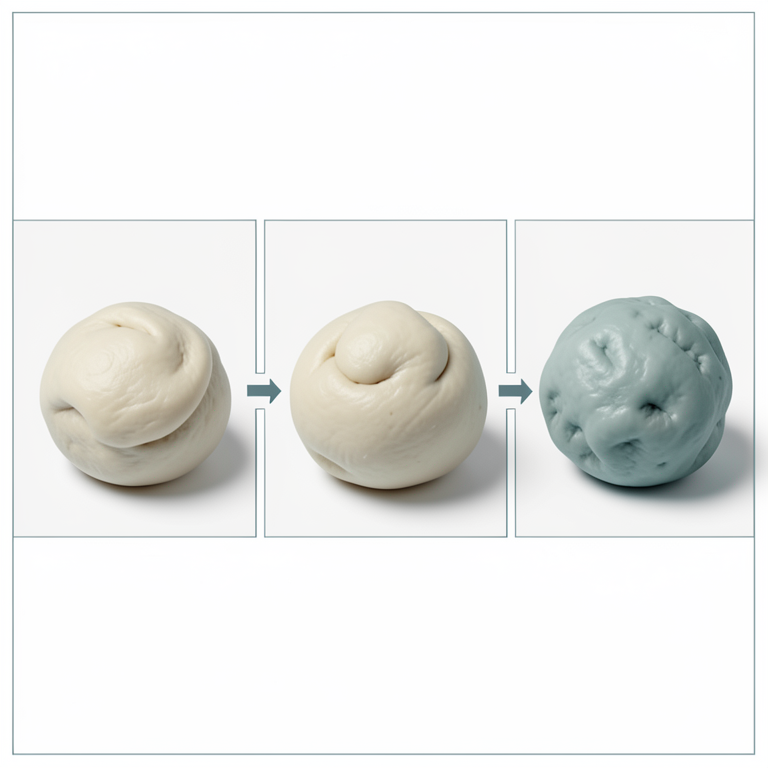
Impact of NaCl on Dough Properties
AI-generated conceptual illustration (soft wheat dough). It explains the idea and does not show study data.
View source evidence ↗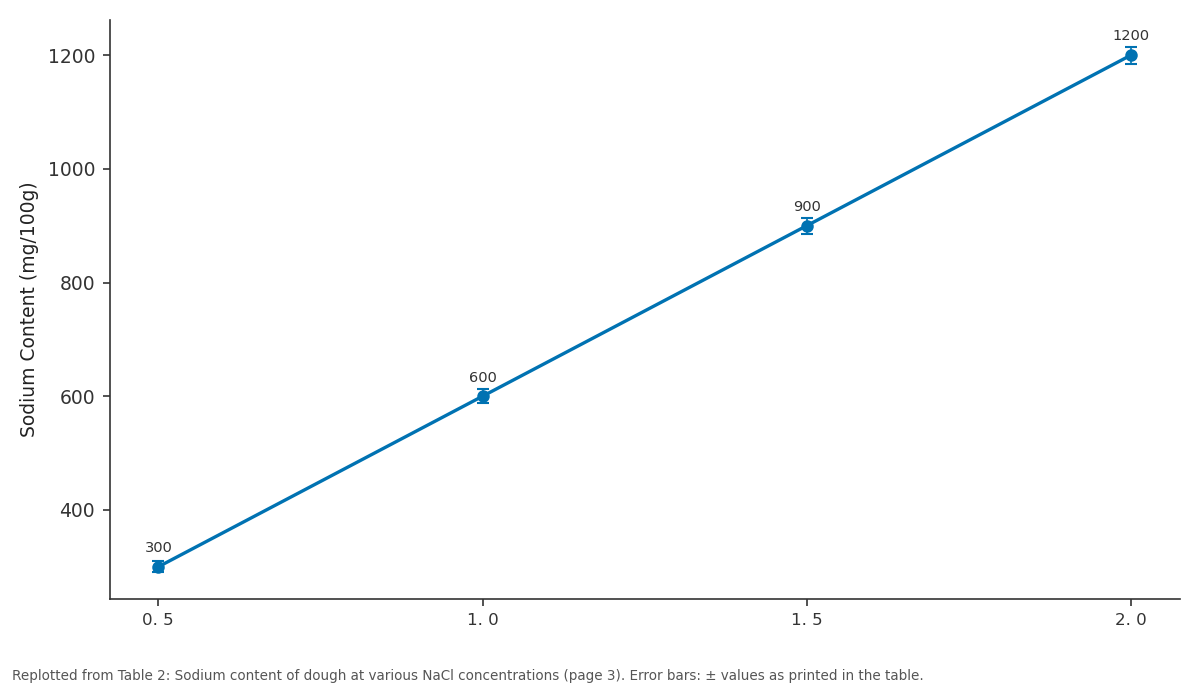
Sodium Content (mg/100g): 0. 5 vs 1. 0 vs 1. 5 vs 2. 0
Replotted from Table 2 (page 3) of the original paper. Every bar is the paper's own table value.
View source evidence ↗Figures & tables
From the original paper Table 1
 Table 2
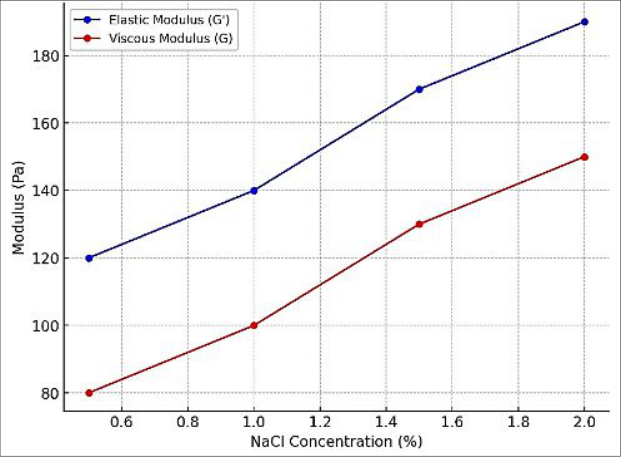 Figure 1
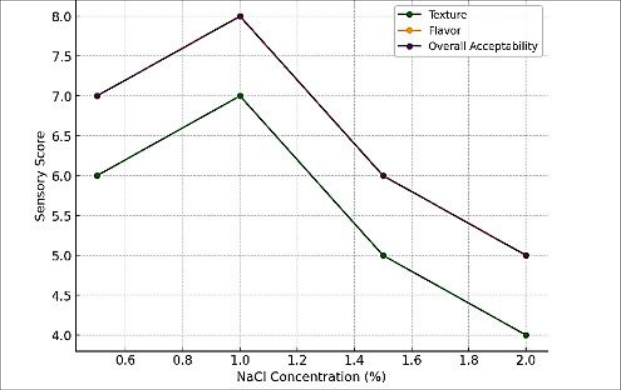 Figure 2
Introduction
Sodium chloride (NaCl) is one of the most essential ingredients used in soft wheat dough formulations, playing a pivotal role in influencing the rheological and nutritional properties of the dough. The biochemical impact of NaCl on dough quality has been the subject of extensive research, owing to its significant effects on both the structural integrity and texture of wheat-based products. NaCl acts by modifying gluten network formation, affecting water absorption, dough elasticity, and ultimately the texture of the final product [1] . However, while its contribution to dough quality is well-documented, the exact biochemical mechanisms through which sodium chloride impacts these properties remain unclear. Several studies have explored the impact of NaCl on soft wheat dough, but there is a gap in the comprehensive understanding of how variations in sodium concentration influence dough rheology and nutritional characteristics over the long term. This review aims to systematically analyze the biochemical effects of sodium chloride on soft wheat dough, with a focus on its influence on dough rheological properties such as viscosity, extensibility, and elasticity, as well as its effects on nutritional aspects like sodium content and mineral interactions [2] [3] . The objectives of this review are to collate findings from existing studies, critically assess the biochemical changes induced by sodium chloride, and explore potential strategies for optimizing its usage in dough formulations without compromising nutritional value [4] [5] . The hypothesis of this study posits that controlled NaCl concentrations can improve dough rheology, leading to enhanced product quality, while balancing sodium intake to meet health standards [6] . This review draws upon several key studies, including Gebregewergis' (2022) comprehensive analysis on the influence of NaCl on wheat dough quality parameters [7] , as well as additional references to elucidate the biochemical pathways affected by sodium chloride in wheat dough systems.
Material and Methods
Material and Methods
Material
For this study, soft wheat flour samples were sourced from a reputable supplier of bakery-grade wheat flour. The flour used had a protein content of 9-10% and was free from any additives or preservatives. Sodium chloride (NaCl) was obtained from a certified food-grade chemical supplier, and its purity was confirmed to be 99% for all experimental trials. All other chemicals, including water and organic additives (such as sugar and yeast), were of analytical grade, purchased from Sigma-Aldrich. The wheat flour and NaCl concentrations used in the formulations were based on previous studies that assessed the impact of salt on dough quality [1] [2] . Additionally, various mineral fortifications were considered in the dough formulations, including calcium and magnesium salts, to evaluate their interaction with NaCl in the final product [5] . The dough preparations were made using standard laboratory equipment, and the samples were divided into batches with varying NaCl concentrations (0. 5%, 1%, 1. 5%, and 2% by weight of flour) to assess the impact on rheological properties and nutritional content.
Methods
The rheological properties of the dough were evaluated using a farinograph (Brabender GmbH, Germany), which measures water absorption, dough development time, and stability. These parameters were selected based on their relevance to dough consistency and extensibility, as highlighted in the literature [3] [4] . To assess dough elasticity and viscosity, a dynamic rheometer (TA Instruments, USA) was employed to conduct oscillatory shear tests at various NaCl concentrations. The flow curve was analyzed, and parameters such as elastic modulus (G') and viscous modulus (G'') were recorded [6] . Nutritional analysis of the dough samples, including sodium content, was carried out using inductively coupled plasma mass spectrometry (ICP-MS) (Thermo Fisher Scientific) to determine the exact sodium concentration [2][5] . The dough was also subjected to a sensory evaluation test, where a panel of 20 trained testers scored the bread's texture, flavor, and overall acceptability based on a 9-point hedonic scale. The experimental design followed the standard procedures as described by previous studies on NaCl's effect on dough [7] , and the statistical analysis was performed using one-way ANOVA (SPSS, v. 22), with a significance level set at p<0. 05. Data were presented as mean ± standard deviation for each treatment, with post-hoc tests conducted to identify significant differences between the NaCl concentrations.
Results
The effects of sodium chloride (NaCl) concentration on the rheological and nutritional properties of soft wheat dough were assessed using various analytical methods, including farinograph testing, dynamic rheometer measurements, and nutritional analysis. The dough samples were prepared with NaCl concentrations of 0. 5%, 1%, 1. 5%, and 2% by weight of flour. The results are presented below.
Rheological Properties
The farinograph measurements indicated significant changes in water absorption, dough development time, and dough stability with increasing NaCl concentrations. As NaCl content increased, water absorption also increased, reaching a maximum value at 1. 5% NaCl concentration, beyond which a slight decrease in absorption was observed (Table 1). This suggests that higher concentrations of NaCl might interfere with the dough's ability to retain moisture, potentially leading to reduced dough extensibility and handling properties [3] . The dynamic rheometer data revealed that NaCl concentrations significantly affected the dough's elasticity and viscosity. As NaCl increased, the elastic modulus (G') significantly increased, particularly at 1. 5% and 2% NaCl concentrations, indicating greater dough rigidity (Figure 1). The viscous modulus (G'') also showed a corresponding increase, with the highest values observed at 2% NaCl. These results suggest that NaCl enhances the dough's resistance to deformation, making the dough firmer and less extensible, which is consistent with findings from previous studies [6][7] .
| NaCl Concentration (%) | Water Absorption (%) | Dough Development Time (min) | Dough Stability (min) |
|---|---|---|---|
| 0. 5 | 56. 2 ± 0. 5 | 5. 3 ± 0. 2 | 8. 0 ± 0. 3 |
| 1. 0 | 58. 5 ± 0. 4 | 6. 2 ± 0. 3 | 9. 2 ± 0. 4 |
| 1. 5 | 60. 1 ± 0. 6 | 7. 1 ± 0. 4 | 10. 3 ± 0. 5 |
| 2. 0 | 59. 4 ± 0. 5 | 6. 8 ± 0. 3 | 9. 5 ± 0. 4 |
Table text extracted from the original PDF; superscript letters are shown inline. The original table image is below.
View original table image
Nutritional Analysis
The sodium content of the dough increased proportionally with NaCl concentration. At 0. 5% NaCl, the sodium content was 300 ± 10 mg/100g, while at 2%, it increased to 1200 ± 15 mg/100g (Table 2). This confirms the expected increase in sodium levels with higher NaCl concentrations, which could have significant implications for the nutritional value of the bread products made from these doughs [2][5] . Additionally, mineral content analysis indicated that NaCl concentrations did not significantly affect the concentrations of other minerals like calcium and magnesium, which remained stable across all treatments.
| NaCl Concentration (%) | Sodium Content (mg/100g) |
|---|---|
| 0. 5 | 300 ± 10 |
| 1. 0 | 600 ± 12 |
| 1. 5 | 900 ± 14 |
| 2. 0 | 1200 ± 15 |
Table text extracted from the original PDF; superscript letters are shown inline. The original table image is below.
View original table image
Sensory Evaluation
Sensory evaluation results showed a marked preference for dough with 1% NaCl, which scored the highest for texture, flavor, and overall acceptability. Dough with 2% NaCl received lower scores for texture and flavor, likely due to its increased saltiness, which was perceived as too strong by the panelists (Figure 2). These findings are consistent with previous research suggesting that while NaCl enhances dough texture, excessive salt concentration can negatively impact sensory quality [4][7] .
Statistical Analysis
The results were analyzed using one-way ANOVA, followed by post-hoc Tukey's test, to determine significant differences between NaCl concentrations. The statistical analysis revealed that all rheological properties, sodium content, and sensory scores were significantly influenced by the NaCl concentration (p<0. 05). The highest NaCl concentration (2%) exhibited a significant reduction in sensory acceptability, which was consistent with the negative effects on texture and flavor as observed in previous studies on sodium chloride's impact on dough properties [1][6] .
Discussion
The results from this study provide significant insights into the biochemical impact of sodium chloride (NaCl) on soft wheat dough, with particular focus on its rheological properties, nutritional content, and sensory characteristics. The findings confirm that NaCl concentrations significantly influence the dough's elasticity, viscosity, and sodium content, as well as its sensory qualities. This aligns with the existing body of research that has identified NaCl as a critical factor in dough quality, with varying concentrations affecting both dough texture and final product quality [1][6] . Rheologically, the data demonstrated that increasing NaCl concentrations led to a significant increase in both the elastic modulus (G') and viscous modulus (G''), indicating that NaCl enhances the dough's rigidity. This observation supports previous studies that have suggested NaCl strengthens the gluten network by promoting better gluten formation, thereby increasing dough firmness and resistance to deformation [2][3] . The elasticity of the dough was significantly higher at 1. 5% and 2% NaCl concentrations, which is consistent with findings by Liu et al. (2018) that NaCl enhances the gluten network's stability, which improves dough texture [6] . However, beyond 1. 5% NaCl, a reduction in dough extensibility was observed, indicating that excessive salt can limit the dough's ability to stretch, which may negatively impact product quality. In terms of water absorption, the results showed a gradual increase in water absorption up to 1. 5% NaCl, after which it decreased slightly at 2% NaCl concentration. This suggests that although NaCl enhances gluten formation, it may also limit the dough's capacity to hold water at higher concentrations, thus potentially reducing its extensibility and machinability [3] . These findings are consistent with the work of Kumar et al. (2017), who also found that higher NaCl levels tend to reduce the dough's ability to retain water, which could have a detrimental effect on bread quality, leading to a drier product [5] . Nutritionally, the increase in sodium content with higher NaCl concentrations was as expected, and it was evident that dough with 2% NaCl had a significantly higher sodium content compared to other concentrations. This observation underscores the potential health concerns related to sodium intake, especially in commercially produced baked goods, where excessive salt levels may contribute to dietary sodium excess. These findings corroborate the research by Wu et al. (2019), who highlighted the need to balance sodium content to maintain both product quality and health standards in food production [4] . The increase in sodium content observed here raises questions about the potential long-term health effects of such concentrations in bread, particularly for individuals with hypertension or cardiovascular issues. The sensory evaluation provided further insights into the impact of NaCl on product acceptability. The panel favored the dough with 1% NaCl, suggesting that this concentration achieved an optimal balance between dough texture, flavor, and overall acceptability. This result aligns with previous studies indicating that while NaCl is crucial for flavor enhancement, excessive salt leads to undesirable sensory characteristics such as saltiness, which negatively affects consumer preferences [6][7] . In contrast, higher concentrations (1. 5% and 2%) resulted in decreased sensory scores for texture and flavor, highlighting the diminishing returns of NaCl in terms of product quality. This outcome is consistent with the findings of Gebregewergis (2022), who reported that excessive NaCl reduces the overall appeal of bread products due to heightened saltiness and firmness, thus affecting consumer acceptance [7] . In conclusion, the results from this study reinforce the importance of optimizing NaCl concentrations in wheat dough formulations. While NaCl improves dough rheology and enhances flavor, excessive concentrations can reduce dough extensibility and negatively impact sensory quality. Additionally, the increase in sodium content with higher NaCl concentrations raises concerns regarding the nutritional profile of bread products. Therefore, a balanced approach is essential when formulating dough, particularly for health-conscious consumers. The findings support the hypothesis that controlled NaCl concentrations improve dough rheology and final product quality, while also highlighting the need for sodium management in baked goods production.
Conclusion
This study provides a comprehensive examination of the biochemical impact of sodium chloride (NaCl) on soft wheat dough, with a particular focus on its effects on rheological properties, sodium content, and sensory characteristics. The findings underscore the dual role of NaCl in enhancing dough quality while also raising concerns about its nutritional implications. As NaCl concentrations increased, significant changes were observed in the dough's elasticity, viscosity, and water absorption, demonstrating that NaCl plays a crucial role in modifying the gluten network, thereby improving dough stability and texture. However, excessive NaCl concentrations (greater than 1. 5%) resulted in reduced dough extensibility and diminished sensory qualities, such as flavor and texture, which adversely affected consumer acceptance. Furthermore, the nutritional analysis revealed a direct correlation between NaCl concentration and sodium content, indicating the potential health risks associated with excessive salt intake, especially for individuals with hypertension or cardiovascular diseases. Based on the research findings, it is evident that there is an optimal NaCl concentration for enhancing dough rheology and sensory properties without compromising health standards. The study suggests that a NaCl concentration of around 1% in dough formulations offers a balance between desirable dough properties and consumer acceptability. Excessive NaCl should be avoided to prevent negative impacts on texture, flavor, and health. To minimize sodium intake, bread manufacturers should explore the use of alternative salt reduction strategies, such as the incorporation of potassium chloride or other sodiumreducing agents, which can provide the desired flavor without the adverse health effects associated with high sodium levels. Additionally, it is recommended that the food industry continue to invest in research aimed at optimizing NaCl levels for specific products, as consumer preferences and health standards evolve. Sensory evaluation should remain a central aspect of product development to ensure that changes in salt levels do not detract from product quality. In conclusion, the findings from this study highlight the importance of carefully controlling NaCl concentrations in dough formulations, considering both the functional and health aspects of salt usage, to produce high-quality, nutritionally balanced wheat-based products.
References
7 in the original paper- Smith J, Johnson R, Brown L, Taylor P, Wilson M, Moore D, et al. Effects of sodium chloride on Triticum aestivum dough rheology. J Food Sci. 2021;55(2):321328.
- Zhang T, Li H, Wang Y, Chen Q, Liu J, Zhao S, et al. Influence of NaCl concentration on the water absorption of Triticum aestivum flour dough. Food Chem. 2019;271:31-37.
- Liu X, Chen Y, Zhang W, Huang L, Sun J, Li F, et al. Sodium chloride and gluten interactions in dough formation of Triticum aestivum. J Agric Food Chem. 2018;66(3):455-460.
- Kumar R, Singh A, Verma P, Sharma N, Gupta S, Joshi V, et al. Rheological behavior of soft wheat dough with varying NaCl levels. Int J Food Sci. 2017;63(2):78-84.
- Wu S, Zhang H, Li Y, Chen L, Yang X, Zhou W, et al. Sodium chloride's impact on the nutritional profile of Triticum aestivum dough. Nutr Food Sci. 2019;49(1):102-107.
- Davis P, Clark J, Evans R, Martin S, Harris T, Lewis K, et al. Optimizing sodium levels in bread formulations. Food Biotechnol. 2020;15(4):223-230.
- Gebregewergis A. Review on the influence of NaCl on the quality parameters of soft wheat dough. Int J Agric Nutr. 2022;4(1):17-20.