
Research article · 2022 · Full text
International Journal of Agriculture and Food ScienceCharacterization of rhizobia isolates from chickpea (Cicer arietinum L.) root nodules of Ethiopia
Volume 4(1) · Pages 103–108 · DOI: 10.33545/2664844x.2022.v4.i1b.128 ↗
Research areasLegume Nitrogen Fixing Symbiosis
Abstract
Author-writtenChickpea (Cicer arietinum L.) is a legume crop that serves as a vital source of protein nutrition in many food insecure regions of the world, including Ethiopia. Chickpea is an important pulse crop grown widely in Ethiopia for grain production and amelioration of soil fertility for the succeeding cereal crops. The ability of the crop to enrich nitrogen poor soils due to biological nitrogen fixation with different isolate of endosymbiotic Mesorhizobium spp. However, the effectiveness of the isolate varies due to inherent Physiological and biochemical characteristics of the endo-symbionts and the host varieties. This necessitates the screening of the outstanding properties of the endo-symbionts under controlled environment. To this effect, 20 promising isolates were characterized for in vitro tolerance and nutritional diversity under laboratory under conditions on Chickpea. Cluster analysis of 61 biochemical and physiologic characteristics of isolates were grouped into four clusters at 70% similarity level. The larger cluster group (CI) contained 35% of the isolates, which reflect large compared to other classification. The isolates displayed incapable to grow at 45 °C and three isolates grow 40 °C. Few isolates grow at 5% NaCl and at pH 4.5, whereas the majority of the isolate grow in the remaining range. The tested isolates were sensitive to the Ampicilline and few resistances to Chloramphenicol. One isolate was found resistance to Pb and most of them sensitive Zn. Generally, the data provided an important complement to select representative distinct symbiont isolate for testing at under greenhouse conditions and field trials to enhance nitrogen fixation activities for chickpea production.
Summary
Source-checkedPlain-language reading of the full paper, prepared with AI and checked against the text. Each point links to the authors' own words.
Why it matters
- Chickpea is a critical protein source for people in food-insecure areas, including Ethiopia. View evidence ↗
- Most agricultural soils in Ethiopia lack enough nitrogen for crops to reach their full yield potential. View evidence ↗
- Rhizobia bacteria in chickpea root nodules convert atmospheric nitrogen into a form the plant can use. View evidence ↗
The question
- The study aims to identify effective and competitive indigenous rhizobia isolates to help maximize chickpea production for Ethiopian smallholder farmers. View evidence ↗
What they did
- Salt tolerance was measured by growing isolates on YMA agar plates with sodium chloride concentrations ranging from 0% to 5%. View evidence ↗
- pH tolerance was tested using YMA agar plates adjusted from pH 4.0 to 10.0. View evidence ↗
- Temperature tolerance was evaluated by incubating isolates at 21, 25, 28, 35, 37, 40, and 45 °C. View evidence ↗
What they found
- The vast majority of isolates (91%) grew well at a 1% NaCl concentration. View evidence ↗
- The isolates showed the highest antibiotic resistance to erythromycin (78%), nalidixic acid (73%), and streptomycin (61%). View evidence ↗
- Resistance to heavy metals was highest for Manganese and Cobalt (52%), followed by Copper (43%) and Zinc (30%), while most were sensitive to Lead (only 4% resistant). View evidence ↗
- Carbon source utilization was highest for D-Sorbitol, D-mannitol, and D-Glucose (61%), while no isolates could utilize α-cellulose. View evidence ↗
- Among amino acids, Phenylalanine was the most utilized (78%), while glycine was the least utilized (13%). View evidence ↗
- Cluster analysis grouped the isolates into four clusters, with Cluster I being the largest, containing 35% of the isolates. View evidence ↗
What it means
- The authors conclude that indigenous Ethiopian chickpea isolates exhibit high variability and versatile tolerance to various environmental stresses. View evidence ↗
- The findings provide a basis for selecting distinct isolates for further testing to potentially enhance chickpea yields. View evidence ↗
Visual summary
3 visualsIllustrations explain the paper; charts are replotted from the paper's own table values.
Rhizobia Screening Process
AI-generated conceptual illustration (Rhizobia bacteria and chickpea root nodules). It explains the idea and does not show study data.
View source evidence ↗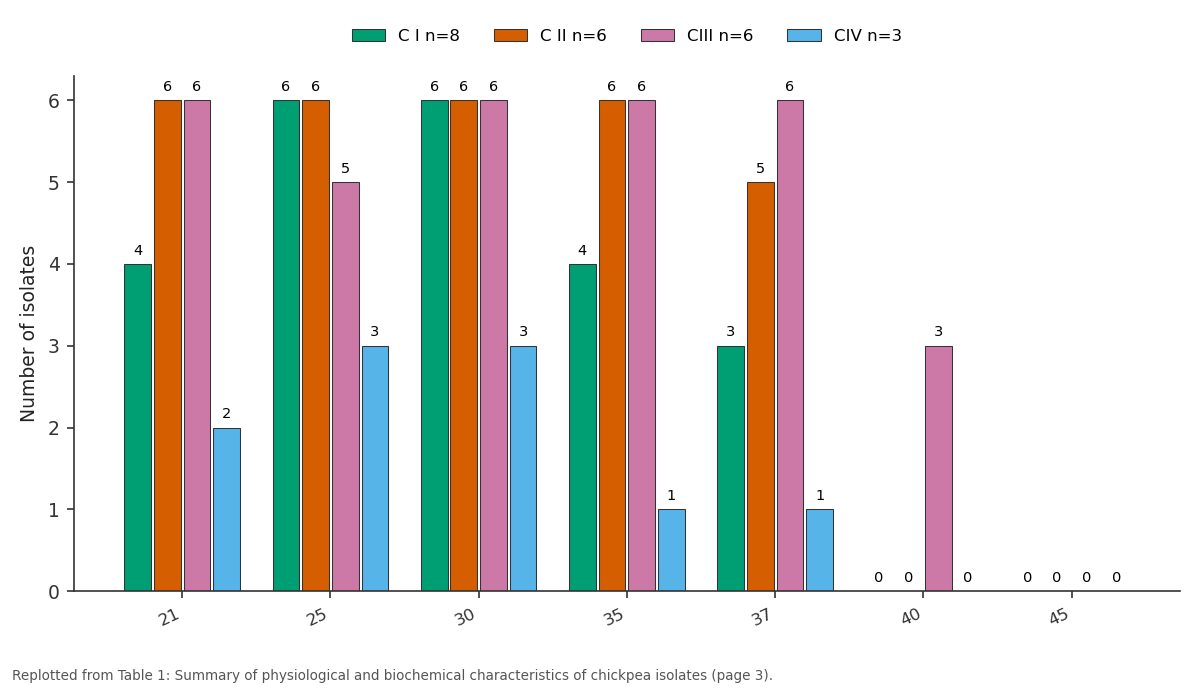
C I n=8 and C II n=6 and more: 21 vs 25 vs 30 vs 35 vs 37
Replotted from Table 1 (page 3) of the original paper. Every bar is the paper's own table value.
View source evidence ↗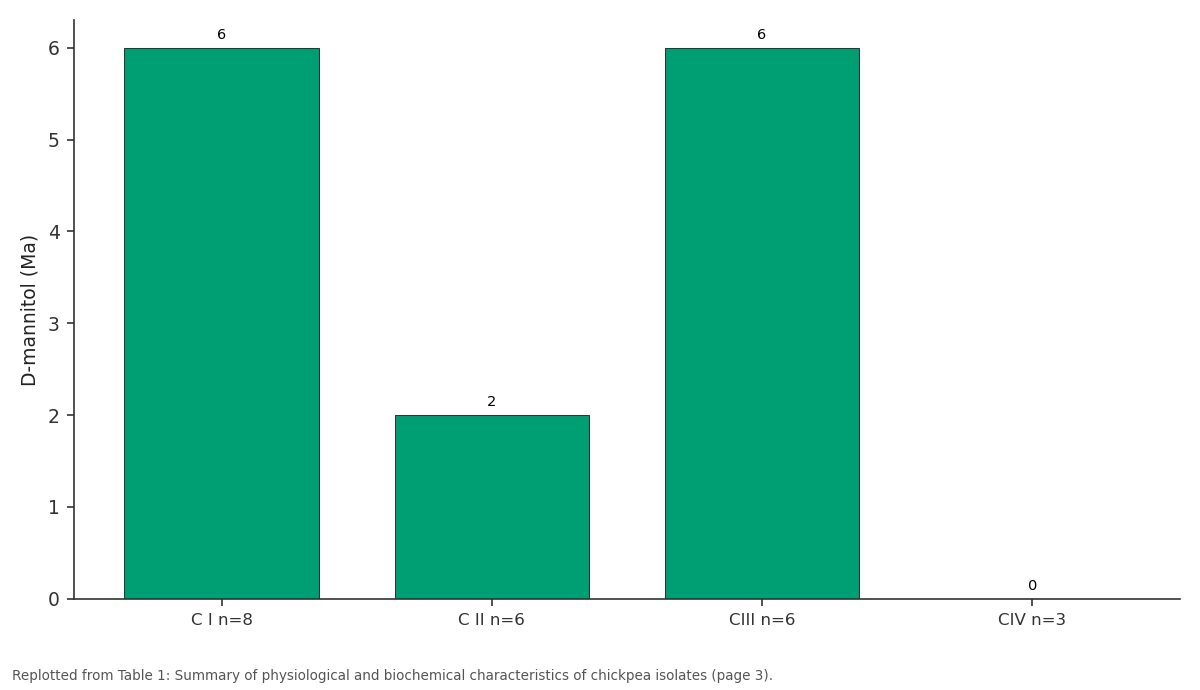
D-mannitol (Ma): C I n=8 vs C II n=6 vs CIII n=6 vs CIV n=3
Replotted from Table 1 (page 3) of the original paper. Every bar is the paper's own table value.
View source evidence ↗Figures & tables
From the original paper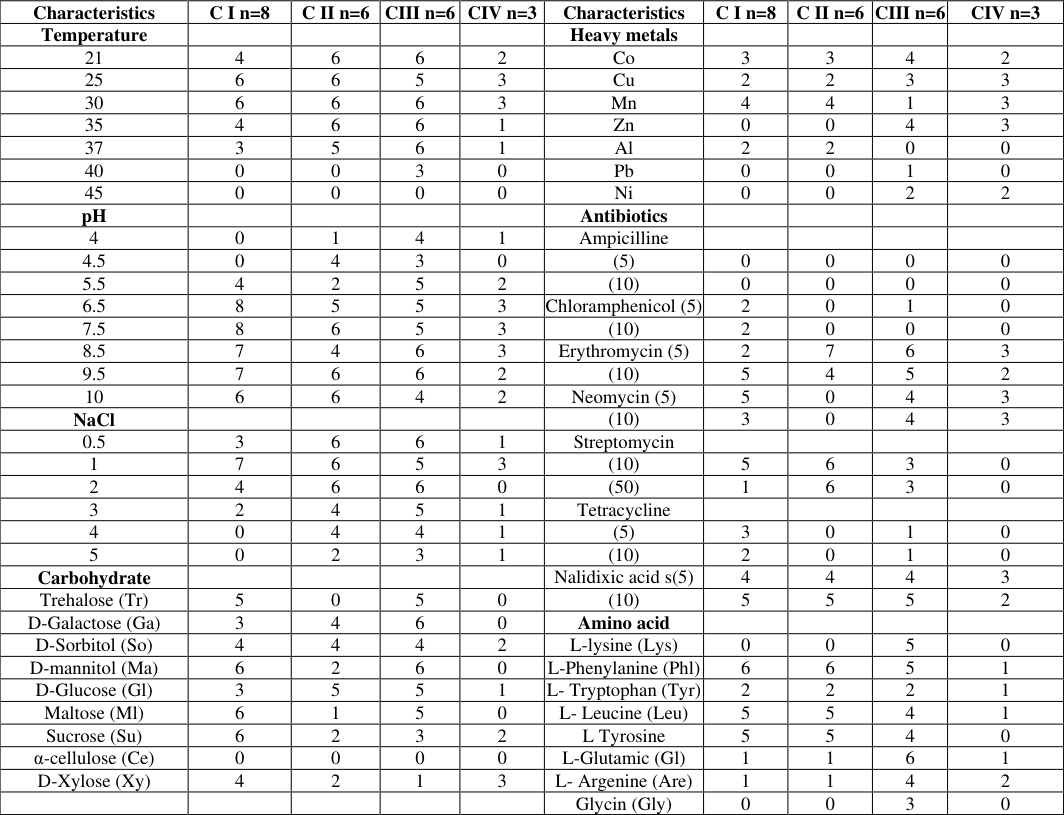 Table 1
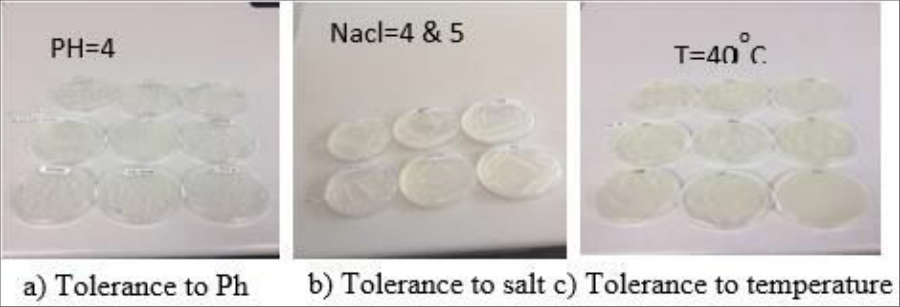 Figure 1
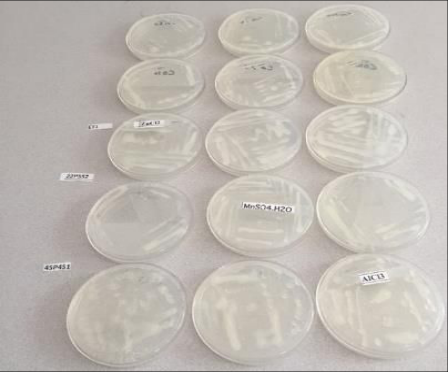 Figure 2
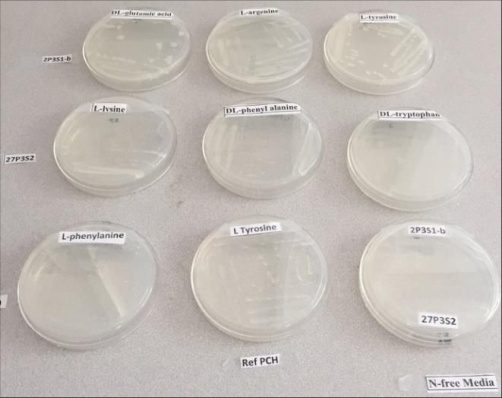 Figure 3
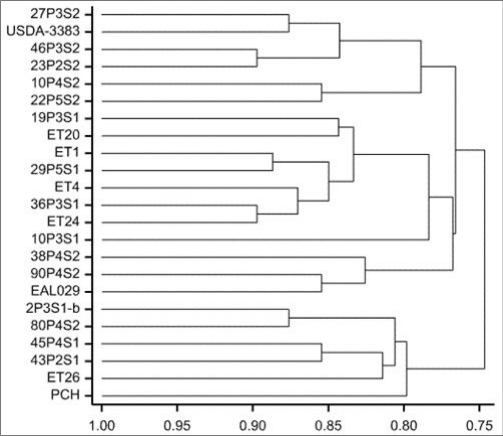 Figure 4
Introduction
Chickpea (Cicer arietinum L.) is a legume crop that belongs to the family Fabaceae. Chickpea is originated in ~10,000 years ago in the Mesopotamian region of Southeastern Turkey; thereafter spread to India ~6,000 years ago and arrived in Ethiopia as early as 2,000-3,000 years ago (van der Maesen et al., 2007; Redden and Berger, 2007) [23,18] . Nitrogen is most commonly limiting nutrient in agricultural crop production and in African agriculture. The majority of Ethiopian agricultural soils have insufficient nitrogen availability for crops to reach their potential yield and the nitrogen requirement is by far the greatest of all major nutrients (Date, 2000). The situation tends to apply soil amendments (Synthetic or organic amendments) that are rich in nutrient such as N, P and K to enhance soil fertility and increase crop productivity (Ahmad et al., 2016) [1] . Improving the overall crop growth performance and rebuilding soil fertility through biological nitrogen fixation has been recognized. Whereas as, legume plants form symbiotic relationship with root nodule bacteria (rhizobia), this group of bacterial isolate needs to distinguish from other isolate of the same species on the basis of physiological or biochemical characters (Dwivedi et al., 2016) for effective inoculant application. Rhizobia lives on the nodules which are present on the roots of Chickpea crop have explicit roles in converting atmospheric nitrogen into a plant accessible form via biological nitrogen fixation (Zafar et al., 2017) [24] . Chickpea nitrogen fixation is affected by a range of abiotic stresses, such as high salt level, extreme temperature and drought (Valentine et al., 2011) [22] . Characteristics of abiotic stresses tolerance and substrate utilization of rhizobial isolate is vital to obtain information about the competence of the rhizobia in the organism's habitat However, effective isolate compatible to different abiotic stresses and applicable for broad range environment in local soils have not been intensively characterized from representative regions of Ethiopia previously. Thus, this study explores the different characteristics of rhizobia isolate to identifying effective and competitive isolate from endemic diversity and maximizes chickpea production for smallholder farmers of Ethiopia.
Materials and Methods
Materials and Methods
Source of isolates and growth conditions
Twenty-three test isolates were obtained as part of an earlier study by (Zehara, 2021) [25] as presented below. Twenty indigenous isolates (27P3S2, 2P3S1-b, 80P4S2, 19P3S1, 45P4S1, 46P3S2, ET1, ET26, ET4, 29P5S1, 36P3S1, ET20, 43P2S1, ET24, 38P4S2, 90P4S22, 23P2S2, 10P4S2, 22P5S2, 10P3S1 and commercial isolate of Menagesha Biotech Ethiopia EAL029, PCH and USDA-3383 reference isolate.
Tolerance to temperature, salt and pH stresses
The tolerance to sodium chloride (Nacl) of rhizobia were studied by streaking them on YMA agar Petri plates in in triplicate. YMA was prepared with different concentrations of Nacl ranging from 0 to 5% (w/v) before autoclaving. The concentration 1% Nacl were used as standard control, which was the concentration of Nacl in the basal YMA medium. The effect of Nacl concentrations on the growth of the isolate were assessed after incubating the plates for 3-5 days at 28 o C, by observing the appearance of colonies on solid YEM (Hungria et al., 2001) [10] . The bacterial growth was recorded as positive for presenting visible growth or negative for absence of growth. Rhizobial isolates to grow in acidic or basic media were tested on YMA agar plates whose different pH values were regulated using 1N HCl to adjust lower pH (acidic) and 1N NaOH to adjust higher pH (alkaline) in medium from (4.0 to 10.0 pH). After 3-5 days of incubation, bacterial growth was recorded by visual observation compared to control treatments incubated at pH 6.8 that the initially adjusted pH of the medium. To verify the tolerance to high temperatures rhizobial isolates were inoculated into YMA agar Petri plates and monitored at incubation (21, 25, 28, 35, 37, 40 and 45) After 3-5 days of incubation, bacterial growth was recorded by visual observation compared to control treatments incubated at 28°C (Somasegaran and Hoben, 1994) [19] .
Intrinsic antibiotic and heavy metal resistance
The intrinsic antibiotics resistance of isolate was performed by preparing filter sterilized antibiotics at different concentrations in the parenthesis (μg/ml); Ampicilline 5, 10; Chloramphenicol 5, 10; Erythromycin 5,10; Neomycin 5,10; Streptomycin 10, 50); tetracycline 5,10; Nalidixic acid 5,10). The stock solution of each antibiotic was prepared by dissolving 2.0 g of antibiotics in 100 ml of distilled water except Chloramphenicol, Erythromycin, tetracycline was dissolved in NaOH and ethanol respectively (Dowdle and Bohlool, 1985). Autoclaved YMA were pour on triplicate plates and allowed to dry for applying agar drop plate method. The isolate cultures were spotted inoculated and evenly distributed over the entire agar surface using glass rod spreader. Then six millimeters diameter punched filter paper were swabbing with antibiotic discs and placed equidistantly using sterile forceps. Incubated for 5-7 days at 28 °C and resistance to an antibiotic was detected by the inhibition zone formed around the discs. Thus, resistance to heavy metal of each isolate were performed on defined medium supplied with bromothymol blue (25 mg/l) by filter sterilized using (0.22 μm size membrane filters) at various concentration in the parenthesis (μg/ml); CoCl2 10), CuCl2 10), MnCl2 50), ZnCl2 50), AlCl3), Pb(CH3COOH).3H2O 10) and NiSO4 10) on freshly prepared solid YEMA Plates. The Plates were inoculated for 48 hours old YEM broth cultures (~10 9 cells/ml) representing each isolate. The growth was observed and recorded after incubation at 28 °C for 5-7 days (Hungria et al., 2001) [10] .
Utilization of Carbon and nitrogen sources
The ability of the isolates to utilize different carbon sources were tested in carbohydrate free basal medium which contained, K2HPO4, 1; KH2PO4, 1; FeCl3.6H2O, 0.01; MgSO4.7H2O, 0.2; CaCl2, 0.1; (NH4)2SO4, 1; and 15.0 (g/l) agar of distilled water at the final concentration 1% (w/v) and filter sterilized by 0.22μm milipore (Amarger et al., 1997) [4] . Heat stable carbon sources such as Sucrose and α-cellulose were added before autoclaving and other heat labile sources after autoclaving sources like Trehalose, D-Galactose, D-Xylose, D-Sorbitol, D-mannitol, D-Glucose and maltose. Approximately the Plates were inoculated with 10 μl of the initial inoculum and after 5 days of incubation, growth response of different isolate was recorded positive (visible growth) or negative (no growth). Similarly, the ability of isolate to utilize different amino acid sources were tested on the same basal medium after replacing ammonium sulfate (1 g/l) of mannitol at the final concentration 0.5% (w/v) and filter sterilized by (0.22μm milipore). Heat stable sources were added before autoclaving sources such as L lysine, L-Phenylanine, L-Tryptophan, L-Leucine, L Tyrosine, L-Glutamic acid, L-Argenine, Glycin and heat labile sources like L-tryptophan and L-glutamic acid after autoclaving according to (Amarger et al., 1997) [4] . Inoculated, plates were incubated at 28 °C for 3-5 days and visual growth were recorded.
Data analysis
The phenotypic characterization data was converted into binary matrix (1 for presence of growth and 0 for absence of growth) for different assay traits. This binary matrix was used for the construction of a similarity matrix using the Sneath and Sokal coefficient method. The Unweighted Pair Group Method with Arithmetic Mean (UPGMA) technique was performed to transform the similarity matrix into a similarity dendrogram using the statistics program GenStat, Version. 19.
Result and Discussion
Tolerance to temperature, salt and pH stresses The isolates showed very diverse range of capability growth on optimum temperature as well as rigorous growth on extreme temperature (Figure 4). Cluster III contains some isolates revealed differences in temperature stress tolerance compared with others, group 45P4S1, ET26, 80P4S2, 43P2S1were showed good growth on extreme temperature (40 °C). Isolate 80P4S2 was isolated from moisture stress and high temperature regimes of Kemisse valley South Wollo which reflects an association of provinces of origin and the tolerance to phenotype of the isolates as indicated in previous finding (Alexandre and Oliveira, 2013) [3] but none of them were able to grow at 45 °C. Most isolates belonging to cluster II had displayed good temperatures tolerant at up to 37 °C. Tolerant of Chickpea rhizobia to extreme temperature has been indicated in other study (Alexandre and Oliveira, 2011, Ogutcu et al., 2008) [2,17] . Some isolates (ET26, 45P4S1 , 22P5S2, 38P4S2 and reference isolates PCH) were able grow highly acidic pH (4.0) and many of the isolate well grown in neutral pH and highly alkaline pH 10.0 (Figure 4). Cluster CI contains 40% the isolate tolerant to pH 4 to pH 10.0, more dominated by (80P4S2, 10P4S2, 19P3S1, ET20, ET26, 90P4S22, 22P5S2, 36P3S1, ET24) group. Isolate 45P4S1and 38P4S2 an acid tolerant character since 26% and 30% grow at pH 4 and 5, respectively. Similarly, (80P4S2, 10P4S2, 19P3S1, ET20, ET26,90P4S22, 22P5S2, 36P3S1, ET24) isolates showed alkali tolerant character as 21% and 18% grew at pH 9 and 10, respectively. Concurrently, the tolerance of Chickpea Mesorhizobium acidic and alkaline pH were stated in previously studied (Jarvis et al. 1997 Ltaief et al. 2007) [11,14] . [7] have found a few isolates showed significant growth with 1.5% NaCl and the growth most tested Mesorhizobium was severely affected with 3% NaCl.
Intrinsic antibiotics and heavy metals resistance
The intrinsic resistance to antibiotics of isolate were showed variation in Chickpea rhizobia Intrinsic antibiotics differences in various concentrations (Figure 4). Most of the isolate were exhibited highest resistance to erythromycin (78%), nalidixic acid (73%) and streptomycin (61%). The cluster group CI isolates such as (ET24, 36P3S1, ET20, 19P3S1, ET1, ET4, 29P5S1,10P3S1) were found highly resistance to these antibiotics. Whereas, the cluster group CIV isolate had revealed least resistance neomycin (52%), tetracycline (17%) and chloramphenicol (13%), which included isolates 90P4S2, 38P4S2 and the national EAL029 reference isolate. All the isolate was found to be sensitive to low concentration of ampicillin. Several studies described high resistance to nalidixic acid and erythromycin of chickpea isolates ( [15,12,20] while (Maatallah et al. 2002a) [16] reported at high concentration of 100 μg/ml of erythromycin few isolates revealed sensitive.
Tetracycline in this study was better resistance performance to than earlier works. Whereas in this finding we observed high sensitivity to low concentration of ampicillin compared (Jida and Assefa, 2012) [12] were found the tested Chickpea isolates sensitive to low concentration of tetracycline. Some of the isolate (52%) exhibited resistance to heavy metals of Mn and Co, (Figure 4). Followed by cu (43%), Zn (30%) and but sensitive to Ni (17%), Al (17%) and Pb (4%) of the isolate. cluster group CIII isolate such as ET26, 43P2S1 , 2P3S1-b 80P4S2, 45P4S1 and reference isolate PCH were the dominant isolate in which revealed good growth in Co.
In addition, among this group 2P3S1-b were showed resistance to Pb. Subsequently, the cluster group CIV isolate 90P4S2, 38P4S2 and the national EAL029 reference were showed high resistance to Mn. The resistance of chickpea rhizobial isolates to Zn and Ni were previously reported (Kucuk and Kivanc, 2008) [13] and Mn was reported (Maatallah et al. 2002a, Maatallah et al., 2002b) [16,15] .
Utilization of Carbon and nitrogen sources
The carbon source utilization assay of isolate showed differences among the Mesorhizobia isolate (Figure 4). The pattern of utilization was more pronounced in D-Sorbitol, D-mannitol, D-Glucose utilized by (61%) of the isolate; followed by Trehalose and D-Xylose moderately utilized by (43%) of the isolate and none of the isolate did not showed utilization of α-cellulose. [15,13,12] Similarly, for the assay of amino acid utilization most of the isolate were found better utilization ability of Phenylanine (78%), Leucine (65%), Tyrosine (61%), Glutamic acid (39%), Argenine (34%), Tryptophan (30%), some of isolate utilize lysine (22%) and glycine 13% (Figure 4). All cluster group CIII isolate except ET26 showed slight utilization of lysine and among this cluster 2P3S1-b utilized glycine. Moreover, glycine was utilized by cluster group CII isolate 46P3S2, 23P2S2 and 22P5S2. The cluster group CIII revealed advantage of utilization compared with other clusters by utilized (33%) of the tested substrates except poor utilization performance on Tryptophan. This representative species cluster group were highest utilization of Glutamic. Cluster group CI and cluster isolate were showed more predominant utilization of Phenylanine.
Earlier study on chickpea isolates from Ethiopian soils showed no growth of isolates on glycine were reported (Jida and Assefa, 2012) [12] , whereas (Kuçuk and Kivanc, 2008 Gebremedhin et al., 2018) [13,9] were observed utilization glycine by few of their isolates.
Conclusion
The physiological and biochemical characteristics of indigenous chickpea isolate reveals that Ethiopian isolate typically have high variability, versatile characteristics to different temperature, acidity, alkalinity, salinity, antibiotics and heavy metals. The results distinguished that a wide range of isolate potential growth on variable Carbon and amino acid sources. Therefore, results from physiological and biochemical characteristics has provided an important complement to select a representative distinct isolate to tested further. This is being used to suggesting the potential of such isolates to enhance chickpea yields.
Figures and tables from the paper
| Characteristics | C I n=8 | C II n=6 | CIII n=6 | CIV n=3 | Characteristics | C I n=8 | C II n=6 | CIII n=6 | CIV n=3 |
|---|---|---|---|---|---|---|---|---|---|
| Temperature | Heavy metals | ||||||||
| 21 | 4 | 6 | 6 | 2 | Co | 3 | 3 | 4 | 2 |
| 25 | 6 | 6 | 5 | 3 | Cu | 2 | 2 | 3 | 3 |
| 30 | 6 | 6 | 6 | 3 | Mn | 4 | 4 | 1 | 3 |
| 35 | 4 | 6 | 6 | 1 | Zn | 0 | 0 | 4 | 3 |
| 37 | 3 | 5 | 6 | 1 | Al | 2 | 2 | 0 | 0 |
| 40 | 0 | 0 | 3 | 0 | Pb | 0 | 0 | 1 | 0 |
| 45 | 0 | 0 | 0 | 0 | Ni | 0 | 0 | 2 | 2 |
| pH | Antibiotics | ||||||||
| 4 | 0 | 1 | 4 | 1 | Ampicilline | ||||
| 4.5 | 0 | 4 | 3 | 0 | (5) | 0 | 0 | 0 | 0 |
| 5.5 | 4 | 2 | 5 | 2 | (10) | 0 | 0 | 0 | 0 |
| 6.5 | 8 | 5 | 5 | 3 | Chloramphenicol (5) | 2 | 0 | 1 | 0 |
| 7.5 | 8 | 6 | 5 | 3 | (10) | 2 | 0 | 0 | 0 |
| 8.5 | 7 | 4 | 6 | 3 | Erythromycin (5) | 2 | 7 | 6 | 3 |
| 9.5 | 7 | 6 | 6 | 2 | (10) | 5 | 4 | 5 | 2 |
| 10 | 6 | 6 | 4 | 2 | Neomycin (5) | 5 | 0 | 4 | 3 |
| NaCl | (10) | 3 | 0 | 4 | 3 | ||||
| 0.5 | 3 | 6 | 6 | 1 | Streptomycin | ||||
| 1 | 7 | 6 | 5 | 3 | (10) | 5 | 6 | 3 | 0 |
| 2 | 4 | 6 | 6 | 0 | (50) | 1 | 6 | 3 | 0 |
| 3 | 2 | 4 | 5 | 1 | Tetracycline | ||||
| 4 | 0 | 4 | 4 | 1 | (5) | 3 | 0 | 1 | 0 |
| 5 | 0 | 2 | 3 | 1 | (10) | 2 | 0 | 1 | 0 |
| Carbohydrate | Nalidixic acid s(5) | 4 | 4 | 4 | 3 | ||||
| Trehalose (Tr) | 5 | 0 | 5 | 0 | (10) | 5 | 5 | 5 | 2 |
| D-Galactose (Ga) | 3 | 4 | 6 | 0 | Amino acid | ||||
| D-Sorbitol (So) | 4 | 4 | 4 | 2 | L-lysine (Lys) | 0 | 0 | 5 | 0 |
| D-mannitol (Ma) | 6 | 2 | 6 | 0 | L-Phenylanine (Phl) | 6 | 6 | 5 | 1 |
| D-Glucose (Gl) | 3 | 5 | 5 | 1 | L- Tryptophan (Tyr) | 2 | 2 | 2 | 1 |
| Maltose (Ml) | 6 | 1 | 5 | 0 | L- Leucine (Leu) | 5 | 5 | 4 | 1 |
| Sucrose (Su) | 6 | 2 | 3 | 2 | L Tyrosine | 5 | 5 | 4 | 0 |
| α-cellulose (Ce) | 0 | 0 | 0 | 0 | L-Glutamic (Gl) | 1 | 1 | 6 | 1 |
| D-Xylose (Xy) | 4 | 2 | 1 | 3 | L- Argenine (Are) | 1 | 1 | 4 | 2 |
| Glycin (Gly) | 0 | 0 | 3 | 0 |
Table text extracted from the original PDF; superscript letters are shown inline. The original table image is below.
View original table image
References
18 in the original paper- Alexandre A, Oliveira S. Most heat-tolerant rhizobia show high induction of major chaperone genes upon stress. FEMS Microbiol Ecol. 2011;75:28-36.
- Alexandre A, Oliveira S. Response to temperature stress in rhizobia. Critical Reviews in Microbiology. 2013;39(3):219-222.
- Amarger N, Macheret V, Laguerre G. Rhizobium gallicum sp. Nov. and Rhizobium giardinii sp. nov., from Phaseolus vulgaris nodules. Int. J Syst. Bacteriol. 1997;47:996-1006.
- Gebregewergis A. Review on the influence of NaCl on the quality parameters of soft wheat dough. Int. J Agric. Nutr. 2022;4(1):17-20. DOI: 10.33545/26646064.2022.v4.i1a.48
- Brigido C, Alexandre A, Solange Oliveira S. Transcriptional analysis of major chaperone genes in salt-tolerant and salt-sensitive mesorhizobia. Microbiological Research. 2012;167:623-629.
- Dwivedi SL, Sahrawat KL, Upadhyaya HD, Mengoni A, Galardini M, Bazzicalupo M, et al. Advances in Host Plant and Rhizobium Genomics to Enhance Symbiotic Nitrogen Fixation in Grain Legumes. Advances in Agronomy. 2015;129:1-116.
- Gebremedhin W, Assefa F, Moses Thuita M, Masso C. Nutritionally Versatile, Abiotic Stress Resistant and Symbiotically Effective Chickpea (Cicer arietinum L.) Root Nodulating Rhizobial isolates from Eastern, Southeastern and Southern Ethiopia. Electronic Journal of Biology. 2018;14(2):87-99
- Hungria M, Chueire L, Mm De O, Coca R, Gm Megl'as M. Preliminary characterization of fast growing rhizobial isolate isolated from soyabean nodules in Brazil. Soil Biol. Biochem. 2001;33:1349-1361.
- Jarvis BDW, Berkum VP, Chen WX, Nour SM, Fernandez MP, Cleyet-Marel JC, et al. Transfer of Rhizobium loti, Rhizobium huakuii, Rhizobium ciceri, Rhizobium mediterraneum and Rhizobium tianshanense to Mesorhizobium gen. nov. Int. J Syst. Bacteriol. 1997;47:895-898.
- Jida M, Assefa F.Phenotypic diversity and plant growth promoting characteristics of Mesorhizobium species isolated from chickpea (Cicer arietinum L.) growing areas of Ethiopia. African Journal of Biotechnology. 2012;11(29):7483-7493.
- Kuçuk C, Kivanc M. Preliminary characterization of Rhizobium isolate isolated from chickpea nodules. Afr. J Biotechnol. 2008;7:772-775.
- Ltaief B, Sifi B, Gtari M, Allah MZ, Lachaal M. Phenotypic and molecular characterization of chickpea rhizobia isolated from different areas of Tunisia. Can J Microbiol. 2007;53:427-434.
- Ogutcu H, Algur OF, Elkoca E, Kantar F. The determination of symbiotic effectiveness of Rhizobium isolate isolated from wild chickpeas collected from high altitudes in Erzurum. Turk J Agric For. 2008;32:241248.
- Tena W, Wolde Meskel W, Fran W. Genetic and phenotypic diversity of rhizobia nodulating chickpea (Cicer arietinum L.) in soils from southern and central Ethiopia. Can. J Microbiol. 2017;63:690-707.
- Wdowiak-Wrobel S, Marek-Kozaczuk M, Kalita M, Karas M, Wojcik M, et al. Diversity and plant growth promoting properties of rhizobia isolated from root nodules of Ononis arvensis. Antonie van Leeuwenhoek. 2017;110(8):1087-1103.
- Valentine AJ, Benedito A, Kang Y. Legume nitrogen fixation and soil abiotic stress: from physiology to genomics and beyond. Annual Plant Reviews. 2011;42:207-248.
- Zafar M, Ahmed N, Mustafa G, Zahir ZA, Simms EL. Molecular and biochemical characterization of rhizobia from chickpea (Cicer arietinum). Pakistan Journal of Agricultural Sciences. 2017;54(2):373-381.
- Ben Romdhane S, Aouani ME, Trabelsi M, De Lajudie P, Mhamdi R. Selection of high Nitrogen-fixing Rhizobia nodulating chickpea (Cicer arietinum) for semi-arid Tunisia. Journal of Agronomy and Crop Scince. 2008;194:413-420.