
Research article · 2022 · Full text
International Journal of Biology SciencesEffect of sodium and potassium humate in adaptive reaction of Zea mays under radiation stress
Volume 4(1) · Pages 9–15 · DOI: 10.33545/26649926.2022.v4.i1a.35 ↗
Research areasFood Industry and Aquatic BiologyAgriculture and Biological StudiesAnimal Nutrition and Health
Abstract
Author-writtenThe effect of sodium and potassium humate on the activity of antioxidant system and photosynthetic pigment concentration of irradiated seeds was studied. The treatment of maize seed with 0.005% and 0.001% solutions of sodium and potassium humate caused significant reduction in processes initiated by radiation. A positive effect of sodium and potassium humate solutions on the amount of malon dialdehyde, chlorophyll pigments and carotenoids, fluorescent characteristics (the maximum quantum yield of PSII (photosystem II) in seedlings obtained from gamma-irradiated maize seeds was revealed.
Summary
Source-checkedPlain-language reading of the full paper, prepared with AI and checked against the text. Each point links to the authors' own words.
Why it matters
- Gamma irradiation causes cellular damage in plants by increasing reactive oxygen species (ROS), which lead to the oxidative modification of macromolecules and structural failure. View evidence ↗
- Humic compounds are known to stimulate plant growth and development while increasing resistance to adverse environmental conditions. View evidence ↗
- Despite their known benefits, the specific radioprotective functions of humic compounds have not been sufficiently researched. View evidence ↗
The question
- The study aimed to evaluate how sodium and potassium humate affect the antioxidant system and photosynthetic pigment concentrations in irradiated maize seeds. View evidence ↗
What they did
- The researchers used maize seeds of the 'Zagatala 68' variety for the experiments. View evidence ↗
- Seeds were treated with sodium or potassium humate for 15 hours and then exposed to a radiation dose of 150 gray. View evidence ↗
What they found
- Radiation alone reduced the seed germination rate to 62%, representing a 40% decrease compared to the control group. View evidence ↗
- Humate treatment improved germination of irradiated seeds, with the 0.001% solution resulting in an 82% germination rate and the 0.005% solution resulting in 76%. View evidence ↗
- Irradiation at 150 Gray caused an average 55% decrease in chlorophyll pigments and carotenoids compared to the control. View evidence ↗
- Pre-treatment with sodium and potassium humate reduced the loss of chlorophyll and carotenoids caused by radiation. View evidence ↗
- Radiation increased the levels of malondialdehyde, a marker of lipid peroxidation, by 30-35% relative to the non-irradiated control. View evidence ↗
- Treatment with potassium humate solutions led to a decrease in the amount of malondialdehyde, indicating reduced lipid peroxidation. View evidence ↗
- While 150 Gy radiation increased catalase activity in the first two weeks, pre-treatment with 0.01% and 0.001% potassium humate significantly reduced this activity. View evidence ↗
- The highest photosynthetic activity was observed in seeds pre-treated with 0.001% solutions of potassium and sodium humates before irradiation. View evidence ↗
What it means
- The authors concluded that potassium humate maintains normal pigment levels and reduces lipid peroxidation, with the 0.001% concentration providing the highest radioprotective effect. View evidence ↗
- The authors recommend pre-sowing seed treatment with humate solutions to increase plant tolerance to radiation stress. View evidence ↗
Visual summary
1 visualsIllustrations explain the paper; they do not show study data.
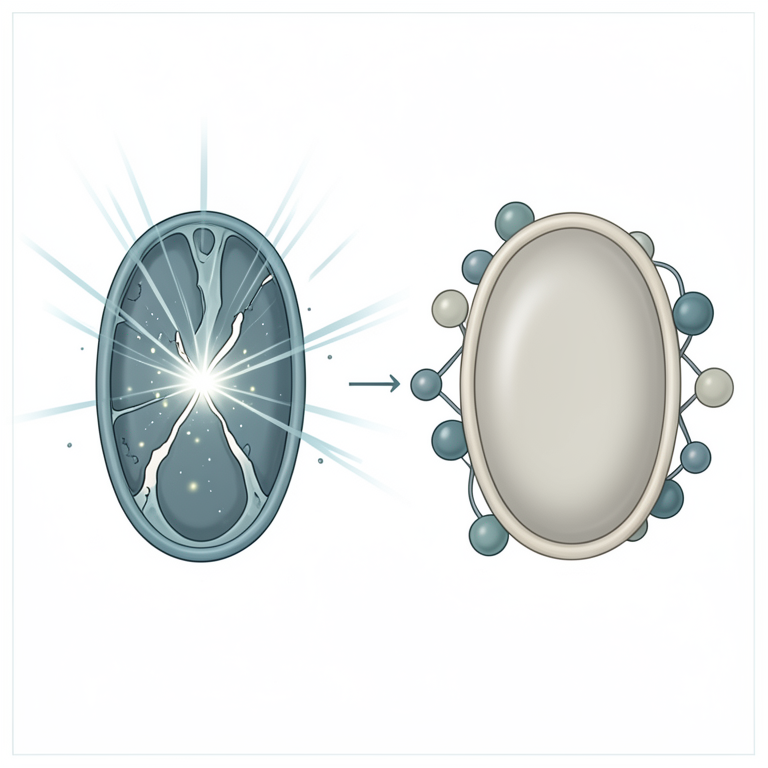
Mechanism of Radiation Damage and Humate Protection
AI-generated conceptual illustration (Zea mays plant cells). It explains the idea and does not show study data.
View source evidence ↗Figures & tables
From the original paper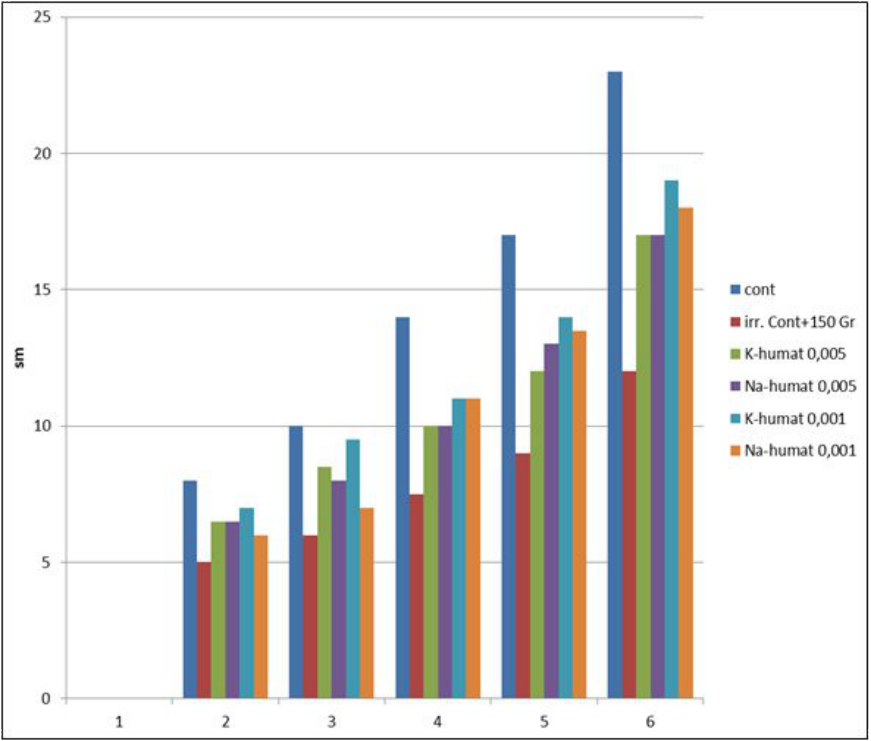 Figure 1
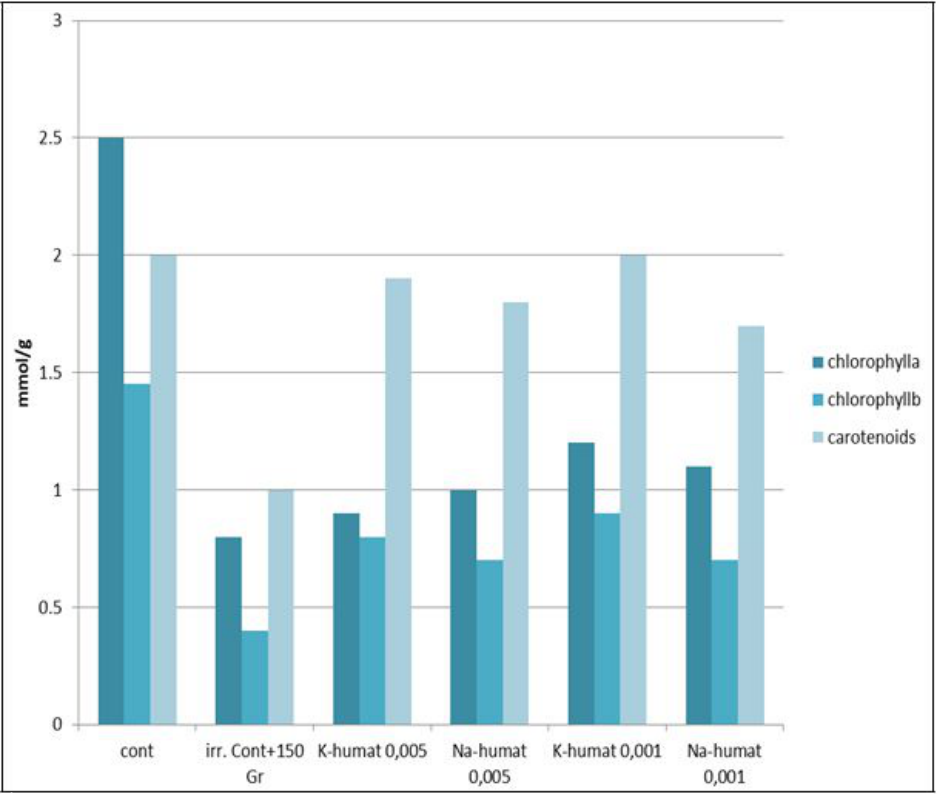 Figure 2
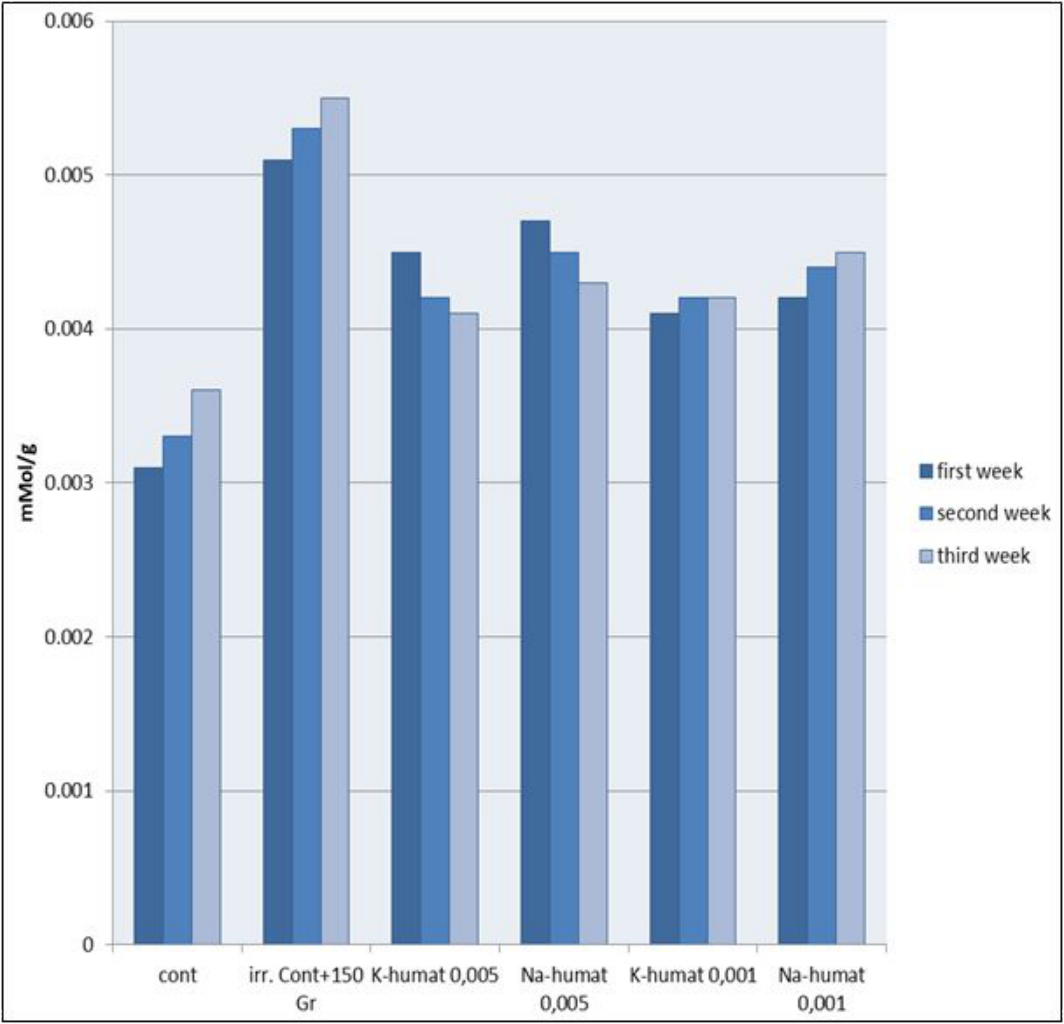 Figure 3
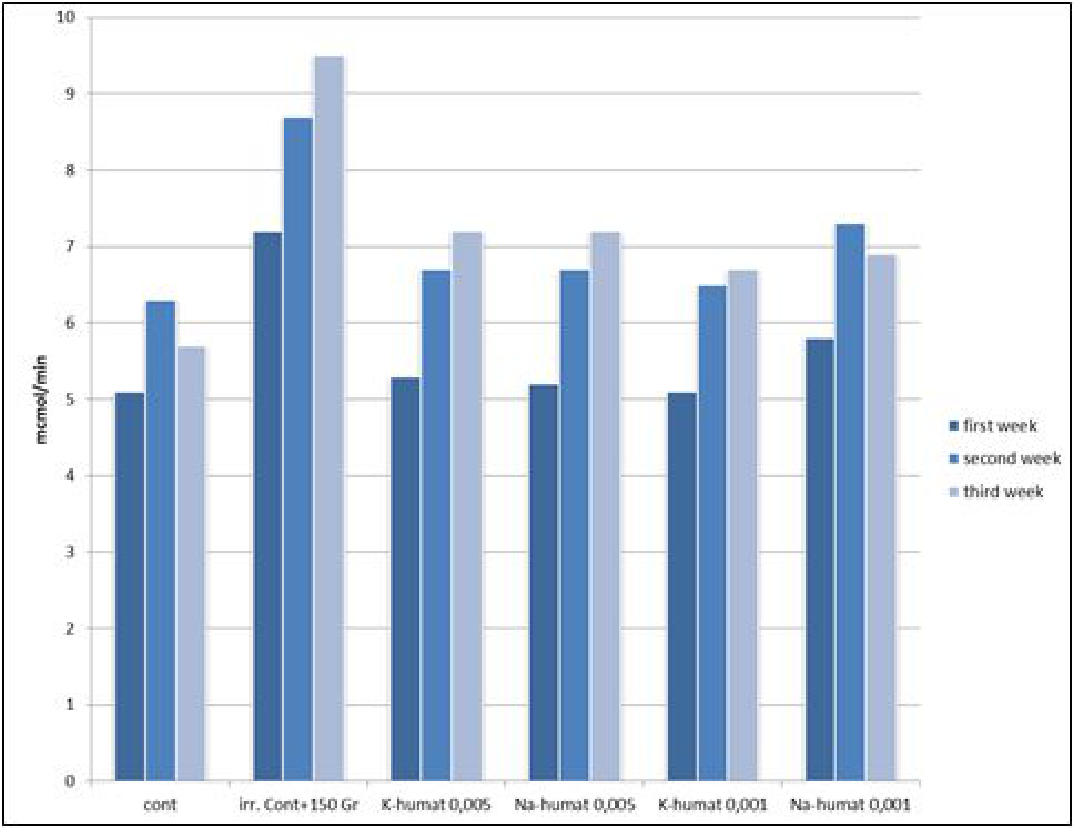 Figure 4
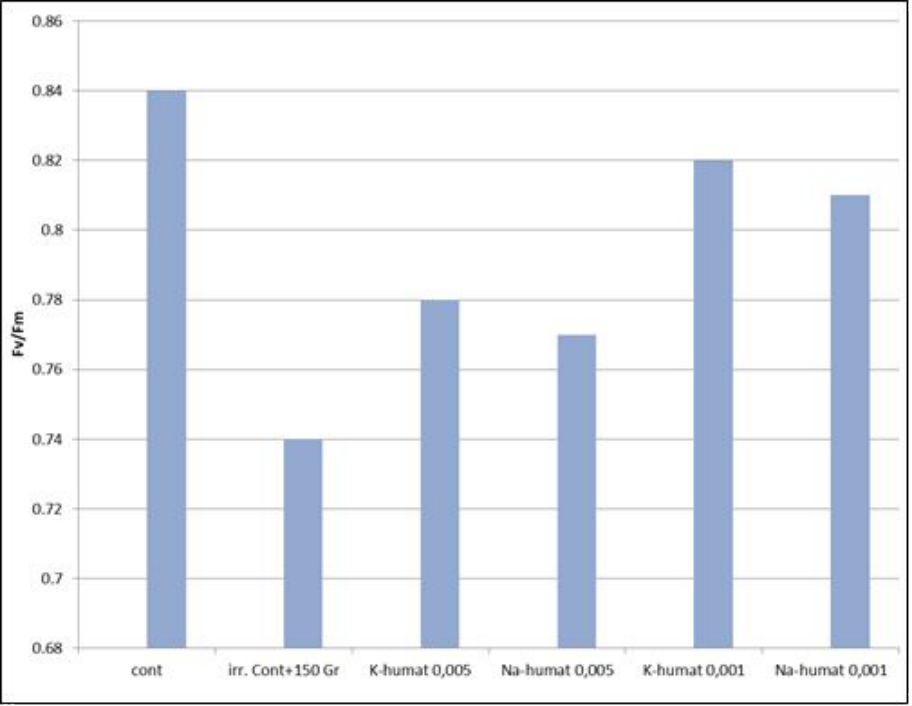 Figure 5
Introduction
It is generally known that seeds during their germination are quite susceptible to the action of various environmental factors [1,2] . This attribute facilitated the use of various physical or chemical agents prior to sowing, primarily focused on increase in productivity of agricultural plants [3] . Gamma irradiation damages initiated by free radicals are enhanced at the expense of reactive oxygen species (ROS) that cause oxidative modification of macromolecules, violation of the integrity of cellular structures. İn lipids, mainly in polyunsaturated fatty acids, ROS cause chain reactions with accumulation of lipid, peroxyl, alkoxyl and other radicals. Organisms are able to protect themselves from the damaging effects of free radicals due to highly active antioxidant system that includes low and high molecular substances capable inhibiting of free radical processes [5,11] In recent years, in the radiotherapy treatment agents obtained from natural sources have been used. There were established stimulatory effect of humic compounds on the growth and development of plants, increasing their resistance to adverse enviromental factors. Soluble forms of humates at low concentrations significantly stimulates protein and carbohydrate metabolism, increase crop yields. Humic-based substances are mainly used in crop production as microfertilizers. With their systematic use, the structure of the soil improves, as well as its buffer and ion exchange properties, soil microorganisms become more active. It is known that radioactive radiation has a damaging effect on biological systems. Damage initiated by free radicals is enhanced by reactive oxygen species (ROS), which cause oxidative modification of macromolecules, disruption of the integrity of cellular structures. The stimulating effect of humic compounds on the growth and development of plants, increasing their resistance to adverse environmental factors. But their radioprotective function has not been studied enough. Under the protective effect of humic acids there are imply their ability to bind ions of radionuclides and heavy metals, and organic ecotoxicants to the stable complexes in contaminated water and soil environments. It is known that the free form of the toxicant has the maximum activity. The bound substance loses its toxicity. On this basis, humic acids can be considered as natural detoxifiers. There are a lot of scientific works on the use of humic substances in the rehabilitation of contaminated soils [6][7][8][9][10] . Salts of humic acids with potassium, ammonium and iron protect plants under conditions of radiation and salt stress [11,12] . Thus, obtaining and studying the biological activity and radioprotective properties of humic substances is quite actual direction.
Materials and Methods
To obtain humate Na and K, the feedstock -peat -was treated with a 3% NaOH and KOH solution with constant stirring at a temperature of 35-40 degrees for 5 hours. After that, the dissolved sodium and potassium humates was separated in a centrifuge. The objects of research were maize seeds of the "Zagatala 68" variety. To study the radioprotective properties of humates, maize seeds were treated with solutions of sodium and potassium humate for 15 hours. Then the seeds were irradiated with a dose of 150 gray using the URİ (K-25) device. In experiments to study the effect of sodium and potassium humate on the dynamics of growth and development of seedlings were used 0,005% and 0,001% solutions. Experiments to study the effect of sodium and potassium humate on the dynamics of growth and development of seedlings were also carried out after irradiation of seeds. Experiments were carried out in 5 repetitions.
To determine the product of lipid peroxidation, malonic dialdehyde, 1 g of fresh weight of seedlings was homogenized in a porcelain mortar with a small amount of the reaction mixture consisting of a 0,25% solution of thiobarbituric acid (TBA). The homogenate was transferred into a glass tube in small portions of the reaction mixture. The samples were mixed and placed in a water bath heated to 950 C for 30 min. Then the contents of the samples were transferred into centrifuge tubes and centrifuged for 10 min at 10,000 g. Optical density was measured on a spectrophotometer. The amount of chlorophyll a (662 nm), chlorophyll b (644 nm), carotenoids (440 nm), malondialdehyde (532 nm) pigments, and catalase activity was determined spectrophotometric ally (Multiscan Go, Germany). The maximum fluorescence quantum yield of maize seedlings was measured on a MINI-PAM fluorometer (Germany). Statistical processing of materials was carried out using the statistical tools of MS Office Excel.
Results and its Discussion
At the beginning of the experiments were studied the effects of sodium and potassium humate solutions on the germination of seeds irradiated at a dose of 150 Gy. The germination rate of seeds that have not been treated with humate solutions has dropped to 62% due to radiation. As a result of irradiation, the germination rate of seeds was reduced by 40% compared to control. The germination rate of maize seeds irradiated at a dose of 150 Gray was -76% in the variant treated with 0.005% humate solutions, 82% in the variant treated with 0.001% sodium and potassium humate solution.
The study of the dynamics of growth and development of seedlings obtained from gamma-irradiated maize seeds was carried out for 4 weeks. Seedling growth was measured every 4-5 days. The study of the effect of sodium and potassium humate on the growth and development of seedlings was carried out before and after seed irradiation. Figure 1 shows the results of experiments on the study of the growth and development of seedlings treated with of sodium and potassium humates solutions before irradiation. The figure 1 clearly shows the effect of sodium and potassium humate solutions on the growth of seedlings obtained from gamma irradiated seeds. It can be seen that at the initial stages of development, the greatest development is observed in the variant when the seeds were treated with 0.001% of potassium and sodium humate solutions before irradiation. But at further stages of development, the seedlings gradually equal each other.
It is known that gamma irradiation of seeds negatively affects the processes of photosynthesis in plants: the synthesis of pigments is disturbed, the photochemical activity of chloroplasts decreases. Studies show that sodium and potassium humic salts have a positive effect on the process of photosynthesis under stressful conditions. Studies show that seed treatment with 0.005% sodium humate increases the concentration of chlorophyll pigments in plants. Humates have also been found to accelerate the release of CO2 from the leaves [13,15] .
Fig 2:
Effect of sodium and potassium humate solutions on the amount of chlorophyll pigments and carotenoids in seedlings obtained from gamma-irradiated maize seeds.
Experiments to determine the amount of photosynthetic pigments showed that the amount of chlorophyll pigments and carotenoids in seedlings obtained from seeds irradiated with 150 Gray decreased by an average of 55% compared with the control. In seedlings obtained from maize seeds treated with a sodium and potassium humate solution before irradiation, a weaker decrease in the amount of chlorophyll pigments and carotenoids is observed than in the control. 0.001% potassium humate solution used in the experiments significantly reduces the effect of radiation on the photosynthetic apparatus in maize seedlings used as model plants. In the following experiments, the effect of sodium and potassium humate solutions on lipid peroxidation was studied. The free radicals that appeared after irradiation interact with the lipids of cell membranes. The result is lipid peroxidation. The lipid peroxidation reaction causes the formation of several end products. One of them is malondialdehyde. The amount of formation of this product determined the degree of cell damage [25] . Lipid peroxidation (LPO) is an indicator reaction of damage to cell membranes. Experiments to determine the effect of potassium humate solutions on lipid peroxidation were carried out at the beginning of the development of maize seedlings in the first three weeks. High doses of ionizing radiation reduced seed germination and stimulated lipid peroxidation in week-old seedlings. After two and three weeks, a decrease in the rate of lipid peroxidation was observed in seedlings treated with potassium humate solutions. With further development of seedlings, the differences in growth and activity of the antioxidant system leveled out. Humate K solutions reduced the damaging effect of ionizing radiation on plants at all stages of plant development. On fig. 3 clearly shows dynamic of the change of amount of malondialdehyde, a product of lipid peroxidation, under the action of gamma radiation. Thus, in the irradiated variant, the amount of malondialdehyde, a product of lipid peroxidation (malonic dialdehyde), increased by 30-35% compared to the non-irradiated control. In samples treated with potassium humate solutions, the amount of lipid peroxidation product -malonic dialdehyde -decreased.
It can be assumed that a noticeable increase in the amount of lipid peroxidation products due to irradiation at a dose of 150 Gy in the first week is the initial reaction of plant tissue to irradiation. In the third week, a significant decrease in the amount of lipid peroxidation product malonic dialdehyde was observed in the variant of seed treatment with 0.001% potassium humate solution. From Figure 3, we can conclude that under the influence of potassium humate solutions, the rate of lipid peroxidation, and, consequently, the rate of destructive processes occurring in the membrane, slows down compared to the irradiated control.
Catalase is an antioxidant enzyme that breaks down hydrogen peroxide into water and oxygen. Some organisms produce catalase to protect against hydrogen peroxide attacks [18] . Irradiation in small doses causes the activity of antioxidant enzymes. The activity of antioxidant enzymes increases depending on the dose and duration of exposure to gamma radiation [19,20] .
In our experiments, the activity of the catalase enzyme noticeably increases when seeds are irradiated at a dose of 150 Gy during the first two weeks (Fig. 4). As can be seen from the figure, seed treatment with potassium humate solutions at concentrations of 0.01% and 0.001% before irradiation significantly reduces catalase activity. The decrease in catalase activity is well observed in the third week The maximum yield of chlorophyll fluorescence -Fv/Fm reflects the maximum quantum efficiency of photosystem II (PSII). A decrease in this value indicates partial damage to PS2 [21] . The advantage of using this indicator as a test function is due to its high sensitivity to pollution and stress. One of the most common methods for studying the activity of photosynthetic processes is PAM fluorometry based on pulse amplitude modulation (Pulse Amplitude Modulation). PAM fluorometers allow accurate measurements of the photochemical quantum yield of photosystems based on the kinetics of chlorophyll fluorescence quenching [22,23] . The influence of potassium humate solutions on the measurement of the maximum quantum yield of PSII -Fv/Fm(Y) in seedlings obtained from gamma-irradiated maize seeds was studied on the third week. Experiments were carried out in 3 repetitions. The purpose of these experiments was to study the effect of potassium and sodium humate solutions on the photochemical activity of photosystem II in the leaves of maize seedlings, the seeds of which were irradiated at a dose of 150 Gy. Figure 5 shows the results of these studies. The highest activity of photosynthesis was observed in the variant where the seeds were treated before irradiation with 0.001% solutions of potassium and sodium humates
Conclusion
Thus in all experiments it was found that the use of potassium and sodium humate causes less damage to irradiated maize seedlings The experiments solved the problems of determining the effect of sodium and potassium humate on seedling growth and development, productivity of chlorophyll pigments, catalase activity and studying the amount of malon dialdehyde. On the basis of the obtained results, it was concluded that potassium humate solutions resulted in lower levels of lipid peroxidation products, and the maintenance of normal concentration of malondialdehyde, chlorophyll pigments. 0.001% solution of potassium and sodium humate showed the highest radioprotective activity. We suggest that the pre-sowing treatment of seeds with humate solutions can bu used to increase tolerance to radiation stress.
Figures and tables from the paper
References
19 in the original paper- Shanko D, Jateni G, Debela A. Effects of Salinity on Chickpea (Cicer arietinum L.) Landraces During Germination Stage. J. Biochem. Mol. Biol. 2017:32(9):1-5. doi:10.21767/2471-8084.100037.
- Liu R, Wang L, Tanveer M, Song J. Seed Heteromorphism: An Important Ad-aptation of Halophytes for Habitat Heterogeneity. Frontiers in plant science. 1515:9:1-10. doi.org/10.3389/fpls.2018.01515.
- Bozhkov AI, Kovalova MK, Azeez ZA, Goltvjansky АV. The effect of pre-sowing seed treatment on seedlings growth rate and their ex-cretory activity. Regulatory Mechanisms in Biosys-tems. 2020:11(1):6066. doi:10.15421/022008.
- Costa H, Gallego SM, Tomaro ML. Effect of radiation on antioxidant defense system in sunflower cotyledons// Plant Science. 2002:162:6.
- Zenkov NK. Activated oxygen metabolites in biological systems/N. K. Zenkov, E. B. Menshikova//Successes of modern biology. 1993:3:286-290.
- Beyer L, Sieling K, Pingpank K. The impact of a low humus level in arable soils on microbial proper-ties, soil organic matter quality and crop yield. Biology and Fertility of Soils. 1999:28:156-161.
- Holman HY, Nieman K, Sorensen DL, Miller CD, Martin MC, Borch T, et al. Catalysis of PAH biodegradation by humic acid shown in synchrotron infrared studies. Environmental Science & Technology. 2002:36:1276-1280.
- Muslimova Z, Azizov I, Faracov M. Effect of ionizing radiation on pigment content and photochemical activity of chloroplasts in maize (Zea mays L.) leaves at partipication of humin comlexes. Inernatinal conference International Journal of Biology Sciences https://www.biologyjournal.net/ Photosynthesis research for sustainability. Baku. Azerbayjan. 2013:5-9:111
- Maslova NF, Nyutin Yu I. Optical properties of tomato leaves grown from irradiated seeds//Physiology and biochemistry of cultivated plants. 1973:5(4):407-410.
- Eleduma AF, Aderibigbe ATB, Sanni KO, Obabire SO. Effect of cattle manure on soil nutrients dynamics and performances of maize (Zea mays L) grown on sandy loam soil in forest-savannah transition zone southwest Nigeria. International Journal of Horticulture and Food Science. 2020;2(2):05-09.
- V.V. Dokuchaeva, Academy of Sciences of the USSR. 1951:38:108-184.
- Dr. Akka KK, Dr. Reddy P. Lipid profile in patients of type 2 diabetes mellitus with myocardial infarction. Int. J Adv. Biochem Res. 2021;5(1):14-19. DOI:10.33545/26174693.2021.v5.i1a.59
- Nuru Seid Tehulie. Review on critical period of weed competition and management in maize (Zea mays L.). Int. J Hortic Food Sci. 2021;3(2):44-48.
- Loewen PC, Switala J, Triggs-Raine BL. Catalases HPI and HPII in Escherichia coli are induced independently. Arch. Biochem. Biophys. 1985:243:144-149.
- Hong MJ, et al. The effects of chronic gamma irradiation on oxidative stress response and the expression of anthocyanin biosynthesis-related genes in maize (Triticum aestivum) International Journal of Radiation Biology. 2014 Dec. International Journal of Radiation Biology; c2014. p. 1218-28. DOI: 10.3109/09553002.2014.934930.
- Hanan M, Abou-Zeid, Salwa A, Latif A. Effects of gamma irradiation on biochemical and antioxidant defense system in maize (Triticum aestivum L.) seedlings/International Journal of Advanced Research. 2014:2(8):287-300.
- Murchie EH, Lawson T. Chlorophyll fuorescence analysis: A guide to good practice and understanding some new applications. J Exp. Bot. 2013:64(13):39833998.
- Kalaji HM, Schansker G, Ladle RJ, et al. Frequently asked questions about in vivo chlorophyll fluorescence: practical issues//Photosynth. Res. 2014:22:121-158.
- Montiller JL, Cacas JL. The upstream oxylipin profile of Arabidopsis thaliana: A tool to scan for oxidative stresses. Plant J. 2004;40:439-450.
Cited by 6
From OpenAlex, OpenCitations and reference lists read by Scinovex
- Effect of slow releasing soil conditioner Zypmite on the yield and yield attributes of Maize in Kosi Region
Ruby Saha, G. L. Choudhary, Ragini Kumari, Sangeeta Shree, Paras Nath, Shyam Babu Sah · International Journal of Advanced Biochemistry Research · 2024
Among the important cereal crop of the world Maize (Zea mays L.) stands at third both in area sown and production after wheat and rice in India. It accounts for around 10 percent of total food grain production in the country. A study has been formulated to understand the effect of the soil conditioner Zypmite plus (slow releasing soil conditioner) on Maize in the Kosi region of Bihar. Intensive cultivation of the soil aggravates the demand for secondary nutrients and micro nutrients. To improve productivity and manage soil health, use of these nutrients is very essential. Major nutrients NPK a
- Effects of four years of continuous conservation agriculture practice on soil fertility and maize (Zea mays L.) yield in agroecological transition context in western Burkina Faso
Kalifa Coulibaly, Alain PK Gomgnimbou, Idriss Sermé, Joseph FK Sanon, Hassan B Nacro · International Journal of Agriculture and Food Science · 2023
The objective of this study is to show the potential of conservation agriculture on chemical parameters, soil respiration activity and maize yields after 4 years of continuous CA practices. The experimental design is a factorial block with two treatments and three replications. The conventional system (CS = plowing + maize) is compared to the conservation agriculture system (CA = 2 t/ha of straw + direct seeding of maize/ cowpea). The results show that the CA system significantly increased soil pH (11.32%), carbon (81.13%), nitrogen (85.71%) and potassium (97.55%) in the 0-5 cm soil layer comp
- EFFECT OF GAMMA IRRADIATION AND POTASSIUM HUMATE ON RED CLOVER (TRIFOLUM PRATENSE L.) SEEDLINGS EXPOSED TO SALT STRESS ↗
M. H., M T A Monowarul Momin A, M. F. Farajov, Asadova I.B., Iwo G A · Journal of Experimental Biology and Agricultural Sciences · 2025
The study investigated the effects of potassium humate solutions and low doses of radiation on the development of red clover (Trifolium pratense L.) seedlings under conditions of salt stress. Over a two-year period, the combined effects of potassium humate solutions at concentrations of 0.1%, 0.01%, and 0.001% were examined, along with irradiation dosages of 10 Gy and 50 Gy, in…
❝ 0PDF - Zinc biofortified maize (Zea mays L.) grain production strategy on the rhodic Ferralsol of Southern Togo
Mihikouwè Mazinagou, Jean Mianikpo Sogbedji, Atchala N’gbendema · International Journal of Agriculture and Nutrition · 2024
Micronutrient deficiency is a major strain to increasing food production and a global concern for human nutrition. To help meet this challenge, a study was carried out over two consecutive years (2020 and 2021) at the University of Lome Agronomic Experiments Station with the aim to increase productivity and zinc content in maize grains. The experiment was set up in a split-plot design composed of twelve (12) treatments in three replications. Four maize varieties (V1 = Ikenne, V2 = Tzee, V3 = Sotubaka and V4 = Sammaz 52), and three zinc doses (Zn0 = 0 kg ha-1; Zn45 = 3.75 kg ha-1 and Zn60 = 5 k
- Zinc biofortified maize (Zea mays L.) grain production strategy on the Rhodic Ferralsol of Southern Togo
Mihikouwè Mazinagou, Jean Mianikpo Sogbedji, Atchala N’gbendema · International Journal of Agriculture and Nutrition · 2023
Micronutrient deficiency is a major strain to increasing food production and a global concern for human nutrition. To help meet this challenge, a study was carried out over two consecutive years (2020 and 2021) at the University of Lome Agronomic Experiments Station with the aim to increase productivity and zinc content in maize grains. The experiment was set up in a split-plot design composed of twelve (12) treatments in three replications. Four maize varieties (V1 = Ikenne, V2 = Tzee, V3 = Sotubaka and V4 = Sammaz 52), and three zinc doses (Zn0 = 0 kg ha-1; Zn45 = 3.75 kg ha-1 and Zn60 = 5 k
- Effect of organic raw and treated press mud with inorganic fertilizers NPK on maize (Zea mays) plant
Nayan P Chapane, Shridhar Saptale, Shriganesh R Shelke · International Journal of Advanced Chemistry Research · 2022
A pot experiment was conducted to evaluate the different combinations of sugarcane raw press mud +cow dung + inorganic fertilizer NPK at a rate of (120:60:40 kg N: P2O:K2O ha-1) and the same treatment with treated press mud. The raw and treated press mud can be used as organic fertilizer to increase the maize (Zea mays) plant height and number of leaves. T1- absolute Control,T2-Soil +cow dung 5 MT/ha- + raw press mud (RPM) 5 MT/ha-1 + inorganic fertilizer NPK at rate of 120:60:40 kg N:P2O:K2O ha-1 , T3-Soil +cow dung 5 MT/ha- + raw press mud (RPM) 7.5 MT/ha-1 + inorganic fertilizer NPK at rate