
Research article · 2022 · Full text
International Journal of Advanced Chemistry ResearchEffect of organic raw and treated press mud with inorganic fertilizers NPK on maize (Zea mays) plant
Volume 4(2) · Pages 318–322 · DOI: 10.33545/26646781.2022.v4.i2e.116 ↗
Research areasBauxite Residue and UtilizationRice Cultivation and Yield Improvement
Abstract
Author-writtenA pot experiment was conducted to evaluate the different combinations of sugarcane raw press mud +cow dung + inorganic fertilizer NPK at a rate of (120:60:40 kg N: P2O:K2O ha-1) and the same treatment with treated press mud. The raw and treated press mud can be used as organic fertilizer to increase the maize (Zea mays) plant height and number of leaves. T1- absolute Control,T2-Soil +cow dung 5 MT/ha- + raw press mud (RPM) 5 MT/ha-1 + inorganic fertilizer NPK at rate of 120:60:40 kg N:P2O:K2O ha-1 , T3-Soil +cow dung 5 MT/ha- + raw press mud (RPM) 7.5 MT/ha-1 + inorganic fertilizer NPK at rate of 120:60:40 kg N:P2O:K2O ha-1 , T4-Soil +cow dung 5 MT/ha- + raw press mud (RPM) 10 MT/ha-1 + inorganic fertilizer NPK at rate of 120:60:40 kg N:P2O:K2O ha-1 ,T5- Soil +cow dung 5 MT/ha- + treated press mud (RPM) 5 MT/ha-1 + inorganic fertilizer NPK at rate of 120:60:40 kg N:P2O:K2O ha-1, T6- Soil +cow dung 5 MT/ha- +treated press mud (RPM) 7.5 MT/ha-1 + inorganic fertilizer NPK at rate of 120:60:40 kg N:P2O:K2O ha-1 ,T7-Soil +cow dung 5 MT/ha- + treated press mud (RPM) 10 MT/ha-1 + inorganic fertilizer NPK at rate of 120:60:40 kg N:P2O:K2O ha-1. The first 30 DAS, without using the inorganic recommended dose of (RDF), show increased growth of maize plants due to the availability of plant nutrients in RPM and TPM. After 30DAS, RDF was applied and at 60 DAS increased the maize plant height and number of leaves. Significantly highest plant height and number of leaves showed in treatment T7.
Summary
Source-checkedPlain-language reading of the full paper, prepared with AI and checked against the text. Each point links to the authors' own words.
Why it matters
- Maize is a versatile crop and is the third most important food source in India, following rice and wheat. View evidence ↗
- Maize growth depends heavily on large quantities of primary macronutrients, specifically nitrogen, potassium, and phosphorus. View evidence ↗
- Sugarcane press mud is considered an eco-friendly manure that can improve soil moisture and provide essential micro and macro nutrients. View evidence ↗
The question
- The study aimed to evaluate how combinations of raw and treated sugarcane press mud with NPK fertilizers affect the plant height and leaf count of maize. View evidence ↗
What they did
- The research was a pot culture experiment conducted in Pune, Maharashtra, India, during the 2021 kharif season (September to November). View evidence ↗
- The experimental design used a Randomized Block Design (RBD) featuring one absolute control and six different treatments, each with three replications. View evidence ↗
- Inorganic NPK fertilizers (Urea, Single super phosphate, and Muriate of potash) were applied 30 days after sowing (DAS). View evidence ↗
- The primary growth attributes measured to determine the effect of the fertilizers were plant height and the number of leaves per plant. View evidence ↗
What they found
- During the first 30 days after sowing, treatments using raw (RPM) and treated press mud (TPM) showed increased growth in height and leaf number even before inorganic fertilizers were applied. View evidence ↗
- At 15 days after sowing, the highest plant height was recorded in treatment T4 (22.83 cm), which was statistically similar to T7 (22.80 cm), T2 (22.40 cm), and T5 (20.77 cm). View evidence ↗
- At 30 days after sowing, treatment T4 achieved the highest plant height (37.90 cm), followed closely by T7 (37.57 cm). View evidence ↗
- By 60 days after sowing, treatment T7 produced the significantly highest plant height (167.53 cm), outperforming the absolute control T1 (103.40 cm). View evidence ↗
- At 60 days after sowing, the highest number of leaves (14) was found in treatments T7 and T6. View evidence ↗
What it means
- The authors concluded that treatment T7 is the most effective for increasing both the plant height and the number of leaves in maize. View evidence ↗
- The authors recommend that farmers use a combination of raw or treated press mud with the recommended dose of inorganic fertilizer for optimal benefits. View evidence ↗
Visual summary
1 visualsIllustrations explain the paper; they do not show study data.
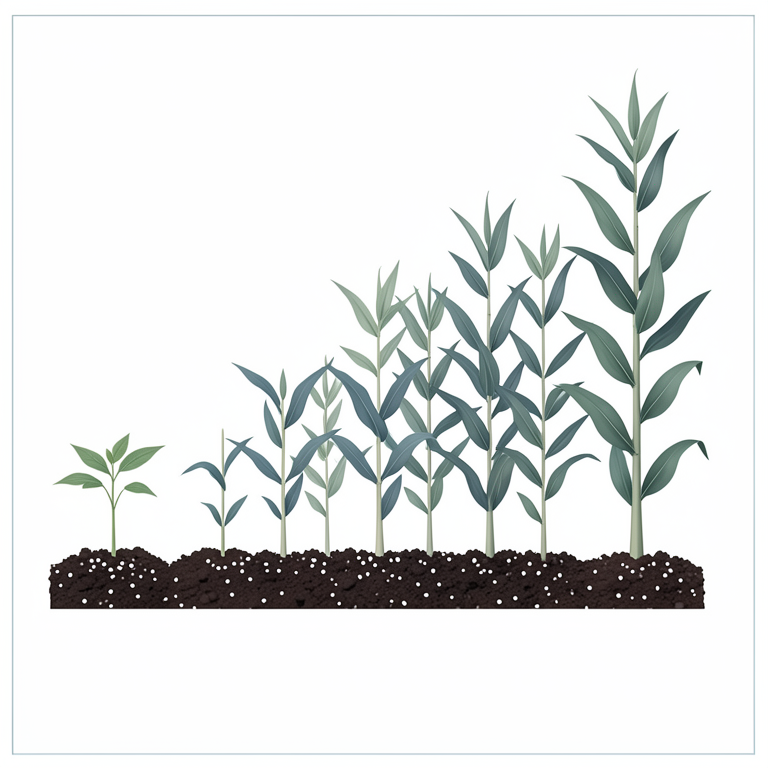
Comparison of Maize Growth Treatments
AI-generated conceptual illustration (maize plants (Zea mays)). It explains the idea and does not show study data.
View source evidence ↗Figures & tables
From the original paper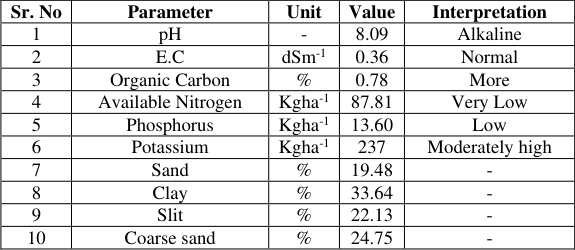 Table 1
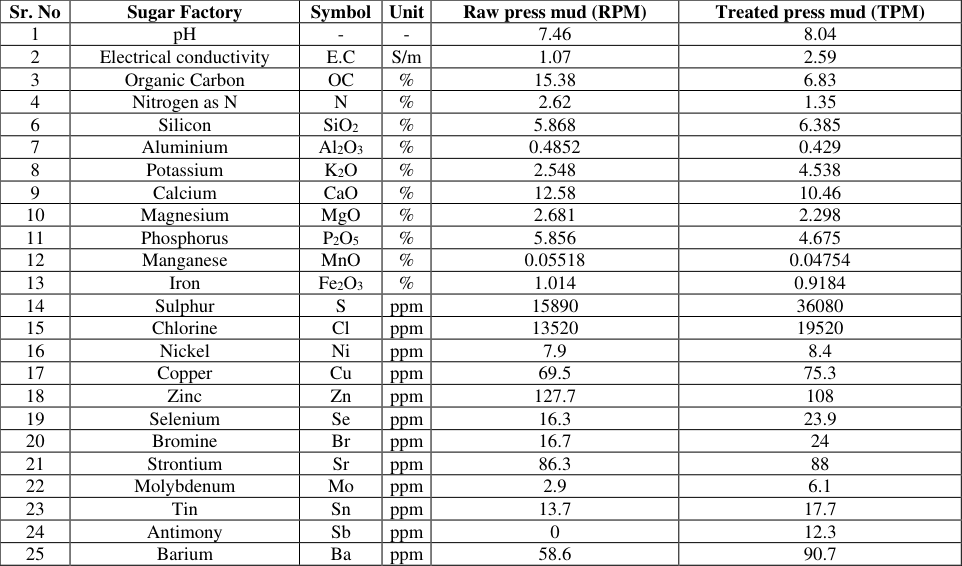 Table 2
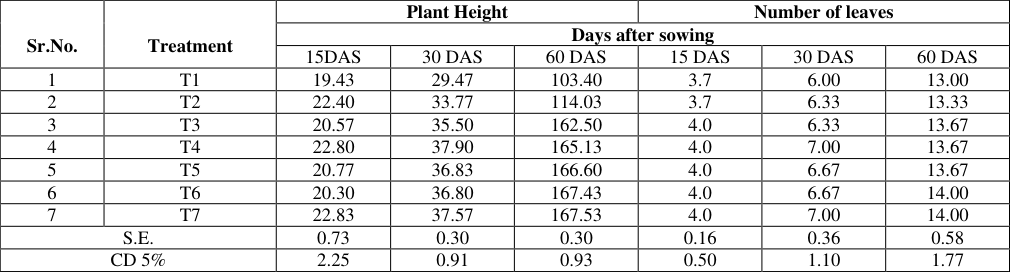 Table 3
Introduction
Maize (Zea mays L) is one versatile and adaptable under in agro-climate conditions and important food after rice and wheat in India (David and Adams 1985) [18] . In Maharashtra, maize is cultivated in Nashik, Aurangabad, Pune and Solapur district. As per reports, 50%of maize production in Pune district, 10 to 15% from Ahmednagar district and 3-4% in Nashik district and some parts of Solapur district (Kasabe Nanda 2020). Maize is used for the consumption of food for human being and quality feed for animals. It is used as basic raw material and ingredients of industrial products includes the making of starch, oil, protein, alcoholic beverages, food sweeteners, pharmaceutical, cosmetic, film, gum, package and paper industries. The growth of maize requires essential primary macronutrients in large amounts viz: nitrogen, potassium, phosphorous. Maize crops need a regular supply of nitrogen, phosphorous, and calcium throughout their growing period from the seedling stage to the grain filling stage. Nitrogen plays a vital role in maize production. Nitrogen is a component of protein, nucleic acid, protoplasm, and part of the chlorophyll molecule, also essential for photosynthesis process (Shanti, K.V.P., M.R. Rao et al 1997) [1] . Maize is recognized for more requirement of nitrogen than other plant nutrients element. Nitrogen fertilizer has a very good effect on the growth and yield of maize (Seadh et al 2013) [3] . Phosphorous play's vital role in photosynthesis, respiration as well as in energy storage and transfer as ADP and ATP (adenosine di and tri-phosphate), DPN and TPN (Di and tri-phopyridine nucleotide). It helps in plant maturation, rapid growth, encourages blooming and root growth, seed and flower development. Phosphorous is involved in enzymatic reactions, necessary for cell divisions and the cell reproduction process. Potassium plays the role of enzyme activator that helps with metabolism. Regulatory of opening and closing of leaf stomates of the plant. In photosynthesis, to recover disease resistance in plants, and improve the quality of fruits and vegetables. Potassium is absorbed from soil and plays important role in plants for the formation and synthesis of amino acid and proteins from ammonium ions.
Responses of maize plant to the application of NPK depends on variety of location, environmental factors like rainfall, climatic condition, availability of the soil nutrients. Soil is a most important, natural source and medium for food production (Biggelaar, et al 2003) [12] . The analysis of soil cannot be completed by the determination of the most important factors, influencing the storage potential and the availability of nutrient elements in the soil. Certainly, behaviour and the uptake of nutrients by the plant roots of fertilizer and native nutrient elements present in the soil, are determined by pH, electrical conductivity, organic matter, total nitrogen content, cation exchange capacity and oxidation -reduction conditions. The ability of plants to absorb nutrients depends on soil condition, irrigation and aeration. Sugarcane press mud is a slow-release fertilizer and prolonged effect on plant growth (Budiyanto G.2021) [11] . Press mud is soft, spongy, amorphous and dark brown white material containing sugar, fiber, albuminoids, also inorganic salts and cane wax. Press mud prevents of disease-causing fungi and reduces the growth rate of microbes as well as useful for soil which has deficient of total N, P, K. It can provide alternative fertilizer which can replace chemical fertilizer to some extent. Press mud increases the moisture, micro and macro nutrient of the soil which are beneficial for agricultural crops. Press mud as eco-friendly and healthy manure for crops as well as for agriculture practices. This study is aimed to examine the presence of nutrient organic sugarcane raw and treated press mud and its combination with nitrogen, phosphorus and potassium fertilizer to increase maize plant height and number of leaves of plant growth.
Materials and Methods
Materials and Methods
Description of experimental site
The cultivation of maize was undertaken during the period year 2021 in pot, in kharif season (September -November). A pot culture experiment was conducted at Ambegaon (BK), Pune, District -Pune, Maharashtra, India, located at NL 18 0 27'33", EL :73 0 49"51".
Experimental Design
The experiment was designed in RBD with three replications and six treatments and one absolute control. Details of treatment used in this study as follows:
Details of treatment used in this study as follows:
Planting and cultural practices
Sowing of maize was done on 13September 2021. Seed of maize species is Hy. maize (Zea mays), brand name Balram were obtained from Greco seeds, marketed by Green cross seeds and services. The treatments of inorganic fertilizer (nitrogen, phosphorous and potassium) were applied at 30DAS after planting through Urea, Single super phosphate and Muriate of potash respectively. The inorganic fertilizers were applied by placing along the lines 5 cm away and 5 cm below the maize plant. All the pots were uniformly irrigated by water and maintained field capacity.
Organic fertilizer
The sugarcane raw press mud (RPM) and treated press mud (TPM) is obtained from the Pandurang sugar factory, Shripur, district Solapur, Maharashtra, India. The organic manure was well-decomposed cow dung manure prepared onsite. The chemical fertilizers used for the present study were selected as per requirement and on the basis of availability, and preference by growers of maize (Zea mays). Physico-chemical analysis of the soil was carried out before the experiment. Analysis of sugarcane raw press mud (RPM) and treated press mud (TPM) was carried out to determine the plant nutrients status. Effect of organic raw and treated press mud and inorganic fertilizers on maize (Zea mays) plants were studied on an attribute like plant height and number of leaves per plant.
Result and Discussion
Result and Discussion
Soil Analysis
Physico-chemical analysis of the soil was carried out before the experiment. The results of determining the potential for soil fertility are shown in 1, the soil of the experiment was analysed, pH 8.09 which was alkaline in nature, EC (0.36 dSm -1 ) was normal in range and organic carbon (0.78%) was more available in soil. Nutrient status of soil consists of very low in available nitrogen (87.81 Kgha -1 ), low in phosphorous (13.60 Kgha -1 ) and moderately high in potash (237Kgha -1 ).
Soil is dominated by fraction of sand (19.48%), clay (33.64%), slit (22.13%) and coarse sand (24.75%).
Analysis of sugarcane raw and treated press mud
The analysis of sugarcane raw and treated press mud was carried to determine the availability nutrients status. [17] . Application of press mud improved soil N, P, K, Fe, Zn, Mn, and Cu, and increases crop yield, quality and to some extent saved chemical fertilizer.
Growth parameters
Growth analysis is an important tool for interaction between plant and environment and understanding the critical phase in the life cycle of any plant. Effect of organic raw and treated press mud and inorganic fertilizers on maize (Zea mays) plant were studied on attributes like plant height, and number of leaves per plant. According to the research report, the application of inorganic fertilizer nitrogen and phosphorous at rate of 120kgN/ha + 40kgP/ha and at rate of 60kgN/ha + 40kgP/ha, both were increasing the maize growth, grain yield and maize production (R.O. Onasanya, O.P. Aiyelari et al 2009) [3] . Maize crops grow very well in different rates of nitrogen, phosphorous fertilizer (Singh, V.K. and O.P. Dukey 1991) [5] . Decreasing soil fertility and insufficient use of fertilizer causes a low yield of maize. Nitrogen, and potassium plays important role in stalk of maize, magnesium and copper help in different growth stages of maize. Nitrogen and phosphorous had most required during the grain filling stage (Csaba Bojtor,Arpad Illes et al 2021) [6] . The essential nutrients sulphur, potassium, molybdenum, and nitrogen showed a significant effect on NPK treatments, also molybdenum, potassium, and iron had a positive effect on the leaves of maize. Phosphorous requirement in sowing stage (K. Girma, K. L. Martin, K. W. Freeman et al 2007) [7] .
Plant height 15DAS
The height of maize at 15 DAS was significantly highest in treatment T4 which was at par with treatment T7, T2, T5. The recorded plant height was in treatment T4 (22.83 cm), T7 (22.80 cm), T2 (22.40 cm) and T5 (20.77cm). The height of T3 (20.57 cm) was followed by T6 (20.30 cm) and T1 (19.43cm). The hierarchical trend of plant height observed amongst was T4> T7> T2> T5> T3> T6> T1.
30DAS
The height of maize at 30 DAS was significantly highest in treatment T4 which was at par with treatment T7. The recorded plant height was in treatment T4 (37.90 cm), T7 (37.57 cm). The plant height was recorded in treatment T5 (36.83 cm), T6 (36.80 cm), T3 (35.50 cm), T2 (33.77 cm) and T1 (29.47 cm). The hierarchical trend of plant height observed amongst was T4> T7> T5>T6> T3> T2> T1. The treatments of inorganic fertilizer (nitrogen, phosphorous and potassium) were applied at 30DAS after planting viz: Urea, SSP (single super phosphate), MOP (Muriate of potash).
DAS
After using inorganic fertilizer (nitrogen, phosphorous and potassium), plant height was recorded. The height of maize at 60 DAS was significantly highest in treatment T7 which was at par with treatment T6. The recorded plant height was in treatment T7 (167.53cm), T6 (167.43 cm) T5 (166.60 cm) which was closely followed by T4 (165.13cm) was next line to T3 (162.50 cm), T2 (114.03 cm) and T1 (103.40 cm) were found. The hierarchical trend of plant height observed amongst was: T7> T6> T5> T4> T3> T2> T1.
Number of leaves 15DAS
The number of leaves of maize at 15 DAS was significantly highest in treatments T3, T4, T5, T6, and T7 at par with treatments T1, T2. Although the difference amongst the treatments depicted in table no. 3 was not highly significant, the number of leaves was highest and found to be similar in treatment T3, T4, T5, T6, T7 i. e number of leaves 4. Also, the number of leaves was found to be similar in treatment T1, T0 (3.7). The general leaf number in all treatments was as follows: T3=T4= T5=T6= T7> T1=T2.
30DAS
The number of leaves of maize at 30 DAS was significantly highest in treatment T7, T4 at par with treatment T5, T6, T2, T3, T1. The number of leaves was highest found in T7 and T4 (7). The number of leaves was found to be similar in treatment T5 and T6 (6.67). The number of leaves similar in treatment T2 and T3 (6.33). The number of leaves was the lowest found in treatment T1 (6). The general leaf number in all treatments was as follows: T7=T4> T5=T6> T2= T3>T1.
DAS
The number of leaves of maize at 60 DAS was significantly highest in treatment T7, T6 at par with treatment T5, T4, T3, T2, T1. The number of leaves was highest found in treatments T7 and T6 (14). The number of leaves was similar in treatments T5, T4, T3, T2, and T1 (13). The general leaf number in all treatments was as follows: T7= T6> T5 =T4= T3= T2= T1.
Discussion
Without using inorganic fertilizer in the first 30DAS shows increased growth of maize plant viz: plant height and a number of leaves in treatment T2, T3, T4, T5, T6, T7, due to availability of plant nutrients in RPM and TPM. Plant height varied significantly due to the application of nutrients contained in raw and treated press mud at the stage of plant growth at 30DAS ( The treatment T7 significantly recorded the highest plant height as well as the number of leaves. Researchers reported that, sugarcane treated press mud is an organic fertilizer that is a slow-release nutrient, it produces the most potassium availability. The application of organic treated press mud to soil can significantly increase the available potassium and exchangeable -potassium (Hamed et al., 2011) [13] . The significantly increased in plant height and number of leaves in responses to the application of organic and inorganic fertilizer is probably due to the enhanced availability of nutrients in maize plant. The higher nutrient supply of inorganic NPK from soil to plant and uptake of nutrients improve plant height and number of leaves of maize (Jemal Abdulai 2010) [14] . Using inorganic fertilizer along with press mud as commercial fertilizer for the crop (M. L. Dotaniya, S. C. Datta, D. R. Biswas et al 2016) [10] .
Conclusion
The application of raw and treated press mud contains micro -macro nutrients which showed a positive effect on plant growth of maize in the first 30DAS without using inorganic fertilizer in treatment T2, T3, T4, T5, T6, T7. The experimental treatment, sugarcane raw press mud and treated press mud combination with cow dung among with RDF 20:60:40 kg N:P 2 O: K 2 O ha -1 used as manure in maize (Zea mays). Sugar cane raw and treated press mud interact with inorganic fertilizer, responses the growth parameter of maize, and increase the plant height and number of leaves.
Figures and tables from the paper
| Sr. No | Parameter | Unit | Value | Interpretation |
|---|---|---|---|---|
| 1 | pH | - | 8.09 | Alkaline |
| 2 | E.C | dSm-1 | 0.36 | Normal |
| 3 | Organic Carbon | % | 0.78 | More |
| 4 | Available Nitrogen | Kgha-1 | 87.81 | Very Low |
| 5 | Phosphorus | Kgha-1 | 13.60 | Low |
| 6 | Potassium | Kgha-1 | 237 | Moderately high |
| 7 | Sand | % | 19.48 | - |
| 8 | Clay | % | 33.64 | - |
| 9 | Slit | % | 22.13 | - |
| 10 | Coarse sand | % | 24.75 | - |
Table text extracted from the original PDF; superscript letters are shown inline. The original table image is below.
View original table image
| Sr. No | Sugar Factory | Symbol | Unit | Raw press mud (RPM) | Treated press mud (TPM) |
|---|---|---|---|---|---|
| 1 | pH | - | - | 7.46 | 8.04 |
| 2 | Electrical conductivity | E.C | S/m | 1.07 | 2.59 |
| 3 | Organic Carbon | OC | % | 15.38 | 6.83 |
| 4 | Nitrogen as N | N | % | 2.62 | 1.35 |
| 6 | Silicon | SiO2 | % | 5.868 | 6.385 |
| 7 | Aluminium | Al2O3 | % | 0.4852 | 0.429 |
| 8 | Potassium | K2O | % | 2.548 | 4.538 |
| 9 | Calcium | CaO | % | 12.58 | 10.46 |
| 10 | Magnesium | MgO | % | 2.681 | 2.298 |
| 11 | Phosphorus | P2O5 | % | 5.856 | 4.675 |
| 12 | Manganese | MnO | % | 0.05518 | 0.04754 |
| 13 | Iron | Fe2O3 | % | 1.014 | 0.9184 |
| 14 | Sulphur | S | ppm | 15890 | 36080 |
| 15 | Chlorine | Cl | ppm | 13520 | 19520 |
| 16 | Nickel | Ni | ppm | 7.9 | 8.4 |
| 17 | Copper | Cu | ppm | 69.5 | 75.3 |
| 18 | Zinc | Zn | ppm | 127.7 | 108 |
| 19 | Selenium | Se | ppm | 16.3 | 23.9 |
| 20 | Bromine | Br | ppm | 16.7 | 24 |
| 21 | Strontium | Sr | ppm | 86.3 | 88 |
| 22 | Molybdenum | Mo | ppm | 2.9 | 6.1 |
| 23 | Tin | Sn | ppm | 13.7 | 17.7 |
| 24 | Antimony | Sb | ppm | 0 | 12.3 |
| 25 | Barium | Ba | ppm | 58.6 | 90.7 |
Table text extracted from the original PDF; superscript letters are shown inline. The original table image is below.
View original table image
| Sr.No. | Treatment | Plant Height | — | — | Number of leaves | — | — |
|---|---|---|---|---|---|---|---|
| Days after sowing | |||||||
| 15DAS | 30 DAS | 60 DAS | 15 DAS | 30 DAS | 60 DAS | ||
| 1 | T1 | 19.43 | 29.47 | 103.40 | 3.7 | 6.00 | 13.00 |
| 2 | T2 | 22.40 | 33.77 | 114.03 | 3.7 | 6.33 | 13.33 |
| 3 | T3 | 20.57 | 35.50 | 162.50 | 4.0 | 6.33 | 13.67 |
| 4 | T4 | 22.80 | 37.90 | 165.13 | 4.0 | 7.00 | 13.67 |
| 5 | T5 | 20.77 | 36.83 | 166.60 | 4.0 | 6.67 | 13.67 |
| 6 | T6 | 20.30 | 36.80 | 167.43 | 4.0 | 6.67 | 14.00 |
| 7 | T7 | 22.83 | 37.57 | 167.53 | 4.0 | 7.00 | 14.00 |
| S.E. | 0.73 | 0.30 | 0.30 | 0.16 | 0.36 | 0.58 | |
| CD 5% | 2.25 | 0.91 | 0.93 | 0.50 | 1.10 | 1.77 |
Table text extracted from the original PDF; superscript letters are shown inline. The original table image is below.
View original table image
References
16 in the original paper- Shanti KVP, MR Rao, et al. Response of maize (Zea mays) hybrid composite to different levels of nitrogen. Indian J Agric. Sci. 1997;67:424-425.
- Seadh SE, Attia AN, El-Moursy, et al. Productivity of maize as affected by organic, foliar and nitrogen fertilization levels. World Res. J of Agron. 2013;2(1):30-36.
- Onasanya RO, Aiyelari OP, et al. Growth and Yield Response of Maize (Zea mays L.) to Different Rates of Nitrogen and Phosphorus Fertilizers in Southern Nigeria, ISSN 1817-3047 World Journal of Agricultural Sciences. 2009;5(4):400-407.
- Muslumova ZH, Mammadli SA, Farajov MF. Effect of sodium and potassium humate in adaptive reaction of Zea mays under radiation stress. Int. J Biol. Sci. 2022;4(1):9-15. DOI: 10.33545/26649926.2022.v4.i1a.35
- Singh VK, Dukey OP. Response of maize to the application of nitrogen and phosphorus, Current Res. University Agric Sci. 1991;20:153-154.
- Csaba Bojtor, Arpad Illes. Evaluation of the Nutrient Composition of Maize in Different NPK Fertilizer Levels Based on Multivariate Method Analysis, International Journal of Agronomy, International Journal of Agronomy Article ID. 5537549: 2021;2021:1-12.
- Girma K, Martin KL, Freeman KW, et al. Determination of optimum rate and growth stage for foliar-applied phosphorus in corn, Communications in Soil Science and Plant Analysis. 2007;38(9-10):11371154.
- Diaz PM. Consequences of Compost Press Mud as Fertilizers, DJ International Journal of Advances in Microbiology and Microbiological Research. 2016;1(1):28-32.
- Bandera AD. Phytochemical screening and return on investment of pechay (Brassica napus L. subsp. chinensis var. Black Behi) as influenced by inorganic fertilizers (ground and foliar application) and organic fertilizer. Int. J Agric. Food Sci. 2020;2(1):24-30. DOI: 10.33545/2664844X.2020.v2.i1a.31
- Dotaniya ML, Datta SC, Biswas DR, et al. Use of sugarcane industrial by-products for improving sugarcane productivity and soil health, ICAR-Indian Institute of Soil Science, Nabibagh, Berasia Road, Bhopal, India Int J Recycl Org Waste Agricult. 2016;5:185-194.
- Budiyanto G. The effect of combination of sugarcane pressmud compost and potassium fertilizer on vegetative growth of corn in coastal sandy soil, Food Research. 2021;5(3):289-296.
- Biggelaar CD, Lal R, Wiebe K, et al. The Global impact of soil erosion on productivity: II: Effects on Crop Yields and Production over Time. Advances in Agronomy. 2003;81:49-95.
- Hamed MH, El-Desoky MA, Faragallah MAA, U sman ARA. Effect of Organic Amendments on Soil Chemical Properties and Potassium Availability to Sorghum Plants grown on a Calcareous Sandy Soil. Assiut Journal of Agricultural Sciences. 2011;42(3):65-76.
- Nayan chapane, Shridhar Saptale Study of plant nutrients availability of raw and treated press mud of different sugar mill industries, Gradiva review journal. 2022;8(8):153-161.
- Mirza Hasanuzzaman KU, Ahamed NM, Rahmatullah N, Akhter KN, Rahman ML. Plant growth characters and productivity of wetland rice (Oryza sativa L.) as affected by application of different manures, Emir. J Food Agric. 2010;22(1):46-58.
- Bhosale PR, Chonde SG, et al. Studies on PhysicoChemical Characteristics of Waxed and Dewaxed Press mud and its effect on Water Holding Capacity of Soil, ISCA J. Biological Sci. 2012;1(1)35-41.