
Research article · 2026 · Full text
International Journal of Advanced Chemistry ResearchPyrrolidine-mediated prodrug strategy for ibuprofen: Synthesis, characterization and biological evaluation
Volume 8(8) · Pages 95–101 · DOI: 10.33545/26646781.2026.v8.i8b.735 ↗
Research areasInflammatory mediators and NSAID effectsSynthesis and biological activityDrug Solubulity and Delivery Systems
Abstract
Author-writtenIbuprofen, a widely used non-steroidal anti-inflammatory drug (NSAID), is limited by gastrointestinal toxicity arising from its free carboxylic acid group. To address this, four ibuprofen-pyrrolidine amide prodrugs (Schemes I-IV; R = CH₃, CONH₂, CH₂OH, CN) were synthesized via EDC·HCl/HOBt/NMM-mediated coupling in 55-61% yield, and characterized by ¹H NMR, IR, and mass spectrometry, confirming amide bond formation (1635 cm⁻¹). Solubility studies showed all prodrugs were water-insoluble but soluble in organic solvents, indicating increased lipophilicity due to carboxylic acid masking. Analgesic and anti-inflammatory activities were evaluated using acetic acid-induced writhing and carrageenan-induced paw edema models in rats, with ibuprofen as standard. All prodrugs showed significant activity, though lower than ibuprofen. The pyrrolidin-2-ylmethanol derivative (III) exhibited the highest efficacy (43.59% writhing inhibition), closely approaching ibuprofen. These results suggest amide prodrug conjugation retains meaningful pharmacological activity while potentially reducing gastric irritation, supporting further evaluation of Compound III as a safer ibuprofen alternative.
Summary
Source-checkedPlain-language reading of the full paper, prepared with AI and checked against the text. Each point links to the authors' own words.
Why it matters
- Ibuprofen is a common non-steroidal anti-inflammatory drug, but its use is limited by toxicity to the gastrointestinal tract caused by its free carboxylic acid group. View evidence ↗
- The gastrointestinal toxicity of ibuprofen occurs through two mechanisms: systemic inhibition of prostaglandin biosynthesis and direct topical contact of the carboxylic acid group with the stomach lining. View evidence ↗
- A prodrug strategy can be used to mask the carboxylic acid group, creating a bioreversible derivative that reduces gastric irritation and is converted back to active ibuprofen after absorption. View evidence ↗
The question
- The study aimed to synthesize four ibuprofen-pyrrolidine amide prodrugs with different 2-substituents (methyl, carboxamide, hydroxymethyl, and nitrile) using a specific coupling protocol to avoid racemization. View evidence ↗
What they did
- The synthesis involved reacting 500 mg of ibuprofen in dichloromethane at 0 °C with HOBt, EDC·HCl, and N-methylmorpholine to activate the acid. View evidence ↗
- The activated ibuprofen was then coupled with one of four pyrrolidine derivatives (R = CH₃, CONH₂, CH₂OH, or CN) added dropwise. View evidence ↗
- The resulting prodrugs were characterized using NMR, IR, and mass spectrometry, and their biological activity was tested using acetic acid-induced writhing and carrageenan-induced paw edema models. View evidence ↗
What they found
- The four prodrugs were synthesized with yields ranging from 55% (nitrile derivative) to 61% (methyl derivative). View evidence ↗
- All four prodrugs were found to be insoluble in water but soluble in organic solvents (ethanol, chloroform, acetone, and diethyl ether), indicating increased lipophilicity. View evidence ↗
- In the analgesic writhing test at 100 mg/kg, all prodrugs showed activity, with the pyrrolidin-2-ylmethanol derivative (III) being the most effective (43.59% inhibition), though all were less potent than ibuprofen (72.39%). View evidence ↗
What it means
- The authors conclude that the pyrrolidin-2-ylmethanol derivative (Compound III) is the most promising candidate due to its superior analgesic and anti-inflammatory activity. View evidence ↗
- The authors state that the amide prodrug approach is a viable strategy for improving ibuprofen's safety profile by reducing gastric irritation while maintaining pharmacological activity. View evidence ↗
- The authors note that further research is needed on gastric ulcerogenicity, pharmacokinetic properties (such as hydrolysis kinetics), and dose optimization to fully prove the therapeutic potential. View evidence ↗
Visual summary
3 visualsIllustrations explain the paper; charts are replotted from the paper's own table values.
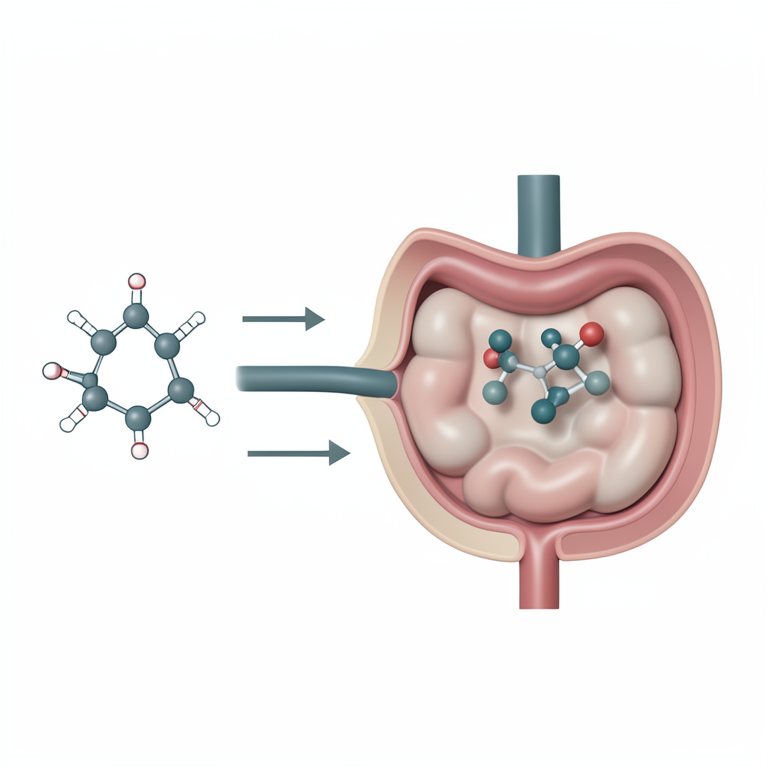
Prodrug Activation Concept
AI-generated conceptual illustration (Ibuprofen prodrug molecule and human gastrointestinal tract). It explains the idea and does not show study data.
View source evidence ↗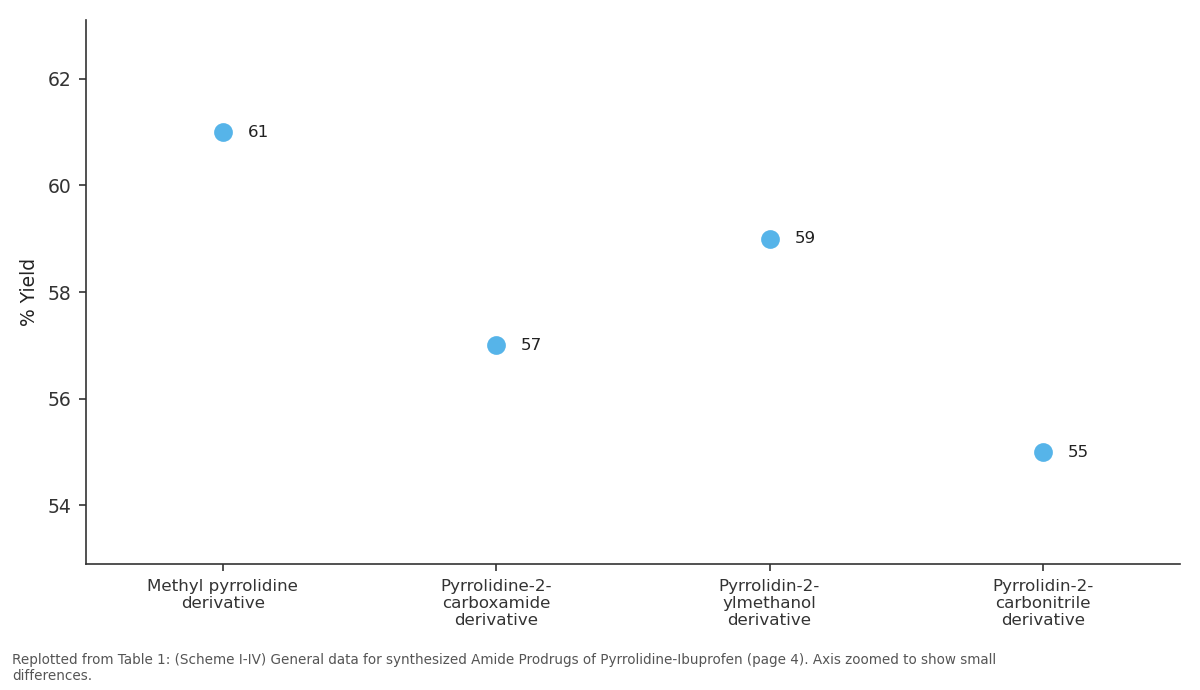
% Yield /: Methyl pyrrolidine... vs Pyrrolidine-2-carboxamid... vs Pyrrolidin-2-ylmethanol... vs Pyrrolidin-2-carbonitril...
Replotted from Table 1 (page 4) of the original paper. Every bar is the paper's own table value.
View source evidence ↗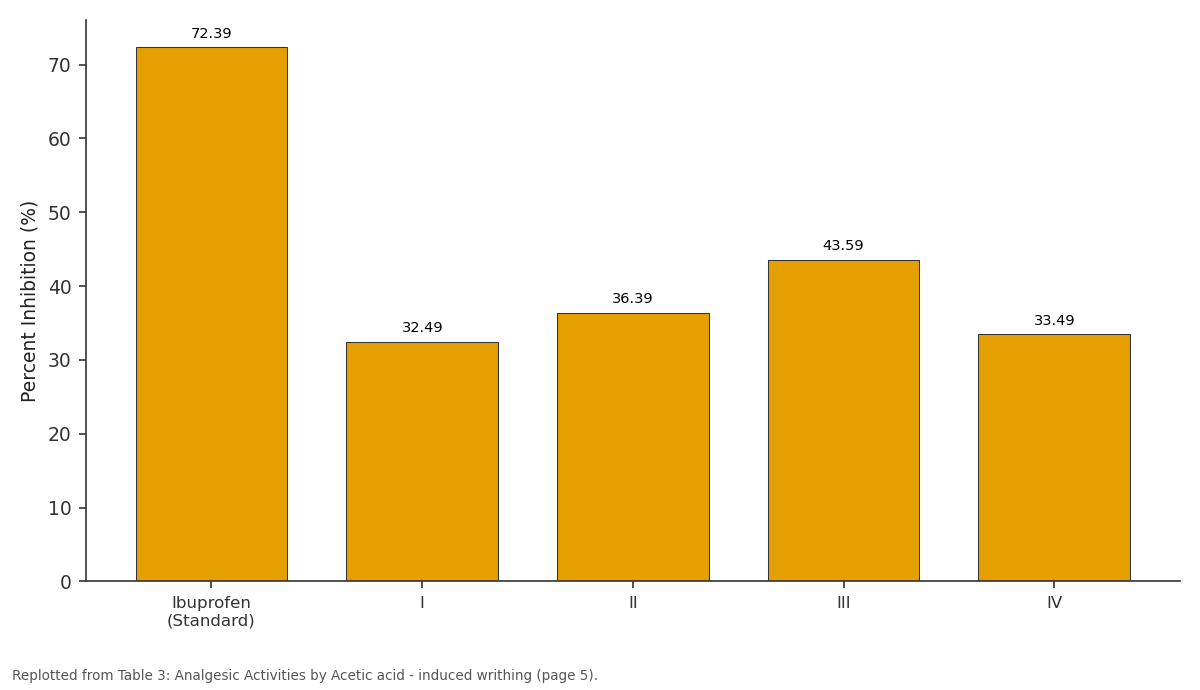
Percent Inhibition (%) / -: Ibuprofen (Standard) vs I vs II vs III vs IV
Replotted from Table 3 (page 5) of the original paper. Every bar is the paper's own table value.
View source evidence ↗Figures & tables
From the original paper Table 1
 Table 2
 Table 3
 Table 4
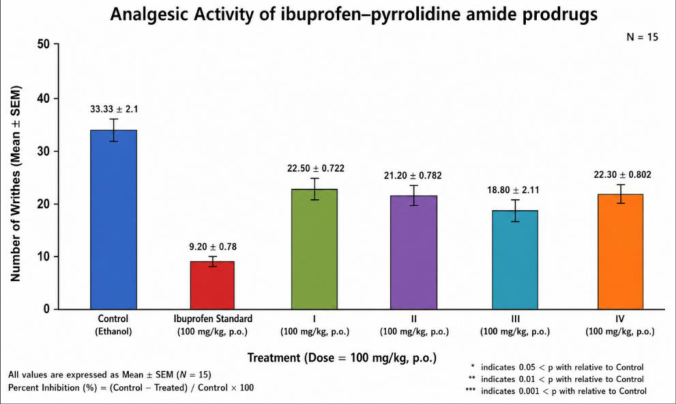 Figure 1
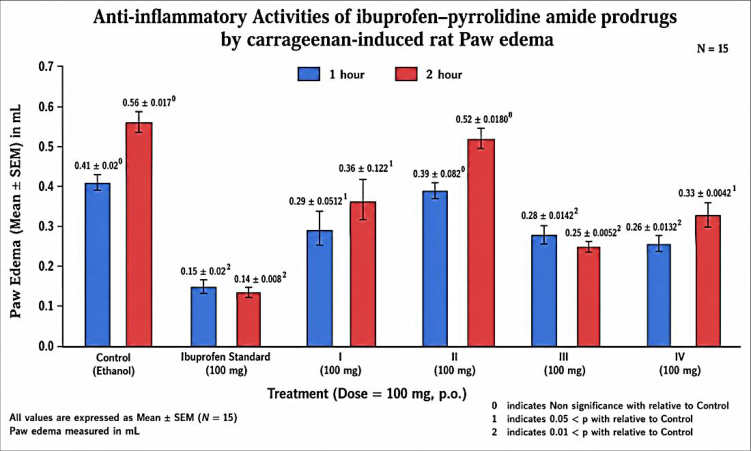 Figure 2
Introduction
Ibuprofen, (±)-2-(4-isobutylphenyl) propanoic acid, belongs to the 2-arylpropionic acid class of non-steroidal anti-inflammatory drugs (NSAIDs) and remains one of the most extensively prescribed agents worldwide for the management of pain, fever, and inflammatory conditions such as rheumatoid arthritis and osteoarthritis [1,2] . Its widespread use is attributed to a favorable balance of analgesic and anti-inflammatory efficacy with comparatively better tolerability than earlier NSAIDs such as aspirin. Despite this, chronic oral administration continues to be associated with clinically significant gastrointestinal (GI) adverse effects, including mucosal irritation, erosion, ulceration, and hemorrhage, and more recent investigations have further implicated long-term use in hepatic, renal, and cardiovascular toxicity, underscoring that ibuprofen's safety profile remains an active area of pharmaceutical research [3] . The mechanistic basis of this toxicity involves two complementary pathways: a systemic component, whereby non-selective inhibition of cyclooxygenase (COX)-catalyzed prostaglandin biosynthesis compromises the mucosal protective barrier [4,5] , and a local, topical component, arising from direct, ion-trapping contact of the drug's free carboxylic acid (-COOH) group with the gastric epithelium [6,7] . This acidic moiety, while essential for pharmacological activity, is therefore a key structural liability limiting the long-term safety of ibuprofen therapy. To address this without compromising efficacy, considerable effort has been directed toward the prodrug approach chemically masking the free carboxylic acid as a bioreversible derivative that is reconverted to the active parent drug via enzymatic or chemical hydrolysis following absorption [8,9] . This allows the reactive acid group to remain concealed during gastric transit, minimizing mucosal contact, while still permitting regeneration of active ibuprofen at a later stage. Panda et al. [10] extended this concept, synthesizing a set of ibuprofen hybrid conjugates that showed significant anti-inflammatory and analgesic activity in vivo without any observable ulcerogenic liability, while also demonstrating improved COX-2 selectivity relative to ibuprofen itself. More recent work continues to support this approach: Kulabaş et al. [11] reported novel amide conjugates of NSAIDs with potent, gastric-sparing anti-inflammatory activity validated through in vitro, in vivo, and in silico evaluation; Bokhtia et al. [12] synthesized triazolyl-linked ibuprofen and indomethacin conjugates via click chemistry that showed antiinflammatory potency comparable to or exceeding the parent drugs without ulcerogenic effects; and Shah et al. [13] reported a microwave-assisted synthesis of ibuprofen derivatives with reduced gastroulcerogenic potential in postoperative and chronic inflammatory pain models. Manolov et al. [14] similarly demonstrated that conjugation of ibuprofen with saturated N-heterocyclic amines, including pyrrolidine-related scaffolds, could be achieved with good synthetic efficiency and favorable biological evaluation, directly supporting the structural rationale of the present work. In our previous study, Kumar and Vipin [15,16] similarly developed amide-based ibuprofen and naproxen prodrugs with favorable spectroscopic and pharmacological profiles, while Vipin and Kumar [17,18] reported complementary ester-based ibuprofen prodrugs, including 2phenylethanol and alcohol ester conjugates, validated in vivo. Goyal et al. [19] reviewed emerging NSAID prodrug strategies for reducing GI toxicity, and Denizkusu et al. [20] reported ibuprofen-cystamine salts with improved aqueous solubility. Most recently, Dimitrova et al. [21] characterized a novel ibuprofen propanamide derivative, reaffirming amidebased modification as an active area of investigation. Among the bioreversible functional groups explored, amide prodrugs are generally preferred over simple esters, since esters are often hydrolyzed rapidly and non-selectively by plasma and tissue esterases, sometimes regenerating the free, irritant acid prematurely within the gastric environment. Amides, by contrast, remain comparatively more resistant to hydrolysis under acidic gastric conditions, undergoing controlled bioconversion primarily through amidase-mediated cleavage following absorption [6] . Coupling ibuprofen with cyclic amine promoieties such as pyrrolidine and its derivatives additionally allows finetuning of the lipophilicity, solubility, and hydrolytic stability of the resulting conjugate. The present study was undertaken to design and synthesize a series of ibuprofen-pyrrolidine amide conjugates bearing structurally diverse 2-substituents (R = CH₃, CONH₂, CH₂OH, and CN; Schemes I-IV), employing a mild, racemization-suppressing EDC•HCl/HOBt/Nmethylmorpholine-mediated coupling protocol. The synthesized conjugates were characterized spectroscopically (¹H NMR, IR, mass spectrometry) and evaluated for their solubility behavior, as well as for analgesic and antiinflammatory activity using the acetic acid-induced writhing test [22,23] and carrageenan-induced paw edema test [24] , respectively.
Experimental 2.1. Materials
Every chemical and reagent used in the study was of analytical or reagent quality and utilized exactly as supplied, requiring no additional purification. We obtained the required chemicals from S.D. Fine-Chem Ltd. and Merck. The solvents were purified by double distillation and then concentrated using a rotary evaporator. A Bruker 400 MHz NMR spectrometer was used to obtain the NMR spectra at room temperature with CDCl₃ serving as the deuterated solvent. Chemical alterations are quantified in parts per million (ppm) and evaluated with tetramethylsilane (TMS), the internal reference. FTIR spectra with a spectral resolution of 4.00 cm⁻¹ were obtained using a Fouriertransform infrared spectrophotometer.
Procedure for the Synthesis of Ibuprofen-Amide Prodrugs (Coupling of Ibuprofen and derivatives of pyrrolidine)
A solution of ibuprofen (500 mg, 2.43 mmol, 1.0 equiv) in anhydrous dichloromethane (10.9 mL; 5.0 mL/mmol) was cooled to 0 °C under an ice-water bath. To this stirred solution were sequentially introduced 1hydroxybenzotriazole (HOBt, 361 mg, 2.68 mmol, 1.1 equiv), EDC•HCl (512 mg, 2.68 mmol, 1.1 equiv), and Nmethylmorpholine (491 mg, 4.86 mmol, 2.0 equiv), and the reaction mixture was maintained at 0 °C for 5 min to allow in situ generation of the activated ester species. Subsequently, a pre-cooled solution of the requisite pyrrolidine derivative (2.43 mmol, 1.0 equiv) in dichloromethane (3 mL) bearing the substituent R = CH₃ (Scheme I), CONH₂ (Scheme II), CH₂OH (Scheme III), or CN (Scheme IV) at the 2-position was added dropwise, and the reaction was further stirred at 0 °C for 10 min to promote controlled nucleophilic addition and mitigate exothermic side reactions. Thereafter, the cooling bath was withdrawn, and the reaction mixture was allowed to attain ambient temperature, with continued stirring for a period of 6-8 h to drive the coupling reaction to completion. Reaction progress was periodically monitored by thin-layer chromatography (TLC), employing ethyl acetate-hexane (2:3, v/v) as the mobile phase. Upon confirmation of complete consumption of the starting acid, the reaction was quenched by the addition of water (10 mL), and the crude product was partitioned between the aqueous phase and ethyl acetate (3 × 20 mL). The combined organic layers were washed sequentially with brine (3 × 20 mL) to remove residual water-soluble impurities, dried over anhydrous sodium sulfate (Na₂SO₄), filtered, and concentrated under reduced pressure to afford the crude product. Final purification was achieved by column chromatography over silica gel (100-200 mesh), employing a gradient of ethyl acetate-hexane as the eluent system, to furnish the target ibuprofen-pyrrolidine conjugates (Schemes I to IV) in analytically pure form.
Results and Discussion
The target ibuprofen-pyrrolidine conjugates (Schemes I-IV) were synthesized each in single synthetic step through EDC•HCl/HOBt-mediated amide coupling between the carboxylic acid functionality of ibuprofen and the ring Mechanistically, activation of ibuprofen by EDC•HCl would proceed via a transient O-acylisourea intermediate, which is anticipated to be efficiently intercepted by HOBt to generate the more stable and selectively electrophilic benzotriazolyl active ester, thereby suppressing competing pathways such as N-acylurea formation and epimerization, while Nmethylmorpholine would serve to neutralize the hydrochloride salts liberated during the reaction and maintain the pyrrolidine nucleophile in its free-base, reactive form. The staged, low-temperature addition protocol pre-activation of the acid at 0 °C followed by controlled introduction of the amine and gradual warming to ambient temperature is expected to further favor clean, racemization-free amide bond formation across all four analogues. On theoretical grounds, the coupling efficiency across the series would be anticipated to vary with the electronic and steric nature of the pyrrolidine 2-substituent: the methyl-bearing nucleophile (Scheme I), being sterically unencumbered and electronically neutral, would be predicted to react most readily and afford the amide in highest yield; the carboxamide-substituted derivative (Scheme II) would be expected to show moderately attenuated nucleophilicity and yield on account of competing hydrogen-bonding interactions and possible partial participation of the amide functionality; the hydroxymethyl-substituted pyrrolidine (Scheme III), despite bearing a competing nucleophilic hydroxyl group, would be predicted to undergo selective N-over O-acylation under the mild, non-acidic reaction conditions, furnishing the amide product with minimal ester byproduct formation; and the nitrile-substituted analogue (Scheme IV), owing to the inductive electron-withdrawing character of the cyano group diminishing the nucleophilicity of the adjacent ring nitrogen, would be expected to react comparatively more sluggishly and in modestly reduced yield. Successful amide bond formation in each case could theoretically be confirmed by the disappearance of the carboxylic acid carbonyl stretch of ibuprofen in the IR spectrum and the emergence of a tertiary amide carbonyl absorption, alongside diagnostic pyrrolidine ring proton resonances in the ¹H NMR spectrum and mass spectral data consistent with the proposed molecular formulae; taken collectively, this theoretical analysis suggests that the EDC•HCl/HOBt/NMM-mediated protocol should constitute a mild, racemization-suppressing, and broadly generalizable route to structurally diverse ibuprofen-pyrrolidine hybrid conjugates, tolerant of varied electronic and steric substitution at the pyrrolidine 2position, and thereby providing a viable synthetic platform for subsequent pharmacological evaluation of this compound series.
Scheme-I Preparation of 2-[4-(2-methylpropyl)phenyl]-1-(2-methylpyrrolidin-1yl)propan-1-one
Scheme-I Preparation of 2-[4-(2-methylpropyl)phenyl]-1-(2-methylpyrrolidin-1yl)propan-1-one
Structural Confirmation
The structures of the synthesized amide prodrugs (Schemes I-IV) were unambiguously confirmed on the basis of their ¹H NMR and IR spectral data, which were found to be in complete agreement with the proposed molecular architectures and consistent with the molecular formulae and weights summarized in Table 1. In all four analogues, the characteristic aromatic proton signals of the 4isobutylphenyl moiety of the ibuprofen scaffold, appearing as two mutually coupled doublets/doublet-of-doublets in the region δ 7.08-7.20 (4H, ArH), together with the diagnostic isobutyl methylene (CH₂-Ph, δ ~2.42-2.44, d, J ≈ 7.0-7.2 Hz, 2H) and terminal gem-dimethyl doublet (δ 0.89-0.90, d, J ≈ 6.6-6.7 Hz, 6H) resonances, confirmed the intact retention of the ibuprofen aryl-isobutyl framework across the series. The presence of an amide C=O stretching absorption at 1635 cm⁻¹ in the IR spectra of all four compounds in place of the free carboxylic acid C=O stretch of ibuprofen provided direct and consistent evidence for successful amide bond formation between ibuprofen and the respective pyrrolidine nucleophiles in each scheme. Finally, the pyrrolidine-2-carbonitrile analogue (Scheme IV; 1-{2- [4-(2-methylpropyl)phenyl]propanoyl}pyrrolidine-2carbonitrile) was distinguished by the appearance of a sharp, diagnostic nitrile (C≡N) stretching absorption at 2150 cm⁻¹ in the IR spectrum, a signal notably absent in the other three analogues in conjunction with the ring methine proton observed at δ 4.76-4.86, together confirming the intact presence of the nitrile functionality and its coexistence with the newly formed amide linkage, consistent with the proposed formula C₁₈H₂₄N₂O (MW 284). Collectively, the close concordance between the observed ¹H NMR chemical shifts, coupling patterns, and IR carbonyl/functional group stretching frequencies with the theoretically predicted structural features of each analogue including retention of the R-substituent-specific signals (CH₃, CONH₂, CH₂OH, and CN) and the uniform emergence of the amide carbonyl band at 1635 cm⁻¹ provides robust structural confirmation of the successful and chemoselective synthesis of all four ibuprofen-pyrrolidine amide prodrugs (Schemes I-IV).
| Compound | Molecular Formula | Molecular Weight | % Yield |
|---|---|---|---|
| Ibuprofen | C₁₃H₁₈O₂ | 206 | — |
| Methyl pyrrolidine derivative | C₁₈H₂₇NO | 273 | 61 |
| Pyrrolidine-2-carboxamide derivative | C₁₈H₂₆N₂O₂ | 302 | 57 |
| Pyrrolidin-2-ylmethanol derivative | C₁₈H₂₇NO₂ | 289 | 59 |
| Pyrrolidin-2-carbonitrile derivative | C₁₈H₂₄N₂O | 284 | 55 |
Table text extracted from the original PDF; superscript letters are shown inline. The original table image is below.
View original table image
Solubility Studies
Solubility of the synthesized ibuprofen-pyrrolidine amide prodrugs (Schemes I-IV) was assessed in water, ethanol, chloroform, acetone, and diethyl ether (Table 2). All four derivatives showed an identical pattern: insoluble in water, but freely soluble in ethanol, chloroform, acetone, and diethyl ether. The aqueous insolubility, observed uniformly even in the polar carboxamide (Scheme II) and hydroxymethyl (Scheme III) analogues, reflects the loss of the free, ionizable -COOH group of ibuprofen upon amide bond formation, which increases overall lipophilicity irrespective of the pendant R-substituent. This is consistent with the general rationale of amide prodrug design, where masking the carboxylic acid reduces the acid-mediated gastric irritation typical of NSAIDs. The good solubility in organic solvents reflects the lipophilic aryl-isobutyl and pyrrolidine framework common to all analogues, and is consistent with their successful purification by column chromatography. Overall, the data indicate that amide conjugation converts ibuprofen into a uniformly lipophilic, water-insoluble prodrug form, in line with the intended design of reducing direct gastric toxicity while relying on in vivo enzymatic hydrolysis to regenerate active ibuprofen.
| Compound | Water | Ethanol | Chloroform | Acetone | Diethyl ether |
|---|---|---|---|---|---|
| Methyl pyrrolidine derivative | Insoluble | Soluble | Soluble | Soluble | Soluble |
| Pyrrolidine-2-carboxamide derivative | Insoluble | Soluble | Soluble | Soluble | Soluble |
| Pyrrolidin-2-ylmethanol derivative | Insoluble | Soluble | Soluble | Soluble | Soluble |
| Pyrrolidine-2-carbonitrile derivative | Insoluble | Soluble | Soluble | Soluble | Soluble |
Table text extracted from the original PDF; superscript letters are shown inline. The original table image is below.
View original table image
Pharmacological Investigation of Synthesized ibuprofen-pyrrolidine amide prodrugs Using In vivo
Models: Having confirmed the structural identity and physicochemical characteristics of the synthesized ibuprofen-pyrrolidine amide prodrugs (Schemes I-IV) through spectral and solubility studies, the biological relevance of this prodrug design strategy was further evaluated by assessing their analgesic and anti-inflammatory potential in vivo, in comparison with ibuprofen as the reference standard. Two well-established and pharmacologically validated rodent models the acetic acidinduced writhing test and the carrageenan-induced paw edema test were employed to independently assess analgesic and anti-inflammatory efficacy, respectively.
Acetic Acid-Induced Writhing Test
Analgesic activity (as shown in table 3 and figure 1) was assessed using the acetic acid-induced writhing method. Animals were pretreated with the test compounds 45 minutes prior to induction of writhing. Ibuprofen (100 mg/kg, i.p.) served as the reference standard, while the synthesized ester prodrugs were administered at an equivalent dose of 100 mg/kg, i.p. Writhing was induced by intraperitoneal injection of 0.6% acetic acid (10 mL/kg), and the number of writhes exhibited by each animal was recorded over a 10-minute observation period. The percentage protection against abdominal constriction, taken as an index of analgesic activity, was calculated using the formula: Where Vₜ and Vc represents the paw edema volume in the drug-treated and control groups, respectively.
| Dose/Treatment | Dose (mg) | Number of Writhes (Mean ± SEM) | Percent Inhibition (%) |
|---|---|---|---|
| Control (Ethanol) | - | 33.33 ± 2.10 | - |
| Ibuprofen (Standard) | 100 | 9.20 ± 0.78 | 72.39 |
| I | 100 | 22.50 ± 0.72 | 32.49 |
| II | 100 | 21.20 ± 0.78 | 36.39 |
| III | 100 | 18.80 ± 2.11 | 43.59 |
| IV | 100 | 22.30 ± 0.80 | 33.49 |
Table text extracted from the original PDF; superscript letters are shown inline. The original table image is below.
View original table image
Conclusion
In the present study, a series of ibuprofen-pyrrolidine amide prodrugs (Schemes I-IV) bearing structurally diverse 2substituents (R = CH₃, CONH₂, CH₂OH, and CN) were successfully synthesized via a mild, EDC•HCl/HOBt/NMM-mediated carbodiimide coupling protocol, affording the target conjugates in moderate-togood yields (55-61%). The structures of all four analogues were unambiguously confirmed by ¹H NMR and IR spectral data, which consistently demonstrated amide bond formation (characteristic C=O stretch at 1635 cm⁻¹) between the ibuprofen carboxylic acid and the pyrrolidine ring nitrogen, along with retention of the respective R-substituent functionalities. Solubility studies further revealed that amide conjugation uniformly converted the parent NSAID into a water-insoluble, lipophilic prodrug form across all four derivatives, consistent with the masking of the free, ionizable -COOH group of ibuprofens, a modification anticipated to reduce the direct acid-mediated gastric mucosal irritation associated with the parent drug. Pharmacological evaluation in acetic acid-induced writhing and carrageenan-induced paw edema models demonstrated that all four prodrugs (I-IV) possessed statistically significant analgesic and anti-inflammatory activity relative to control, although the magnitude of activity for each was lower than that of ibuprofen itself. In the writhing test, percentage inhibition followed the order III (43.59%) > II (36.39%) > IV (33.49%) > I (32.49%), all substantially lower than the 72.39% inhibition observed for ibuprofen, indicating that amide conjugation attenuates, but does not abolish, analgesic efficacy. Similarly, in the carrageenaninduced paw edema model, compound III (pyrrolidin-2ylmethanol derivative) exhibited the most pronounced reduction in paw edema at both 1 h (0.28 mL) and 2 h (0.25 mL) among the synthesized prodrugs approaching, though not matching, the efficacy of ibuprofen (0.15/0.14 mL) while compound II (pyrrolidine-2-carboxamide derivative) displayed the weakest anti-inflammatory response, with a non-significant effect at the 2 h time point relative to control. Taken together, these findings indicate that compound III, bearing the hydroxymethyl-substituted pyrrolidine moiety, emerged as the most pharmacologically promising candidate within the series, consistently outperforming the other three analogues in both analgesic and anti-inflammatory assays, and may be attributed to a more favorable balance of lipophilicity and susceptibility to in vivo enzymatic (amidase-mediated) hydrolysis, facilitating more efficient regeneration of free ibuprofen at the target site. While the reduced potency of all prodrugs relative to ibuprofen reflects the expected pharmacokinetic lag associated with prodrug bioactivation, the retention of significant analgesic and anti-inflammatory activity combined with the anticipated advantage of diminished gastric irritation owing to masking of the free carboxylic acid supports the overall viability of the amide prodrug approach as a strategy for improving the gastrointestinal safety profile of ibuprofen. Further studies, including in vivo gastric ulcerogenicity assessment, pharmacokinetic evaluation (including hydrolysis kinetics and bioavailability), and dose-optimization studies, are warranted to fully substantiate the therapeutic potential of these ibuprofen-pyrrolidine conjugates, particularly compound III, as safer alternatives to conventional ibuprofen therapy.
Figures and tables from the paper
| Treatment | Dose (mg) | 1 Hour (Mean ± SEM) | 2 Hours (Mean ± SEM) |
|---|---|---|---|
| Control (Ethanol) | - | 0.41 ± 0.02 | 0.56 ± 0.017 |
| Ibuprofen (Standard) | 100 | 0.15 ± 0.02 | 0.14 ± 0.008 |
| I | 100 | 0.29 ± 0.051² | 0.36 ± 0.122 |
| II | 100 | 0.39 ± 0.082 | 0.52 ± 0.018⁰ |
| III | 100 | 0.28 ± 0.014² | 0.25 ± 0.005² |
| IV | 100 | 0.26 ± 0.013² | 0.33 ± 0.004² |
Table text extracted from the original PDF; superscript letters are shown inline. The original table image is below.
View original table image
References
24 in the original paper- Shanbhag VR, Crider AM, Gokhale R, Harpalani A, Dick RM. Ester and amide prodrugs of ibuprofen and naproxen: synthesis, anti-inflammatory activity, and gastrointestinal toxicity. J Pharm Sci. 1992;81(2):149154. DOI:10.1002/jps.2600810210.
- Rainsford KD. Ibuprofen: pharmacology, efficacy and safety. Inflammopharmacology. 2009;17(6):275-342. DOI:10.1007/s10787-009-0016-x.
- Rahman MM, Afrin MF, Zong C, Ichihara G, Kimura Y, Haque MA, et al. Modification of ibuprofen to improve the medicinal effect; structural, biological, and toxicological study. Heliyon. 2024;10(5):e27371. DOI:10.1016/j.heliyon.2024.e27371.
- Vane JR. Inhibition of prostaglandin synthesis as a mechanism of action for aspirin-like drugs. Nat New Biol. 1971;231(25):232-235. DOI:10.1038/newbio231232a0.
- Wallace JL. Prostaglandins, NSAIDs, and gastric mucosal protection: why doesn't the stomach digest itself? Physiol Rev. 2008;88(4):1547-1565. DOI:10.1152/physrev.00004.2008.
- Shah K, Gupta JK, Chauhan NS, Upmanyu N, Shrivastava SK, Mishra P. Prodrugs of NSAIDs: a review. Open Med Chem J. 2017;11:146-195. DOI:10.2174/1874104501711010146.
- Wallace JL. NSAID gastropathy and enteropathy: distinct pathogenesis likely necessitates distinct prevention strategies. Br J Pharmacol. 2012;165(1):6774. DOI:10.1111/j.1476-5381.2011.01509.x.
- Bundgaard H, editor. Design of prodrugs. Amsterdam: Elsevier; 1985.
- Rautio J, Kumpulainen H, Heimbach T, Oliyai R, Oh D, Järvinen T, et al. Prodrugs: design and clinical applications. Nat Rev Drug Discov. 2008;7(3):255-270. DOI:10.1038/nrd2468.
- Panda SS, Girgis AS, Honkanadavar HH, George RF, Srour AM. Synthesis of new ibuprofen hybrid conjugates as potential anti-inflammatory and analgesic agents. Future Med Chem. 2020;12(15):1369-1386. DOI:10.4155/fmc-2020-0109.
- Kulabaş N, Set İ, Aktay G. Identification of some novel amide conjugates as potent and gastric sparing antiinflammatory agents: in vitro, in vivo, in silico studies and drug safety evaluation. J Mol Struct. 2023;1285:135521. DOI:10.1016/j.molstruc.2023.135521.
- Bokhtia RM, Panda SS, Girgis AS, Samir N, Said MF, Abdelnaser A, et al. New NSAID conjugates as potent and selective COX-2 inhibitors: synthesis, molecular modeling and biological investigation. Molecules. 2023;28(4):1945. DOI:10.3390/molecules28041945.
- Shah NZ, Avula SK, Karim N, Islam NU, El-Saber Batiha G, Muhsinah AB, et al. Bio-oriented synthesis of ibuprofen derivatives for enhancement efficacy in postoperative and chronic inflammatory pain models. RSC Adv. 2023;13:12518-12528. DOI:10.1039/D3RA01385E.
- Manolov S, Ivanov I, Bojilov D. Synthesis of new 1,2,3,4-tetrahydroquinoline hybrid of ibuprofen and its biological evaluation. Molbank. 2022;2022(1):M1350. DOI:10.3390/M1350.
- Surender Kumar, Vipin. Synthesis and characterization of ibuprofen-based amide prodrugs: a synthetic, spectroscopic, and pharmacological study. J Res Chem. 2022;3(2):60-65. DOI:10.22271/reschem.2022.v3.i2a.378.
- Surender Kumar, Vipin. Naproxen-amino acid ester conjugates as potential prodrugs: synthesis, characterization and pharmacological evaluation. J Res Chem. 2023;4(1):82-88. DOI:10.22271/reschem.2023.v4.i1a.377.
- Vipin, Surender Kumar. Structural modification of ibuprofen through ester prodrug design: synthesis, characterization and in vivo evaluation of 2phenylethanol derivatives. Int J Chem Stud. 2022;10(6):140-145. DOI:10.22271/chemi.2022.v10.i6b.12799.
- Vipin, Surender Kumar. Synthesis of ibuprofen-alcohol ester prodrugs: spectroscopic characterization and in vivo pharmacological studies. Int J Chem Stud. 2023;11(1):177-182. DOI:10.22271/chemi.2023.v11.i1b.12798.
- Goyal R, Gupta S, Sharma P, Sharma M. Insights into prospects of novel NSAID prodrugs in the management of gastrointestinal toxicity: a perspective review. Recent Adv Inflamm Allergy Drug Discov. 2024;18(1).
- Denizkusu S, Sabuncu E, Sipahi H, Avci D. New ibuprofen cystamine salts with improved solubility and anti-inflammatory effect. ChemistryOpen. 2024;13(12):e202400206. DOI:10.1002/open.202400206.
- Dimitrova D, Ivanov I, Manolov S, Bojilov D. (±)-2-(4Isobutylphenyl)-N-(naphthalen-1-yl)propanamide. Molbank. 2025;2025(4):M2065. DOI:10.3390/M2065.
- Koster R, Anderson M, De Beer EJ. Acetic acid for analgesic screening. Fed Proc. 1959;18:412-417.
- Collier HOJ, Dinneen LC, Johnson CA, Schneider C. The abdominal constriction response and its suppression by analgesic drugs in the mouse. Br J Pharmacol Chemother. 1968;32(2):295-310. DOI:10.1111/j.1476-5381.1968.tb00973.x.
- Winter CA, Risley EA, Nuss GW. Carrageenin-induced edema in hind paw of the rat as an assay for antiinflammatory drugs. Proc Soc Exp Biol Med. 1962;111(3):544-547. DOI:10.3181/00379727-111-27849.