
Research article · 2026 · Full text
International Journal of Horticulture and Food ScienceUtilization of walnut okara powder as a functional ingredient for the development of protein-enriched muffins
Volume 8(7) · Pages 57–61 · DOI: 10.33545/26631067.2026.v8.i7a.799 ↗
Research areasFood composition and propertiesFood and Agricultural SciencesSeed and Plant Biochemistry
Abstract
Author-writtenThe present study aimed to develop protein-enriched muffins by incorporating walnut okara powder, a nutrient-rich by-product of walnut milk processing, as a partial replacement for refined wheat flour. Composite flours were prepared by substituting refined wheat flour with walnut okara powder at 10%, 20%, 30%, and 40% levels, and their functional properties were evaluated. Muffins were analyzed for physical, textural, proximate, and sensory characteristics. Incorporation of walnut okara significantly (p < 0.05) reduced the moisture content and bulk density of composite flour while increasing ash content, water absorption capacity, and oil absorption capacity. The fortified muffins exhibited improved crumb-to-crust ratio, specific volume, and nutritional quality compared with the control. Sensory evaluation indicated that muffins containing 20% walnut okara powder achieved the highest overall acceptability and were comparable to the control in terms of colour, texture, and appearance. The findings demonstrate that walnut okara powder can be effectively used as a sustainable functional ingredient to produce protein-enriched muffins, with 20% substitution providing the optimal balance between nutritional enhancement and sensory acceptability.
Summary
Source-checkedPlain-language reading of the full paper, prepared with AI and checked against the text. Each point links to the authors' own words.
Why it matters
- Standard muffins made from refined wheat flour typically lack sufficient protein, dietary fiber, and micronutrients while being high in fats and carbohydrates. View evidence ↗
- The rise in plant-based milk production has led to an increase in walnut okara, an insoluble by-product of the walnut milk extraction process. View evidence ↗
- Despite being rich in lipids, fiber, and protein, walnut okara is frequently discarded or used as low-value animal feed, which causes environmental issues. View evidence ↗
The question
- The study aimed to determine the optimal amount of walnut okara powder to replace refined wheat flour in muffins by evaluating the resulting physical, chemical, textural, and sensory properties. View evidence ↗
What they did
- The researchers created composite flours by substituting refined wheat flour with walnut okara powder at five levels: 0%, 10%, 20%, 30%, and 40%. View evidence ↗
- Muffins were produced using a conventional creaming method and baked at 180 ± 5 °C for a duration of 20 to 25 minutes. View evidence ↗
- A semi-trained panel of 30 members used a 9-point hedonic scale to evaluate the muffins' taste, texture, color, appearance, flavor, and overall acceptability. View evidence ↗
What they found
- The physical quality of the muffins improved with more okara, with the crumb-to-crust ratio increasing from 3.091:1 to 4.180:1 and specific volume increasing from 1.56 to 1.90 mL/g. View evidence ↗
- Incorporating walnut okara reduced muffin hardness (from 305.67g to 119.63g) while increasing cohesiveness (0.56 to 0.92) and resilience (0.41 to 0.52). View evidence ↗
What it means
- The authors recommend a 20% substitution of refined wheat flour with walnut okara powder as the optimal level to balance nutritional enrichment with sensory and physical quality. View evidence ↗
- Using walnut okara in food products is concluded to be an effective way to reduce waste and add value to processing by-products sustainably. View evidence ↗
Visual summary
2 visualsIllustrations explain the paper; charts are replotted from the paper's own table values.
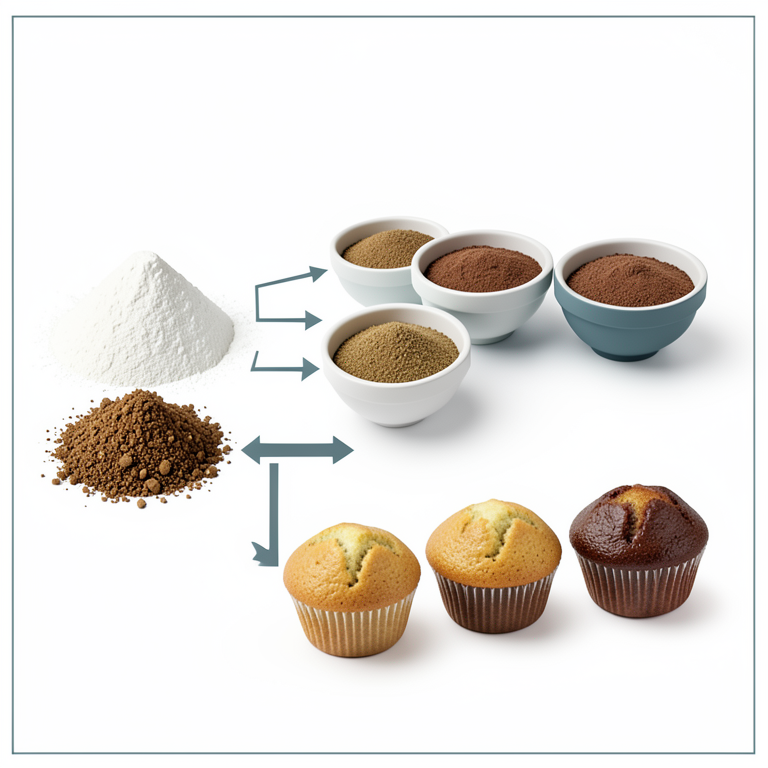
Experimental Substitution Flow
AI-generated conceptual illustration (walnut okara powder, refined wheat flour, and baked muffins). It explains the idea and does not show study data.
View source evidence ↗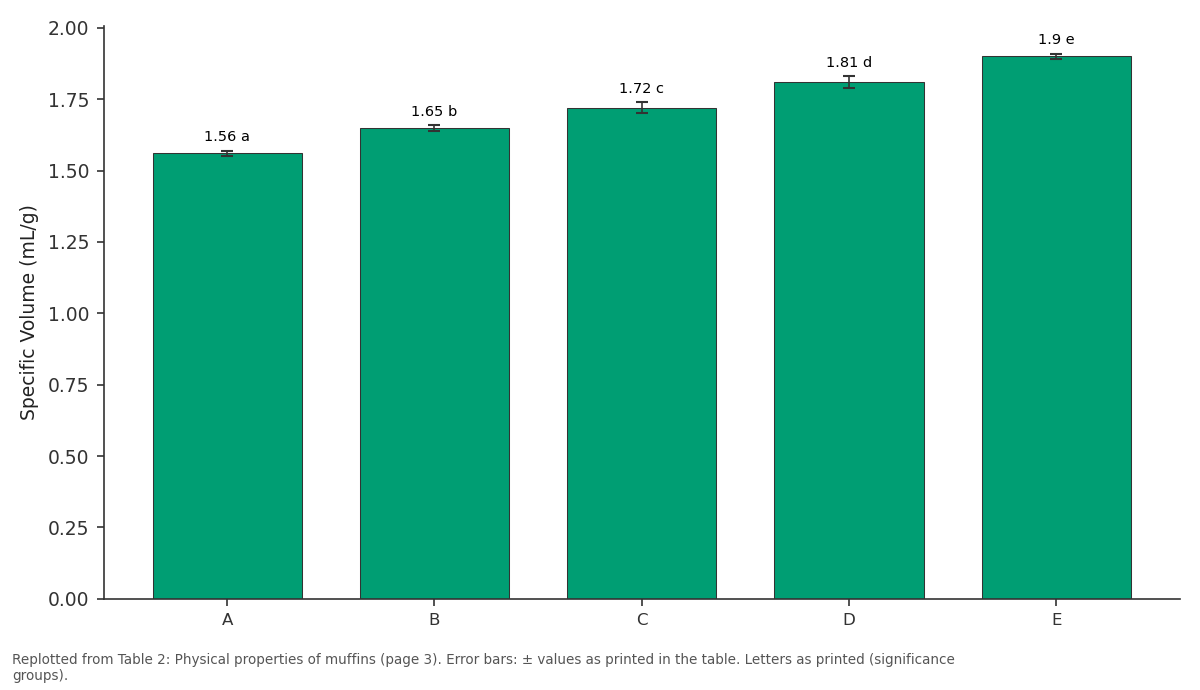
Specific Volume: A vs B vs C vs D vs E
Replotted from Table 2 (page 3) of the original paper. Every bar is the paper's own table value.
View source evidence ↗Figures & tables
From the original paper Table 1
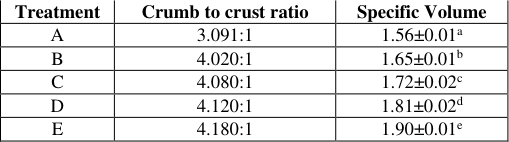 Table 2
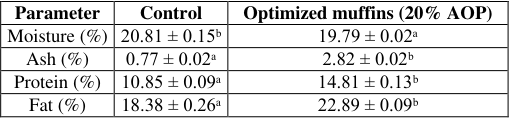 Table 3
 Table 4
 Table 5
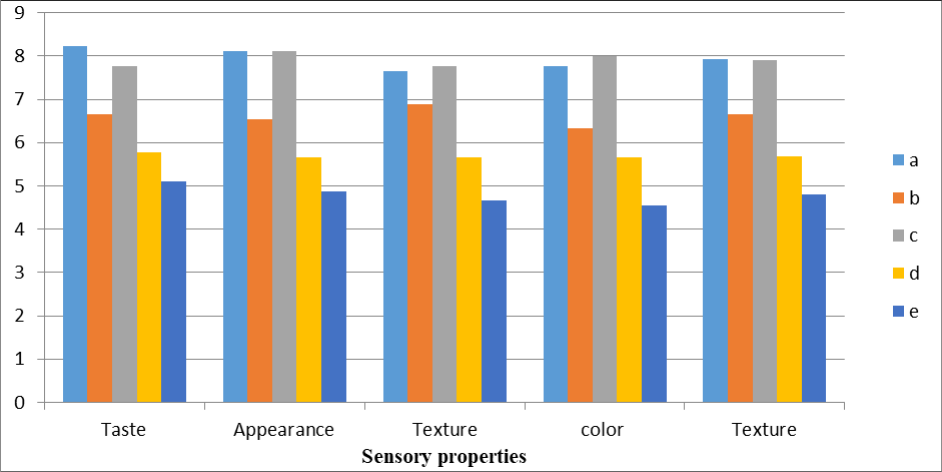 Figure 1
Introduction
Bakery products are among the most popular ready-to-eat foods due to their convenience, affordability and sensory appeal. Among these, muffins are widely accepted because of their soft texture, pleasant flavour and ease of consumption. However, conventional muffins made with refined wheat flour are generally rich in carbohydrates and fat but comparatively low in dietary fibre, protein, and micronutrients [1] . Therefore, increased consumer awareness of healthy diets has encouraged the development of functional bakery products by incorporating nutrient-rich ingredients [2,3]. Walnut (Prunus dulcis) is recognized as an excellent source of high-quality protein, dietary fibre, unsaturated fatty acids, vitamin E and essential minerals, making it an important functional food ingredient [4] . The growing demand for plant-based beverages has substantially increased walnut milk production, generating walnut okara, an insoluble by-product left after milk extraction. Although walnut okara is rich in protein, fibre and lipids, it is often discarded or utilized as low-value animal feed, creating environmental concerns [5]. The utilization of food processing by-products as functional ingredients has gained considerable attention as a sustainable strategy for reducing food waste and producing valueadded foods [6] . Okara has been reported to improve the nutritional and functional quality of bakery products due to its high dietary fibre and protein content. Recent studies have demonstrated that incorporating okara and walnut flour into bakery products produces products with acceptable sensory properties, highlighting their potential as functional ingredients in baked foods [7]. Soy okara has been successfully incorporated into cookies, bread and muffins; however, information regarding the application of walnut okara in muffin formulations remains limited. Considering its favourable nutritional composition and functional properties, walnut okara offers considerable potential as a sustainable ingredient for the development of protein-enriched bakery products while promoting the valorization of walnut processing by-products.
Therefore, the present study aimed to develop muffins fortified with walnut okara powder by partially replacing refined wheat flour at different substitution levels and to evaluate their physicochemical, functional, textural, and sensory characteristics to determine the optimum level of incorporation.
Materials and Methods
Materials and Methods
Raw materials
Walnuts, refined wheat flour, sugar, butter, eggs, baking powder, vanilla essence and other ingredients required for muffin preparation were procured from the local market of Hisar, Haryana, India. All chemicals and reagents used were of analytical grade.
Preparation of walnut okara powder
Walnuts were soaked overnight, manually peeled and blended with water (1:3, w/v). The slurry was filtered through muslin cloth to separate walnut milk from walnut okara. The obtained okara was dried in a hot-air oven at 60 ± 2 °C until constant weight, ground into fine powder and sieved through a 60-mesh sieve before storage in airtight containers [14].
Preparation of composite flour and muffins
Composite flour was prepared by replacing refined wheat flour with walnut okara powder at 0% (A), 10% (B), 20% (C), 30% (D), and 40% (E) levels. Muffins were prepared using the conventional creaming method as described by [8] with slight modifications. Butter and sugar were creamed until light and fluffy, then eggs and vanilla were added. Composite flour mixed with baking powder was gradually incorporated into the batter. The batter was poured into muffin molds and baked at 180 ± 5 °C for 20-25 min. The baked muffins were cooled to room temperature and packed in polypropylene pouches for further analysis.
Functional properties of composite flour
Moisture content, ash content, bulk density, water absorption capacity (WAC) and oil absorption capacity (OAC) of composite flour were determined according to standard AOAC methods [9]. Functional properties were evaluated following the procedures described by [10].
Physical properties of muffins
The specific volume and crumb-to-crust ratio of muffins were determined using standard methods. Specific volume was measured by the rapeseed displacement method described by [11].
Proximate composition
Moisture, ash, crude protein, crude fat, crude fibre and carbohydrate contents of muffins were determined according to the standard methods of the [9]. Carbohydrate content was calculated by difference, while energy value was estimated using Atwater conversion factors.
Texture profile analysis
Texture profile analysis (TPA) was carried out using a texture analyzer to determine hardness, cohesiveness, springiness, chewiness, gumminess and resilience according to the procedure described by [12].
Sensory evaluation
Sensory evaluation was conducted using a semi-trained panel comprising 30 members. Samples were evaluated for colour, appearance, flavour, taste, texture and overall acceptability using a 9-point hedonic scale as described by [13].
Statistical Analysis
All experiments were performed in triplicate. Data were expressed as mean ± standard deviation and analyzed by one-way analysis of variance (ANOVA). Significant differences among treatment means were determined using Duncan's Multiple Range Test (DMRT) at p < 0.05 in SPSS.
Results and Discussion
Results and Discussion
Functional properties of composite flour
The functional properties of composite flour are presented in Table 1. Incorporation of walnut okara powder significantly (p < 0.05) affected all functional properties of the composite flour. Moisture content and bulk density decreased with increasing levels of walnut okara, whereas ash content, water absorption capacity (WAC) and oil absorption capacity (OAC) increased. The reduction in moisture content may improve storage stability, while the higher ash content reflects the mineral-rich nature of walnut okara. Increased WAC and OAC can be attributed to the high dietary fibre and protein contents of walnut okara, which enhance water and oil binding capacity and improve batter functionality. Similar trends have been reported for okara-enriched bakery products and other fibre-rich composite flours [7,14]. These findings indicate that walnut okara can effectively improve the functional properties of composite flour and its suitability for bakery applications.
| Treatments | Moisture content (%) | Ash content (%) | Bulk density(g/ml) | WAC(g/g) | OAC (g/g) |
|---|---|---|---|---|---|
| A | 13.04±0.08e | 0.81±0.02a | 0.53±0.01e | 0.56±0.01a | 0.58±0.01a |
| B | 12.66±0.07d | 0.98±0.02b | 0.51±0.01d | 0.57±0.00b | 0.61±0.00b |
| C | 10.62±0.03c | 1.18±0.01c | 0.46±0.01c | 0.59±0.02c | 0.63±0.00c |
| D | 8.61±0.03b | 1.40±0.01d | 0.43±0.01b | 0.63±0.01d | 0.65±0.01d |
| E | 6.44±0.06a | 1.58±0.02e | 0.41±0.01a | 0.66±0.01e | 0.67±0.01e |
Table text extracted from the original PDF; superscript letters are shown inline. The original table image is below.
View original table image
Physical properties of muffins
The effect of walnut okara powder incorporation on the physical properties of muffins is presented in Table 2. The crumb-to-crust ratio and specific volume increased progressively with increasing levels of walnut okara powder. The crumb-to-crust ratio increased from 3.09:1 in the control to 4.18:1 in muffins containing 40% walnut okara, indicating improved crumb development. Likewise, the specific volume increased significantly (p < 0.05) from 1.56 to 1.90 mL/g as substitution levels increased. The improvement in these parameters may be attributed to the higher protein and dietary fiber contents of walnut okara, which enhance batter viscosity and gas retention during baking, resulting in improved expansion and crumb formation. Similar improvements in specific volume and baking quality following okara incorporation have been reported by [14,15] . Comparable observations for bakery products enriched with functional ingredients were also reported by [8] and [16] . These findings demonstrate that walnut okara positively influences muffin structure and improves physical quality without adversely affecting product characteristics.
| Treatment | Crumb to crust ratio | Specific Volume |
|---|---|---|
| A | 3.091:1 | 1.56±0.01a |
| B | 4.020:1 | 1.65±0.01b |
| C | 4.080:1 | 1.72±0.02c |
| D | 4.120:1 | 1.81±0.02d |
| E | 4.180:1 | 1.90±0.01e |
Table text extracted from the original PDF; superscript letters are shown inline. The original table image is below.
View original table image
Proximate composition of optimized muffins
The proximate composition of the optimized muffins is presented in Table 1. Incorporation of 20% walnut okara significantly (p < 0.05) affected the chemical composition of the muffins. Moisture content decreased slightly, whereas ash, protein and fat contents increased significantly compared with the control. The lower moisture content may contribute to improved storage stability, while the increased ash content reflects the higher mineral content of walnut okara. The improvement in protein and fat contents is attributed to the naturally high protein and lipid composition of walnut okara, thereby enhancing the nutritional quality of the muffins. Similar increases in protein and mineral contents following okara incorporation have been reported [14]. These findings demonstrate that walnut okara can effectively improve the nutritional value of muffins without compromising product quality.
Texture profile analysis
The textural properties of muffins fortified with walnut okara powder are presented in Table 4. Incorporation of walnut okara significantly (p < 0.05) influenced the texture profile of muffins. Compared with the control, muffins containing walnut okara exhibited reduced hardness and chewiness, indicating a softer crumb structure. The decrease in hardness may be attributed to the higher water absorption capacity and dietary fibre content of walnut okara, which improved moisture retention within the muffin matrix. In contrast, cohesiveness and resilience increased with increasing levels of walnut okara, suggesting enhanced internal bonding and structural integrity of the crumb, while springiness showed only minor variation among the formulations. Similar improvements in the textural characteristics of bakery products enriched with okara and other fibre-rich ingredients have been reported by [14, 15, 16]. These findings indicate that walnut okara can be successfully incorporated into muffins to improve textural quality while maintaining desirable structural characteristics.
| Treatment | Hardness (g) | Springiness | Cohesiveness | Resilience |
|---|---|---|---|---|
| A | 305.67 ± 0.71ᵉ | 0.87 ± 0.01ᵃ | 0.56 ± 0.01ᵃ | 0.41 ± 0.01ᵃ |
| B | 280.23 ± 0.51ᵈ | 0.96 ± 0.01ᵇ | 0.83 ± 0.01ᵇ | 0.49 ± 0.01ᶜ |
| C | 255.17 ± 0.49ᶜ | 0.99 ± 0.01ᵉ | 0.85 ± 0.01ᶜ | 0.48 ± 0.01ᵇ |
| D | 196.50 ± 0.66ᵇ | 0.98 ± 0.01ᵈ | 0.88 ± 0.01ᵈ | 0.50 ± 0.01ᵈ |
| E | 119.63 ± 0.40ᵃ | 0.97 ± 0.01ᶜ | 0.92 ± 0.01ᵉ | 0.52 ± 0.01ᵉ |
Table text extracted from the original PDF; superscript letters are shown inline. The original table image is below.
View original table image
Sensory analysis
The sensory attributes of muffins prepared with different levels of almond okara powder are presented in Table 4.10. Sample C (20% almond okara) received the highest overall acceptability score (7.91), comparable to the control, with desirable colour, appearance, taste, and texture. Sensory scores declined with increasing levels of almond okara, particularly beyond 30% substitution, due to reduced taste, texture, and overall acceptability. Although fibre enrichment slightly increased hardness, muffins containing up to 30% almond okara remained acceptable. These findings indicate that 20% almond okara is the optimum substitution level, producing nutritionally enriched muffins with good sensory quality. Similar observations have been reported by [1], who found that moderate dietary fibre incorporation did not adversely affect the sensory quality of muffins.
Conclusion
The present study demonstrated that walnut okara powder can be successfully utilized as a sustainable functional ingredient for the development of protein-enriched muffins. Incorporation of walnut okara significantly improved the functional properties of composite flour by increasing ash content, water absorption capacity, and oil absorption capacity while reducing moisture content and bulk density. Fortified muffins exhibited enhanced physical characteristics, improved protein and mineral contents, and desirable textural properties. Although higher substitution levels (30-40%) adversely affected sensory quality, muffins containing 20% walnut okara powder achieved the highest overall acceptability while providing superior nutritional value. Therefore, 20% walnut okara powder can be recommended as the optimum substitution level for producing nutritionally enriched muffins with desirable physicochemical, textural, and sensory characteristics. The use of walnut okara also offers an effective approach to value-add to walnut processing by-products, contributing to waste reduction and sustainable food product development.
Figures and tables from the paper
| Parameter | Control | Optimized muffins (20% AOP) |
|---|---|---|
| Moisture (%) | 20.81 ± 0.15ᵇ | 19.79 ± 0.02ᵃ |
| Ash (%) | 0.77 ± 0.02ᵃ | 2.82 ± 0.02ᵇ |
| Protein (%) | 10.85 ± 0.09ᵃ | 14.81 ± 0.13ᵇ |
| Fat (%) | 18.38 ± 0.26ᵃ | 22.89 ± 0.09ᵇ |
Table text extracted from the original PDF; superscript letters are shown inline. The original table image is below.
View original table image
| Treatment | Taste | Appearance | Texture | Colour | Overall acceptability |
|---|---|---|---|---|---|
| A | 8.22 ± 0.22ᵉ | 8.11 ± 0.20ᵈ | 7.66 ± 0.33ᵈ | 7.77 ± 0.27ᵈ | 7.94 ± 0.25ᵉ |
| B | 6.66 ± 0.23ᶜ | 6.55 ± 0.33ᶜ | 6.88 ± 0.26ᶜ | 6.33 ± 0.23ᶜ | 6.66 ± 0.26ᶜ |
| C | 7.77 ± 0.27ᵈ | 8.11 ± 0.20ᵈ | 7.77 ± 0.27ᵉ | 8.00 ± 0.23ᵉ | 7.91 ± 0.19ᵈ |
| D | 5.77 ± 0.22ᵇ | 5.66 ± 0.23ᵇ | 5.66 ± 0.16ᵇ | 5.66 ± 0.16ᵇ | 5.68 ± 0.19ᵇ |
| E | 5.11 ± 0.26ᵃ | 4.88 ± 0.26ᵃ | 4.66 ± 0.23ᵃ | 4.55 ± 0.24ᵃ | 4.80 ± 0.24ᵃ |
Table text extracted from the original PDF; superscript letters are shown inline. The original table image is below.
View original table image
References
16 in the original paper- Heo Y, Lee H, Lee S, Kim M, Lee J. Muffins enriched with dietary fiber from kimchi by-product: Baking properties, physicochemical properties, and consumer acceptance. Food Science & Nutrition. 2019;7(5):17781785.
- Garg M, Sharma N, Sharma S, Kapoor P, Kumar A, Chunduri V, et al. Biofortified crops generated by breeding, agronomy, and transgenic approaches are improving lives of millions of people around the world. Frontiers in Nutrition. 2018;5:12.
- Sibian MS, Riar CS. Formulation and characterization of cookies prepared from the composite flour of germinated kidney bean, chickpea, and wheat. Legume Science. 2020;2:e42.
- Elli L, Branchi F, Tomba C, Villalta D, Norsa L, Ferretti F, et al. Diagnosis of gluten-related disorders: Celiac disease, wheat allergy and non-celiac gluten sensitivity. World Journal of Gastroenterology. 2015;21(23):7110-7119.
- O'Toole DK. Characteristics and use of okara, the soybean residue from soy milk production: A review. Journal of Agricultural and Food Chemistry. 1999;47(2):363-371.
- Ayala-Zavala JF, Vega-Vega V, Rosas-Domínguez C, Palafox-Carlos H, Villa-Rodriguez JA, Siddiqui MW, et al. Agro-industrial potential of exotic fruit byproducts as a source of food additives. Food Research International. 2011;44(7):1866-1874.
- Ismail MA, Bahrin SN, Yunos MA. Sensory properties of gluten-free cookies produced from okara and walnut flour. International Journal of Technical Vocational and Engineering Technology. 2024;5(1):166-172.
- Baixauli R, Salvador A, Fiszman SM. Muffins with resistant starch: Baking performance in relation to the rheological properties of the batter. Journal of Cereal Science. 2008;47(3):502-509.
- AOAC International. Official Methods of Analysis. 21st ed. Rockville (MD): AOAC International; 2019.
- Suresh Chandra, Singh S, Kumari D. Evaluation of functional properties of composite flours and sensorial attributes of composite flour biscuits. Journal of Food Science and Technology. 2015;52(6):3681-3688.
- AACC International. Approved Methods of Analysis. 10th ed. St. Paul (MN): American Association of Cereal Chemists; 2000.
- Bourne MC. Food Texture and Viscosity: Concept and Measurement. 2nd ed. San Diego (CA): Academic Press; 2002.
- Peryam DR, Pilgrim FJ. Hedonic scale method of measuring food preferences. Food Technology. 1957;11:9-14.
- Ostermann-Porcel MV, Quiroga-Panelo N, Rinaldoni AN, Campderrós ME. Incorporation of okara into gluten-free cookies with high quality and nutritional value. Journal of Food Quality. 2017;2017:4071585.
- Sethi S, Singh J, Kaur A, Kaur G. Phytonutrient content, antioxidant potential and acceptability of muffins functionalized with soy and citrus industry waste. Journal of Food Processing and Preservation. 2022;46(7):e16606.
- Marchetti L, Califano AN, Andrés SC. Partial replacement of wheat flour by pecan nut expeller meal in bakery products: Effect on muffin quality. LWT. 2018;95:85-91.