
Research article · 2026 · Full text
International Journal of Biology SciencesFood fortification of frozen yoghurt with biopeptide loaded fish gelatin nanoparticles and its effect on the antioxidant activity of frozen yogurt during refrigeration and storage
Volume 8(6) · Pages 197–201 · DOI: 10.33545/26649926.2026.v8.i6c.886 ↗
Research areasProteins in Food SystemsMicroencapsulation and Drying ProcessesProtein Hydrolysis and Bioactive Peptides
Abstract
Author-writtenFish gelatin nanoparticles have proven to be extremely versatile in its application in the food industry as an emulsifier, foaming agent, colloids stabilizer, fining agent, biodegradable packaging material and micro-encapsulating agent. Antioxidant biopeptides encapsulated in gelatin can be successfully incorporated in various food systems with specific attributes due to the nanoparticles digestibility and permeability for better uptake into the blood stream. Such a food delivery system can provide many health benefits to the consumers especially as antioxidants. The purpose of this study was to prepare a simple, safe and reproducible novel food delivery nanoparticle system encapsulating a desirable antioxidant biopeptide. Upon addition of gelatin nanoparticles (GNPs) loaded with antioxidant biopeptide to frozen yoghurt, negligible difference was measured for pH, hardness and cohesiveness; however syneresis and adhesiveness saw a slight variation. A comparison of the antioxidant activity, measured by DPPH and FRAP assay, of yoghurt fortified with the antioxidant biopeptide and plain frozen yoghurt showed an increase with increasing concentration of GNPs added and would deliver the desired food nanoparticle delivery system.
Summary
Source-checkedPlain-language reading of the full paper, prepared with AI and checked against the text. Each point links to the authors' own words.
Why it matters
- The food industry is increasingly using functional additives to improve the preservation, taste, color, and overall functional properties of food products. View evidence ↗
- Adding antioxidant bioactive compounds to food is challenging because they are sensitive to environmental factors like heat, light, water, and oxygen. View evidence ↗
The question
- The study aimed to evaluate how adding fish gelatin nanoparticles (GNPs) loaded with antioxidant biopeptides affects the chemical and physical properties of yoghurt. View evidence ↗
What they did
- The researchers used fish gelatin nanoparticles with a size of 228 nm and an encapsulation efficiency of 76%. View evidence ↗
- The experiment compared three yoghurt groups: a control with no gelatin, one with 0.5 g of GNPs, and one with 1.0 g of GNPs. View evidence ↗
- Textural changes in the yoghurt were measured using a 2mm probe on 150ml samples from each group. View evidence ↗
- Chemical properties were assessed by measuring the pH of 50ml samples immediately and then on days 1, 3, and 5. View evidence ↗
What they found
- The pH showed negligible changes (from 4.39 to 4.345), but syneresis increased when 1g of GNP was added. View evidence ↗
What it means
- The authors conclude that gelatin nanoparticles loaded with antioxidant biopeptides can successfully improve the antioxidant properties of yoghurt and provide sustained antioxidants during storage. View evidence ↗
- The authors state that more tests with more samples and different GNP amounts are needed to fully understand the impact on the food packing industry. View evidence ↗
Visual summary
3 visualsIllustrations explain the paper; charts are replotted from the paper's own table values.
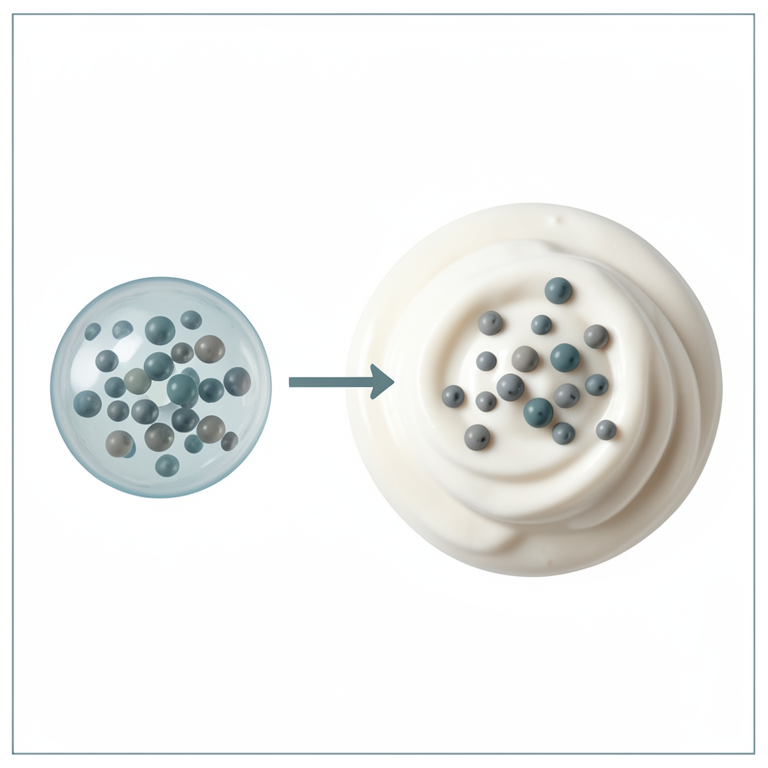
Biopeptide Encapsulation Concept
AI-generated conceptual illustration (fish gelatin nanoparticles and frozen yogurt). It explains the idea and does not show study data.
View source evidence ↗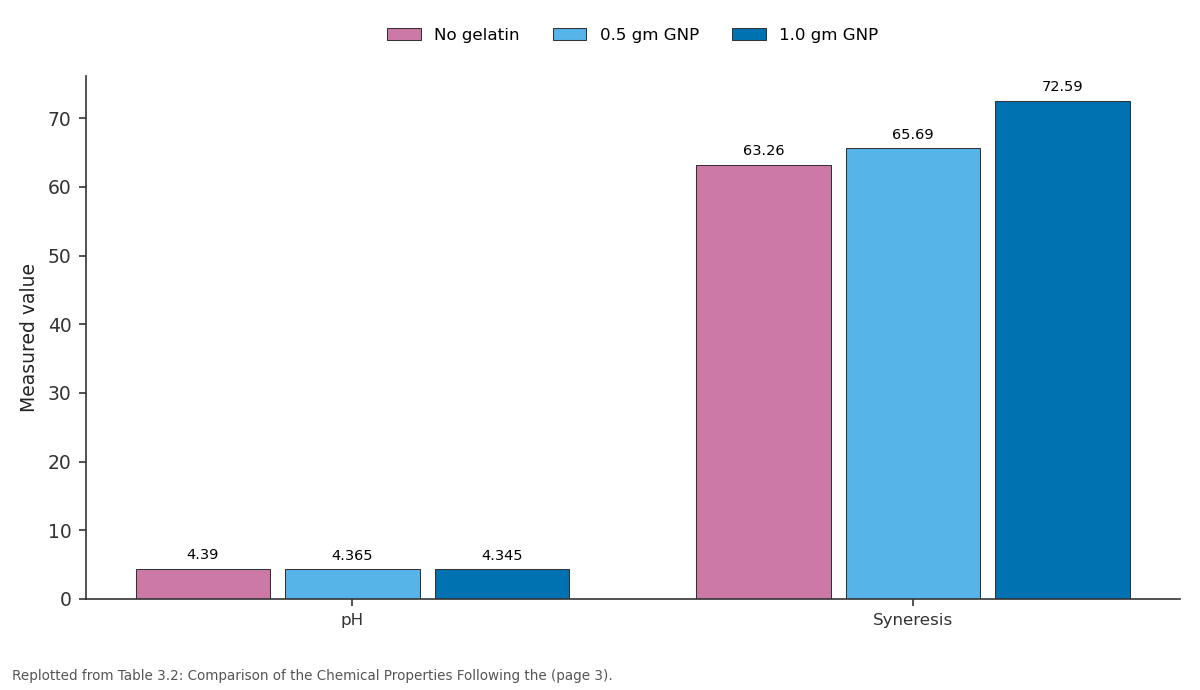
No gelatin and 0.5 gm GNP and more: pH vs Syneresis
Replotted from Table 3 (page 3) of the original paper. Every bar is the paper's own table value.
View source evidence ↗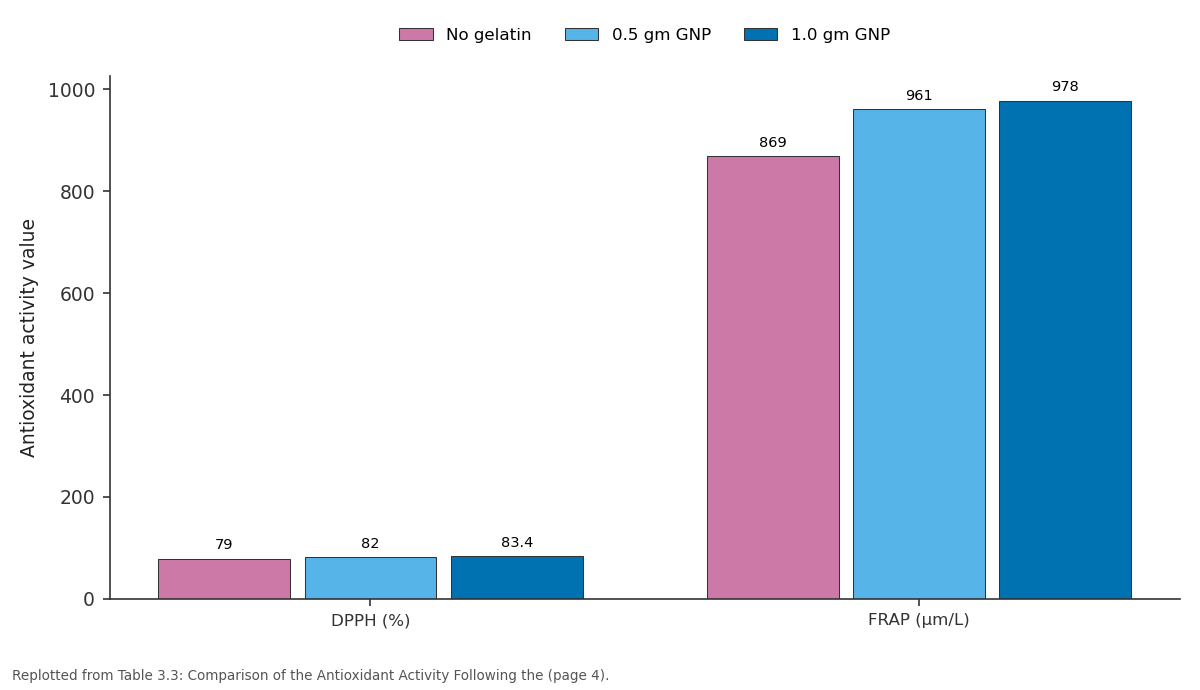
No gelatin and 0.5 gm GNP and more: DPPH (%) vs FRAP (µm/L)
Replotted from Table 3 (page 4) of the original paper. Every bar is the paper's own table value.
View source evidence ↗Figures & tables
From the original paper Table 2
 Table 3
 Table 3
 Table 3
Introduction
The contemporary food industry is witnessing a surge in the incorporation of various functional food additives or ingredients to enhance the functional properties of food items in terms of their color, taste, odor, preservation or usage. Many of these additives fall into the category of antioxidants or probiotics, due to their applied benefits to meet the current nutritional requirements. The most studied upon parameters for the successful inclusion of such bioactives into the daily food items relies upon their strength, stability and bioavailability upon ingestion into the human gastrointestinal tract (Dordevic et al., 2014) [10] . Antioxidant bioactive compounds such as vitamins, probiotics, minerals, polyphenols, omega-3-fatty acids, and phytosterols, are potentially the most limited additions to food items due to their sensitivity to oxygen, light, heat, and water. Champagne (2007) [7] studied these various parameters to understand the shelf life and stability of such additives, as they might produce byproducts upon degradation such as off-flavors, off-colors, or carcinogenic compounds. On consumption, food items undergo various enzymatic chemical reactions starting from the mouth in the gastrointestinal tract. Digestion and enzymatic hydrolysis can potentially change the bioactivity of the food additive, thereby ensuring its stability and shelf life as the most critical step in food fortification process. Moreover, the main purpose of such additives is targeted delivery and optimum functionality, hence to stabilize such compounds is of utmost importance. Besides, targeted delivery and stability in the gastrointestinal tract, a major undertaking for the addition of bioactive compounds in the current food items is their limited uptake in the body cells and bioavailability. Hence, a dire need is encountered for administration of these compounds to enrich the food products ensuring optimal qualitative properties whilst maintaining minimal impact on the organic structure. To overcome such issues, encapsulation of the said desired products into various matrixes can enable a wide application of proactive compounds wrapped in a protective covering (Thies, 2005). Encapsulation of bioactive compounds can improve upon the possibility of modifying the physical and rheological properties of food materials as well as overcome certain incompatibility with respect to dissolution amongst various ingredients, e.g., bioactive compounds and the food matrices. Fish gelatin has shown promising results in nanoencapsulation of various drugs and peptide molecules due to their targeted delivery, delayed release and minimum side effects (Akbar et al., 2019) [3] . Antioxidant biopeptides derived from the byproducts of oil industry into gelatin nanoparticles could create a new dimension in the food nutraceutical and pharmaceutical industry. Therefore, streaming into the field of encapsulation techniques for food enhancement and fortification during processing and preservation has gained much impact (Nutraceuticals world, 2010). Currently, much part of food ingredient encapsulation goes into nanometric food delivery systems, packaging materials and health promoting products as well as medicinal supplements. The industry continues to see a surge due to its safety in consumption. The main aim of this research was to understand and assess the effect of addition of fish gelatin nanoparticles encapsulating antioxidant biopeptides on the physical and chemical properties of yoghurt upon addition of GNPs.
Materials and Methodology 2.1 Antioxidant Biopeptide Fraction Obtained From
Defatted Sunflower Mean: An antioxidant biopeptide was obtained from previous research (Akbar et al., 2019) [3] . The defatted sunflower meal was subjected to sequential enzymatic hydrolysis by an exo and endo peptidase i.e. alcalase and flavorzyme respectively to release the protein hydrolysates fraction of less than 60 kDa in weight, which was assessed for its antioxidant activity activity as per a method developed by Jamal et al. (2016) [17] by DPPH set as 89% and a FRAP assay of 968 µm/L.
Preparation of Gelatin Nanoparticles Encapsulating Antioxidant Biopeptide
GNPs encapsulating sunflower derived antioxidant biopeptide were prepared by a two step desolvation method suggested by Coester et al. (2010) with slight modifications for better encapsulation efficiency and particle size (Akbar et al., 2019) [3] . Gelatin nanoparticles of the size range of 228 nm showing an encapsulation efficiency of 76 % were used for the yoghurt fortification study.
Preparation of Fresh Made Yogurt and Fortification with Antioxidant Biopeptide
Loaded Gelatin Nanoparticles 750ml of yogurt was prepared according to the ingredients listed in the table below. Store bought yogurt was used as a starter culture. The mixture of skim milk powder, sucrose and distilled water was heated until 90 o C and let cooled until 50 o C during which yogurt starter culture was added. 250ml of yogurt was used for three different groups, no gelatin, 0.5 g GNPs and 1.0 g GNPs. The three yogurt samples were incubated at 45-50 o C overnight and were then placed in a 4 o C fridge for it to set.
Measurement of Textural Properties.
150ml of yogurt from each group was placed inside a 150ml beaker and the textural measurements were obtained by using a 2mm probe to detect the change in yoghurt consistency due to GNPs (Alfaro et al., 2015) [4] .
Measurement of Chemical Properties.
50ml of yogurt from each group was used to measure the pH of the yogurts, pH of the yogurt was measured immediately after taking it out from the fridge and pH of yogurt was measured at Day 1, 3 and 5 to observe the change in pH over time (Alfaro et al., 2015) [4] .
Measurement of Syneresis.
50ml of yogurt from each group was placed in a filter funnel on a Grade 1 Filter paper and left for 20 minutes at room temperature. The amount of whey casein that was collected in the beaker was weighed (Alfaro et al., 2015) [4] . Syneresis was measured by measuring the amount of whey collected from yogurt as shown in Equation 3.4.
where, V1 = volume of whey collected, and V2 = volume of yogurt sample.
Antioxidant Activity of Biopeptide Loaded Gelatin
Nanoparticles in Fortified Yogurt: The increase in antioxidant activity of yoghurt fortified with biopeptide loaded gelatin nanoparticles was determined by checking the scavenging activity of the yoghurt sample and the fortified yoghurt sample with GNPs by DPPH test according to Aluko & Monu (2003) [5] with slight modifications. The FRAP of samples was measured according to a previously reported method (Zhang, Wang, & Xu, 2008), which was modified as per Girgih et al (2015) [12] .
Results and Discussion
To assess the viability of the antioxidant loaded gelatin nanoparticles when added to food products, their food application was tested by adding them to a yoghurt sample. Yoghurt was used because the previous studies had utilized yoghurt, and yoghurt was a readily available, cheap material that could be made easily. Yoghurt is also relatively tasteless compared to other possible food products, thereby allowing a more robust comparison to be carried out regarding the full effects of the addition of the GNP. The production of various dairy items depends on the usage of starter cultures which need to be proteolytic such as to produce fermented goods, such starter and non-starter bacteria can therefore be used to generate bioactive peptides. Lactic acid bacteria (LAB), e.g. Lactococcuslactis, Lactobacillus helveticus and Lb. delbrueckii ssp. Bulgaricus have been used to make good started cultures for use in the yoghurt industry. This proteolytic system comprises of a cell wall-bound proteinase and a number of distinct intracellular peptidases, including endopeptidases, aminopeptidases, tripeptidases and dipeptidases (Christensen et al., 1999) [8] . The utilization of plant based bioactive compounds such as antioxidants have become the most well researched technology to incorporate into various food systems. Cam et al. (2014) studied the microencapsulation of pomegranate peel in maltodextrine as the matrix. Pomegranate is a potent source of phenoilcs namely, punicalagins and its microencapsulation in ice cream has remarkably improved the functional properties, antioxoidant and aglucosidase inhibitory action, used at a quantity of 0.5 and 1.0 % (w/w) on dry matter basis). Antioxidant activity of phenolic compounds is highly temperature sensitive, hence to maintain the phenolic activity while retaining the quality of the food additive is a major challenge in food nanoencapsulation. Moreover, the targeted delivery at the site of action and the limited uptake upon digestion of these compounds is an additional issue. Hence, the major limitation of food fortification is overcoming all these issues while maintaining the desired qualities and after effects of beneficial bioactive compounds.
Textural and Chemical Properties of the Fortified Yoghurt with Antioxidant Loaded Gelatin Nanoparticles
In our study, the physical and chemical properties of yoghurt fortified with encapsulated gelatin nanoparticles were assessed and the results of the physical properties are displayed in Table 3.1; hardness has undergone a negligible difference upon the addition of GNPs, in fact reducing marginally. The cohesiveness also saw a negligible difference with varying amounts of GNP. The adhesiveness however saw a marginal increase (approximately 20%) upon the addition of GNP. This increase is not excessive, however must be noted as it may affect the packing process. The chemical properties of yoghurt following the addition of GNPs were also investigated and are shown in Table 3.2. The pH underwent a negligible change; however the syneresis was seen to increase when 1g of GNP was added. More whey casein was seen to be collected in the test. Although the increase was not excessive, it is still an effect that needs to be considered further. This meant more tests with more samples and differing amounts of GNP must be carried out to understand the impact the addition of GNP to yoghurt may have to the food packing industry. The present study was aimed to establish a successful food delivery system and achieve a desirable encapsulated nanoparticle size with an antioxidant biopeptide to improve upon the quality of yoghurt while maintaining its own rheological properties. Goh et al. (2008) [14] studied the first report on the survival of bifodobacteria in microencapsulated speheres with a diameter of less than 100 mm in simulated gastric juice (SGJ) and milk. He concluded that the survival in the gastric juices of microencapsulated bifidobacteria did not improve over that of free cells. He also reported a nonconsistent effect of the microencapsulated bifidobacteria at pH 3. [14] also studied the sensory characteristics of microencapsulated bifdobacteria, and concluded that the products encapsulated in bifdobacteria revealed similar results for both microencapsulated as well as free cells regardless of inoculation levels. He concluded that microencapsulation in alginate had a positive effect on the metabolism and the stability of bifdobacteria. Adhikari et al. (2000) performed a sensory evaluation test on yoghurt containing entrapped bifdobacteria and reported a certain preference of consumers towards a more acidic yoghurt containing free cells over the yoghurt containing entrapped bifdobacteria with normal yoghurt pH. Sheu & Marshall (1993) [21] encapsulated probiotic lactobacilli in alginate microspheres (25-62 mm) in frozen milk mixes and noticed similar improvements in survival. Shah & Ravula (2000) [20] reported similar behaviour in fermented frozen dairy desserts. In their research, better protection for the lactobacilli may be achieved by coating the alginate microspheres with poly-L-lysine. However in our study, no major change was noticed for the physical or chemical properties of the GNP loaded yoghurt. The same results were reported by Alfaro et al. (2015) [4] , mentioning that the frozen yoghurt fortified with nanoemulsion of purple rice bran oil mix did not show any considerable difference in its viscosity in comparison with plain yoghurt. He prepared yoghurt containing droplets (in the size range of 150-300 nm) of nano-emulsion containing purple rice bran oil (NPBRO) which showed similar viscosity to plain yoghurt mix. The viscosity of the frozen yoghurt mixture added with any supplement depends on the flocculation and fat crystallization frozen yogurt mix (Goh, Ye, & Dale, 2006; Icier & Tavman, 2006) [13,16] . The insignificance to viscosity of the frozen yoghurt mix showed that the NPBRO blended easily with the fat in the frozen yogurt mix, while as fat crystallization or flocculation did not interfere with the viscous properties of the frozen yogurt mix. However, some increase in viscosity in added frozen mixes could be attributed to increased protein protein interactions and protein bonds from the added solution of nanoparticles which can increase the elasticity of the yoghurt gel matrix. Similarly, Marafon et al. (2011) [18] reported an increase in viscosity in yogurt upon addition of a nanoparticle emulsion. With regards to the texture, according to Hartel (2001) [15] , the composition of the yoghurt in terms of protein and sugar are the determinants of the texture and the effectiveness of the freezing proces of frozen desserts. Consequentially, no other encapsulation studies determined or compared the sensory characteristics of the food products. Hence, the results above and their correlation with previous studies seem to suggest that the addition of GNP to the yoghurt does not impact the properties of the yoghurt significantly, therefore assuaging fears food manufacturers may have.
| Yoghurt sample | No gelatin | 0.5 gm GNP | 1.0 gm GNP |
|---|---|---|---|
| DPPH (%) | 79 | 82 | 83.4 |
| FRAP (µm/L) | 869 | 961 | 978 |
Table text extracted from the original PDF; superscript letters are shown inline. The original table image is below.
View original table image
| Yoghurt Sample | No gelatin | 0.5 gm GNP | 1.0 gm GNP |
|---|---|---|---|
| pH | 4.39 | 4.365 | 4.345 |
| Syneresis | 63.26 | 65.69 | 72.59 |
Table text extracted from the original PDF; superscript letters are shown inline. The original table image is below.
View original table image
| Yoghurt sample | No gelatin | 0.5 gm GNP | 1.0 gm GNP |
|---|---|---|---|
| Hardness | 45.77 | 43.3667 | 44.025 |
| Cohesiveness | 1.0224 | 1.0047 | 1.01675 |
| Adhesiveness | 4.3333 | 5.6667 | 5.3 |
Table text extracted from the original PDF; superscript letters are shown inline. The original table image is below.
View original table image
Goh et al. (2008)
Goh et al. (2008)
Antioxidant Activity of Biopeptide Loaded Gelatin Nanoparticles in Fortified Yogurt
Various studies have been conducted to assess the antioxidative-antichelating potential of yoghurt either as [22] assessed total antioxidant activity found in four yoghurt samples at the beginning of the storage, ranging from 74.14% to 85.42% as determined by bleaching of β-carotene in this assay. The antioxidant activity for the yoghurt sample in the present study was determined by the DPPH scavenging capacity assay and was set at 79 % and FRAP of 869 µm/L which is in correlation with the previous values reported for frozen yoghurt. The yoghurt sample fortified with various concentrations of GNPs (0.5 and 1.0 g) showed a higher antioxidant activity as determined by DPPH assay at 82 % and 83.4 % and FRAP at 961 µm/L and 978 µm/L compared to yoghurt with no GNP addition. The results were also stated by El-said et al. (2015) [11] who compared the antioxidant activity of plain yoghurt fortified with pomegranate peel extracts (PEP) and concluded that increasing the percentage of the added PPE increased significantly the antioxidant activities of stirred yoghurt up to 25% as assessed by DPPH assay and RAS.
Unal & Akilin (2012) studied the effect of fortification of yoghurt with sodium calcium caseinate (SCC) and whey protein concentrate (WPC) on the antioxidant activity. The highest DPPH scavenging activity was set for 4 % WPC whilest the other yoghurt samples containing SCC showed no variations. In the Fe 2+ chelating activity method, as determined by FRAP assay, a significant improvement was noticed for all yoghurt types depending on the incubation time ranging between 0 to 60 minutes at room temperature. Yoghurts supplemented with WPC and 4% SMP showed higher Fe 2+ chelating activity than those fortified with SCC for all incubation times. Shori (2013) [23] showed that the addition of soybean in both cow and camel milk yogurts enhanced the antioxidant activity during and the highest antioxidant activity was shown on day 0 for soybean-cow milk yogurt (61.76 ± 2.2%) and day 7 for soybean-camel milk yogurt (53.16 ± 0.1%) respectively. Muniandy et al.
(2016) [19] studied the antioxidant activity of three types of tea (green, white, black) additions to yoghurt and green tea extract showed the highest antioxidant activity followed by white tea extract and black tea extracts. In conclusion, antioxidant biopeptide loaded gelatin nanoparticles can be successfully employed to improve the antioxidant properties of yogurt and provide sustained antioxidants during storage.
A comparative study on the physical, chemical and antioxidant properties of yoghurt was done to study the effect of food fortification on yoghurt on addition of gelatin nanoparticles loaded with antioxidant biopeptide. The physical analysis of the two yoghurt samples revealed that no significant change was observed for the hardness or cohesiveness on addition of GNPs; however adhesiveness saw a slight variation. Chemical analysis of yoghurt with and without GNPs saw negligible change in terms of pH but a difference in syneresis for the fortified yoghurt with GNPs. In order to assess the effect on antioxidant activity of the yoghurt upon administration of GNPs, the DPPH assay saw a shift from 79 to 83.4 % and FRAP improved upon by 869 to 978 µm/L, thus concluding that food fortification with GNPs could potentially perk up the antioxidant activity to complement consumer requirements.
Conclusion
A comparative study on the physical, chemical and antioxidant properties of yoghurt was done to study the effect of food fortification on yoghurt on addition of gelatin nanoparticles loaded with antioxidant biopeptide. The physical analysis of the two yoghurt samples revealed that no significant change was observed for the hardness or cohesiveness on addition of GNPs; however adhesiveness saw a slight variation. Chemical analysis of yoghurt with and without GNPs saw negligible change in terms of pH but a difference in syneresis for the fortified yoghurt with GNPs. In order to assess the effect on antioxidant activity of the yoghurt upon administration of GNPs, the DPPH assay saw a shift from 79 to 83.4 % and FRAP improved upon by 869 to 978 µm/L, thus concluding that food fortification with GNPs could potentially perk up the antioxidant activity to complement consumer requirements.
Acknowledgement
AcknowledgmentsThe research work was financially sponsored by the International Institute For Halal Research & Training (INHART) of the International Islamic University Malaysia (IIUM). The laboratory work was done in the Kulliyah of Biotechnology-Biochemical Engineering.
Figures and tables from the paper
| Ingredients | Amount |
|---|---|
| Skim Milk Powder | 105g |
| Sucrose | 28g |
| Yogurt | 14g |
Table text extracted from the original PDF; superscript letters are shown inline. The original table image is below.
View original table image
References
26 in the original paper- Adhikari K, Mustapha A, Grün I, Lakdas F. Viability of microencapsulated bifidobacteria in set yogurt during refrigerated storage. J Dairy Sci. 2000;83:1946-1951.
- Akbar I, Jaswir I, Jamal P, Octavianti F. Fish gelatin nanoparticles and their food applications: a review. Int Food Res J. 2017;24(Suppl):S255-S264.
- Akbar I, Jaswir I, Jamal P. Optimization of the production of fish gelatin nanoparticles as a carrier for a sunflower derived biopeptide. Int Food Res J. 2019.
- Alfaro L, Hayes D, Boeneke C, Xu Z, Bankston D, Bechtel PJ, Sathivel S. Physical properties of a frozen yogurt fortified with a nano-emulsion containing purple rice bran oil. Food Sci Technol. 2015;62(2):1184-1191.
- Aluko RE, Monu E. Functional and bioactive properties of quinoa seed protein hydrolysates. J Food Sci. 2003;68:1254-1258.
- Cam M, Içyer NC, Erdoğan F. Pomegranate peel phenolics: microencapsulation, storage stability and International Journal of Biology Sciences https://www.biologyjournal.net potential ingredient for functional food development. Food Sci Technol. 2014;55(1):117-123.
- Champagne CP, Fustier P. Microencapsulation for the improved delivery of bioactive compounds into foods. Curr Opin Biotechnol. 2007;18:184-190.
- Christensen JE, Dudley EG, Pederson JA, Steele JL. Peptidases and amino acid catabolism in lactic acid bacteria. Antonie Van Leeuwenhoek. 1999;76:217-246.
- Coester C, Langer K, Von H, Briesen J, Kreuter J. Gelatin nanoparticles by two step desolvation-a new preparation method, surface modification and cell uptake. J Microencapsul. 2000;17:187-193.
- Dordevic V, Balanc B, Belščak-Cvitanovic A, Levic S, Trifkovic K, Kaluševic A, et al. Trends in encapsulation technologies for delivery of food bioactive compounds. Food Eng Rev. 2014;6:39-59.
- El-Said MM, Haggag HF, Fakhr El-Din HF, Gad AS, Farahat AM. Antioxidant activities and physical properties of stirred yoghurt fortified with pomegranate peel extracts. Ann Agric Sci. 2014;59(2):207-212.
- Girgih AT, Chao D, Lin L, He R, Jung S, Aluko R. Enzymatic protein hydrolysates from high pressurepretreated isolated pea proteins have better antioxidant properties than similar hydrolysates produced from heat pretreatment. Food Chem. 2015;188:510-516.
- Goh KK, Ye A, Dale N. Characterisation of ice cream containing flaxseed oil. Int J Food Sci Technol. 2006;41(8):946-953.
- Goh KK, Nair RS, Matia-Merino L. Exploiting the functionality of lactic acid bacteria in ice cream. Food Biophys. 2008;3(3):295-304.
- Hartel RW. Crystallization in foods. 1st ed. Gaithersburg (MD): Aspen Publishers; 2001.
- Icier F, Tavman S. Ohmic heating behavior and rheological properties of ice cream mixes. Int J Food Prop. 2006;9(4):679-689.
- Jamal P, Akbar I, Zuhainis Y, Jaswir I. Process development for maximum lycopene production from selected fruit waste and its antioxidant and antiradical activity. J Food Process Technol. 2016;7:4.
- Marafon AP, Sumi A, Alcantara MR, Tamime AY, Nogueira de Oliveira M. Optimization of the rheological properties of probiotic yoghurts supplemented with milk proteins. Food Sci Technol. 2011;44(2):511-519.
- Muniandy P, Shori AM, Baba AM. Influence of green, white and black tea addition on the antioxidant activity of probiotic yogurt during refrigerated storage. Food Packag Shelf Life. 2016;8:1-8.
- Shah NP, Ravula RR. Microencapsulation of probiotic bacteria and their survival in frozen fermented dairy desserts. Aust J Dairy Technol. 2000;55(3):139-144.
- Sheu TY, Marshall RT. Microentrapment of Lactobacilli in calcium alginate gels. J Food Sci. 1993;58:557-561.
- Sengul M, Erkaya T, Şengül M, Yildiz H. The effect of adding sour cherry pulp into yoghurt on the physicochemical properties, phenolic content and antioxidant activity during storage. Int J Dairy Technol. 2012;65:429-436.
- Shori AB. Antioxidant activity and viability of lactic acid bacteria in soybean-yogurt made from cow and camel milk. J Taibah Univ Sci. 2013;7(4):202-208.
- Unal G, Akalın AS. Antioxidant and angiotensinconverting enzyme inhibitory activity of yoghurt fortified with sodium calcium caseinate or whey protein concentrate. Dairy Sci Technol. 2012;92(6):627-639.
- Virtanen T, Pihlanto A, Akkanen S, Korhonen H. Development of antioxidant activity in milk whey during fermentation with lactic acid bacteria. J Appl Microbiol. 2007;102:106-115.
- Zhang SB, Wang Z, Xu SY. Antioxidant and antithrombotic activities of rapeseed peptides. J Am Oil Chem Soc. 2008;85:521-527.