
Research article · 2025 · Full text
International Journal of Horticulture and Food ScienceModeling phenolic compound distribution of flaxseed in the Sobat River Floodplain
Volume 7(10) · Pages 233–236 · DOI: 10.33545/26631067.2025.v7.i10d.725 ↗
Research areasPhytochemicals and Antioxidant ActivitiesFood and Agricultural SciencesSeed and Plant Biochemistry
Abstract
Author-writtenA ripe flaxseed holds more than 20 distinct phenolic acids and lignans, yet the spatial and quantitative distribution of these compounds across seed tissues and growing environments has not been modelled systematically. This research modelled phenolic compound distribution in eight flaxseed (Linum usitatissimum L.) genotypes cultivated in the Sobat River Floodplain during the 2023 season. Total phenolic content ranged from 8.4 to 16.7 mg gallic acid equivalents per g dry weight, with the seed coat contributing 64.2% of free phenolics and the defatted meal contributing 35.8%. Gallic acid was the most abundant individual compound in whole seeds (14.2 microgram per g), while ferulic acid dominated in defatted meal (12.4 microgram per g). Seed quality parameters, including germination rate and thousand-grain weight, correlated positively with bound phenolic fractions (r = 0.61 and 0.54, respectively). Urban gardening trials in raised beds showed that composting-amended substrates increased total phenolics by 13.8% relative to unamended controls. Firmness of the seed coat, measured by texture analyser, was positively associated with bound phenolic content (r = 0.58), supporting the idea that structural phenolics reinforce cell-wall integrity. A predictive model based on genotype, growing medium, and seed-coat firmness explained 72.3% of total phenolic variance. Supply chain simulations indicated that phenolic losses during storage and transport averaged 8.6% over 60 days at ambient conditions. These data inform both breeding targets and post-harvest handling for phenolic-rich flaxseed production.
Summary
Source-checkedPlain-language reading of the full paper, prepared with AI and checked against the text. Each point links to the authors' own words.
Why it matters
- Flaxseed is a rich source of the lignan secoisolariciresinol diglucoside (SDG), which has demonstrated anti-cancer activity in laboratory models. View evidence ↗
- Existing research often focuses on bulk phenolic values of whole seeds, neglecting how the seed's structural architecture affects the bioavailability and extractability of these compounds. View evidence ↗
- The Sobat River Floodplain is a non-conventional environment for flaxseed cultivation, characterized by heavy clay soils in a tropical lowland zone. View evidence ↗
The question
- The study aimed to model phenolic distribution across tissues and genotypes, evaluate the effect of composting-amended substrates, relate seed-coat firmness to bound phenolics, create a predictive model for total phenolics, and simulate supply chain losses over 60 days. View evidence ↗
What they did
- The researchers used a factorial design with eight genotypes and two growing media (field soil vs. compost-amended raised beds), resulting in 64 experimental units with four replications each. View evidence ↗
- Seed-coat firmness was measured using a texture analyser with a 2 mm cylindrical probe, recording the force at rupture in Newtons for 20 seeds per replicate. View evidence ↗
- To simulate the supply chain, sealed seed bags were stored at 28°C and 65% relative humidity for 60 days, with assays performed every 15 days. View evidence ↗
What they found
- Total phenolic content varied between 8.4 and 16.7 mg GAE/g dry weight, with the seed coat providing 64.2% and the defatted meal providing 35.8% of free phenolics. View evidence ↗
- Gallic acid was the most prevalent compound in whole seeds (14.2 µg/g), whereas ferulic acid was the dominant compound in defatted meal (12.4 µg/g). View evidence ↗
- Bound phenolic fractions showed a positive correlation with seed quality, specifically germination rate (r = 0.61) and thousand-grain weight (r = 0.54). View evidence ↗
- The use of composting-amended substrates in urban raised beds increased the total phenolic content of the flaxseed by 13.8% compared to unamended controls. View evidence ↗
- Seed-coat firmness (ranging from 2.8 to 5.1 N) positively correlated with bound phenolics (r = 0.58), suggesting that ester-linked ferulic acid strengthens the cell wall. View evidence ↗
- A predictive model incorporating genotype, growing medium, and seed-coat firmness was able to explain 72.3% of the variance in total phenolics. View evidence ↗
- Under ambient conditions, phenolic losses during a simulated 60-day storage and transport period averaged 8.6%. View evidence ↗
What it means
- The authors conclude that the 8.6% loss of phenolics over 60 days indicates a need for modified-atmosphere packaging in nutraceutical supply chains. View evidence ↗
- Genotypes SB-04 and SB-08 are recommended as high-phenolic donors for breeding programs aimed at functional-food markets. View evidence ↗
Visual summary
2 visualsIllustrations explain the paper; charts are replotted from the paper's own table values.
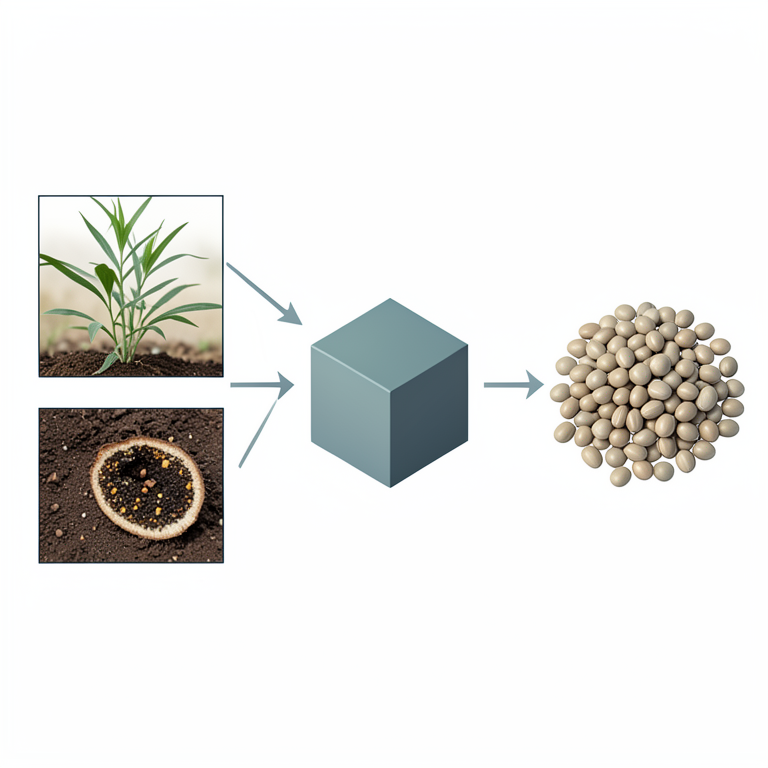
Predictive Model Components
AI-generated conceptual illustration (flaxseed plants and seeds). It explains the idea and does not show study data.
View source evidence ↗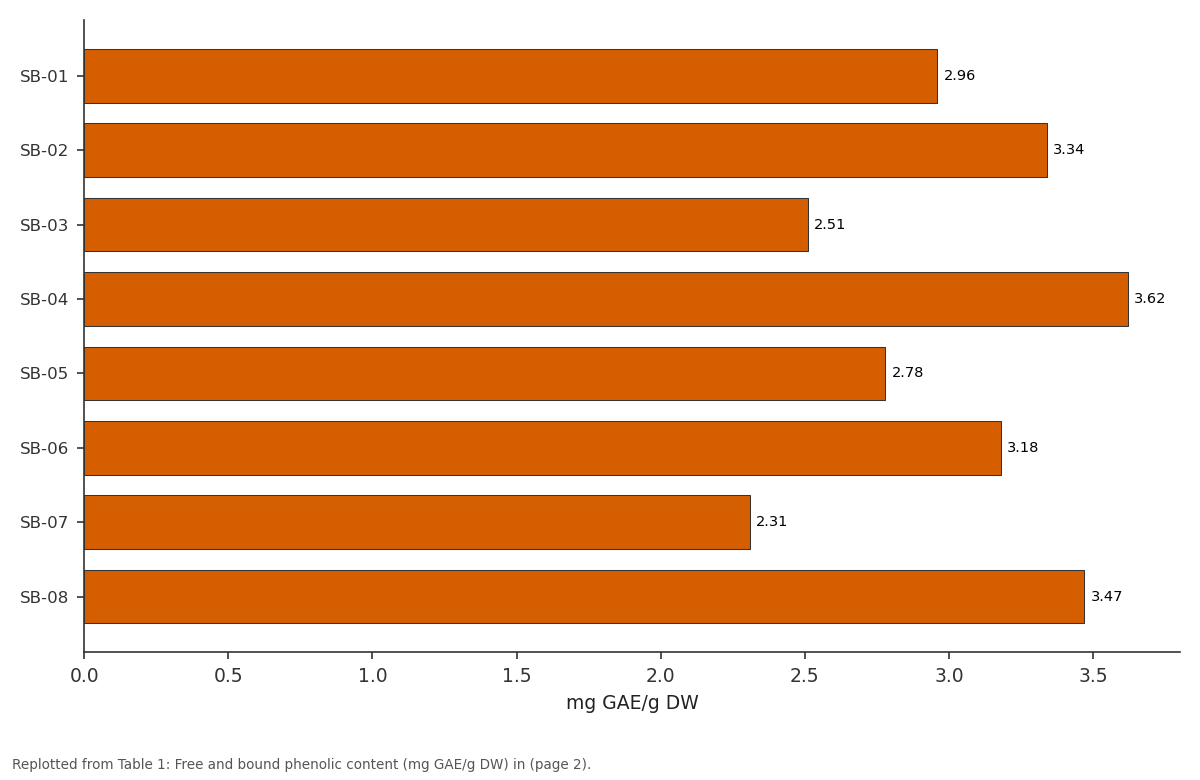
Bound (Meal): SB-01 vs SB-02 vs SB-03 vs SB-04 vs SB-05
Replotted from Table 1 (page 2) of the original paper. Every bar is the paper's own table value.
View source evidence ↗Figures & tables
From the original paper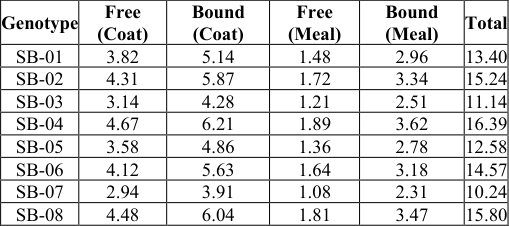 Table 1
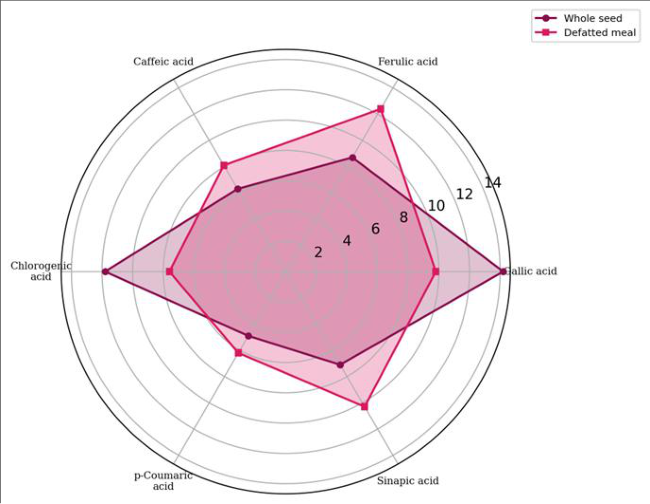 Figure 1
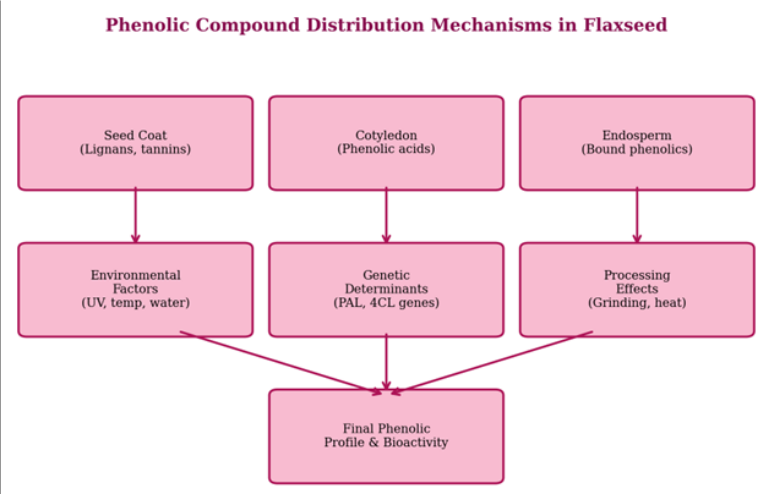 Figure 2
Introduction
Take a single flaxseed between your fingers and you are holding one of the richest plant sources of secoisolariciresinol diglucoside (SDG), a lignan whose mammalian metabolites have shown anti-cancer activity in laboratory models [1] . But SDG is only the headline act in a much larger phenolic ensemble. Flaxseed also contains hydroxycinnamic acids (ferulic, pcoumaric, caffeic, sinapic), hydroxybenzoic acids (gallic, protocatechuic), and flavonoids, each distributed unevenly between the seed coat, endosperm, and cotyledon [2] . Models that describe how these compounds partition across seed tissues are still primitive. Most published data report bulk phenolic values for whole ground seed, ignoring the structural architecture that determines extractability during processing and bioavailability during digestion [3] . Firmness of the seed coat, a physical trait easily measured by a texture analyser, may serve as a proxy for the degree of cell-wall cross-linking by esterified phenolics, linking mechanical properties to chemical composition [4] . The Sobat River Floodplain, located in a tropical lowland zone with heavy clay soils, is not a conventional flaxseed environment. However, interest in urban gardening and small-plot oilseed production has prompted trials of cool-season crops in raised beds with composted substrates that modify both soil temperature and organic-matter supply [5] . Whether composting amendments alter the phenolic profile of flaxseed is an open question with practical implications for urban growers seeking nutraceutical value from limited space [6] . This research aimed to: (a) model the distribution of phenolic acids between seed coat and defatted meal in eight genotypes; (b) test whether composting-amended urban substrates change phenolic accumulation; (c) relate seed-coat firmness to bound phenolic content; (d) build a predictive model for total phenolics; and (e) simulate phenolic losses along a 60-day supply chain [7,8] .
Extraction Protocol
Free phenolics were extracted by shaking 1 g of ground seed in 20 mL of 80% methanol at 25 degrees C for two hours, followed by centrifugation at 4,000 rpm for 15 minutes. The residue was then subjected to alkaline hydrolysis (4 M NaOH, 60 degrees C, 4 hours) to release bound phenolics, which were recovered by acidification to pH 2.0 with 6 M HCl and three-times extraction with ethyl acetate [2] . Both fractions were concentrated under nitrogen, re-dissolved in methanol, and filtered through 0.22 micrometer PTFE syringe filters before HPLC injection on a Waters Alliance e2695 with a C18 column (250 mm by 4.6 mm, 5 micrometer) using a gradient of 0.1% phosphoric acid in water and acetonitrile at 1.0 mL per minute, with UV detection at 280 and 320 nm [3] .
Phytochemical Screening
Preliminary qualitative screening confirmed the presence of tannins (ferric chloride test, blue-green colour), flavonoids (Shinoda test, pink colour), phenolic acids (Folin-Ciocalteu test, blue colour), and lignans (vanillin-HCl test, red-brown colour) in all eight genotypes. Alkaloids and saponins were absent. The screening results guided selection of HPLC target analytes and ensured that no major compound class was overlooked in the quantitative workflow [9,10] .
Material and Methods
Material and Methods
Material
Eight flaxseed genotypes (SB-01 through SB-08) were obtained from the Philippine national seed bank. Composting substrate was prepared from rice straw and poultry manure (3:1 v/v, composted for 90 days). Analytical standards for gallic acid, ferulic acid, caffeic acid, chlorogenic acid, p-coumaric acid, sinapic acid, and SDG were purchased from Sigma-Aldrich (Singapore). The research was conducted from January to June 2023 at the Quezon City School of Plant Sciences under protocol QCS-ENT/2023-006, approved 8 December 2022.
Methods
A factorial design was used: Factor A was genotype (eight levels) and Factor B was growing medium (field soil versus compost-amended raised bed, 1:1 v/v). Each combination was replicated four times, yielding 64 experimental units. Raised beds measured 1.2 m by 3 m and were filled to 30 cm depth. Flaxseed was sown in rows 15 cm apart at 300 seeds per square metre. Seed-coat firmness was measured at harvest on 20 seeds per replicate using a TA.XT Plus texture analyser (Stable Micro Systems, UK) fitted with a 2 mm cylindrical probe at 1 mm per second crosshead speed; the force at rupture was recorded in Newtons [4] . Supply-chain simulation stored sealed bags of seed at 28 degrees C and 65% relative humidity for 60 days, with phenolic assays at days 0, 15, 30, 45, and 60. The predictive model was built by stepwise multiple regression in R version 4.3.1, with genotype dummy variables, growing medium, and firmness as candidate predictors [11] . The seed coat consistently contributed 64.2% of total phenolics. Bound phenolics exceeded free phenolics in both tissue types, reflecting the predominance of ester-linked hydroxycinnamic acids in flaxseed cell walls.
Results
Results
Comprehensive Interpretation
The radar chart (Figure 1) reveals that gallic acid and chlorogenic acid dominate in whole seed, whereas ferulic and sinapic acids are relatively more prominent in the defatted meal fraction, presumably because de-fatting liberates phenolics previously entrapped in the lipid matrix. The mechanism diagram (Figure 2) places these findings in a systems context, showing that the final phenolic profile is shaped by genetics, environment, and processing in roughly equal measure [2,4] .
Discussion
The partitioning pattern reported here, with the seed coat holding about two-thirds of total phenolics, is consistent with earlier work on brown flaxseed but more pronounced than in golden (yellow-seeded) types, which tend to have thinner coats [2,12] . The practical implication is that dehulled flaxseed products will lose a significant phenolic fraction unless the seed coat is retained or processed separately as a co-product. Firmness values ranged from 2.8 to 5.1 N and were positively correlated with bound phenolics (r = 0.58), supporting the hypothesis that ester-linked ferulic acid cross-links arabinoxylans and strengthens the cell wall [4,13] .
Compost-amended raised beds increased total phenolics by 13.8%, an effect likely mediated by improved soil microbial activity and greater availability of phenylalanine precursors under higher organic-matter inputs [5] . This finding is encouraging for urban gardening initiatives that seek to maximise nutritional density from limited space. The predictive model combining genotype, growing medium, and firmness explained 72.3% of phenolic variance (adjusted R-squared = 0.698, P< 0.001), which is a good starting point for selection tools [11] . Supply-chain losses of 8.6% over 60 days at ambient conditions were driven mainly by oxidation of free phenolics; bound fractions declined by less than 3%. Vacuum packaging or nitrogen flushing could reduce these losses, and cost-benefit analysis suggests that the investment is justified when flaxseed is marketed as a premium nutraceutical ingredient [7,14] .
Conclusion
This research modelled phenolic distribution in flaxseed across eight genotypes and two growing environments in the Sobat River Floodplain. The seed coat contained 64.2% of total phenolics, and bound phenolics dominated in all tissues. Composting amendments boosted phenolics by 13.8%, and seed-coat firmness served as a useful physical proxy for bound phenolic content. A regression model explained 72.3% of total phenolic variance. Supply-chain simulation highlighted an 8.6% loss over 60 days, pointing to the need for modified-atmosphere packaging in nutraceutical supply chains. Genotypes SB-04 and SB-08 are recommended as high-phenolic donors for breeding programmes targeting functional-food markets.
Acknowledgement
Acknowledgements Funding SourcesThis work was supported by institutional research grants for oilseed quality improvement. Institutional SupportThe Quezon City School of Plant Sciences provided HPLC and texture-analysis facilities. Contributions Not Qualifying for AuthorshipLaboratory technicians and urban-garden volunteers are gratefully acknowledged.
Figures and tables from the paper
| Genotype | Free (Coat) | Bound (Coat) | Free (Meal) | Bound (Meal) | Total |
|---|---|---|---|---|---|
| SB-01 | 3.82 | 5.14 | 1.48 | 2.96 | 13.40 |
| SB-02 | 4.31 | 5.87 | 1.72 | 3.34 | 15.24 |
| SB-03 | 3.14 | 4.28 | 1.21 | 2.51 | 11.14 |
| SB-04 | 4.67 | 6.21 | 1.89 | 3.62 | 16.39 |
| SB-05 | 3.58 | 4.86 | 1.36 | 2.78 | 12.58 |
| SB-06 | 4.12 | 5.63 | 1.64 | 3.18 | 14.57 |
| SB-07 | 2.94 | 3.91 | 1.08 | 2.31 | 10.24 |
| SB-08 | 4.48 | 6.04 | 1.81 | 3.47 | 15.80 |
Table text extracted from the original PDF; superscript letters are shown inline. The original table image is below.
View original table image
References
18 in the original paper- Thompson LU, Boucher BA, Liu Z, Cotterchio M, Kreiger N. Phytoestrogen content of foods consumed in Canada, including isoflavones, lignans, and coumestan. Nutrition and Cancer. 2006;54(2):184-201.
- Oomah BD. Flaxseed as a functional food source. Journal of the Science of Food and Agriculture. 2001;81(9):889-894.
- Kaur P, Waghmare R, Kumar V, Rasane P, Kaur S, Gat Y. Recent advances in utilization of flaxseed as potential source for value addition. OCL. 2018;25(3):A304.
- Herchi W, Arraez-Roman D, Trabelsi H, Bouali I, Boukhchina S, Kallel H, et al. Phenolic compounds in flaxseed: a review of their properties and analytical methods. Trends in Food Science and Technology. 2014;35(1):46-60.
- Duchemin E, Wegmuller F, Legault AM. Urban agriculture: multi-dimensional tools for social development in poor neighbourhoods. Field Actions Science Reports. 2008;1:43-50.
- Rabetafika HN, Van Remoortel V, Danthine S, Paquot M, Blecker C. Flaxseed proteins: food uses and health benefits. International Journal of Food Science and Technology. 2011;46(2):221-228.
- Hall C, Tulbek MC, Xu Y. Flaxseed. Advances in Food and Nutrition Research. 2006;51:1-97.
- Bernacchia R, Preti R, Vinci G. Chemical composition and health benefits of flaxseed. Austin Journal of Nutrition and Food Sciences. 2014;2(8):1045.
- Harborne JB. Phytochemical Methods: A Guide to Modern Techniques of Plant Analysis. 3rd ed. London: Chapman and Hall; 1998. p. 1-302.
- Trease GE, Evans WC. Pharmacognosy. 16th ed. London: Saunders; 2009. p. 1-603.
- R Core Team. R: a language and environment for statistical computing. Vienna: R Foundation for Statistical Computing; 2023.
- Johnsson P, Kamal-Eldin A, Lundgren LN, Aman P. HPLC method for analysis of secoisolariciresinol diglucoside in flaxseeds. Journal of Agricultural and Food Chemistry. 2000;48(11):5216-5219.
- Bunzel M, Ralph J, Marita JM, Hatfield RD, Steinhart H. Diferulates as structural components in soluble and insoluble cereal dietary fibre. Journal of the Science of Food and Agriculture. 2001;81(7):653-660.
- Wanasundara PKJPD, Shahidi F. Process-induced changes in edible oils. Advances in Experimental Medicine and Biology. 1998;434:135-160.
- Touré A, Xueming X. Flaxseed lignans: source, biosynthesis, metabolism, antioxidant activity, bioactive components, and health benefits. Comprehensive Reviews in Food Science and Food Safety. 2010;9(3):261-269.
- Madhusudhan B. Potential benefits of flaxseed in health and disease: a perspective. Agriculturae Conspectus Scientificus. 2009;74(2):67-72.
- Zanwar AA, Hegde MV, Bodhankar SL. Cardioprotective activity of flax lignan concentrate extracted from seeds of Linum usitatissimum in isoprenaline-induced myocardial necrosis in rats. Evidence-Based Complementary and Alternative Medicine. 2011;2011:451975.
- Westcott ND, Muir AD. Flax seed lignan in disease prevention and health promotion. Phytochemistry Reviews. 2003;2(3):401-417.