
Research article · 2026 · Full text
International Journal of Biology SciencesBeetroot extract powder as a nutraceutical: Insights into its chemical composition and phenolic profile
Volume 8(5) · Pages 12–14 · DOI: 10.33545/26649926.2026.v8.i5a.820 ↗
Research areasBotanical Research and ApplicationsFood Science and Nutritional StudiesPhytochemicals and Antioxidant Activities
Abstract
Author-writtenBeetroot (Beta vulgaris L.) has recently gained considerable recognition as a nutraceutical owing to its high content of bioactive compounds and their related health benefits. In the present study, the chemical composition and bioactive ingredients of beetroot extract powder were investigated to explore its potential as a nutraceutical ingredient. The extract was analysed for proximate composition, total polyphenols and tannins using established in vitro assays. The beetroot extract powder contained 3.61 mg gallic acid equivalents (GAE)/g of total polyphenols and 2.08 mg tannic acid equivalents (TAE)/g of tannins. Proximate analysis of beetroot extract powder revealed that it contained 94.14 percent dry matter, 90.74 percent organic matter, 10.81 percent crude protein, 4.02 percent crude fibre, 0.89 percent ether extract, 9.26 percent total ash, 1.76 percent acid insoluble ash and 75.02 percent nitrogen free extract. These findings indicate that beetroot extract powder contains appreciable levels of phenolic compounds and exhibits significant antioxidant and anti-inflammatory activities. The results highlight its potential as a functional nutraceutical ingredient.
Summary
Source-checkedPlain-language reading of the full paper, prepared with AI and checked against the text. Each point links to the authors' own words.
Why it matters
- Beetroot (Beta vulgaris L.) is recognized as a nutraceutical because it contains high levels of bioactive compounds that provide health benefits. View evidence ↗
- The plant is rich in betalains, dietary nitrates, polyphenols, and flavonoids, which contribute to its antioxidant, anti-inflammatory, and cardioprotective properties. View evidence ↗
- Nutraceuticals are substances that offer health benefits beyond basic nutrition, such as improving immunity and helping manage or prevent diseases. View evidence ↗
The question
- The study aimed to evaluate whether beetroot extract powder has the potential to be used as a nutraceutical. View evidence ↗
- The researchers specifically sought to determine the beetroot's proximate composition and its total tannin and phenolic contents. View evidence ↗
What they did
- Fresh beetroot roots were peeled, sliced, and shade-dried at 25-30 °C for 5-7 days before being ground into a powder and sieved through a 60-mesh sieve. View evidence ↗
- The proximate composition of the powder was analyzed following standard AOAC (2023) procedures. View evidence ↗
- Total tannin content was measured using the Folin-Denis method with tannic acid as the standard, expressed in mgTAE/g. View evidence ↗
- Total polyphenol content was determined via the Folin-Ciocalteu method using gallic acid as the calibration standard. View evidence ↗
What they found
- The beetroot extract powder was found to contain 94.14±0.092% dry matter. View evidence ↗
- Proximate analysis showed the powder contained 10.81±0.050% crude protein, 4.02±0.017% crude fibre, 0.89±0.011% ether extract, 9.26±0.047% total ash, 75.02±0.106% nitrogen-free extract, and 1.76±0.011% acid insoluble ash. View evidence ↗
- The total phenolic content of the beetroot extract powder was measured at 3.61 mg GAE/g. View evidence ↗
- The tannin content of the sample was found to be 2.08 mg TAE/g. View evidence ↗
- The results indicate that the powder contains significant levels of phenolic compounds and possesses anti-inflammatory and antioxidant activities. View evidence ↗
What it means
- The authors conclude that beetroot extract powder is a viable nutraceutical because it contains essential nutrients, notable phenolic compounds, and moderate tannins. View evidence ↗
- The authors state that further in vivo studies are required to validate the powder's effects on metabolic functions and health. View evidence ↗
Visual summary
1 visualsIllustrations explain the paper; they do not show study data.
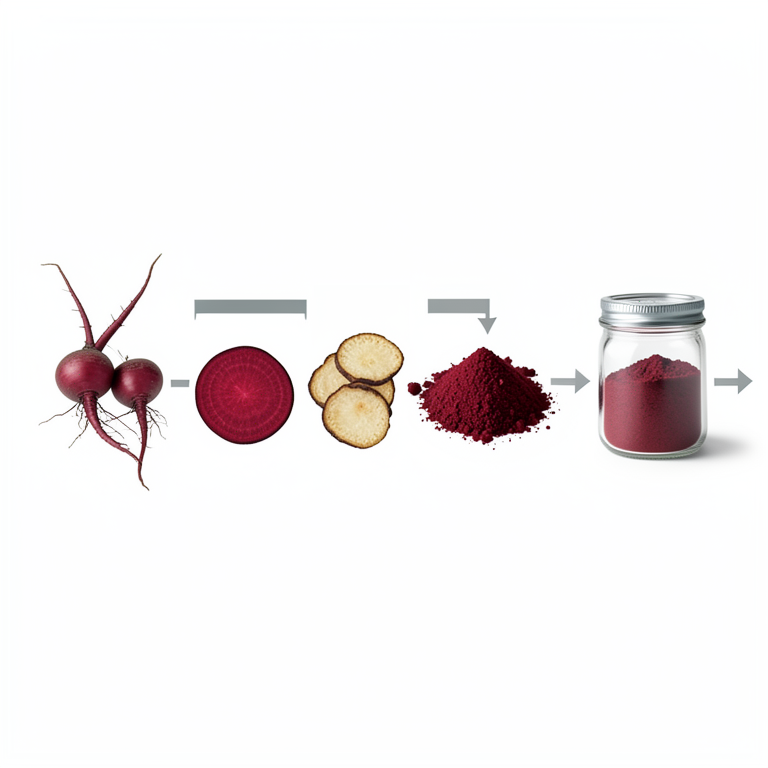
Beetroot Powder Preparation Process
AI-generated conceptual illustration (beetroot roots). It explains the idea and does not show study data.
View source evidence ↗Figures & tables
From the original paper Table 2
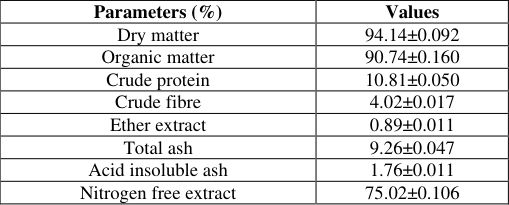 Table 1
Introduction
The link between diet and disease has long been acknowledged as a fundamental principle of preventive nutrition. Although functional foods are often presented as a modern innovation, the concept traces back to ancient Indian Vedic literature and traditional Chinese medicine. The modern pursuit of functional foods is rooted in the Eastern belief that food and medicine stem from the same source. The initiative to develop functional foods originated in Japan in the 1980s as a response to increasing healthcare costs (Henry, 2010) [1] . Growing attention toward functional foods can be attributed to three main factors: the rising cost of healthcare, new regulatory developments, and advancements in scientific research. Establishing strong scientific evidence supporting the health benefits of functional foods and their bioactive compounds has become a major area of interest (Milner, 2000) [2] . Nutraceuticals have their roots in ancient medicinal practices and have gradually developed into modern dietary supplements, with the term first coined by Stephen DeFelice in 1989. Nutraceuticals originate from various food sources, including superfoods, dietary supplements, phytochemicals, fortified foods, and genetically engineered products. They provide health advantages that go beyond basic nutrition, including boosting immunity, promoting overall well-being, and aiding in the prevention and management of diseases (Chavan et al., 2025) [3] . Since ancient times, humans have utilized plants for both nutrition and medicinal purposes. Beetroot (Beta vulgaris) is a highly nutritious vegetable increasingly valued for its phytonutrient-rich composition and health-enhancing potential. It is abundant in bioactive compounds, including betalains, dietary nitrates, polyphenols, and flavonoids, which impart significant antioxidant, anti-inflammatory, and cardioprotective effects (Kumar et al., 2011) [4] . This study was conducted to evaluate the potential of beetroot extract powder as a nutraceutical. Therefore, the present study evaluated the properties of beetroot including total phenolic content, total tannin content and proximate composition.
Materials and Methods Preparation of beetroot extract powder
Fresh beetroot (Beta vulgaris L.) roots were procured from a local market, washed thoroughly to remove dirt, and peeled. The roots were sliced into thin pieces and shade dried at ambient temperature (25-30 °C) with adequate air circulation for 5-7 days until completely dried. The dried slices were then ground into a fine powder, sieved through a 60-mesh sieve, and stored in airtight containers at 4 °C until further analysis.
Proximate analysis
The proximate composition of beetroot extract powder sample was done as per the standard procedure (AOAC, 2023) [5] .
Estimation of Tannins
Total tannin content of the beetroot extract powder was estimated using the Folin-Denis method as described by Polshettiwar et al., (2007) [6] . Briefly, 0.5 ml of the sample extract was mixed with 0.5 ml distilled water and 0.5 ml Folin-Denis reagent, followed by addition of 4.5 ml of 2 percent sodium carbonate solution. The mixture was incubated and the absorbance was measured at 725 nm using a spectrophotometer. Tannic acid was used as the standard and the results were expressed as mg tannic acid equivalents per ml of extract (mgTAE/g).
Estimation of total polyphenol
Total polyphenol content of beetroot extract powder was determined using the Folin-Ciocalteu method described by Mallick and Singh (1980) [7] . Briefly, 0.5 ml of the sample extract was mixed with 800 µl of Folin-Ciocalteu reagent and 2 ml of 2 percent sodium carbonate solution. The mixture was diluted with distilled water and incubated in the dark for 2 h. Absorbance was measured at 765 nm using a spectrophotometer. Gallic acid was used as the standard for calibration, and the results were expressed as mg gallic acid equivalents (GAE) per ml of extract.
Results and Discussions Proximate composition of beetroot extract powder
The percent chemical composition of Beetroot extract powder on dry matter basis used in the experimental diet is presented in Table 1. Beetroot extract powder contained 94.14±0.092 percent dry matter. The crude protein, crude fibre, ether extract, total ash, nitrogen-free extract and acid insoluble ash contents were 10.81±0.050, 4.02±0.017, 0.89±0.011, 9.26±0.047, 75.02±0.106 and 1.76±0.011 percent, respectively. The results of the present study are in close agreement with Ahmed et al. (2025) [8] , who reported that beetroot powder contains 86.82 percent dry matter and 76.06 percent organic matter. They also observed that it comprises 14.92 percent crude protein, 19.84 percent crude fibre, 0.92 percent crude fat and 40.38 percent nitrogen-free extract. Similar results were reported by Shuaibu et al. (2021) [9] on proximate analysis of beetroot peel. They reported that Beetroot peel contains 44.17 percent carbohydrates, 4.10 percent protein, 6.98 percent fibre, 3.29 percent fat and 30.88 percent moisture. It is also a good source of minerals, especially Iron (26.46 percent), Potassium (13.82 percent), Sodium (4.17 percent) and Phosphorus (11.57 percent). The proximate analysis of different genotypes of beetroot has showed average values of 10±1 percent dry matter, 11.6±0.7 percent crude protein, 5.72±0.53 percent fibre, 8.31±0.56 percent ash (Vaitkevičienė et al., 2022) [10] .
| Parameters (%) | Values |
|---|---|
| Dry matter | 94.14±0.092 |
| Organic matter | 90.74±0.160 |
| Crude protein | 10.81±0.050 |
| Crude fibre | 4.02±0.017 |
| Ether extract | 0.89±0.011 |
| Total ash | 9.26±0.047 |
| Acid insoluble ash | 1.76±0.011 |
| Nitrogen free extract | 75.02±0.106 |
Table text extracted from the original PDF; superscript letters are shown inline. The original table image is below.
View original table image
Total polyphenol and tannin content in beetroot extract powder.
The total polyphenol and tannin content of beetroot extract powder are given in the table 2 2.08± 0.08 (mg TAE/g sample) (All assays were performed in triplicate (n = 3), and the results were expressed as mean ± Standard deviation).
| Parameters | Concentration |
|---|---|
| Polyphenol | 3.61± 0.12 (mg GAE/g sample) |
| Tannin | 2.08± 0.08 (mg TAE/g sample) |
Table text extracted from the original PDF; superscript letters are shown inline. The original table image is below.
View original table image
The total phenolic content was measured to be 3.61 mg GAE/g of the sample. This result was comparable with Yasaminshirazi et al. (2020) [11] who reported that the total phenolic content of the red-colored genotypes of beetroot varied between 3.52±0.28 mg GAE g⁻¹ DW and 4.89±0.28 mg GAE g⁻¹ DW. Similarly, Guine et al. (2018) [12] found that the total phenolic content in the fresh beetroot varied from 1.45 to 2.70 mg GAE/g. In accordance with this Kaur et al. (2021) [13] reported that beetroot powder produced by steam blanching showed a total phenolic content of 4.16 mg GAE/g. Comparable results were also reported by Guldiken et al. (2016) [14] who found that dried beetroot had total phenolic content of 3.47±0.23 mg GAE/g beetroot powder.
The tannin content was found to be 2.08 mg TAE/g sample. This finding is consistent with the report of Mahmood et al. (2022) [15] who conducted the phytochemical analysis of ethanolic extract of beetroot and found that it contains total phenolic (133.5 mg Gallic acid /100 g), total tannin (2.14 mg/100 g). Whereas El-Beltagi et al. (2018) [16] found that the total tannin content is 5.13±0.085 (mg Tannic acid /g DW) in beetroot. Whereas Omogbai, and Omoregie, (2016) [17] reported that ethanolic extract of beetroot contains only 6 mg/100 g tannins.
Conclusion
The present study demonstrated the proximate composition, tannin content and total phenolic content of beetroot extract powder emphasizing its nutritional and functional properties. The findings substantiate that beetroot extract powder contains significant amount of essential nutrients along with notable levels of phenolic compounds and moderate tannin content. The presence of these bioactive compounds suggests considerable antioxidant potential for beetroot extract powder which provide preliminary evidence supporting the potential of beetroot extract powder as a functional nutraceutical. However further in vivo studies are necessary to validate its effect in enhancing health and metabolic functions.
Acknowledgement
AcknowledgementThe authors would like to extend their sincere gratitude to the Kerala Veterinary and Animal Sciences University, Pookode, Wayanad for providing the necessary fund and facilities required for the study.
References
17 in the original paper- Henry CJ. Functional foods. European Journal of Clinical Nutrition. 2010;64(7):657-659.
- Milner JA. Functional foods: the US perspective. The American Journal of Clinical Nutrition. 2000;71(6):1654S-1659S.
- Chavan PP, Nemade LS. The evolution of nutraceuticals: from ancient medicine to modern dietary supplements. J Pharm Sci Comput Chem. 2025;1(2):135-153.
- Kumar T, Pal SL, Saini H. Phyto-nutraceuticals importance of beet root: a review. Journal of Pharmacognosy and Phytochemistry. 2024;13(1):122128.
- AOAC. Official methods of analysis. 22nd ed. Rockville: Association of Official Analytical Chemists International; 2023. p. 188.
- Polshettiwar SA, Ganjiwale RO. Spectrophotometric estimation of total tannin in some ayurvedic eye drops. Indian Journal of Pharmaceutical Sciences. 2007;69(4):574-576.
- Mallick CP, Singh MB. Plant enzymology and plant histoenzymology. New Delhi: Kalyani Publishers; 1980. p. 286.
- Ahmed M, Das K, Hossen M, Ataher MS, Momu JM, Aktaruzzaman M, et al. Dietary inclusion of beetroot (Beta vulgaris): impacts on egg production, egg quality, and physiological status of commercial laying hens. Veterinary and Animal Science. 2025:100559.
- Shuaibu BS, Aremu MO, Kalifa UJ. Chemical composition and antioxidant activities of beetroot peel. Afr J Eng Environ Res. 2021;2:62-73.
- Vaitkevičienė N, Sapronaitė A, Kulaitienė J. Evaluation of proximate composition, mineral elements and bioactive compounds in skin and flesh of beetroot grown in Lithuania. Agriculture. 2022;12(11):1833.
- Yasaminshirazi K, Hartung J, Fleck M, GraeffHoenninger S. Bioactive compounds and total sugar contents of different open-pollinated beetroot genotypes grown organically. Molecules. 2020;25(21):4884.
- Guine RP, Goncalves F, Lerat C, El Idrissi T, Rodrigo E, Correia PM, et al. Extraction of phenolic compounds with antioxidant activity from beetroot (Beta vulgaris L.). Current Nutrition & Food Science. 2018;14(4):350357.
- Kaur S, Kaur N, Aggarwal P, Grover K. Bioactive compounds, antioxidant activity, and color retention of beetroot (Beta vulgaris L.) powder: effect of steam blanching with refrigeration and storage. Journal of Food Processing and Preservation. 2021;45(3):e15247.
- Guldiken B, Toydemir G, Nur Memis K, Okur S, Boyacioglu D, Capanoglu E. Home-processed red beetroot (Beta vulgaris L.) products: changes in antioxidant properties and bioaccessibility. International Journal of Molecular Sciences. 2016;17(6):858.
- Mahmood SK, Askar SJ. Study the hepatoprotective effects and oxidant-antioxidant status of beta vulgaris roots ethanolic extract in hepatotoxic rats induced by acetaminophen. International Journal of Health Sciences. 2022;5:1385-1403.
- El-Beltagi HS, Mohamed HI, Megahed BM, Gamal M, Safwat G. Evaluation of some chemical constituents, antioxidant, antibacterial and anticancer activities of Beta vulgaris L. root. Fresenius Environmental Bulletin. 2018;27(9):6369-6378.
- Omogbai BA, Omoregie IA. Chemical analysis and biological activity of natural preservative from beet root (Beta vulgaris) against foodborne pathogens and spoilage organisms. African Scientist. 2016;17(2):115122.