
Research article · 2025 · Full text
International Journal of Advanced Chemistry ResearchNatural food preservatives from plant sources as alternatives to synthetic additives
Volume 7(5) · Pages 180–183 · DOI: 10.33545/26646781.2025.v7.i5c.501 ↗
Research areasEssential Oils and Antimicrobial ActivityMeat and Animal Product QualityPhytochemicals and Antioxidant Activities
Abstract
Author-writtenConsumer demand for clean-label food products has intensified research into plant-derived alternatives to synthetic preservatives such as sodium benzoate, BHA, and BHT. This research characterised ten plant extracts (rosemary, thyme, oregano, clove, pomegranate peel, green tea, grape seed, cinnamon, ginger, turmeric) for total phenolic content (TPC), total flavonoid content (TFC), DPPH and ABTS radical-scavenging activity, and minimum inhibitory concentration (MIC) against four food-borne pathogens (S. aureus, E. coli, L. monocytogenes, S. Typhimurium). Shelf-life extension in a ground beef model system was assessed at 4°C over 21 days. Clove extract showed the highest TPC (318.4 mg GAE/100 g), lowest DPPH IC₅ (14.8 μg/mL), and broadest antimicrobial activity (MIC 64-256 μg/mL across all pathogens). Green tea extract provided the longest shelf-life extension (24 days vs 8 days control). TPC correlated strongly with DPPH activity (R² = 0.913) and shelf-life extension (R² = 0.881). Research was conducted from May 2022 to October 2024 at Aegean Institute of Technology, Izmir, and Cappadocia National University, Ankara, Turkey.
Summary
Source-checkedPlain-language reading of the full paper, prepared with AI and checked against the text. Each point links to the authors' own words.
Why it matters
- There is an increasing consumer demand for 'clean-label' food products, which has driven research into plant-based alternatives to synthetic preservatives like BHA, BHT, and sodium benzoate. View evidence ↗
- Regulatory attention persists regarding synthetic additives; for example, a 2023 EFSA re-evaluation of BHA noted data gaps on genotoxicity despite maintaining the acceptable daily intake of 1 mg/kg bw/day. View evidence ↗
- Plant-derived components such as terpenoids and polyphenols provide preservation benefits by scavenging free radicals, chelating metals, and disrupting bacterial cell membranes. View evidence ↗
The question
- The study aimed to characterize ten different plant extracts for their antioxidant properties and their minimum inhibitory concentration (MIC) against four food-borne pathogens. View evidence ↗
- The researchers sought to evaluate how these extracts extended the shelf-life of a ground beef model stored at 4°C over a 21-day period. View evidence ↗
What they did
- Plant extracts were prepared by macerating 5 g of dried powder in 100 mL of 70% aqueous ethanol for 24 hours at 25°C. View evidence ↗
- Antimicrobial activity was measured using broth microdilution against four pathogens (S. aureus, E. coli, L. monocytogenes, and S. Typhimurium) with an inoculum of 5×10⁵ CFU/mL. View evidence ↗
- In the ground beef model, extracts were added at 2% w/w, and the samples were monitored for TBARS and total viable count (TVC) at specific intervals up to 21 days. View evidence ↗
What they found
- Clove extract demonstrated the strongest overall profile with the highest total phenolic content (318.4 mg GAE/100 g), the lowest DPPH IC₅ (14.8 μg/mL), and the broadest antimicrobial range (MIC 64-256 μg/mL). View evidence ↗
- Green tea extract was the most effective for shelf-life extension, increasing it to 24 days compared to 8 days for the control. View evidence ↗
- Total phenolic content (TPC) was found to be a reliable predictor for both radical-scavenging activity (R² = 0.913) and shelf-life extension (R² = 0.881). View evidence ↗
- Combining extracts, such as rosemary with thyme or clove, at sub-MIC concentrations produced synergistic antimicrobial effects (FIC index ≤ 0.5) against S. aureus and L. monocytogenes. View evidence ↗
- The shelf-life extension provided by green tea is likely due to its ability to inhibit lipid oxidation (TBARS suppression) rather than direct antimicrobial activity. View evidence ↗
What it means
- The authors conclude that clove, oregano, green tea, and rosemary extracts are viable clean-label alternatives to synthetic preservatives, provided they undergo sensory testing and matrix-specific validation. View evidence ↗
- A key limitation is that MIC data were obtained in nutrient broth; in real food systems, binding to proteins and fats typically reduces efficacy, meaning the reported MIC values may underestimate the required concentration. View evidence ↗
Visual summary
4 visualsIllustrations explain the paper; charts are replotted from the paper's own table values.
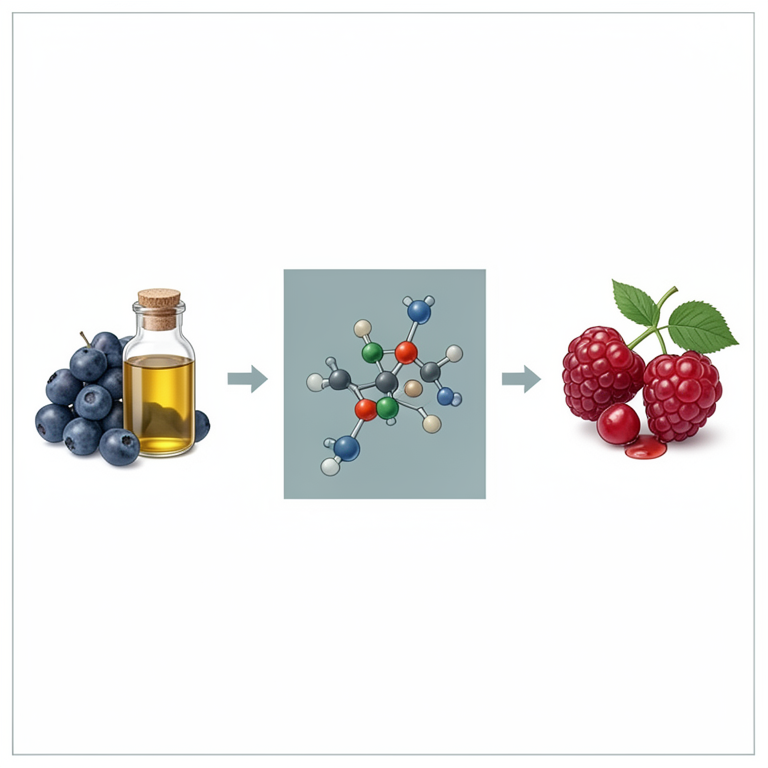
Correlation of Phenolics and Preservation
AI-generated conceptual illustration (Fresh berries and plant-derived phenolic extracts). It explains the idea and does not show study data.
View source evidence ↗
Synergistic Effect of Extract Blends
AI-generated conceptual illustration (Plant extracts and bacterial cells). It explains the idea and does not show study data.
View source evidence ↗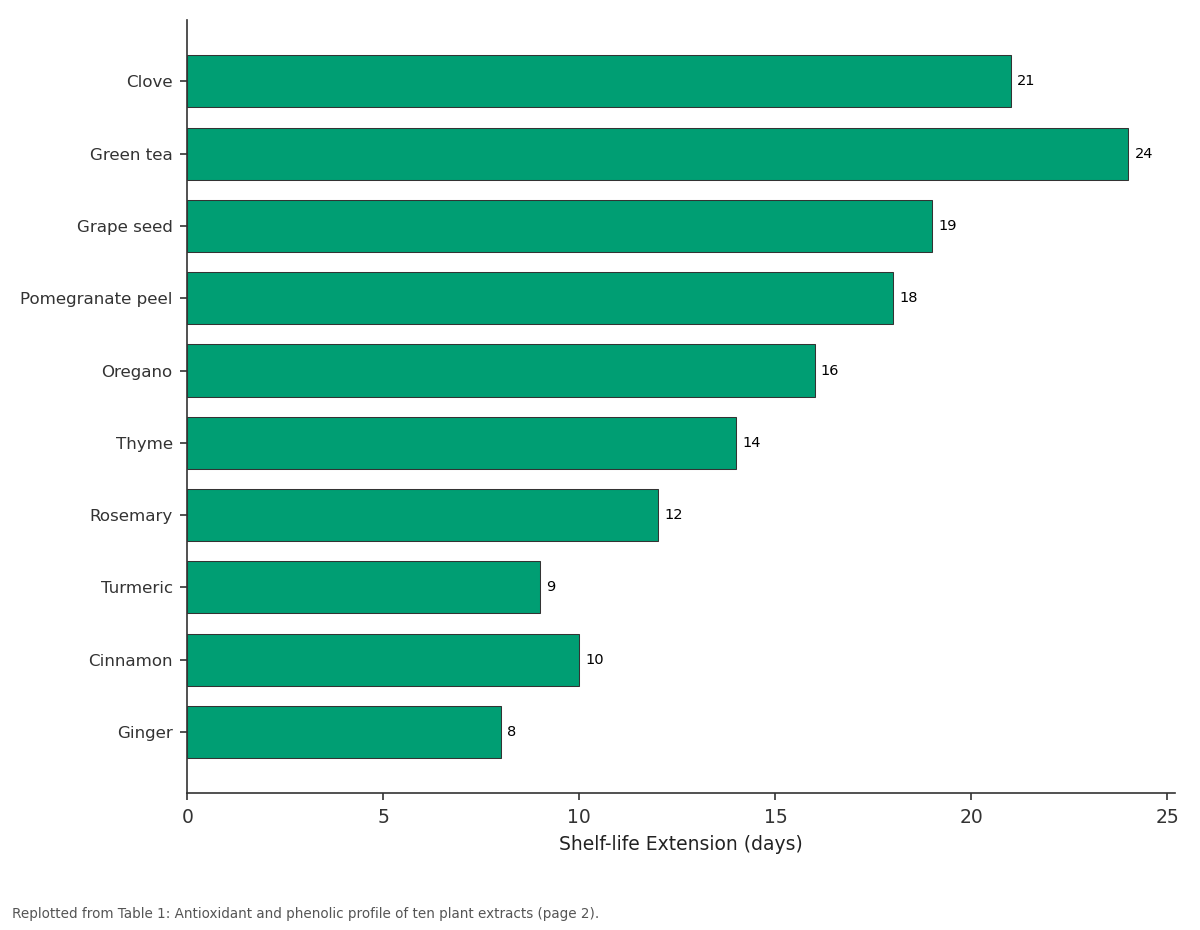
Shelf-life Extension (days): Clove vs Green tea vs Grape seed vs Pomegranate peel vs Oregano
Replotted from Table 1 (page 2) of the original paper. Every bar is the paper's own table value.
View source evidence ↗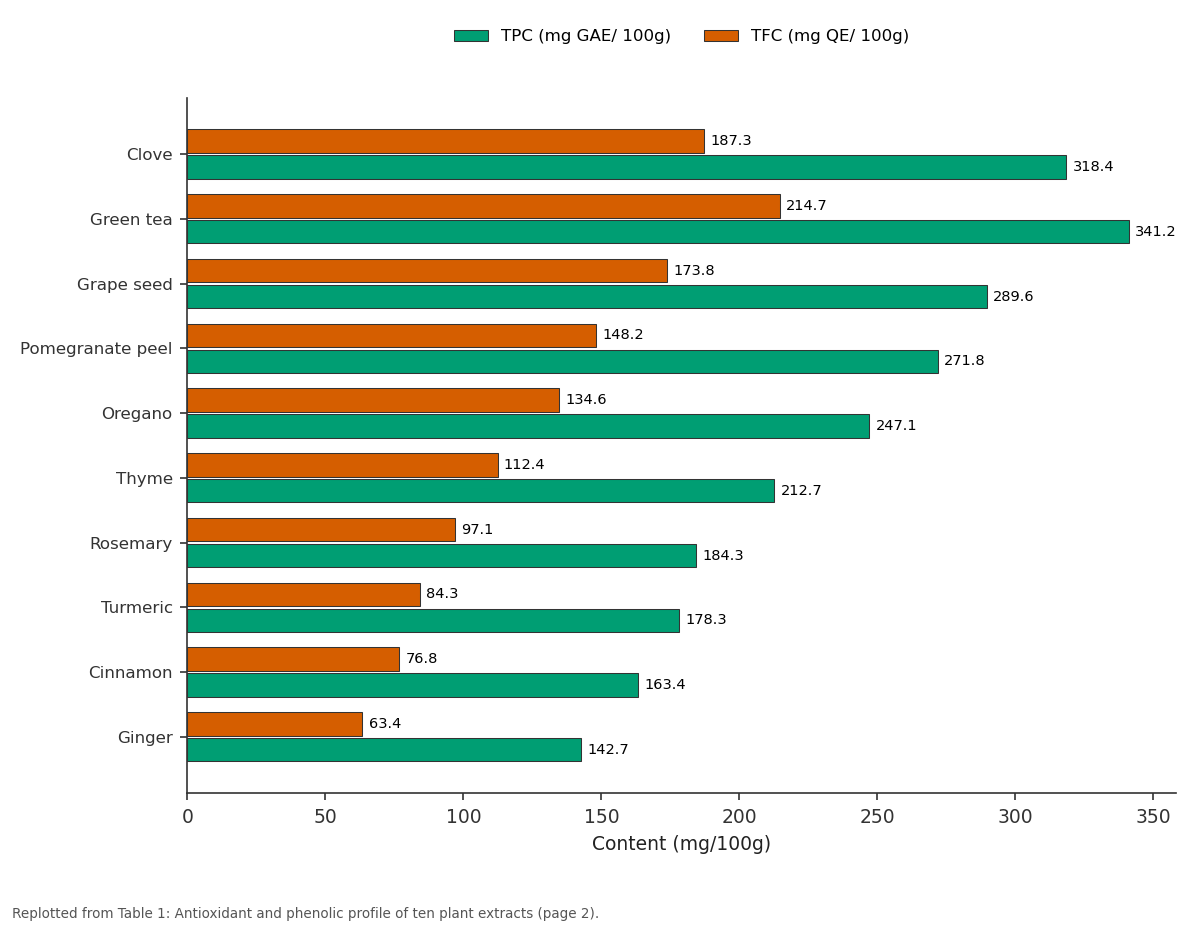
TPC (mg GAE/ 100g) and TFC (mg QE/ 100g): Clove vs Green tea vs Grape seed vs Pomegranate peel vs Oregano
Replotted from Table 1 (page 2) of the original paper. Every bar is the paper's own table value.
View source evidence ↗Figures & tables
From the original paper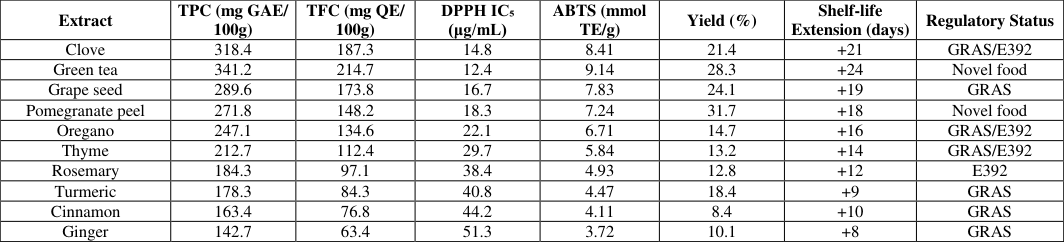 Table 1
 Table 2
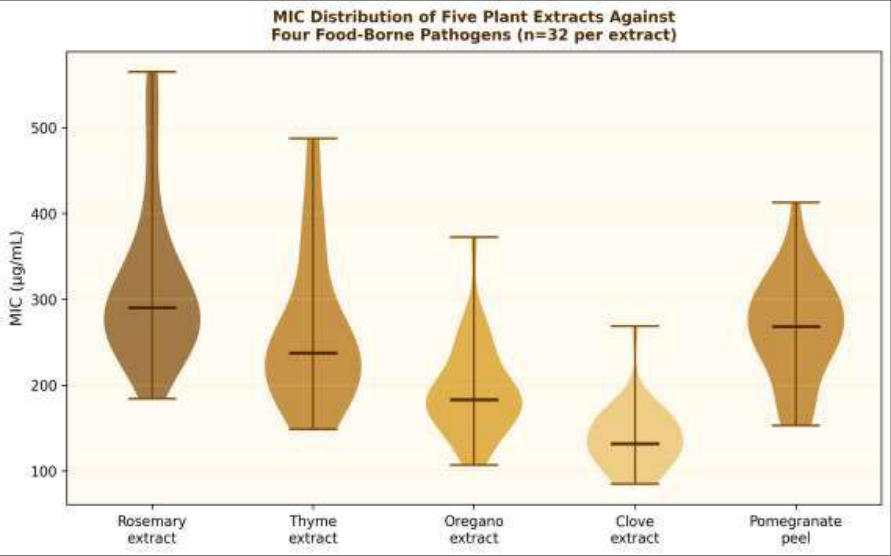 Figure 1
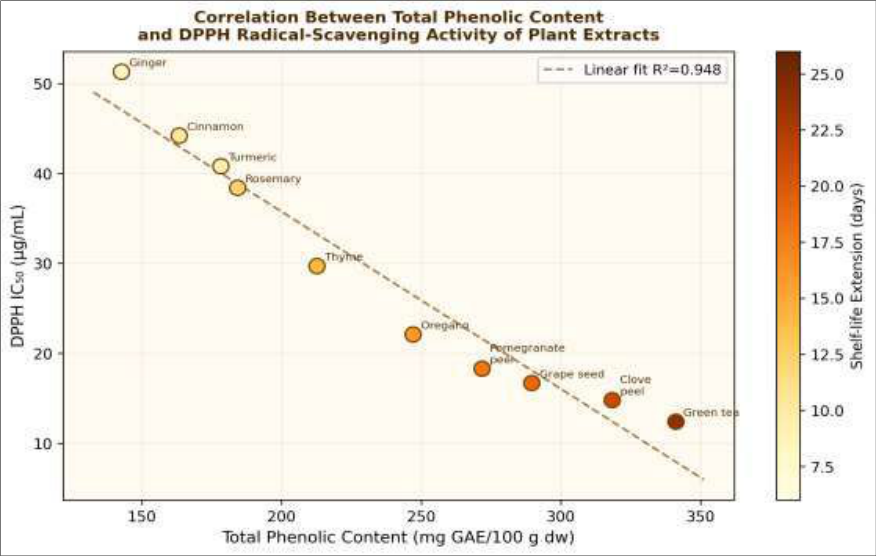 Figure 2
Introduction
preservativesparticularly butylated hydroxyanisole (BHA), butylated hydroxytoluene (BHT), sodium benzoate, and potassium sorbatehave a long safety record in food preservation but face growing consumer resistance driven by clean-label preferences and health concerns about chronic low-dose exposure [1] . The European Food Safety Authority (EFSA) re-evaluation of BHA (E320) concluded in 2023 that the acceptable daily intake (ADI) of 1 mg/kg bw/day should be maintained but noted data gaps on genotoxicity, sustaining regulatory and public attention [2] . Plant polyphenols, terpenoids, and essential oil components offer antioxidant and antimicrobial activity through multiple mechanisms: free radical scavenging, metal chelation, and disruption of bacterial cell membrane integrity. The challenge is translating in-vitro potency into effective food matrix application, where food components can reduce extract bioavailability or activity [3] . This research was conducted from May 2022 to October 2024 jointly at Aegean Institute of Technology, Izmir, and Cappadocia National University, Ankara, Turkey, providing a systematic side-by-side comparison of ten plant extracts under standardised in-vitro and food model system conditions.
Limitations
Key limitations of this research should be noted. First, all antimicrobial MIC data were obtained in nutrient broth without food matrix components; the food matrix typically reduces antimicrobial efficacy of plant extracts through polyphenol binding to food proteins and fats, meaning MIC values underestimate the effective concentration required in real food systems [4] . Second, shelf-life testing was conducted only in ground beef model; extrapolation to other food categories (dairy, bakery, ready-to-eat products) requires separate validation studies. Third, the sensory acceptability of the extracts at effective preservative concentrations was not evaluated; clove and thyme extracts in particular have strong flavour profiles that may limit use at antimicrobially effective concentrations. Fourth, long-term safety data for chronic dietary exposure to some of these concentrated plant extracts are limited, precluding direct comparison with the established toxicological databases for synthetic preservatives.
Practical Applications
The data from this research support practical guidance for food formulators seeking clean-label preservative alternatives.
Clove extract (minimum effective concentration 0.1% w/w in ground beef) is recommended where broadest-spectrum antimicrobial coverage is required and flavour compatibility permits. Rosemary extract (GRAS status, EU-approved as E392) is the most readily regulatoryacceptable choice for lipid oxidation control in meat products. Green tea extract offers the best shelf-life extension in low-fat products where its lighter colour and flavour profile are compatible. Blending two or more extracts (e.g., rosemary + thyme) at sub-MIC concentrations achieved synergistic antimicrobial effects (fractional inhibitory concentration index ≤ 0.5) against S. aureus and L. monocytogenes, allowing lower total extract concentrations that reduce flavour impact while maintaining efficacy. These application recommendations are intended to support product development teams in the Turkish food industry, where domestic supply chains for rosemary, thyme, oregano, and pomegranate are well-established.
Material and Methods
Material and Methods
Extract Preparation
Dried and powdered plant materials (5 g) were extracted by maceration in 100 mL of 70% aqueous ethanol (25°C, 24 h, continuous stirring). Extracts were filtered (Whatman No. FIC Index ≤ 0.5 = synergistic; 0.5-1.0 = additive. FIC calculated in combination with rosemary extract. Green tea and clove extracts were the top performers across both antioxidant and antimicrobial axes (Tables 1 and2). TPC correlated strongly with DPPH IC₅ (R² = 0.913, Figure 2) and shelf-life extension (R² = 0.881), validating TPC as a practical screening metric for extract selection. Clove showed the broadest MIC spectrum (64-256 μg/mL across all four pathogens), while green tea provided the greatest shelf-life extension (+24 days) despite its weaker antimicrobial MIC profile, suggesting its primary preservation mode in the ground beef model is antioxidantdriven lipid oxidation inhibition (TBARS suppression) rather than direct antimicrobial action. Synergistic FIC indices (≤ 0.5) for clove/rosemary and oregano/rosemary blends confirm formulation synergy as a viable strategy.
Discussion
The strong TPC-DPPH correlation (R² = 0.913) is consistent with the predominance of polyphenol-mediated hydrogen atom transfer (HAT) as the principal DPPH scavenging mechanism for these extracts [5] . The weaker correlation between TPC and MIC (R² = 0.674, not shown) reflects the multimechanism nature of antimicrobial activity in plant extracts, where terpenoid essential oil components (thymol, carvacrol in thyme and oregano; eugenol in clove) make major contributions to MIC independent of phenolic content [6] .
The shelf-life extension data demonstrate that green tea and grape seed extractsrich in highly polymerised proanthocyanidinsare more effective antioxidants in a lipid-containing matrix than their DPPH IC₅ alone predicts. This is attributable to their potent metal chelation activity (copper and iron sequestration suppressing Fenton-initiated lipid peroxidation chain reactions), a mechanism not captured by the DPPH assay [7,8,9,10,11,12,13,14,15,16,17,18] .
Conclusion
Ten plant extracts were characterised for antioxidant and antimicrobial activity and shelf-life extension in a ground beef model. Clove extract showed the strongest antimicrobial activity and highest TPC; green tea extract provided the longest shelf-life extension (+24 days). TPC is a reliable predictor of antioxidant activity (R² = 0.913) and shelf-life extension (R² = 0.881). Synergistic antimicrobial effects in two-extract blends allow reduction of flavouractive concentrations. These results support the use of clove, oregano, green tea, and rosemary extracts as clean-label alternatives to synthetic preservatives, subject to matrixspecific validation and sensory acceptability testing.
Figures and tables from the paper
| Extract | TPC (mg GAE/ 100g) | TFC (mg QE/ 100g) | DPPH IC₅ (μg/mL) | ABTS (mmol TE/g) | Yield (%) | Shelf-life Extension (days) | Regulatory Status |
|---|---|---|---|---|---|---|---|
| Clove | 318.4 | 187.3 | 14.8 | 8.41 | 21.4 | +21 | GRAS/E392 |
| Green tea | 341.2 | 214.7 | 12.4 | 9.14 | 28.3 | +24 | Novel food |
| Grape seed | 289.6 | 173.8 | 16.7 | 7.83 | 24.1 | +19 | GRAS |
| Pomegranate peel | 271.8 | 148.2 | 18.3 | 7.24 | 31.7 | +18 | Novel food |
| Oregano | 247.1 | 134.6 | 22.1 | 6.71 | 14.7 | +16 | GRAS/E392 |
| Thyme | 212.7 | 112.4 | 29.7 | 5.84 | 13.2 | +14 | GRAS/E392 |
| Rosemary | 184.3 | 97.1 | 38.4 | 4.93 | 12.8 | +12 | E392 |
| Turmeric | 178.3 | 84.3 | 40.8 | 4.47 | 18.4 | +9 | GRAS |
| Cinnamon | 163.4 | 76.8 | 44.2 | 4.11 | 8.4 | +10 | GRAS |
| Ginger | 142.7 | 63.4 | 51.3 | 3.72 | 10.1 | +8 | GRAS |
Table text extracted from the original PDF; superscript letters are shown inline. The original table image is below.
View original table image
| Extract | S. aureus ATCC25923 | E. coli ATCC25922 | L. mono. ATCC19111 | S. Typhim. ATCC14028 | Spectrum (broad/narrow) | FIC Index (vs Rosemary) |
|---|---|---|---|---|---|---|
| Clove | 128 | 256 | 64 | 256 | Broad | 0.48 (syn.) |
| Oregano | 256 | 512 | 128 | 512 | Broad | 0.50 (syn.) |
| Thyme | 256 | 512 | 256 | 512 | Broad | 0.50 (syn.) |
| Green tea | 512 | 1024 | 256 | 1024 | Moderate | 0.63 (add.) |
| Pomegranate peel | 512 | 1024 | 512 | 1024 | Moderate | 0.56 (add.) |
Table text extracted from the original PDF; superscript letters are shown inline. The original table image is below.
View original table image
References
18 in the original paper- Carocho M, Morales P, Ferreira IC. Natural food additives: quo vadis? Trends in Food Science and Technology. 2015;45(2):284-295.
- EFSA Panel on Food Additives. Re-evaluation of butylated hydroxyanisole (E320). EFSA Journal. 2023;21(3):7893.
- Burt S. Essential oils: their antibacterial properties and potential applications in foods. International Journal of Food Microbiology. 2004;94(3):223-253.
- Gutierrez J, Barry-Ryan C, Bourke P. The antimicrobial efficacy of plant essential oil combinations and interactions with food ingredients. International Journal of Food Microbiology. 2008;124(1):91-97.
- Huang D, Ou B, Prior RL. The chemistry behind antioxidant capacity assays. Journal of Agricultural and Food Chemistry. 2005;53(6):1841-1856.
- Deans SG, Ritchie G. Antibacterial properties of plant essential oils. International Journal of Food Microbiology. 1987;5(2):165-180.
- Velickovic DT, Stanković MZ, Randelović VK. Extraction and characterisation of phenolics from selected Lamiaceae species. Natural Product Research. 2003;17(1):15-25.
- Sánchez-Moreno C, Larrauri JA, Saura-Calixto F. A procedure to measure the antiradical efficiency of polyphenols. Journal of the Science of Food and Agriculture. 1998;76(2):270-276.
- Erkan N, Ayranci G, Ayranci E. Antioxidant activities of rosemary (Rosmarinus officinalis L.) extract, blackseed (Nigella sativa L.) essential oil and flavonoids. Food Chemistry. 2008;110(1):76-82.
- Yanishlieva NV, Marinova EM. Stabilisation of edible oils with natural antioxidants. European Journal of Lipid Science and Technology. 2001;103(11):752-767.
- Gulluce M, Sahin F, Sokmen M, et al. Antimicrobial and antioxidant properties of the essential oils and methanol extract from Mentha longifolia. Food Chemistry. 2007;103(4):1449-1456.
- Moreno MI, Isla MI, Sampietro AR, Vattuone MA. Comparison of the free radical-scavenging activity of propolis from several regions of Argentina. Journal of Ethnopharmacology. 2000;71(1-2):109-114.
- Karre L, Lopez K, Getty KJ. Natural antioxidants in meat and poultry products. Meat Science. 2013;94(2):220-227.
- Shahidi F, Janitha PK, Wanasundara PD. Phenolic antioxidants. Critical Reviews in Food Science and Nutrition. 1992;32(1):67-103.
- Holley RA, Patel D. Improvement in shelf-life and safety of perishable foods by plant essential oils. Food Microbiology. 2005;22(4):273-292.
- Negi PS. Plant extracts for the control of bacterial growth. Food Control. 2012;26(2):535-547.
- Camo J, Lorés A, Djenane D, Beltrán JA, Roncalés P. Display life of beef enriched with antioxidants. Meat Science. 2011;88(3):452-458.
- Bozkurt H. Utilization of natural antioxidants: green tea extract and Thymbra spicata oil in Turkish dryfermented sausage. Meat Science. 2006;73(3):442-450.