
Research article · 2026 · Full text
International Journal of Agriculture and NutritionSensory evaluation and nutritional analysis of value-added products Jam, Jelly and Candy developed from star fruit and Cape gooseberry
Volume 8(3) · Pages 31–37 · DOI: 10.33545/26646064.2026.v8.i3a.357 ↗
Research areasFood Science and Nutritional StudiesSensory Analysis and Statistical MethodsPomegranate: compositions and health benefits
Abstract
Author-writtenThe study evaluates the quality of value-added products jam, jelly and candy developed from Star fruit and Cape gooseberry, carried out in the Nutrition Research Laboratory in the Department of Food, Nutrition and Public Health, Naini Agriculture Institute, Sam Higginbottom University of Agriculture, Technology and Sciences, Prayagraj, Uttar Pradesh. The sensory evaluation of the products by a panel of 5 judges the judges were requested to evaluates the fruits based preserved products with the help of a score card based on the 9- point Hedonic Scale (Color and Appearance, Consistency, Taste and Flavour and Overall Acceptability)
Summary
Source-checkedPlain-language reading of the full paper, prepared with AI and checked against the text. Each point links to the authors' own words.
Why it matters
- Fruits are essential, affordable, and nutritionally valuable components of human diets that serve as preventive foods. View evidence ↗
- Star fruit (Averrhoa carambola L.) is considered an underutilized fruit. View evidence ↗
- Adding medicinal herbs such as mint, rose petals, and basil to preserved foods increases their functional value. View evidence ↗
The question
- The study aims to evaluate the quality of jam, jelly, and candy developed from star fruit and Cape gooseberry. View evidence ↗
What they did
- The researchers developed jam, jelly, and candy, each with three different ingredient treatments, four replications, and one control group. View evidence ↗
- A panel of five judges used a 9-point Hedonic Scale to evaluate the products based on color, appearance, consistency, taste, flavor, and overall acceptability. View evidence ↗
- The jam treatment T2 was composed of star fruit pulp (35 g), cape gooseberry pulp (23 g), jaggery (25 g), mint leaves (6 g), rose petals (4 g), basil leaves (3 g), and cinnamon (4 g). View evidence ↗
What they found
- For the jam, treatment T2 was the most acceptable, scoring 8.80 overall, with specific scores of 7.60 for color, 7.80 for aroma, 8.00 for consistency, and 8.20 for flavor and taste. View evidence ↗
- The jelly treatment T2 achieved the highest overall acceptability score of 9.00, with scores of 8.40 for color, 8.60 for aroma, 8.40 for consistency, and 8.20 for flavor and taste. View evidence ↗
- For the candy, treatment T3 was the most acceptable, scoring 8.80 overall, with scores of 8.00 for color, 8.00 for aroma, 8.20 for consistency, and 8.40 for flavor and taste. View evidence ↗
- Treated samples had higher moisture content than controls, peaking in T2 for jam (2.45% vs 1.80%) and jelly (2.72% vs 2.00%), and in T3 for candy (1.06% vs 0.78%). View evidence ↗
- Adding herbs improved the flavor complexity, aroma intensity, and appearance of all three products compared to the control samples. View evidence ↗
What it means
- The authors conclude that jam, jelly, and candy made from star fruit and cape gooseberry with herbs are more acceptable than controls in terms of taste, flavor, consistency, color, and appearance. View evidence ↗
- The authors recommend these enriched products for all age groups to increase intake of protein, fiber, vitamins, minerals, and antioxidants while reducing calorie intake. View evidence ↗
Visual summary
3 visualsIllustrations explain the paper; charts are replotted from the paper's own table values.
Product Development Workflow
AI-generated conceptual illustration (Star fruit, Cape gooseberry, and processed fruit preserves). It explains the idea and does not show study data.
View source evidence ↗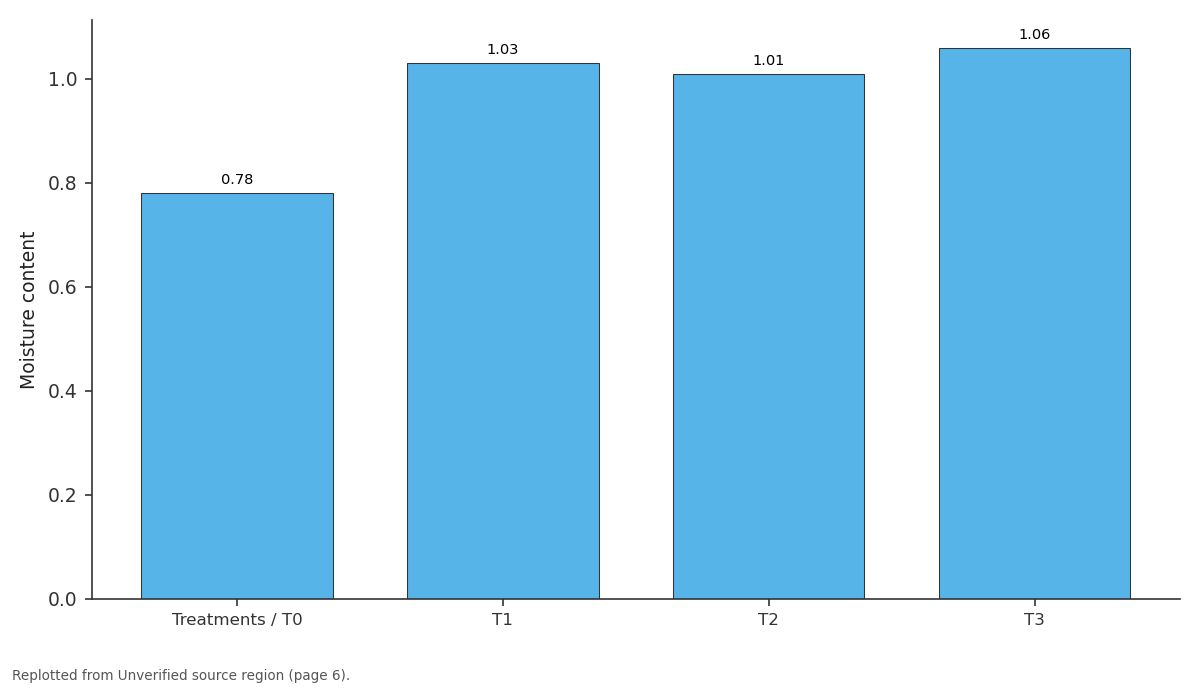
Moisture content: Treatments / T0 vs T1 vs T2 vs T3
Replotted from a table (page 6) of the original paper. Every bar is the paper's own table value.
View source evidence ↗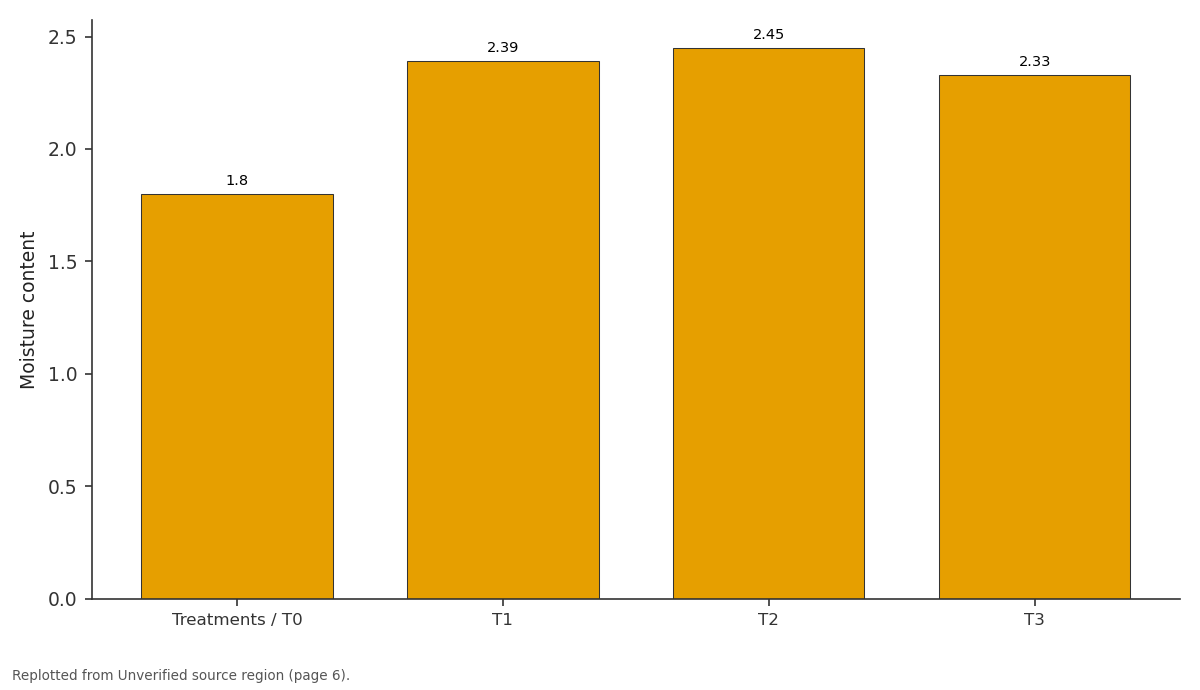
Moisture content: Treatments / T0 vs T1 vs T2 vs T3
Replotted from a table (page 6) of the original paper. Every bar is the paper's own table value.
View source evidence ↗Figures & tables
From the original paper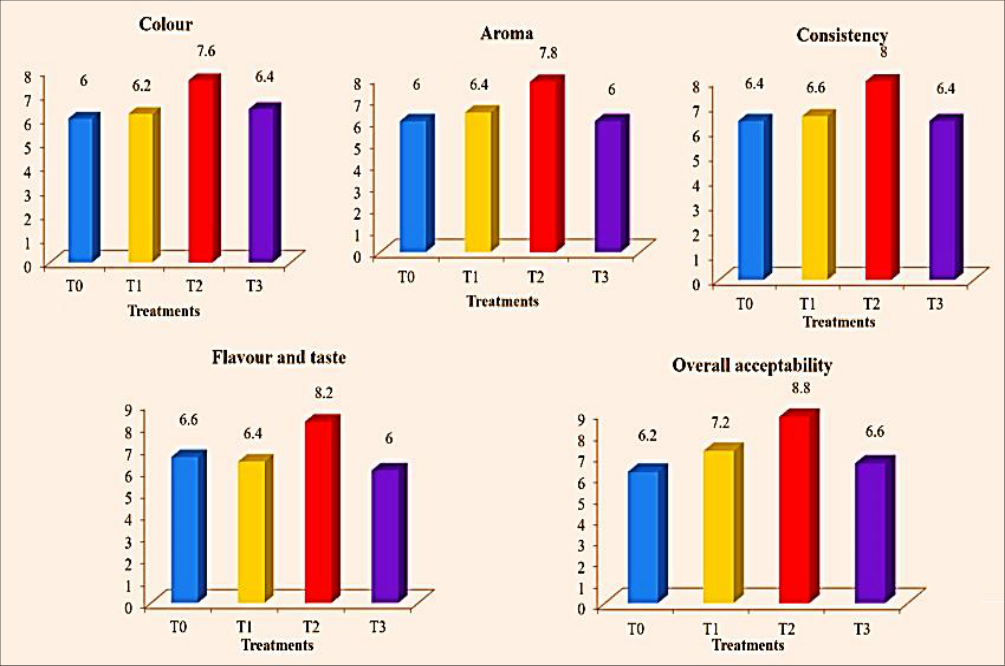 Figure 1
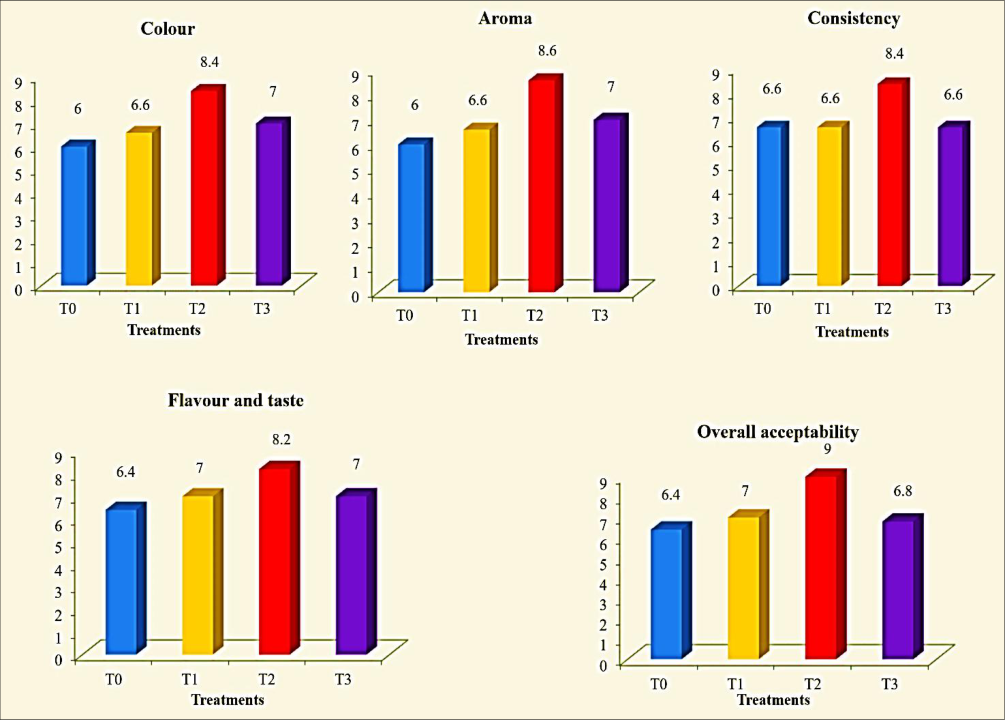 Figure 2
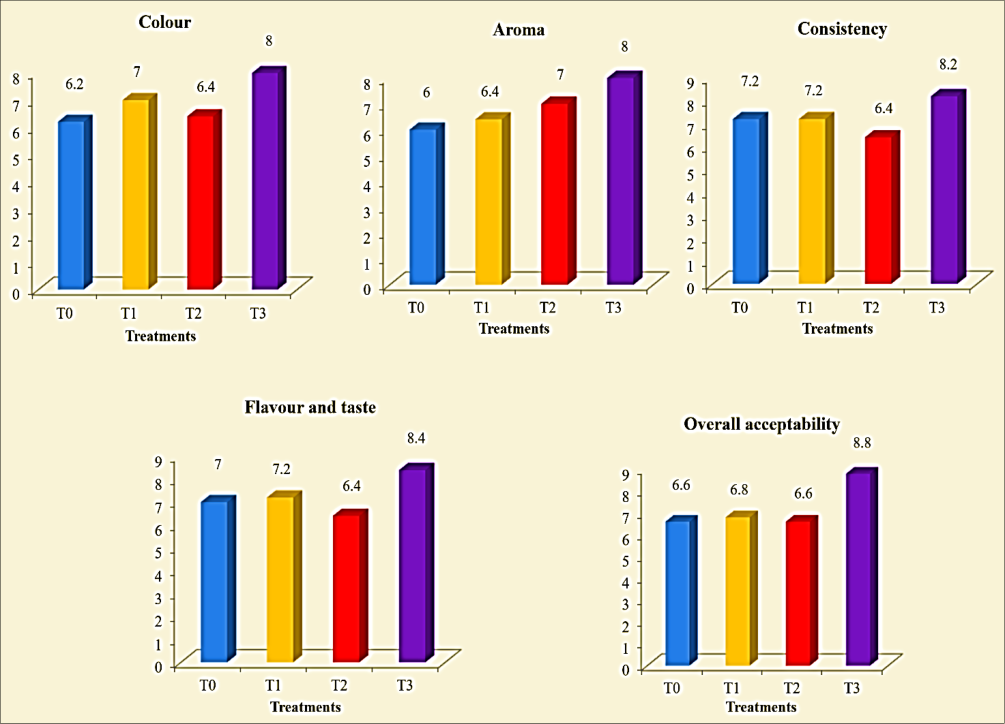 Figure 3
Introduction
Fruits are one of the perishables goods that are necessary for human diets. They are better and more affordable sources of preventive foods, have a high nutritional value and contribute significantly to human welfare. The fruit has the highest antioxidant properties amongst the various Indian tropical fruits as it is a significant source of phenolic antioxidants hence helps in lowering cholesterol, maintaining blood pressure and body weight. This fruit has anti-inflammatory activity, antiulcer activity, hypoglycaemic activity as well as antimicrobial activity. This fruit is added in our diet can meet around 30% of our daily requirement of Vitamin C in just 100 g. (Anita Kanwar and Savita Budhwar, 2018) [1] . The carambola (Averrhoa carambola L.), an attractive fruit of the family Oxalidaceae, also known as the "Star fruit" had attained the status of underutilized fruits in Sri Lanka. Averrhoa carambola, tropical fruit which has the highest antioxidant properties of fighting against free radicals as well as the damage caused due to free radicals. (Udani et al., 2021) [12] Starfruit is an underutilized fruit and is rich in vitamin C. Fruit leather from starfruit was prepared in this study and analyses of its physicochemical, phytochemical, and sensory characteristics were performed. Five samples named A, B, C, D and E were prepared with different proportions of fruit pulp: sugar of 70:30, 75:25, 80:20, 85:15 and 90:10, respectively. (Gautam et al., 2024) [5] Carambola (Averrhoa carambola L.) is a drought resistant, evergreen and multipurpose tree. The word 'carambola' is derived from the Sanskrit word 'Karmaranga' which means "Food appetizer" (Manda et al., 2012) [10] Cape gooseberry rich in vitamin C found in the fruit could also benefit in improving immunity. Vitamin C plays certain important roles in healthy immune system response. Vitamin C is an essential micronutrient for humans, with pleiotropic functions related to its ability to donate electrons. (Carr and Maggini 2017) [2] Cape gooseberry is rich in Vitamins and minerals are found in small amounts in food, yet they are essential substances for metabolism. The impact of vitamins and minerals on health development and disease prevention is significant. (Jyoti et al., 2016) [7] Jaggery, also known as "Gur", is a type of non-centrifugal sugar (NCS) that is widely used in many Asian, African, and South American countries, including India and Colombia. Unlike refined white sugar, which mainly consists of only sucrose, jaggery contains minerals, vitamins, glucose, fructose (invert sugars) in addition to sucrose (Rao et al., 2022) [11] .
International Journal of Agriculture and Nutrition https://www.agriculturejournal.net Jaggery of high quality is golden yellow in colour, hard in texture, crystalline in structure, sweet in taste and low in moisture. A good quality jaggery contains over 70% sucrose, below 10% of glucose and fructose, less than 5% minerals and under 3% moisture. (Hirpara et al., 2020) [6] . Furthermore, the integration of medicinal herbs like mint (Mentha spp.), rose petals (Rosa spp.), basil (Ocimum spp.) into preserved food products adds functional value. These herbs possess natural antimicrobial, anti-inflammatory, and digestive properties and are known to enhance immunity and metabolic health (Pandey et al., 2014) [8] . Herbalinfused jams, jellies, and candies are increasingly gaining consumer acceptance as they combine traditional. Jam, jelly, and candy products are widely used in breakfasts, baking, and as quick snacks. Their convenience and acceptability make them ideal carriers for delivering nutrients and bio actives. Modern food science is now focused on low-sugar, natural, and herb-infused formulations to meet healthconscious consumer demands (Moura et al., 2022) [9] .
Materials and Methods
The raw materials Cape gooseberry, star fruit, orange, basil leaves, cinnamon powder, rose petals and other ingredients was procured from local market of Prayagraj. Three products using three different treatments were prepared. First product was jam which had 3 treatments with varying ingredients amount. Second product was jelly with three different amounts of ingredients in it. Third product was candy which also had three different treatments. Every product had 3 treatments, 4 replications and 1 control. The control was made without any alterations or value addition in it. The treatments were made by alterating the ingredients amount and doing the value addition with herbs. The treatments were replicated four times respectively to get an average value.
Prepared preserved fruits-based products Preparation of jam
Treatment T₂ consisted of 35 g star fruit pulp, 23 g cape gooseberry pulp, 25 g jaggery, 6 g mint leaves, 4 g rose petals, 3 g basil leaves, and 4 g cinnamon. The ingredients were blended properly and cooked under controlled conditions to prepare the jam was found to be best in terms of overall acceptability and nutritional value. T 2 showed the best overall acceptability with 9 points on 9-point hedonic scale. The Nutritional composition of T Source: Srivastava and Kumar (2006) [13] 3rd ED fruits and vegetable preservation Flow diagram of preparation of jam
Preparation of Jelly
The treatments were made by altering the proportion of ingredients in each treatment. Four replications of the treatment were made to obtain average. Out of three treatments T 2 was the best treatment with the use of the Jelly was prepared by using 26% star fruit pulp, 35% cape gooseberry pulp, and 25% jaggery, along with 5% rose petals, 4% mint leaves, and 5% basil leaves. The mixture was blended uniformly and cooked to achieve the desired jelly consistency. T 2 showed the best overall acceptability with 9 points on 9-point hedonic scale. The Nutritional composition of T 2 was 2.72% moisture, 3.82% ash content,69.81 gm of carbohydrates, 5.30 gm protein, 0.17 gm fats, 301.92 gm energy and 16.58 gm sugar.
Preparation of candy
The product had 3 treatments with varying proportion of ingredients in each treatment. Each treatments had 4 replications. Out of 3 treatments T 3 with the use of Cape gooseberry 35%, star 25%, Jaggery 23%, mint leaves 7%, basil leaves 3%, orange 7%, was found to be best in terms of overall acceptability and nutritional value. The T 3 had moisture content of 1.06%, ash 3.22%, carbohydrates 74.15gm, protein 3.35 gm, fat 0.48 gm, energy 298.25 kcal, iron 21.82 mg and a sensory score of 8.80 on 9-point hedonic scale which makes it the best treatment.
Flow diagram of preparation of candy
Source: (Srivastava 2003) [15] "Fruits and vegetable preservation" Ed.3: 299-233.
Result and Discussion
The data obtained from different aspects during this research' have been analysed and tabulated statistically to find out the relevant informational facts and also the factual meaning behind them. The results were briefly illustrated with the help of suitable charts. The analysed results are arranged sequentially under the following heads:
The sensory evaluation of fruit-based jam, jelly and candy flavoured with herbs revealed significant variation among treatments for all sensory attributes including colour, aroma, consistency, flavour and taste, and overall acceptability as measured using the 9-point hedonic scale. In the case of jam, treatment T₂ recorded the highest overall acceptability score (8.80) with superior ratings for colour (7.60), aroma ), indicating that a slightly higher herbal concentration was more suitable for confectionery products compared to spreads. The control treatments in all three products consistently showed lower sensory scores, demonstrating that the addition of herbs improved sensory characteristics such as flavour complexity, aroma intensity and product appearance. Statistical analysis further confirmed that the differences among treatments were significant at the 5% level, indicating that variation in herbal concentration had a significant influence on the organoleptic quality of the developed products. Similar findings have been reported in previous studies, which suggest that herbal extracts and natural flavouring agents can significantly enhance the sensory quality, functional value and consumer acceptance of fruit-based processed foods such as jams, jellies and confectionery products. sensorial characteristics of the 4 gums selected, in terms of visual aspect (colour, homogeneity, and general aspect), aroma (aroma to fruit and to herb), texture (consistency, elasticity, roughness), taste (bitter, sweet, to fruit, to herbs. (Guine R. et al., 2018) [4] .
Nutritional composition of fruit-based jam and jelly and candy
The nutritional composition of fruit-based jam, jelly and candy prepared with different herbal treatments (T 0 -T 3 ) showed statistically significant differences for all parameters as indicated by the F-test at p ≤ 0.05, demonstrating that the incorporation of herbal ingredients significantly influenced the nutritional profile of the products. In both jam, jelly and candy the moisture content increased slightly in the treated samples, with the highest value observed in treatment T 2 (2.45% in jam and 2.72% in jelly 1.06 in candy) compared to the control samples (1.80% and 2.00%, 0.78 respectively). This increase may be attributed to the hygroscopic nature of plant constituents present in herbs, which enhance moisture retention in fruit-based products. Overall, treatment T 2 in jam, T 2 in Jelly and T 3 in Candy demonstrated superior nutritional characteristics among had higher nutritional values than the control (T₀). The F-test indicates significant differences among treatments, showing that herbal flavouring improved the nutritional quality of the jam, jelly and candy. The total energy content of each jam was calculated by multiplying its carbohydrate content, protein content, fat content and fibre content by factors of 4, 4, 9 and 2, respectively and adding these values. The value was expressed in kilocalories per 100 g of the jam. Garg, S. et al., (2019) [3] .
Conclusion
This study indicates that the chosen fruits and herbs were high in Nutrient composition like Iron, antioxidants, fiber, vitamins, and minerals and low in calories. These particular fruits and herbs can be successfully included to candies, jams, and jellies. The made jam, jelly, and candies with various herbs and fruits found good sensory scores. It can be concluded that the fruits and herbs like star fruit and cape gooseberry Jam, Jelly and Candy are more acceptable than the control Jam, Jelly and Candy due to its of taste and flavor, consistency, color, and appearance, Any age group can easily consume fruits, herbs, and products enriched with Cape gooseberry, orange, and star into their daily diet, which will increase their intake of protein, fiber, vitamins, minerals, and antioxidants while lowering their calorie intake and protecting the body from degenerative diseases.
Figures and tables from the paper
References
13 in the original paper- Kanwar A, Budhwar S. Utilization of star fruit (Averrhoa carambola) into value added products and their storage stability. International Journal of Food Science and Nutrition. 2018;3(1):77-80.
- Carr AC, Maggini S. Vitamin C and immune function. Nutrients. 2017;9(11):1211. doi:10.3390/nu9111211.
- Garg S, Ghosh P, Rana SS, Pradhan RC. Preparation and quality evaluation of nutritionally enriched jam made from blends of Indian blackberry and other fruits. International Journal of Fruit Science. 2019;19(1):2944.
- Guiné R, Correia P, Florença S. Development of jelly gums with fruits and herbs: colour and sensory evaluation. Journal of International Scientific Publications: Agriculture and Food. 2018;6:340-349.
- Gautam S, Khadka N, Rai K. Effect of fruit pulp and sugar concentration on the physicochemical, phytochemical and sensory characteristics of star fruit (Averrhoa carambola) leather. Vietnam Journal of Science and Technology. 2024;62(5):869-878.
- Hirpara P, Thakare N, Kele VD, Patel D. Jaggery: a natural sweetener. Journal of Pharmacognosy and Phytochemicals. 2020;9(5):3145-3148.
- Jyoti T, Nikita W. Assessment of dietary micronutrient deficiency among adolescent girls. Food Science Research Journal. 2016;7(2):340-344.
- Pandey B, Singh B, Negi PS. Antimicrobial activity of essential oils and their potential application as natural preservatives. International Journal of Current Microbiology and Applied Sciences. 2014;3(3):643650.
- Manda H, Vyas K, Pandya A, Singhal G. A complete review on Averrhoa carambola. World Journal of Pharmacy and Pharmaceutical Sciences. 2012;1(1):1733.
- Rao GP, Singh P. Value addition and fortification in non-centrifugal sugar (jaggery): a potential source of functional and nutraceutical foods. ResearchGate. 2022;24(2):387-396.
- Udani KHA, Premakumar K, Sahana S. Development and evaluation of quality attributes, physicochemical profile of fruit jam from Avverhoa carambola L. blended with Pineapple. Research Journal of Agriculture and Forestry Sciences; 2021. ISSN, 2320, 6063.
- Srivastava RP, Kumar S. Fruit and vegetable preservation: Principles and practices. 3rd rev. & enl. ed. Lucknow: International Book Distributing Co.; 2006.
- Srivastava S, Srivastava AK, Suprasanna P, D'souza SF. Comparative biochemical and transcriptional profiling of two contrasting varieties of Brassica juncea L. in response to arsenic exposure reveals mechanisms of stress perception and tolerance. Journal of experimental botany. 2009 Aug 1;60(12):3419-3431.