
Research article · 2026 · Full text
International Journal of Horticulture and Food ScienceConsumer preference for strawberries and its relation to some of their characteristics
Volume 8(2) · Pages 29–34 · DOI: 10.33545/26631067.2026.v8.i2a.482 ↗
Research areasBerry genetics and cultivation researchSensory Analysis and Statistical MethodsOrganic Food and Agriculture
Abstract
Author-writtenThe research aims to identify consumers' preference for two varieties of Strawberry fruits produced in the College of Agriculture, University of Kirkuk, for the agricultural season 2023/2024, namely (Albiun) and (Rubygem), To study the correlation between the distinctive characteristics of consumers and their degree of preference for fruit qualities, two varieties of strawberries were planted at the Agricultural Research and Experimentation Station of the College of Agriculture, University of Kirkuk. After reaching the production stage, the fruits of each variety were displayed to a number of consumers, numbering 60 consumers, who were selected from a total of (449) members and students representing the research community. The opinions of the respondents were recorded through a questionnaire form, the first part of which included identifying the distinctive characteristics of the respondents, represented by (age, gender, smoking and the number of fruits consumed per month), while the second part included a set of paragraphs representing the sensory characteristics of the Strawberry fruits, namely (external appearance, fruit color, fruit texture, taste, flavor) in front of which were placed answer alternatives representing the degree of agreement on a seven-point scale from which the respondent chooses what represents his opinion on each of the previous characteristics. The data was collected for the period from (3/3/2023 to 3/24/2023) and then the data was emptied and analyzed using the SPSS statistical analysis program. The results showed that (41.7%) of the respondents were between (31-42) years old, (58.3%) of them were males, (80%) of the respondents were non-smokers, while (61.7%) of them consumed more than 23 fruits of Strawberry per month, and none of the characteristics showed a correlation with the degree of consumers' preference for the fruits. The results also showed that consumers preferred the fruits of the (Albiun) variety over the fruits of the (Rubygem) variety because it was distinguished by the characteristics of taste, color and flavor according to the consumers' evaluation of both varieties, which means that consumers want to buy the fruits of the Albiun variety and accept it in the markets when it is offered by farmers.
Summary
Source-checkedPlain-language reading of the full paper, prepared with AI and checked against the text. Each point links to the authors' own words.
Why it matters
- Strawberries are members of the Rosaceae family and are valued for their flavor and high nutritional content. View evidence ↗
- The fruits contain antioxidant compounds that may help combat obesity, cancer, and heart diseases, while also supporting dental health. View evidence ↗
- Meeting consumer desires regarding sensory qualities like color, texture, and appearance is essential for the successful marketing of agricultural products. View evidence ↗
The question
- The study sought to identify which strawberry varieties consumers prefer and are more likely to purchase. View evidence ↗
- The researchers aimed to determine if specific consumer characteristics influence how they evaluate strawberries. View evidence ↗
What they did
- The study compared consumer preferences for two strawberry varieties, Albiun and Rubygem, grown at the University of Kirkuk during the 2023/2024 season. View evidence ↗
- Consumers evaluated the varieties on a seven-point scale across five sensory attributes: taste, flavor, fruit color, fruit texture, and external appearance. View evidence ↗
- Data was collected via personal interviews from March 3 to March 24, 2023, after participants tasted fruits from both varieties. View evidence ↗
What they found
- Consumers preferred the Albiun variety (average score 6.07) over the Rubygem variety (average score 5.65) on a 7-point scale. View evidence ↗
- While Albiun scored higher in external appearance (5.27 vs 4.92), the difference was not statistically significant. View evidence ↗
- Albiun was significantly preferred over Rubygem in terms of fruit color, with scores of 5.55 and 5.08 respectively. View evidence ↗
- Albiun scored significantly higher than Rubygem in both taste (5.80 vs 5.23) and flavor (6.07 vs 5.42). View evidence ↗
- Gender did not significantly correlate with the degree of preference for the strawberries. View evidence ↗
- The amount of strawberries consumed per month did not significantly influence the preference for either variety. View evidence ↗
What it means
- The authors conclude that the Albiun variety is preferred by consumers due to its superior sensory characteristics. View evidence ↗
Visual summary
2 visualsIllustrations explain the paper; charts are replotted from the paper's own table values.
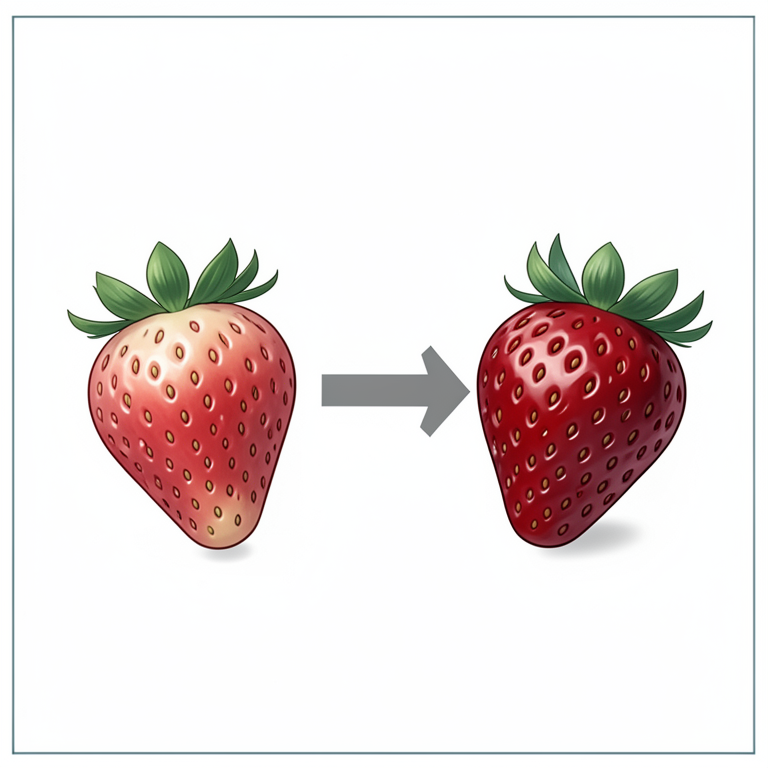
Comparison of Variety Preferences
AI-generated conceptual illustration (strawberry fruits of the cultivars Albiun and Rubygem). It explains the idea and does not show study data.
View source evidence ↗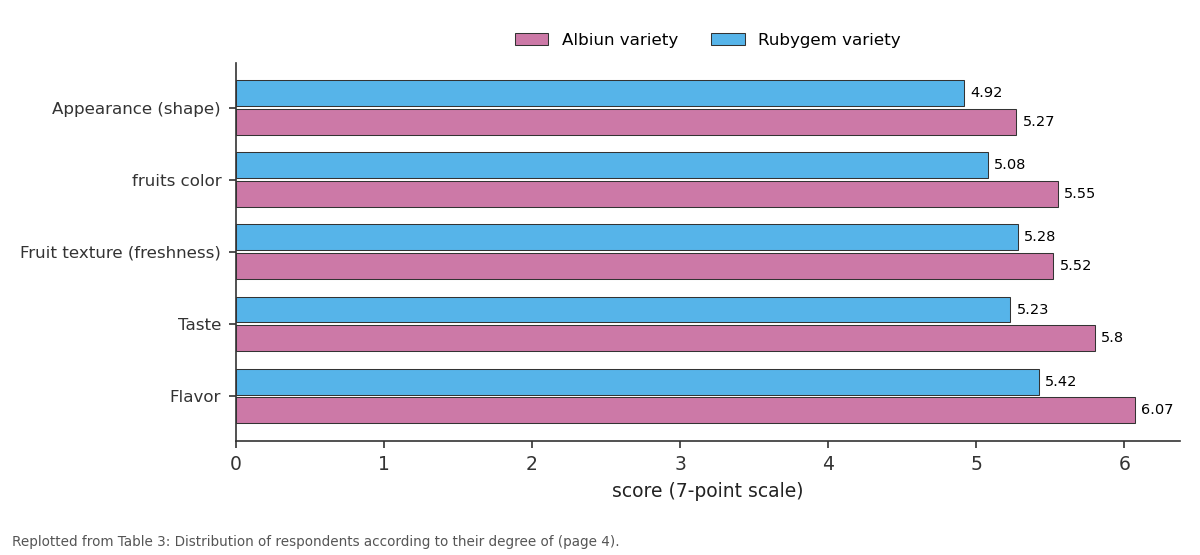
Albiun variety and Rubygem variety: Appearance (shape) vs fruits color vs Fruit texture... vs Taste vs Flavor
Replotted from Table 3 (page 4) of the original paper. Every bar is the paper's own table value.
View source evidence ↗Figures & tables
From the original paper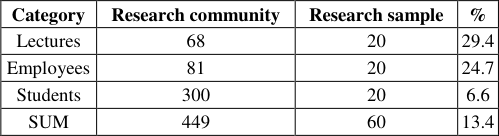 Table 1
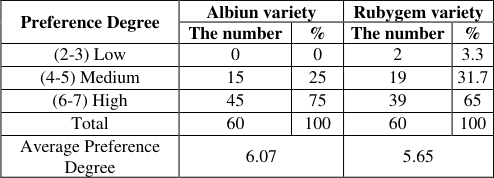 Table 2
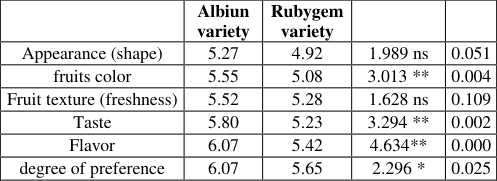 Table 3
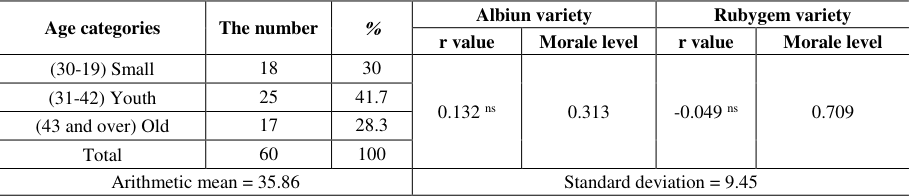 Table 4
 Table 5
 Table 6
 Table 7
Introduction
Strawberries (Fragaria x ananassa) are plants of the Rosaceae family. Their fruits are characterized by their high nutritional value and good flavor. They contain many nutrients such as proteins, carbohydrates, fats, and many trace elements, in addition to vitamin C [1,2] . The fruits also contain a high percentage of antioxidant compounds that fight common diseases such as heart disease and atherosclerosis, and combat obesity and cancer, and also enhance the health and safety of human teeth [3] . Strawberries are grown for fresh consumption or for making jams and juices [4] . Strawberries are somewhat similar to berries and are characterized by their conical shape and light red or pink color. They differ from one variety to another and are characterized by different taste, flavor, and fruit firmness [5] . Consumer tastes differ in determining the food products to be purchased, including agricultural products such as fruits, vegetables and their products, and directly affect their decision in the purchase process. The senses that humans possess, represented by sight, smell and touch, are inputs that contribute to determining the consumer's taste and directing the purchase process. Since the senses differ from one individual to another, their decision to purchase may also differ [6,7] . States that there are many factors that affect the consumer's purchasing decision, including the quality of the products, which greatly affects their decision to purchase products.
Their satisfaction with new products also contributes to repeating the purchase of the product [8] . Also found in their study that consumer taste greatly affects his desire to prefer imported varieties over local varieties of food commodities. Studies have shown that the expectations created by colors in consumers affect their decision regarding the quality of products, and that their response to those colors changes with the change in those colors. Smells also arouse feelings and emotions in people's souls and leave an impact on their nerves. The sense of touch is also important, as it is one of the first senses through which things are perceived and also affects the consumer's desire to buy. The consumer can distinguish the quality of agricultural products, including strawberries, by touching them and determining their texture and consistency, and then determining whether or not he decides to buy them [9] . Attention to the sensory qualities of the produced fruits, such as their external appearance, color, texture, and flavor, must meet the desires of consumers [8] . What is the benefit of producing agricultural goods in large quantities without taking into account their qualitative qualities that directly affect the purchasing process? Achieving the first only does not contribute to increasing farmers' profits, but may create a problem related to how to market the products and convince the consumer to make the purchase [10] . Therefore, it was necessary to study consumers' preference for the produced strawberries and determine whether it gives an indication of the success of marketing the variety in the region. Hence, the current study came to answer the following questions: Which strawberry varieties do consumers prefer and want to buy? What is the consumers' evaluation of the sensory characteristics of the two strawberry varieties under study? What is the relationship between the distinctive characteristics of consumers and their degree of evaluation of strawberries?
Study objectives
The research aims to achieve the following objectives: Identify consumers' preference for strawberry fruit qualities. Compare the degree of consumers' evaluation of the sensory qualities of the two varieties of strawberries. Determine the correlation between some of the distinctive characteristics of consumers represented by (age, gender, smoking, number of fruits consumed) and their preference for strawberry fruit qualities.
Study hypotheses
The current study tests the following research hypotheses: There are no significant differences between the degree of consumers' preference for strawberries between the Albiun and Rubygem varieties. The fruits of the Albiun and Rubygem varieties do not differ from each other in the sensory characteristics represented by (external appearance, fruit color, fruit texture, taste, flavor) from the point of view of the consumers surveyed. There is no significant correlation between the degree of consumers' preference for strawberries and each of their distinguishing characteristics represented by (age, gender, smoking, number of fruits consumed).
Operational definitions
Consumers: They are people who buy strawberries for the purpose of eating them fresh or making juices and jams from them. In this study, they are members of the College of Agriculture, including faculty members and employees, as well as graduate students in the college. Preference: The consumer's desire to buy strawberries according to his ability to distinguish between them through their external appearance, freshness, color, and flavor.
Materials and Methods
The descriptive approach was adopted in conducting the study on consumer preference, as the descriptive approach is suitable for reaching accurate data and facts about consumer preference at a specific time [11] , then classifying and tabulating that data and facts, processing them, and analyzing them accurately to extract their implications and reach comprehensive and accurate results and generalizations about the phenomenon under study [12] .
Research community and sample
The research community included all members and students of the College of Agriculture at the University of Kirkuk for the academic year 2023/2024, amounting to (449) members and students. A simple random sample was selected, consisting of (20) lecturers, (20) employees, and (20) students, who were selected randomly according to Table (1). Preparing the questionnaire form In order to collect data related to the research, a questionnaire form was prepared consisting of two parts: the first part included some personal information about consumers represented by (age, gender, smoking, number of fruits consumed per month), while the second part included a seven-point scale consisting of a group of paragraphs to determine consumers' preference for strawberries for each of the two varieties (Albiun and Rubygem) according to some sensory characteristics represented by (external appearance, fruit color, fruit texture, taste, flavor), as well as the degree of his preference for each variety, as the consumer determines the degree of his evaluation for each of the previous sensory characteristics by specifying one of the following alternatives (very unacceptable, highly unacceptable, moderately unacceptable, acceptable, moderately acceptable, highly acceptable, very acceptable) for each variety separately after presenting him with a ripe fruit that had not been treated with the studied treatments (comparison treatment), and each consumer was asked to determine the degree of his preference for each variety according to the previous scale.
After completing the preparation of the questionnaire form in its initial form, it was presented to some specialists in agricultural guidance and horticulture at the College of Agriculture, University of Kirkuk, to demonstrate its suitability for collecting data for the research. After making some modifications according to the experts' point of view, the questionnaire form became ready to collect research data. Second: Measuring consumers' preference for strawberries. The preference scale, which was prepared as mentioned previously, included (5) sensory attributes, namely (external appearance, fruit color, fruit texture, taste, flavor), as well as the final consumer preference score between the two varieties. Alternatives were placed in front of each attribute: (very unacceptable, highly unacceptable, moderately unacceptable, acceptable, moderately acceptable, highly acceptable, very acceptable), and weights were given to them: (1, 2, 3, 4, 5, 6, 7). These scores were used as a basis for conducting the statistical analyses required for this study.
Measuring research variables
Measuring research variables
Data collection and analysis
After completing the preparation of the questionnaire, the data was collected by answering the paragraphs of the questionnaire using a personal interview with the consumers included in the research sample after giving them a fruit of each variety to evaluate its sensory qualities and record their answers in the questionnaire form for the period from (3/3/2023 to 3/24/2023). After that, it was emptied, tabulated, and then analyzed using the SPSS statistical analysis program for social sciences.
Statistical methods and means
Some statistical methods and means were used to achieve the research objectives such as (range, arithmetic mean, Pearson simple correlation coefficient, Spearman correlation coefficient, and (t) test). 1. Range: It was used to classify some independent variables into categories according to the following law: Range = highest value -lowest value Class length = (range) / number of categories (with rounding the results to the nearest integer).
Arithmetic mean:
It was used to describe the numerical values of each variable and its law is as follows: [13] .
= arithmetic mean n = number of respondents ∑x = sum of numerical values
Pearson's simple correlation coefficient (Pearson):
used to find the correlation between the degree of consumers' preference for strawberries and each of the variables of age and the number of fruits consumed per month according to the following law [14] . r = r = value of the correlation coefficient. xi = numeric values of the independent variable (x). yi = numeric values of the dependent variable (y). n = number of respondents.
Spearman's rank correlation equation:
It was used to find the correlation between the degree of consumers' preference for strawberries and each of the variables of gender and smoking, according to the following law: [15] . rs = Rank correlation coefficient ∑d 2 = Sum of squares of differences between ranks of variables n = Number of respondents
Test (t):
It was used to test the significance of the differences between the average evaluation score for the sensory attributes of the two strawberry varieties, as well as to test the significance of the correlation between the degree of consumers' preference for strawberries and each of the independent factors studied by comparing them with the tabular (t) value according to the following law: [16] . t = t = calculated value t. r = value of correlation coefficient. n = number of respondents.
Results and Discussion Identify consumers' preference for strawberry fruit qualities
The results in Table (2) showed that the average degree of preference of the surveyed consumers for the fruits of the Albiun variety of strawberries reached (6.07) degrees, which is higher than the average degree of their preference for the fruits of the Rubygem variety, which reached (5.65) degrees on a scale with a maximum degree of 7 degrees. The results of the study showed that (75%) of the surveyed consumers had a high preference for the Albiun variety, while (25%) of them indicated that their preference for the Albiun variety was average, while no consumer indicated that the preference was low, while (65%) of the surveyed consumers stated that the fruits of the Rubygem variety had a high preference, while (31.7%) of them stated that they found the strawberry fruits to have an average preference, and (3.3%) found them to be low in their preference. As shown in Table (2), it is clear from the above that consumers preferred the Albiun variety over the Rubygem variety, and the reason for this may be due to its superiority in sensory characteristics, which means that this variety has a high marketing potential.
Compare the degree of consumers' evaluation of the sensory qualities of the two varieties of strawberries
Table (3) shows that the average degree of consumers' evaluation of all sensory attributes of the Albiun variety outperformed all sensory attributes of the Rubygem variety, as it was shown that the average degree of evaluation of the external appearance attribute of the Albiun variety reached (5.27) degrees, which is higher than that of the Rubygem variety, which reached (4.92) degrees. When compared, it was found that the calculated (T) test value reached (1.989), which is not significant at the (5%) level, which means accepting the research hypothesis that states that there are no significant differences between the two varieties in the external appearance attribute. As for the consumers' evaluation of the fruit color trait, it was found that the average evaluation score for the Albiun variety reached (5.55) degrees, which is higher than that for the Rubygem variety, which reached (5.08) degrees. When comparing the average evaluation score for the two varieties, it was found that the calculated (T) test value reached (3.013), which is significant at the (1%) level, which means rejecting the research hypothesis that indicates the absence of significant differences between the two varieties in the fruit color trait from the point of view of the consumers surveyed.
As for the consumers' evaluation of the fruit tissue characteristic (softness), it was found that the average evaluation score of the Albiun variety reached (5.52) degrees, which is higher than that of the Rubygem variety, which reached (5.28) degrees. When comparing the average evaluation score of the two varieties, it was found that the calculated (T) test value reached (3.013), which is not significant at the (5%) level, which means rejecting the research hypothesis and accepting the alternative, which indicates the absence of significant differences between the two varieties in the fruit tissue characteristic (softness) from the point of view of the consumers surveyed.
As for the consumers' evaluation of the taste and flavour of the fruits, it was found that the average evaluation score for the Albiun variety reached (5.80) and (6.07) points for each of them respectively, which is higher than that for the Rubygem variety, which reached (5.23) and (5.42) points for the two qualities respectively. When comparing the average evaluation score for the two varieties, it was found that the calculated (T) test value reached (3.294) and (4.634), which is significant at the (1%) level, which means accepting the research hypothesis that indicates the absence of significant differences between the two varieties in the taste and flavor qualities of the fruits from the point of view of the consumers surveyed. Finally, when comparing the average degree of consumer preference between the Albiun and Rubygem varieties, it was found that the average degree of preference for the Albiun variety was higher than the average degree of preference for the Rubygem variety. To determine the significance of the difference between the two averages, it was found that the calculated (T) test value reached (2.296), which is significant at the (5%) level, which means rejecting the research hypothesis that indicates that there is no significant difference between the two varieties in their average degree of preference from the point of view of the consumers surveyed, as shown in Table (3). (ns)= Not significant, (*)= Significant at 5%, (**)= Significant at 1%
Determine the correlation between some of the distinctive characteristics of consumers represented by (age, gender, smoking, number of fruits consumed) and their preference for strawberry fruit qualities Age: The results in Table (4) showed that the youngest respondents were (19) years old and the oldest were (55) years old, with an average of (35.86) years and a standard deviation of (9.45) degrees. The respondents were distributed into three categories according to the range and category length laws, where it was found that (41.7%) of the respondents were in the middle category whose ages ranged from (31-42) years, while it was found that (30%) of them were in the young category whose ages ranged from (19-30) years, while it was found that (28.3%) of the respondents were in the old age category which was (43 and over). In order to find the correlation between the degree of preference of the surveyed consumers for strawberries and their age, Pearson's correlation coefficient was used. The values of the correlation coefficient were (0.132) and (-0.049) for both types, respectively, and they were not significant at either level, which means accepting the research hypothesis that states (there is no significant correlation between the degree of preference of the surveyed consumers for strawberries and their age), as shown in Table (4).
Gender
The results showed that the number of male consumer respondents was (35) individuals, representing (58.3%) of the total respondents, and the number of females in the research sample was (25) individuals, representing (41.7%) of the total respondents, as in Table (5). In order to find the correlation between the degree of preference of the surveyed consumers for strawberries and their gender, the Spearman-Brown correlation coefficient was used. The values of the correlation coefficient were (0.226) and (0.228) for both types, respectively, and they were not significant at either level, which means accepting the research hypothesis that states (there is no significant correlation between the degree of preference of the surveyed consumers for strawberries and their gender), as shown in Table (5).
Smoking:
The results showed that the number of respondents from consumers who smoke cigarettes reached (12) respondents, representing (20%) of the total respondents, and the number of respondents who are nonsmokers reached (48) individuals, representing (80%) of the total respondents, as shown in Table (6). In order to find the correlation between the degree of preference of the consumers surveyed for strawberries and smoking, the Spearman-Brown correlation coefficient was used, and the values of the correlation coefficient were (-0.013) and (-0.172) for both types, respectively, and they are not significant at any of the levels, which means accepting the research hypothesis that states (there is no significant correlation between the degree of preference of the consumers surveyed for strawberries and smoking), as shown in Table (6). (ns)= Not significant
Number of fruits consumed per month
The results in Table (7) showed that the smallest number of fruits consumed by the respondents per month was (4) fruits, and the largest number of fruits was (60) fruits, with an average of (29.73) fruits and a standard deviation of (13.51) degrees. The respondents were distributed into three categories according to the range and category length laws, where it was found that (43.3%) of the respondents were in the medium category, whose number of fruits they consumed during the month ranged between (23-41) fruits, while it was found that (38.3%) of them were in the small category, whose number of fruits they consumed ranged between (4-22) fruits, while it was found that (18.4%) of the respondents were in the large consumption category, which was between (42-60) fruits.
In order to find the correlation between the degree of preference of the surveyed consumers for strawberries and the number of fruits they consume, Pearson's correlation coefficient was used. The values of the correlation coefficient were (0.163) and (0.092) for both types, respectively, and they were not significant at either level, which means accepting the research hypothesis that states (there is no significant correlation between the degree of preference of the surveyed consumers for strawberries and the number of fruits they consume during the month), as shown in Table (7).
Table 7: Distribution of respondents according to the number of fruits they consume per month and its relation to their preference for strawberries.
| Categories of Number of fruits consumed per month | The number | % | Albiun variety | — | Rubygem variety | — |
|---|---|---|---|---|---|---|
| r value | Morale level | r value | Morale level | |||
| (22-4) little | 23 | 38.3 | 0.163 ns | 0.213 | 0.092 ns | 0.485 |
| (23-41)medium | 26 | 43.3 | ||||
| (60-42) a lot | 11 | 18.4 | ||||
| Total | 60 | 100 | ||||
| Arithmetic mean = 29.73 | Standard deviation = 13.51 |
Table text extracted from the original PDF; superscript letters are shown inline. The original table image is below.
View original table image
Categories of
Categories of
Conclusions and Recommendations
From the above, we conclude the following: 1. Consumers prefer the Albiun variety because it is superior in most sensory characteristics to the Rubygem variety. 2. The studied independent variables did not show a significant correlation with the degree of consumers' preference for strawberries, which means that there may be other variables with a significant relationship.
According to the conclusions reached, the current study recommends the following 1. Cultivation of the Albium variety due to its superiority in sensory characteristics from the consumers' point of view, as it has an acceptable external appearance, flavor and color. 2. Studying the relationship of other independent variables to consumers' preference for agricultural products.
Figures and tables from the paper
| Category | Research community | Research sample | % |
|---|---|---|---|
| Lectures | 68 | 20 | 29.4 |
| Employees | 81 | 20 | 24.7 |
| Students | 300 | 20 | 6.6 |
| SUM | 449 | 60 | 13.4 |
Table text extracted from the original PDF; superscript letters are shown inline. The original table image is below.
View original table image
| Preference Degree | Albiun variety | — | Rubygem variety | — |
|---|---|---|---|---|
| The number | % | The number | % | |
| (2-3) Low | 0 | 0 | 2 | 3.3 |
| (4-5) Medium | 15 | 25 | 19 | 31.7 |
| (6-7) High | 45 | 75 | 39 | 65 |
| Total | 60 | 100 | 60 | 100 |
| Average Preference Degree | 6.07 | 5.65 |
Table text extracted from the original PDF; superscript letters are shown inline. The original table image is below.
View original table image
| — | Albiun variety | Rubygem variety | — | — |
|---|---|---|---|---|
| Appearance (shape) | 5.27 | 4.92 | 1.989 ns | 0.051 |
| fruits color | 5.55 | 5.08 | 3.013 ** | 0.004 |
| Fruit texture (freshness) | 5.52 | 5.28 | 1.628 ns | 0.109 |
| Taste | 5.80 | 5.23 | 3.294 ** | 0.002 |
| Flavor | 6.07 | 5.42 | 4.634** | 0.000 |
| degree of preference | 6.07 | 5.65 | 2.296 * | 0.025 |
Table text extracted from the original PDF; superscript letters are shown inline. The original table image is below.
View original table image
| Age categories | The number | % | Albiun variety | — | Rubygem variety | — |
|---|---|---|---|---|---|---|
| r value | Morale level | r value | Morale level | |||
| (30-19) Small | 18 | 30 | 0.132 ns | 0.313 | -0.049 ns | 0.709 |
| (31-42) Youth | 25 | 41.7 | ||||
| (43 and over) Old | 17 | 28.3 | ||||
| Total | 60 | 100 | ||||
| Arithmetic mean = 35.86 | Standard deviation = 9.45 |
Table text extracted from the original PDF; superscript letters are shown inline. The original table image is below.
View original table image
| Gander categories | The number | % | Albiun variety | — | Rubygem variety | — |
|---|---|---|---|---|---|---|
| r value | Morale level | r value | Morale level | |||
| Male | 35 | 58.3 | 0.226 ns | 0.083 | 0.228 ns | 0.080 |
| Female | 25 | 41.7 | ||||
| Total | 60 | 100 |
Table text extracted from the original PDF; superscript letters are shown inline. The original table image is below.
View original table image
| Smoking categories | The number | % | Albiun variety | — | Rubygem variety | — |
|---|---|---|---|---|---|---|
| r value | Morale level | r value | Morale level | |||
| Smoke | 12 | 20 | -0.013 ns | 0.923 | -0.172 ns | 0.189 |
| Not smoke | 48 | 80 | ||||
| Total | 60 | 100 |
Table text extracted from the original PDF; superscript letters are shown inline. The original table image is below.
View original table image
References
15 in the original paper- Azeez K, Taha S. Response of two strawberry cultivars (Fragaria × ananassa Duch.) to foliar application of algae and iron chelate fertilizers. Kirkuk University Journal for Agricultural Sciences. 2023;14(3):98-112. DOI:10.58928/ku23.14311.
- United States Department of Agriculture (USDA). National nutrient database for standard reference [Internet]. 2006 [cited 2026 Feb 16]. Available from: http://www.us.gov
- Giampieri F, Forbes-Hernandez TY, Gasparrini M, Alvarez-Suarez JM, Afrin S, Bompadre S, et al. Strawberry as a health promoter: an evidence-based review. Food and Function. 2015;6(5):1386-1398.
- Ali Hussein S, Medan RA, Azeez DR. Effect of foliar application of chelated calcium and boron on growth and yield of strawberry (Fragaria × ananassa Duch.) cv. Festival. Kirkuk University Journal for Agricultural Sciences. 2017;8(5):77-86.
- K M, Mahmood S. Foliar application of two organic fertilizers on two strawberry cultivars (Fragaria × ananassa Duch.). Kirkuk University Journal for Agricultural Sciences. 2021;12(4):47-63. DOI:10.58928/ku21.12405.
- Hussein N, Oğuz C, Altalb A. Factors affecting consumer preferences of milk and dairy products: Mosul province example. Kirkuk University Journal for Agricultural Sciences. 2020;11(1):144-155. DOI:10.58928/ku20.11112.
- M'Sila (DZ): University of M'Sila, Faculty of Economics and Business; 2015. Available from: https://www.scribd.com/document/395232391
- Abbas AA, Al-Janabi AAH. Important elements influencing the purchase decision of foodstuffs among consumers: a prospective study of households in the city of Karbala. Iraqi Magazine for Managerial Sciences. 2009;6(25).
- Oda HK, Kshash BH. Rice consumption by rural households in Al Taleea district, Babylon province, Iraq. Euphrates Journal of Agricultural Science. 2024;16(2):208-218. Available from: https://www.iasj.net/iasj/download/68ebe45937bec4d6
- Al-Asadi SJ. Creativity of a scientific researcher in the humanities and social education sciences. 2nd ed. Iraq: Warith Cultural Foundation, Department of Studies and Research; 2008.
- Al-Rashidi BS. Educational research methods. 1st ed. Kuwait: College of Education, Kuwait University; 2002.
- Abdul Hafeez I, Hussein BM. Scientific research methods and statistical analysis in educational, psychological and sports fields. 1st ed. Dar Al-Kitab for Printing and Publishing; 2000.
- Joudah M. Basic statistical analysis using SPSS. 1st ed. Amman (JO): Wael for Publishing and Distribution; 2009.
- Al-Baldawi AHAM. Statistical methods. 1st ed. Amman (JO): Wael for Publishing and Distribution; 2009.
- Al-Quraishi IKS. Laboratory and non-laboratory methods and their impact on Arab countries. Iraqi Journal of Information. 2007;7(2).