
Research article · 2025 · Full text
International Journal of Horticulture and Food ScienceEffect of organic manures and liquid consortia on growth, yield and quality of onion
Volume 7(7) · Pages 01–05 · DOI: 10.33545/26631067.2025.v7.i7a.329 ↗
Research areasGarlic and Onion StudiesPlant Growth Enhancement TechniquesIrrigation Practices and Water Management
Abstract
Author-writtenAn experiment was conducted entitled “Effect of Organic Manures and Liquid Consortia on Growth, Yield and Quality of Onion (Allium cepa L.)” during rabi, 2024-25 at Instructional Farm, School of Agricultural Sciences, Dabok, Udaipur. The experiment comprised of ten treatments using organic manures and liquid consortia either alone or in combinations which were replicated thrice in randomized block design. Onion variety N-53 was used as a test crop. The results revealed that among all treatments T8 (50% RDN through Poultry manure + 50% RDN through Vermicompost + Liquid Consortia) was found to significantly increase growth, yield attributes, yield, quality parameters, as well as economics of onion. It was found that maximum value of growth parameters viz., plant height (58.67 cm), leaf length (45.23 cm), number of leaves plant-1 (11.85), neck thickness (11.85 mm), yield attributes and yield viz., bulb diameter (6.24 cm), fresh bulb weight (92.75 g), yield plot-1 (9.85 kg), yield ha-1 (45.60 t ha-1) were observed with the application of T8 (50% RDN through Poultry manure + 50% RDN through Vermicompost + Liquid Consortia). Further it was noted that maximum values of quality parameters viz., TSS (13.45 °Brix), chlorophyll content in leaf (65.42 mg 100 g-1), were found with treatment T8 (50% RDN through Poultry manure + 50% RDN through Vermicompost + Liquid Consortia). Maximum net return (₹682,500 ha-1) and B-C ratio (3.85) were also obtained with T8 (50% RDN through Poultry manure + 50% RDN through Vermicompost + Liquid Consortia).
Summary
Source-checkedPlain-language reading of the full paper, prepared with AI and checked against the text. Each point links to the authors' own words.
Why it matters
- Organic fertilizers are beneficial for onion growth because they improve soil structure, water retention, and microbial activity. View evidence ↗
- Combining organic manures with biofertilizers is considered an ecologically friendly alternative to using chemical fertilizers, which can harm soil health. View evidence ↗
The question
- The study aimed to evaluate how different organic manures and liquid consortia affect the growth, yield, and quality of onions. View evidence ↗
What they did
- The field experiment took place from November 2024 to March 2025 at the Horticulture farm in Dabok, Udaipur. View evidence ↗
- The researchers used onion variety N-53 in a randomized block design with ten different treatments, each replicated three times. View evidence ↗
- The study used a seed rate of 10-12 kg ha-1 and a planting spacing of 15 cm x 10 cm. View evidence ↗
What they found
- Treatment T8 (50% RDN poultry manure + 50% RDN vermicompost + liquid consortia) produced the best growth, including a plant height of 58.67 cm and leaf length of 45.23 cm. View evidence ↗
- The highest yield was achieved with treatment T8, resulting in a bulb diameter of 6.24 cm and a yield of 45.60 t ha-1. View evidence ↗
- Economically, treatment T8 was the most profitable with a net return of ₹682,500 ha-1 and a B-C ratio of 3.85, compared to the control (T1) which had a net return of ₹301,000 ha-1. View evidence ↗
What it means
- The authors conclude that the combination of 50% RDN poultry manure, 50% RDN vermicompost, and liquid consortia is highly effective for onion production. View evidence ↗
- The authors note that their conclusions are based on a single year of investigation and require further evaluation. View evidence ↗
Visual summary
3 visualsIllustrations explain the paper; charts are replotted from the paper's own table values.
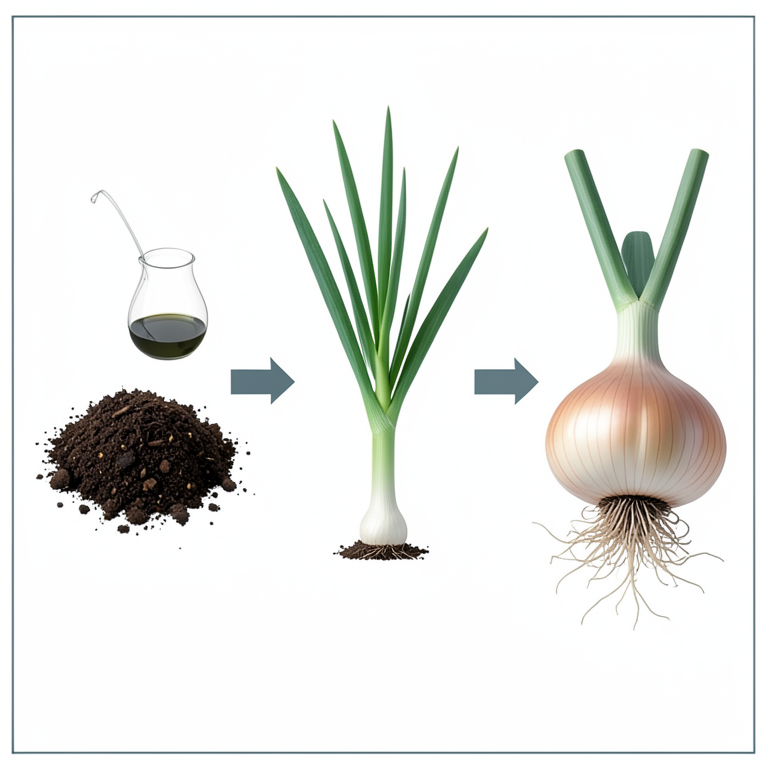
Impact of Organic Nutrients on Onion Development
AI-generated conceptual illustration (onion plants (Allium cepa)). It explains the idea and does not show study data.
View source evidence ↗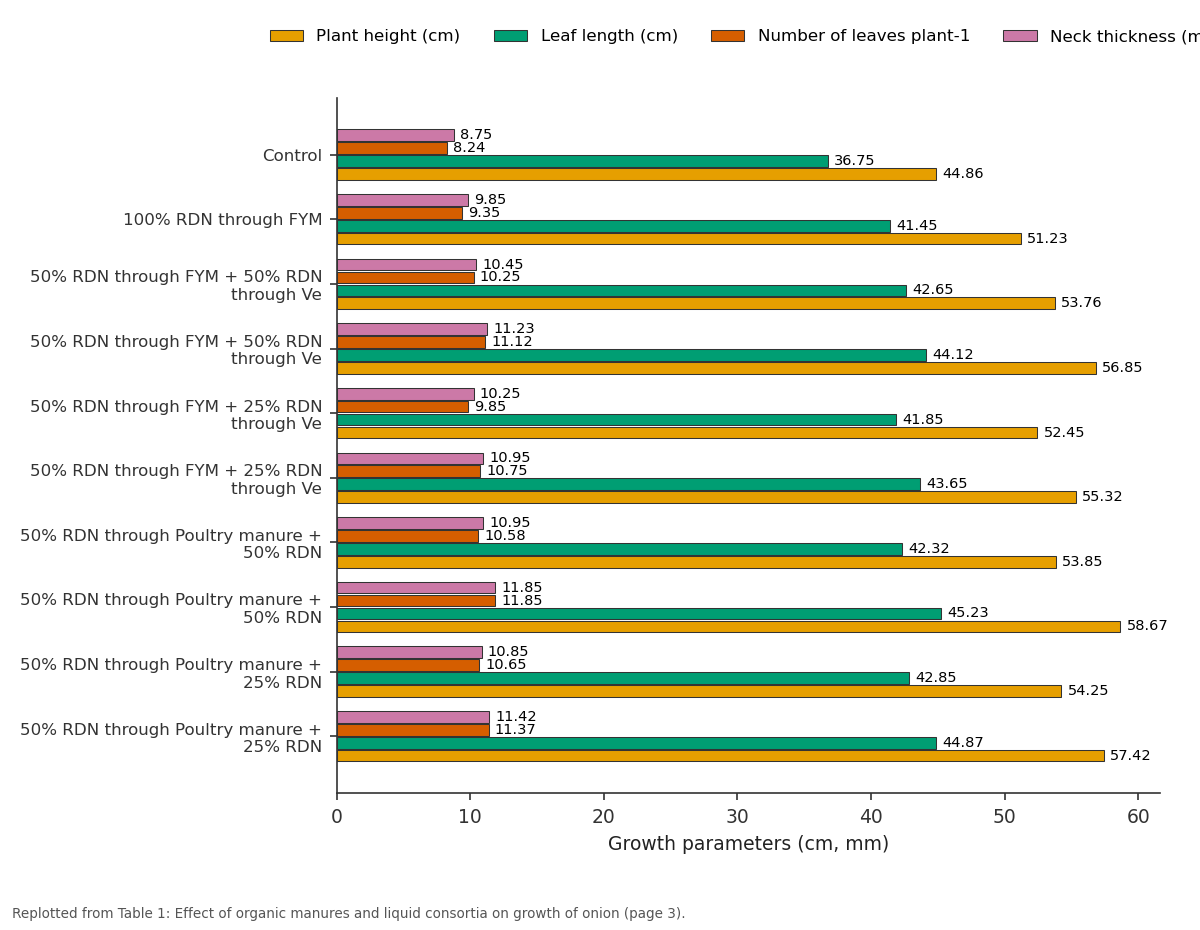
Plant height (cm) and Leaf length (cm) and more: Control vs 100% RDN through FYM vs 50% RDN through FYM +... vs 50% RDN through FYM +... vs 50% RDN through FYM +...
Replotted from Table 1 (page 3) of the original paper. Every bar is the paper's own table value.
View source evidence ↗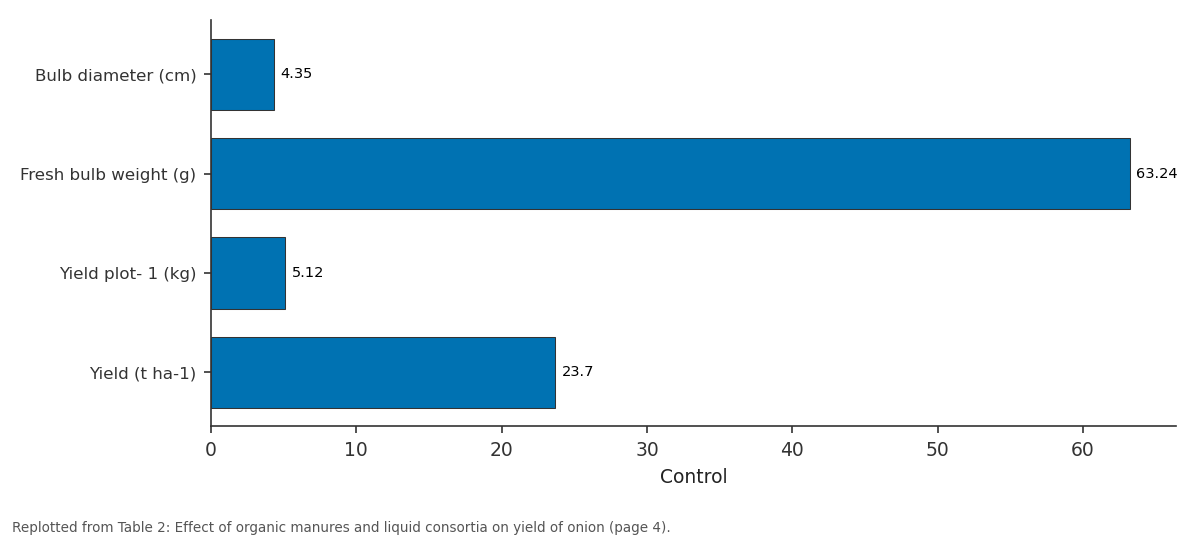
Control: Bulb diameter (cm) vs Fresh bulb weight (g) vs Yield plot- 1 (kg) vs Yield (t ha-1)
Replotted from Table 2 (page 4) of the original paper. Every bar is the paper's own table value.
View source evidence ↗Figures & tables
From the original paper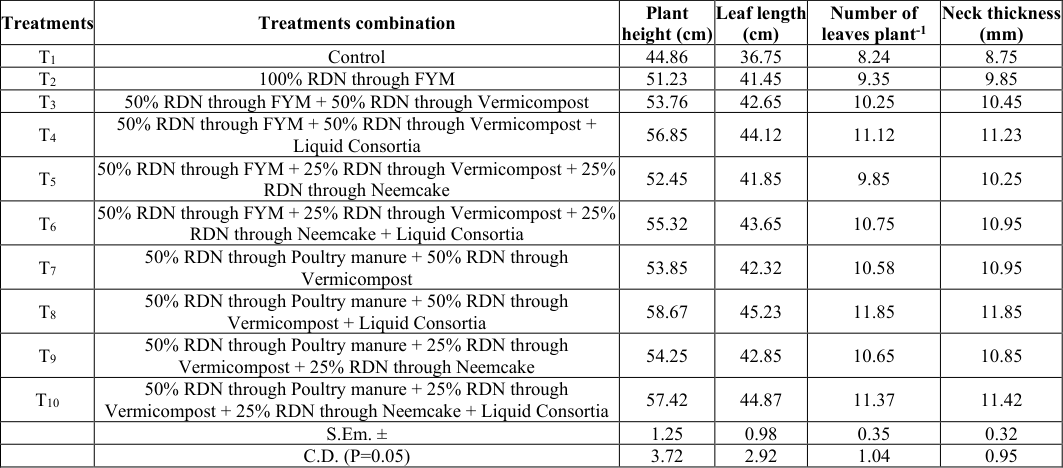 Table 1
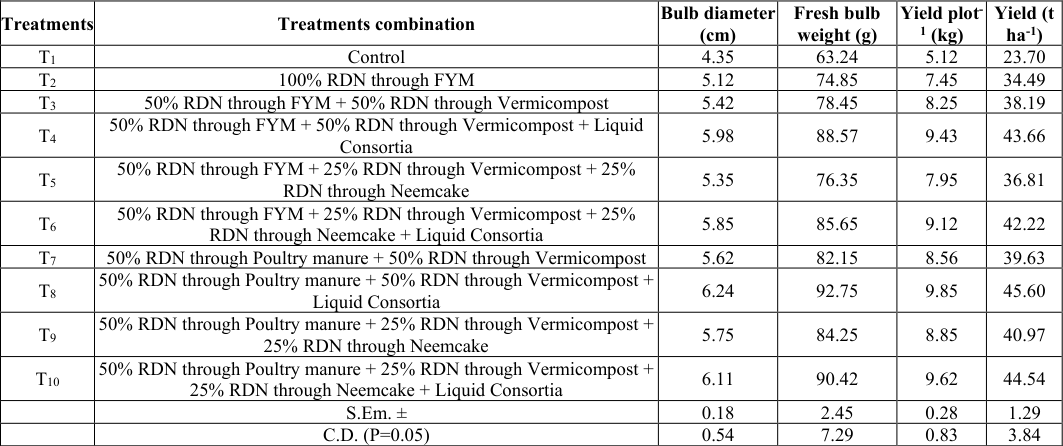 Table 2
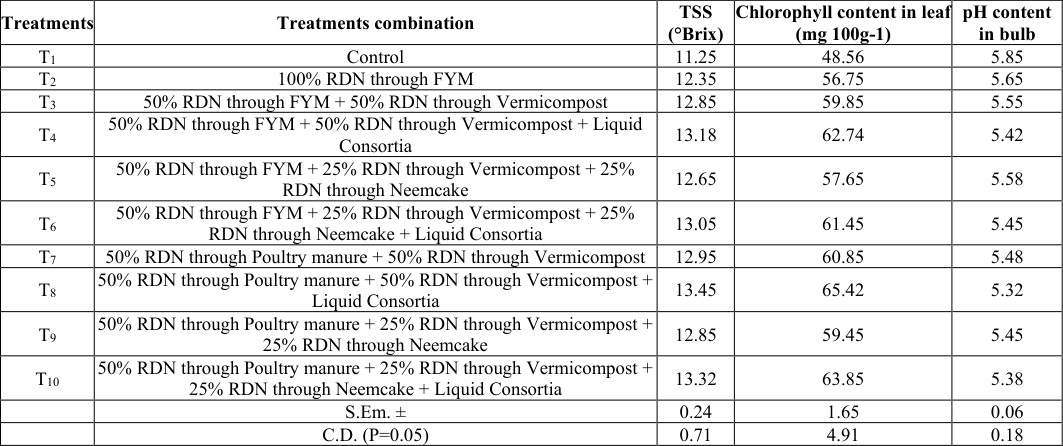 Table 3
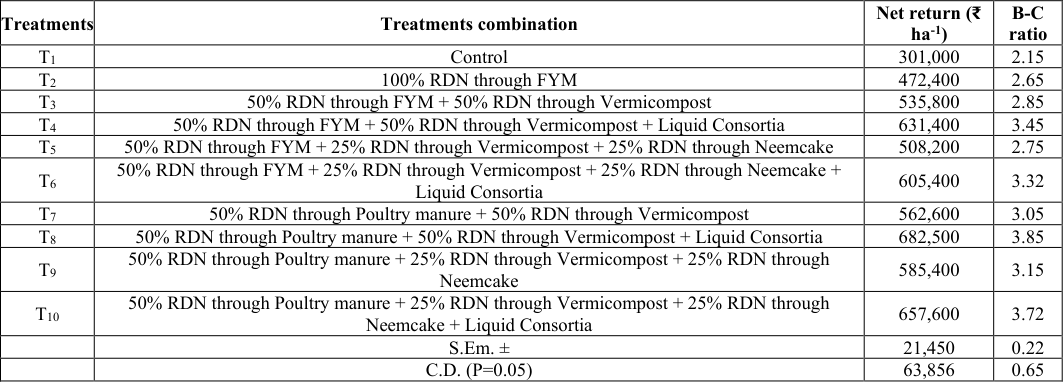 Table 4
Introduction
Onions (Allium cepa L.) are a widely grown vegetable and have specific nutrient requirements to achieve optimal growth and yield. The onion (Allium cepa L.), a member of the Amaryllidaceae family, is a widely cultivated and valued vegetable crop with a diploid chromosome number of 2n = 16. Originally thought to have come from Central Asia, with early cultivation noted in Iran and Pakistan, onions are grown worldwide for their culinary and medicinal uses. This biennial plant is typically cultivated as an annual for its edible bulbs, which are rich in vitamins C and B6, folic acid and fiber as well as antioxidants like flavonoids and sulphur compounds known for their health benefits. Applying both organic and inorganic fertilizers is part of managing nutrients in onions. Fertilizers made from organic materials, such as plants or animals, include compost, manure and green manure. Inorganic fertilizers also known as synthetic fertilizers are chemical-based and include nitrogen, phosphorus and potassium in various forms. Both types of fertilizers affect onions in different ways. Organic fertilizers improve soil structure, enhance microbial activity, and increase organic matter content. They help in better water retention and root development, which leads to improved onion growth. Organic amendments, such as farmyard manure or vermicompost, release nutrients slowly, supporting sustained growth over time. According to research by Mehta, (2023) [9] the application of organic fertilizers resulted in better bulb size, dry matter content and onion yield compared to untreated controls. Organic nutrients have been reported to improve the flavour, texture and nutritional quality of onions. They increase the content of sulphur compounds, which contribute to the pungency and overall quality of the onion bulb. Organic fertilizers contribute to lower environmental pollution and enhance biodiversity in the soil.
Organic farming is a system that integrates the interactions between soil, plants, water, soil microflora, and fauna; it is not just non-chemical agriculture. Organic farming aims in creating a healthy soil and helps in proper energy flows in soil, crop, water and environment, while the plant system keeps biological life cycle alive and helps in sustaining considerable levels in yield (Mishra, 2022) [1] . Alternative alternatives for supplying crops with the nutrients they need and filling up any future shortfalls include bio-fertilizers. Given the detrimental impact that chemical fertilisers alone have on soil health, employing organic manures in conjunction with biofertilizers will be ecologically friendly. Additionally, biofertilizers are widely acknowledged as inexpensive alternatives to chemical fertilisers that have no negative effects on the environment or soil health. Legumes are advised, and green manure crops should be used into organic farming wherever feasible as part of a sustainable rotation system.
Materials and Methods
The field experiment was carried out during November, 2024 to March, 2025 Horticulture farm, Department of Horticulture, School of Agricultural Sciences, Dabok, Udaipur. Geographically, Udaipur is located at 24° 34' N latitude and 73° 42' E longitude at an elevation of 582.17 meters above mean sea level (MSL). This particular part of India falls under agro climatic zone IV a i.e. "Sub-Humid Southern Plain and Aravalli Hills" of Rajasthan state. The geography of the experimental site was fairly levelled with an ample surface drainage and the field soil was having clay loam texture. In experiment conducted ten treatments in RBD Design with trice replications. In study, cultivar N -53 and sees rate 10-12 kg ha -1 was used. For raising seedling of onion, raised beds of 1.5 m width and 10 m length were prepared. Seeds were sown in lines at 10 cm apart and at 1.0 cm depth. After sowing, the beds were covered with a thin layer of well-decomposed FYM and irrigated with a rose can. Regular irrigation was provided to maintain optimum moisture in the nursery beds. Forty-five days old seedlings were transplanted in the well prepared field Seedling were planted at the spacing of 15 cm x 10 cm (R x P).
Results and Discussion
Results and Discussion
Effect of Organic Manures and Liquid Consortia on Growth attributes
Data examine in Table 1 indicate that application of integrated nutrient management brought about a significant variation in growth parameters as viz., Plant height, Leaf length, Number of leaves plant -1 and Neck thickness. The maximum plant height (58.67 cm) , maximum leaf length (45.23 cm) , number of leaves plant -1 (11.85) and maximum neck thickness (11.85 mm) were recorded with the application of T8 (50% RDN through Poultry manure + 50% RDN through Vermicompost + Liquid Consortia). These results were significantly superior to all other treatments. The result obtained by the use of poultry manure, Vermicompost and liquid consortia are due to rapid cell division, multiplication and cell elongation in meristematic region of plant which promoted vegetative growth of plant in the form of plant height, leaf length and number of leaves. Maximum value of growth parameters might be due to improved physio-chemical and biological properties of soil like water holding capacity, hydraulic conductivity, high rate of microbial transformation due to availability of organic carbon for heterotrophic organism, buffering effect, improved soil aggregation, aeration, release of organic acids etc. which act as stimulant for supply of crop nutrients during the course of microbial decomposition and enable the crop to utilize nutrient and water more efficiently (Patra and Sahoo 2023) [13] . The application of organic manure enhanced physiological processes including as transpiration, stomatal conductance, and photosynthesis. It suggests that the rise in these physiological processes may have contributed to improved nutrient absorption, improved digestion of carbohydrates, and the formation of new tissue, all of which in turn may have boosted vegetative growth. The results are in conformity with the findings of Kumar et al. (2016) [8] . Higher soil fertility and crop nutrient availability may be maintained and sustained with the help of organic manures. Utilized vermicompost and poultry manure to regulate nutrients enhanced the soil's chemical, physical, and biological characteristics, which promoted root development and may have enhanced nutrient absorption and effective translocation to the plant system during vegetative growth. Beneficial bacteria like as Azotobacter, Phosphate Solubilising Bacteria (PSB), and Potassium Mobilising Bacteria (KMB) are found in liquid consortia and are crucial for the growth and development of plants. Therefore, improved root development and plant growth may have been the outcome of balanced nutrition in the right nutritional environment. Moreover, increasing value of growth parameters under T8 (50% RDN through Poultry manure + 50% RDN through Vermicompost + Liquid Consortia) might be due to increased availability of nitrogen, phosphorous and potassium to the plant initially through poultry manure and then by Vermicompost and liquid consortia matching the needs of plants throughout the cropping season. The findings of the present study are in the similar consent with the findings of Bairwa et al. (2015) [1] , Singh (2015) [1] and Choudhary et al. (2021) [4] in onion.
| Treatments | Treatments combination | Plant height (cm) | Leaf length (cm) | Number of leaves plant-1 | Neck thickness (mm) |
|---|---|---|---|---|---|
| T1 | Control | 44.86 | 36.75 | 8.24 | 8.75 |
| T2 | 100% RDN through FYM | 51.23 | 41.45 | 9.35 | 9.85 |
| T3 | 50% RDN through FYM + 50% RDN through Vermicompost | 53.76 | 42.65 | 10.25 | 10.45 |
| T4 | 50% RDN through FYM + 50% RDN through Vermicompost + Liquid Consortia | 56.85 | 44.12 | 11.12 | 11.23 |
| T5 | 50% RDN through FYM + 25% RDN through Vermicompost + 25% RDN through Neemcake | 52.45 | 41.85 | 9.85 | 10.25 |
| T6 | 50% RDN through FYM + 25% RDN through Vermicompost + 25% RDN through Neemcake + Liquid Consortia | 55.32 | 43.65 | 10.75 | 10.95 |
| T7 | 50% RDN through Poultry manure + 50% RDN through Vermicompost | 53.85 | 42.32 | 10.58 | 10.95 |
| T8 | 50% RDN through Poultry manure + 50% RDN through Vermicompost + Liquid Consortia | 58.67 | 45.23 | 11.85 | 11.85 |
| T9 | 50% RDN through Poultry manure + 25% RDN through Vermicompost + 25% RDN through Neemcake | 54.25 | 42.85 | 10.65 | 10.85 |
| T10 | 50% RDN through Poultry manure + 25% RDN through Vermicompost + 25% RDN through Neemcake + Liquid Consortia | 57.42 | 44.87 | 11.37 | 11.42 |
| S.Em. ± | 1.25 | 0.98 | 0.35 | 0.32 | |
| C.D. (P=0.05) | 3.72 | 2.92 | 1.04 | 0.95 |
Table text extracted from the original PDF; superscript letters are shown inline. The original table image is below.
View original table image
Yield attributes and yield
A glance of the data represented in Table 2 clearly revealed in yield parameter Bulb diameter, Fresh bulb weight, Yield plot -1 and Yield hectare -1 . Significantly increase in yield of onion bulb with the application of organic manures and liquid consortia. The maximum bulb diameter (6.24 cm), fresh bulb weight (92.75 g), yield plot -1 (9.85 kg) and yield ha -1 (45.60 t ha -1 ) were recorded with the application of treatment T8 (50% RDN through Poultry manure + 50% RDN through Vermicompost + Liquid Consortia). The minimum values for yield attributes and yield were recorded with treatment T1 (Control). The delivery of nutrients in a balanced amount and appropriate availability may be the key factors for improved development of yield characteristics and bulb output. The application of organic manures and liquid consortia appeared to have a cumulative impact of increasing plant growth parameters, such as plant height, leaf length, number of leaves, and yield characteristics, which in turn led to a larger onion bulb yield. More locations for photosynthesis and the movement of photosynthates from source to sink (bulbs) were made possible by the improved plant development. Patil (2017) [12] concluded that organic sources contain all macro and micro nutrients and also improve physiochemical and biological properties of soil which enables plant roots to proliferate resulting in better uptake of nutrients by crops. Rajput and Choudhary (2019) [15] reported that the physical, chemical, and biological qualities of the soil were enhanced by organic manures, which in turn raised the yield characteristics and bulb yield values. Additionally, soil microflora use organic sources as a source of energy to change inorganic nutrients that are already present in the soil into a form that developing plants can easily use. The presence of beneficial microorganisms in liquid consortia like Azotobacter, Phosphate Solubilizing Bacteria (PSB) and Potassium Mobilizing Bacteria (KMB) improved plant growth and increased yield. When applied as a spray, these microorganisms colonized in the leaves increased the nutrient uptake and enhanced the total nutrient supply (Sharma et al., 2019) [16] . The use of poultry manure, Vermicompost and liquid consortia significantly improved the growth of onion crop. The increased values for yield parameters in the study might be due to higher number of bacteria, fungi and actinomycetes found in the soil due to application of organic manures and liquid consortia, due to which higher mineralization and solubilization of nutrients occurs that provide nutrients to plants resulting in increased yield attributes and yield. These results are in close conformity of the findings of Das and Patra (2020) [5] , Mishra et al. (2022) [10] and Rai et al. (2023) [14] in onion.
| Treatments | Treatments combination | Bulb diameter (cm) | Fresh bulb weight (g) | Yield plot- 1 (kg) | Yield (t ha-1) |
|---|---|---|---|---|---|
| T1 | Control | 4.35 | 63.24 | 5.12 | 23.70 |
| T2 | 100% RDN through FYM | 5.12 | 74.85 | 7.45 | 34.49 |
| T3 | 50% RDN through FYM + 50% RDN through Vermicompost | 5.42 | 78.45 | 8.25 | 38.19 |
| T4 | 50% RDN through FYM + 50% RDN through Vermicompost + Liquid Consortia | 5.98 | 88.57 | 9.43 | 43.66 |
| T5 | 50% RDN through FYM + 25% RDN through Vermicompost + 25% RDN through Neemcake | 5.35 | 76.35 | 7.95 | 36.81 |
| T6 | 50% RDN through FYM + 25% RDN through Vermicompost + 25% RDN through Neemcake + Liquid Consortia | 5.85 | 85.65 | 9.12 | 42.22 |
| T7 | 50% RDN through Poultry manure + 50% RDN through Vermicompost | 5.62 | 82.15 | 8.56 | 39.63 |
| T8 | 50% RDN through Poultry manure + 50% RDN through Vermicompost + Liquid Consortia | 6.24 | 92.75 | 9.85 | 45.60 |
| T9 | 50% RDN through Poultry manure + 25% RDN through Vermicompost + 25% RDN through Neemcake | 5.75 | 84.25 | 8.85 | 40.97 |
| T10 | 50% RDN through Poultry manure + 25% RDN through Vermicompost + 25% RDN through Neemcake + Liquid Consortia | 6.11 | 90.42 | 9.62 | 44.54 |
| S.Em. ± | 0.18 | 2.45 | 0.28 | 1.29 | |
| C.D. (P=0.05) | 0.54 | 7.29 | 0.83 | 3.84 |
Table text extracted from the original PDF; superscript letters are shown inline. The original table image is below.
View original table image
Quality parameters
The data regards to effect of organic manures and liquid consortia on total soluble solids chlorophyll content and pH content in bulb of onion have been presented in Table 3 Application of organic manures and liquid consortia had significant effect on quality of onion. The maximum TSS (13.45 °Brix), chlorophyll content in leaf (65.42 mg 100 g -1 ) and minimum pH content in bulb (5.32) were found in treatment T8 (50% RDN through Poultry manure + 50% RDN through Vermicompost + Liquid Consortia). While the minimum values of quality parameters were noticed under treatment T1 (Control). Application of organic manures provides all essential elements in sufficient amount which improves the overall metabolism of plant. Availability of micro nutrients, which are required for the synthesis of various nutrient components, improves the nutritional quality of the end product. Further the accumulation of more mineral nutrient improves the dry matter and overall quality of the product. This might be because organic carbon and nutrients are easily accessible, resulting in a balanced C-N ratio that enhances produce quality. Liquid consortia increases the availability of nutrients by enhancing microbial population resulting in increased mineralization and oxidation process. The increase in TSS content might be due to enhanced synthesis and translocation of carbohydrates from leaves to bulbs. The decrease in pH content in bulb might be due to increased organic acid content in the bulb. Similar findings were also noticed by Singh (2015) [1] , Kumar and Sharma (2016) [8] and Chand and Singh (2022) [3] in onion.
| Treatments | Treatments combination | TSS (°Brix) | Chlorophyll content in leaf (mg 100g-1) | pH content in bulb |
|---|---|---|---|---|
| T1 | Control | 11.25 | 48.56 | 5.85 |
| T2 | 100% RDN through FYM | 12.35 | 56.75 | 5.65 |
| T3 | 50% RDN through FYM + 50% RDN through Vermicompost | 12.85 | 59.85 | 5.55 |
| T4 | 50% RDN through FYM + 50% RDN through Vermicompost + Liquid Consortia | 13.18 | 62.74 | 5.42 |
| T5 | 50% RDN through FYM + 25% RDN through Vermicompost + 25% RDN through Neemcake | 12.65 | 57.65 | 5.58 |
| T6 | 50% RDN through FYM + 25% RDN through Vermicompost + 25% RDN through Neemcake + Liquid Consortia | 13.05 | 61.45 | 5.45 |
| T7 | 50% RDN through Poultry manure + 50% RDN through Vermicompost | 12.95 | 60.85 | 5.48 |
| T8 | 50% RDN through Poultry manure + 50% RDN through Vermicompost + Liquid Consortia | 13.45 | 65.42 | 5.32 |
| T9 | 50% RDN through Poultry manure + 25% RDN through Vermicompost + 25% RDN through Neemcake | 12.85 | 59.45 | 5.45 |
| T10 | 50% RDN through Poultry manure + 25% RDN through Vermicompost + 25% RDN through Neemcake + Liquid Consortia | 13.32 | 63.85 | 5.38 |
| S.Em. ± | 0.24 | 1.65 | 0.06 | |
| C.D. (P=0.05) | 0.71 | 4.91 | 0.18 |
Table text extracted from the original PDF; superscript letters are shown inline. The original table image is below.
View original table image
Economics
A keen observation of data Table 4 revealed that the application organic manures and liquid consortia on economics. The maximum net return (₹682,500 ha -1 ) and B-C ratio (3.85) were found with the application of T8 (50% RDN through Poultry manure + 50% RDN through Vermicompost + Liquid Consortia). However, the minimum net return (₹301,000 ha -1 ) and B-C ratio (2.15) were found with T1 (Control). This increased net return and B-C ratio might be due to the fact that under T8 treatment the cost of treatments was low as compared to output added, therefore, higher bulb yields resulted in higher net returns and B-C ratio. Similar finding was recorded through use of organic manures by Deshmukh et al. (2019) [6] , Patel (2021) [4] and Kaur and Verma (2022) [7] on onion crop.
| Treatments | Treatments combination | Net return (₹ ha-1) | B-C ratio |
|---|---|---|---|
| T1 | Control | 301,000 | 2.15 |
| T2 | 100% RDN through FYM | 472,400 | 2.65 |
| T3 | 50% RDN through FYM + 50% RDN through Vermicompost | 535,800 | 2.85 |
| T4 | 50% RDN through FYM + 50% RDN through Vermicompost + Liquid Consortia | 631,400 | 3.45 |
| T5 | 50% RDN through FYM + 25% RDN through Vermicompost + 25% RDN through Neemcake | 508,200 | 2.75 |
| T6 | 50% RDN through FYM + 25% RDN through Vermicompost + 25% RDN through Neemcake + Liquid Consortia | 605,400 | 3.32 |
| T7 | 50% RDN through Poultry manure + 50% RDN through Vermicompost | 562,600 | 3.05 |
| T8 | 50% RDN through Poultry manure + 50% RDN through Vermicompost + Liquid Consortia | 682,500 | 3.85 |
| T9 | 50% RDN through Poultry manure + 25% RDN through Vermicompost + 25% RDN through Neemcake | 585,400 | 3.15 |
| T10 | 50% RDN through Poultry manure + 25% RDN through Vermicompost + 25% RDN through Neemcake + Liquid Consortia | 657,600 | 3.72 |
| S.Em. ± | 21,450 | 0.22 | |
| C.D. (P=0.05) | 63,856 | 0.65 |
Table text extracted from the original PDF; superscript letters are shown inline. The original table image is below.
View original table image
Acknowledgement
AcknowledgementAuthors are grateful to the department of Horticulture, School of Agricultural Sciences, JRNRV University, Udaipur for providing facility during research work.
References
17 in the original paper- Bairwa RK, Singh V, Singh M, Kumar R, Sharma V. Effect of Organic Manures and Bio-fertilizers on Growth, Yield and Quality of Onion. Indian J Hortic. 2015;72(4):637-641.
- Bhardwaj S, Sharma R. Environmental and economic impacts of organic farming practices in onion cultivation. Int J Environ Agric. 2021;15(2):121-130.
- Chand R, Singh D. Enhanced TSS in Onion with Poultry Manure and Azospirillum. Int J Soil Sci. 2022;15(3):159-167.
- Choudhary R, Patel M. Azotobacter and FYM in Enhancing Growth Parameters in Onion (Allium cepa L.). J Eco-friendly Agric. 2021;10(3):233-239.
- Das A, Patra L. FYM and Azospirillum for Enhanced Sulfur and Pungency. J Hortic Sci. 2020;47(4):538-545.
- Deshmukh M, Singh S, Jadhav R, Patil S. Cost-saving potential of organic inputs in onion farming. Indian J Agric Finance. 2019;22(4):188-194.
- Kaur M, Verma A. Market trends and pricing of organic onions in India. Market Econ J. 2022;14(5):170-181.
- Kumar A, Sharma S. Vermicompost and PSB in Enhancing Yield and Profitability of Onion. J Plant Nutr. 2016;39(3):501-509.
- Mehta P, Singh R, Kumar S, Yadav A, Sharma N. Azotobacter and FYM in Enhancing Onion Yield and Profitability. J Agric Biol Sci. 2023;18(2):122-128.
- Mishra R, Sharma V. Combined Application of Poultry Manure and AMF to Improve Root Growth in Onion. Plant Soil Sci. 2022;44(1):89-95.
- Patel D. Impact of organic and bio-fertilizer amendments on onion yield and profitability. Hortic J India. 2021;35(1):89-97.
- Patil P. Poultry Manure and AMF in Enhancing Onion Quality. Agric Res J. 2017;19(2):165-172.
- Patra S, Singh M. Vermicompost and PSB for Increased Yield and Profitability in Onion. J Sustain Agric Hortic. 2023;35(2):211-218.
- Rai A, Sharma K. Poultry Manure and PhosphateSolubilizing Bacteria Impact on Onion Bulb Formation. Agric Res J. 2023;36(2):199-206.
- Rajput S, Choudhary P. AMF and Vermicompost for Improved TSS in Onion. J Org Agric. 2019;22(3):211220.
- Sharma P, Singh K. Poultry Manure and PSB for Better Flavor and Diameter in Onion. J Plant Sci. 2019;27(4):346-352.
- Singh J. Effects of FYM and Azospirillum on Onion Yield and Economics. J Hortic Sci. 2015;72(4):634639.
Cited by 1
From OpenAlex, OpenCitations and reference lists read by Scinovex
- Expression of quantitative and qualitative traits in post kharif onion (Allium cepa L.) grown using non-chemical amendments in Eastern Indian Plateau
A. K. Dutta, Arpan Mondal, Subrata Ghosh · International Journal of Horticulture and Food Science · 2025
A field trial comprising five onion varieties and three non-chemical nutrient sources was conducted at the organic experimental farm of RKMVERI, Ranchi, during post-kharif season. The experiment was conducted for two consecutive years (2022-23 and 2023-24) and was designed using a FRBD spread across 45 experimental plots [five varieties, viz., V1(Sukh Sagar), V2(Agrifound Dark Red), V3(N-53), V4(Pusa Sona), & V5(Pusa Riddhi); and three treatments, namely, T1 (NCSN-1), T2 (NCSN-2), & T3 (NCSN-3) with three replications each]. Several growth, yield, and quality attributes were considered for eva