
Research article · 2025 · Full text
International Journal of Horticulture and Food ScienceExpression of quantitative and qualitative traits in post kharif onion (Allium cepa L.) grown using non-chemical amendments in Eastern Indian Plateau
Volume 7(10) · Pages 16–22 · DOI: 10.33545/26631067.2025.v7.i10a.397 ↗
Research areasGarlic and Onion StudiesIrrigation Practices and Water ManagementAgricultural Science and Fertilization
Abstract
Author-writtenA field trial comprising five onion varieties and three non-chemical nutrient sources was conducted at the organic experimental farm of RKMVERI, Ranchi, during post-kharif season. The experiment was conducted for two consecutive years (2022-23 and 2023-24) and was designed using a FRBD spread across 45 experimental plots [five varieties, viz., V1(Sukh Sagar), V2(Agrifound Dark Red), V3(N-53), V4(Pusa Sona), & V5(Pusa Riddhi); and three treatments, namely, T1 (NCSN-1), T2 (NCSN-2), & T3 (NCSN-3) with three replications each]. Several growth, yield, and quality attributes were considered for evaluation. Results showed that growth and yield attributes of five onion varieties were significantly influenced by T1, where Jeevamrutha was used as non-chemical amendment, but the quality-contributing traits were greatly influenced by T2, where a biodynamic formulation (BD-501) was applied as foliar feeding. Findings also revealed that Agrifound Dark Red, N-53, and Sukh Sagar are the best- performing post-kharif onion varieties for the eastern Indian plateau.
Summary
Source-checkedPlain-language reading of the full paper, prepared with AI and checked against the text. Each point links to the authors' own words.
Why it matters
- India leads global onion production, producing 302.81 lakh tonnes annually. View evidence ↗
- In the eastern Indian plateau, onion growers often use traditional methods or excessive agro-chemicals, leading to reduced yields and deteriorated quality. View evidence ↗
- Non-chemical approaches using farm-based organic and biodynamic formulations are proposed as suitable interventions for tribal growers in the region. View evidence ↗
The question
- The study aimed to evaluate how different onion varieties interact with chemical-free organic treatments to affect growth, yield, and quality in the eastern Indian plateau during the late kharif season. View evidence ↗
What they did
- The study used a Factorial Randomized Block Design (FRBD) with 45 plots over two years (2022-23 and 2023-24) at RKMVERI, Ranchi, testing five onion varieties and three non-chemical nutrient sources. View evidence ↗
- Treatments included T1 (FYM and Jeevamrutha soil drenching), T2 (FYM and BD-501 foliar spray), and T3 (no organic/biodynamic inputs as a control). View evidence ↗
- The five onion varieties tested were Sukh Sagar (V1), Agrifound Dark Red (V2), N-53 (V3), Pusa Sona (V4), and Pusa Riddhi (V5). View evidence ↗
- The researchers measured growth (height, leaf number, length, and area), yield (bulb diameters, weight, and total yield), and quality (TSS, total sugar, reducing sugar, and ascorbic acid). View evidence ↗
What they found
- T1 (Jeevamrutha) produced the highest plant height at 44.00 cm, and variety V1 (Sukh Sagar) was the best performing variety for height at 39.98 cm. View evidence ↗
- The maximum leaf length was observed in T1 (48.03 cm) and in variety V2 (Agrifound Dark Red) at 43.69 cm. View evidence ↗
- T1 resulted in the largest equatorial bulb diameter (5.85 cm), while variety V2 had the largest diameter among varieties (5.76 cm). View evidence ↗
- Average bulb weight was highest in T1 (50.29 g), significantly outperforming T2 (40.33 g) and T3 (25.08 g). View evidence ↗
- T1 achieved the highest bulb yield (31.78 t.ha-1) compared to T3 (15.06 t.ha-1); among varieties, V2 yielded the most (26.44 t.ha-1) and V5 the least (19.53 t.ha-1). View evidence ↗
- T2 produced the highest Total Soluble Solids (13.91°Brix), and variety V5 had the highest TSS (14.13°Brix) while V1 had the lowest (11.32°Brix). View evidence ↗
- Total sugar was highest in T2 (6.05%) and variety V5 (6.38%), and lowest in T3 (5.16%) and variety V3 (4.92%). View evidence ↗
- Ascorbic acid content was highest in T2 (14.59 mg.100g-1) and variety V1 (14.82 mg.100g-1), and lowest in T1 (13.77 mg.100g-1) and variety V3 (13.48 mg.100g-1). View evidence ↗
What it means
- The authors conclude that Jeevamrutha (T1) significantly improves growth and yield, whereas the biodynamic formulation BD-501 (T2) enhances quality traits. View evidence ↗
- Agrifound Dark Red, N-53, and Sukh Sagar are recommended as the top-performing varieties for the eastern Indian plateau based on their bulb yields. View evidence ↗
Visual summary
2 visualsIllustrations explain the paper; charts are replotted from the paper's own table values.
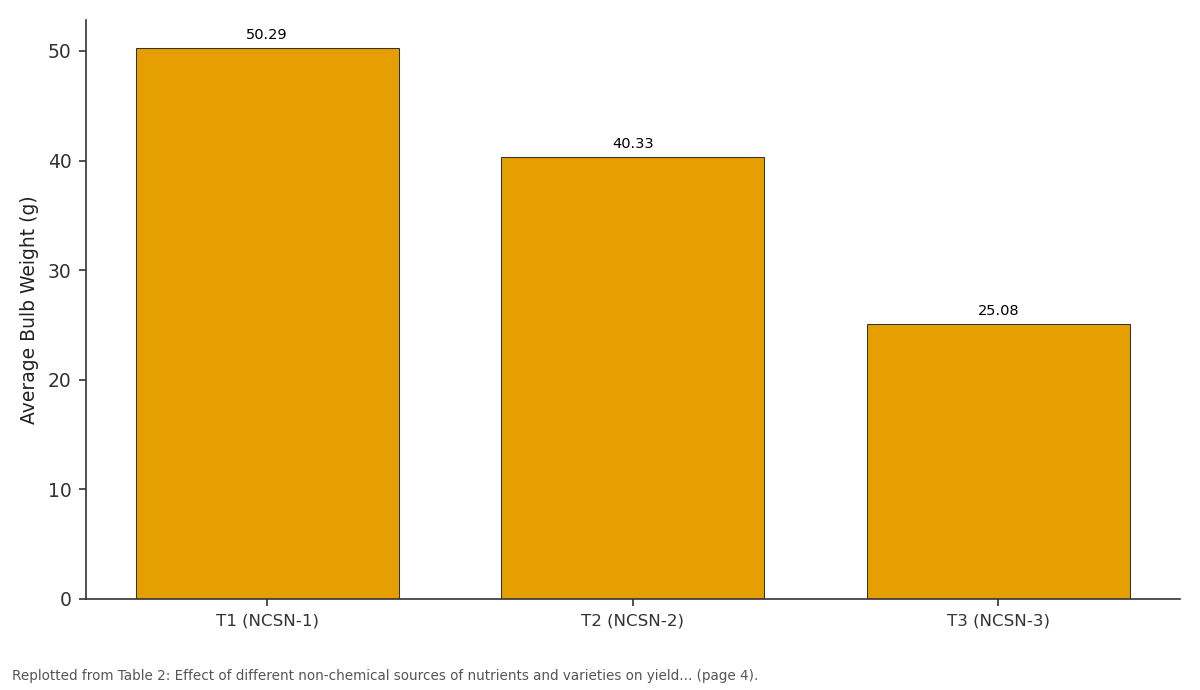
Average Bulb Weight (g): T1 (NCSN-1) vs T2 (NCSN-2) vs T3 (NCSN-3)
Replotted from Table 2 (page 4) of the original paper. Every bar is the paper's own table value.
View source evidence ↗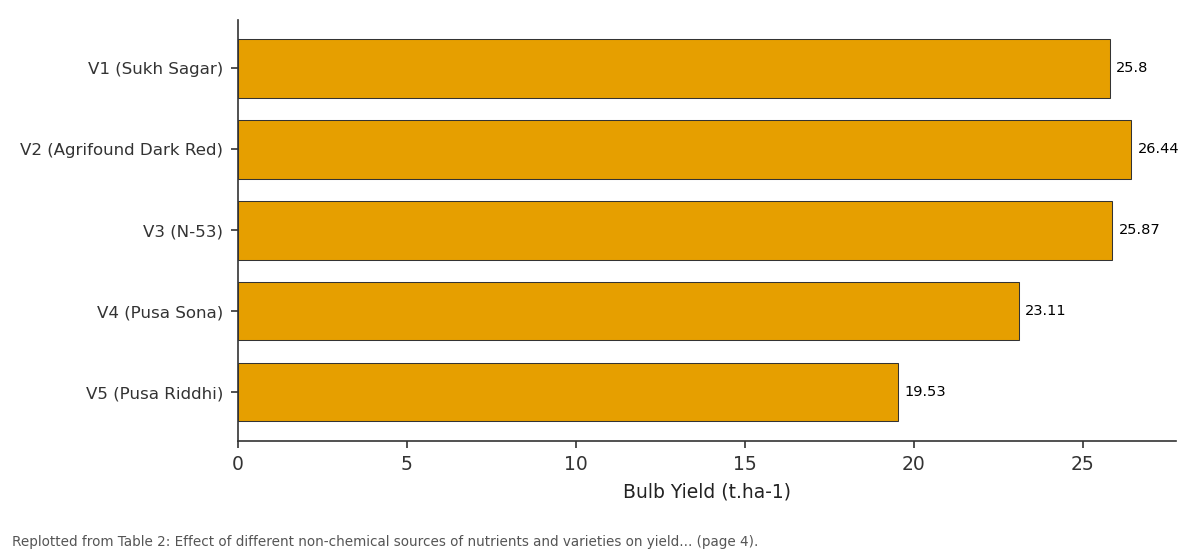
Bulb Yield (t.ha-1): V1 (Sukh Sagar) vs V2 (Agrifound Dark Red) vs V3 (N-53) vs V4 (Pusa Sona) vs V5 (Pusa Riddhi)
Replotted from Table 2 (page 4) of the original paper. Every bar is the paper's own table value.
View source evidence ↗Figures & tables
From the original paper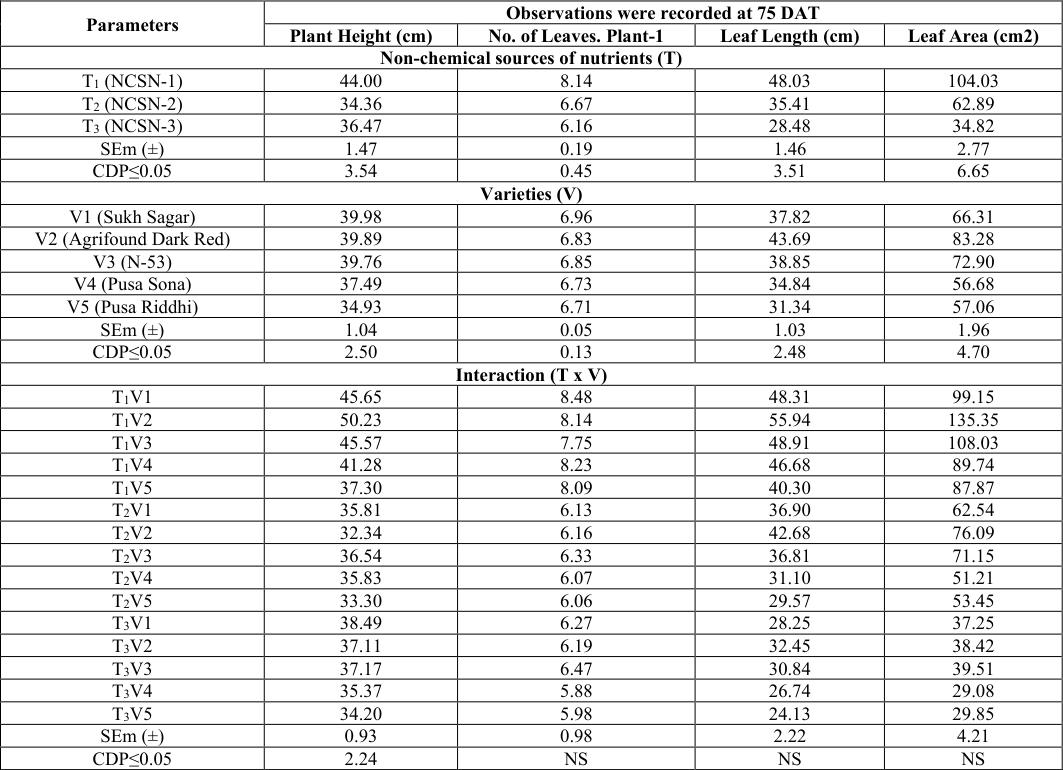 Table 1
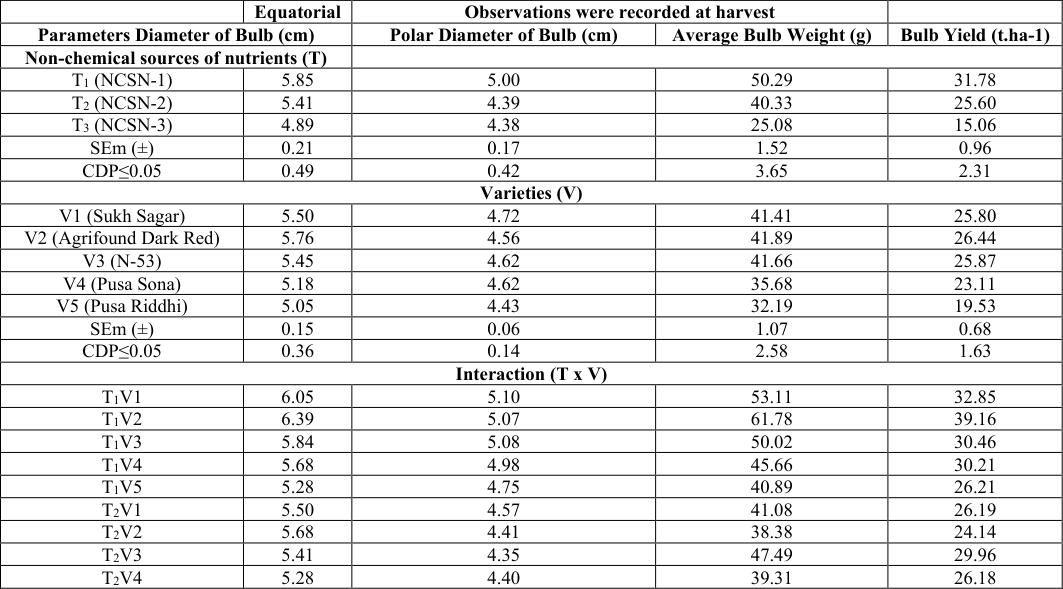 Table 2
 Table 3
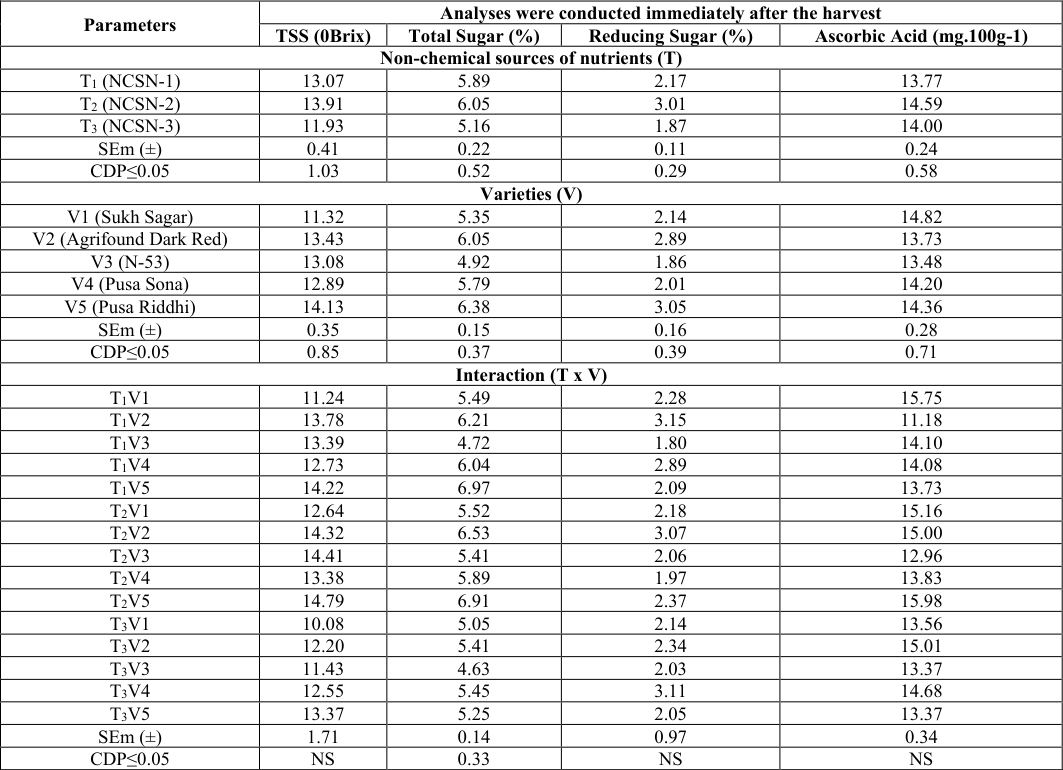 Table 3
Introduction
India is the global leader in onion production, with an annual production of 302.81 lakh tonnes, followed by the mainland China with 248.60 lakh tonnes [12] . Onion is an indispensable and important vegetable item that is used in every kitchen; therefore, its constant demand always remains throughout the year. It is basically grown as a rabi crop in the eastern Indian plateau after the harvesting of kharif paddy. The variety grown in the kharif season requires shorter photoperiod than rabi season crops. The day length requirement varies: for short-day varieties, it's less than 12 hours; for intermediate-day varieties, it's between 12 and 14 hours; and for long-day varieties, it's more than 14 hours for bulbing [35] . Growers of the eastern Indian plateau generally tend to grow the crop either in a very traditional manner without considering its seasonal and nutrient requirements or on a very limited commercial scale using indiscriminate application of agro-chemicals. Consequently, on one hand, there is reduced yield [41] , but on the other hand, quality deteriorates [38] . In this context, non-chemical growing approaches have been prioritized to counteract yield reduction and chemical hazards. Besides, the eastern Indian plateau is home to a remarkable tribal population with a very poor economic background; therefore, nonchemical growing approaches incorporating own-farm resource-based organic and biodynamic formulations may be the most suitable production intervention for tribal growers in the region. Jeevamrutha is an organic liquid formulation made of cow dung and cow urine that is rich in plant nutrients and plant growth enhancers [30,43] . Its efficacy on the growth and productivity of vegetables, including onions [23,31] , has been evidenced in various research findings [9,8,14,17,39] . Biodynamic farming is regarded as "above and beyond organic" [6] . The fundamental distinction between the two systems is due to the biodynamic agriculture's specific preparation [2] . Growth and yield improvement in various horticultural crops through biodynamic farming have been investigated by several researchers. For instance, higher yields have been observed in cauliflower, cabbage, gooseberry, and mango [34] , better growth and yield in cumin [37] , and improved onion yield [34] . Additionally, biodynamic agriculture has been shown to restore normal antioxidant production in plants, thereby increasing the nutritional value of biodynamic fruits and vegetables [15,31] .
Examples include the highest polyphenol concentration in lettuce [18] , the highest total phenolic content in red beets [5] , and mangoes [24] . There is a strong correlation between varieties and growing seasons on the growth, yield, and quality of onions [10] . Besides, different onion varieties respond differently to various organic nutrient sources [11,32] . Considering the above valuable information, the present investigation was designed to evaluate the interaction effect of onion varieties under different chemical-free organic treatments during the late kharif season in the eastern Indian plateau, focusing on growth, yield, and quality-contributing traits of the crop.
Materials and Methods
The experiment was conducted at the organic experimental farm of the university, located at 23.23°N latitude and 85.23°E longitude, at Morabadi, Ranchi, Jharkhand, India. Late kharif season of the experimental site with average temperature regimes of 140-200C (minimum) and 220-270C (maximum) for 2022-23 and 2023-24 was chosen to conduct the experiment.
Details of the experiment
Three treatments [T1 (NCSN-1) = FYM @ 10 t.ha-1 (as basal application) + Jeevamrutha @ 500 litre ha-1 thrice at 15 days interval starting 30 DAT (as soil drenching in split applications); T2 (NCSN-2) = FYM @ 10 t.ha-1 (as basal application) + Bio-Dynamic (BD-501) @ 3% thrice at 15 days interval starting 30 DAT (as a foliar spray in split applications); T3 (NCSN-3) = Without any organic or biodynamic inputs (therefore, organic by default as control)] and five varieties [V1 (Sukh Sagar), V2 (Agrifound Dark Red), V3 (N-53), V4 (Pusa Sona), & V5 (Pusa Riddhi)] with three replications were basic experimental compositions of the study. Accordingly, forty-five experimental plots of 3.0 m x 2.0 m were laid out through Factorial Randomized Block Design (FRBD) considering the crop spacing (15 cm x 10 cm). Different growth [Plant height (cm), No. of leaves. plant-1, Leaf length (cm), and Leaf area (cm2)], yield [Equatorial diameter of bulb (cm), Polar diameter of bulb (cm), Average bulb weight (g), and Bulb yield (t.ha-1)], and quality [TSS (0Brix), Total sugar (%), Reducing sugar (%), and Ascorbic acid (mg.100g-1)] contributing traits of the crop varieties were evaluated under several nonchemical sources of plant nutrients. Forty-five days old seedlings were transplanted [7] into the experimental plots. Subsequently, growth, yield, and quality attributes were recorded at 75 days after transplanting, at harvest, and immediately after harvest, respectively. Necessary crop husbandry practices, such as weeding and irrigation, were performed as needed. No severe incidences of insect-pests or diseases occurred during the experimentation period in both years.
Preparation of Jeevamrutha and BD-501
Jeevamrutha is a fermented organic liquid manure prepared by mixing cow dung, cow urine, and water in a 1:1:20 ratio, with 1 kg of molasses and 1 kg of gram flour added per 100 litres of finished product to enrich its nutrients and beneficial microbes. Adding a handful of soil, preferably from a garden, enhances microbial populations. Indigenous cow dung and urine are preferred. The mixture is stirred with a wooden ladle for 2-3 minutes, twice daily (morning and afternoon), in clockwise and anti-clockwise directions.
It is ready for application after 2-3 days of fermentation, depending on the prevailing weather conditions especially the temperature. BD-501 was prepared by filling cow horns with silica powder paste and burying them in a pit during the descending moon phase in March-April. After six months of incubation, the horns were unearthed in October-November during the ascending moon phase. The light yellowish silica powder was then extracted and stored in glass jars near a sunny window. For application, 30 g of horn silica (BD-501) was mixed with 1 litre of water to create a 3% solution for foliar feeding.
Methods adopted for measuring growth and yield parameters
Growth parameters recorded at 75 DAT: Plant height measured from ground level to the tip of the longest leaf in five tagged plants per plot, averaged and recorded in cm. The number of fully opened leaves was counted on five selected plants per plot 75 days after transplanting, then averaged and expressed as the number of leaves per plant. The leaf length of five tagged plants was measured at 75 DAT, and the average value was recorded as leaf length in cm. Leaf area was measured in five tagged plants randomly using a digital leaf area meter, and the average value was calculated and expressed in cm².
Yield attributes recorded at harvest: The equatorial diameter of five randomly selected onion bulbs at harvest was measured using slide calipers, and the average was calculated and expressed in cm. Similarly, the length of five randomly selected bulbs was measured between both polar ends, and the average was calculated as the polar diameter and expressed in cm. The weight of five randomly selected harvested bulbs from each plot was measured using a digital weighing machine, and the average was calculated and expressed in grams (g). The bulbs were harvested from each plot, and the total bulb weight was recorded using a digital balance. Bulb yield per hectare was calculated based on the yield per plot and expressed in tonnes per hectare (t.ha-1).
Methods used for analyzing quality traits
Following bulb quality parameters were analyzed immediately after harvest: Total soluble solids (TSS) in onion bulb samples were measured using an ERMA Hand Refractometer (0-32° Brix), with values corrected to 20°C. Total sugar content was determined by the Anthrone method and expressed as a percentage (%). Reducing sugar content was measured using Fehling's test and expressed as a percentage (%). Ascorbic acid content was determined by dye titration [20] and expressed in mg.100g-1.
Statistical methods used in the study
Data from two consecutive years of experimentation (2022-23 and 2023-24) were analyzed statistically using Analysis of Variance (ANOVA) [13] . Differences were tested for significance using Fisher and Snedecor's F-test at P≤ 0.05. Critical differences (CD) were determined at a 5% significance level using Fisher and Yates' table, and interpretations were drawn based on pooled mean values.
Results and Discussion
Non-chemical plant nutrient sources significantly influenced growth, yield, and quality traits in onion varieties, as presented in the following tables and discussed below.
Growth parameters
Plant height differed significantly (P≤0.05) among treatments, varieties, and their interactions (Table 1). The highest plant height (44.00 cm) was recorded in T1, while among varieties, V1 (39.98 cm) performed best. All varieties performed better in T1 compared to the other two treatments, with T3 consistently yielding the lowest plant height across all varieties. The superior performance of T1 may be attributed to the microbial activity in Jeevamrutha, promoting growth substances and nutrient availability. Enhanced soil microbial activity likely improved soil physical properties (granulation, friability, and porosity), creating a balanced nutritional environment [22,42] . These findings align with previous studies [11,23] . Number of leaves per plant differed significantly (P ≤ 0.05) among treatments, with T1 recording the highest value (8.14). Among varieties, V1 had the maximum (6.96). However, interactions between varieties and treatments were non-significant (Table 1). These findings well matched with the previous studies [3,16] . The highest number of leaves per plant in T1 may be attributed to the enhanced nutrient supply from the liquid organic formulation, Jeevamrutha. Leaf length differed significantly among treatments and varieties, but their interaction was non-significant (Table 1). T1 recorded the highest leaf length (48.03 cm), while V2 showed the maximum (43.69 cm) among varieties. Jeevamrutha positively influenced all varieties, leading to better performance of all varieties under T1 treatment condition. Although leaf length is a varietal trait, certain varieties like Agrifound Dark Red (V2) excelled under favourable nonchemical nutrient supply conditions. Leaf area differed significantly among treatments and varieties, but their interaction was non-significant (Table 1). Leaf area ranged from 34.82 to 104.03 cm² among treatments and 56.68 to 83.28 cm² among varieties. These findings align with previous studies [33] .
| Parameters | Observations were recorded at 75 DAT | — | — | — |
|---|---|---|---|---|
| Plant Height (cm) | No. of Leaves. Plant-1 | Leaf Length (cm) | Leaf Area (cm2) | |
| Non-chemical sources of nutrients (T) | ||||
| T1 (NCSN-1) | 44.00 | 8.14 | 48.03 | 104.03 |
| T2 (NCSN-2) | 34.36 | 6.67 | 35.41 | 62.89 |
| T3 (NCSN-3) | 36.47 | 6.16 | 28.48 | 34.82 |
| SEm (±) | 1.47 | 0.19 | 1.46 | 2.77 |
| CDP≤0.05 | 3.54 | 0.45 | 3.51 | 6.65 |
| Varieties (V) | ||||
| V1 (Sukh Sagar) | 39.98 | 6.96 | 37.82 | 66.31 |
| V2 (Agrifound Dark Red) | 39.89 | 6.83 | 43.69 | 83.28 |
| V3 (N-53) | 39.76 | 6.85 | 38.85 | 72.90 |
| V4 (Pusa Sona) | 37.49 | 6.73 | 34.84 | 56.68 |
| V5 (Pusa Riddhi) | 34.93 | 6.71 | 31.34 | 57.06 |
| SEm (±) | 1.04 | 0.05 | 1.03 | 1.96 |
| CDP≤0.05 | 2.50 | 0.13 | 2.48 | 4.70 |
| Interaction (T x V) | ||||
| T1V1 | 45.65 | 8.48 | 48.31 | 99.15 |
| T1V2 | 50.23 | 8.14 | 55.94 | 135.35 |
| T1V3 | 45.57 | 7.75 | 48.91 | 108.03 |
| T1V4 | 41.28 | 8.23 | 46.68 | 89.74 |
| T1V5 | 37.30 | 8.09 | 40.30 | 87.87 |
| T2V1 | 35.81 | 6.13 | 36.90 | 62.54 |
| T2V2 | 32.34 | 6.16 | 42.68 | 76.09 |
| T2V3 | 36.54 | 6.33 | 36.81 | 71.15 |
| T2V4 | 35.83 | 6.07 | 31.10 | 51.21 |
| T2V5 | 33.30 | 6.06 | 29.57 | 53.45 |
| T3V1 | 38.49 | 6.27 | 28.25 | 37.25 |
| T3V2 | 37.11 | 6.19 | 32.45 | 38.42 |
| T3V3 | 37.17 | 6.47 | 30.84 | 39.51 |
| T3V4 | 35.37 | 5.88 | 26.74 | 29.08 |
| T3V5 | 34.20 | 5.98 | 24.13 | 29.85 |
| SEm (±) | 0.93 | 0.98 | 2.22 | 4.21 |
| CDP≤0.05 | 2.24 | NS | NS | NS |
Table text extracted from the original PDF; superscript letters are shown inline. The original table image is below.
View original table image
Yield traits
Equatorial diameter of bulbs differed significantly among treatments, varieties, and their interactions (Table 2). T1 recorded the largest diameter (5.85 cm), followed by T2 (5.41 cm) and T3 (4.89 cm). Among varieties, Agrifound Dark Red (V2) had the largest bulb diameter (5.76 cm). The application of Jeevamrutha likely enhanced bulb size by providing a balanced nutrient supply and growth-promoting substances [30] [43] . Its positive impact on onion growth and productivity has been previously reported [23] [31] . Polar diameter of bulbs differed significantly among treatments and varieties, but their interaction was non-significant (Table 2). T1 recorded the highest polar diameter (5.00 cm), while among varieties, Sukh Sagar (V1) had the maximum (4.72 cm). These findings align with previous studies [1] . The superior performance under T1 may be attributed to Jeevamrutha's potential to supply more plant-available nitrogen, consistent with reports that nitrogen fertilizers enhance polar diameter [36,44] . Bulb weight differed significantly among treatments and varieties (Table 2). T1 recorded the highest average bulb weight (50.29 g), followed by T2 (40.33 g) and T3 (25.08 g). Jeevamrutha likely enhanced bulb weight due to its superior organic nutrient supply potentiality followed by the biodynamic formulation (BD-501). While V1 (41.41 g), V2
| — | Equatorial | Observations were recorded at harvest | — | — |
|---|---|---|---|---|
| Parameters Diameter of Bulb (cm) | Polar Diameter of Bulb (cm) | Average Bulb Weight (g) | Bulb Yield (t.ha-1) | |
| Non-chemical sources of nutrients (T) | ||||
| T1 (NCSN-1) | 5.85 | 5.00 | 50.29 | 31.78 |
| T2 (NCSN-2) | 5.41 | 4.39 | 40.33 | 25.60 |
| T3 (NCSN-3) | 4.89 | 4.38 | 25.08 | 15.06 |
| SEm (±) | 0.21 | 0.17 | 1.52 | 0.96 |
| CDP≤0.05 | 0.49 | 0.42 | 3.65 | 2.31 |
| Varieties (V) | ||||
| V1 (Sukh Sagar) | 5.50 | 4.72 | 41.41 | 25.80 |
| V2 (Agrifound Dark Red) | 5.76 | 4.56 | 41.89 | 26.44 |
| V3 (N-53) | 5.45 | 4.62 | 41.66 | 25.87 |
| V4 (Pusa Sona) | 5.18 | 4.62 | 35.68 | 23.11 |
| V5 (Pusa Riddhi) | 5.05 | 4.43 | 32.19 | 19.53 |
| SEm (±) | 0.15 | 0.06 | 1.07 | 0.68 |
| CDP≤0.05 | 0.36 | 0.14 | 2.58 | 1.63 |
| Interaction (T x V) | ||||
| T1V1 | 6.05 | 5.10 | 53.11 | 32.85 |
| T1V2 | 6.39 | 5.07 | 61.78 | 39.16 |
| T1V3 | 5.84 | 5.08 | 50.02 | 30.46 |
| T1V4 | 5.68 | 4.98 | 45.66 | 30.21 |
| T1V5 | 5.28 | 4.75 | 40.89 | 26.21 |
| T2V1 | 5.50 | 4.57 | 41.08 | 26.19 |
| T2V2 | 5.68 | 4.41 | 38.38 | 24.14 |
| T2V3 | 5.41 | 4.35 | 47.49 | 29.96 |
| T2V4 | 5.28 | 4.40 | 39.31 | 26.18 |
Table text extracted from the original PDF; superscript letters are shown inline. The original table image is below.
View original table image
(41.89 g), and V3 (41.66 g) showed statistically similar effects, the lower performance of V4 (35.68 g) and V5 (32.19 g) led to significant varietal differences. These findings align with previous studies on kharif-grown onions [26] . The interaction between treatments and varieties was non-significant (Table 2). Bulb yield differed significantly among treatments and varieties, but their interaction was non-significant (Table 2). T1 recorded the highest average bulb yield (31.78 t.ha-1), while T3 had the lowest (15.06 t/ha). Among varieties, V2 yielded the highest (26.44 t.ha-1), followed by V3 (25.87 t.ha-1) and V1 (25.80 t.ha-1), with V5 (Pusa Riddhi) recording the lowest (19.53 t.ha-1). These results highlight Jeevamrutha's potential for enhancing non-chemical onion production in the eastern Indian plateau. The findings on onion bulb yield under organic management practices align with previous studies [4,45] .
Quality attributes
Quality contributing traits of bulbs harvested from five onion varieties as influenced by the non-chemical sources of plant nutrients are discussed below: Total Soluble Solids (TSS) is a key quality attribute of onion, directly linked to its processing value. Treatments and varieties showed significant differences (P ≤ 0.05), but their interaction was non-significant (Table 3). T2 recorded the highest TSS (13.91°Brix), statistically similar to T1 (13.07°Brix). Among varieties, V5 (Pusa Riddhi) had the highest TSS (14.13°Brix), while V1 (Sukh Sagar) recorded the lowest (11.32°Brix). The higher TSS in organically produced onions suggests their suitability for processing. Although non-significant but higher level of TSS in T2 with all varietal interactions showed potential for enhancing TSS via biodynamic formulation (BD-501), while T1 interactions highlighted Jeevamrutha's role in improving TSS, likely due to enhanced nitrogen supply [27,28] . Higher level of TSS as recorded in the present investigation align with previous studies [29,40] . Total sugar content differed significantly among treatments and varieties as well as their interactions (Table 3). T2 recorded the highest total sugar (6.05%), followed by T1 (5.89%), while T3 had the lowest (5.16%). Among varieties, Pusa Riddhi (V5) had the highest total sugar (6.38%), while N-53 (V3) recorded the lowest (4.92%). These findings align with previous research findings [25] . Reducing sugar content differed significantly among treatments and varieties, but their interaction was nonsignificant (Table 3). T3 recorded the highest reducing sugar content (3.01%). Among varieties, V5 (Pusa Riddhi) had the highest reducing sugar content (3.05%). The higher levels of reducing sugars may be attributed to the immediate measurement just after the harvest as earlier findings revealed that reducing sugar content in onion bulbs decreases during storage [21] . Ascorbic acid content differed significantly among treatments and varieties (Table 3). T2 recorded the highest content (14.59 mg.100g-1), followed by T3 (14.00 mg.100g-1), while T1 had the lowest (13.77 mg.100g-1). Among varieties, V1 (Sukh Sagar) recorded the highest content (14.82 mg.100g-1), followed by V5 (Pusa Riddhi) with 14.36 mg.100g-1, while V3 (N-53) had the lowest (13.48 mg.100g-1). These findings align with previous research showing that organically managed soils, with lower nitrogen availability, often result in higher ascorbic acid content in crops compared to conventionally fertilized crops [19] . : NS= Non-significant; T1 (NCSN-1) = FYM @ 10 t.ha-1 (as basal application) + Jeevamrutha @ 500 litre.ha-1 thrice at 15 days interval starting 30 DAT (as soil drenching in split applications); T2 (NCSN-2) = FYM @ 10 t.ha-1 (as basal application) + Bio-Dynamic (BD-501) @ 3% thrice at 15 days interval starting 30 DAT (as a foliar spray in split applications); T3 (NCSN-3) = Without any organic or bio-dynamic inputs (therefore, organic by default as control). : NS= Non-significant; T1 (NCSN-1) = FYM @ 10 t.ha-1 (as basal application) + Jeevamrutha @ 500 litre.ha-1 thrice at 15 days interval starting 30 DAT (as soil drenching in split applications); T2 (NCSN-2) = FYM @ 10 t.ha-1 (as basal application) + Bio-Dynamic (BD-501) @ 3% thrice at 15 days interval starting 30 DAT (as a foliar spray in split applications); T3 (NCSN-3) = Without any organic or bio-dynamic inputs (therefore, organic by default as control). : NS= Non-significant; T1 (NCSN-1) = FYM @ 10 t.ha-1 (as basal application) + Jeevamrutha @ 500 litre.ha-1 thrice at 15 days interval starting 30 DAT (as soil drenching in split applications); T2 (NCSN-2) = FYM @ 10 t.ha-1 (as basal application) + Bio-Dynamic (BD-501) @ 3% thrice at 15 days interval starting 30 DAT (as a foliar spray in split applications); T3 (NCSN-3) = Without any organic or bio-dynamic inputs (therefore, organic by default as control).
| Parameters | Analyses were conducted immediately after the harvest | — | — | — |
|---|---|---|---|---|
| TSS (0Brix) | Total Sugar (%) | Reducing Sugar (%) | Ascorbic Acid (mg.100g-1) | |
| Non-chemical sources of nutrients (T) | ||||
| T1 (NCSN-1) | 13.07 | 5.89 | 2.17 | 13.77 |
| T2 (NCSN-2) | 13.91 | 6.05 | 3.01 | 14.59 |
| T3 (NCSN-3) | 11.93 | 5.16 | 1.87 | 14.00 |
| SEm (±) | 0.41 | 0.22 | 0.11 | 0.24 |
| CDP≤0.05 | 1.03 | 0.52 | 0.29 | 0.58 |
| Varieties (V) | ||||
| V1 (Sukh Sagar) | 11.32 | 5.35 | 2.14 | 14.82 |
| V2 (Agrifound Dark Red) | 13.43 | 6.05 | 2.89 | 13.73 |
| V3 (N-53) | 13.08 | 4.92 | 1.86 | 13.48 |
| V4 (Pusa Sona) | 12.89 | 5.79 | 2.01 | 14.20 |
| V5 (Pusa Riddhi) | 14.13 | 6.38 | 3.05 | 14.36 |
| SEm (±) | 0.35 | 0.15 | 0.16 | 0.28 |
| CDP≤0.05 | 0.85 | 0.37 | 0.39 | 0.71 |
| Interaction (T x V) | ||||
| T1V1 | 11.24 | 5.49 | 2.28 | 15.75 |
| T1V2 | 13.78 | 6.21 | 3.15 | 11.18 |
| T1V3 | 13.39 | 4.72 | 1.80 | 14.10 |
| T1V4 | 12.73 | 6.04 | 2.89 | 14.08 |
| T1V5 | 14.22 | 6.97 | 2.09 | 13.73 |
| T2V1 | 12.64 | 5.52 | 2.18 | 15.16 |
| T2V2 | 14.32 | 6.53 | 3.07 | 15.00 |
| T2V3 | 14.41 | 5.41 | 2.06 | 12.96 |
| T2V4 | 13.38 | 5.89 | 1.97 | 13.83 |
| T2V5 | 14.79 | 6.91 | 2.37 | 15.98 |
| T3V1 | 10.08 | 5.05 | 2.14 | 13.56 |
| T3V2 | 12.20 | 5.41 | 2.34 | 15.01 |
| T3V3 | 11.43 | 4.63 | 2.03 | 13.37 |
| T3V4 | 12.55 | 5.45 | 3.11 | 14.68 |
| T3V5 | 13.37 | 5.25 | 2.05 | 13.37 |
| SEm (±) | 1.71 | 0.14 | 0.97 | 0.34 |
| CDP≤0.05 | NS | 0.33 | NS | NS |
Table text extracted from the original PDF; superscript letters are shown inline. The original table image is below.
View original table image
| T2V5 | 5.20 | 4.24 | 35.37 | 21.54 |
|---|---|---|---|---|
| T3V1 | 5.30 | 4.51 | 30.04 | 18.36 |
| T3V2 | 5.25 | 4.19 | 25.51 | 16.01 |
| T3V3 | 5.31 | 4.44 | 27.49 | 17.18 |
| T3V4 | 4.99 | 4.47 | 22.05 | 12.93 |
| T3V5 | 4.95 | 4.29 | 20.30 | 10.84 |
| SEm (±) | 0.13 | 0.11 | 0.96 | 0.61 |
| CDP≤0.05 | 0.32 | NS | NS | NS |
Table text extracted from the original PDF; superscript letters are shown inline. The original table image is below.
View original table image
Conclusion
The study concludes that growth and yield attributes of five onion varieties were significantly influenced by T1 (Jeevamrutha as a non-chemical amendment), while quality traits were enhanced by T2 (biodynamic formulation BD-501 as foliar feeding). Agrifound Dark Red (V2), N-53 (V3), and Sukh Sagar (V1) emerged as top-performing postkharif onion varieties for the eastern Indian plateau, with bulb yields of 26.44, 25.87, and 25.80 t.ha⁻¹, respectively.
Acknowledgement
AcknowledgementsThe authors acknowledge the financial and infrastructural support provided by the host institute and its authorities for conducting the experiment at the organic experimental farm in Morabadi, Ranchi, Jharkhand, India.
References
45 in the original paper- Abdissa Y, Tekalign T, Pant LM. Growth, bulb yield and quality of onion (Allium cepa L.) as influenced by nitrogen and phosphorus fertilization on vertisol I. Growth attributes, biomass production and bulb yield. Afr J Agric Res. 2011;6(14):3252-8.
- Aeberhard A, Rist S. Transdisciplinary co-production of knowledge in the development of organic agriculture in Switzerland. Ecol Econ. 2009;68(4):1171-81.
- Asiegbu JE, Uzo JO. Yield and yield component response of vegetable crops to farm yard manure in the presence of inorganic fertilizers. J Agric Univ Puerto Rico. 1984;68:243-52.
- Bagali AN, Patil HB, Chimmad VP, Patil PL, Patil RV. Effect of inorganics and organics on growth and yield of onion (Allium cepa L.). Karnataka J Agric Sci. 2012;25(1):112-5.
- Bavec M, Turinek M, Grobelnik-Mlakar S, Slatnar A, Bavec F. Influence of industrial and alternative farming systems on contents of sugars, organic acids, total phenolic content and the antioxidant activity of red beet (Beta vulgaris L. ssp. vulgaris Rote Kugel). J Agric Food Chem. 2010;58(22):11825-31.
- Beluhova-Uzunova R, Atanasov D. Biodynamic agriculture-old traditions and modern practices. Trakia J Sci. 2019;17(1):530-6.
- Pusa Red. J Pharmacogn Phytochem. 2018;SP4:333-6.
- Boraiah B, Devakumar N, Shubha S, Palanna KB. Effect of panchagavya, jeevamrut and cow urine on beneficial micro-organisms and yield of capsicum [Capsicum annuum (L.) var. grossum]. Int J Curr Microbiol Appl Sci. 2017;6:3226-34.
- Chandrakala M. Effect of FYM and fermented liquid manures on yield and quality of chilli. Biol Fertil Soils. 2008;30:1-6.
- Das B, Das B, Devi HL, Mahajan V, Sahoo L, Kumar R, Choudhury BU, Mishra VK. Onion variety and season interaction for yield, storage and disease-insect dynamics under North-east Indian agro-climatic conditions. J Environ Biol. 2025;46(4):497-507.
- Dodiya JS, Jodha AS, Visen D, Yadav K, Tyagi S, Pareek V, Shrimali T, Dhabhai N, Kumawat SL. Effect of organic manures and liquid consortia on growth, yield and quality of onion. Int J Hortic Food Sci. 2025;7(7):1-5.
- FAOSTAT. Crops and livestock products [Onions and shallots, dry (excluding dehydrated)-2023]. Available from: https://www.fao.org/faostat/en/#data/QCL. Cited 2025 Sep 18.
- Gomez KA, Gomez AA. Statistical procedures for agricultural research. 2nd ed. New York: John Wiley and Sons; 1984. p. 84-97.
- Gore NS, Sreenivasa MN. Influence of liquid organic manures on growth, nutrient content and yield of tomato (Lycopersicon esculentum Mill.) in the sterilized soil. KJAS. 2011;24:153-7.
- Granato D, de Magalhães Carrapeiro M, Fogliano V, van Ruth SM. Effects of geographical origin, varietal and farming system on the chemical composition and functional properties of purple grape juices: a review. Trends Food Sci Technol. 2016;52:31-48.
- Haldar A, Karak C, Naik A, Samanta MK, Hazra P. Identification of suitable early rabi onion varieties under West Bengal condition. J Crop Weed. 2009;5(1):124-9.
- Hameedi A, Thakur KS, Kansal S, Mehta DK, Yousafzai A, Mohammadi MH. Effect of organic nutrient sources on growth, yield and quality of bell pepper (Capsicum annuum L.) under mid hill condition of Himachal Pradesh. Int J Multidiscip Res Dev. 2018;5:135-8.
- Heimler D, Vignolini P, Arfaioli P, Isolani L, Romani A. Conventional, organic and biodynamic farming: differences in polyphenol content and antioxidant activity of Batavia lettuce. J Sci Food Agric. 2012;92(3):551-6.
- Herencia JF, García-Galavís PA, Dorado JAR, Maqueda C. Comparison of nutritional quality of the crops grown in an organic and conventional fertilized soil. Sci Hortic. 2011;129(4):882-8.
- Jones E, Hughes RE. Foliar ascorbic acid in some angiosperms. Phytochem. 1983;22(11):2493-9.
- Kukanoor L. Post-harvest studies in onion cv. N-53. Dharwad (India): University of Agricultural Sciences; 2005.
- Kumar A, Singh R, Chhillar RK. Influence of nitrogen and potassium application on growth, yield and nutrient uptake by onion (Allium cepa L.). Indian J Agron. 2001;46(4):742-6.
- Kurubetta KD, Mesta RK, Allolli TB, Tatagar MH, Sweta K. Response of onion (Allium cepa) for graded levels of fertilizers and Jeevamruta application. Res J Chem Environ Sci. 2017;5(6):19-21.
- Maciel FL, da Silva Oliveira C, da Silva Bispo E, Miranda da PS. Antioxidant activity, total phenolic compounds and flavonoids of mangoes coming from biodynamic, organic and conventional cultivations in three maturation stages. Br Food J. 2011;113(9):110313.
- Malik YS, Singh K, Pandia ML. Effect of salinity on quality of bulb and chemical composition of leaves in onion (Allium cepa L.). Haryana J Hort Sci. 1982;11:226-30.
- Mohanty BK, Prusti AM. Performance of common onion varieties in kharif seasons. J Trop Agric. 2001;39(1):21-3.
- Morsy MG, Marey RA, Karam SS, Abo-Dahab AMA. Productivity and storability of onion as influenced by the different levels of NPK fertilization. J Agric Res Kafer El-Sheikh Univ. 2012;38(1):171-86.
- Moursy ME, Khalifa HE, Attia MM, Sayed MA, Osman AM. Effect of organic and nitrogen fertilizers and plant densities on onion production in sandy soils under drip irrigation system. Alex J Agric Res. 2007;52(1):103-8.
- Nag D, Dutta AK. Yield and quality of sand mulched onion with the application of different liquid organic manures. Environ Ecol. 2017;35(2B):1050-4.
- Palekar S. Text book on Shoonya Bandovalada Naisargika Krushi. Bangalore: Swamy Anand Agri Prakashana; 2006.
- Patel RS. Biodynamic agriculture: a form of alternative agriculture. Agriculture & Food: e-Newsletter. 2021.
- Pathak S, Dutta AK. Screening onion varieties through organic farming in the south Chhotanagpur plateau of Jharkhand during post-kharif season. JETIR. 2019;6(5):492-500.
- Prabhakar M, Hebbar SS, Nair AK. Effect of organic farming practices on growth, yield and quality of rose onion (Allium cepa). Indian J Agric Sci. 2012;82(6):503.
- Ram RA, Pathak RK. Organic approaches for sustainable production of horticultural crops: A review. Prog Hort. 2016;48(1):1-16.
- Rana MK, Hore JK. Onion. In: Rana MK, editor. Olericulture in India. New Delhi: Kalyani Publishers; 2005. p. 237-61.
- Reddy KC, Reddy KM. Differential levels of vermicompost and nitrogen on growth and yield in onion (Allium cepa L.)-radish (Raphanus sativus L.) cropping system. J Res ANGRAU. 2005;33(1):11-7.
- Sharma SK, Laddha KC, Sharma RK, Gupta PK, Chatta LK, Pareek P. Application of biodynamic preparations and organic manures for organic production of cumin (Cuminum cyminum L.). Int J Seed Spices. 2012;2(1):711.
- Sharma K, Aroor MS, Das S, Bora B, Gupta M, Srivatsan V. Comprehensive review on the current scenarios in onion processing and addressing the grand onion challenge of India. Sci Hortic. 2025;345:114152.
- Spehia RS, Meera Devi, Singh J, Sharma S, Negi A, Singh S, Chauhan N, Sharma D, Sharma JC. Lettuce growth and yield in Hoagland solution with an organic concoction. Int J Veg Sci. 2018;24(6):557-66.
- Sundarrajan RV, Jeevitha S, Karthick R, Karthik Raj BG, Loganathan R, Manivannan M, Manoj G, Mathan M. Influence of macronutrients and micronutrients on biochemical and yield contributing traits in onion (Allium cepa L.). Plant Arch. 2024;24(2):1823-8.
- Tekalign T, Abdissa Y, Pant LM. Growth, bulb yield and quality of onion (Allium cepa L.) as influenced by nitrogen and phosphorus fertilization on vertisol II. Bulb quality and storability. Afr J Agric Res. 2012;7(45):5980-5.
- Thanunathan K, Natarajan S, Senthilkumar R, Arulmurugan K. Effect of different sources of organic amendments on growth and yield of onion in mine spoil. Madras Agric J. 1997;84(7):382-4.
- Vasanthkumar HHA. Jeevamrut slurry preparation. Siri Samruddhi. 2006;4-5.
- Yadav BD, Khandelwal RB, Sharma YK. Use of biofertilizer (Azospirillum) in onion. Haryana J Hort Sci. 2004;33:281-3.
- Yohannes KW, Belew D, Debela A. Effect of farmyard manure and nitrogen fertilizer rates on growth, yield and yield components of onion at Jimma, Southwest Ethiopia. Asian J Plant Sci. 2013;12(6-8):228-34.