
Research article · 2026 · Full text
International Journal of Advanced Chemistry ResearchPhysico-chemical and functional quality assessment of selected commercial dairy whiteners
Volume 8(1) · Pages 43–51 · DOI: 10.33545/26646781.2026.v8.i1a.357 ↗
Research areasFood Chemistry and Fat AnalysisSensory Analysis and Statistical MethodsMicroencapsulation and Drying Processes
Abstract
Author-writtenDried milk products are occupying a significant place in the dairy industry owing to numerous advantages such as excellent storage stability, convenience in storage, transport and use, providing numerous functional properties to innovative products, etc. Dairy whitener is one of the most preferred additives to coffee and tea beverages. The study was contemplated to assess the physico-chemical properties of dairy whiteners. Dairy whitener samples of three prominent brands available in the Indian market were sourced (Brand 1, Brand 2 and Brand 3). Six samples of each brand were analyzed. All the samples of dairy whiteners were analyzed for compositional parameters and physico-chemical properties viz. moisture, fat, protein, sucrose, ash, acid insoluble ash, titratable acidity, insolubility index, bulk density, Hausner ratio, Carr’s index, wettability, occluded air and coffee stability. The statistical analysis was done by using Completely Randomized Design (CRD). Significant differences were observed (p
Summary
Source-checkedPlain-language reading of the full paper, prepared with AI and checked against the text. Each point links to the authors' own words.
Why it matters
- Dried milk products are highly valued in the dairy industry because they offer excellent storage stability and convenience for transport and use. View evidence ↗
- Dairy whiteners are among the most preferred additives used in tea and coffee beverages. View evidence ↗
- Even with standardization and quality assurance, dairy whiteners can vary in quality between different batches and manufacturing plants. View evidence ↗
What they did
- The researchers analyzed six samples each from three different commercial dairy whitener brands (medium-fat and high-fat types) sourced from the Indian market. View evidence ↗
- Chemical composition, including moisture, fat, protein, sucrose, and ash, was determined following FSSAI (2022) methods. View evidence ↗
- Coffee stability was measured according to the ISO 15322 IDF: 203 standard. View evidence ↗
- A Konica Minolta Chroma Meter CR-400 was used to measure the color coordinates of the powders. View evidence ↗
What they found
- Brand 3 contained the highest mean sucrose content at 19.59%, compared to 17.24% for Brand 1 and 17.61% for Brand 2. View evidence ↗
- Based on Carr's index, Brand 3 had the best flowability (mean 18.54), while Brands 1 and 2 were categorized as having passable flowability (means 21.23 and 21.53 respectively). View evidence ↗
What it means
- The authors identified Brand 2 as having the superior coffee stability among the three brands. View evidence ↗
Visual summary
2 visualsIllustrations explain the paper; charts are replotted from the paper's own table values.
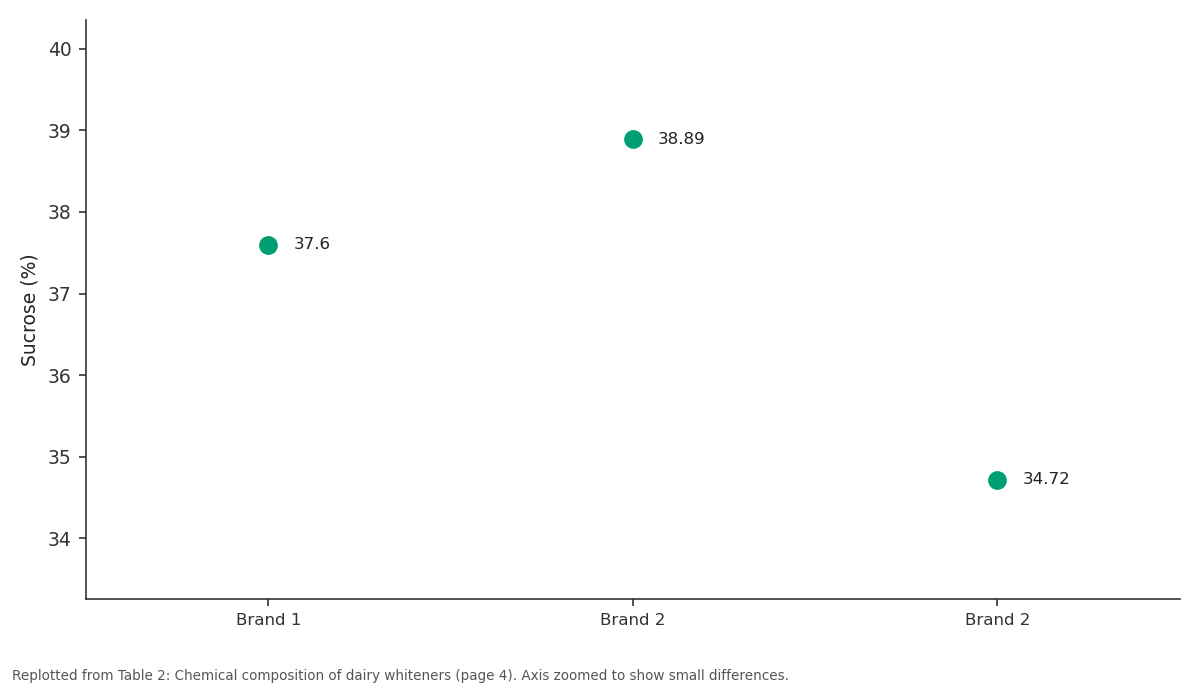
Protein (% on SNF basis): Brand 1 vs Brand 2 vs Brand 2
Replotted from Table 2 (page 4) of the original paper. Every bar is the paper's own table value.
View source evidence ↗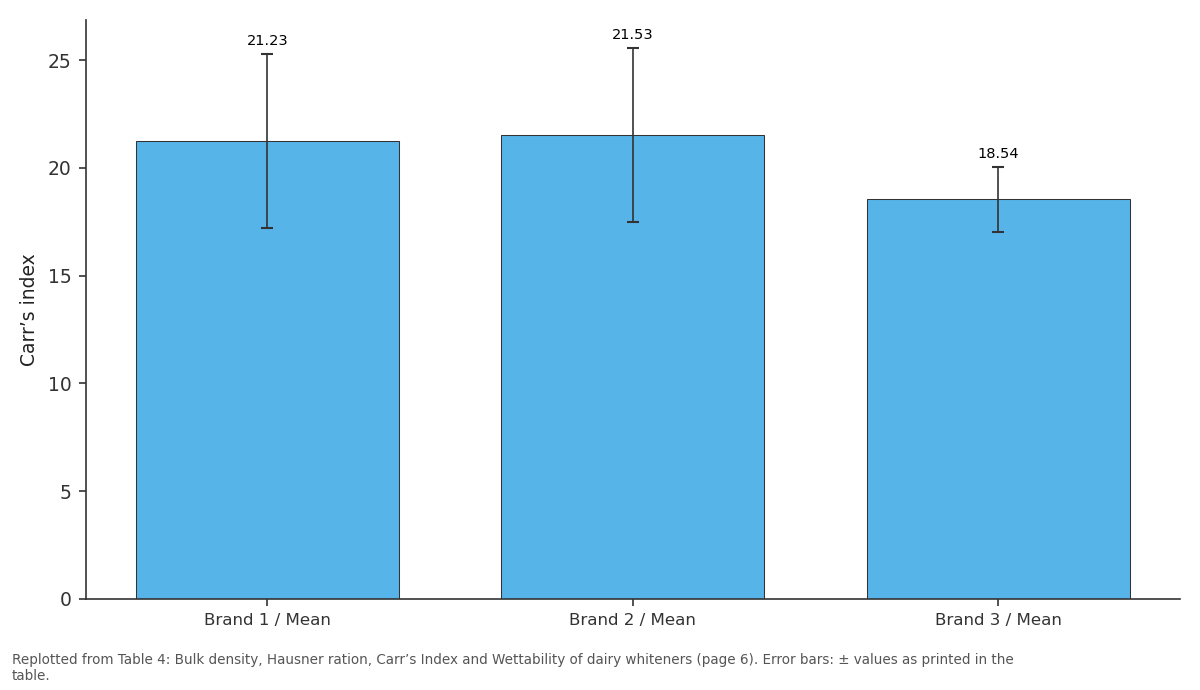
Carr’s index: Brand 1 / Mean vs Brand 2 / Mean vs Brand 3 / Mean
Replotted from Table 4 (page 6) of the original paper. Every bar is the paper's own table value.
View source evidence ↗Figures & tables
From the original paper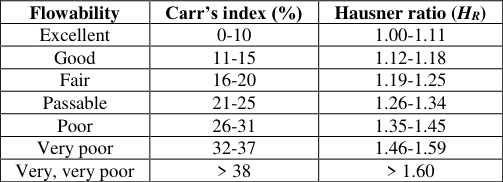 Table 1
 Table 2
 Table 3
 Table 4
 Table 5
Introduction
Food is an essential commodity for every life form living in the world. Different food provides different levels and types of nutrients in the form of fat, protein, carbohydrates, vitamin, minerals and several other essential elements. Milk is considered as almost complete food and is part of most human diets in the world. However, milk is inherently perishable in nature with extremely limited shelf life. The stability of milk can be enhanced via many processes like pasteurization, ultra-high temperature (UHT) treatment, drying, changing it into various products through heat and acid coagulation, fermentation, phase inversion, heat desiccation and freezing, etc. (Priyanka et al., 2022a) [32] . Conversion of milk into powder enhances its shelf life making long-duration storage possible with minimal loss in quality. The drying of milk leads to improved shelf life mainly due to the removal of water; which controls the growth of microorganisms and inhibit enzymatic reactions (Pugliese et al., 2017) [35] . Milk production of India stands at 221.1 million metric tonnes with per capita availability of 444 g per day, which accounts for 21% of global output (Basic Animal Husbandry Statistics, MoFAHD, DAHD, GoI, 2022). The surplus milk is often converted into various dried products like high fat dried milk, non-fat dry milk, dairy whiteners, coffee whiteners, dairy creamers etc. Due to various advantages like higher keeping quality, a need for less storage space, and less expensive transportation; dry milk production has grown to be a significant sector of the dairy business and is predicted to continue to grow. People are currently interested in purchasing instant powders because they offer greater convenience for both manufacturers and consumers in terms of packing, handling, storage, transportation costs and ease of preparation.
Coffee creamers, often known as "coffee whitener", "coffee sweetener" or "Dairy Whitener" are liquid or granular compounds that are used in coffee or other beverages to replace milk or cream because of their intrinsic functional properties, added sugar and ability to withstand higher temperatures (85-90 °C) and low pH (4.50) Hedayatnia et al., (2018) [17] . The perfect dairy whitener for tea and coffee should be stable, have a superior mouthfeel, and possesses good whitening properties. Coffee is currently one of the most widely consumed pharmacologically active beverages and is a part of people's daily lives everywhere in the world. Coffee with milk is preferred by the majority of people because it comprises a variety of ingredients that give the beverage a rich flavour (Priyanka et al., 2022b) [34] . However, the principle use of whitener has remained in hot/cold tea and coffee. As dairy whitener contains high sugar and high fat content, it is prone to various physicochemical changes during and after manufacture. Despite raw milk standardization, use of different drying methods, technological parameters and the well-defined quality assurance procedures adopted in manufacture of milk powder, there are chances of batch-to-batch and plant-toplant variation in quality parameters of dairy whiteners. By evaluating these properties, we can also interpret variations prevalent in the various dairy whiteners available in the market. Studying important physico-chemical parameters of dairy whiteners and generation of the data will be useful for possible correlation with raw material variability, manufacturing control and consequent quality improvement among the different dairy plants. Physical properties of milk powder are important for the final steps of the drying process as well as for further use of it. The chemical composition and their physical properties are the basic quality indicators of milk powders. The variation in milk powder properties comes from the raw material, drying methods and the numerous chemical reactions that could happen during storage because of the temperature, relative humidity and time (Pugliese et al., 2017) [35] . A very significant commercial attribute of dried milk is its solubility (or, more precisely, its reconstitutability). Protein denaturation caused by heat treatment during the production process results in a loss of solubility. The method of production would result in powder 14 with a variety of solubilities since the degree of the heat treatment has a significant impact on the solubility/insolubility of dried milk. Due to damage to the fat globule caused by the harsh heat treatment employed in atmospheric roller drying, the solubility of the powder is reduced to 80 to 85% (Patel, 2011) [31] . The insolubility of dried milk can be estimated in several ways. In every test, the concentration, temperature, stirring time, and intensity are standardized. After the powder is dissolved, the remaining portion is identified (for example, by volumetric analysis after centrifugation or by determining the dry matter), (Khatkar and Gupta, 2012) [22] . Bulk density is a measurement of the amount of milk powder that fits into a specific volume. It is sometimes referred to as apparent density or packing density. Because it has an impact on container size, storage space, and transportation space, bulk density is significant from an economic, commercial, and functional standpoint. High bulk density is desired by producers of powders when transporting powders across long distances in order to minimize volume. Bulk density is the weight of a volume unit of powder, expressed in g/cm 3 or g/ml. The bulk volume, which is measured in ml/100 g or ml/g, is the reciprocal value (Nijdam and Langrish, 2007) [29] . Hausner ratio and Carr's index are used to check flowability properties of milk powders. The ratio of tapped density to loose poured bulk density is known as the Hausner ratio (Saw et al., 2015) [37] . The Hausner ratio is extremely sensitive to the shape of the particle. Carr's index determines its compressibility or free-flowing quality. Non-free-flowing powders have a Carr's index of more than 25% (Priyanka et al., 2022a) [32] . The capacity of a particular amount of powder to pierce the still surface of the water is known as wettability and is measured in seconds. In other terms, wettability refers to a powder's capacity to absorb surface water and become wet (Sharma et al., 2012) [39] . The occluded air, also known as entrapped air, is one of the most important factors controlling bulk density; it is present inside milk powder particles as bubbles. The difference between the volume of a weight of particles and the volume of a weight of air-free solids is known as the volume of occluded air (ml/100 g). Depending on the drying circumstances, especially the temperature of particulates throughout the drying process, air bubbles that previously existed may expand and reduce the particle density even further (Caric and Milanovic, 2002) [3] . The use of dairy powders in coffee as creamers or whiteners has become essential. Coffee stability of dairy whiteners is one of the important tests to check the ability of milk powder to withstand harsh conditions like high temperature and low pH (Finnegan et al., 2021) [10] . The colour of the milk product can be an indicator of physico-chemical changes. Various parameters like the composition of milk, pre-heating temperature, drying temperature, packaging, and storage conditions are important factors that influence the colour of milk powders (Saxena et al., 2021) [38] . The present investigation was undertaken with the following objectives: To evaluate the chemical composition of selected commercial dairy whitener brands in terms of moisture, fat, protein, sucrose, ash, and acid-insoluble ash.
Physico-Chemical Properties of Dairy Whiteners
The titratable acidity (FSSAI 01.060:2022) and insolubility index (FSSAI 01.068:2022) were determined using method described by FSSAI (2022). Bulk density of the powder was determined by the method described by GEA Niro analytical method A2a. Bulk density, Hausner ratio and Carr's index were calculated using formulae (1), ( 2) and (3), respectively, as described by Reddy et al., (2014) [36] .
BV = bulk volume of 100 g powder in ml/100 g, 100= weight of powder sample in g
Hausner ratio = bulk density loose bulk density
Wettability of goat and cow milk powders was measured using GEA Niro analytical method No. A 5 b (GEA Niro, 2009) [49] . In 600 ml glass beaker, 250 ml (25 ± 0.5 °C) deionized water was taken. 13 g of goat and cow milk powders were weighed accurately. The glass plate was placed on top of the beaker, with one edge of the plate close to the rim of the beaker then placed the metal tube on top of the plate. The sample was transferred to the metal tube and spread evenly over the glass plate, and the glass plate was removed with one hand holding the tube. Total time was recorded until all particles had become wetted. The occluded air of dairy whiteners was determined using GEA Niro analytical method No A 11 b method. 25 g of sample was taken into a 100 ml measuring cylinder. Then 60 ml of petroleum ether was added to it. The total volume with suspended particles was read. Occluded air in goat and cow milk powders was measured using the following calculation 4.
Occluded air =
The coffee stability of dairy whiteners was determined using the method described by ISO 15322 IDF: 203. Exactly 0.8 ± 0.01 g of instant coffee powder was weighed in 250 ml glass beaker. Boiling water was added to the coffee powder in the 250 ml glass beaker. Volume was made up to the 100 ml mark with boiling water. The temperature of the reconstituted coffee was checked with the thermometer. When it had reached 80 °C ± 0.5 °C, the weighed amount of the test portion was added and the stopwatch was started. After 5 s, the contents of the beaker were stirred gently with the spatula. It was stirred six times clockwise and six times counter clockwise over 6 s. The contents of the beaker were then immediately poured into two 50 ml centrifuge tubes.
The centrifuge tubes were allowed to stand for at least 5 min. The tubes were centrifuged with fast acceleration, at a rotational frequency producing a radial acceleration of 160 g at the inside bottom of the tubes, for 5 min at between 20 °C and 25 °C, at atmospheric pressure. If the volume is less than 0.5 ml, read the volume of sediment in each tube to the nearest 0.05 ml. If the volume is equal to or more than 0.5 ml, read the sediment volume in each tube to the nearest 0.1 ml. Sediment value is calculated using the following formula (5).
Where, VS: Total sediment volume (ml) V1: Volume of the sediment in the first centrifuge tube (ml) V2: Volume of the sediment in the second centrifuge tube (ml)
The colour of the goat and cow milk powders was measured using a chromameter (Konica Minolta Chroma Meter CR-400, Japan) described in Public Health England (2017). For the analysis of the sample, the appropriate amount of powder was taken in glass petri dish and colour measurement was performed according to the three-colour coordinates (L*, a*, b*) with chromameter. The chroma, yellowness index, whiteness index and browning index were calculated from these three measured colour coordinates (L*, a*, b*) using equations ( 6), ( 7), ( 8) and ( 9), respectively, as described by Milovanovic et al. (2020) [27] .
Results and Discussion
The most commonly available three brands of dairy whiteners were sourced from market and studied for comparative analysis among three prominent brands for their physico-chemical analysis viz. Moisture, Fat, Protein, Sucrose, Ash, Acid insoluble ash, titratable acidity, Bulk density, Occluded air, Flowability, wettability and coffee stability.
Chemical Characteristics of Dairy Whiteners
The moisture content of Brand
Insolubility Index
Solubility is one of the most critical property and requirement for dried milk products. Poorly soluble powders can impact reconstitution of powders. Solubility is a measure of the final condition to which the constituents of the powder can be brought into solution or stable suspension. The mean insolubility index of Brand 1, Brand 2 and Brands 3 was observed as ≤ 0.1. Brand 1 had poor solubility as compared to Brand 2 and Brand 3. All dairy whitener samples were found to comply with maximum permissible limit for insolubility index (1.5 ml) as specified by FSSR (2011). Khatkar et al., (2014) [23] reported the insolubility index of developed UF dairy whitener as 0.2 ml. They compared this value with two market samples, the insolubility index of these were observed to be 0.2 and 0.3 ml respectively. Priyanka et al., (2022) [32] reported insolubility index of 4 different dairy whiteners samples collected from Bengaluru market in the range of 0.1 to 0.8 ml. Chudy et al., (2015) [5] reported insolubility index of whole milk powder as 0.1 ml. The insolubility index of instant whole milk powder, coffee whitener and skim agglomerated milk powders was recorded below 0.05 ml (Zbikowska et al., 2006) [45] . Addition of sucrose in granulated form, not very fine powder as an additive in milk powder however, improved the milk powder solubility (Galet et al., 2004) [11] . Maltodextrins are also known to improve particle size, bulk density, hygroscopicity and solubility (Zainil et al., 2019) [44] . The better solubility in case of Brand 2 and Brand 3 might be due to the addition of maltodextrin.
Occluded air
The presence of air in the atomized droplets causes occluded air in dried particles. Milk powder normally contains between 10 to 30 ml of occluded air per 100 g of powder (Patel, 2011) [31] . The mean occluded air content in dairy whiteners of Brand 2 was higher as compared to Brand 1 and Brand 3. Occluded air content in all samples ranged from 17.58 to 33.93 ml, 22.97 to 34.90 ml and 16.33 to 20.84 for Brand 1, Brand 2 and Brand 3, respectively. Khatkar and Gupta (2012) [22] reported occluded air content of dairy whitener immediately after manufacture as 14.43 ml/100 g. Chever et al., (2017) [4] reported occluded air content in agglomerated and non-agglomerated whole milk powder ranging from 63 to 135 ml/100 g. Deshwal et al., (2020) [7] reported occluded air content in camel milk powder as 119.47 ml/100 g. Keogh et al., (2003) [21] reported the occluded air content in the range of 5.5 to 12.5 ml as milk protein increased from 3.08 to 5.33%. Hazlett et al., (2021) [16] reported the occluded air content in infant milk powder ranging from 4.52 to 4.77 ml/100 g. The high occluded air contents of the dairy whitener resulted in a low loose and packed bulk densities (Chever et al., 2017) [4] . The level of whey protein denaturation affects the amount of occluded air in the powder. Low heat powders tend to have a higher amount of occluded air as compared to high heat powder due to the higher content of un-denatured whey proteins which are responsible for increasing the foamability of powder (Abdalla et al., 2017; Tamime, 2009) [1,42] . The feed concentration of condensed milk plays an important role and high concentration gives less occluded air content in milk powder (Tamime, 2009) [42] . Considering this, as Brand 2 dairy whitener had the highest occluded air, it can be inferred to have been processed at relatively lower preheating temperatures as compared to the other two dairy whitener brand samples.
Coffee Stability
Coffee stability is one of the important properties with respect to the quality of dairy whiteners as they are used in beverages. The precipitation is called "feathering," comprising whole casein micelles attached to fat particles through micellar casein phosphate. An increased concentration of Ca 2+ promotes protein aggregation and denaturation reactions by reducing the negative potential of the casein micelle and by forming salt bridges, resulting in increased floc formation and feathering (Oldfield et al., 2000) [30] . The mean coffee sediment value of Brand 1 was highest, followed by Brand 3 and Brand 2. The values of coffee sediments for Brand 1, Brand 2 and Brand 3 dairy whitener samples were observed in the range of 0.52 to 0.98, 0.12 to 0.45 ml and 0.30 to 0.50 ml with mean values of 0.73, 0.21 and 0.43 respectively. The volume of coffee sediment increased with increasing water hardness caused by high concentration of Ca +2 (Oldfield et al., 2000) [30] . Teehan et al., (1997) [43] studied the effect of pH, temperature and water hardness on coffee stability of whole milk powder. Coffee unstable WMP showed a gradual increase in sediment as the pH of the mixture decreased from 7.0 to 6.6 at 80 °C. However, sediment formation increased rapidly from 1.0 to 4.0 ml when pH was lowered from 6.5 to 6.2 for coffee unstable powder in comparison to a maximum sediment of 2.5 ml at the lowest pH tested for coffee stable samples. Sweetsur (1976) [41] reported the coffee stability of instant skim milk powder as 0.34 and 10.84 ml sediments corresponding to 82.6 and 88.3 casein number. Priyanka et al., (2022) [32] conducted market survey of the different dairy whitener samples available in Bangalore. They found the coffee stability of samples B1, B2, B3, B4 and B5 as 0.6, 0.5, 0.6, 0.5 and 0.5 ml respectively. Kelly et al. (2002) stated that as fat content increased from 24.2 to 30.9, correspondingly the coffee sediment value also increased from 0.2 to 1.25 ml. Zbikowska et al., (2006) [45] reported that exposing whole milk powder to extreme conditions regarding both a temperature of 90 °C and coffee infusion (5 g/100 ml) strength resulted in a increase in the amount of residues from 0.15-0.40 ml.
Bulk Density
Bulk density, also known as apparent or packing density, is a measure of the mass of milk powder which occupies a fixed volume. Because it has an impact on container size, storage space, and transportation space, bulk density is significant from an economic, commercial, and functional standpoint. Bulk density mainly depends on methods of manufacture of milk powder. It also depends on the type of atomizer used, the speed of the atomizer, feed concentration, the temperature and duration of preheating, etc. Bulk density of all samples ranged from 0.603-0.643, 0.573-0.650 g/ml and 0.620-0.710 with mean values of 0.628, 0.611 and 0.666 g/ml for Brand 1, Brand 2 and Brand 3 respectively. Priyanka et al., (2022) [32] reported bulk densities of the dairy whitener samples collected from the Bangalore market for samples B1, B2, B3, B4 and B5 as 0.6, 0.6, 0.6, 0.7, 0.6 respectively. Khatkar and Gupta (2012) [22] reported the loose bulk density and tapped bulk density of UF based dairy whitener as 0.27 g/ml and 0.37 g/ml, respectively. Chever et al., (2017) [4] reported bulk density of agglomerated and non-agglomerated whole milk powder ranging from 0.373 to 0.407 g/ml, tapped density ranged from 0.454 to 0.720 g/cm 3 . Pugliese et al., (2017) [35] analyzed various whole milk powder samples and found tapped bulk density and loose bulk density in the range of 0.551-0.625 g/ml and 0.360-0.672 g/ml respectively. Han et al., (2020) [15] reported bulk density of infant milk powder ranging from 0.492 to 0.600 g/ml. MacCarthy (1985) reported the bulk density of whole milk powder in the range of 0.57 to 0.75 g/ml. Habtegebriel et al., (2018) [13] reported that the bulk density of cow milk powder ranged from 0.26 to 0.48 g/ml. Ding et al., (2020) [8] evaluated the bulk density of instant WMP of four different brands. They observed loose bulk density of WMP having coarse, medium and fine particles as 0.397, 0.433, 0.494; 0.339, 0.417, 0.466; 0.337, 0.409, 0.440; 0.333, 0.422, 0.467 g/ml for Brand 1, Brand 2, Brand 3 and Brand 4 respectively. Also observed tapped bulk density of WMP having coarse, medium and fine particles as 0.421, 0.529, 0.632; 0.386, 0.508, 0.613; 0.395, 0.521, 0.600; 0.382, 0.520, 0.617 g/ml for Brand 1, Brand 2, Brand 3 and Brand 4 respectively. Reddy et al., (2014) [36] reported bulk density of Osmanabadi goat milk powder made from milk having initial concentration of 35%, 40% and 45% as 0.46, 0.43, 0.41; 0.49, 0.46, 0.43, 0.58, 0.53, 0.49 for inlet temperature of 160 °C, 170 °C and 180 °C respectively.
Hausner Ratio
A more straightforward and convenient way of assessing powder flowability is the measurement and use of Hausner ratio. HR is the ratio of tapped density to loose poured bulk density (Saw et al., 2015) [37] . Typical ranges for Hausner ratio that characterizes flowability based on HR are: 1.0 < 1.1 free flowing powder, 1.1 < 1.25 medium flowing powder, 1.25 < 1.4 difficult flowing powder, and HR > 1.4 very difficult flowing powder (Abdalla et al., 2017) [1] . Hausner ratio of all sample ranged from 1.197 to 1.413, 1.230 to 1.306 and 1.166 to 1.276 with mean values of 1.274, 1.275 and 1.230 for Brand 1, Brand 2 and Brand 3 respectively. According to European Council (2011), the Hausner ratio is related to flowability with values 1.00-1.11 indicating excellent flowability, 1.12-1.18 good, 1.19-1.25 fair, 1.26-1.34 passable, 1.35-1.45 poor, 1.46-1.59 very poor and > 1.60 very, very poor. Considering these recommendations, none of the samples analyzed in our study had excellent flowability. Samples of Brand 3 had fair flowability, whereas samples of Brand 1 and Brand 2 had passable flowability. The bulk density and tapped bulk density of the milk powder has significant impact on the Hausner ratio. The flowability of milk powder is occasionally impacted by its hygroscopic nature as well. The variations in the sample might be indicative of differences in the raw material and processing parameters maintained in different powder manufacturing plants (Saw et al., 2015) [37] . Priyanka et al., (2022) [32] did a market survey of different dairy whiteners sample available in Bangalore and observed Hausner ratio as 1.32, 1.35, 1.31, 1.32, 1.35 for B1, B2, B3, B4 and B5 samples respectively. Pugliese et al., (2017) [35] analyzed 4 different whole milk powder samples and found Hausner ratio in the range of 1.38 and 1.41. Sulieman et al., (2014) [40] compared selected physico-chemical properties of spray-dried camel and cow milk powder; in that they found Hausner ratio of camel milk powder and cow milk powder ranging from 1.21 to 1.33 and 1.46 to 1.48 respectively. Szulc and Lenart (2010) [2] studied the effect of agglomeration on flowability of infant food powders, wherein they found Hausner ratio of whole milk powder as 1.29. Reddy et al., (2014) [36] reported Carr's index of Osmanabadi goat milk powder made from milk having initial concentration of 35%, 40% and 45% as 1.32, 1.25, 1.24; 1.27, 1.24, 1.23; 1.26, 1.21, 1.17 for inlet temperature of 160 °C, 170 °C and 180 °C respectively.
Carr's Index
The capacity to reduce the volume of a powder by tapping is measured by the compressibility index, also known as Carr's index. Carr's index determines its compressibility or freeflowing quality. Non-free-flowing powders have a Carr's index of more than 25%. According to Ilari and Mekkaoui (2005) [18] , milk powder is categorized as cohesive, or having decreased flowability, if its compressibility index is more than 28%. The Carr's index of all samples ranged from 16. 31 2011), none of the samples analysed in the study could be classified as having excellent flowability. Dairy whiteners of Brand 1 and Brand 2 had passable flowability, whereas Brand 3 had fair flowability. Reddy et al., (2014) [36] reported Carr's index of Osmanabadi goat milk powder made from milk having initial concentration of 35%, 40% and 45% as 24.09, 20.14, 19.67; 21.23, 19.43, 18.
Wettability
The capacity of a particular amount of powder to pierce the surface of water is known as wettability and is measured in seconds. In other terms, wettability refers to a powder's capacity to absorb surface water and become wet. The wettability of all the dairy whitener samples was observed to be more than 30 min at 25 °C. The higher surface free fat and fine particles size of dairy whiteners might be the reason for this poor wettability. Khatkar and Gupta (2012) [22] studied the physicochemical and functional quality attributes of dairy whitener prepared from ultrafiltration process; in that they found wettability as 19.50 s. Priyanka et al., (2022b) [34] reported wettability of dairy whiteners samples B1, B2, B3, B4 and B5 collected from Bangalore market as 8.30, 8.60, 8.12, 7.10 and 8.80 respectively at 60 °C. Hailu et al. (2023) [14] utilized a lecithination and agglomeration process for SMP to improve physical and wettability properties. They observed wettability of > 300 s, > 300 s, > 300 s, 8.94 s for regular SMP, regular lecithinated SMP, agglomerated SMP and agglomerated lecithinated SMP respectively at 24 °C. Reported the wettability of agglomerated and non-agglomerated milk protein powder as > 1200, > 1200, > 1200, > 1200, > 1200; 480 ± 120, > 1200, 320 ± 14, > 1200, > 1200 s for milk protein isolate, whey protein isolate, micellar casein, sodium caseinate and calcium caseinate respectively. Murphy et al., (2013) [28] reported wetting time of infant milk powder as 7.6 ± 0.5, 7.5 ± 0.6 for control and high-solids steam injection formulations respectively. Zbikowska et al. (2006) [45] observed similar values in instant coffee whitener "Cremilka", which took 47 s to get wet on the surface of the powder at 20 °C.
Colour parameters of Dairy Whiteners
Milk appears white due to certain chemical constituents and the way they are present physically in milk. Dispersed fat globules, calcium caseinate, and calcium phosphate all reflect light to give milk its natural colour.
L* Value
The most essential property of any whitener is its whitening ability. The whitening effect results from scattering of light by surface of finely emulsified particles. L* values in colour measurement of milk powder gives lightness (brightness) of milk powder, it scales from 0 to 100 (Dark to light). L values of Brand 1, Brand 2 and Brand 3 varies from 92. 43 [35] studied the physical characterization of whole and skim milk powders in that they analysed four different market samples of whole milk powder and found the L* values as 96.49 ± 0.35, 95.24 ± 0.38, 96.06 ± 0.02 and 96.23 ± 0.55. Sulieman et al., (2014) [40] reported L* values for spray dried cow milk powder ranging from 94.70 to 95.78, while that for camel milk ranging from 90.24 to 97.73. Magan et al., (2019) [25] reported L* values for whole milk powder produced from cow milk fed on different feed are 93.0 ± 0.71, 93.3 ± 0.75 and 93.5 ± 0.85. Ferrer et al., (2005) [9] studied the follow up infant formula and found L* values in fresh and samples stored at 20 °C for 3 months as 90.70 and 90.51 respectively. Grigioni et al., (2009) [12] studied milk powder colour changes due to heat treatments and season of manufacture; wherein they found L* values as 92.63 ± 0.44, 93.09 ± 0.17, 92.56 ± 0.35, 92.19 ± 0.32 in autumn, winter, spring, summer respectively when the preheating temperature was varied from 90-93 °C for 180 s. Evaluated the effect of storage conditions on the stability to autoxidation in infant milk formulas. The L* value observed in fresh sample of infant milk formula was 84. 35 [35] analyzed whole and skim milk powder from Italian market for physical properties. They observed a* value of whole milk powder corresponding to four different sample as -1.43 ± 0.08, -2.15 ± 0.09, -1.59 ± 0.10 and 80 1.78 ± 0.05. Magan et al., (2019) [25] reported a* values for whole milk powder produced from cow milk fed on different feed as -4.58 ± 0.86, -3.69 ± 0.1 and -3.84 ± 1.0 corresponding to feed types GRS, CLV and TMR. Ferrer et al., (2005) [9] observed a* value in fresh samples of follow up infant formula as -0.25 and 0.29 in the samples stored at 20 °C for 3 months. Grigioni et al., (2009) [12] studied color changes in milk powder related to heat treatments and season of manufacture. They observed a* values as -0.48 ± 0.11, -0.53 ± 0.13, -0.65 ± 0.20 and -0.74 ± 0.10 respectively for autumn, winter, spring, summer seasons when the preheating temperatures were varied from 90 to 93 °C for 180 s. [35] studied the physical characteristics of whole and skim milk powders sourced from Italian market. The b* value of four different sample observed were 13.70 ± 0.16, 15.03 ± 0.12, 14.59 ± 0.18 and 14.48 ± 0.13. The effect of feed on the b* value was studied by Magan et al., (2019) [25] . The b* values of whole milk powder obtained upon feeding GRS, CLV and TMR feed types were 11, 8.66 and 7.96 respectively. Masum et al., (2020) [26] reported b* value for infant milk powder having whey protein to casein ratio of 60:40, 50:50, 40:60 as 9.1 ± 0.4, 9.0 ± 0.1, 9.5 ± 0.6 respectively. Ferrer et al., (2005) [9] reported b* values in fresh and stored (3 months at 20 °C) samples of follow up infant formula as 14.78 and 14.97 respectively. Grigioni et al., (2009) [12] evaluated the effect of seasons on the color changes in milk powder. They obtained b* values as 19.61 ± 0.57, 20.30 ± 0.66, 21.11 ± 0.61 and 20.37 ± 0.58 in autumn, winter, spring, summer respectively. The preheating temperature employed in the study was 90-93 °C for 180 s.
Chroma Index (C*): This is also known as chromaticity or colourfulness, it represents the colour sensation, when colour is fully saturated, the colour is considered to be in its purest version (Milovanovic et al., 2020) [27] . Chroma Index of Brand [32] studied OHMIC heating for infant formula processing, wherein they evaluated the effect of different voltage gradient on milk colour. The whitening index values observed for different voltage gradient were 88.7, 90, 91.4, 91, 90.7, 92.6 for control, 8, 12, 16, 20, 24 V/cm respectively.
Browning Index: Browning in milk products has been attributed to non-enzymatic browning mostly because of interactions between the amino acid lysine and lactose. Browning index is a brown colour purity, and it refers to browning food containing sugar. The Browning index of Brand 1, Brand 2 and Brand 3 varies from [32] studied use of ohmic heating for infant formula processing, wherein they evaluated the effect of different voltage gradient on milk colour. The yellowness index observed for different voltage gradient were -3 ± 1, -3 ± 1, -3 ± 1, -1 ± 2, -2.9 ± 0.3, -0.6 ± 0.1 for control, 8, 12, 16, 20, 24 V/cm respectively. Yellowness index ranged between 31.21 to 33.54 and 13.40 to 38.95 for unconcentrated and concentrated milk respectively. The values are mean of six sample of each brand analysed
Conclusion
The comparative analysis of different brands of dairy whiteners found that significant differences were observed in chemical composition as well as most physical properties of dairy whiteners. Bulk density of Brand 3 was found to be higher, followed by Brand 1 and Brand 2, which means dairy whiteners from Brand 3 are more economical with respect to storage and transportation. None of the dairy whiteners has excellent flowability; however, dairy whiteners from Brand 1 and Brand 2 have passable flowability compared to Brand 3. Solubility of every brand's dairy whiteners was found to be satisfactory within permissible limits given by FSSAI. With regard to coffee stability, Brand 2 has better coffee stability, followed by Brand 3 and Brand 1. Dairy whiteners from Brand 3 were found to have the highest lightness, followed by Brand 2 and Brand 1. Dairy whiteners from Brand 1 were found to have a high browning index, followed by Brand 3 and Brand 2, which suggests that certain brands of dairy whiteners have undergone greater Maillard browning.
Figures and tables from the paper
| Flowability | Carr’s index (%) | Hausner ratio (HR) |
|---|---|---|
| Excellent | 0-10 | 1.00-1.11 |
| Good | 11-15 | 1.12-1.18 |
| Fair | 16-20 | 1.19-1.25 |
| Passable | 21-25 | 1.26-1.34 |
| Poor | 26-31 | 1.35-1.45 |
| Very poor | 32-37 | 1.46-1.59 |
| Very, very poor | > 38 | > 1.60 |
Table text extracted from the original PDF; superscript letters are shown inline. The original table image is below.
View original table image
| Parameters | Moisture (%) | Fat (%) | Protein (% on SNF basis) | Sucrose (%) | Ash (%) | Acid insoluble ash (%) |
|---|---|---|---|---|---|---|
| Brand 1 | 2.55 | 20.35 | 37.60 | 17.24 | 8.65 | 0.05 |
| Brand 2 | 2.37 | 18.23 | 38.89 | 17.61 | 8.66 | 0.039 |
| Brand 2 | 2.13 | 14.30 | 34.72 | 19.59 | 7.88 | 0.056 |
Table text extracted from the original PDF; superscript letters are shown inline. The original table image is below.
View original table image
| Characteristics | Brand 1 | — | Brand 2 | — | Brand 3 | — |
|---|---|---|---|---|---|---|
| Mean | Range | Mean | Range | Mean | Range | |
| Occluded air | 24.95 ± 5.94 | 17.58-33.93 | 28.57 ± 3.71 | 22.97-34.90 | 19.28 ± 7.92 | 16.33-20.84 |
| Coffee stability | 0.73 ± 0.16 | 0.52-0.98 | 0.21 ± 0.11 | 0.12-0.45 | 0.43 ± 0.06 | 0.30-0.50 |
| Insolubility index (ml) | ≤ 0.1 | ≤ 0.1 | < 0.1 | < 0.1 | < 0.1 | < 0.1 |
Table text extracted from the original PDF; superscript letters are shown inline. The original table image is below.
View original table image
| Characteristics | Brand 1 | — | Brand 2 | — | Brand 3 | — |
|---|---|---|---|---|---|---|
| Mean | Range | Mean | Range | Mean | Range | |
| Bulk density (g/ml) | 0.628 ± 0.014 | 0.603-0.643 | 0.611 ± 0.028 | 0.573-0.650 | 0.666 ± 0.030 | 0.620-0.710 |
| Hausner ratio | 1.274 ± 0.069 | 1.197-1.413 | 1.275 ± 0.025 | 1.230-1.306 | 1.230 ± 0.039 | 1.166-1.276 |
| Carr’s index | 21.23 ± 4.04 | 16.31-29.08 | 21.53 ± 4.04 | 18.75-23.05 | 18.54 ± 1.50 | 18.60-21.64 |
| Wettability | > 30 min | > 30 min | > 30 min | > 30 min | > 30 min | > 30 min |
Table text extracted from the original PDF; superscript letters are shown inline. The original table image is below.
View original table image
| Parameters/Sample | L* value | a* value | b* value | C* value | Browning index | Yellowness index | Whiteness index |
|---|---|---|---|---|---|---|---|
| Brand 1 | 94.71 ± 1.15 | -4.89 ± 0.34 | 17.63 ± 1.263 | 18.30 ± 1.301 | 15.99 ± 1.412 | 26.61 ± 2.042 | 80.92 ± 1.413 |
| Brand 2 | 95.42 ± 0.48 | -4.45 ± 0.26 | 13.88 ± 0.962 | 14.57 ± 0.960 | 11.68 ± 1.098 | 20.78 ± 1..528 | 84.72 ± 1.024 |
| Brand 3 | 95.50 ± 0.135 | -4.52 ± 0.188 | 16.28 ± 0.278 | 16.89 ± 0.258 | 14.47 ± 0.405 | 24.35 ± 0.407 | 82.51 ± 0.242 |
Table text extracted from the original PDF; superscript letters are shown inline. The original table image is below.
View original table image
References
49 in the original paper- Abdalla AK, Smith K, Lucey J. Bulk density and flowability of non-fat dry milk and skim milk powder. Egypt J Dairy Sci. 2017;45:17-24.
- Szulc K, Lenart A. Effect of agglomeration on flowability of baby food powders. J Food Sci. 2010;75(5):E276-E284. DOI: 10.1111/j.1750-3841.2010.01634.x
- Caric M, Milanovic S. Physical and functional properties of milk powders. In: Roginski H, Fuquay JW, Fox PF, editors. Encyclopedia of Dairy Sciences. Elsevier Science Ltd; 2002, p. 1874-1880. DOI: 10.1016/B0-12-227235-8/00316-3
- Chever S, Mejean S, Dolivet A, Mei F, Den Boer CM, Le Barzic G, et al. Agglomeration during spray drying: Physical and rehydration properties of whole milk/sugar mixture powders. Food Sci Technol. 2017;83:33-41. DOI: 10.1016/j.lwt.2017.05.002
- Chudy S, Pikul J, Rudzinska M, Makowska A. The effect of storage on physicochemical properties of spray-dried milk, egg and milk-egg mixture. Acta Agrophys. 2015;22(1):17-26.
- De Oliveira AH, Mata MERC, Fortes M, Duarte MEM, Pasquali M, Lisboa HM. Influence of spray drying conditions on the properties of whole goat milk. Drying Technol. 2021;39(6):726-737. DOI: 10.1080/07373937.2020.1714647
- Deshwal GK, Singh AK, Kumar D, Sharma H. Effect of spray and freeze drying on physico-chemical, functional, moisture sorption and morphological characteristics of camel milk powder. Dairy Sci Technol. 2020;134:110-117. DOI: 10.1016/j.lwt.2020.110117
- Ding H, Li B, Boiarkina I, Wilson DI, Yu W, Young BR. Effects of morphology on the bulk density of instant whole milk powder. Foods. 2020;9(8):1024.
- Ferrer E, Alegria A, Farre R, Clemente G, Calvo C. Fluorescence, browning index, and color in infant formulas during storage. J Agric Food Chem. 2005;53(12):4911-4917. DOI: 10.1021/jf0403585
- Finnegan EW, Mahomud MS, Murphy EG, O'Mahony JA. The influence of pre-heat treatment of skim milk on key quality attributes of fat-filled milk powder made therefrom. Int J Dairy Technol. 2021;74(2):404-413. DOI: 10.1111/1471-0307.12758
- Galet L, Vu TO, Oulahna D, Fages J. The wetting behaviour and dispersion rate of cocoa powder in water. Food Bioprod Process. 2004;82(4):298-303.
- Grigioni G, Biolatto A, Irurueta M, Sancho AM, Paez R, Pensel N. Color changes of milk powder due to heat treatments and season of manufacture. CYTA-J Food. 2007;5(5):335-339. DOI: 10.1080/11358120709487709
- Habtegebriel H, Edward D, Wawire M, Sila D, Seifu E. Effect of operating parameters on the surface and physico-chemical properties of spray-dried camel milk powders. Food Bioprod Process. 2018;112:137-149. DOI: 10.1016/j.fbp.2018.09.010
- Hailu Y, Maidannyk VA, Murphy EG, McCarthy NA. Improving the physical and wettability properties of skim milk powders through agglomeration and lecithination. J Food Eng. 2023;2023:111597. DOI: 10.1016/j.jfoodeng.2023.111597
- Han J, Fitzpatrick J, Cronin K, Maidannyk V, Miao S. Breakage of infant milk formula through three different processing methods and its influence on powder properties. J Food Eng. 2020;282:109997. DOI: 10.1016/j.jfoodeng.2020.109997
- Hazlett R, Schmidmeier C, O'Mahony JA. Influence of mechanical integrity during pneumatic conveying on the bulk handling and rehydration properties of agglomerated dairy powders. J Food Eng. 2021;288:110103. DOI: 10.1016/j.jfoodeng.2020.110103
- Hedayatnia S, Mirhosseini H. Quality of reduced-fat dairy coffee creamer: affected by different fat replacer and drying methods. In: Descriptive Food Science. IntechOpen; 2018. p. 115.
- Ilari JL, Mekkaoui L. Physical properties of constitutive size classes of spray-dried skim milk powder and their mixtures. Dairy Sci Technol. 2005;85(4-5):279-294. DOI: 10.1051/lait:2005029
- Ji J, Fitzpatrick J, Cronin K, Maguire P, Zhang H, Miao S. Rehydration behaviours of high protein dairy powders: The influence of agglomeration on wettability, dispersibility and solubility. Food Hydrocoll. 2016;58:194-203.
- Kelly J, Kelly PM, Harrington D. Influence of processing variables on the physicochemical properties of spray dried fat-based milk powders. Dairy Sci Technol. 2002;82(4):401-412. DOI: 10.1051/lait:2002019
- Keogh MK, Murray CA, O'Kennedy BT. Effects of ultrafiltration of whole milk on some properties of spray-dried milk powders. Int Dairy J. 2003;13(12):995-1002. DOI: 10.1016/S0958-6946(03)00123-7
- Khatkar SK, Gupta VK. Physicochemical and functional quality attributes of dairy whitener prepared from ultrafiltration process. J Food Process Preserv. 2012;38(3):1145-1154. DOI: 10.1111/jfpp.12074
- Khatkar SK, Gupta VK, Khatkar AB. Studies on preparation of medium fat liquid dairy whitener from buffalo milk employing ultrafiltration process. J Food Sci Technol. 2014;51(9):1956-1964. DOI: 10.1007/s13197-014-1259-0
- MacCarthy DA. Effect of temperature and bulk density on thermal conductivity of spray-dried whole milk powder. J Food Eng. 1985;4(4):249-263. DOI: 10.1016/0260-8774(85)90007-X
- Magan JB, Tobin JT, O'Callaghan TF, Kelly AL, Fenelon MA, Hennessy D, et al. Physicochemical properties of whole milk powder derived from cows fed pasture or total mixed ration diets. J Dairy Sci. 2019;102(11):9611-9621. DOI: 10.3168/jds.2019-16415
- Masum AKM, Huppertz T, Chandrapala J, Adhikari B, Zisu B. Physicochemical properties of spray-dried model infant milk formula powders: Influence of whey protein-to-casein ratio. Int Dairy J. 2020;100:104565. DOI: 10.1016/j.idairyj.2019.104565
- Milovanovic B, Djekic I, Miocinovic J, Djordjevic V, Lorenzo JM, Barba FJ, et al. What is the color of milk and dairy products and how is it measured? Foods. 2020;9(11):1629. DOI: 10.3390/foods9111629
- Murphy EG, Tobin JT, Roos YH, Fenelon MA. A highsolids steam injection process for the manufacture of powdered infant milk formula. Dairy Sci Technol. 2013;93:463-475.
- Nijdam JJ, Langrish TAG. An investigation of milk powders produced by a laboratory-scale spray dryer. Drying Technol. 2005;23(5):1043-1056. DOI: 10.1081/DRT-200060208
- Oldfield DJ, Teehan CM, Kelly PM. The effect of preheat treatment and other process parameters on the coffee stability of instant whole milk powder. Int Dairy J. 2000;10(9):659-667. DOI: 10.1016/S0958-6946(00)00088-1
- Patel HG. Technology of condensed and dried milks. 1 st Ed; 2011, p. 266.
- Pires RP, Cappato LP, Guimaraes JT, Rocha RS, Silva R, Balthazar CF, et al. Ohmic heating for infant formula processing: Evaluating the effect of different voltage gradient. J Food Eng. 2020;280:109989.
- Priyanka V, Shilpashree BG, Ashwini A. Physicochemical and techno-functional attributes of dairy powders. Int Res J Mod Eng Technol Sci. 2022;4(4):1941-1947.
- Priyanka V, Shilpashree BG, Praveen AR, Ramachandra B. Techno-functional attribute studies of dairy whitener brands available in Bengaluru market. Pharma Innov J. 2022;11(6):2219-2225.
- Pugliese A, Cabassi G, Chiavaro E, Paciulli M, Carini E, Mucchetti G. Physical characterization of whole and skim dried milk powders. J Food Sci Technol. 2017;54:3433-3442. DOI: 10.1007/s13197-017-2795-1
- Reddy RS, Ramachandra CT, Hiregoudar S, Nidoni U, Ram J, Kammar M. Influence of processing conditions on functional and reconstitution properties of milk powder made from Osmanabadi goat milk by spray drying. Small Ruminant Res. 2014;119(1-3):130-137. DOI: 10.1016/j.smallrumres.2014.01.013
- Saw HY, Davies CE, Paterson AH, Jones JR. Correlation between powder flow properties measured by shear testing and Hausner ratio. Procedia Eng. 2015;102:218-225. DOI: 10.1016/j.proeng.2015.01.132
- Saxena J, Adhikari B, Brkljaca R, Huppertz T, Zisu B, Chandrapala J. Influence of lactose on the physicochemical properties and stability of infant formula powders: A review. Food Rev Int. 2021:1-15. DOI: 10.1080/07373937.2020.1767645
- Sharma A, Jana AH, Chavan RS. Functionality of milk powders and milk-based powders for end use applications-a review. Comprehensive Rev Food Sci Food Saf. 2012;11(5):518-528. DOI: 10.1111/j.1541-4337.2012.00199.x
- Sulieman AME, Elamin OM, Elkhalifa EA, Laleye L. Comparison of physicochemical properties of spraydried camel's milk and cow's milk powder. Int J Food Sci Nutr Eng. 2014;4(1):15-19. DOI: 10.5923/j.food.20140401.03
- Sweetsur AWM. The stability of instantized skimmed milk powder to hot coffee. Int J Dairy Technol. 1976;29(3):157-160. DOI: 10.1111/j.1471-0307.1976.tb00424.x
- Tamime AY, editor. Dairy powders and concentrated products. Oxford: John Wiley & Sons; 2009, p. 180234. DOI: 10.1002/9781444322729
- Teehan CM. Factors affecting the coffee-stability of instant whole milk powder [Doctoral Dissertation]. Dublin: Dublin City University; 1997.
- Zainil HM, Xiang LJ. Effect of spray drying temperature differences on the gross nutritional composition and solubility and sinkability of goat milk powder. J Bangladesh Agric Univ. 2019;17(2):206-221.
- Zbikowska A, Zbikowski Z. Stability of milk concentrates in hot coffee. Pol J Food Nutr Sci. 2006;15(Suppl 1):253-258.
- Westergaard V. Milk powder technology: Evaporation and spray drying. 5th ed. Copenhagen: Niro A/S; 2004.
- GEA Niro. Particle density and occluded air by petroleum ether. GEA Niro Analytical Method A 11 a. Copenhagen: GEA Process Engineering; 2006.
- GEA Niro. Powder bulk density. GEA Niro Analytical Method A 2 b. Copenhagen: GEA Process Engineering; 2006.
- GEA Niro. Wettability. GEA Niro Analytical Method A 5 b. Copenhagen: GEA Process Engineering; 2009.