
Research article · 2025 · Full text
International Journal of Agriculture and Food ScienceThe Science Behind Tender Chicken: How Technology Makes Poultry Juicier and Tastier
Volume 7(10) · Pages 18–19 · DOI: 10.33545/2664844x.2025.v7.i10a.848 ↗
Research areasMeat and Animal Product QualityAnimal Nutrition and PhysiologyMicrobial Inactivation Methods
Abstract
Author-writtenTenderness and juiciness are the most desirable attributes in poultry meat, significantly influencing consumer preference and market value. Recent advancements in food science and technology have introduced innovative methods to enhance these qualities in chicken, ensuring both improved taste and nutritional value. This paper explores the science behind tender chicken by examining the biochemical and physical factors that contribute to meat texture, including muscle fiber structure, protein denaturation, and water-holding capacity. It highlights modern technological interventions such as controlled feeding practices, enzymatic treatments, marination techniques, and vacuum tumbling, which optimize flavor retention and tenderness. Additionally, the role of emerging technologies like ultrasound, high-pressure processing, and electrical stimulation is discussed, emphasizing their impact on breaking down connective tissue and improving overall meat quality. The integration of these methods not only enhances consumer satisfaction but also benefits the poultry industry by reducing waste and increasing efficiency. Furthermore, attention is given to the balance between sensory appeal, safety, and sustainability in poultry production. By combining traditional culinary practices with cutting-edge scientific approaches, the industry continues to produce chicken that is consistently juicier, tastier, and healthier for consumers. This review underscores the importance of technology-driven solutions in shaping the future of poultry meat production and meeting evolving consumer demands.
Summary
Source-checkedPlain-language reading of the full paper, prepared with AI and checked against the text. Each point links to the authors' own words.
Why it matters
- Tenderness and juiciness are critical factors for poultry meat because they directly impact how consumers perceive the product and its overall market value. View evidence ↗
- The texture of chicken meat is determined by several biochemical and physical factors, specifically the structure of muscle fibers, the denaturation of proteins, and the meat's ability to hold water. View evidence ↗
The question
- The paper aims to review how technology-driven solutions can be used to produce chicken that meets consumer demands for juiciness and taste. View evidence ↗
What they did
- The review examines several technological interventions to improve meat quality, including vacuum tumbling, marination, enzymatic treatments, and controlled feeding. View evidence ↗
- The authors discuss emerging technologies such as electrical stimulation, high-pressure processing, and ultrasound, which are used to break down connective tissues. View evidence ↗
What they found
- Marinades containing enzymes (such as pineapple or papaya extract) or acidic ingredients (such as yogurt or lemon juice) soften meat by breaking down connective tissue and muscle proteins. View evidence ↗
- The inclusion of salt in marinades helps the chicken retain moisture during the cooking process, which prevents the meat from becoming dry. View evidence ↗
- Tumbling technology uses a rotating drum to massage the meat, which loosens muscle fibers and allows seasonings and marinades to penetrate deeper into the chicken. View evidence ↗
- Specific natural enzymes, including ficin from figs, papain from papaya, and bromelain from pineapple, are effective at breaking down proteins to reduce toughness. View evidence ↗
- Sous-vide cooking, which involves vacuum-sealing and slow cooking in a temperature-controlled water bath, ensures the meat is cooked evenly and remains moist. View evidence ↗
- Pressure cooking is an effective method for softening tougher cuts of meat by accelerating the breakdown of connective tissue. View evidence ↗
- Industrial processing utilizes mechanical tenderization (piercing the surface) and injection marination (using needles to distribute brine) to maintain juiciness in commercial products. View evidence ↗
What it means
- The authors conclude that achieving tender chicken requires a combination of traditional practices, scientific understanding, and technological application rather than just cooking skill. View evidence ↗
- The authors suggest that continued advancements in food technology will lead to chicken products that are tastier, healthier, and more convenient for the consumer. View evidence ↗
Visual summary
1 visualsIllustrations explain the paper; they do not show study data.
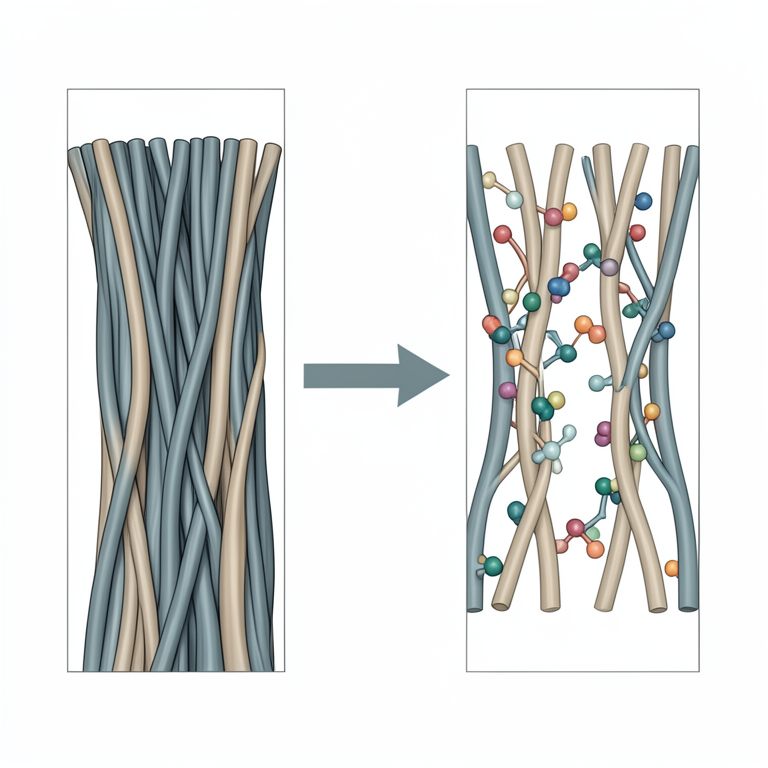
Mechanism of Protein Breakdown
AI-generated conceptual illustration (broiler chicken breast muscle fibers). It explains the idea and does not show study data.
View source evidence ↗Methods
not only enhances consumer satisfaction but also benefits the poultry industry by reducing waste and increasing efficiency. Furthermore, attention is given to the balance between sensory appeal, safety, and sustainability in poultry production. By combining traditional culinary practices with cutting-edge scientific approaches, the industry continues to produce chicken that is consistently juicier, tastier, and healthier for consumers. This review underscores the importance of technology-driven solutions in shaping the future of poultry meat production and meeting evolving consumer demands.
Keywords: Tenderness, Poultry technology, Meat quality, Juiciness, Food processing
Introduction
Chicken is one of the most loved proteins across the globe. From spicy curries to crispy fried chicken, its versatility makes it a kitchen superstar. Yet, not all chicken dishes turn out equally tender and juicy. Many of us have bitten into a piece that feels dry, chewy, or tough.
Why does this happen? And how do food technologists and chefs ensure that chicken remains succulent on our plates? The answer lies in food technology, a blend of science and innovation that transforms raw poultry into tender, flavourful delights. Let’s explore some fascinating techniques.
Marination Magic Marination is more than just a flavour boost; it’s the first step to tender chicken. A good marinade typically contains acidic ingredients (like lemon juice or yogurt) or enzymes (like papaya or pineapple extract). This help break down the muscle proteins and connective tissue, making the meat softer. Salt in the marinade also plays a key role.
It helps chicken retain water, ensuring that moisture is locked in during cooking. That’s why well-marinated chicken tastes juicy even after grilling or frying. Tumbling Technology Ever wondered how ready-to-cook chicken products like kebabs, sausages and nuggets always taste uniform? The secret is tumbling.
In food processing units, chicken pieces are placed in a large drum that slowly rotates, creating a gentle massage effect. This motion allows marinades and seasonings to penetrate deeper into the meat while also loosening the muscle fibers. The result? Faster marination, improved flavour absorption and a consistently tender bite. https://www.agriculturaljournals.com 3.
Ge Q, Wu S, Li J, Xu X, Zhou G, Zhao Y. A comparative study of vacuum tumbling and immersion marination on quality, microstructure, and protein changes of Xueshan chicken. Foods. 2022;11(23):3853. 4. Hasani E, Amirkhani M, Javanmard A, Alirezalu K, Azari R.
Effect of combination of time and temperature on quality properties of chicken breast under sous-vide processing. Foods. 2022;11(4):581. 5. Hong GP, Park SH, Kim JY, Lee SK. Effects of mechanical tenderization and tumbling on the quality properties of chicken breast meat.
Korean J Food Sci Anim Resour. 2016;36(2):235-42. 6. Mohd Azmi SI, Mat Hashim D, Noranizan MA, et al. Application of plant proteases in meat tenderization. Foods. 2023;12(6):1336. 7.
Naveena BM, Mendiratta SK, Anjaneyulu ASR. Effect of application of papain on spent hen by marination in combination with vacuum tumbling. J Food Sci Technol. 2004;41(1):56-9. 8. Saha A, Perumalla AVS, Lee Y, Meullenet JF, Owens CM.
Tenderness, moistness, and flavor of pre- and postrigor marinated broiler breast fillets evaluated by consumer sensory panel. Poult Sci. 2009;88(6):1250-6. 9. Smith DP, Acton JC. Marination, cooking, and curing of poultry products.
In: Sams AR, editor. Poultry meat processing. Boca Raton: CRC Press; 2001. p. 257-73. Enzymes at Work Nature has its own tenderizers and food technologists make smart use of them.
Enzymes like bromelain (from pineapple), papain (from papaya) and ficin (from figs) are well-known for their ability to break down proteins. When applied carefully, these enzymes reduce toughness without making the meat mushy. In traditional kitchens, people have long used mashed papaya or pineapple juice in meat curries. Modern poultry processors have refined this age-old wisdom by applying enzymes in controlled amounts, ensuring consistent results.
Smart Cooking Methods Even the best-prepared chicken can turn rubbery if cooked the wrong way. Food technology research has highlighted
Methods
that preserve tenderness: Sous-vide cooking: Chicken is vacuum-sealed and cooked slowly in a water bath at controlled temperatures. This keeps the meat moist and evenly cooked. Steam cooking: Retains natural juices better than dry heat. Pressure cooking: Breaks down connective tissue faster, making tougher cuts soft. For everyday home cooks, the lesson is simple: avoid overcooking and let science guide your kitchen! The Role of Modern Processing In large-scale poultry processing, techniques like injection marination (where brine and seasonings are evenly distributed inside the meat using fine needles) and mechanical tenderization (lightly piercing the meat surface) are widely used.
These ensure that even commercially packed chicken products remain juicy when cooked at home. A Juicy Future The journey of tender chicken is a story of how traditional wisdom meets modern technology. What began with simple marinades has now expanded into a world of advanced techniques that guarantee flavour, juiciness and consumer satisfaction. So, the next time you bite into a soft, succulent piece of chicken, remember: it’s not just cooking, it’s science at work on your plate.
Conclusion
Tender chicken is not just the result of good cooking skills. it’s the outcome of science, technology and tradition working together. From marination and enzymatic tenderizers to modern tumbling and sous-vide cooking, each method is designed to keep poultry juicy, flavourful and enjoyable. As food technology advances, consumers can look forward to even more convenient, healthier and tastier chicken products on their plates.
References
2 in the original paper- Bekhit AE, Hopkins DL, Fahri FT, Ponnampalam EN. Oxidative processes in muscle systems and fresh meat: sources, biomarkers, and antioxidant strategies. Compr Rev Food Sci Food Saf. 2013;12(5):565-97.
- Dhanda JS, Kaur S, Kaur A. Effect of marination on meat quality and food safety: a review. J Meat Sci. 2022;17(1):1-10.