
Research article · 2025 · Full text
International Journal of Agriculture and Food ScienceDevelopment and nutritional evaluation of fortified pomelo peel candy as a functional confectionery product
Volume 7(11) · Pages 188–191 · DOI: 10.33545/2664844x.2025.v7.i11c.957 ↗
Research areasPhytochemicals and Antioxidant ActivitiesMicroencapsulation and Drying ProcessesFood Drying and Modeling
Abstract
Author-writtenPomelo (Citrus grandis), an underutilized citrus fruit, is nutritionally rich, containing significant amounts of vitamin C, dietary fiber, pectin, and essential minerals such as potassium, magnesium, and calcium. The peel, often discarded as waste, is particularly abundant in bioactive compounds, including flavonoids, phenolic acids, and antioxidants. This study focuses on the nutritional enhancement of pomelo peel through its incorporation into a fortified candy product. The formulated candy was enriched with natural sources of key nutrients, including vitamin A, iron, protein, vitamin D, calcium, and zinc. Nutritional analysis of the product revealed a well-balanced composition of macronutrients and micronutrients, indicating the potential of pomelo peel candy as a functional, nutrient-dense confectionery.
Summary
Source-checkedPlain-language reading of the full paper, prepared with AI and checked against the text. Each point links to the authors' own words.
Why it matters
- Pomelo is a large citrus fruit from Southeast Asia that remains underutilized despite having significant nutritional and functional potential. View evidence ↗
- The pomelo peel is typically discarded as waste, but it contains high concentrations of bioactive phytochemicals like flavonoids, limonoids, and pectin. View evidence ↗
- The bioactive compounds found in pomelo peel are associated with health benefits, including antioxidant, anti-inflammatory, and antidiabetic activities. View evidence ↗
The question
- The study aims to investigate the nutritional makeup of a pomelo peel candy and evaluate its potential as a functional confectionery product. View evidence ↗
What they did
- The product preparation was carried out at the Department of Food Nutrition and Public Health at Ethelind College of Community Science in Prayagraj, India. View evidence ↗
- The process involved cleaning and cutting pomelo peel, followed by blanching in boiling water for 5-7 minutes to reduce bitterness and soften the texture. View evidence ↗
- The candy base was made from pomelo peel paste, dates paste, and jaggery, with cornstarch for thickness, gelatin for binding/texture, lemon juice for preservation/flavor, and ghee for mouthfeel. View evidence ↗
- Three formulations (T1, T2, T3) were tested, varying the amounts of pomelo peel (35-40g) and dates paste (30-40g) while keeping other ingredients constant. View evidence ↗
- Sensory attributes were evaluated by a panel of faculty members using a 9-point Hedonic scale to score color, consistency, flavor, taste, and overall acceptability. View evidence ↗
What they found
- Treatment T3 was the most preferred formulation, scoring highest in taste (7.83), flavor (7.91), color (7.75), texture (7.83), mouthfeel (7.91), and overall acceptability (7.91). View evidence ↗
- The T3 candy per 100g contained 16% moisture, 7.2g crude protein, 10g crude fat, 2.5% ash, and 64g carbohydrates. View evidence ↗
What it means
- The authors conclude that they successfully created a functional, indulgent homemade candy that addresses the demand for healthier snack alternatives. View evidence ↗
- The results provide a basis for future research and the potential commercialization of health-promoting candy products. View evidence ↗
Visual summary
2 visualsIllustrations explain the paper; charts are replotted from the paper's own table values.
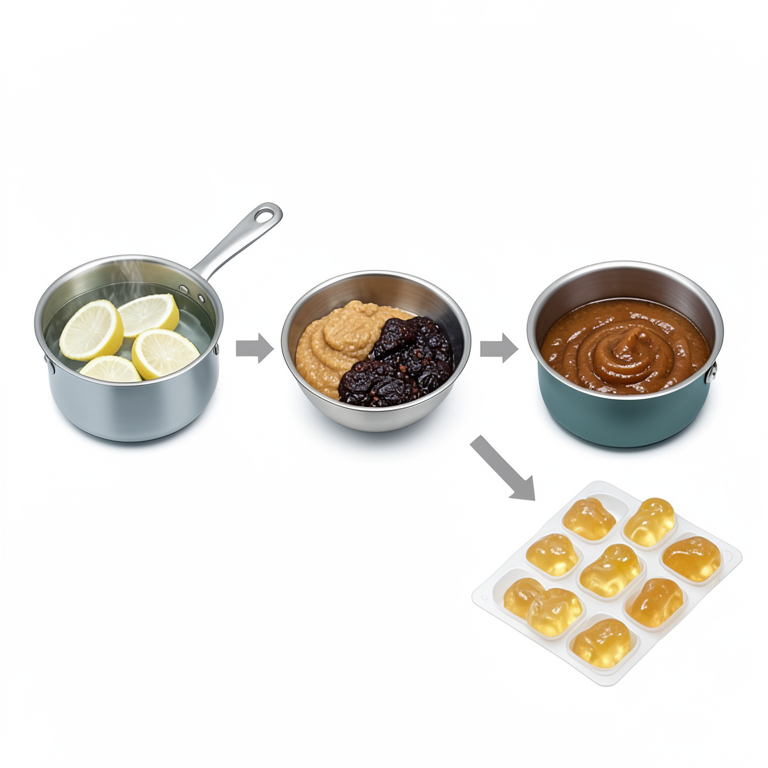
Pomelo Candy Production Process
AI-generated conceptual illustration (pomelo peel and confectionery ingredients). It explains the idea and does not show study data.
View source evidence ↗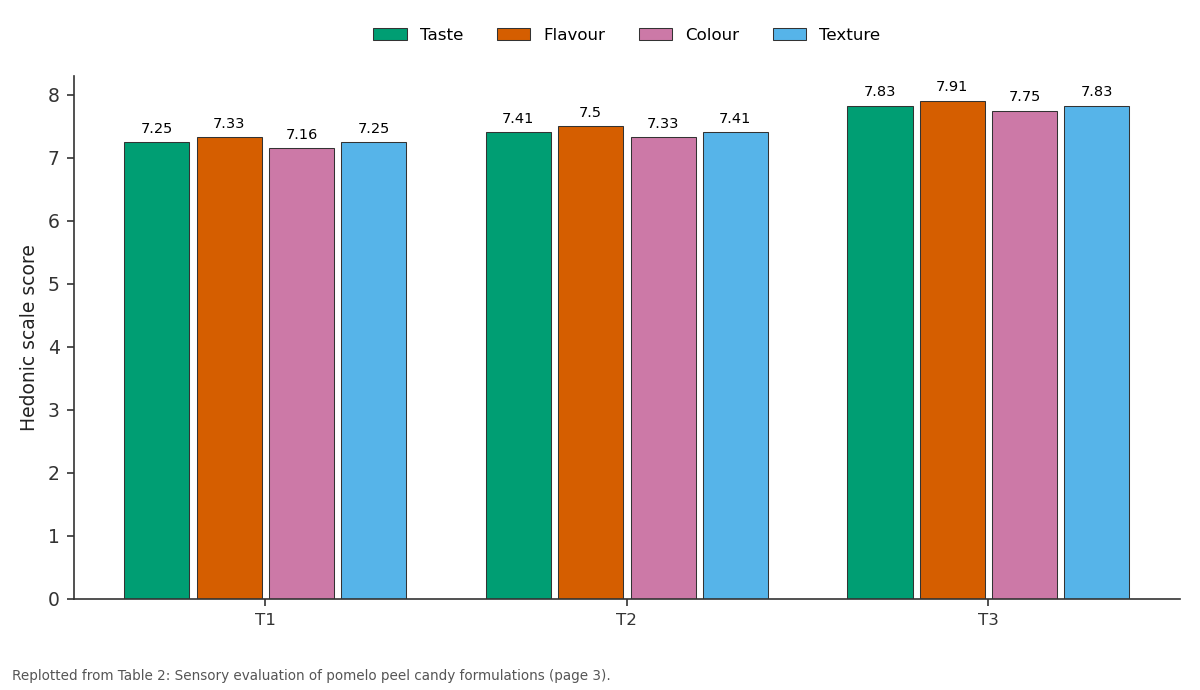
Taste and Flavour and more: T1 vs T2 vs T3
Replotted from Table 2 (page 3) of the original paper. Every bar is the paper's own table value.
View source evidence ↗Figures & tables
From the original paper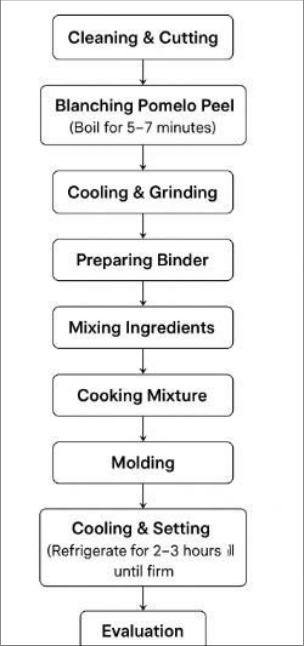 Figure 1
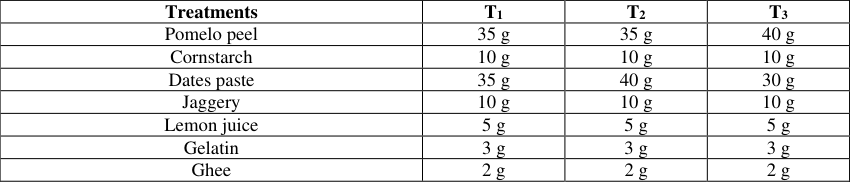 Table 1
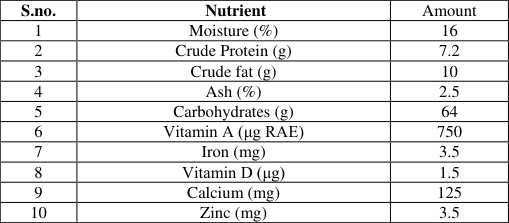 Table 3
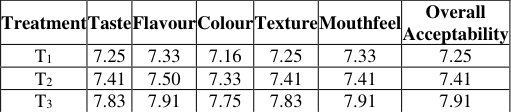 Table 2
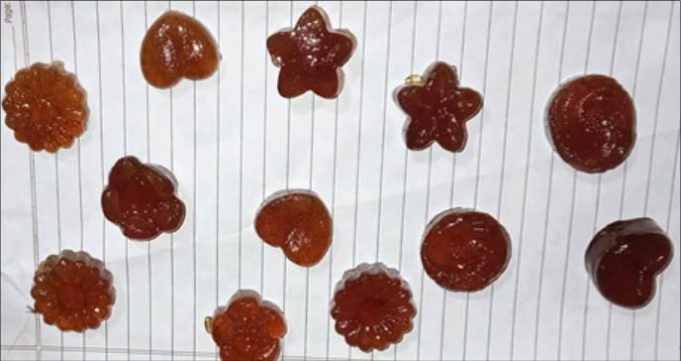 Figure 2
Introduction
Pomelo (Citrus grandis), a large citrus fruit native to Southeast Asia, is considered an underutilized crop despite its rich nutritional and functional potential. The fruit comprises two main parts: the pulp, which is the edible juicy segment, and the peel, which includes the thick outer rind and spongy inner albedo. The pulp of pomelo is widely consumed and is known for its refreshing flavor, high water content (approximately 89-91%), and its abundance of vitamin C, a key nutrient for immune support and collagen synthesis. It also provides β-carotene (provitamin A), dietary fiber, potassium, folic acid, and trace minerals such as magnesium and iron, contributing to its hydrating and nourishing qualities (Gorinstein et al., 2004) [5] .On the other hand, the peel-often discarded-holds significant promise due to its concentration of bioactive phytochemicals, including flavonoids (e.g., naringin, hesperidin), limonoids (e.g., limonin, nomilin), essential oils, pectin, and polyphenols. These compounds have been linked to various health-promoting effects, such as antioxidant, anti-inflammatory, antihypertensive, antimicrobial, and antidiabetic activities (Tripathi & Chandra, 2010; Zhang et al., 2014) [15,18] . Pomelo (Citrus maxima) holds significant importance in human nutrition as one of the largest and most widely cultivated citrus fruits. It is appreciated for its refreshing, mildly sweet to tangy flavor, thick rind, and versatile culinary applications ranging from fresh consumption to incorporation in beverages, salads, and desserts. Pomelo has earned a notable place in traditional medicine systems and contemporary diets alike, due to its nutritional density and functional health benefits (Tripathi & Chandra, 2010) [15] . Pomelo peel, which is typically discarded as waste, is gaining renewed attention for its high content of dietary fiber, flavonoids, and pectin, making it a valuable ingredient for developing functional food products. One such innovation is pomelo peel candy, a novel confectionery product that transforms underutilized peel into a flavorful, nutrient-dense treat. This value-added product is not only environmentally sustainable but also aligns with the growing demand for health-conscious sweets. Enriched with natural antioxidants, vitamins, and minerals, pomelo peel candy exhibits a pleasant citrus aroma, chewy texture, and vibrant appearance, offering a unique sensory experience. Recent studies have shown that blanching and processing techniques effectively reduce the bitterness of pomelo peel (caused by compounds like naringin and limonoids) while preserving its nutritional quality (Li et al., 2006; Hussain et al., 2020) [6,8] . As a result, pomelo peel candy stands out as a promising functional confectionery product with potential health benefits and broad consumer appeal. This research aims to explore the nutritional composition of pomelo peel candy and assess its potential health benefits as a functional confectionery product.
Objectives
1. To formulate and optimize pomelo peel-based candy. 2. To evaluate the sensory attributes and nutritional composition of the developed pomelo peel candy.
Materials and Methods
Materials and Methods
Experimental site
The experimental work for product preparation was conducted the Department of Food Nutrition and Public Health at Ethelind College of Community Science, Sam Higginbottom University of Agriculture, Technology and Sciences, Prayagraj, Uttar Pradesh.
Procurement of Samples
Fresh pomelo fruits were procured from local markets in Prayagraj, Uttar Pradesh, India. Other ingredients, including cornstarch, dates paste, jaggery, lemon juice, gelatin, and ghee, were sourced from verified local suppliers specializing in food-grade or organic products.
Preparation Method
The candy-making process begins with cleaning the pomelo peel, cutting it into small pieces, and blanching in boiling water for 5-7 minutes to soften its texture and reduce bitterness. After cooling, the peel is finely chopped or ground into a smooth paste. This pomelo peel paste is then combined with dates paste and jaggery as natural sweeteners, forming a flavorful base. Cornstarch is incorporated to thicken the mixture, while a pre-soaked gelatin solution is added to enhance binding and provide a desirable chewy texture. Lemon juice is included to balance flavor and act as a mild preservative, and a small quantity of ghee is added to improve mouthfeel, shine, and overall richness. The mixture is gently cooked over low heat with constant stirring until it thickens to the desired consistency.
Additional heating ensures the mixture achieves the proper texture, similar to reaching a target total soluble solids (TSS) level in conventional candy-making. Once the candy mass is ready, it is poured onto prepared silicone molds, left to cool at room temperature, and then refrigerated for 2-3 hours to allow firm setting. Finally, the set candy is removed from the molds, evaluated for taste, texture, visual appeal, and shelf stability, and stored in airtight containers to maintain freshness over one week under ambient conditions.
Formulation of pomelo peel candy
Three variations were formulated, with percentage changes in pomelo peel, cornstarch, and dates paste.
Sensory Analysis
The sensory evaluations of the prepared products were done by the panel of judges selected from the faculty member of the Ethelind College of Community Science. Products were judged by using the various sensory attributes like colour and appearance, consistency, flavour and taste and overall acceptability. The evaluation was done by on the 9 point Hedonic scale based score card (Srilakshmi 2015) [14] .
Nutritional Analysis:
Nutritional Composition included moisture, ash, fat, protein, crude fiber were analyzed by the methods described by AOAC (2012) and carbohydrate was calculated by difference method. Mineral content includes calcium, and iron were estimated in ash by the method described by Rangana (2010) [11] with little modifications. Calcium in ash was determined volumetrically and the acidic extract was treated with ammonium oxalate at pH 4.0 which precipitates calcium as calcium oxalate (CaC 2 O 4 ).Ferrous iron in acid solution reacts with the potassium thiocynate to form an intense red compound of ferric thiocynate. The compound is extracted with the organic potassium per sulphate and iron contents were measured calorimetrically at 560 nm. The sensory evaluation identified Treatment T 3 as the best formulation among the three developed pomelo peel candies based on its superior performance across all evaluated attributes. T 3 exhibited the highest values for taste (7.83), flavour (7.91), colour (7.75), texture (7.83), mouthfeel (7.91), and overall acceptability (7.91), followed by T 2 . The formulation's success can be attributed to the optimal use of pomelo peel, which enhanced flavour, aroma, and colour, combined with the complementary sweetness of dates paste and jaggery, and the smooth texture provided by gelatin and ghee. This well-balanced and appealing candy formulation offers a delightful sensory experience, making it the preferred choice among the panellists.
Results and Discussion
Results and Discussion
Sensory Acceptability
Sensory Acceptability
Nutritional Analysis (Estimated per 100g)
The nutritional composition of the best fortified pomelo peel candy (T 3 ) per 100 g is as follows: moisture content is 16%, indicating suitable shelf stability. The crude protein content is 7.2 g, while the crude fat content is 10 g. The ash content, which represents total mineral content, is around 2.5%. The carbohydrate content is 64g, contributing to the energy value of the candy. The candy is also enriched with micronutrients, providing 750 μg RAE of vitamin A, 3.5 mg of iron, 1.5μg of vitamin D, 125mg of calcium, and 3.5 mg of zinc.
Conclusion
The present study successfully developed a nutritious and appealing candy formulation by incorporating pomelo peel, dates paste, jaggery, and complementary ingredients such as cornstarch, gelatin, ghee, and lemon juice. Through a systematic approach, various combinations of these ingredients were explored, and Treatment T 3 , containing 40 g pomelo peel, 30 g dates paste, and 10 g each of jaggery and cornstarch, emerged as the most promising formulation based on its superior sensory attributes, including taste, flavour, colour, texture, mouthfeel, and overall acceptability, followed by T 2 and T 1 .The incorporation of pomelo peel and dates paste into the candy formulation significantly enhanced the nutritional profile by providing essential nutrients, including protein, carbohydrates, fats, vitamins A and D, calcium, iron, and zinc. The physicochemical properties of the developed candy were found to be desirable, with balanced moisture content, texture, and sweetness, contributing to overall product quality. The careful formulation allowed for a visually appealing colour and a pleasant texture, enhancing consumer acceptability.
Overall, this research successfully developed a functional and indulgent homemade candy that meets the growing demand for healthier snack options. The combination of pomelo peel, dates, and jaggery provides a nutritious treat with enhanced sensory appeal and bioactive potential. These findings lay the foundation for further research and potential commercial development of innovative and healthpromoting candy products that align with contemporary consumer health trends
Figures and tables from the paper
| Treatments | T1 | T2 | T3 |
|---|---|---|---|
| Pomelo peel | 35 g | 35 g | 40 g |
| Cornstarch | 10 g | 10 g | 10 g |
| Dates paste | 35 g | 40 g | 30 g |
| Jaggery | 10 g | 10 g | 10 g |
| Lemon juice | 5 g | 5 g | 5 g |
| Gelatin | 3 g | 3 g | 3 g |
| Ghee | 2 g | 2 g | 2 g |
Table text extracted from the original PDF; superscript letters are shown inline. The original table image is below.
View original table image
| S.no. | Nutrient | Amount |
|---|---|---|
| 1 | Moisture (%) | 16 |
| 2 | Crude Protein (g) | 7.2 |
| 3 | Crude fat (g) | 10 |
| 4 | Ash (%) | 2.5 |
| 5 | Carbohydrates (g) | 64 |
| 6 | Vitamin A (μg RAE) | 750 |
| 7 | Iron (mg) | 3.5 |
| 8 | Vitamin D (μg) | 1.5 |
| 9 | Calcium (mg) | 125 |
| 10 | Zinc (mg) | 3.5 |
Table text extracted from the original PDF; superscript letters are shown inline. The original table image is below.
View original table image
| Treatment | Taste | Flavour | Colour | Texture | Mouthfeel | Overall Acceptability |
|---|---|---|---|---|---|---|
| T1 | 7.25 | 7.33 | 7.16 | 7.25 | 7.33 | 7.25 |
| T2 | 7.41 | 7.50 | 7.33 | 7.41 | 7.41 | 7.41 |
| T3 | 7.83 | 7.91 | 7.75 | 7.83 | 7.91 | 7.91 |
Table text extracted from the original PDF; superscript letters are shown inline. The original table image is below.
View original table image
References
21 in the original paper- Alam MS, Rahman MM, Rahman MM. Study of the extraction of bioactive compounds from pomelo (Citrus grandis) peel. Food Res. DOI:10.26656/fr.2023.6.84855864
- Alam MS, Rahman MM, Rahman MM. Nutritional, bioactive, and health potential of pomelo (Citrus maxima). Food Nutr J. 2018;12(2):123-135. DOI:10.12691/fnj-12-2-4
- AOAC. Official Methods of Analysis of AOAC International. 19th ed. Gaithersburg (MD): AOAC International; 2012.
- Chatterjee S, Ghosh S. Gelatin: A versatile biopolymer for food applications. Int J Food Sci Technol. 2015;50(4):741-749. DOI:10.1111/ijfs.12656
- Gorinstein S, Leontowicz H, Leontowicz M. Comparative content of dietary fiber, total phenolics, and minerals in persimmons and apples. Int J Food Sci Nutr. 2004;55(3):171-178. DOI:10.1080/09637480410001725183
- Hussain MI, Shah SM. Jaggery: A traditional sweetener with potential health benefits. J Food Sci Technol. 2020;57(4):1234-1241. DOI:10.1007/s11483-020-02272-3
- Ixtaina VY, Nolasco SM, Tomás MC. Flaxseed and chia oils as potential sources of bioactive compounds. J Am Oil Chem Soc. 2011;88(3):301-307. DOI:10.1007/s11746-010-1733-0
- Li X, Zhang Y, Zhang X. Blanching of pomelo peel to reduce bitterness and preserve nutrients. J Food Sci. 2006;71(5):S346-S350. DOI:10.1111/j.1365-2621.2006.tb08993.x
- Pereira CV, Silva CL. Role of cornstarch in food texture and consistency. Food Hydrocoll. 2020;102:105-112. DOI:10.1016/j.foodhyd.2020.105612
- Ranganna S. Handbook of Analysis and Quality Control for Fruit and Vegetable Products. 2nd ed. New Delhi: Tata McGraw-Hill; 2010.
- Shahidi F, Yeo J. Lemon juice: A natural flavor enhancer and preservative. Food Chem. 2018;239:1-6. DOI:10.1016/j.foodchem.2017.06.086
- Srilakshmi B. Food Science. 6th ed. New Delhi: New Age International Publishers; 2015.
- Tripathi S, Chandra R. Pomelo (Citrus maxima): A review of its nutritional and pharmacological properties. Int J Food Sci Technol. 2010;45(11):2221-2228. DOI:10.1111/j.1365-2621.2010.02402.x
- Verywell Fit. Pomelo nutrition facts and health benefits. 2021 https://www.verywellfit.com/pomelo-nutrition-facts4582354
- WebMD. Pomelo: Nutrition and healthy eating. 2021 https://www.webmd.com/diet/health-benefits-pomelo
- Zhang Y, Zhang X. Pomelo peel: A potential source of bioactive compounds. J Food Sci. 2014;79(4):C551C557. DOI:10.1111/1750-3841.12491
- Zhao X, Li X. Pomelo peel: Chemical composition and potential health benefits. Food Res Int. 2015;76:1-9. DOI:10.1016/j.foodres.2015.05.010
- Zhao Y, Zhang Y. Pomelo peel: A review of its nutritional and functional properties. Food Sci Hum Wellness. 2016;5(4):149-156. DOI:10.1016/j.fshw.2016.09.003
- Zhou L, Liu H. Pomelo peel: A promising source of dietary fiber and bioactive compounds. Food Chem. 2017;214:1-8. DOI:10.1016/j.foodchem.2016.07.097
- Zhou Y, Zhang X. Pomelo peel: A potential functional food ingredient. J Funct Foods. 2018;40:1-9. DOI:10.1016/j.jff.2017.11.016
- Zhu Y, Wang Y. Pomelo peel: Nutritional composition and potential health benefits. Food Res Int. 2019;116:19. DOI:10.1016/j.foodres.2018.09.035
Cited by 1
From OpenAlex, OpenCitations and reference lists read by Scinovex
- Solid-state debittering and fractionation of pomelo (Citrus maxima) Peel: Mechanistic constraints, technology readiness, and food valorization ↗
Yu Liu, 任婧楠, Siyi Pan, Gang Fan, Lifen Ma · Trends in Food Science & Technology · 2026
❝ 0