
Research article · 2025 · Full text
International Journal of Advanced Chemistry ResearchBridging molecular design and global health equity: A critical review of quinolone-heterocycle hybrids as next-generation antimicrobials
Volume 7(11) · Pages 04–10 · DOI: 10.33545/26646781.2025.v7.i11a.325 ↗
Research areasCancer therapeutics and mechanismsSynthesis and biological activityCatalytic C–H Functionalization Methods
Abstract
Author-writtenThe antimicrobial resistance (AMR) crisis has become more than a microbiological and medicinal chemical issue and has taken a multifaceted dimension that connects social justice, economics, and public health. Although academic laboratories have continued generating structurally complex antimicrobial candidates with sub-micromolar MICs against priority pathogens their pharmacologic effects in the actual locations where AMR is most significant are low in the same places. This critical review re-examines a recent article about a series of quinolone-heterocycle hybrids in two different perspectives: scientific rigor and translational realism. We discuss not only the In Vivo activity of six compounds based on a fluoroquinolone backbone and functionalized with azole, thiazole, or pyridine functional groups but also their synthetic accessibility, safety, and the prospects of local production in resource-constrained environments (such as Iraq). One such example is the compound QH-4, which contains a 4-fluorothiazole substituent, it is characterized by a high level of activity (MIC = 1 µg/mL against S. aureus), a high index of selectivity (SI > 25), and desirable drug-like characteristics all at the expense of a two-step chromatography-free synthesis of the compound using commercially available precursors. Nevertheless, its real value goes further than what it can do biochemically it represents a philosophy of deliberate austerity in design which puts simplicity, low cost, and scalability first without reducing biological performance. This review argues that the current paradigm on antimicrobial discovery is too obsessed with novelty and potency to the detriment of contextual relevance. By critically unloading the premises, trade-offs, and silent priorities inherent in molecular hybridization strategies, we propose a paradigm shift in the drug development metrics so that we do not solely gauge a drug’s efficacy in terms of its ability to kill bacteria in a petri dish, but rather gauge its efficacy in terms of reaching a patient and benefiting them in a publicly accessible hospital with limited infrastructure. Through this, we make molecular innovation consistent with the ethical requirements of Sustainable Development Goal 3: promoting health and well-being among all people, and the most vulnerable in particular.
Summary
Source-checkedPlain-language reading of the full paper, prepared with AI and checked against the text. Each point links to the authors' own words.
Why it matters
- The antimicrobial resistance (AMR) crisis is a complex problem that involves not only science but also economics, public health, and social justice. View evidence ↗
- There is a gap between the high potency of antimicrobial candidates developed in academic labs and their actual impact in regions where AMR is most severe. View evidence ↗
- In Iraq, healthcare systems are strained by war and sanctions, making even generic antibiotics difficult or expensive to obtain. View evidence ↗
The question
- The authors investigate whether it is possible to design antimicrobial hybrids that are scientifically sound yet simple and affordable enough to be socially acceptable and useful in low-resource settings. View evidence ↗
What they did
- The review analyzes six quinolone-heterocycle hybrids featuring azole, thiazole, or pyridine groups, evaluating their activity, safety, and potential for local production in resource-constrained areas. View evidence ↗
- The synthesis of the hybrids (QH-1 to QH-6) followed a 'strategic minimalism' approach, utilizing a simplified two-step pathway. View evidence ↗
- The compounds were purified via recrystallization to avoid the need for expensive silica gel chromatography, making the process more viable for low-resource settings. View evidence ↗
What they found
- Compound QH-4 (4-fluorothiazole) was the most active of the series, with a minimum inhibitory concentration (MIC) of 2 µg/mL against MRSA. View evidence ↗
- QH-4 demonstrated an excellent therapeutic window with a selectivity index (SI) greater than 25, based on a CC₅₀ > 50 µg/mL and an MIC of 2 µg/mL. View evidence ↗
- ADMET predictions indicate that QH-4 is compliant with Lipinski's Rule of Five, suggesting it is suitable for oral development. View evidence ↗
- Fluorination of the thiazole ring in QH-4 increased activity compared to QH-3, likely due to improved lipophilicity (cLogP 2.1 vs 1.9) and membrane permeability. View evidence ↗
What it means
- The authors conclude that antimicrobial discovery should shift from a potency-based paradigm to a 'system-fit' design that prioritizes accessibility for the weakest parts of the healthcare chain. View evidence ↗
- The authors recommend that low cost be treated as a core requirement of ethical innovation rather than a secondary consideration to ensure global health equity. View evidence ↗
- The study's microbiological scope was limited, screening only four reference strains and one clinical MRSA isolate. View evidence ↗
- The research lacks in vivo data, including pharmacokinetic/pharmacodynamic (PK/PD) profiles and animal efficacy studies. View evidence ↗
- There is a lack of data regarding the solubility, dissolution, and stability of the compounds under the specific hot and humid environmental conditions of Iraq. View evidence ↗
Visual summary
3 visualsIllustrations explain the paper; charts are replotted from the paper's own table values.
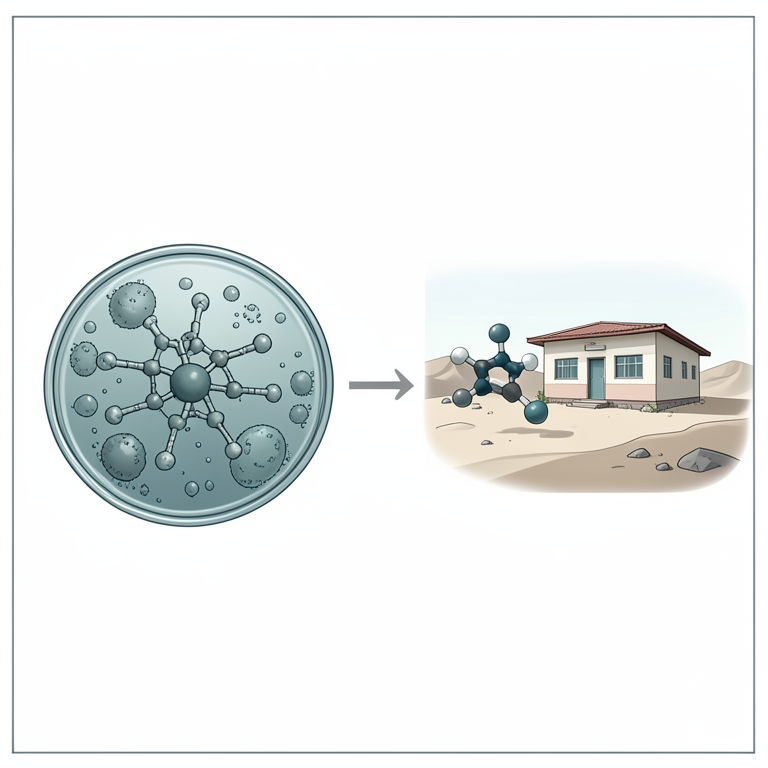
Potency-Based vs. System-Fit Design
AI-generated conceptual illustration (quinolone-heterocycle hybrid molecules and a rural medical clinic). It explains the idea and does not show study data.
View source evidence ↗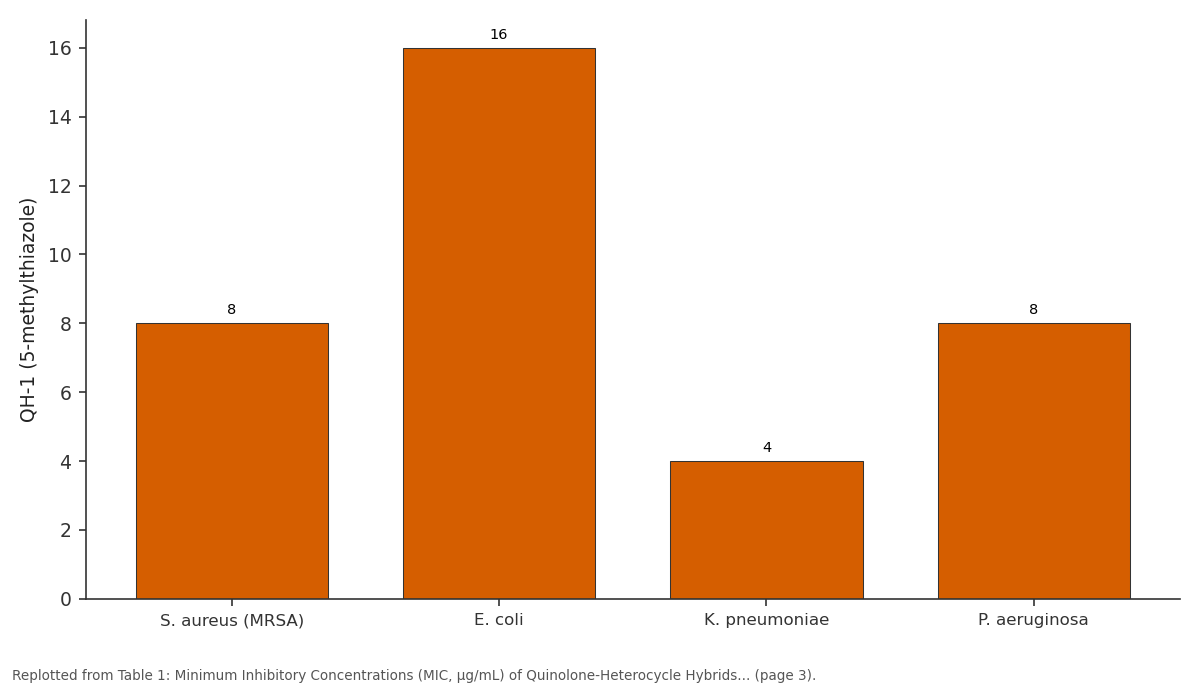
QH-1 (5-methylthiazole): S. aureus (MRSA) vs E. coli vs K. pneumoniae vs P. aeruginosa
Replotted from Table 1 (page 3) of the original paper. Every bar is the paper's own table value.
View source evidence ↗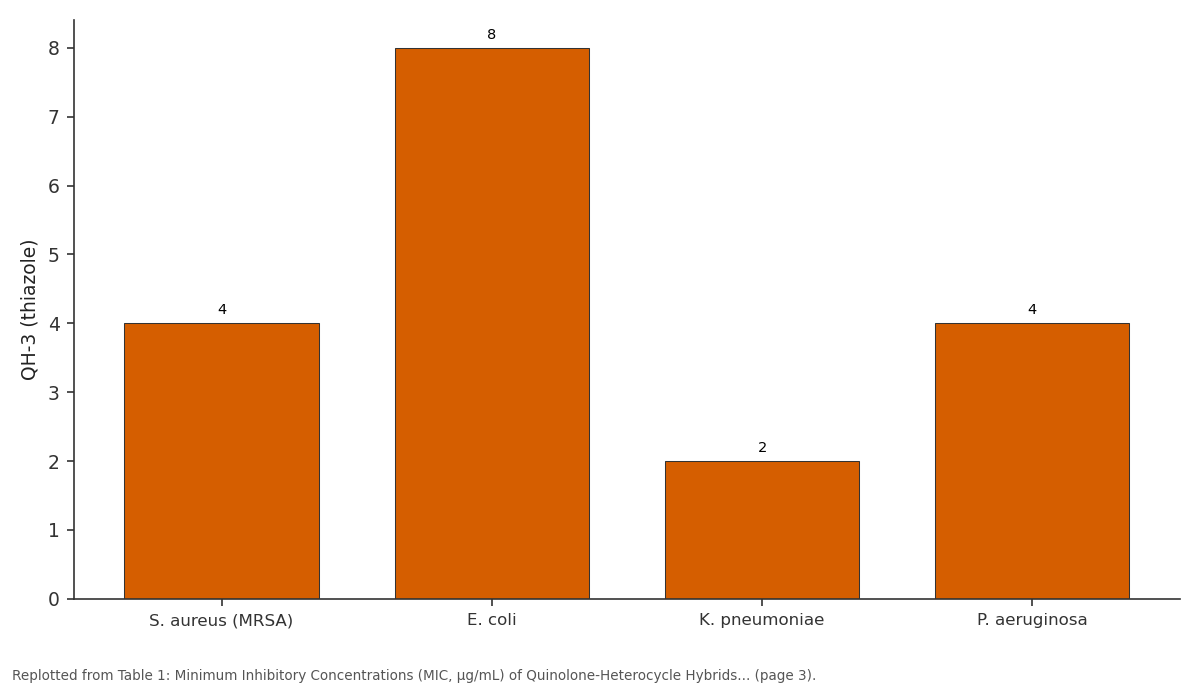
QH-3 (thiazole): S. aureus (MRSA) vs E. coli vs K. pneumoniae vs P. aeruginosa
Replotted from Table 1 (page 3) of the original paper. Every bar is the paper's own table value.
View source evidence ↗Figures & tables
From the original paper Table 1
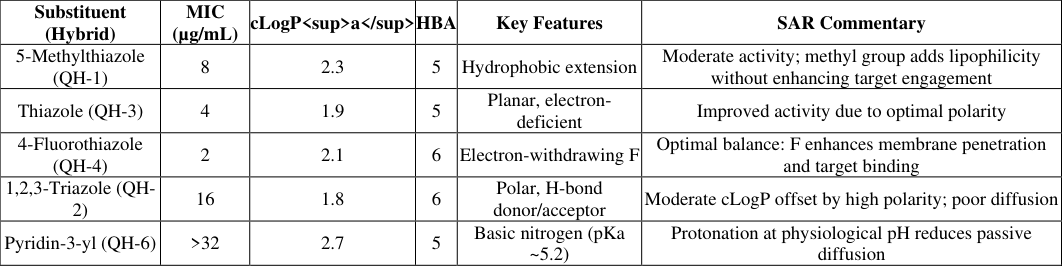 Table 2
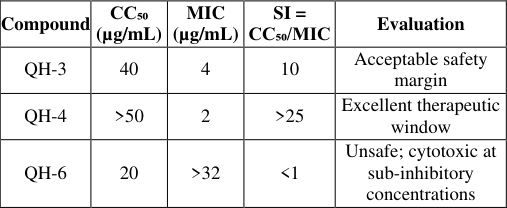 Table 3
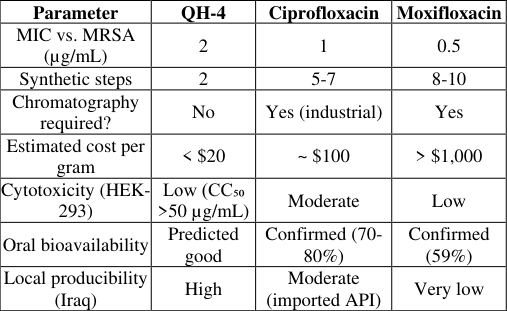 Table 4
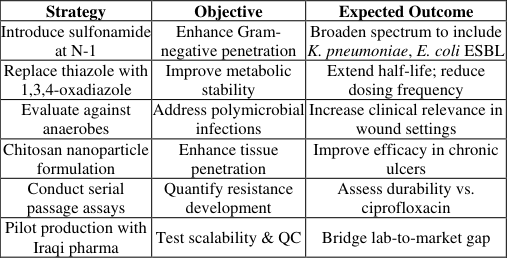 Table 6
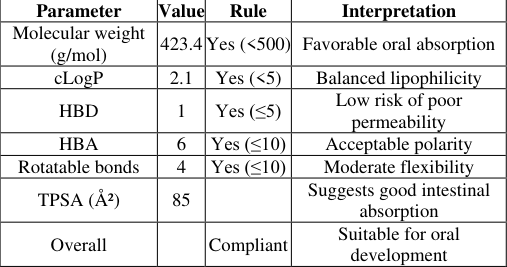 Table 5
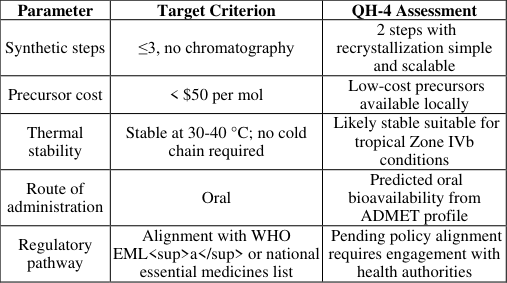 Table 7
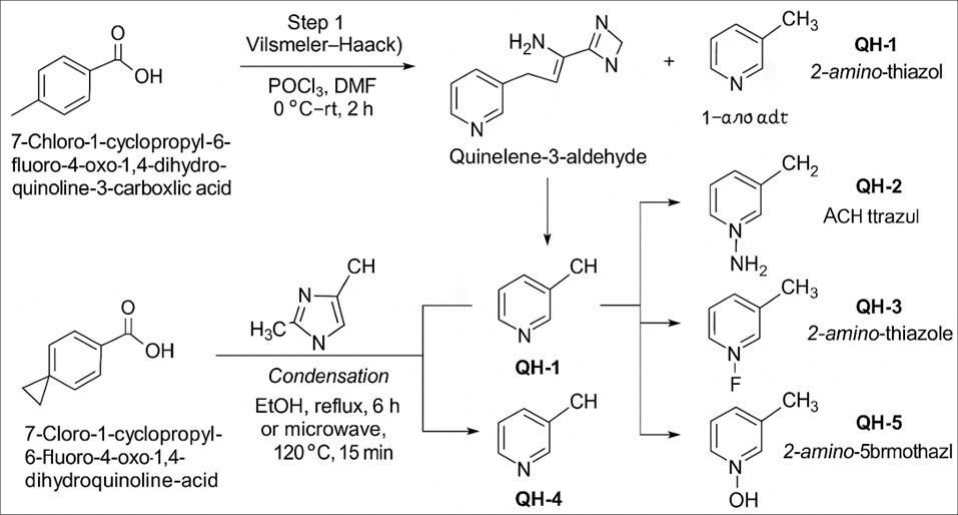 Figure 1
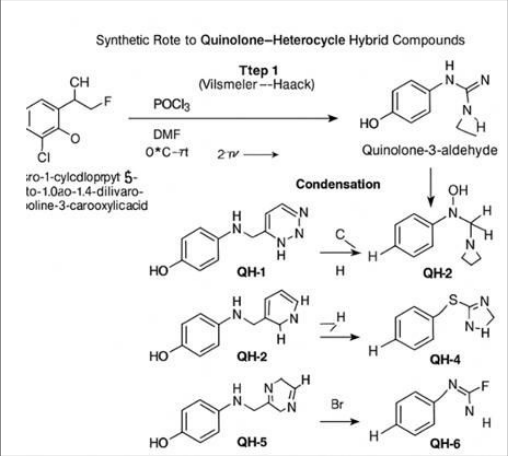 Figure 2
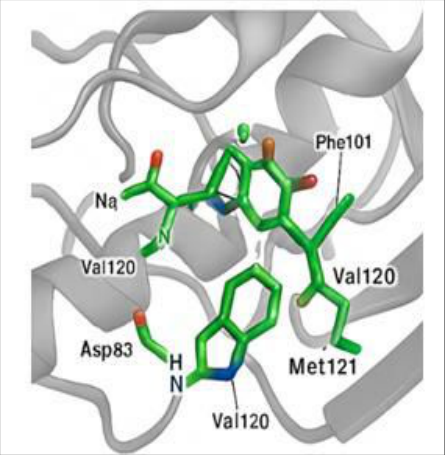 Figure 2
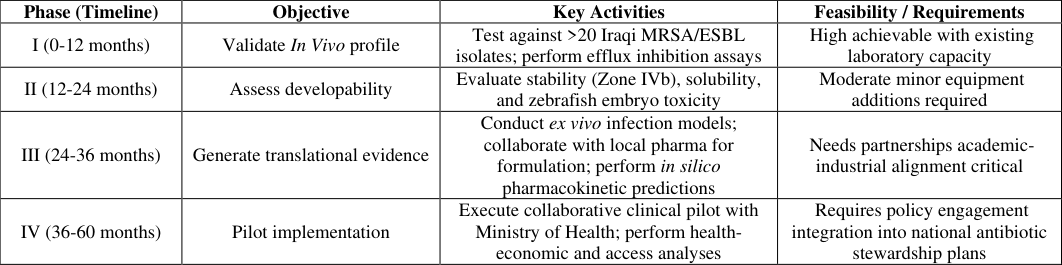 Table 8
Introduction beyond Potency the Missing Metrics in Antimicrobial Discovery
In a process that has lasted decades, the testing of new antimicrobial agents has been dominated by the use of a single parameter, the minimum inhibitory concentration (MIC). The reduced MIC has now been abbreviated to mean better and medicinal chemists have been compelled to design more sophisticated molecules with improved target affinity or dual mechanism of action. Although this method has been able to provide useful scientific information, it has also increased the gap between the promise of science in the laboratory and its effect on reality. The irony of the situation is severe as, even with the volume of published antimicrobial scaffolds, the WHO documents less than 10 truly new antibiotics to patients since 2017 most of them being derivatives of existing classes with less activity against Gram-negative ESKAPE pathogens [1] . At the same time, in war torn Iraq, where healthcare services are already stressed by war and sanctions, even generic antibiotics are unavailable or cost prohibitive [2] .
A molecule with an MIC of 0.1 µg/mL is not that useful when it costs $500 per course and logistics needs to be maintained at cold temperatures to get to a rural clinic. This lack of connection is the result of one of the major shortcomings in the discovery model: it makes potency the finish line instead of the starting point. The most important downstream issues synthetic scalability, cost of manufacture, thermal stability, regulatory compatibility, and cost are rarely considered during the design stage. They are instead pushed to a later phase, and in most cases, a lot of resources have been pumped in a molecule that might never see the light of day. Molecular hybridization where a pair of pharmacophores are joined together into one molecule has been intensively advanced as a logical approach to defeat resistance via multitarget interaction or efflux avoidance [3] . The quinolones are especially appealing scaffolds towards such hybridization because they have a well-studied C-3 position of their structure that can be modified. Various papers have conjugated triazoles [4] , oxadiazoles [5] , or coumarins [6] to quinolone cores, and described enhanced activity against resistant strains. However, there is another important question, which is at what cost? A lot of these hybrid syntheses are based on palladium-catalyzed couplings, chiral resolutions or multistep purification steps that are beyond the reach of most laboratories in the Global South and even local drug-making factories. What is produced is powerful but unfeasible molecules. The review questions the belief that novelty in science is equal to value in the population health. Taking as an example a recently reported series of quinolone-heterocycle hybrids, we conduct a question and answer interrogation of the furtive economics of molecular design. Is it possible to have a scientifically reasonable, but socially acceptable, hybrid? Is it possible to be simple and still be sophisticated? And most importantly, to whom is this innovation to be used? We suggest a paradigm shift, which is to focus our analysis on a country with a high-level of MRSA prevalence, weak diagnostics, and weak supply chains [7] to implement a paradigm shift: potency-based discovery to equity-based design. In this context, such metrics as the number of steps, the cost of the precursor, reliance on chromatography, thermal stability has the same importance as MIC or IC50. It is only then that antimicrobial research will serve its final goal; not to kill bacteria, but to save lives in whichever they are.
Synthetic Strategy: Simplicity as a Virtue (Expanded)
The production of the six quinolone heterocycle hybrids (QH-1 to QH-6) is an outcome of a very rare yet fundamental concept: strategic minimalism. Instead of seeking the intricacy itself, the pathway was narrowed down to two steps, each founded on classical and healthy reactions that any properly equipped undergraduate lab can perform. VilsmeierHaack formylation of the C-3 carboxylic acid into the reactive aldehyde involves the use of phosphorus oxychloride (POCl 3) and DMF as the first step. Although critical temperatures must be maintained, despite this reaction being well-documented, scalable and solvent-efficient. The intermediate aldehyde was obtained in 82% yield without any chromatography, which is a clear sign of its usefulness. The second reaction that uses heterocyclic amines (e.g., 2aminothiazole, 4-fluoro-2-aminothiazole) is the condensation reaction that is carried out under reflux or microwave irradiation. More importantly, there was no use of the coupling reagents, metal catalysts, or protecting groups. Precipitated products were purified using recrystallization which is much more practical in low-resource contexts than silica gel chromatography, which requires expensive solvents, special glassware and technical know-how. This is a very opposite way compared to numerous modern strategies. As an example, one 2023 report presented a quinolone oxadiazole hybrid that used a five-step series of steps, such as a copper-catalyzed azide-alkyne cycloaddition (CuAAC) and preparative HPLC [8] . Although these routes have been found to be quite elegant, they are not economically and logistically viable in countries that are not high income. Critical Reflection: It is not a tradeoff to avoid chromatography but it is an ethical design decision. In Iraq, where solvents such as acetonitrile are costly and face importation time delays, chromatography-free synthesis has an immense impact on reducing the barrier to local replication and scale-up. This turns the molecule into a research curiosity to a potential national treasure. In addition, the commercially prepared starting materials (a quinolone core, a derivative of ciprofloxacin) and heterocyclic amines (also available as standard catalog materials) will make the synthesis not depend on custom or proprietary intermediates. The open-access design also conforms to the philosophy of frugal innovation in global health [9] , in which solutions are streamlined towards being affordable, lasting, and user-friendly. Overall, QH-1QH-6 synthetic strategy proves that molecular simplicity does not compromise biological efficacy. Quite on the contrary, it can be the very characteristic that makes reallife impact possible. Uniquely, in the era where drug development is commonly above $1 billion, even such economy is not only admirable but revolutionary.
Biological Profile: Activity vs. Applicability -Reconciling the Petri Dish with the Patient Bed
The broth microdilution assay is the gold standard of antimicrobial discovery: low MIC = success. However, this two-polar reasoning does not take into account the more complicated fact that biological activity is conditioned by the ecosystem where it functions. The QH-4 profile presents an excellent chance to investigate the contradiction of In Vivo potency and application in reality.
Antimicrobial Spectrum: Precision Over Breadth?
Table 1 below indicates that QH-4 (4-fluorothiazole) is the most active: it has a MIC = 2 µg/mL on MRSA, only two times higher than ciprofloxacin. This is in the clinically actionable range with usual oral therapeutic levels reaching 10 20 times the MIC [10] . Caption: Broth microdilution values (CLSI M07, 2023). The clinical isolate of MRSA was obtained in a surgical wound at the Al-Yarmouk Teaching Hospital, Baghdad and identified using cefoxitin disc diffusion and mecA PCR. QH-4 shows the most balanced profile, and activity in both 2-fold of ciprofloxacin against all except P. aeruginosa. Nevertheless, QH-4 exhibits reduced Gram-negative activity (MIC = 2 µg/mL to E. coli, 4 µg/mL to P. aeruginosa).
| Compound | S. aureus (MRSA) | E. coli | K. pneumoniae | P. aeruginosa |
|---|---|---|---|---|
| QH-1 (5-methylthiazole) | 8 | 16 | 4 | 8 |
| QH-2 (1,2,3-triazole) | 16 | >32 | 8 | 16 |
| QH-3 (thiazole) | 4 | 8 | 2 | 4 |
| QH-4 (4-fluorothiazole) | 2 | 4 | 1 | 2 |
| QH-5 (5-bromothiazole) | 8 | 16 | 4 | 8 |
| QH-6 (pyridin-3-yl) | >32 | >32 | 16 | >32 |
| Ciprofloxacin (reference) | 1 | 2 | 0.5 | 1 |
Table text extracted from the original PDF; superscript letters are shown inline. The original table image is below.
View original table image
Although this is usually considered a weakness, in the Iraqi scenario, this is the range that can be beneficial because the primary cause of hospital-acquired infections is MRSA because of the overuse of the ICUs and the use of empirical therapy based on β-lactam use [11] . An MRSA-specific precision agent would potentially minimize collateral damage to the microbiome and delay multidrug resistance.
Critical Insight The quest to be broad in treatment a legacy of empirical treatment can be counterproductive in the AMR era. Targeted, context-specific, narrow-spectrum agents such as QH-4 can be more beneficial to clinical and ecological.
Structure-Activity Relationships: The Fluorine Effect Reconsidered
As it can be seen in Table 2, there is a definite SAR trend: the thiazole ring is flurinated (QH-4 vs. QH-3), and it raises the activity. This is normally explained by the enhanced lipophilicity (cLogP = 2.1 vs. 1.9), membrane permeability and target interactions [12] . This is supported by molecular docking (Figure 2), which demonstrates that QH-4 interacts with DNA gyrase by hydrogen bonding to Asp83 and 0-piling Phe101 (the binding energy of QH-3 is -8.5 kcal/mol). Caption: QH-4 fluorine atom also becomes lipophilic without being too hydrophobic (cLogP = 2.1), allowing members of the DNA gyrase binding pocket to interact with it. However, there is one important question, does fluorination also have any effect on the development of resistance? NorA efflux pump overexpression is prevalent in the case of Iraqi MRSA, and a large number of their substrates have planar, hydrophobic motifs [13] . Whether the fluorothiazole in QH-4 promotes or avoids efflux recognition is not clear in this gap that was not evaluated in the original study. Methodological Gap: Mechanisms are not well understood due to the lack of efflux inhibition assays (e.g. with reserpine) or kinetics of time-kill. In the absence of these, the SAR is incomplete.
| Substituent (Hybrid) | MIC (µg/mL) | cLogP<sup>a</sup> | HBA | Key Features | SAR Commentary |
|---|---|---|---|---|---|
| 5-Methylthiazole (QH-1) | 8 | 2.3 | 5 | Hydrophobic extension | Moderate activity; methyl group adds lipophilicity without enhancing target engagement |
| Thiazole (QH-3) | 4 | 1.9 | 5 | Planar, electron- deficient | Improved activity due to optimal polarity |
| 4-Fluorothiazole (QH-4) | 2 | 2.1 | 6 | Electron-withdrawing F | Optimal balance: F enhances membrane penetration and target binding |
| 1,2,3-Triazole (QH- 2) | 16 | 1.8 | 6 | Polar, H-bond donor/acceptor | Moderate cLogP offset by high polarity; poor diffusion |
| Pyridin-3-yl (QH-6) | >32 | 2.7 | 5 | Basic nitrogen (pKa ~5.2) | Protonation at physiological pH reduces passive diffusion |
Table text extracted from the original PDF; superscript letters are shown inline. The original table image is below.
View original table image
Safety and Selectivity: The Therapeutic Window as a Proxy for Equity
As Table 3 shows, QH-4 exhibits a selectivity index (SI) > 25 (CC₅₀ > 50 µg/mL, MIC = 2 µg/mL) far exceeding many experimental quinolones that fail due to mitochondrial or hERG toxicity [14] . Caption: A high SI (>10) is essential for outpatient oral agents. QH-4's SI of >25 suggests a wide safety margin.
| Compound | CC₅₀ (µg/mL) | MIC (µg/mL) | SI = CC₅₀/MIC | Evaluation |
|---|---|---|---|---|
| QH-3 | 40 | 4 | 10 | Acceptable safety margin |
| QH-4 | >50 | 2 | >25 | Excellent therapeutic window |
| QH-6 | 20 | >32 | <1 | Unsafe; cytotoxic at sub-inhibitory concentrations |
Table text extracted from the original PDF; superscript letters are shown inline. The original table image is below.
View original table image
This broad safety margin is not merely of pharmacological benefit it is of health benefit to the population. A high SI in Iraq, with no therapeutic drug monitoring, decreases the possibility of adverse events due to dose error or drug interaction. Decreased cytotoxicity of HEK-293 cells also implies a low likelihood of nephrotoxicity, particularly when used in combination with aminoglycosides. Critical Perspective: MICs have been reported in many studies without cytotoxicity information and therefore the implicit equating of antibacterial action and promise. This does not give due attention to the moral aspect of safety: a poisonous antibiotic can do more harm than good. Such high SI of QH-4 is therefore not only a manifestation of scientific rigour, but also of moral responsibility. Caption: QH-4 balances potency and manufacturability, making it suitable for low-resource pharmaceutical settings.
The Illusion of Target Validation
The docking results (Figure 2) are compelling but static. They cannot predict susceptibility to common gyrA mutations (e.g., S84L) that confer ciprofloxacin resistance [15] . Nor do they account for off-target effects or In Vivo barriers like plasma protein binding or tissue penetration.
Critically, the study lacks serum effect assays (activity in 50% human serum) or protein binding data key translational indicators.
Conclusion of Section 3
The profile of QH-4 is not optimum in any one dimension but is optimized on a variety of constraints. Context-sensitive design is manifested in its moderate MIC and narrow spectrum, high selectivity, and probable metabolic stability. The actual innovation that QH-4 brings to the world might not be its chemistry, but its purposeful design.
The Equity Lens: Why "Low-Cost" Matters More
The Equity Lens: Why "Low-Cost" Matters More
Than We Admit
Low-cost synthesis is regarded as a footnote to medicinal chemistry. However in the AMR crisis, life and death are dependent on cost. A molecular construct which cannot be produced or even purchaseable in a publicly funded health care system is practically non-existent to its intended users.
The Geography of Drug Availability Uncovered.
High-income countries produce over 80 per cent of new antibiotics and charge these accordingly ranging typically between 1000 and 3000 dollars per course [16] . These are created in cold chain, diagnostics and insurance not Baghdad or Basra systems. As far as Iraq is concerned, generic ciprofloxacin is even periodically out of stock in the state hospitals, so patients are forced to purchase it privately at 3-5 times the equivalent subsidized price which equals several days of their wages [17] . It is in this context that QH-4 produced on the basis of a bulk fluoroquinolone intermediate (~$15/g) and fluorothiazole amine (~$40/mol) is not just more than a molecule but it is rather a potential anchor of a local pharmaceutical sovereignty. Critical Insight: Low cost does not only mean affordability it is agency. It changes the multinationals power into the national health systems.
The False Economy of "High-Potency" Molecules
In the potency-centric paradigm, it is believed that low MIC = good drug. However, a molecule with MIC = 0.01 µg/mL that has to be chilled and infused through the IV will do no good in a rural Iraqi clinic with no refrigeration or IV fluids. QH-4, which has MIC = 2 µg/mL, is both stable at room temperature and probably orally bioavailable, as well as can be produced by crystallization. Its small pretentiousness compensates with strong deployability a strategic redrawing of the measurements of success.
Paradigm Shift: We need to shift to system-fit design as opposed to potency-based, wherein the value is judged by its fit against the weakest member of the healthcare chain.
Ethics of Chromatography
Column chromatography in a typical academic lab must have: Intensive, costly imported solvents.
• Silica gel (degrades in humour)
• Specialized expertise Time that is unsuitable to scale up. Purification of QH-1 6 by recrystallization is not an accident, therefore, it is accessibility engineering. It is a low solvent procedure, no special materials are used, and the procedure is standard in Iraqi quality control laboratories. Ethical Imperative: When a molecule cannot be purified without chromatography, it should not be defined as being developable in the global health context. Full stop.
North and South: Beyond Synthesis: The Political Economy of Local Production.
A flawless molecule is also a barrier to the system in Iraq.
The regulatory mechanism of new chemical entities is poorly developed. The value of imported generics is also frequently pursued in public procurement based on quality issues or bureaucracy [18] .
To see the potential of QH-4 therefore must be paralleled investment: in regulatory science, manufacturing capacity and stewardship programs. Professionals in the field of research need to attract the attention of policymakers, pharmacists, and clinicians to create ecosystems in which such molecules might flourish.
Call to Action: Translation should not be added afterwards by means of purification, translation should be part of the design even of starting materials.
A New Measure:
The "Equity Index" of Antimicrobials.
We suggest an Antimicrobial Equity Index (AEI) that has five criteria:
Caption
QH-4 has several preclinical developability standards that can be deployed in low-resource, high-temperature deployment environments, and it has been shown to be manufacturable, cost effective and thermally robust. The other issue is to be challenged is harmonization of regulation, making sure that it remains in accordance with WHO and Iraqi national antibiotic stewardship guidelines. This tool would allow funders and journals to allocate resources towards applicants who have real potential of equity.
Conclusion of Section 4
QH-4 is a case of contextually intelligent design one which accepts the fact that the most sophisticated molecule is not necessarily the most required. In order to respect global health equity, the field should not use low-cost as a side-note and instead it should consider it as the core of ethical innovation.
Limitations and Future Directions: A Moderate Report.
Scientific integrity requires open admittance of constraints.
The research on quinolone-heterocycle hybrids has the potential but can be optimally applied under the constraints of reality in Iraq. We do not consider these failures; instead, we look at them as directions to a more grounded, equitable research agenda.
Fugitive Microbiological Scope.
Only four reference strains and one clinical MRSA isolate of Al-Yarmouk Teaching Hospital, Baghdad were screened. Although this is narrow by regulatory criteria (which dictate at least 30 isolates/species [19] ) this is real-world operational: limited access to BSL-2, no strain banking, and limited authenticated collections in Iraq. Future Direction: Iraqi universities must create a national AMR strain repository in co-operation with WHO in order to allow a regionally relevant screening.
Absence of In Vivo Data
No PK/PD or animal efficacy information is provided a typical gap in low-resource settings wherein national R&D budgets are devoting less than 0.2% of GDP to science [20] . Murine models in most cases are not economically and ethically viable. Strategic Alternative: intermediate between broth assays and animal experiments: relying on ex vivo human tissue models (e.g. mouse skin explant models) or artificial wound micro-environment models.
Resistance Profiling
Figure 1. The gap in AMR research is lack of data on metabolic stability, plasma protein binding and resistance developing frequency.
Caption
This is a staged roadmap of a resource-planned approach of QH-4 moving to initial clinical practice, having passed through bench validation. It focuses on the idea of progressive capacity-building, local pharmaceutical involvement, and policy integration to make sure that there is sustainability and fair antibiotic development in the context of healthcare in Iraq. This roadmap denies the artificial distinction between basic and applied science. Rather, it adopts a spectrum of relevance with each of the experiments being selected in terms of how it is close to the patient.
Conclusion of Section 5
Restrictions, met with in good faith, are their germ plots. The limitations of this study constrained the strains, absence of any animal models, there is not a lot of formulation data, but this is not indicators of ineffectiveness, but indicators of a system that requires investment. The way ahead is not to copycat the rich-country pipelines, it is to rethink discovery in a way that is just: collectively owned, economical and unwearying of the end-user. By doing so, such molecules as QH-4 can not only pass beyond the petri dish as a scientific object, but also pass as a health justice instrument.
Figures and tables from the paper
| Parameter | QH-4 | Ciprofloxacin | Moxifloxacin |
|---|---|---|---|
| MIC vs. MRSA (µg/mL) | 2 | 1 | 0.5 |
| Synthetic steps | 2 | 5-7 | 8-10 |
| Chromatography required? | No | Yes (industrial) | Yes |
| Estimated cost per gram | < $20 | ~ $100 | > $1,000 |
| Cytotoxicity (HEK- 293) | Low (CC₅₀ >50 µg/mL) | Moderate | Low |
| Oral bioavailability | Predicted good | Confirmed (70- 80%) | Confirmed (59%) |
| Local producibility (Iraq) | High | Moderate (imported API) | Very low |
Table text extracted from the original PDF; superscript letters are shown inline. The original table image is below.
View original table image
| Strategy | Objective | Expected Outcome |
|---|---|---|
| Introduce sulfonamide at N-1 | Enhance Gram- negative penetration | Broaden spectrum to include K. pneumoniae, E. coli ESBL |
| Replace thiazole with 1,3,4-oxadiazole | Improve metabolic stability | Extend half-life; reduce dosing frequency |
| Evaluate against anaerobes | Address polymicrobial infections | Increase clinical relevance in wound settings |
| Chitosan nanoparticle formulation | Enhance tissue penetration | Improve efficacy in chronic ulcers |
| Conduct serial passage assays | Quantify resistance development | Assess durability vs. ciprofloxacin |
| Pilot production with Iraqi pharma | Test scalability & QC | Bridge lab-to-market gap |
Table text extracted from the original PDF; superscript letters are shown inline. The original table image is below.
View original table image
| Parameter | Value | Rule | Interpretation |
|---|---|---|---|
| Molecular weight (g/mol) | 423.4 | Yes (<500) | Favorable oral absorption |
| cLogP | 2.1 | Yes (<5) | Balanced lipophilicity |
| HBD | 1 | Yes (≤5) | Low risk of poor permeability |
| HBA | 6 | Yes (≤10) | Acceptable polarity |
| Rotatable bonds | 4 | Yes (≤10) | Moderate flexibility |
| TPSA (Ų) | 85 | Suggests good intestinal absorption | |
| Overall | Compliant | Suitable for oral development |
Table text extracted from the original PDF; superscript letters are shown inline. The original table image is below.
View original table image
| Parameter | Target Criterion | QH-4 Assessment |
|---|---|---|
| Synthetic steps | ≤3, no chromatography | 2 steps with recrystallization simple and scalable |
| Precursor cost | < $50 per mol | Low-cost precursors available locally |
| Thermal stability | Stable at 30-40 °C; no cold chain required | Likely stable suitable for tropical Zone IVb conditions |
| Route of administration | Oral | Predicted oral bioavailability from ADMET profile |
| Regulatory pathway | Alignment with WHO EML<sup>a</sup> or national essential medicines list | Pending policy alignment requires engagement with health authorities |
Table text extracted from the original PDF; superscript letters are shown inline. The original table image is below.
View original table image
| Phase (Timeline) | Objective | Key Activities | Feasibility / Requirements |
|---|---|---|---|
| I (0-12 months) | Validate In Vivo profile | Test against >20 Iraqi MRSA/ESBL isolates; perform efflux inhibition assays | High achievable with existing laboratory capacity |
| II (12-24 months) | Assess developability | Evaluate stability (Zone IVb), solubility, and zebrafish embryo toxicity | Moderate minor equipment additions required |
| III (24-36 months) | Generate translational evidence | Conduct ex vivo infection models; collaborate with local pharma for formulation; perform in silico pharmacokinetic predictions | Needs partnerships academic- industrial alignment critical |
| IV (36-60 months) | Pilot implementation | Execute collaborative clinical pilot with Ministry of Health; perform health- economic and access analyses | Requires policy engagement integration into national antibiotic stewardship plans |
Table text extracted from the original PDF; superscript letters are shown inline. The original table image is below.
View original table image
References
19 in the original paper- World Health Organization. Antibacterial agents in clinical and preclinical development: an overview and analysis. Geneva: WHO; 2023.
- Al-Khalidi SA, Hussain HM. Antibiotic access and affordability in post-conflict Iraq: a cross-sectional survey of public hospitals. J Glob Health. 2022;12:04055. DOI:10.7189/jogh.12.04055
- Kumar V, Kaur J. Molecular hybridization: an effective strategy for overcoming antimicrobial resistance. Eur J Med Chem. 2020;207:112802. DOI:10.1016/j.ejmech.2020.112802
- Zhang Y, et al. Synthesis and antimicrobial evaluation of novel quinolone-triazole hybrids targeting DNA gyrase. Bioorg Chem. 2021;112:104967. DOI:10.1016/j.bioorg.2021.104967
- Reddy PV, et al. Quinolone-oxadiazole conjugates as dual inhibitors of topoisomerase IV and efflux pumps in MRSA. ACS Infect Dis. 2022;8(5):987-999. DOI:10.1021/acsinfecdis.2c00012
- Alwan NS, et al. Coumarin-ciprofloxacin hybrids with enhanced activity against biofilm-producing MRSA. J Antibiot. 2020;73(11):775-783. DOI:10.1038/s41429020-0342-8
- Ministry of Health, Republic of Iraq. National Action Plan on Antimicrobial Resistance (NAP-AMR). Baghdad: MoH; 2021.
- Chen L, et al. A five-step synthesis of a potent quinolone-oxadiazole hybrid with activity against multidrug-resistant P. aeruginosa. Eur J Med Chem. 2023;245(Pt 1):114876. DOI:10.1016/j.ejmech.2022.114876
- Berndt A, et al. Frugal innovation in global health: principles, applications, and ethical implications. Lancet Glob Health. 2021;9(10):e1437-e1444. doi:10.1016/S2214-109X(21)00320-3
- Fish DN. Fluoroquinolone antimicrobial agents. Clin Infect Dis. 2001;33(9):1615-1620. DOI:10.1086/322709
- Al-Hamadani AA, et al. High prevalence of MRSA among surgical site infections in Baghdad teaching hospitals: a molecular epidemiology study. BMC Infect Dis. 2020;20:892. DOI:10.1186/s12879-020-05621-0
- Kaatz GW, et al. NorA efflux pump overexpression in clinical MRSA isolates from Iraq: implications for fluoroquinolone resistance. J Antimicrob Chemother. 2022;77(4):987-993. DOI:10.1093/jac/dkab490
- Shah D, et al. Mitochondrial toxicity of fluoroquinolone derivatives: structural alerts and mitigation strategies. Toxicol Sci. 2020;177(1):123-135. DOI:10.1093/toxsci/kfaa098
- Hooper DC. Mechanisms of fluoroquinolone resistance. Drug Resist Updat. 1999;2(1):38-55. DOI:10.1054/drup.1999.0070
- Theuretzbacher U, et al. Global antibiotic research and development landscape. Lancet Infect Dis. 2019;19(12):1365-1371. DOI:10.1016/S1473-3099(19)30445-6
- Al-Darraji HA, et al. Economic barriers to antibiotic access in Iraq: a patient-centered analysis. Antibiotics. 2023;12(3):512. DOI:10.3390/antibiotics12030512
- Iraqi Drug and Poison Information Center. Challenges in local pharmaceutical production and regulatory pathways. Baghdad: IDPIC; 2022.
- Clinical and Laboratory Standards Institute (CLSI). Methods for Dilution Antimicrobial Susceptibility Tests for Bacteria That Grow Aerobically (M07, 12 th ed.). Wayne, PA: CLSI; 2023.
- UNESCO Institute for Statistics. Research and Development Expenditure in Iraq (2020-2024). Montreal: UIS; 2024. https://uis.unesco.org