
Research article · 2025 · Full text
International Journal of Agriculture and Food ScienceEffectiveness of Social Media Marketing for Food and Dairy Brands
Volume 7(11) · Pages 06–13 · DOI: 10.33545/2664844x.2025.v7.i11a.934 ↗
Research areasDigital Marketing and Social MediaMarketing and Advertising StrategiesOrganizational and Employee Performance
Abstract
Author-writtenThis research investigates the effectiveness of social media marketing strategies employed by food and dairy (F&D) brands in the contemporary digital environment. The marketing landscape has fundamentally shifted from unidirectional mass media to a dynamic, two-way dialogue on platforms like YouTube, Instagram, and TikTok, which now capture the majority of digital ad spend. This transition is driven by changing consumer habits and the efficacy of strategies like influencer collaborations and user-generated content (UGC). Using a survey of 100 highly engaged consumers, the study confirms a high and pervasive level of social media influence, with 91% of respondents reporting being swayed in their F&D purchase decisions. However, effectiveness is highly conditional: purchase intent is less driven by direct promotions than by authenticity/transparency (36%) and positive reviews (34%). Consumers primarily follow brands for utility, preferring recipes (65%) and nutrition facts (61%). The findings underscore that while social media excels at awareness and brand connection, its primary strategic function is to build long-term trust and provide value-driven content, rather than serving as a direct transactional channel.
Summary
Source-checkedPlain-language reading of the full paper, prepared with AI and checked against the text. Each point links to the authors' own words.
Why it matters
- Food and dairy marketing has shifted from one-way mass media to interactive two-way dialogues on digital platforms like TikTok, Instagram, and YouTube. View evidence ↗
- Because food and dairy products are central to daily life and culture, the transition to social media marketing offers unique opportunities and challenges for brands. View evidence ↗
The question
- The study aims to investigate how effective social media marketing strategies are for food and dairy brands in today's digital environment. View evidence ↗
What they did
- Data was collected in October 2025 using a web-based survey. View evidence ↗
- The study used random sampling to target a diverse group of consumers aged 18 to 60+ years. View evidence ↗
- The researchers analyzed data from 100 participants using descriptive statistical tools, including tabulation and charts. View evidence ↗
What they found
- Social media has a pervasive influence on purchase decisions, with 91% of respondents reporting some level of influence. View evidence ↗
- Despite the influence of social media, brand reputation is the most critical factor for product choice, cited by 46% of respondents. View evidence ↗
- Trust-building elements are the most powerful drivers of purchase, with authenticity/transparency (36%) and positive reviews (34%) together accounting for 70% of the influence. View evidence ↗
- Consumers prefer functional and educational content, specifically recipe/cooking videos (65%) and health/nutrition facts (61%). View evidence ↗
- Short, engaging videos (45%) and high-quality photos (45%) are the most effective content types for driving actual purchases. View evidence ↗
- Social media is highly effective for creating awareness of new products, with 79% of respondents agreeing or strongly agreeing. View evidence ↗
- Social media is less effective as a direct transactional channel, with only 46% of respondents agreeing that it led to a direct purchase. View evidence ↗
What it means
- The authors conclude that food and dairy brands should move away from simple advertising and instead focus on providing value, transparency, and social proof to maintain a presence in consumer feeds. View evidence ↗
- The authors recommend that brands shift their strategy from high-gloss imagery toward fostering genuine dialogue and transparent communication. View evidence ↗
Visual summary
2 visualsIllustrations explain the paper; charts are replotted from the paper's own table values.
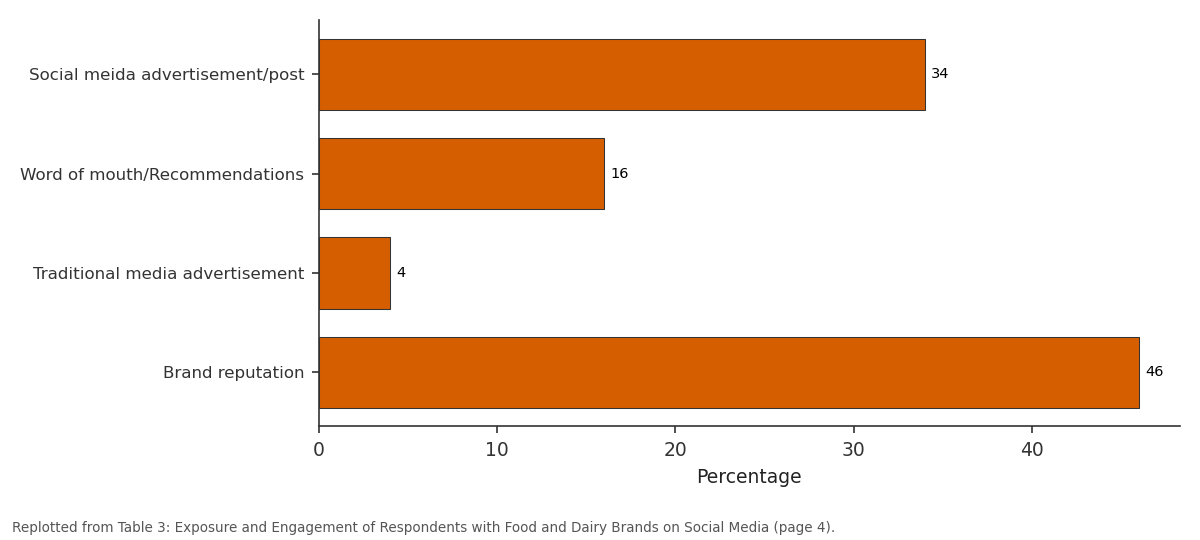
Percentage: Social meida... vs Word of... vs Traditional media... vs Brand reputation
Replotted from Table 3 (page 4) of the original paper. Every bar is the paper's own table value.
View source evidence ↗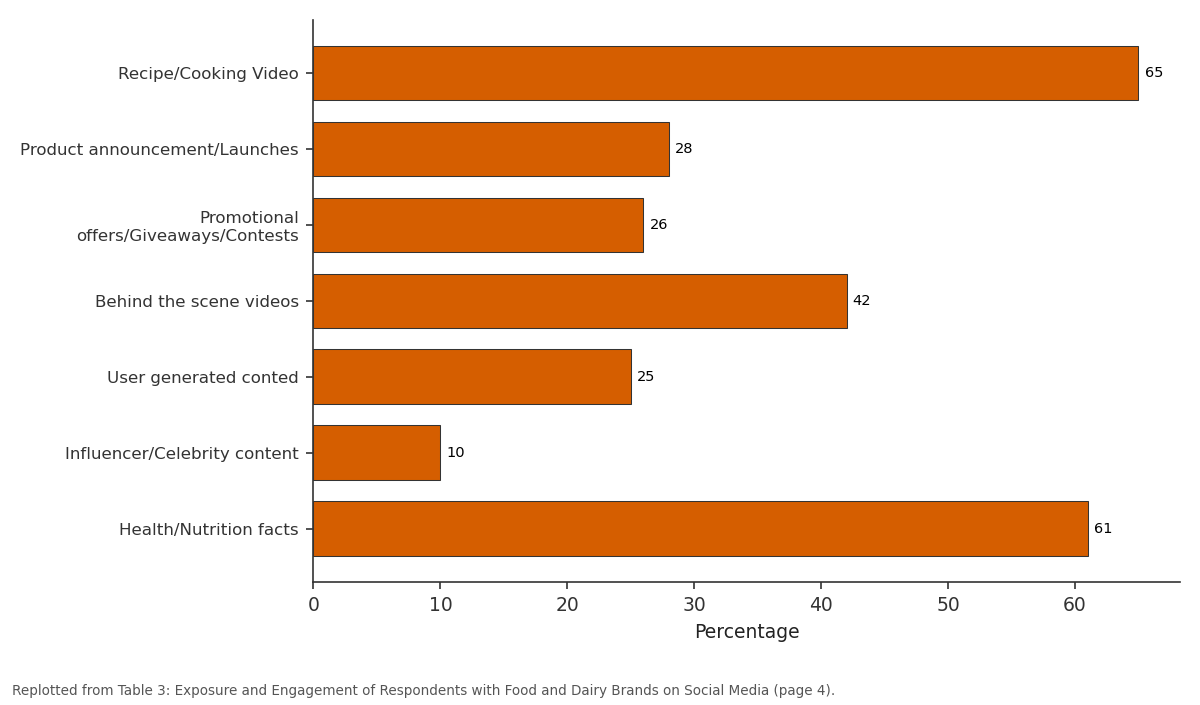
Percentage: Recipe/Cooking Video vs Product... vs Promotional... vs Behind the scene videos vs User generated conted
Replotted from Table 3 (page 4) of the original paper. Every bar is the paper's own table value.
View source evidence ↗Figures & tables
From the original paper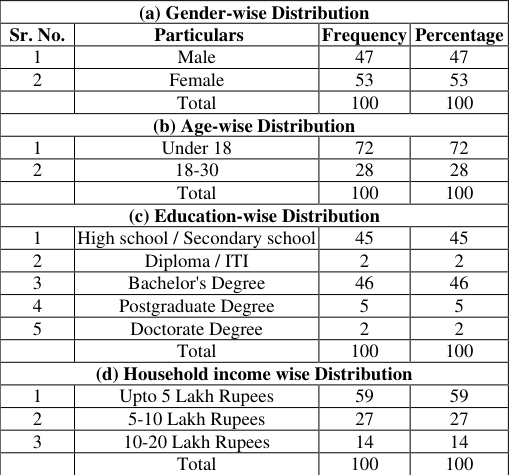 Table 1
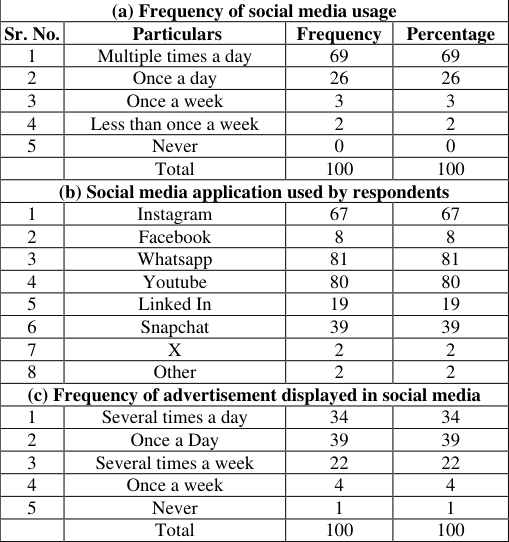 Table 2
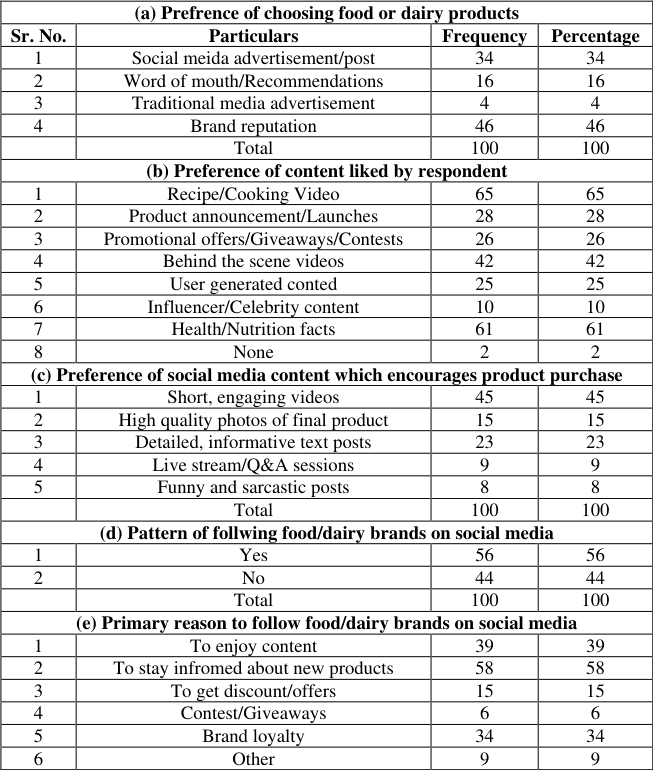 Table 3
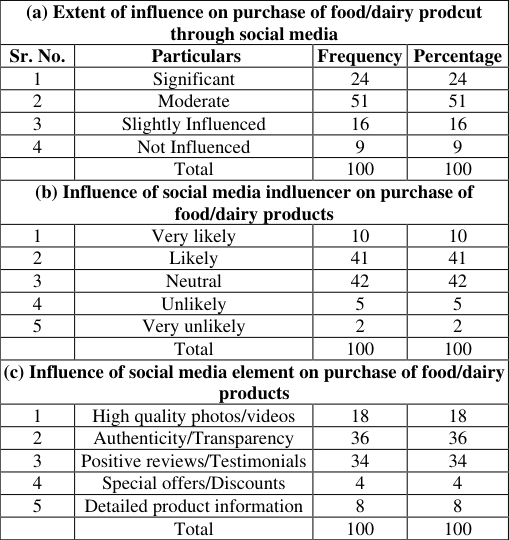 Table 4
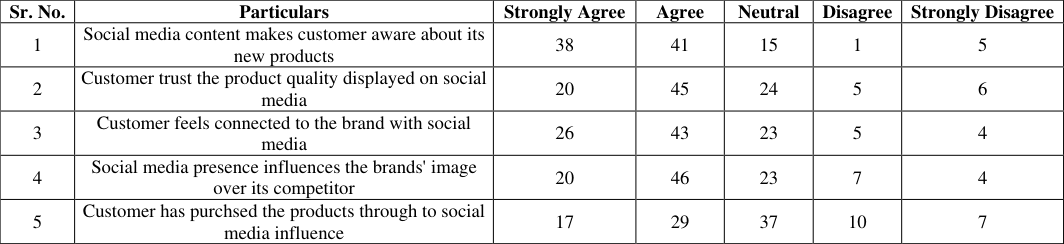 Table 5
Introduction
The Transformation of Food and Dairy Marketing in the Digital Age: The marketing landscape for the food and dairy industry has undergone a seismic transformation over the past two decades (Sani et al., 2025) [6] . The once-dominant paradigm of unidirectional mass media advertising, characterized by television commercials and print advertisements, has been fundamentally disrupted by the rise of the internet and, more specifically, the ubiquity of social media platforms (Martino et al., 2021) [4] . This evolution represents more than a simple reallocation of advertising budgets; it signifies a fundamental reshaping of the brandconsumer relationship, moving from a monologue to a dynamic, continuous dialogue (Sani et al., 2025; Shehani, 2025) [6,7] . For dairy and food brands, whose products are deeply embedded in daily life and cultural practices, this shift presents both unprecedented opportunities and complex challenges.
The Paradigm Shift in F&D Promotion: Historically, F&D advertising expenditures were heavily concentrated in traditional media, with television accounting for the vast majority of spending (Potvin Kent et al., 2024) [6] . However, marketers in the F&D sector are now increasingly inclined towards social media marketing, a powerful subform of mass communication that is internet-based and allows for two-way interaction (Martino et al., 2021) [4] . Platforms such as Facebook, Instagram, YouTube, and TikTok have become primary arenas for brand promotion and now constitute a critical duopoly in the online advertising space, capturing the majority of digital ad spend in many markets (Sani et al., 2025; Martino et al., 2021; Potvin Kent et al., 2024) [6,4,5] . This migration is driven by the changing media consumption habits of consumers, particularly younger demographics who are less engaged with traditional media (Kawecki, 2022) [3] . The shift has allowed brands to foster real-time interactions, moving beyond passive ad consumption to active engagement, which in turn can enhance customer relationships and build significant brand loyalty (Sani et al., 2025; Shehani, 2025) [6,7] .
Literature Review
The Contemporary Playbook: Dominant Social Media Strategies in the Food Sector The strategic playbook for food and dairy brands on social media is multifaceted, leveraging the unique affordances of digital platforms to create visually compelling, interactive, and community-oriented campaigns. An analysis of current practices reveals a consistent set of core strategies designed to capture consumer attention, foster engagement, and ultimately drive commercial outcomes. These strategies move beyond simple product promotion to cultivate a brand identity and emotional resonance with consumers.
From Broadcast to Engagement: A Taxonomy of Digital Tactics
The foundation of F&D social media marketing rests on several key features identified within the literature: targeted advertising, sales promotions, firm-generated content, usergenerated content (UGC), and electronic word-of-mouth (e-WOM) (Martino et al., 2021; Shehani, 2025) [4,7] . Unlike the static nature of traditional media, social media provides a visually rich and interactive canvas ideally suited for the food industry (Potvin Kent et al., 2024) [5] . Brands leverage this by crafting visually appealing content, including highquality photography and video, that highlights food aesthetics, ingredients, and preparation methods to attract potential customers (Sani et al., 2025; Shehani, 2025) [6,7] . Data-driven social media advertising, particularly through short-form videos on platforms like TikTok and Instagram Reels, has proven highly effective in enhancing brand reach and engagement (Sani et al., 2025) [6] .
The Influencer Marketing Ecosystem
Influencer marketing has emerged as a cornerstone of contemporary F&D strategy, offering a powerful method to reach and persuade consumers in a crowded digital marketplace (Sani et al., 2025; Folkvord et al., 2020) [6,1] . Brands partner with social media influencers to circumvent the declining efficacy of traditional advertising among younger audiences and to operate in a digital space that is often less regulated than broadcast media (Kawecki, 2022) [3] . These collaborations allow brands to tap into the established trust and rapport that influencers have with their followers, lending an air of authenticity to promotional messages (Hwang et al., 2021; Folkvord et al., 2020) [2,1] .
Case Studies in Strategic Implementation
The practical application of these strategies is best illustrated through successful brand campaigns that have achieved measurable results. These case studies demonstrate a sophisticated understanding of platform-specific nuances and audience behavior. Cadbury's Crème Egg: This campaign adopted a digital-first strategy centered on humor and interactivity. It used short films and an online personality test to engage consumers, supported by strategic hashtag use across social platforms like Facebook to enhance brand equity and drive immediate sales (Sani et al., 2025) [6] . Starbucks' "Sip Into Spring": This campaign focused on user-generated content by partnering with creators to develop aesthetically pleasing, spring-themed content for Instagram Reels and Pinterest. By encouraging customers to share their own experiences, the campaign amplified its reach and contributed to a 14% lift in spring beverage sales compared to the previous year (Sani et al., 2025) [6] .
Mechanisms of Influence: Shaping Consumer Behavior and Brand Perception
The strategies employed by food and dairy brands on social media are effective because they tap into powerful psychological and social mechanisms that shape consumer attitudes, perceptions, and, ultimately, purchase decisions. Understanding these mechanisms-from the direct impact on the purchase journey to the subtle cultivation of brand trust and the formation of quasi-personal relationships with influencers-is critical to comprehending the full scope of social media's influence.
The Digital Path to Purchase
There is compelling evidence of a direct and significant link between social media activity and consumer purchasing behavior in the F&D sector. Research indicates a strong, positive correlation between various forms of social media engagement and purchase decisions (Sani et al., 2025) [6] . Specifically, strategies such as creating valuable content, collaborating with influencers, and monitoring and aligning with trends are all significantly predictive of consumer purchase behavior (Sani et al., 2025) [6] . The data is stark: over half of consumers (50.3%) report having purchased products they first encountered on social media platforms (Sani et al., 2025) [6] .
Research
Research
Research Methodology
To effectively carry out the study titled "Effectiveness of Social Media Marketing for Dairy and Food Brands" a structured research design was developed. The research was conducted in October 2025, utilizing a web based survey as the primary tool for data collection. A structured questionnaire was designed to gather relevant information aligned with the study objectives.
The target population comprised individuals aged 18 to 60+ years individuals from different demographics, representing a key consumer segment for both food and dairy products. A random sampling method was employed to ensure that each individual within the defined population had an equal opportunity of being selected. This approach helped minimize selection bias and enhanced the reliability and generalizability of the findings. A total of 100 respondents participated in the study. The primary data collected from these participants were systematically compiled and analysed using Descriptive Statistical tools. Techniques such as tabulation, graphical representation, and charts were employed to interpret the data effectively. These methods facilitated a comprehensive understanding of consumer awareness, buying patterns, and perceptions regarding social media marketing for dairy and food brands.
Results and Discussion Demographic Profile of Respondents
The demographic analysis table is crucial as it lays the foundation for understanding the characteristics of the target population. It helps in categorizing respondents based on essential factors like gender, age, education level, college affiliation, and living conditions. This classification ensures that the sample is well represented and diverse, allowing for more accurate and generalized conclusions. It also enables researchers to identify demographic influences on behaviours, preferences, or attitudes relevant to the study. Furthermore, it supports subgroup analysis and comparison, enhancing the depth and quality of the research. Table 1 shows the data collected.
| (a) Gender-wise Distribution | — | — | — |
|---|---|---|---|
| Sr. No. | Particulars | Frequency | Percentage |
| 1 | Male | 47 | 47 |
| 2 | Female | 53 | 53 |
| Total | 100 | 100 | |
| (b) Age-wise Distribution | |||
| 1 | Under 18 | 72 | 72 |
| 2 | 18-30 | 28 | 28 |
| Total | 100 | 100 | |
| (c) Education-wise Distribution | |||
| 1 | High school / Secondary school | 45 | 45 |
| 2 | Diploma / ITI | 2 | 2 |
| 3 | Bachelor's Degree | 46 | 46 |
| 4 | Postgraduate Degree | 5 | 5 |
| 5 | Doctorate Degree | 2 | 2 |
| Total | 100 | 100 | |
| (d) Household income wise Distribution | |||
| 1 | Upto 5 Lakh Rupees | 59 | 59 |
| 2 | 5-10 Lakh Rupees | 27 | 27 |
| 3 | 10-20 Lakh Rupees | 14 | 14 |
| Total | 100 | 100 |
Table text extracted from the original PDF; superscript letters are shown inline. The original table image is below.
View original table image
(a) Gender-wise Distribution:
The gender distribution of the survey participants indicates a relatively balanced representation with a slight predominance of female respondents. Out of 100 respondents, 53% are female and 47% are male. This indicates that females form a slightly higher proportion of the participants in the study.
(b) Age-wise Distribution:
The majority of respondents (72%) fall in the age group of under 18 years, which typically represents high school students. This is followed by 28% in the 18 to 30 years age group, likely covering most undergraduate and postgraduate students, indicating that the survey predominantly targeted youth and early adults. This age distribution aligns well with the student demographic ensuring that the study results are relevant to students already involved with the use of social media.
(c) Education-wise Distribution:
Regarding educational qualification, the majority of respondents are undergraduates (46%), high school (45%), followed by postgraduates (5%) and a minimal number of PhD students (2%) and diploma students (2%). This breakdown provides insight primarily into the behaviour of early-stage students, offering a foundation for understanding social media usage habits across different levels of higher education. The presence of postgraduate and doctoral students also adds depth to the analysis in terms of maturity, lifestyle, and health awareness influencing social media usage.
(d) Household income wise Distribution:
The majority of respondents (59%) fall in the up to 5 lakh Rupees household income group, followed by 27% in 5-10 lakh Rupees and 14 % in 10-20 lakh Rupees household income group. This represents a diverse range of respondents coming from different financial background and purchasing power.
Respondent's Social Media Usage
To accurately analyze respondents' social media usage, the demographic analysis table provides the essential context for interpreting the collected data. This foundation allows for subgroup analysis, enabling the identification of significant demographic influences on the frequency, platform choice, purpose, and intensity of social media engagement. For instance, researchers can compare the usage patterns of different age groups or those with varying education levels. This comparative analysis is crucial for ensuring that any conclusions about social media usage are accurate, well-represented across diverse segments, and sufficiently deep to inform targeted strategies or to understand how various demographic profiles influence online behavior and preferences. This analysis is based on a survey of 100 respondents, focusing on their frequency of social media usage, the specific applications they use, and their perception of advertisement frequency on these platforms. Table 2 represents the data collected.
| (a) Frequency of social media usage | — | — | — |
|---|---|---|---|
| Sr. No. | Particulars | Frequency | Percentage |
| 1 | Multiple times a day | 69 | 69 |
| 2 | Once a day | 26 | 26 |
| 3 | Once a week | 3 | 3 |
| 4 | Less than once a week | 2 | 2 |
| 5 | Never | 0 | 0 |
| Total | 100 | 100 | |
| (b) Social media application used by respondents | |||
| 1 | 67 | 67 | |
| 2 | 8 | 8 | |
| 3 | 81 | 81 | |
| 4 | Youtube | 80 | 80 |
| 5 | Linked In | 19 | 19 |
| 6 | Snapchat | 39 | 39 |
| 7 | X | 2 | 2 |
| 8 | Other | 2 | 2 |
| (c) Frequency of advertisement displayed in social media | |||
| 1 | Several times a day | 34 | 34 |
| 2 | Once a Day | 39 | 39 |
| 3 | Several times a week | 22 | 22 |
| 4 | Once a week | 4 | 4 |
| 5 | Never | 1 | 1 |
| Total | 100 | 100 |
Table text extracted from the original PDF; superscript letters are shown inline. The original table image is below.
View original table image
Exposure and Engagement with Food and Dairy Brands on Social Media
To accurately analyze Exposure and Engagement with Food and Dairy Brands on Social Media, the preceding understanding of general social media usage, structured by demographic variables, serves as a vital interpretative framework. This analysis will specifically utilize the established subgroup classifications from the demographic table (including age, gender, and college affiliation) to determine how these characteristics mediate brand interaction. By linking general usage patterns to specific engagement metrics-such as the frequency of seeing brand content, types of interaction, and recall of specific campaigns-we can identify precise demographic segments that are most or least receptive to brand messaging. This detailed comparative approach is essential for providing actionable insights into targeted marketing effectiveness, moving beyond broad statistics to understand the nuanced ways different consumer profiles engage with food and dairy brands in the social media space.
Primary Reason to Follow Food/Dairy Brands on Social Media
The primary motivation for following brands is informational and utility-driven, with a secondary interest in brand enjoyment. The most significant reason is To stay informed about new product (58%), demonstrating that social media serves a crucial function as a primary channel for new product announcement and updates. The second major driver is To enjoy content (39%), reinforcing the preference for engaging and entertaining material (as seen in section b). Brand loyalty (34%) is a substantial factor, suggesting that social media serves to maintain relationships with existing customers. Reasons related to immediate monetary benefit-To get discount/offers (15%) and Contest/Giveaways (6%)-are the least influential factors, further supporting the conclusion that content utility outweighs direct promotion as a driver for brand following.
Pattern of agreement and disagreement of food/dairy brands' social media activity
Pattern of agreement and disagreement of food/dairy brands' social media activity
Conclusion
The research on the Effectiveness of Social Media Marketing for Dairy and Food Brands confirms that the digital transition has fundamentally repositioned social media from a mere advertising channel to a critical platform for customer relationship management, informational utility, and competitive brand building. The findings, based on a survey of 100 primarily young and highly-engaged respondents, reveal a clear set of strategic priorities for food and dairy marketers. The single most important factor for product choice remains Brand Reputation (46%), but Social Media's influence is nearly universal, with 91% of consumers reporting they are influenced to some degree in their purchase decisions. The primary reasons for following brands are informational (to stay informed about new products, 58%) and for content enjoyment (39%), with direct transactional appeals like discounts being the least influential. Consumers are not driven by high-gloss visuals alone. The most influential content elements for purchase are Authenticity/Transparency (36%) and Positive Reviews/Testimonials (34%). This underscores a strong consumer desire for integrity and social proof, demanding that brands shift from prioritizing perfect aesthetics to fostering genuine dialogue and open communication. The most preferred content is functional and educational, with Recipe/Cooking Videos (65%) and Health/Nutrition Facts (61%) being the most popular. Content that successfully drives purchase is highly visual and concise, with Short, engaging videos (45%) and High-quality photos (45%) being the most effective. While 51% of respondents are Likely or Very Likely to be influenced by social media influencers, the largest single response was Neutral (42%). This suggests that influencer efficacy is not guaranteed and is highly contingent on the perceived credibility, expertise, and authenticity of the partner. Social media is highly effective for building product awareness (79% Agree/Strongly Agree) and brand connection (69% Agree/Strongly Agree). However, its direct role as a transactional channel shows the highest uncertainty, with only 46% reporting a purchase due to social media influence and a large Neutral response (37%). This indicates that social media successfully sets the stage for a purchase, but the transaction often occurs on another platform. In essence, for food and dairy brands, the future of marketing is not about simply advertising at consumers, but about earning a permanent seat in their information feed by consistently providing value, maintaining transparency, and enabling social proof.
Figures and tables from the paper
| (a) Prefrence of choosing food or dairy products | — | — | — |
|---|---|---|---|
| Sr. No. | Particulars | Frequency | Percentage |
| 1 | Social meida advertisement/post | 34 | 34 |
| 2 | Word of mouth/Recommendations | 16 | 16 |
| 3 | Traditional media advertisement | 4 | 4 |
| 4 | Brand reputation | 46 | 46 |
| Total | 100 | 100 | |
| (b) Preference of content liked by respondent | |||
| 1 | Recipe/Cooking Video | 65 | 65 |
| 2 | Product announcement/Launches | 28 | 28 |
| 3 | Promotional offers/Giveaways/Contests | 26 | 26 |
| 4 | Behind the scene videos | 42 | 42 |
| 5 | User generated conted | 25 | 25 |
| 6 | Influencer/Celebrity content | 10 | 10 |
| 7 | Health/Nutrition facts | 61 | 61 |
| 8 | None | 2 | 2 |
| (c) Preference of social media content which encourages product purchase | |||
| 1 | Short, engaging videos | 45 | 45 |
| 2 | High quality photos of final product | 15 | 15 |
| 3 | Detailed, informative text posts | 23 | 23 |
| 4 | Live stream/Q&A sessions | 9 | 9 |
| 5 | Funny and sarcastic posts | 8 | 8 |
| Total | 100 | 100 | |
| (d) Pattern of follwing food/dairy brands on social media | |||
| 1 | Yes | 56 | 56 |
| 2 | No | 44 | 44 |
| Total | 100 | 100 | |
| (e) Primary reason to follow food/dairy brands on social media | |||
| 1 | To enjoy content | 39 | 39 |
| 2 | To stay infromed about new products | 58 | 58 |
| 3 | To get discount/offers | 15 | 15 |
| 4 | Contest/Giveaways | 6 | 6 |
| 5 | Brand loyalty | 34 | 34 |
| 6 | Other | 9 | 9 |
Table text extracted from the original PDF; superscript letters are shown inline. The original table image is below.
View original table image
| (a) Extent of influence on purchase of food/dairy prodcut through social media | — | — | — |
|---|---|---|---|
| Sr. No. | Particulars | Frequency | Percentage |
| 1 | Significant | 24 | 24 |
| 2 | Moderate | 51 | 51 |
| 3 | Slightly Influenced | 16 | 16 |
| 4 | Not Influenced | 9 | 9 |
| Total | 100 | 100 | |
| (b) Influence of social media indluencer on purchase of food/dairy products | |||
| 1 | Very likely | 10 | 10 |
| 2 | Likely | 41 | 41 |
| 3 | Neutral | 42 | 42 |
| 4 | Unlikely | 5 | 5 |
| 5 | Very unlikely | 2 | 2 |
| Total | 100 | 100 | |
| (c) Influence of social media element on purchase of food/dairy products | |||
| 1 | High quality photos/videos | 18 | 18 |
| 2 | Authenticity/Transparency | 36 | 36 |
| 3 | Positive reviews/Testimonials | 34 | 34 |
| 4 | Special offers/Discounts | 4 | 4 |
| 5 | Detailed product information | 8 | 8 |
| Total | 100 | 100 |
Table text extracted from the original PDF; superscript letters are shown inline. The original table image is below.
View original table image
| Sr. No. | Particulars | Strongly Agree | Agree | Neutral | Disagree | Strongly Disagree |
|---|---|---|---|---|---|---|
| 1 | Social media content makes customer aware about its new products | 38 | 41 | 15 | 1 | 5 |
| 2 | Customer trust the product quality displayed on social media | 20 | 45 | 24 | 5 | 6 |
| 3 | Customer feels connected to the brand with social media | 26 | 43 | 23 | 5 | 4 |
| 4 | Social media presence influences the brands' image over its competitor | 20 | 46 | 23 | 7 | 4 |
| 5 | Customer has purchsed the products through to social media influence | 17 | 29 | 37 | 10 | 7 |
Table text extracted from the original PDF; superscript letters are shown inline. The original table image is below.
View original table image
References
7 in the original paper- Folkvord F, Roes E, Bevelander K. Promoting healthy foods in the new digital era on Instagram: an experimental study on the effect of a popular real versus fictitious fit influencer on brand attitude and purchase intentions. BMC Public Health. 2020;20:1677. doi:10.1186/s12889-020-09779-y
- Hwang J, Eves A, Stienmetz JL. The impact of social media use on consumers' restaurant consumption experiences: a qualitative study. Sustainability. 2021;13(12):6581. doi:10.3390/su13126581
- Kawecki NM. The challenges of digital marketing of food products towards the behavior of young consumers. Nowoczesne Syst Zarzadzania. 2022;17(2):47-58. doi:10.37055/nsz/150303
- Martino FP, Brooks R, Browne J, Carah N, Zorbas C, Corben K, et al. The nature and extent of online marketing by Big Food and Big Alcohol during the COVID-19 pandemic in Australia: content analysis study. JMIR Public Health Surveill. 2021;7(3):e25202. doi:10.2196/25202
- Potvin Kent M, Bagnato M, Amson A, Remedios L, Pritchard M, Sabir S, et al. #junkfluenced: the marketing of unhealthy food and beverages by social media influencers popular with Canadian children on YouTube, Instagram and TikTok. Int J Behav Nutr Phys Act. 2024;21:43. doi:10.1186/s12966-024-015894
- Sani AM, Hasri NSU, Kamarudin N, Turay T. The effect of social media engagement on consumer purchase behaviour in the food and beverage industry. Int J Res Innov Soc Sci. 2025;9(8):5925-38. doi:10.47772/IJRISS.2025.908000482
- Shehani C. Effective influencer marketing strategies to improve brand perception in food retail industry in UK. ResearchGate. 2025 Mar. Available from: https://www.researchgate.net/publication/389563976_E ffective_influencer_marketing_strategies_to_improve_ brand_perception_in_food_retail_industry_in_UK
Cited by 1
From OpenAlex, OpenCitations and reference lists read by Scinovex
- Social media marketing effectiveness for value-added dairy brands in India: A sentiment analysis using NLP
Savaliya Manas, KC Kamani, MC Prajapati, MD Gurjar · International Journal of Agriculture Extension and Social Development · 2026
There is no denying the significant changes in the marketing strategies of companies resulting from the rise of social media usage. This applies to the marketing strategies employed by value- added dairy brands using the likes of Instagram, Facebook, and X to reach their customers. The current research focuses on the assessment of the impact of social media marketing for a select few value-added dairy brands in India, such as Amul, Milky Mist, and Mother Dairy. Sentiment analysis will be used to assess consumer-generated opinions of selected value-added dairy brands. For that purpose, publicly