
Research article · 2025 · Full text
International Journal of Agriculture and Food ScienceComparative Evaluation of Thermosonication and Conventional Cooking in Chicken Sausage
Volume 7(10) · Pages 600–604 · DOI: 10.33545/2664844x.2025.v7.i10i.926 ↗
Research areasMeat and Animal Product QualityMicrobial Inactivation MethodsFood Drying and Modeling
Abstract
Author-writtenThe popularity of chicken sausages in India is steadily increasing due to their convenience, versatility and nutritional benefits. Conventional thermal processing, although effective for ensuring microbial safety, can accelerate nutrient degradation and compromise product quality thermosonication, a hybrid technique that combined mile heat with ultrasonic cavitation that emerged as a promising alternative to address consumer demand for minimally processed foods. In this study, chicken sausages were subjected to temperatures from 62⁰C - 70⁰C at 2⁰C intervals for durations of 25, 30, 35 and 40 minutes at 5 minutes interval. The process parameters were evaluated for manual cutting test, visual appearance and sensory analysis. Results indicated that thermosonication treatment produced sausages with improved texture, greater firmness, enhanced cohesiveness and more uniform visual appearance, while retaining moisture and structural integrity compared to conventional cooking. These findings highlight thermosonication as a promising and sustainable processing technology that is capable of enhancing the quality characteristics of meat products.
Summary
Source-checkedPlain-language reading of the full paper, prepared with AI and checked against the text. Each point links to the authors' own words.
Why it matters
- Traditional heat treatments for sausages ensure safety but can damage the product's quality and degrade nutrients. View evidence ↗
- Thermosonication is a hybrid method combining moderate heat (37-75 °C) and ultrasound to kill pathogens and enzymes, serving as a potential alternative to standard heating. View evidence ↗
What they did
- Chicken sausages were prepared by mincing meat and blending it with dry ingredients (salt, chili powder, wheat flour, masala) and wet ingredients (oil, egg, ginger garlic paste). View evidence ↗
- Sensory quality was assessed by 15 panellists using a 9-point hedonic scale to rate appearance, aroma, taste, tenderness, and overall acceptability. View evidence ↗
- Data were analyzed using SPSS (Version 25), with Duncan’s multiple range test used to identify significant differences at p < 0.05. View evidence ↗
What they found
- Samples S15 through S20 showed significant sensory improvements, with appearance scores rising from 6.66±0.12 to 8.93±0.06, taste from 6.86±0.16 to 9.00±0.00, and tenderness from 7.13±0.09 to 8.93±0.06. View evidence ↗
- The overall acceptability of the sausages increased significantly from 6.91±0.06 for sample S15 to 8.95±0.03 for sample S20. View evidence ↗
- The highest thermosonication treatment (S20) achieved sensory scores for appearance (8.93±0.006), aroma (8.93±0.066), and taste (9.00±0.000) that were nearly identical to the control (S0). View evidence ↗
What it means
- The authors conclude that thermosonication is a superior cooking method for chicken sausages compared to conventional cooking based on textural, visual, and sensory data. View evidence ↗
- The authors state that optimized thermosonication improves texture, firmness, and visual appearance while better retaining moisture and structural integrity than traditional methods. View evidence ↗
Visual summary
3 visualsIllustrations explain the paper; charts are replotted from the paper's own table values.
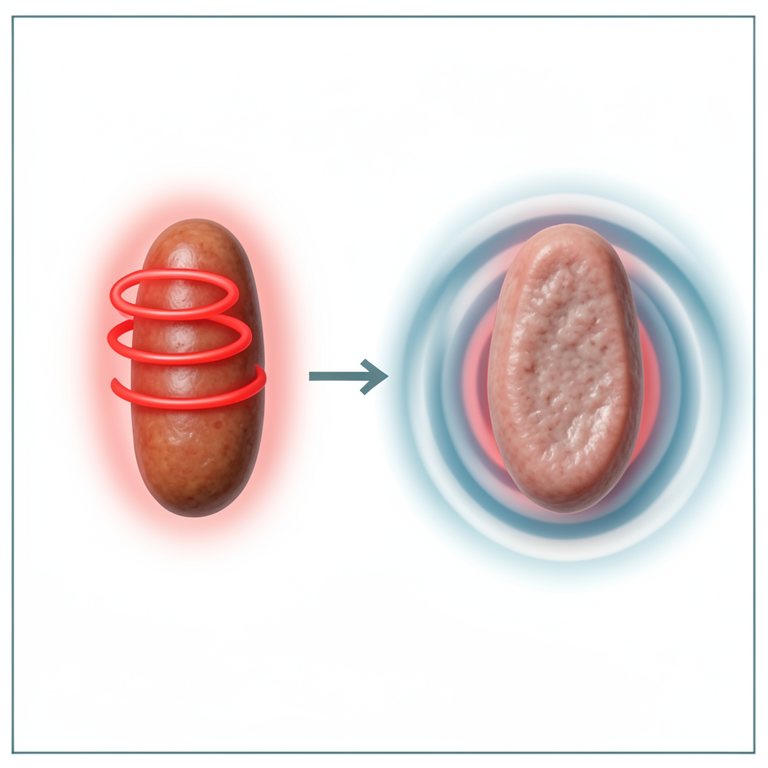
Thermosonication Process Concept
AI-generated conceptual illustration (chicken sausage). It explains the idea and does not show study data.
View source evidence ↗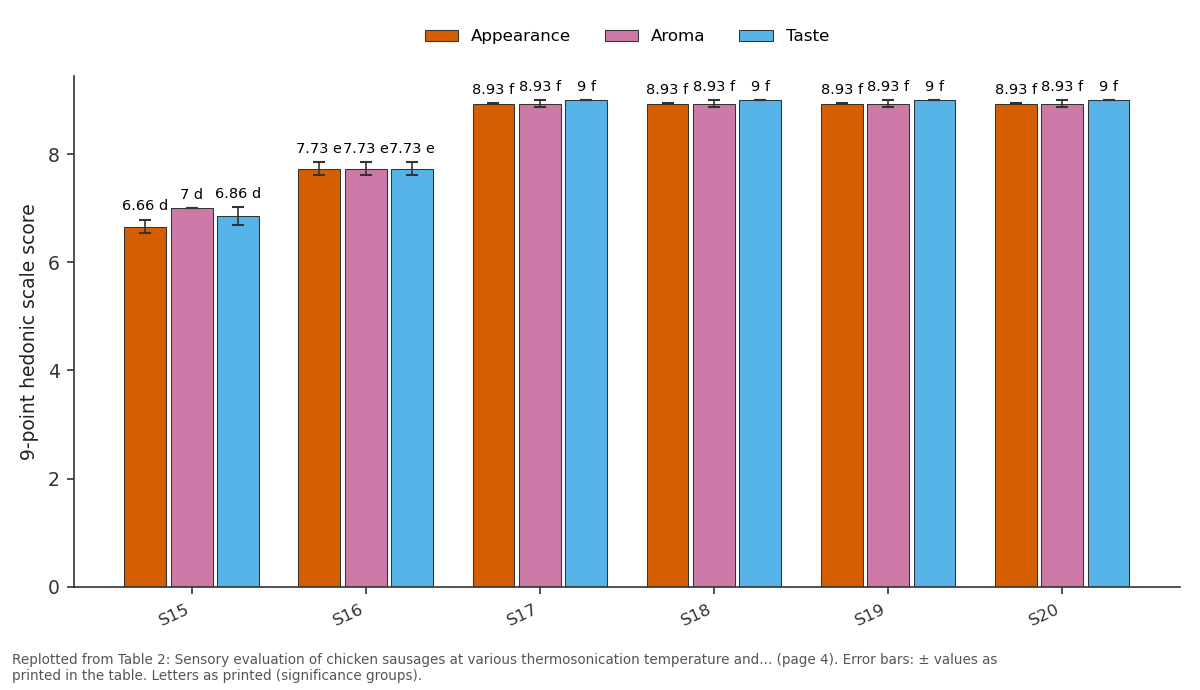
Appearance and Aroma and more: S15 vs S16 vs S17 vs S18 vs S19
Replotted from Table 2 (page 4) of the original paper. Every bar is the paper's own table value.
View source evidence ↗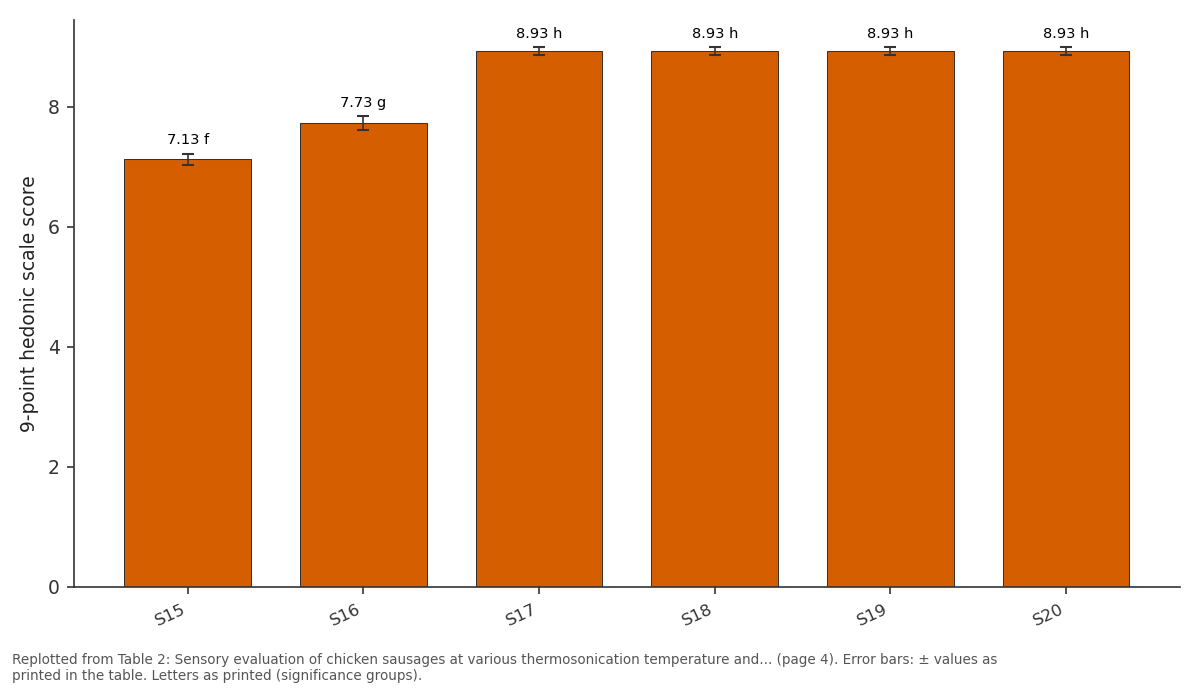
Tenderness: S15 vs S16 vs S17 vs S18 vs S19
Replotted from Table 2 (page 4) of the original paper. Every bar is the paper's own table value.
View source evidence ↗Figures & tables
From the original paper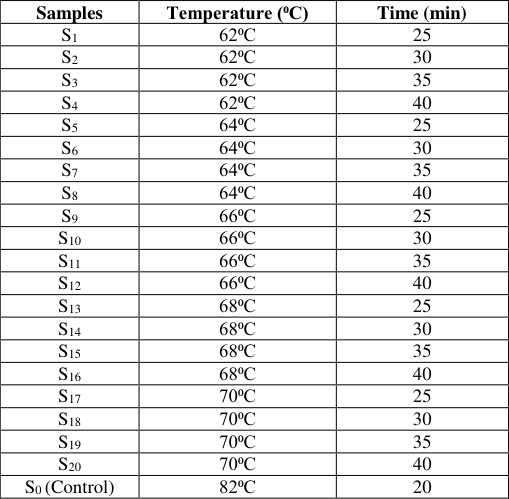 Table 1
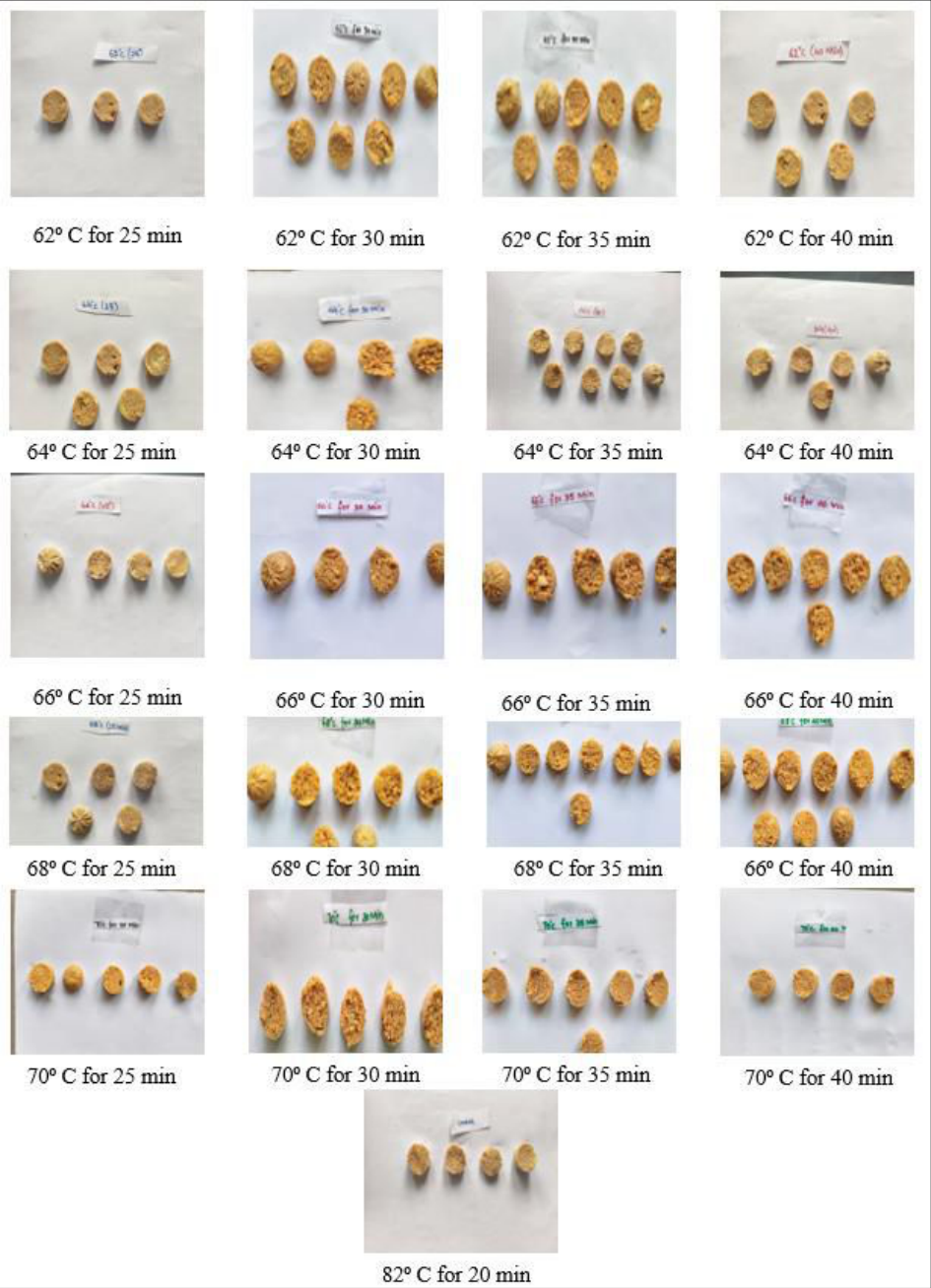 Plate 1
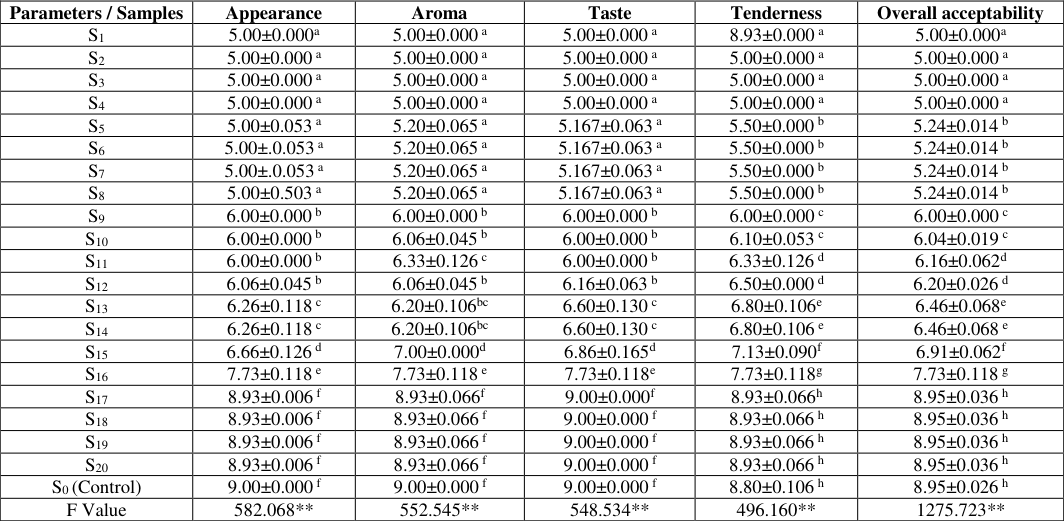 Table 2
Introduction
Meat is widely recognized as a valuable source of high -quality protein and essential nutrients such as vitamin B12, iron, zinc and selenium that are vital for growth, tissue repair and overall health. Its appealing taste, aroma and texture makes preferred component of diets worldwide. Global meat consumption has increased significantly in recent decades, driven by population growth and rising incomes. With the world population projected to reach 9 billion by 2050, meat production will need to nearly double to meet protein demands and support global food security (Lee et al., 2020) [8] . Poultry meat with a moisture content of around 70.09% is a highly nutrient -dense food, providing approximately 18.59% protein, 6.0% fat and 0.80% ash. It is also rich in essential minerals such as iron and phosphorous, along with vitamins like niacin and riboflavin. Owing to high biological value and easy digestibility, poultry meat is a preferred choice among both young and elderly consumers (Sharma, 1999) [15] . The nutritional importance of chicken meat is well recognized as it is rich in mineral content that supports blood, cardiovascular and nervous system functions, while its low cholesterol and fat levels make it an ideal choice for individuals with vascular health concerns (EUP, 2019; Gordana et al., 2018) [4,7] . Processed chicken products such as nuggets, patties, sausages and kebabs have become increasingly popular as they offer convenience, extended shelf life, improved flavour and texture. Their growing demand, especially in developing countries like India reflects changing lifestyles and rising poultry consumption (FAO, 2024). Sausage is one of the most widely consumed meat products worldwide. The term refers to uncured, unheated products made from various meats such as beef, pork, chicken or fish with combined fat. These are typically chopped or emulsified and blended with region specific seasonings, spices, salt and colorants to enhance flavour and appearance (Pearson and Gillet). Commercially, sausages are typically processed using conventional heat treatments that ensure microbial safety and extend shelf life but often lead to the loss of heat -sensitive nutrients, colour, texture and flavour (Piyasena et al., 2003; Selby et al., 2006; Cichoski et al., 2015) [12,13,3] .
To overcome these drawbacks, several novels non -thermal processing methods -such as pulsed electric fields, high pressure processing, ultrasonication, pulsed UV light and cold plasma are gaining attention for their ability to maintain product quality while ensuring microbial safety (Zell et al., 2010) [17] . Among these, ultrasound technology has emerged as an eco -friendly, non-toxic and versatile approach that used sound waves between 20 -100 kHz to create cavitation, improving mixing, enzyme inactivation and microbial reduction (Awad et al., 2012) [1] . A notable advancement is thermosonication that combined moderate heat (37-75 ⁰C) with ultrasound to effectively inactivate spoilage enzymes and pathogens, offering a promising alternative to conventional heat treatments.
Materials and methods
Chicken meat was thoroughly washed and excess water removed before processing. The meat was minced using MADO Patron mincer and dry ingredients such as salt, chili powder, refined wheat flour and chicken masala were incorporated. Wet ingredients such as oil, egg and ginger garlic paste were then blended into a uniform sausage emulsion. This emulsion was stuffed into artificial casings using a mechanical filler and rested a 15 -18 ⁰C for 4 hours. The prepared sausages were stored at -18⁰C until further use, subsequently sausages were processed by thermosonicator equipment at various thermosonication temperature (from 62⁰C to 70 ⁰C at an interval of 2⁰C), time (25 to 40 minutes at an interval of 5 minutes) outlined in Table 1, with slight procedural modifications Feiner.G (2006) [6] .
| Samples | Temperature (⁰C) | Time (min) |
|---|---|---|
| S1 | 62⁰C | 25 |
| S2 | 62⁰C | 30 |
| S3 | 62⁰C | 35 |
| S4 | 62⁰C | 40 |
| S5 | 64⁰C | 25 |
| S6 | 64⁰C | 30 |
| S7 | 64⁰C | 35 |
| S8 | 64⁰C | 40 |
| S9 | 66⁰C | 25 |
| S10 | 66⁰C | 30 |
| S11 | 66⁰C | 35 |
| S12 | 66⁰C | 40 |
| S13 | 68⁰C | 25 |
| S14 | 68⁰C | 30 |
| S15 | 68⁰C | 35 |
| S16 | 68⁰C | 40 |
| S17 | 70⁰C | 25 |
| S18 | 70⁰C | 30 |
| S19 | 70⁰C | 35 |
| S20 | 70⁰C | 40 |
| S0 (Control) | 82⁰C | 20 |
Table text extracted from the original PDF; superscript letters are shown inline. The original table image is below.
View original table image
Cooking is carried out until the core temperature reaches the optimized temperatures, then the samples were taken out of the thermosonicator bath and evaluated for manual cutting tests, visual quality and sensory analysis to assess the effectiveness of the cooking process.
Texture attributes -Manual cutting test
The manual cutting test was performed on both treated and control sausage samples by slicing them into cylindrical sections with a sharp stainless-steel knife in a single, uniform stroke to ensure consistency (Bourne, 2002) [2] .
Visual quality
The visual quality of treated and control sausages was assessed immediately after cooking and cooling to room temperature. Each sample was evaluated for surface colour, uniformity, presence of cracks, fat separation and overall structural integrity (Meilgaard et al., 2016) [9] .
Sensory evaluation
Sensory evaluation of the thermosonicated chicken sausages was conducted using 9 -point hedonic scale (Shaik et al., 2018) [14] by 15 panellists including faculty and students from College of Food and Dairy Technology, Koduveli, Chennai. Each sample was presented with a randomized code and evaluated at room temperature between 3:00 and 4:30 pm under day light conditions. Panellists were provided with water to rinse their palate between samples and the sensory attributes assessed included appearance, aroma, taste, tenderness and overall acceptability.
Statistical analysis
The test was repeated for each experimental condition and the results are presented as mean values. Statistical analysis was carried out using SPSS software (Version 25) to calculate averages and standard deviations, while Duncan's multiple range test was applied to determine significant differences at p < 0.05.
Result and discussion
Result and discussion
Manul cutting tests and Visual quality of thermosonicated chicken sausages
Manual cutting test and visual quality of thermosonicated chicken sausage samples mentioned in Table 1 is shown in Plate 1. Manual cutting test and visual appearance are integral for evaluating chicken sausage quality, providing critical information on texture, structure and overall consumer appeal. When compared across different processing time and temperatures, sausages subjected to optimized conditions-temperatures (68⁰C, 69⁰C and 70⁰C) exhibited improved textural attributes such as firmness, cohesiveness, well cooked with slice integrity, along with more uniform colour and reduced surface defects. In contrast, sausages processed at lower temperatures (< 68⁰C) for shorter times often showed weaker structural integrity, lower firmness, under cooked and less visually appealing slice (Shin et al., 2022; Pena-Saldarriaga et al., 2020) [16,11] .
Plate 1: Manual cutting test and visual quality test for thermosonicated chicken sausages at different temperature and time
Sensory analysis
Sensory evaluation of chicken sausages subjected to different thermosonication temperatures and time combinations revealed significant differences (p < 0.01) in appearance, aroma, taste, tenderness and overall acceptability. Treatments up to S14 exhibited moderate scores, whereas treatments from S15 onwards showed marked improvements in all sensory attributes. In particular, S15 to S20 demonstrated substantial enhancement in appearance (6.66±0.12 to 8.93±0.06), taste (6.86±0.16 to 9.00±0.00) and tenderness (7.13±0.09 to 8.93±0.06), reflecting better juiciness and textural quality. Overall acceptability rose significantly from S15 (6.91±0.06) to S20 (8.95±0.03), indicating that increased temperature and time combinations -in thermosonication produced more desirable sensory profiles. These findings align with previous research suggesting that ultrasound -assisted thermal processing enhances protein functionality, improves water retention and leads to a more stable gel matrix, thereby by improving tenderness and flavour perception (Shin et al., 2022; Pena -Saldarriaga et al., 2020) [16,11] . The higher appearance scores from S15 onward may be linked to improved pigment stability and minimized cooking loss due to the synergistic effects of heat and acoustic cavitation. Additionally, the enhanced taste and aroma are likely a result of better flavour compound retention, as ultrasound -assisted processing minimizes nutrient degradation and preserves volatile compounds.
Overall, the results confirm that thermosonication treatments from S15 onward offer the most favourable balance between appearance, aroma, taste, tenderness and overall consumer acceptability, highlighting its potential as superior alternative to conventional thermal processing in chicken sausage production.
Table 2: Sensory evaluation of chicken sausages at various thermosonication temperature and time combination shown in Table 1.
| Parameters / Samples | Appearance | Aroma | Taste | Tenderness | Overall acceptability |
|---|---|---|---|---|---|
| S1 | 5.00±0.000a | 5.00±0.000 a | 5.00±0.000 a | 8.93±0.000 a | 5.00±0.000a |
| S2 | 5.00±0.000 a | 5.00±0.000 a | 5.00±0.000 a | 5.00±0.000 a | 5.00±0.000 a |
| S3 | 5.00±0.000 a | 5.00±0.000 a | 5.00±0.000 a | 5.00±0.000 a | 5.00±0.000 a |
| S4 | 5.00±0.000 a | 5.00±0.000 a | 5.00±0.000 a | 5.00±0.000 a | 5.00±0.000 a |
| S5 | 5.00±0.053 a | 5.20±0.065 a | 5.167±0.063 a | 5.50±0.000 b | 5.24±0.014 b |
| S6 | 5.00±.0.053 a | 5.20±0.065 a | 5.167±0.063 a | 5.50±0.000 b | 5.24±0.014 b |
| S7 | 5.00±.0.053 a | 5.20±0.065 a | 5.167±0.063 a | 5.50±0.000 b | 5.24±0.014 b |
| S8 | 5.00±0.503 a | 5.20±0.065 a | 5.167±0.063 a | 5.50±0.000 b | 5.24±0.014 b |
| S9 | 6.00±0.000 b | 6.00±0.000 b | 6.00±0.000 b | 6.00±0.000 c | 6.00±0.000 c |
| S10 | 6.00±0.000 b | 6.06±0.045 b | 6.00±0.000 b | 6.10±0.053 c | 6.04±0.019 c |
| S11 | 6.00±0.000 b | 6.33±0.126 c | 6.00±0.000 b | 6.33±0.126 d | 6.16±0.062d |
| S12 | 6.06±0.045 b | 6.06±0.045 b | 6.16±0.063 b | 6.50±0.000 d | 6.20±0.026 d |
| S13 | 6.26±0.118 c | 6.20±0.106bc | 6.60±0.130 c | 6.80±0.106e | 6.46±0.068e |
| S14 | 6.26±0.118 c | 6.20±0.106bc | 6.60±0.130 c | 6.80±0.106 e | 6.46±0.068 e |
| S15 | 6.66±0.126 d | 7.00±0.000d | 6.86±0.165d | 7.13±0.090f | 6.91±0.062f |
| S16 | 7.73±0.118 e | 7.73±0.118 e | 7.73±0.118e | 7.73±0.118g | 7.73±0.118 g |
| S17 | 8.93±0.006 f | 8.93±0.066f | 9.00±0.000f | 8.93±0.066h | 8.95±0.036 h |
| S18 | 8.93±0.006 f | 8.93±0.066 f | 9.00±0.000 f | 8.93±0.066 h | 8.95±0.036 h |
| S19 | 8.93±0.006 f | 8.93±0.066 f | 9.00±0.000 f | 8.93±0.066 h | 8.95±0.036 h |
| S20 | 8.93±0.006 f | 8.93±0.066 f | 9.00±0.000 f | 8.93±0.066 h | 8.95±0.036 h |
| S0 (Control) | 9.00±0.000 f | 9.00±0.000 f | 9.00±0.000 f | 8.80±0.106 h | 8.95±0.026 h |
| F Value | 582.068** | 552.545** | 548.534** | 496.160** | 1275.723** |
Table text extracted from the original PDF; superscript letters are shown inline. The original table image is below.
View original table image
Parameters / Samples
Appearance Aroma Taste Tenderness Overall acceptability S1
Conclusion
Manual cutting test, visual appearance and sensory analysis assessments confirms that thermosonication is a superior method for cooking chicken sausages compared to conventional cooking. By optimizing time and temperature, thermosonication produced sausages with improved texture, greater firmness, enhanced cohesiveness and more uniform visual appearance, while retaining moisture and structural integrity. In contrast, conventional cooking at fixed temperatures often resulted in higher cooking loss, less uniform texture and lower visual appeal. These results indicate that thermosonication provides a controlled processing environment that enhances both the quality and consumer acceptability of chicken sausages, making it a more effective cooking method than traditional techniques.
Acknowledgement
AcknowledgementWe sincerely extend our gratitude to the College of Food and Dairy Technology, TANUVAS, Chennai -600 052, faculty and staff for providing the invaluable resources and a supportive environment that greatly facilitated our research and development endeavours.
Figures and tables from the paper
References
16 in the original paper- Awad TS, Moharram HA, Shaltout OE, Asker DYMM, Youssef MM. Applications of ultrasound in analysis, processing and quality control of food: a review. Food Res Int. 2012;48(2):410-27.
- Bourne MC. Food texture and viscosity: concept and measurement. 2nd ed. San Diego (CA): Academic Press; 2002.
- Cichoski AJ, Rampelotto C, Silva MS. Ultrasoundassisted post-packaging pasteurization of sausages. Innov Food Sci Emerg Technol. 2015;30:132-7.
- European Union Poultry (EUP). Five chicken health benefits nutrition facts. 2019.
- Food and Agriculture Organization (FAO). Meat market review -poultry highlights, 2023. Rome: FAO; 2024.
- Feiner G. Meat products handbook: practical science and technology. Cambridge (UK): Woodhead Publishing; 2006.
- Gordana K, Zlata K, Manuela G, Danica H. Quality of chicken meat. In: Yücel B, Taşkin T, editors. Animal husbandry and nutrition. Osijek (Croatia): IntechOpen, University of Osijek; 2018. p. 64-94.
- Lee HJ, Yong HI, Kim M, Choi YS, Jo C. Status of meat alternatives and their potential role in the future meat market: a review. Asian-Australas J Anim Sci. 2020;33(10):1533-43.
- Meilgaard M, Civille GV, Carr BT. Sensory evaluation techniques. 5th ed. Boca Raton (FL): CRC Press; 2016.
- Pearson AM, Gillett TA. Processed meats. 3rd ed. Oregon (OR): Springer; 2012. p. 213-6.
- Peña-Saldarriaga LM, Pérez-Álvarez JA, FernándezLópez J. Quality properties of chicken emulsion-type sausages formulated with chicken fatty byproducts. Foods. 2020;9(4):507.
- Piyasena P, Mohareb E, McKellar RC. Inactivation of microbes using ultrasound: a review. Int J Food Microbiol. 2003;87(3):207-16.
- Shaik R, Kuna A, Azam M, Kanuri M. Effect of rice bran oil spread (RBOS) as a fat substitute on the sensory properties of baked products. ISOR J Agric Vet Sci. 2018;51:1-5.
- Sharma P, Bremer P, Oey I, Everett DW. Bacterial inactivation in whole milk using pulsed electric field processing. Int Dairy J. 2014;35(1):49-56.
- Shin DJ, Yim DG, Kwon JA, Kim SS, Jo C. Effect of cutting time and cooking temperature on physiochemical properties of chicken breast meat emulsion with olive oil. Poult Sci. 2022;101(12):101554.
- Zell M, Lyng JG, Cronin DA, Morgan DJ. Ohmic cooking of whole turkey meat: effect of rapid ohmic heating on selected product parameters. Food Chem. 2010;120:724-9.