
Research article · 2025 · Full text
International Journal of Agriculture and NutritionRecent innovations and opportunities in red dragon fruit (Hylocereus polyrhizus) juice processing and value addition: A review
Volume 7(4) · Pages 10–19 · DOI: 10.33545/26646064.2025.v7.i4a.214 ↗
Research areasBotanical Research and Applications
Abstract
Author-writtenRed dragon fruit (Hylocereus polyrhizus) is gaining global recognition for its striking appearance, high nutritional value, and diverse health benefits. Research suggests that regular consumption of this fruit may lower the risks of chronic diseases-including diabetes, cancer, and atherosclerosis—while supporting liver and kidney health, primarily due to its rich antioxidant and anti-inflammatory profile. To meet rising consumer demand and maximize its economic potential, innovative processing and value addition are essential for ensuring year‐round availability. This review discusses recent advancements in red dragon fruit juice processing, comparing traditional thermal methods with emerging non‐thermal techniques such as high-pressure processing, thermosonication, ultrafiltration, and pulsed light, which show promise in preserving bioactive compounds and maintaining sensory quality. Furthermore, the development of value-added products-including fermented beverages, wines, jellies, syrups, and carbonated drinks-is explored, with fermentation noted for its potential to enhance the nutritional profile of the final product. Despite extensive research on the composition of dragon fruit pulp, studies on its juice remain limited, underscoring the need for further investigations to optimize preservation strategies and unlock its full commercial and therapeutic potential.
Summary
Source-checkedPlain-language reading of the full paper, prepared with AI and checked against the text. Each point links to the authors' own words.
Why it matters
- Red dragon fruit (Hylocereus polyrhizus) is becoming globally recognized due to its nutritional value, appearance, and health benefits. View evidence ↗
- The fruit's antioxidant and anti-inflammatory properties may help support liver and kidney health and reduce the risk of chronic diseases like cancer, diabetes, and atherosclerosis. View evidence ↗
- Innovative processing and value addition are necessary to ensure the fruit is available year-round and to maximize its economic potential. View evidence ↗
The question
- The review aims to discuss advancements in red dragon fruit juice processing by comparing thermal and non-thermal techniques and exploring the development of value-added products. View evidence ↗
What they did
- The review evaluates traditional thermal methods against non-thermal techniques, including pulsed light, ultrafiltration, thermosonication, and high-pressure processing. View evidence ↗
- The scope of the review includes the exploration of value-added products such as syrups, jellies, wines, carbonated drinks, and fermented beverages. View evidence ↗
What they found
- Compared to white-fleshed varieties, red dragon fruit contains higher levels of protein, sugar, vitamin C, and minerals such as phosphorus, magnesium, and calcium. View evidence ↗
- Using 5% pectinase for 25 minutes of hydrolysis resulted in 88.16% efficiency, with high phenolic content (88.68 mg/100 mL) and betacyanin (20.06 mg/100 mL). View evidence ↗
- Thermal processing of red-flesh (RF) puree at 90°C for 60 minutes caused a 32.35% decrease in betacyanin content. View evidence ↗
- Ohmic heating preserves more nutrients than conventional heating, and the addition of 0.25% ascorbic acid further helps maintain antioxidant activity, phenolic content, betacyanins, and color. View evidence ↗
- UV-C treatment alone reduced total plate counts by 2.43 log₁₀, but combining it with 15 µL/100 mL dimethyl dicarbonate and 1.5% citric acid increased reductions to 4.12 log₁₀ for total plate count and 4.14 log₁₀ for yeast and mold. View evidence ↗
- A combination of 7 minutes of ozone followed by 316 MPa of high hydrostatic pressure for 5 minutes effectively reduced Saccharomyces cerevisiae and Listeria innocua. View evidence ↗
- Pulsed light (PL) treatment preserves more nutrients than thermal processing, which caused losses of 22% in antioxidants and 36% in total phenols. View evidence ↗
What it means
- The authors note that while pulp composition is well-researched, studies on dragon fruit juice are limited, necessitating more research to optimize preservation. View evidence ↗
Visual summary
1 visualsIllustrations explain the paper; they do not show study data.
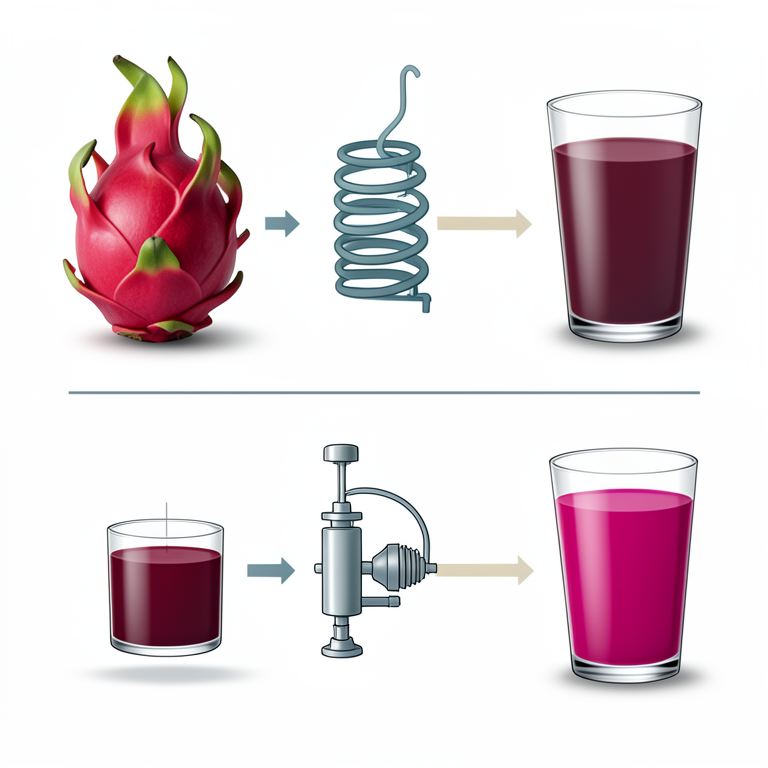
Comparison of Processing Techniques
AI-generated conceptual illustration (Red dragon fruit (Hylocereus polyrhizus)). It explains the idea and does not show study data.
View source evidence ↗Figures & tables
From the original paper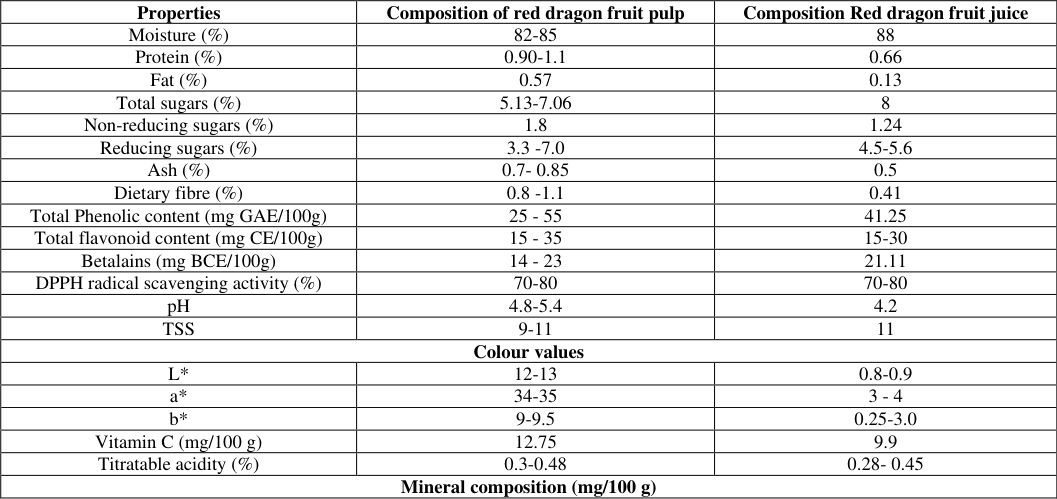 Table 1
Introduction
Red dragon fruit (Hylocereus polyrhizus) also known by various names such as Pitaya, Pitahaya, Strawberry pear, Kamalam, Buah Naga, and the wonder fruit of 21 st century is gaining global recognition due to its high consumer demand and numerous health benefits. Research has shown that its consumption can help reduce the risk of diabetes, cancer, and atherosclerosis while supporting liver and kidney health. Additionally, the fruit is rich in antioxidants and possesses strong anti-inflammatory properties, making it a valuable addition to a healthy diet (Nishikito et al., 2023) [35] . To ensure year-round availability and maximize its economic potential, processing and value addition of dragon fruit are essential. Developing innovative processing methods not only extends the shelf life of the fruit but also enhances its usability in various food and beverage applications. This review explores recent advancements in dragon fruit juice processing, including both thermal and non-thermal techniques. Additionally, it highlights recent research on value-added products derived from dragon fruit, emphasizing their potential benefits for both consumers and the agricultural industry. (Perween et al., 2018) [58] . In kerala, the season slightly varies from March to October.
Red dragon fruit pulp and juice composition
Arivalagan et al. (2021) [3] studied biochemical and nutritional content of different varieties of dragon fruit. The study reported that dragon fruit is a nutrient-rich, lowcalorie superfruit with high mineral and vitamin content. It starts yielding within 12-15 months and stabilizes by the third year. White-pulped varieties have higher yield and sugar content, while red-pulped ones are richer in phenolics and antioxidants. Among the clones, Hirehalli White excelled in yield and quality, while Hiriyur Round Red and Long Red were best among red varieties. This study provides valuable nutritional data, promoting dragon fruit as a healthy dietary choice. Lande et al. (2024) [22] studied two types of dragon fruit: white-fleshed (H. undatus) and red-fleshed (H. polyrhizus). The red variety was shorter but wider and heavier than the white one. White dragon fruit had a slightly higher juice yield than the red variety. The red dragon fruit contained more sugar, protein, vitamin C, and minerals like calcium, magnesium, and phosphorus. In contrast, the white variety had more fat and carbohydrates and appeared brighter in color. The red dragon fruit was the only one with betacyanin and had higher levels of phenolic compounds in both pulp and juice. These differences show that both types have unique benefits and can be used in various food products like drinks and ice cream. Chakraborty et al. (2024) [59] investigated how different extraction and processing methods affect the antioxidant activity of dragon fruit. Their study highlighted the fruit's rich antioxidant content, including phenolic acids, flavonoids, and betalains, found in the pulp, peel, seeds, and leaves. The peel showed the highest antioxidant activity, with the DPPH assay being the most commonly used measurement method. Storing dragon fruit at 5°C helps maintain freshness, while advanced extraction techniques like UAE and MAE improve antioxidant retention, making the fruit valuable for both health benefits and food preservation. [15] , Abd Manan et al.. (2019) [1] , Arivalagan et al. (2021) [3] , Kumar, (2021) [21] , Lande et al.( 2024) [22] . Chuah et al. (2008) [60] analyzed the rheological properties of dragon fruit juice, which are crucial for optimizing equipment design, process control, and consumer acceptance. Juice concentrates of 10° and 12°Brix were prepared, and their flow behavior was examined at temperatures of 5, 10, 15, and 40°C. The results indicated that dragon fruit juice exhibits non-Newtonian, pseudoplastic behavior, with both concentrations fitting well within the selected rheological model. Additionally, the effect of temperature on apparent viscosity was best described using the Arrhenius model.
Red dragon fruit juice Processing Enzyme assisted extraction of juice
Nur 'Aliaa et al. (2011) [36] explored the impact of commercial enzymes, Pectinex Ultra SP-L and Pectinex CLEAR, on the chemical composition, vitamin C, and polyphenol content of red pitaya juice. Results showed no significant changes in key nutrients like moisture, fat, carbohydrates, and calories after enzymation and pasteurization. However, the use of Pectinex CLEAR notably increased protein content from 0.23% to 2.20%. While vitamin C levels slightly decreased due to heat treatment, phenolic compounds rose by 7%, enhancing the juice's antioxidant properties. These findings provide useful insights for optimizing red pitaya juice production and promoting it as a functional beverage.
Truong & Dang, (2016) [49] evaluated the effectiveness of using two commercial enzymes, Pectinex Ultra SP-L and Viscozyme L, to enhance the extraction process and quality of red dragon fruit (Hylocereus polyrhizus) juice. The enzymes were applied at a constant total concentration of 0.1%, but their ratios, temperatures, and treatment durations varied. Their application significantly boosted both juice yield and quality. The highest yield and sugar content were obtained at 40°C after 120 minutes using a 70/30 enzyme ratio. In contrast, juice extracted without enzymes had a lower yield and sugar content. Moreover, enzymatic treatment lowered viscosity, increased acidity, and improved total phenolic content (TPC) and vitamin C levels compared to non-enzymatic extraction. Minh, (2020) [31] examined how different pectinase concentrations (15 to 35 μL/100 mL) and incubation times (30 to 90 minutes) at 35°C affect the turbidity and viscosity of pitaya juice. The results indicated that treating the juice with 30 μL/100 mL of pectinase for 75 minutes at 35°C significantly improved its clarity and consistency, making it more suitable for subsequent membrane-based clarification processes. Dao et al. (2023) [9] explored how pectinase affects the quality of red-fleshed dragon fruit juice. Pectinase (400 ppm) was tested at different concentrations (0-9%) and hydrolysis times (0-45 min [42][43] explored how cultivation conditions and geographic origin influence the phytochemical composition and antioxidant properties of red-fleshed dragon fruit from four regions in Vietnam. The study also focused on refining pectinase enzymatic hydrolysis and thermal sterilization techniques to enhance juice quality. Additionally, an optimized energy drink formulation was developed to improve nutrient preservation, microbial safety, and consumer acceptance. The research identified optimal processing parameters, including a pH of 4.6, a temperature of 53°C, a treatment time of 145 minutes, and an initial enzyme concentration of 0.24%.
Ultrasound assisted enzymatic extraction
Le & Le. (2021) [24][25] optimized ultrasonic and enzymatic treatments for maximum antioxidant extraction from red dragon fruit juice using response surface methodology (RSM) with the Box-Behnken design. The best conditions for betacyanin release were 18.4 minutes of sonication and 88.5 minutes of enzymatic treatment at 33.0°C, while for total phenolic content (TPC), the ideal conditions were 13.4 minutes of sonication, 71.5 minutes of enzymatic treatment, and 43.9 °C. LC-MS analysis and antioxidant tests (DPPH and FRAP assays) confirmed that ultrasound-assisted enzymatic treatment improved betacyanin and related compounds. While TPC-focused optimization slightly degraded betacyanins, it significantly increased the juice's overall antioxidant capacity.
Thermal Processing of dragon fruit juice Conventional heating
Wijitra et al. (2013) [51] heated white-flesh (WF) and redflesh (RF) dragon fruit purees from 50 to 90°C for up to 60 minutes to study their physicochemical, color, betacyanin content, microbial, antioxidative, and rheological changes. Unheated RF had significantly higher physicochemical and antioxidative properties than WF. Betacyanin content in RF decreased by 32.35% after heating at 90 °C for 60 minutes, with color changes following second-order kinetics. The L* and b* values were useful for quality control, and TCC could predict betacyanin content. Heating increased antioxidative properties, with strong correlations among them. Both WF and RF exhibited shear-thinning behavior, and heating increased viscosity, fitting well with the power law model. Heated RF puree, in particular, shows potential for food applications due to its beneficial properties. Liaotrakoon et al. (2013) [29] studied the effects of heat on white-flesh and red-flesh dragon fruit purees. Red flesh dragon fruit puree initially had higher antioxidant and physicochemical values than WF. Heating RF at 90°C for 60 minutes reduced its betacyanin content to 32.35%. Color change and betacyanin loss followed a predictable pattern, with L* and b* values useful for quality control. Heating improved antioxidant properties in both purees and increased viscosity, following the power law model. Overall, heated Red fleshed dragon fruit puree showed promising potential for use in food products due to its enhanced properties.
Wong & Siow, (2015) [52] examined how heat pasteurization, pH adjustment, ascorbic acid addition, and storage conditions affect betacyanin content in red-fleshed dragon fruit (Hylocereus polyrhizus) juice and concentrate. The concentrate was prepared using a rotary evaporator at 40 °C, and betacyanin content was analyzed using a UV-Visible spectrophotometer. The best conditions for preserving betacyanin were 0.25% ascorbic acid, pH 4.0, and pasteurization at 65 °C for 30 minutes. Agitation at 220 rpm improved betacyanin stability in concentrate compared to juice, while light exposure reduced stability in both. Overall, ascorbic acid helped maintain betacyanin levels, but light caused degradation.
Siow & Wong, (2017) [46] assessed how juice concentration affects betacyanin degradation and sensory acceptance in red-fleshed dragon fruit (Hylocereus polyrhizus) juice. Findings showed that samples stored at 4°C retained betacyanin better and had lower yeast and mold growth compared to those stored at 25°C. Betacyanin degradation in both juice and concentrate followed a first-order reaction at 25, 37, and 45°C. Additionally, reconstituted juice from the concentrate was preferred for its sweetness, flavor, and overall acceptability. The study highlights that juice concentration can enhance both betacyanin stability and sensory appeal.
Ohmic heating
Doan et al. (2023) [11] explored how ohmic heating and ascorbic acid affect the quality of red-fleshed dragon fruit juice during storage. The juice was heated to 85°C using ohmic heating and stored at 4°C for eight weeks. After one week, there was no significant loss of phenolic content or betacyanin, but by week eight, betacyanin dropped by 47%, total phenolic content by 60%, and antioxidant activity by 39%. Color changes were closely linked to betacyanin levels. Compared to conventional heating, ohmic heating preserved more nutrients. Adding 0.25% ascorbic acid helped maintain color, betacyanins, Total phenolic content and antioxidant activity, making ohmic heating a better method for processing and storing the juice.
Non-thermal processing of dragon fruit juice UV -C light
Halim et al. (2012) [13] Ochoa-Velasco & Guerrero-Beltrán, (2012) [40] treated Pitaya juice with continuous UV-C light at 57 µW/cm² using five flow rates (0.46, 3.28, 6.57, 16.49, and 30.33 mL/s) and five treatment durations (5, 10, 15, 20, and 25 minutes), with untreated juice as a control. The treatment did not significantly alter pH or total soluble solids. However, longer treatment times resulted in greater overall color change (ΔE), although higher flow rates helped lessen this effect. In addition, increased treatment time and lower flow rates led to reductions in betalains and total phenolic compounds, which decreased the juice's antioxidant activity. Furthermore, the UV-C processing effectively reduced microbial counts, achieving up to a 2.11 log cycle reduction in aerobic mesophilic bacteria and a 1.14 log cycle reduction in yeasts and molds. Ochoa-Velasco & Beltrán, (2013) [39] treated fresh pitaya juice deliberately inoculated with the yeast Zygosaccharomyces bailii, with continuous UV-C light at 57 μW/cm².The juice was processed at three different flow rates (16.49, 23.78, and 30.33 mL/s) with treatment times ranging from 5 to 30 minutes, and then stored at 4 °C for 25 days. Throughout storage, both microbiological (yeasts, molds, and total counts) and physicochemical (pH, soluble solids, color, phenolic content, betalains, and antioxidant activity) properties were monitored. Longer UV-C exposure led to a higher overall color change (with a maximum ΔE of 3.9), and the most intense treatment (30.33 mL/s for 30 minutes) resulted in reductions of 11.6% in phenolic compounds, 14.6% in betalains, and 37.0% in antioxidant activity, as well as a 1.8 log cycle drop in the population of Z. bailii.
Ozone-high hydrostatic pressure del Rosario García-Mateos et al. (2019) [10] explored the combined effects of ozone (24 mg/O3/L/min) and high hydrostatic pressure (HHP, 179-321 MPa) on reducing microbes in pitaya juice. The most effective treatment-ozone for 7 minutes followed by 316 MPa for 5 minutessignificantly reduced Listeria innocua and Saccharomyces cerevisiae, keeping native microbes at undetectable levels. Juice treated this way had the highest sensory preference (79%) after 30 days at 5°C. The findings suggest that using ozone and HHP together is more effective for ensuring juice safety than using them separately.
Ultrasound processing
Liao et al. (2020) [28] evaluated the effects of thermosonication (TS) on the color stability of clear red pitaya juice. While longer treatment and higher temperatures caused color changes, TS retained color better than thermal processing (83°C, 1.5 min). The color shift was mainly due to betacyanin decomposition, confirmed by spectroscopic analysis, with betanin and phyllocactin degradation playing a key role. Increased 5-hydroxymethylfurfural and Maillard reaction products also contributed to discoloration. However, TS effectively inactivated polyphenol oxidase and preserved over 92.97% of polyphenols, minimizing enzymatic browning. These findings suggest that TS is a promising method for maintaining color and bioactive compounds in fruit juice. Zhu et al. (2021) [55] examined the effects of thermosonication (TS) on the microbial safety and quality of red pitaya juice during storage. Juice treated with TS (475 W, 56°C for 20 minutes) experienced a significant reduction in microbial count, comparable to conventional thermal processing (83°C for 1.5 minutes). Over 28 days of refrigerated storage at 4°C, essential quality attributes such as pH, soluble solids, enzyme activity, and browning remained stable. However, slight color deterioration was observed after 10 days due to betacyanin degradation and residual microbial activity. Compared to thermal processing, TS provided better color preservation while maintaining a similar shelf life, making it a viable alternative for juice preservation. Tan et al. (2023) [48] examined the effects of ultrasonic pretreatment on the physicochemical properties of red dragon fruit juice. Flesh cubes were subjected to ultrasound for 20, 40, and 60 minutes using an ultrasonic bath operated at an output power of 600 W and a frequency of 37 kHz. While total soluble solids, pH, and titratable acidity remained unchanged, a 60-minute treatment significantly increased organic acids, phenolics, and anthocyanins compared to untreated juice. Antioxidant activity was also positively influenced by sonication duration. These results indicated that ultrasonic pretreatment can enhance the nutritional profile of red pitaya juice.
Ultrafiltration
Le et al., (2021) [24][25] studied the clarification of red-fleshed dragon fruit juice using ultrafiltration (UF) with polyethersulfone membranes of different pore sizes. The best results were obtained with a 10 kDa membrane at 3 bar, achieving high filtration efficiency while preserving betacyanins and phenolic compounds. Cake resistance was the main factor affecting filtration, while membrane structure remained unchanged after use and cleaning. Liquid chromatography-mass spectrometry confirmed that UF effectively clarified the juice without damaging heatsensitive compounds.
High Pressure Processing
Ismail et al. (2024) [16] examined the effects of high-pressure processing (HPP) and thermal pasteurization (TP) on the preservation of red dragon fruit (RDF) purée. The study analyzed total betacyanin content, phenolic and flavonoid levels, antioxidant activity, enzyme activity, microbial growth, and color stability over 60 days of storage at 4±1°C. RDF purée samples were divided into TP-treated (65°C/20 min), HPP-treated (350 MPa/5 min), and an untreated control group, with analyses conducted at 15-day intervals. Results showed that preservation method and storage duration significantly influenced these attributes. HPP was highly effective in extending shelf life beyond 60 days by suppressing microbial growth and reducing enzyme activity, whereas TP helped maintain phenolic content, antioxidant activity, and color stability. These findings suggest that HPP offers a promising alternative to TP for RDF purée preservation, promoting sustainability and health-conscious food practices. [19] evaluated the effects of thermal and pulsed light (PL) processing on red dragon fruit juice preservation at 4°C. Thermal treatment (95°C for 3 minutes) and PL treatment (1.4 J cm⁻²) effectively reduced microbial content, and the juice was stored in ethylene vinyl alcohol pouches under refrigeration. Over 30 days, no significant changes were observed in pH, titratable acidity, or total soluble solids. However, thermal processing led to greater losses of total phenols (36%) and antioxidants (22%) compared to PL treatment. The shelf life was 25 days for PL-treated juice and 30 days for thermally treated juice. The findings highlighted PL as a promising alternative for preserving dragon fruit juice with minimal nutrient loss.
Pulsed light Kamble et al. (2024)
Pulsed light Kamble et al. (2024)
Value added products from red dragon fruit juice
Dam, (2012) [8] optimized protocols for producing various products from different parts of Hylocereus undatus fruits and plant. The best wine formula used 50% (v/v) S. oviformis and 50% (v/v) S. vini, yielding 12% ethanol. Betacyanin extraction required pre-drying at 55°C and a 1:5 raw material-to-water ratio, yielding 14.82%. Jam was produced using 0.3% pectinase and 0.2% pectin for optimal texture and taste. Soft drinks from stems were made with 0.25% Pectinex Ultra SP at 45-55°C, a 1:4 material-to-water ratio, 10.4% sugar, and pasteurization at 95°C. Dragon fruit flower tea, made with 10% dried flowers, licorice, citric acid, and sugar, had superior quality to other teas in the Vietnamese market. Ombiko & Lascano, (2016) explored the use of red-fleshed dragon fruit in fruit juice drinks, cream cheese spreads, and yogurt drinks. Four juice formulations (1:3, 1:5, 1:7, and 1:10 juice-to-water ratios) were developed, with Treatment A (highest juice content) having the highest titratable acidity and vitamin C, while Treatment B (1:5 ratio) was the most acceptable. Dragon fruit was also incorporated into cream cheese spreads as jam and puree (0-35%), with the 35% formulation selected for its cost-effectiveness. Chemical tests showed higher antioxidant activity in the puree (68.54%) than in the jam (60.60%), while the jam-flavored spread had the highest viscosity. To utilize surplus dragon fruit, a yogurt drink was developed with varying puree concentrations (0-20%). Higher puree levels increased pH, total soluble solids, and antioxidant activity while decreasing viscosity. Sensory analysis identified the 15% puree formulation as the most preferred, though 10% and 20% were also acceptable. [15] analyzed the nutritional composition of dragon fruit and develop dragon fruit jelly to evaluate its market potential. The proximate analysis of juice showed high moisture (87.90%), total sugar (8.00%), vitamin C (9.90%), and a pH of 4.20. Jelly was prepared using different pectin concentrations (0.05%, 0.1%, and 1.5%) and analyzed for nutritional content. All samples had similar compositions and were stored at room temperature (27°C-34°C) for six months. Minimal changes in color, flavor, and pH were observed after four months. A taste panel of 10 participants rated the samples, with the 1.5% pectin jelly scoring highest in color, flavor, turbidity, and overall acceptability
Jelly
Jelly
Islam et al. (2012)
Islam et al. (2012)
Fermented drink
Choo et al. (2018) [5] examined how storage temperature and duration affect fermented red dragon fruit drink (FRDFD).
Results
showed that betacyanin content and physicochemical properties were better preserved at 4°C than 25°C. Microbial counts remained low, and after eight weeks at 4°C, FRDFD retained 13.93 g/L betanin with a pH of 3.46. Sensory evaluation showed over 80% acceptability, confirming its potential as a functional beverage. Choo et al. (2019) [6] optimized fermentation conditions to increase betalain concentration in fermented red dragon fruit drink (FRDFD). The study examined fermentation duration, sugar-to-flesh ratio, and sugar type. The optimal condition-7 days of fermentation with 10% white refined cane sugarproduced the highest betanin, total phenolic, and flavonoid content, achieving a nine-fold increase compared to nonoptimized fermentation. This demonstrates fermentation as an effective and economical method to enhance bioactive compounds in functional beverages.
Huan et al. (2020) [14] optimized the alcoholic fermentation of Vietnamese dragon fruit juice using Saccharomyces cerevisiae. Experiments tested different sugar levels (16-20°Brix), yeast inoculum (1-3%), and fermentation times (40-48 hours). The best conditions were found to be 18°Brix sugar, 2% yeast, and 44 hours of fermentation, resulting in 3.54% alcohol and 14.6°Brix residual sugar. Sensory evaluation rated the drink as "moderately like."
Wine
Jiang et al. (2020) [18] studied the impact of pectinase pretreatment on red dragon fruit wine fermentation using Torulaspora delbrueckii. After juice pasteurization, Pectinex® Ultra SP-L (0.1% v/v) was added, and fermentation occurred at 20°C for 14 days. The results showed no significant effect on yeast growth, ethanol, or glycerol levels, but juice and wine yield increased by 16% v/v. Fermented samples with pectinase retained more nitrogen-containing compounds, indicating less favorable fermentation conditions. The treatment enhanced ester and terpene aromas while reducing higher alcohol content. Although total phenolic content increased, betacyanin levels and color intensity were lower than in untreated samples. These findings suggested that pectinase treatment can improve juice yield and aroma while influencing fermentation conditions and color properties, providing insights for red dragon fruit wine production. Ngoc et al. (2024) [33] optimized fermentation conditions for red dragon fruit (Hylocereus polyrhizus) wine, focusing on yeast strain, dilution ratio, and yeast concentration (Begum MA et al., 2024) [7] . Saccharomyces cerevisiae RV002 was the best strain due to its resilience. A 50% dilution ratio improved clarity and flavor, while dilutions above 90% lowered ethanol content. The ideal 1 g/L yeast concentration balanced alcohol production and microbial control. Fermentation reduced sugar and vitamin C but increased polyphenols and antioxidants.
Carbonated drink
Mai et al. (2022) [30] developed a carbonated drink from redflesh dragon fruit while optimizing hydrolysis and pasteurization to preserve bioactive compounds and color. The research examined pectinase hydrolysis by varying temperature (35-50°C), time (1-4 hours), enzyme concentration (0.4-1%), and enzyme content (0.2-0.8%). Optimization was based on polyphenol content, vitamin C levels, and antioxidant activity (DPPH scavenging). Pham et al. (2024) [42][43] optimized pectin hydrolysis to enhance the quality of red dragon fruit carbonated beverages. The study identified optimal conditions-49.9°C, 131.3 minutes, and 0.23% pectinase-resulting in improved clarity and high anthocyanin content. Sensory evaluation found that a blend of 20% juice, 0.12% citric acid, 13°Bx, and 0.30% mint flavor had the highest consumer acceptance. These findings highlight red dragon fruit's potential for nutritious and appealing carbonated beverages.
RTS drink
Jalgaonkar et al. (2018) [17] developed a ready-to-serve (RTS) drink using dragon fruit (60-80%), grape juice (0-10%), and sugar syrup (2-6%). The formulation was optimized using response surface methodology with a Box-Behnken design to enhance nutritional and sensory qualities. Results showed that adding grape juice and sugar syrup significantly improved taste and overall acceptability. The optimal blend consisted of 70% dragon fruit, 5% grape juice, and 3% sugar syrup, producing a nutritionally balanced and well-accepted beverage. Ghorband & Joshi, (2023) [12] formulated a dragon fruit RTS (Ready-to-Serve) beverage using varying concentrations of dragon fruit juice (10-14%), sugar (10-15%), and citric acid (0.3-0.9%). The optimized formulation, determined based on sensory and biochemical analyses, consisted of 14% fruit juice, 12.75% sugar, and 0.38% citric acid. This combination enhanced key quality attributes, including color, flavor, taste, and overall acceptability. Additionally, the beverage exhibited a total soluble solids (TSS) content of 15.70°Bx, an antioxidant activity of 26.44% DPPH inhibition, and an improved color value (a*) of 1.49 with increasing juice concentration. Notably, the absence of artificial colors and flavors ensured the product's nutritional value and safety for consumption. Patel & Bhise, (2024) [41] developed a lime-flavored dragon fruit RTS beverage and evaluated thermal, microwave, and chemical treatments for shelf-life enhancement. The optimized formulation contained 12% fruit juice, 12°Brix TSS, 0.1% citric acid, and 3% lime juice for the best taste. Treatments included thermal (70-90°C for 5-15 min), microwave (900 W for 30-150 sec), and chemical (500-1500 ppm ascorbic acid), with the best results observed at 70°C for 5 min, 900 W for 30 sec, and 500 ppm ascorbic acid. Shelf-life analysis showed significant changes in pH, TSS, betacyanin content, and sensory properties, with the highest betacyanin retention and acceptability on the 6th day at ambient storage, while refrigeration retained higher betacyanin and acceptability on the 60th day. The 500 ppm ascorbic acid treatment proved most effective in maintaining quality during storage.
Pigment
Woo et al. (2011) [54] investigated the stability of betalain pigment from red dragon fruit extracted with ethanol. They analyzed the effects of storage conditions, pH, light, temperature, and additives over three weeks. The study found that light was the primary cause of betalain degradation, while refrigerated storage in darkness effectively preserved pigment quality.
Concentrated juice
Nguyen et al., (2021) [34] studied a novel evaporation method, JEVA, to concentrate juice from Binh Thuan Province, Vietnam, under ambient pressure and moderate temperature. This process increased juice concentration from 13.8°Brix to over 60°Brix while retaining over 90% polyphenols and flavonoids, along with 70.17% vitamin C and 74% betacyanin. Compared to vacuum evaporation at 40°C, which retained 57% vitamin C and 40% betacyanin, JEVA at 35°C preserved 85.76% betacyanin and 81.55% vitamin C after 8 weeks at 4°C. These findings highlight JEVA's potential for large-scale red dragon fruit juice processing. Kumar, (2021) [21] processed dragon fruit juice and concentrate by heating the pulp at 85±2°C (3 minutes for juice, 35 minutes for concentrate), followed by the addition of 0.1% sodium benzoate and 0.1% ascorbic acid. The juice was then cooled and centrifuged at 3600 rpm for 10 minutes. A study on storage stability using different preservative proportions and colored PET bottles showed that key biochemical properties, including total sugars, acidity, ascorbic acid, and betacyanin, were best preserved in select treatments. After 90 days, the concentrate retained high total soluble solids (TSS) and antioxidant content, confirming that preservatives and packaging effectively improved shelf life. [32] aimed to enhance market value of the fruit by optimizing the production and preservation of dragon fruit (Hylocereus undatus) nectar. The research evaluated the effects of pH, sugar concentration, pasteurization conditions, and storage parameters on sensory quality, total soluble solids, acidity, and microbial stability. The results indicated that the optimal nectar formulation was achieved at pH 4.2 with 8% sugar, subjected to pasteurization at 95°C for 1 minute, and stored at 4±2°C in glass bottles to maintain quality and stability.
Nectar
Nectar
Minh et al. (2019)
Minh et al. (2019)
Syrup
Susilo et al. (2021) [47] aimed to enhance the quality of red dragon fruit (Hylocereus costaricensis) syrup by using a double jacket vacuum evaporator to reduce nutrient loss. Traditional syrup production involves high temperatures, which can degrade essential nutrients like vitamin C. The research analyzed the impact of temperature and vacuum pressure on syrup quality through nine treatment variations. Findings revealed that temperature significantly influenced vitamin C levels, moisture content, and reducing sugars, whereas pressure mainly affected moisture content. The best condition for maximizing vitamin C retention (8.75 mg/100 ml) was 50°C at -60 cmHg, highlighting the benefits of lowtemperature, low-pressure evaporation in preserving nutritional value. Syrup is a thick sugar solution that may contain additives. It typically uses high-calorie cane sugar, which can contribute to obesity if not balanced with physical activity. Wibowo & Herawati, (2023) [50] examined the effects of low-calorie sugar on the chemical (pH, vitamin C, reducing sugars, betacyanin), physical (total dissolved solids), and sensory (aroma, taste, color) characteristics of red dragon fruit syrup. The experiment followed a randomized block design (RBD) with five sugar concentrations (3%, 6%, 9%, 12%, and 15%), each tested five times, totaling 25 trials. Results showed that low-calorie sugar significantly affected reducing sugar levels and total dissolved solids but had no significant impact on pH, vitamin C, or betacyanin. Sensory tests revealed that panelists preferred the syrup with 15% sugar for its aroma, taste, and color. Wibowo & Herawati, (2023) [50] examined how adding red dragon fruit juice affects the characteristics and sensory qualities of belimbing wuluh syrup. A completely randomized design (CRD) was used with five juice concentrations (0%, 5%, 10%, 15%, and 20%) and three replications. Results showed that the juice significantly influenced color, pH, sugar content, vitamin C, acidity, antioxidant activity, and betacyanin levels, while aroma remained unaffected. The best formulation, with 20% juice, had the highest overall quality, including a pH of 3.67, 73.99% sugar, 16.19 mg/100g vitamin C, and strong antioxidant activity (44.65%). Sensory evaluation indicated the highest preference for color, taste, and overall acceptability.
Candy: Nurhafsah et al. (2023) [38] examined the impact of red dragon fruit peel and pulp on the chemical composition and acceptance of jelly candy. Using a completely randomized design, different amounts of pulp (50g, 55g, 60g, and 65g) were tested. Chemical analysis measured water content, sugar content, and vitamin C, while 25 panelists evaluated texture, aroma, color, and taste using a five-point hedonic scale. The most preferred formulation (P3) contained 150g peel, 60g pulp, and 290g sugar flour, with a water content of 25.6%, sugar content of 53.7%, and vitamin C of 0.03%. Singh et al. (2023) [45] examined the effects of different sugar levels on dragon fruit candy's quality and storage stability. The experiment followed a randomized design with eight treatments. The candy was made using gelatin and citric acid, with the 80% sugar formulation showing the best quality in terms of taste, texture, and chemical properties. Over 90 days of storage at 30°C, sugar levels and acidity increased, while moisture, pH, and sensory quality slightly declined. A cost-benefit analysis showed all treatments were profitable, with the highest return in the 55% sugar formulation. Lee et al. (2013) [26] investigated the stability and antioxidant properties of spray-dried red and white dragon fruit powder under varying humidity conditions. The powder was produced using spray drying at 120°C for red dragon fruit and 110°C for white dragon fruit, with 30% maltodextrin as a carrier. The resulting particles ranged from 3 to 7 μm in size. While spray drying reduced the antioxidant content, the antioxidant properties remained stable after 25 days of storage. Structural changes were observed at 43%, 54%, and 75% relative humidity (RH), whereas 33% RH preserved the stability of the powder. Nurhadi et al. (2024) [37] examined the stability of encapsulated betacyanin from dragon fruit peel and pulp using maltodextrin and gum Arabic as coating agents with vacuum drying. Findings indicated that juice powder maintained higher phytochemical concentrations and stability compared to ethanol-extracted peel powder over 30 days. Although both powders exhibited similar color stability, juice powder retained a more natural fruit-like hue but had lower antioxidant activity. Betacyanin levels were higher in juice powder) than in peel powder. The combination of maltodextrin and gum Arabic (1:1) proved most effective in preserving total phenolics and betacyanin, highlighting its potential for industrial applications.
Juice powder
Value added products from dragon fruit peel Pectin: Woo et al. (2010) [53] conducted a study on the extraction and characterization of pectin from dragon fruit peel obtained from the fruit industry. The peel was ovendried, and pectin extraction was carried out at varying pH levels (3.0, 3.5, and 4.0) and subjected to heat treatment at 75°C for different durations (30, 60, and 120 minutes). The findings indicated that the highest pectin yield was achieved at a pH of 3.5 with a treatment time of 60 minutes.
Conclusions
This review highlighted recent advancements in dragon fruit processing, with a particular focus on juice preservation and value addition. While extensive research has been conducted on the composition of dragon fruit pulp, studies on its juice remain limited, necessitating further investigation into its bioactive compounds. Non-thermal preservation techniques such as high-pressure processing (HPP), thermosonication, ultrafiltration, and pulsed light have shown promise in maintaining juice quality, though the potential of pulsed electric fields, cold plasma, and retort processing remains largely unexplored. Additionally, the development of valueadded products, including fermented beverages, wine, jelly, syrup, and carbonated drinks, enhances the commercial viability of dragon fruit. Notably, fermentation has been found to increase bioactive compound content, further improving the fruit's nutritional profile. Future research should focus on optimizing preservation techniques and exploring novel processing methods to maximize the health benefits and shelf life of dragon fruit products.
Acknowledgement
AcknowledgementThe author thank Kelappaji College of Agricultural Engineering and Food Technology, Tavanur, Malappuram, Agribusiness Incubator, Department of Agricultural Engineering, College of Agriculture, Vellanikkara, and Kerala Agricultural University, Thrissur for the facilities and support provided during the research.
Figures and tables from the paper
| Properties | Composition of red dragon fruit pulp | Composition Red dragon fruit juice |
|---|---|---|
| Moisture (%) | 82-85 | 88 |
| Protein (%) | 0.90-1.1 | 0.66 |
| Fat (%) | 0.57 | 0.13 |
| Total sugars (%) | 5.13-7.06 | 8 |
| Non-reducing sugars (%) | 1.8 | 1.24 |
| Reducing sugars (%) | 3.3 -7.0 | 4.5-5.6 |
| Ash (%) | 0.7- 0.85 | 0.5 |
| Dietary fibre (%) | 0.8 -1.1 | 0.41 |
| Total Phenolic content (mg GAE/100g) | 25 - 55 | 41.25 |
| Total flavonoid content (mg CE/100g) | 15 - 35 | 15-30 |
| Betalains (mg BCE/100g) | 14 - 23 | 21.11 |
| DPPH radical scavenging activity (%) | 70-80 | 70-80 |
| pH | 4.8-5.4 | 4.2 |
| TSS | 9-11 | 11 |
| Colour values | ||
| L* | 12-13 | 0.8-0.9 |
| a* | 34-35 | 3 - 4 |
| b* | 9-9.5 | 0.25-3.0 |
| Vitamin C (mg/100 g) | 12.75 | 9.9 |
| Titratable acidity (%) | 0.3-0.48 | 0.28- 0.45 |
| Mineral composition (mg/100 g) |
Table text extracted from the original PDF; superscript letters are shown inline. The original table image is below.
View original table image
References
58 in the original paper- Abd Manan E, Abd Gani SS, Zaidan UH, Halmi MIE. Characterization of antioxidant activities in red dragon fruit (Hylocereus polyrhizus) pulp water-based extract. Journal of Advanced Research in Fluid Mechanics and Thermal Sciences. 2019;61(2):170-180.
- Al-Qthanin R, Salih AMME, Alhafidh FMA, Almoghram SAM, Alshehri GA, Alahmari NH. Assessing the suitability of pitaya plant varieties for cultivation in the arid climate of Saudi Arabia. Heliyon. 2024;10(1).
- Arivalagan M, Karunakaran G, Roy T, Dinsha M, Sindhu B, Shilpashree V, et al. Biochemical and nutritional characterization of dragon fruit (Hylocereus species). Food Chemistry. 2021;353:129426.
- Chen NJ, Paull RE. Overall Dragon Fruit Production and Global Marketing. FFTC Agricultural Policy Platform. 2019;9(2):229-239.
- Choo KY, Kho C, Ong YY, Thoo YY, Lim RLH, Tan CP, et al. Studies on the storage stability of fermented red dragon fruit (Hylocereus polyrhizus) drink. Food Science and Biotechnology. 2018;27:1411-1417.
- Choo KY, Ong YY, Lim RLH, Tan CP, Ho CW. Study on bioaccessibility of betacyanins from red dragon fruit (Hylocereus polyrhizus). Food Science and Biotechnology. 2019;28:1163-1169.
- Begum MA, Robbani M, Howlader J, Labib LA, Sharif MS, Islam MM. Co-benefits of cow urine and biocharbased fertilizer on flowering, fruiting and fruit quality of dragon fruit. South. Asian J Agric. Sci. 2024;4(1):211-215. doi:10.22271/27889289.2024.v4.i1c.130.
- Dam S. Development of different processed products from the edible and inedible parts of the dragon fruit (Hylocereus undatus). 2012;271-278.
- Dao T, Nguyen L, Le D, Tran T, Huynh X. Effects of pectinase treatment on the quality of red dragon fruit (Hylocereus polyrhizus) juice. International Food Research Journal. 2023;30(4).
- del Rosario García-Mateos M, Quiroz-González B, Corrales-García J, Ybarra-Moncada MC, Leyva-Ruelas G. Ozone-high hydrostatic pressure synergy for the stabilization of refrigerated pitaya (Stenocereus pruinosus) juice. Innovative Food Science & Emerging Technologies. 2019;56:102187.
- Doan NK, Nguyen TH, Le NT, Pham MT, Phan TXU, Lai QD, et al. Effects of ohmic heat processing and ascorbic acid on antioxidant compounds and colour of red-fleshed dragon (Hylocereus polyrhizus) fruit juice during storage. International Journal of Food Science & Technology. 2023;58(7):3819-3826.
- Ghorband A, Joshi B. Development and Quality Evaluation of Ready to Serve (RTS) Beverage from Dragon Fruit. Current Journal of Applied Science and Technology. 2023;42(46):197-204.
- Halim H, Noranizan M, Sobhi B, Sew C, Karim R, Osman A. Nonthermal pasteurization of pitaya (Hylocereus polyrhizus) juice using the hurdle concept. International Food Research Journal. 2012;19(4).
- Huan P, Hien N, Anh N. Optimization of alcoholic fermentation of dragon fruit juice using response surface methodology. Food Research. 2020;4(5):15291536.
- Islam MZ, Khan M, Hoque M, Rahman M. Studies on the processing and preservation of dragon fruit (Hylocereus undatus) jelly. 2012.
- Ismail N, Nawawi N, Ijod G, Anzian A, Ismail-Fitry M, Ahmad N, et al. Shelf life and quality assessment of pasteurised red dragon fruit (Hylocereus polyrhizus L.) purée: Comparative study of high-pressure and thermal processing. International Food Research Journal. 2024;31(2).
- Jalgaonkar K, Mahawar MK, Kale S, Kale PN, Bibwe B, Dukare A, et al. Response surface optimization for development of Dragon fruit based ready to serve drink. Journal of Applied and Natural Science. 2018;10(1):272-278.
- Jiang X, Lu Y, Liu SQ. Effects of pectinase treatment on the physicochemical and oenological properties of red dragon fruit wine fermented with Torulaspora delbrueckii. LWT. 2020;132:109929.
- Kamble SV, Lele SS, Chakraborty S, Annapure US. Impact of pulsed light treatment on achieving microbial safety, enzymatic stability, and shelf life extension of dragon fruit juice. Food Safety and Health. 2024;2(4):509-523.
- Kumar B. Study on Storage Stability of Dragon Fruit (Hylocereus polyrhizus) Juice and Concentrate. 2021.
- Lande V, Kshirsagar R, Aralkar S, Agarkar A, Patil B, Suryawanshi H. A comparative analysis of red and white dragon fruit pulp and juice characteristics. Journal of Applied Horticulture. 2024;26(2):244-247.
- Le TT, Le NL. Antioxidant capacities and betacyanin LC-MS profile of red-fleshed dragon fruit juice (Hylocereus polyrhizus) extracted by ultrasound-assisted enzymatic treatment and optimized by response surface methodology. Journal of Food Processing and Preservation. 2021;45(3):e15217.
- Le TT, Vu LT, Le NL. Effects of membrane pore size and transmembrane pressure on ultrafiltration of red-fleshed dragon fruit (Hylocereus polyrhizus) juice. Journal of Chemical Technology & Biotechnology. 2021;96(6):1561-1572.
- Lee K, Wu T, Siow L. Spray drying of red (Hylocereus polyrhizus) and white (Hylocereus undatus) dragon fruit juices: Physicochemical and antioxidant properties of the powder. International Journal of Food Science & Technology. 2013;48(11):2391-2399.
- Li P, Ma X, Li Z, Yao H, Lu G, Hu H, et al. A review on the advances of dragon fruit. Tropical Plants. 2024;3(1).
- Liao H, Zhu W, Zhong K, Liu Y. Evaluation of colour stability of clear red pitaya juice treated by thermosonication. LWT. 2020;121:108997.
- Liaotrakoon W, De Clercq N, Van Hoed V, Van de Walle D, Lewille B, Dewettinck K. Impact of thermal treatment on physicochemical, antioxidative and rheological properties of white-flesh and red-flesh dragon fruit (Hylocereus spp.) purees. Food and Bioprocess Technology. 2013;6:416-430.
- Mai HTQ, Pham VT, Do VL, Phuc TB, Truc TT, Ngan TTK. Production process of a carbonated drink from red flesh dragon fruit (Hylocereus polyrhizus). 2022;1048:514-523.
- Minh NP. Influence of enzymatic concentration and incubation time in processing of pitaya (Hylocereus polyrhizus) fruit juice. Research on Crops. 2020;21(3):494-497.
- Minh NP, Nhan NPT, Tha DT, Khai LQ, Tu LN. Different aspects affecting to production of dragon fruit (Hylocereus undatus) nectar. Journal of Pharmaceutical Sciences and Research. 2019;11(3):1040-1043.
- Ngoc TB, Thinh PV, Mui DT, Uyen LH, Ngan NNK, Tran NTK, et al. Influences of fermentation conditions on the chemical composition of red dragon fruit (Hylocereus polyrhizus) wine. Beverages. 2024;10(3):61.
- Nguyen TTH, Pham DC, Chu TP, Vu NH, Samhaber WM, Nguyen MT. Impact of jeva evaporation on storage stability and physiochemical characteristics of Vietnam red dragon fruit (Hylocereus polyrhizus). Chemical Engineering Transactions. 2021;87:169-174.
- Nishikito DF, Borges ACA, Laurindo LF, Otoboni AMB, Direito R, Goulart RA, et al. Anti-inflammatory, antioxidant, and other health effects of dragon fruit and potential delivery systems for its bioactive compounds. Pharmaceutics. 2023;15(1):159.
- Nur 'Aliaa A, Siti Mazlina M, Taip F. Effects of commercial pectinases application on selected properties of red pitaya juice. Journal of Food Process Engineering. 2011;34(5):1523-1534.
- Nurhadi B, Qonit MAH, Mubarok S, Saputra RA. Enhancing betacyanin stability: Comparison of dragon fruit (Hylocereus polyrhizus) pulp and peel powders through encapsulation technology during storage. Food Science & Nutrition. 2024;12(5):3251-3264.
- Nurhafsah N, Laboko A, Gobel D, Novitasari E, Muazam A, Andriani I, et al. Effect of red dragon fruit (Hylocereus polyrhizus) peel and pulp on jelly candy chemical composition and acceptance. IOP Conference Series: Earth and Environmental Science. 2023;1183(1):012059.
- Ochoa-Velasco CE, Beltrán JÁG. Short-wave ultraviolet-C light effect on pitaya (Stenocereus griseus) juice inoculated with Zygosaccharomyces bailii. Journal of Food Engineering. 2013;117(1):34-41.
- Ochoa-Velasco CE, Guerrero-Beltrán JÁ. Ultraviolet-C light effect on pitaya (Stenocereus griseus) juice. Journal of Food Research. 2012;1(2):60.
- Patel D, Bhise S. Betacyanin, antioxidant activity and shelf-life evaluation of thermally, microwave, and chemically processed lime-flavored dragon fruit ready to serve beverage. Journal of Scientific Research and Reports. 2024;30(6):1-15.
- Pham BA, Vu ND, Phan PH, Long HB, Long TB, Pham VT. Pectinase-driven optimization of pectin hydrolysis for enhanced clarity, anthocyanin retention, and consumer appeal in red dragon fruit mint flavored beverage. Journal of Food Processing and Preservation. 2024;2024(1):9273464.
- Pham TV, Cao TX, Le NTH, Pham AM, Trinh HT, Nguyen DT, et al. Enhancing the quality and consumer satisfaction of dragon fruit beverage production: The effects of geological origin and processing conditions. Science Progress. 2024;107(4):00368504241300854.
- Sharma SC, Mittal R, Sharma A, Verma V. Dragon fruit: A promising crop with a growing food market that can provide profitable returns to farmers. International Journal of Agricultural Science Research. 2021;11:114.
- Singh A, Singh D, Bala KL. Postharvest impact of different sugar levels on dragon fruit (Hylocereus undatus) candy. International Journal of Plant & Soil Science. 2023;35(16):302-309.
- Siow LF, Wong YM. Effect of juice concentration on storage stability, betacyanin degradation kinetics, and sensory acceptance of red-fleshed dragon fruit (Hylocereus polyrhizus) juice. International Journal of Food Properties. 2017;20(3):623-632.
- Susilo B, Sutan S, Hendrawan Y, Damayanti R. Improving quality of dragon fruit (Hylocereus costaricensis) syrup by processing with double jacket vacuum evaporator. IOP Conference Series: Earth and Environmental Science. 2021;924(1):012012.
- Tan CX, Lim SW, Tan SS, Tan ST. Characterization of juice extracted from ultrasonic-treated red pitaya flesh. Horticulturae. 2023;9(1):92.
- Truong N, Dang QT. Application of hydrolytic enzymes for improvement of red dragon fruit juice processing. Asia Pacific Journal of Sustainable Agriculture, Food and Energy. 2016;4(1):1-4.
- Wibowo DS, Herawati MM. The effect of application of low-calorie sugar on chemical, physical, and organoleptic characteristics of red dragon (Hylocereus polyrhizus) fruit syrup. Jurnal Teknik Pertanian Lampung (Journal of Agricultural Engineering). 2023;12(4):1010-1021.
- Wijitra L, Benny L, Koen D. Impact of thermal treatment on physicochemical, antioxidative and rheological properties of white-flesh and red-flesh dragon fruit (Hylocereus spp.) purees. Food and Bioprocess Technology. 2013;6(2):416-430.
- Wong YM, Siow LF. Effects of heat, pH, antioxidant, agitation and light on betacyanin stability using redfleshed dragon fruit (Hylocereus polyrhizus) juice and concentrate as models. Journal of Food Science and Technology. 2015;52:3086-3092.
- Woo K, Chong Y, Li Hiong S, Tang P. Pectin extraction and characterization from red dragon fruit (Hylocereus polyrhizus): A preliminary study. Journal of Biological Sciences. 2010;10(7):631-636.
- Woo K, Ngou F, Ngo L, Soong W, Tang P. Stability of betalain pigment from red dragon fruit (Hylocereus polyrhizus). American Journal of Food Technology. 2011;6(2):140-148.
- Zhu W, Ai Y, Fang F, Liao H. Application of thermosonication in red pitaya juice processing: Impacts on native microbiota and quality properties during storage. Foods. 2021;10(5):1041.
- Abirami R, Senthil TS, Keerthana SP, Yuvakkumar R, Ravi G, Pannipara M, et al. An approach to enhance the photocatalytic activity of ZnTiO3. Ceramics International. 2021 Jul 1;47(13):18122-18131.
- Kakade A, Salama ES, Han H, Zheng Y, Kulshrestha S, Jalalah M, et al. World eutrophic pollution of lake and river: Biotreatment potential and future perspectives. Environmental Technology & Innovation. 2021 Aug 1;23:101604.
- Perween T, Mandal KK, Hasan MA. Dragon fruit: An exotic super future fruit of India. Journal of Pharmacognosy and Phytochemistry. 2018;7(2):10221026.
- Chakraborty TC, Venter ZS, Demuzere M, Zhan W, Gao J, Zhao L, Qian Y. Large disagreements in estimates of urban land across scales and their implications. Nature communications. 2024 Oct 24;15(1):9165.
- Chuah TG, Ling HL, Chin NL, Choong TS. Effects of temperatures on rheological behavior of dragon fruit (Hylocereus sp.) juice. International Journal of Food Engineering. 2008;4(7).
Cited by 2
From OpenAlex, OpenCitations and reference lists read by Scinovex
- Untargeted Metabolomics Reveals Metabolomic Diversity of Hylocereus polyrhizus in Karst Regions of Southwest China ↗
Liangjie Ba, Zhibing Zhao, Yinmei yin Luo · SSRN Electronic Journal · 2026
❝ 0PDF - DIVERSIFIKASI OLAHAN BUAH NAGA SEBAGAI STRATEGI PENINGKATAN NILAI TAMBAH KOMODITAS LOKAL MELALUI PEMBERDAYAAN MASYARAKAT DESA SUKAMAJU ↗
Abdul Wahid, Amanda Patappari Firmansyah, A.Farmy Zul Fariduddin Attar, Basri Basir Mr · PATIKALA Jurnal Pengabdian Kepada Masyarakat · 2026
Diversifying dragon fruit into processed products is a strategy to enhance the utilization of local commodities while strengthening community capacity to produce value-added goods. This activity aimed to improve the knowledge and skills of the Sukamaju Village community in processing dragon fruit into various food products and to introduce product development opportunities as part of community economic empowerment. The activity…
❝ 0PDF