
Research article · 2025 · Full text
International Journal of Agriculture and Food ScienceEvaluation of thermal tolerance of co-encapsulated beads incorporated with probiotic culture and L-ascorbic acid
Volume 7(4) · Pages 85–89 · DOI: 10.33545/2664844x.2025.v7.i4b.336 ↗
Research areasProteins in Food SystemsFood composition and propertiesMicroencapsulation and Drying Processes
Abstract
Author-writtenThe proposed work was focused on the thermo tolerance of co-encapsulated beads formed with lactic acid bacteria and ascorbic acid. The beads were prepared by emulsion and extrusion method of encapsulation wherein coating material sodium alginate (4 %) and maize starch (2 %) were used. Microcapsules thus prepared by these two methods were freeze dried at -72˚C under vacuum. Thermo tolerance of the co-encapsulated beads were analyzed to check their stability under different temperatures viz. 45, 55, 65 and 75°C for 20 minutes using distilled water as suspending medium. In case of beads made from extrusion method, treatment and periodic mean value showed a significant difference from initial mean of 10.01 log to 8.61 log. For ascorbic acid a significant reduction was observed in the treatment mean values. In periodic mean value also, a significant difference was observed from initial mean of 14.39 mg to 10.24 mg. For each of the temperatures applied, the lowest reduction was observed at 45˚C (1.63 mg) and highest reduction was observed at 75˚C (5.97 mg). In case of beads made from emulsion method, a significant reduction was observed in the treatment as well as periodic mean values. For each of the temperatures applied, a significantly lowest and highest reduction was observed at 45˚C (0.13 log) and 75˚C (1.83 log), respectively. Similarly. a significant reduction was observed in the treatment mean values and periodic mean values for ascorbic acid and significantly lowest reduction was noted at 45˚C (1.08 mg) and highest at 75˚C (6.8 mg).
Summary
Source-checkedPlain-language reading of the full paper, prepared with AI and checked against the text. Each point links to the authors' own words.
Why it matters
- Probiotics face significant challenges in maintaining survival and vigor during production, storage, and their journey through the gastrointestinal tract. View evidence ↗
- The stability of ascorbic acid is negatively affected by various environmental factors, including temperature, pH, and oxygen. View evidence ↗
- Instability of ascorbic acid during heat processing and storage often leads to undesirable sensory changes in liquid food products. View evidence ↗
The question
- The study aimed to determine if micro-encapsulated beads could protect probiotic bacteria and ascorbic acid from temperature abuse during dairy product manufacturing. View evidence ↗
What they did
- The researchers co-encapsulated Lactobacillus helveticus MTCC 5463 (V3) and ascorbic acid using two different techniques: extrusion and emulsion. View evidence ↗
- The encapsulation process utilized a coating mixture consisting of 4% sodium alginate and 2% maize starch. View evidence ↗
- Thermal stability was tested by exposing the beads to temperatures of 45, 55, 65, and 75°C for 20 minutes in distilled water. View evidence ↗
- The prepared microcapsules were freeze-dried under vacuum at -72°C. View evidence ↗
What they found
- For probiotics encapsulated via extrusion, the highest viability was at 45°C, while the most significant reduction occurred at 75°C, decreasing by 1.62 logs. View evidence ↗
- Probiotics encapsulated via the emulsion method also showed a reduction in viability at higher temperatures, but the reduction at 75°C (1.24 logs) was lower than that of the extrusion method. View evidence ↗
- Ascorbic acid in extrusion beads showed the highest retention at 45°C and a reduction of 2.68 mg at 75°C. View evidence ↗
- Ascorbic acid in emulsion beads also showed the highest retention at 45°C, with a reduction of 3.63 mg at 75°C. View evidence ↗
- The emulsion method was found to be superior to the extrusion method for probiotic stability, as it resulted in lower log reductions and higher overall viability. View evidence ↗
What it means
- The authors conclude that the emulsion method is more effective than the extrusion method for providing stability to the co-encapsulation of probiotic cultures and ascorbic acid. View evidence ↗
Visual summary
1 visualsIllustrations explain the paper; they do not show study data.
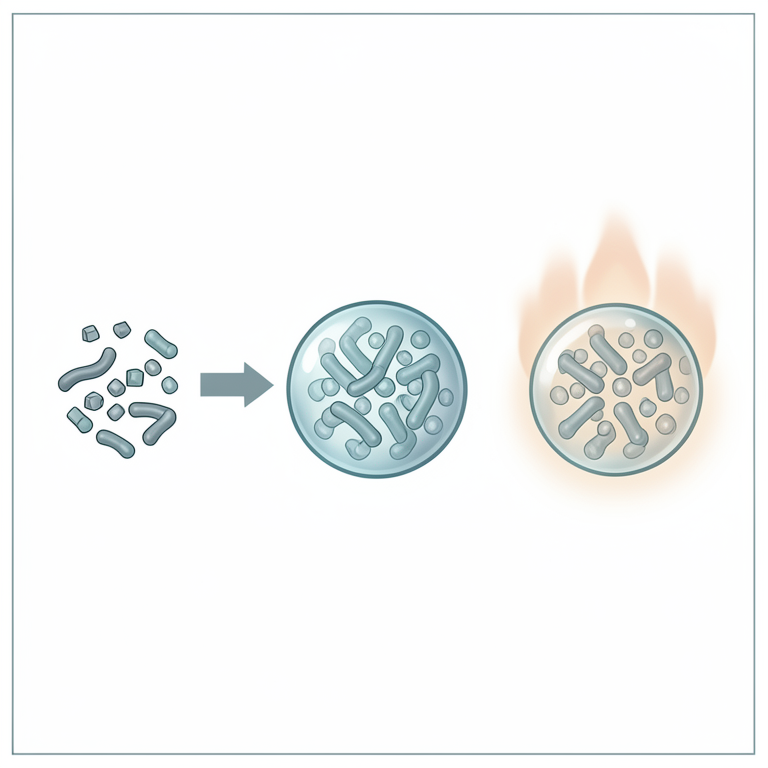
Co-encapsulation Concept
AI-generated conceptual illustration (Lactobacillus helveticus bacteria and L-ascorbic acid molecules within sodium alginate and maize starch beads). It explains the idea and does not show study data.
View source evidence ↗Figures & tables
From the original paper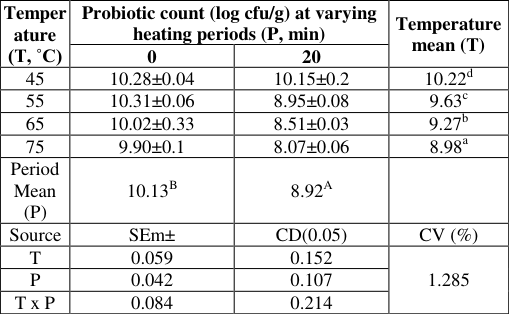 Table 2
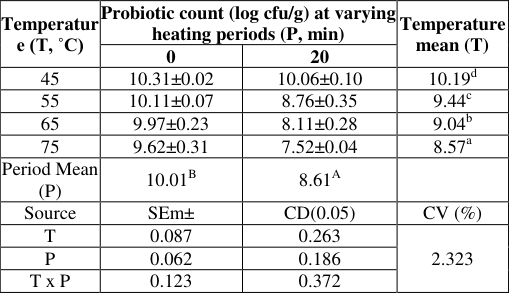 Table 1
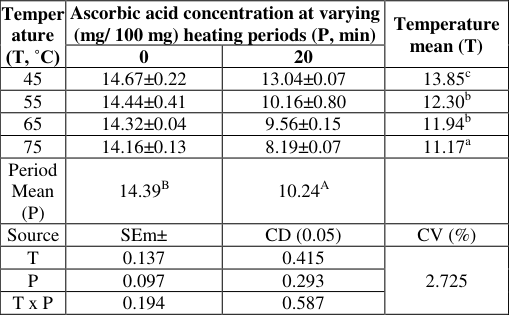 Table 3
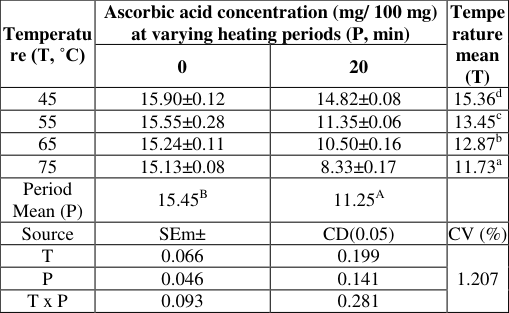 Table 4
Introduction
Major challenges are associated with the probiotic's survival and vigor throughout production, storage, and passage through the gastrointestinal tract. For these bacteria to positively affect health, they must endure and proliferate in the gut environment in a certain quantity (Kailasapathy and Chin, 2000) [8] . Probiotics have been investigated for improving their viability and vitality in food products as well as their passage through the gastrointestinal tract using microencapsulation in hydrocolloid beads (Krasaekoopt et al., 2003; Mandal et al., 2006; Annan et al., 2008) [9,11,3] . According to Mandal et al. (2006) [11] and Ding and Shah (2009) [7] , microencapsulation protects cells from damaging conditions and low-intensity heat exposure by possibly lowering cell damage and eventual death. Microencapsulation is an efficient way to prevent probiotics from degrading. According to Tripathi et al. (2013) [17] and Anselmo et al. (2016) [4] , probiotics should be stable during storage, protected from extreme conditions in the upper gastrointestinal tract, released into the colon, and then stimulated to colonize the mucosal surfaces utilizing an effective microencapsulation technique. Numerous studies conducted over the past few decades have demonstrated various health benefits that probiotics, prebiotics, and their formulation as synbiotics offer to people. According to Pandey et al. (2015) [13] , functional foods are essential dietary supplements that claim to alter, change, and replenish the body's natural gut flora. Environmental factors such as temperature, pH, oxygen, metal ions, UV, and X-rays affects the stability of ascorbic acid. Because ascorbic acid is usually unstable and readily broken down during processing, it may impart yellowish tinge.
Moreover, ascorbic acid may interact with other ingredients to cause undesirable alterations in the flavor and color of food product (Wilson and Shah, 2007; Moon et al., 2020) [20,12] . Foods that contain stable vitamin C may benefit from their inclusion (Wilson and Shah, 2007) [20] . To overcome some of its disadvantages, ascorbic acid is encapsulated using the microencapsulation technique. In addition to mask the acidic taste, the microencapsulated ascorbic acid prevents color changes and maintains the product's stability. According to Uddin et al. (2001) [18] , microencapsulation reduces the possibility of any interaction between ascorbic acid and other ingredients in food products. Since ascorbic acid is sensitive to temperature, water, and oxygen, it is challenging to incorporate it into many food products. The naturally high ascorbic acid content of many fruits and vegetables rapidly degrades when they are kept or exposed to specific post-harvest processes. Ascorbic acid oxidizes rapidly in solution but is generally stable in air when dried. Additionally, exposure to heat, moisture, and light may cause it to darken. Cooking typically destroys ascorbic acid by accelerating the oxidation process. Packaging and encapsulation can help to reduce some of these losses, but will add to the cost of the product (Teucher et al., 2004) [16] . The instability of ascorbic acid during storage, heat processing, and cooking are the main causes of unwanted sensory changes in liquid products. Thermotolerance is one of the criteria which can indicate the proper passage of coencapsulated microcapsule in the form of food through gut. Here, present investigation was conducted to determine whether micro-encapsulated beads tolerate and protect probiotic bacteria and ascorbic acid from temperature abuse which is a main concern during manufacturing of dairy products.
Materials and methods
Probiotic culture Lactobacillus helveticus MTCC 5463 (V3) encapsulated with ascorbic acid by two conventional methods i.e. extrusion and emulsion method.
Encapsulation of lactic acid bacteria cells and ascorbic acid using suitable medium
The suggested work focused on encapsulating lactic acid bacteria and ascorbic acid using two different encapsulation techniques (emulsion and extrusion). The coating materials such as sodium alginate (4%) and maize starch (2%) (Himedia) were autoclaved and used as encapsulating materials. L-ascorbic acid (Hi-media) and a 12-hour-old lactic culture were used as core material. After an overnight growth period, a cell suspension was made. The coating to core material ratio was maintained at a 5:1 ratio (20 ml of coating material to 4 ml of cell suspension). 100 ml of coating material was mixed with 100 ml of L-ascorbic acid. To create a homogenous mixture, the coating and core materials were thoroughly mixed (Das and Gawai, 2024) [6] .
Encapsulation by extrusion method
An insulin syringe with an internal diameter of 0.18 mm and a needle thickness of 28G was used in accordance with the procedure outlined by Krasaekoopt et al. (2003) [9] . Drop by drop, the mixture (20 ml) was extruded through the needle into a 100 ml 0.1 M CaCl 2 hardening solution, and it was left undisturbed for an hour. The beads were then gathered and kept in a refrigerator.
Encapsulation by emulsion method
This procedure was followed as outlined by Mandal et al. (2014) [10] , using 100 ml of pre-autoclaved soybean oil with 0.5% Tween 80 added as an emulsifier (which serves as a continuous phase). Next, drop by drop, the coating-core material mixture (20 ml) was added to the magnetically stirred continuous phase. After 5 minutes, a uniformly turbid emulsion was produced, into which 100 ml of previously cooled 0.1 M CaCl 2 was rapidly injected to break up the emulsion and harden the alginate-starch microcapsules. After that, it was left undisturbed for 20 minutes. For adequate hardness and elimination of oil odor, the capsules were harvested by gentle centrifugation at 350 g for 10 minutes and then rinsed three times with cooled CaCl 2 solution. The beads were separated by filtration and stored in refrigerator (Das and Gawai, 2024) [6] . Microcapsules formed by these two methods were freeze dried in a bench top freeze drier at -72˚C under vacuum and analysed for the following parameters.
Cell viability
The micro-encapsulated probiotic culture's vitality was assessed following the capsule's depolymerization and plating on MRS agar (Mandal, 2006) [11] . One gram of microcapsule was placed in 9 ml of sterile phosphate buffer solution (pH 7.1 ± 0.2), incubated for an hour at 37°C, and then depolymerized by vertexing until a uniformly cloudy solution was formed. Appropriate dilutions were then prepared using 9 ml of sterile phosphate buffer tubes. Encapsulated lactobacilli cells are released from the alginate-maize capsules as a result of the de-polymerization of sodium-alginate caused by phosphate ions in the solution reacting with sodium in the alginate. Colonies formed after 48 hours at 37°C were enumerated using MRS agar by pour plating.
Ascorbic acid concentration
The 2,6-dichlorophenolindophenol titration method of AOAC 967.21 technique AOAC (1997) [1] was used to determine the ascorbic acid concentration. The process relies on ascorbic acid's stoichiometric reduction of the dye 2, 6-dichlorophenol indophenol to a colorless substance. 100 mg of the microparticles were dissolved in 50 ml of sterile phosphate buffer and left to depolymerize in order to prepare them for the ascorbic acid assay. In a conical flask with 24 ml of water, standardized 2, 6dichlorophenol indophenol (Hi-media) dye was taken and titrated with 1.0 ml of 0.1% ascorbic acid and noted the quantity of dye required to reach the desired pink color. 25 ml of the depolymerized sample's hazy solution were transferred to an Erlenmeyer flask, and 25 ml of 5% TCA were then added. It was shaken well and filtered using Whatman filter paper No. 1. To get the pink color end point, 25 ml of filtrate were placed in a conical flask and titrated with the dye. Noted the quantity of dye used in the titration. Vitamin C was calculated using the following formulas:
( ⁄ )
Y=Titer value of sample X= Titer value of standard ascorbic acid
Thermo tolerance
Tolerance of encapsulated probiotic culture to heat treatment was carried out by the method described by Mandal (2006) [11] . It consists of treating sample at different temperatures viz. 45, 55, 65 and 75°C for 20 minutes using distilled water as suspending medium. One gram of microcapsules or 1 ml of the free cell suspension was transferred in test tubes containing 10 ml of distilled water. After the heat treatments described earlier, the content was cooled to room temperature (30°C) and viable cells were enumerated.
Statistical analysis
Statistical analysis was carried out using statistical design FCRD (Steel and Torrie, 1980) [15] . All the experiments were conducted in required numbers of replications and the results are expressed as mean± standard deviation (SD).
Results and discussion
Microcapsules made from both of the methods i.e. extrusion and emulsion method were selected for further analysis.
Thermo tolerance of probiotic culture in encapsulated beads
Thermo tolerance of the co-encapsulated beads were analysed to check their stability under four temperature conditions viz. 45, 55, 65 and 75°C for 20 minutes using distilled water as suspending medium.
In Table 1, thermo tolerance of probiotic culture encapsulated by extrusion method is shown. A significant (p<0.05) reduction was observed in the treatment mean values. At 45˚C the mean log value was highest and at 75˚C it got reduced by 1.62 logs. In the periodic mean value also, a significant (p<0.05) difference was observed from initial mean of 10.01 log to 8.61 log. (a,b,c,d) within column and superscripts (A,B) within row differ significantly (p<0.05) For each of the temperatures applied for this experiment, there was a significant reduction observed. Lowest reduction was observed at 45˚C (0.25 log) and highest reduction was observed at 75˚C (2.1 log).
| Temperatur e (T, ˚C) | Probiotic count (log cfu/g) at varying heating periods (P, min) | — | Temperature mean (T) |
|---|---|---|---|
| 0 | 20 | ||
| 45 | 10.31±0.02 | 10.06±0.10 | 10.19d |
| 55 | 10.11±0.07 | 8.76±0.35 | 9.44c |
| 65 | 9.97±0.23 | 8.11±0.28 | 9.04b |
| 75 | 9.62±0.31 | 7.52±0.04 | 8.57a |
| Period Mean (P) | 10.01B | 8.61A | |
| Source | SEm± | CD(0.05) | CV (%) |
| T | 0.087 | 0.263 | 2.323 |
| P | 0.062 | 0.186 | |
| T x P | 0.123 | 0.372 |
Table text extracted from the original PDF; superscript letters are shown inline. The original table image is below.
View original table image
Similar experiment was done for microcapsules prepared by emulsion method. Results of thermo tolerance of probiotic culture encapsulated by emulsion method are shown in Table 2. Analyzed data showed a significant (p<0.05) reduction in the treatment mean values. At 45˚C, the mean log value was highest and at 75˚C it got reduced by 1.24 logs. In periodic mean value also, a significant (p<0.05) difference was observed from initial mean of 10.22 log to 8.98 log. For each of the temperatures applied, there was a significant (p<0.05) reduction wherein lowest reduction was observed at 45˚C (0.13 log) and highest reduction was observed at 75˚C (1.83 log).
| Temper ature (T, ˚C) | Probiotic count (log cfu/g) at varying heating periods (P, min) | — | Temperature mean (T) |
|---|---|---|---|
| 0 | 20 | ||
| 45 | 10.28±0.04 | 10.15±0.2 | 10.22d |
| 55 | 10.31±0.06 | 8.95±0.08 | 9.63c |
| 65 | 10.02±0.33 | 8.51±0.03 | 9.27b |
| 75 | 9.90±0.1 | 8.07±0.06 | 8.98a |
| Period Mean (P) | 10.13B | 8.92A | |
| Source | SEm± | CD(0.05) | CV (%) |
| T | 0.059 | 0.152 | 1.285 |
| P | 0.042 | 0.107 | |
| T x P | 0.084 | 0.214 |
Table text extracted from the original PDF; superscript letters are shown inline. The original table image is below.
View original table image
When comparison was done between thermo stability of probiotic culture prepared by these two methods, emulsion method of encapsulation was a better choice as the log reduction in emulsion method was lower than extrusion method and also it had a higher viability as compared to extrusion method. [10] added the resistant-maize starch in alginate for micro-encapsulation and coated the microcapsules with poly-L-lysine, stearic acid, and bees wax. They studied the effect of these on the viability of encapsulated Lactobacillus casei NCDC 298 at 65°C for 20 min. When heated at 65°C for 20 min observed that the free L. casei NCDC 298 cells in distilled water (9.40 log cfu /ml) were significantly (p<0.05) decreased to 4.92 log cfu/ml. They summarised that lactobacilli survived for longer time when it was enclosed in an alginate matrix (4%), with added resistant starch and covering the capsules beads with stearic acid. This might be due to the interaction of alginate polymers and resistant starch which increased the total solid content of the capsules and decreased the hot water molecules ability to diffuse through the capsule's matrix. Pupa et al. (2021) [14] developed a double-encapsulated coating using alginate (1.5%) and chitosan (0.5%). The Lactobacillus plantarum strains 31F, 25F, 22F, Pediococcus pentosaceus 77F, and P. acidilactici 72N were used as cultures. They prepared beads by extrusion, emulsion, and spray drying techniques. Following the encapsulation of these organisms, thermotolerance tests were conducted for varied durations: 60°C for 30, 45, and 60 minutes; 70°C for 15 and 30 minutes; 80°C for 1 minute; and 100°C for 10 and 30 seconds. After 60°C for 60 min and 70°C for 30 min for all three techniques, cell viability decreased by about 2.5 log CFU/g, compared to around 1.5 log CFU/g after 80°C for 5 min. and 100°C for 30 s.
Thermo tolerance of ascorbic acid in encapsulated beads
Along with the probiotic culture, ascorbic acid was also coencapsulated and its thermal stability was determined in mg of ascorbic acid retained after thermal treatment. Results of thermo tolerance of ascorbic acid encapsulated by extrusion method are shown in Table 3. As mentioned in table 3, a significant (p<0.05) reduction was observed in the treatment mean values. At 45˚C, the mean mg of ascorbic acid was the highest and at 75˚C it got reduced by 2.68 mg. In periodic mean value also a significant (p<0.05) difference was observed from initial mean of 14.39 mg to 10.24 mg. For each of the temperatures applied, a significant reduction was observed. Lowest reduction was observed at 45˚C (1.63 mg) and highest reduction was observed at 75˚C (5.97 mg).
| Temper ature (T, ˚C) | Ascorbic acid concentration at varying (mg/ 100 mg) heating periods (P, min) | — | Temperature mean (T) |
|---|---|---|---|
| 0 | 20 | ||
| 45 | 14.67±0.22 | 13.04±0.07 | 13.85c |
| 55 | 14.44±0.41 | 10.16±0.80 | 12.30b |
| 65 | 14.32±0.04 | 9.56±0.15 | 11.94b |
| 75 | 14.16±0.13 | 8.19±0.07 | 11.17a |
| Period Mean (P) | 14.39B | 10.24A | |
| Source | SEm± | CD (0.05) | CV (%) |
| T | 0.137 | 0.415 | 2.725 |
| P | 0.097 | 0.293 | |
| T x P | 0.194 | 0.587 |
Table text extracted from the original PDF; superscript letters are shown inline. The original table image is below.
View original table image
Results for thermo tolerance of ascorbic acid prepared by emulsion method are shown in table 4. A significant (p<0.05) reduction was observed in the treatment mean values. At 45˚C, the mean mg of ascorbic acid was the highest and at 75˚C it got reduced by 3.63 mg. In periodic mean value also, a significant (p<0.05) difference was observed from initial mean of 15.45 mg to 11.25 mg. For each of the temperatures applied, a significant reduction was observed. Lowest reduction was observed at 45˚C (1.08 mg) and highest reduction was observed at 75˚C (6.8 mg). [19] investigated the loss of vitamin C over a 12 week period at 2, 20, 30, and 50°C. At 2°C, there was little loss of vitamin C, but as the temperature increased, there was an exponential rise in the rate of loss of vitamin C. It was noted that at 20°C, 50% of the vitamin had lost by 6 weeks, whereas at 50°C, 50% lost was recorded after 3 weeks. By using microencapsulation, Abbasi et al. (2019) [2] investigated improving the ascorbic acid's stability under various processing circumstances. Six microcapsule formulations with varying amounts of chitosan, maltodextrin, and gum arabic were used. Analyses were done to know the changes in ascorbic acid retention under diverse circumstances. However, ascorbic acid was retained significantly more (almost twice) in capsule samples (63.8, 54.1, and 46.8% at 50, 70, and 90˚C, respectively).
| Temperatu re (T, ˚C) | Ascorbic acid concentration (mg/ 100 mg) at varying heating periods (P, min) | — | Tempe rature mean (T) |
|---|---|---|---|
| 0 | 20 | ||
| 45 | 15.90±0.12 | 14.82±0.08 | 15.36d |
| 55 | 15.55±0.28 | 11.35±0.06 | 13.45c |
| 65 | 15.24±0.11 | 10.50±0.16 | 12.87b |
| 75 | 15.13±0.08 | 8.33±0.17 | 11.73a |
| Period Mean (P) | 15.45B | 11.25A | |
| Source | SEm± | CD(0.05) | CV (%) |
| T | 0.066 | 0.199 | 1.207 |
| P | 0.046 | 0.141 | |
| T x P | 0.093 | 0.281 |
Table text extracted from the original PDF; superscript letters are shown inline. The original table image is below.
View original table image
Maximum amount of the ascorbic acid was susceptible to heat and got destroyed in free form at 70˚C and 90˚C.
In another study, microencapsulation of ascorbic acid was conducted by complex coacervation technique and observed that ascorbic acid in its free form was completely degraded after 15 and 30 days of storage at temperatures 37°C and 20°C, respectively. These results highlighted the instability of ascorbic acid in solution during storage (Comunian et al., 2013) [5] . Cited research works indicated sensitive nature of ascorbic acid and probiotic cultures in relation to temperature. Hence, microencapsulation can act as a better medium to deliver ascorbic acid and probiotic culture in food system.
Conclusions
The comparison study on thermotolerance of probiotic culture and ascorbic acid revealed that emulsion method of encapsulation is comparatively better than extrusion method. In present investigation, beads from extrusion method showed a significant reduction of cell viability and ascorbic acid concentration of 1.62 logs and 2.68 mg at 75˚C in comparison to values obtained at 45˚C. Similarly, beads from emulsion method showed a significant reduction of cell viability and ascorbic acid concentration of 1.24 logs and 3.63 mg at 75˚C when compared to values obtained at 45˚C. Importantly maximum cell viability and ascorbic acid retention was observed for beads encapsulated by emulsion method than extrusion method. Conclusively emulsion method is better in providing stability to co-encapsulation of probiotic culture and ascorbic acid.
Acknowledgement
AcknowledgementsThe work was conducted in Dairy Microbiology Department, SMC College of Dairy Science, Kamdhenu University, Gujarat. The authors are thankful to the staff of SMC College of Dairy Science, Kamdhenu University for funding and supporting during the technical works. The authors have not stated any conflicts of interest.
References
19 in the original paper- Abbasi Z, Jafari M, Fazel M. Potential of microencapsulation to protect ascorbic acid under different temperature and pH during heating process. Braz J Technol. 2019;2(2):573-589.
- Annan NT, Borza AD, Hansen LT. Encapsulation in alginate-coated gelatin microspheres improves survival of the probiotic Bifidobacterium adolescentis 15703T during exposure to simulated gastro-intestinal conditions. Food Res Int. 2008;41(2):184-193.
- Anselmo AC, McHugh KJ, Webster J, Langer R, Jaklenec A. Layer-by-layer encapsulation of probiotics for delivery to the microbiome. Adv Mater. 2016;28(43):9486-9490.
- Comunian TA, Thomazini M, Alves AJG, de Matos Junior FE, et al. Microencapsulation of ascorbic acid by complex coacervation: Protection and controlled release. Food Res Int. 2013;52(1):373-379.
- Das K, Gawai KM. Comparison study of coencapsulation beads formed by extrusion and emulsion method using a probiotic culture with L-ascorbic acid. Int J Vet Sci Anim Husbandry. 2024;9(3):409-414.
- Ding WK, Shah NP. An improved method of microencapsulation of probiotic bacteria for their stability in acidic and bile conditions during storage. J Food Sci. 2009;74(2):M53-M61.
- Kailasapathy K, Chin J. Survival and therapeutic potential of probiotic organisms with reference to Lactobacillus acidophilus and Bifidobacterium spp. Immunol Cell Biol. 2000;78(1):80-88.
- Krasaekoopt W, Bhandari B, Deeth H. Evaluation of encapsulation techniques of probiotics for yoghurt. Int Dairy J. 2003;13(1):3-13.
- Mandal S, Hati S, Puniya AK, Khamrui K, Singh K. Enhancement of survival of alginate-encapsulated Lactobacillus casei NCDC 298. J Sci Food Agric. 2014;94(10):1994-2001. https://doi.org/10.1002/jsfa.6514
- Mandal S. Microencapsulation of probiotics and their application in manufacture of biodynamic milk chocolate. 2006. Doctoral dissertation, National Dairy Research Institute, Karnal, Haryana, India. Available from: https://krishikosh.egranth.ac.in
- Moon KM, Kwon EB, Lee B, Kim CY. Recent trends in controlling the enzymatic browning of fruit and vegetable products. Molecules. 2020;25(12):2754.
- Pandey KR, Naik SR, Vakil BV. Probiotics, prebiotics and synbiotics -a review. J Food Sci Technol. 2015;52(12):7577-7587.
- Pupa P, Apiwatsiri P, Sirichokchatchawan W, Pirarat N, Muangsin N, Shah AA, Prapasarakul N. The efficacy of three double-microencapsulation methods for preservation of probiotic bacteria. Sci Rep. 2021;11(1):1-9.
- Steel RGD, Torrie JH. Principles and procedures of statistics: A biometrical approach. 2nd ed. New York: McGraw-Hill Book Company; 1990.
- Teucher B, Olivares M, Cori H. Enhancers of iron absorption: ascorbic acid and other organic acids. Int J Vitam Nutr Res. 2004 Nov;74(6):403-419.
- Tripathi P, Beaussart A, Alsteens D, Dupres V, Claes I, Von Ossowski I, Dufrene YF. Adhesion and nanomechanics of pili from the probiotic Lactobacillus rhamnosus GG. ACS Nano. 2013;7(4):3685-3697.
- Uddin MS, Hawlader MNA, Zhu HJ. Microencapsulation of ascorbic acid: Effect of process variables on product characteristics. J Microencapsul. 2001;18(2):199-209.
- Wills RBH, Silalahi J. Effects of storage temperature on loss of vitamin C in potato crisps. J Sci Food Agric. 1990;53(2):275-278.
- Wilson N, Shah NP. Microencapsulation of vitamins. ASEAN Food J. 2007;14(1):1-14.