
Research article · 2025 · Full text
International Journal of Agriculture and Food SciencePreparation of fermented milk using freeze dried indigenous probiotic strain Lactobacillus rhamnosus Fb JX406746
Volume 7(3) · Pages 98–103 · DOI: 10.33545/2664844x.2025.v7.i3b.317 ↗
Research areasProbiotics and Fermented FoodsFood Industry and Aquatic BiologyMicrobial Metabolites in Food Biotechnology
Abstract
Author-writtenIn the current investigation, fermented milk, Dahi was prepared using indigenous probiotic strain Lb. rhamnosus Fb JX406746 culture which was previously freeze dried in a mixture of skim milk (10%) with glycerol (2%) (designated as SG) or skim milk (10%) with chocolate (2%) (designated as SC) as cryoprotective agents. The prepared Dahi was stored for 15 days at refrigeration temperature and evaluated periodically for chemical, sensory and micrbiologicalcal parameters. During the storage study of 15 days, overall acceptability score was retained above 6on 9-point hedonic scale, however it decreased from 8.19 to 6.75 and 7.89 to 7.16 for SC & SG, respectively. This was mainly attributed to the changes in flavor and body & texture scores. The viable count was non-significantly decreased during storage period. Initially, product had 9.11 log10 CFU/g (SC) and 9.16 log10 CFU/g (SG) of culture, while at the end of storage it had 9.06 log10 (SC) CFU/gm and 9.11 log10 CFU/g (SG). The titratable acidity of product rose from 0.65 to 0.1.02% and 0.68 to 1.04% L.A. for SC and SG Dahi samples, respectively. The product was found to be free from yeast & mold and coliform count throughout the storage period. Results establish the fact of effective use of freeze-dried culture of indigenous probiotic Lb. rhamnosus Fb JX406746 to develop an organoleptically acceptable fermented milk like Dahi.
Summary
Source-checkedPlain-language reading of the full paper, prepared with AI and checked against the text. Each point links to the authors' own words.
Why it matters
- Lactic acid bacteria (LAB) are historically significant for their role in preserving and producing food. View evidence ↗
- Fermented milk products are a staple of the Indian diet due to their nutritional and therapeutic benefits. View evidence ↗
- From an industrial standpoint, the production of fermented milk typically requires the freeze-drying (lyophilization) of cultures. View evidence ↗
The question
- The study aimed to determine if freeze-dried cells of Lactobacillus rhamnosus Fb JX406746, using two different cryoprotective agents, could produce an organoleptically acceptable fermented milk (Dahi). View evidence ↗
What they did
- The researchers used two cryoprotective agent mixtures for the freeze-dried cells: skim milk (10%) with glycerol (2%) (SG) and skim milk (10%) with chocolate (2%) (SC). View evidence ↗
- The resulting Dahi was stored at 5±2°C and evaluated at 0, 7, and 15 days for sensory attributes, titratable acidity, and microbial counts. View evidence ↗
- Sensory evaluation was conducted by a trained panel of six judges using a 9-point hedonic scale. View evidence ↗
What they found
- Over 15 days of storage, the overall acceptability score remained above 6, though it dropped from 8.19 to 6.75 for the SC group and from 7.89 to 7.16 for the SG group. View evidence ↗
- The viable cell count showed a non-significant decrease over 15 days, moving from 9.11 to 9.06 log10 CFU/g for SC and 9.16 to 9.11 log10 CFU/g for SG. View evidence ↗
- Titratable acidity increased significantly during storage, rising from 0.65% to 1.02% L.A. for SC and from 0.68% to 1.04% L.A. for SG. View evidence ↗
- No yeast or mold was detected in 1g of the product throughout the 15-day storage period. View evidence ↗
- Coliforms were absent in 1g of the product at all intervals during the study. View evidence ↗
- By the 15th day of storage, the color and appearance score declined significantly for the SC product, while the decrease for the SG product was non-significant. View evidence ↗
- Body and texture scores showed a significant difference by the second week of storage for the SC product, whereas the SG product remained stable. View evidence ↗
What it means
- The authors conclude that freeze-dried culture can produce an organoleptically acceptable fermented milk with a 15-day shelf life at 5°C, containing an average of 1.3 billion live lactobacilli per gram. View evidence ↗
- The authors suggest that the application of the lyophilized culture as a probiotic supplement requires further investigation. View evidence ↗
Visual summary
3 visualsIllustrations explain the paper; charts are replotted from the paper's own table values.
Experimental Setup
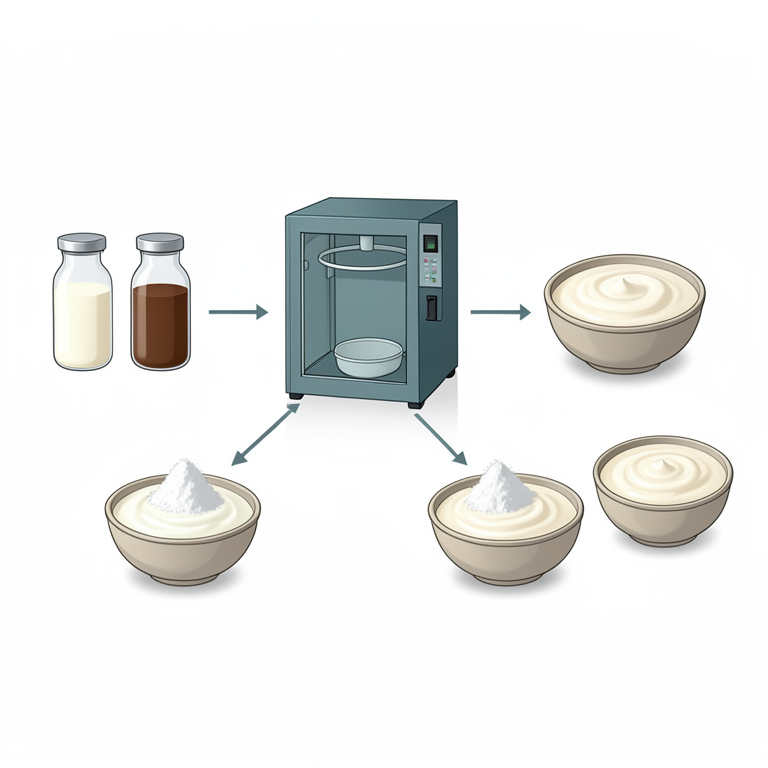
AI-generated conceptual illustration (Lactobacillus rhamnosus bacteria and fermented milk (Dahi)). It explains the idea and does not show study data.
View source evidence ↗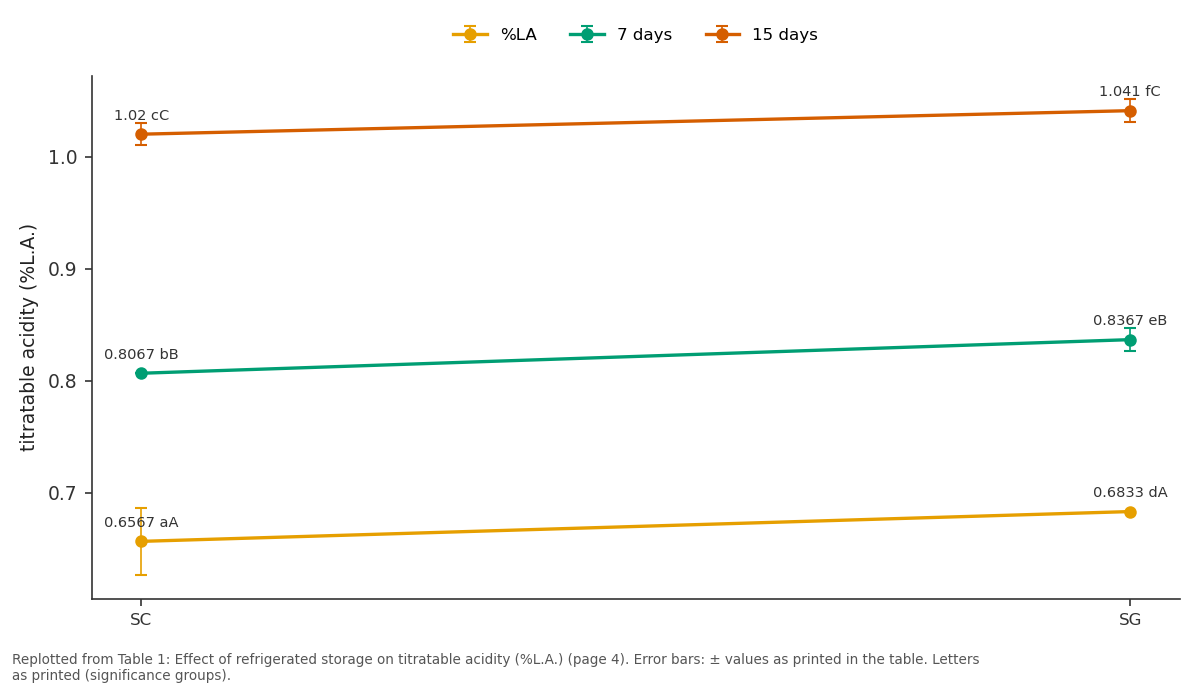
%LA and 7 days and more: SC vs SG
Replotted from Table 1 (page 4) of the original paper. Every bar is the paper's own table value.
View source evidence ↗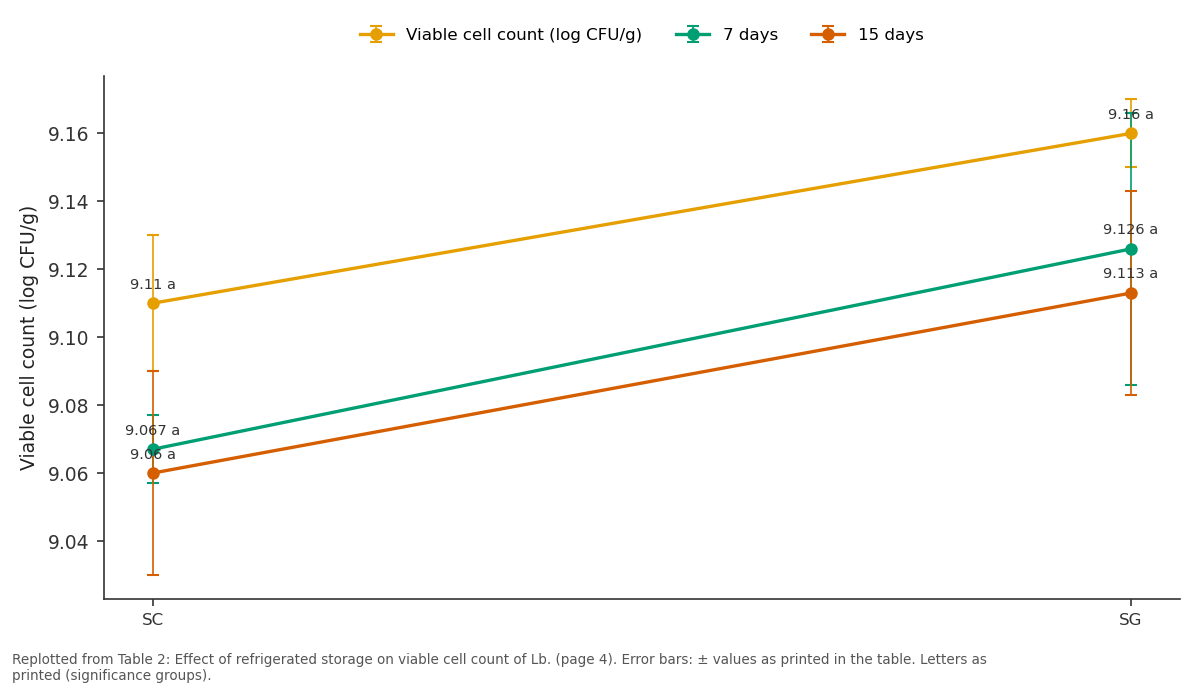
Viable cell count (log CFU/g) and 7 days and more: SC vs SG
Replotted from Table 2 (page 4) of the original paper. Every bar is the paper's own table value.
View source evidence ↗Figures & tables
From the original paper Table 1
 Table 2
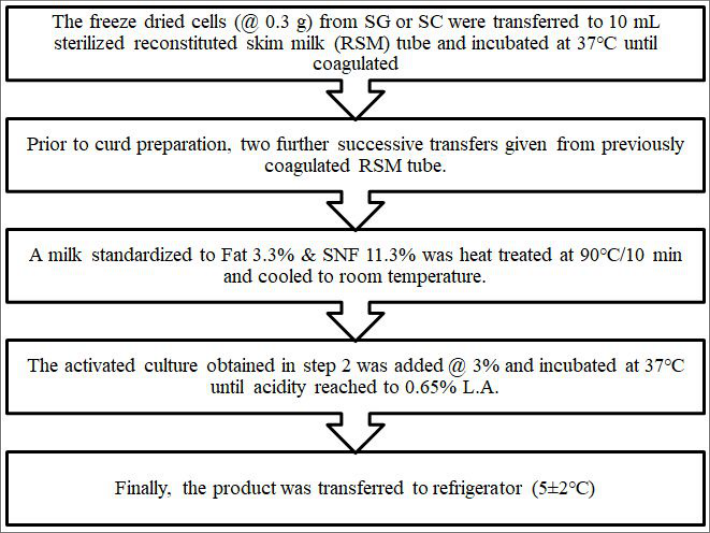 Figure 1
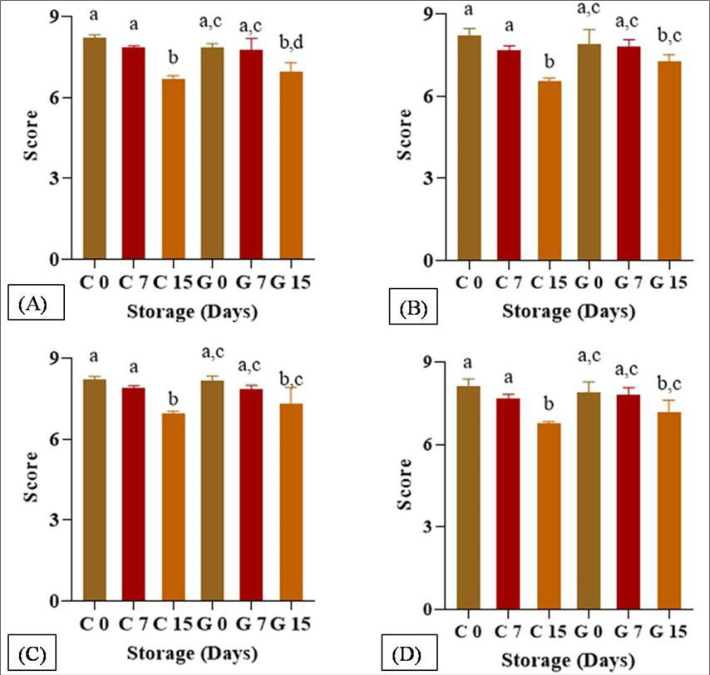 Figure 2
Introduction
Microbial cultures belonging to the lactic acid bacteria (LAB) group have played a very important role in food production and preservation since ages. Hence, LAB have found an significant place in the society and especially in the dairy industry as many of them have been employed for manufacturing of various kinds of fermented milks & dietary supplements (probiotics) and are being consumed for health and well being of the society (Damián et al., 2022; Verma, et al., 2019) [2][3][4][5][6][7][8][9][10][11][12][13][14][15] . In India since ancient times, consumption of fermented milk products has been an essential part of dietary habits because of their immense nutritional and therapeutic virtues. Additionally, fermentation assists in development of product specific flavor, texture and other organoleptic characteristics. Fermented milk products such as yogurts, Dahi and Chhash have been consumed for several thousand years knowingly or not knowingly its' beneficial effect to health (Shah and Prajapati, 2014) [13] . These products are good source of nutrients such as vitamins, minerals and proteins etc. owing to natural biosynthesis by the LAB. Fermented milk products with specific bacterial cultures can reduce severity or occurrence of certain diseases. For lactose intolerance people this is a good food that can be consumed due to lactose degradation by bacterial culture (Buttriss, 1997) [1] . Indian people's diet prominence fermented milk products are Dahi (curd), Buttermilk (Chhach) or Lassi (sweetened yoghurt drink like product) and Shrikhand (semi soft strained curd -partial removal of whey, added with sugar and flavoring ingredients). In India, probably 10% of milk production is being diverted in manufacturing of traditional fermented milk products in organized sector. However, around 6.9% total milk is used only in preparation of Dahi which is very popular in diet of Indian people (Khurana and Kanawjia, 2007) [8] . Lactobacillus spp., have been utilized since thousands of years for preservation of food through fermentation.
Additionally, it can serve potentially for imparting health benefits too. From industrial perspective, the development of fermented milk product is an essential step preceded by lyophilization of cultures. After completion of freeze drying, the application of freeze dried culture is entitled either as starter culture or as adjunct culture in dairy products. Further, the preparation also evaluates the activeness of cells that has been passed through the extreme adverse conditions (Vijayendra and Gupta, 2014) [16] . The culture, Lactobacillus rhamnosus Fb JX406746 employed in the present study was isolated from infant feces and established for its probiotic attributes by Pithva et al., (2014) [11] . This strain exhibited wide antimicrobial activity against both Gram positive and Gram negative organisms. The strain is even able to show antimicrobial activities even after passage through simulated gastrointestinal fluid. However, there is reduction in the extent of antimicrobial activity in case of simulated gastric fluid (SGF) treated and SGF-simulated intestinal fluid (SIF) treated as compared to control. This is mainly because of the reduction in live cell (Pithva et al., 2023) [10] . Earlier, Gadhavi (2020) [5] has also successfully developed synbiotic lassi with this culture. All these aspects prompted to evaluate the fermentation ability of freeze dried cells of Lb. rhamnosus Fb JX406746. Therefore, in the present study freeze dried cells of Lb. rhamnosus Fb JX406746 using two different cryoprotective agents was directly inoculated in milk to analyze significance of freeze drying on its ability to produce organoleptic acceptable fermented milk like Dahi.
Materials and Methods
Materials and Methods
Culture conditions
The potential probiotic culture, Lb. rhamnosus Fb JX406746 used in the present study was procured from Department of Biosciences, Saurashtra University, Rajkot, Gujarat. The culture was isolated from healthy human infant feces. The freeze dried cells containing in a mixture of skim milk (10%) with glycerol (2%) (designated as SG) or skim milk (10%) with chocolate (2%) (designated as SC) as cryoprotective agents were used for the preparation of curd. The culture was maintained at -18℃ throughout the study period.
Preparation of Fermented Milk Product
Fermented milk product (curd) was prepared using freeze dried cells of culture as shown in the Figure 1.
Shelf life Study of Fermented Milk
The final product was stored under refrigeration at 5±2℃.
The product was analyzed at 0, 7 & 15 days for various sensorial parameters like body and texture, flavour, colour and appearance, and overall acceptability score followed by measurement of titratable acidity, viable lactic count, yeast & mold count and coliform count.
Determination of titratable acidity
Thirty milliliters of distilled water was added to ten milliliters of a well-mixed fermented milk sample in a conical flask. The sample was then mixed with 1.0 mL of phenolphthalein indicator. The dish's contents were titrated against 0.1 N NaOH until a faint pink tint appeared. In 20 seconds, the titration was finished. In order to compare the colors, a blank was also made by diluting 10 g of the sample with 30 mL of water in a different flask (FSSAI, 2022) [4] .
The titratable acidity of the sample was calculated as follows:
Where, V = Volume (mL) of standard NaOH solution used, W = Weight (g) of sample, N = Normality of the standard NaOH solution (0.1 N)
Determination of Lactobacillus count of fermented milk product
Lactobacilli count of sample was determined as per the method described by Bureau of Indian standards (IS: 12899, (Reaffirmed 1999) [6] . MRS agar, melted and cooled to approx. 45C, was poured in petriplates containing the appropriate dilutions, mixed properly and allowed to solidify. Each petriplate was overlaid with second layer of same agar (5-8 mL). The solidified petriplates were then placed in a incubator at 37C. Colonies formed on the medium were counted manually after 48h and was expressed as CFU/g.
Determination of Coliform count of fermented milk product
In a petriplates containing 1 mL of appropriate dilution of the product, melted and cooled (to approx. 45C) Violet Red Bile Agar (VRBA) agar was added, mixed well and allowed to solidify. Each plate was further overlaid with second layer of same agar (5-8 mL). Following a 24-hour incubation period at 37°C, typical colonies of coliform bacteria were enumerated and quantified as CFU/mL. Plates that did not show any growth were incubated for further 24h. Plates were then examined for typical colonies of coliform bacteria (dark red colonies having a diameter of about > 0.5 mm) and counted (Indian Standards, IS: 5401, 1969).
Determination of Yeast and Mold count of fermented milk product
Procedure followed was according to Indian Standards, IS: 5403 (1999) [7] . Melted and cooled potato dextrose agar medium at approximately 45°C (adjusted to 3.5 pH using 10% sterile tartaric acid solution) was added to the petriplates containing the diluted samples, thoroughly mixed, and allowed to solidify. Prior to counting typical colonies, the plates were incubated for three to five days at 25°C.
Sensory evaluation of fermented milk product
The product was subjected to the sensory evaluation by discriminative and an expert trained panel of six judges using nine point hedonic scale (9 for liking extremely and 1 for disliking extremely). The score for flavour, body & texture, colour & appearance, and overall acceptability were recorded. The products were marked randomly and served in 50 g of sample during each trial.
Statistical Analysis
All the data are presented as means±standard deviation. The obtained results were analyzed through one-way analysis of variance (ANOVA) and t-test. Statistical significance was considered at a significance level of 5% (P<0.05). The values for microbial counts were log 10 transformed before analysis.
Results and Discussion
The ability of the freeze-dried cultures to withstand stressful conditions is a fundamental attribute. It is unlikely that the dried cultures would be utilized directly as the primary starter culture for the production of products until their acidifying activity could be enhanced. Assessing the ability of dried cultures to produce acid is a more appropriate criterion for judging the quality of starter cultures. Freeze-dried starters have been found to have a longer lag phase during the first one to two transfers. Therefore, in current study, previously freeze dried preparation of Lb. rhamnosus Fb JX406746 using two different cryoprotective agents (Shah, 2024) [12] was directly inoculated in milk to analyze significance of freeze drying on the ability of cells to ferment milk.
Preparation of curd using freeze dried culture of Lb. rhamnosus Fb JX406746
Fermented milk products have an enormous popularity across the world (Shah and Prajapati, 2014) [13] . Acceptability by the end user i.e. consumer is the most important leading aspect for success of any product. Thus, the study was aimed at comparative analysis of product formulating ability of two freeze dried variants of culture. The viable cell count of culture in freeze dried powder was of 9.73 & 9.83 log CFU/g for SG & SC, respectively. Therefore, as discussed in the methodology section, the freeze-dried cultures were directly added during curd preparation. In general, the shelf life of non-sterile fermented milk product is expected upto 2 to 3 weeks at refrigeration temperature. Therefore, the product in the current study was stored at commercial refrigeration temperature (5±2℃) for 15 days and periodically evaluated for sensory, physicochemical, and microbiological parameters.
Sensory evaluation
Sensory analysis of product exhibits an important aspect of product development process. The literature on manufacturing curd using Lb. rhamnosus is very scarce. The changes in various sensorial attributes during storage period are shown in Figure 2.
Effect on flavor
The effect of storage period was significant at 5% level. The initial average flavor score of fermented milk made with freeze dried cells of SC (8.19) was higher than freeze dried cells of SG (7.86) as shown in Figure 2A. This gradually decreased significantly (P<0.05) between 7 to 15 days for both the samples. However, a sharp decline in score was reported after storage of seven days (Figure 2A). Moreover, the difference between two samples was remained nonsignificant (P>0.05) during the entire storage period. At the end of 15 days of storage study, the product had still acceptability score 6.66 & 6.94 for SC & SG, respectively. Similarly, Vijayendra and Gupta, (2012) [17] prepared dahi and yoghurt using Bulk Freeze Dried (BFD) culture in combination of probiotic cultures B. bifidum and Lb. acidophilus. Dahi sample produced using BFD culture and in combination of BFD & probiotic obtained flavor score of 9.62 & 8.02, respectively. The reason behind low score of probiotic dahi could be high acidity and personal perception. On the other hand, yoghurt prepared with and without probiotics gained flavor score of 9.82 and 9.80, respectively. The difference of score was significant (P<0.01) only for dahi. In a study performed by Dimitrellou et al., (2019) [3] , yoghurt was prepared using freeze dried culture of Lb. casei in free state (FLC) or immobilized on apple pieces (ILCA) or immobilized on casein (ILCC) in combination of thermophilic starter, CH-1 (Chr. Hansen, Horsholm, Denmark). The sweet odour score (7.4) was higher for ILCA followed by ILCC (7.0), FLC (6.3) and control (6.3). They observed significant (P=0.007) effect of immobilized cells on the flavor of fermented product.
Effect on color and appearance
The color and appearance score of both the products was 8.19 & 8.16 when they were prepared. The storage period and score obtained were found inversely related. As it is evident from Figure 2B, on 15 th day of storage, the score was significantly (P<0.05) declined for SC whereas nonsignificant decrease was noticed for SG. The minute decrease (P>0.05) in score was seen between 7 to 15 days for product prepared with freeze dried cells of SG, whereas the sharp decrease in score was observed after storage of 7 days for product prepared using freeze dried cells of SC (Figure 2B). Significantly, the lower score at 15 days was due to syneresis observed in the products. At the end of 15 days of storage, the products were found acceptable with an average score of 6.94 (SC) & 7.33 (SG). The results are found in agreement with Gadhavi (2020) 5 who showed the impact of developed body & texture of the product. According to Dimitrellou et al., (2019) [3] , the immobilization and free cells Lb. casei ATCC 393 did not exert any significant effect on the color of fermented product. However, immobilized cells have slightly increased the intensity of color of the fermented milk product.
Effect on body and texture
Figure 2B represents the changes in body and texture score for the product stored at refrigeration temperature. The score was significantly (P<0.05) affected by storage period. It observed significant difference for second week of storage in case of SC while non-significant change was observed throughout the storage period for SG. The product was acceptable by judges panel at the end of storage period with an average score of 6.52 (SC) & 7.25 (SG). The possible reason for decrease in body and texture score could be development of coarseness and firmness. The results observed are in accordance with Gadhavi (2020) [4] . Dimitrellou et al., (2019) [3] obtained low score for yoghurt containing probiotic compared to yoghurt prepared with free cells due to presence of solid immobilized cells. In a study by Vijayendra and Gupta (2012) [17] , judges have marked score of 4.83, 4.73, 4.64 & 4. 66 on scale of five for dahi, probiotic dahi, yoghurt and probiotic yoghurt, respectively.
Effect on overall acceptability
The overall acceptability score of the products was 8.13 (SC) and 7.88 (SG) when freshly prepared. As it could be seen from Figure 2D, in case of product prepared with SC, the decline in overall acceptability score from 0 to 7 days was non-significant (P>0.05) which further decreased significantly (P<0.05) from 7 to 15 days of storage. On the other hand, product prepared with SG showed nonsignificant (P>0.05) decrease during entire storage period. The average score for overall acceptability was 6.75 & 7.16 for SC & SG, respectively, at the end of storage. The major comments from judges were; coarse body & texture, developed acidity and firmness. Nevertheless, the product was acceptable by judges after storage of 15 days (Figure 2D). The results were found in accordance with Gadhavi (2020) [5] , who also noticed the decreased in sensorial characteristics of synbiotic lassi. On 14 th days of storage, the score had reduced to 7.61 and 7.39 for control and synbiotic lassi, respectively. The judges have made comment regarding development of higher acidity in control than lassi containing Lb. rhamnosus Fb JX406746 along with prebiotic. In another investigation, curd and yoghurt (with and without probiotics) prepared using freeze dried cultures marked high score for overall acceptability (Vijayendra and Gupta, 2012) [17] . Dimitrellou et al., (2019) [3] reported the higher overall acceptability score of product with immobilized cells attributed to greater conc. of acetoin and 2-butanone in combination with acetaldehyde, diacetyl, and acetone. The difference was found significant (P=0.005) among four variants.
Changes in Overall Acidity during Shelf life Study of Fermented Milk
Table 1 illustrates the changes in titratable acidity of product stored at refrigeration temperature. It also evident that the titratable acidity was significantly (P<0.05) rose from 0.65 to 1.02% L.A and 0.68 to 1.04% L.A. (Table 1) for curd samples with freeze dried cells of SC and SG during storage period, respectively. The increase in acidity at an interval of every 7 days was significant (P<0.05) for the storage period. However, no significant difference was observed for treatments SC and SG. The increase in acidity was due to production of lactic acid which confirms the growth of culture during storage period. Our results are in agreement with Gadhavi (2020) [5] who prepared synbiotic lassi using the same culture and also reported the gradual increase during 21 days of storage at refrigeration temperature. The samples showed acidity of 1.127 (control) and 1.123 (synbiotic lassi) on 21 st day of storage. Researcher did not find significant difference between control and experimental sample. In another study, Sharma et al., (2016) [14] indicated that there was an increase in titratable acidity of probiotic Lassi samples from 0.64 to 1.25% L.A. while in synbiotic lassi with honey, the gradual increase in acidity was 0.63 to 1.36% L.A. at the end of storage for 28 days.
| Product | %LA | — | — |
|---|---|---|---|
| 0 | 7 days | 15 days | |
| SC | 0.6567±0.03aA | 0.8067±0.0bB | 1.02±0.01cC |
| SG | 0.6833±0.0dA | 0.8367±0.01eB | 1.041±0.01fC |
Table text extracted from the original PDF; superscript letters are shown inline. The original table image is below.
View original table image
Changes in Viable Cell Count of Lb. rhamnosus Fb JX406746 during Shelf life Study of Fermented Milk
Table 2 represents the changes in Lactobacilli count of product stored at refrigeration temperature. The count reduced from 9.11 to 9.06 log 10 CFU/g and 9.16 to 9.11 log 10 CFU/g in fermented milk products made from SC and SG respectively, at the end of 15 days of storage. However, non-significant reduction in viable count was observed (Table 2). For a health benefit minimum therapeutic dose of live probiotic cells is 10 8 -10 9 daily and this can be achieved by consumption of 100 gram of product containing 10 6 -10 7 viable cells per gram (Yeo and Liong, 2010) [18] . With regard to this, the product was containing 1.3x10 9 (SG) and 1.1x 10 9 (SC) cells per gram which meet the requirement of probiotic product. Similar results were obtained by Gadhavi (2020) [5] , who also achieved viable count of 9.38 & 9.49 log CFU/g for control and synbiotic lassi, respectively, on 14 th day of storage. The decrease in count was non-significant. The probable reason for decrease in viable count could be unfavorable condition due to development of acidity or lowering of pH during storage.
| Product | Viable cell count (log CFU/g) | — | — |
|---|---|---|---|
| 0 | 7 days | 15 days | |
| SC | 9.11±0.02a | 9.067±0.01a | 9.06±0.03a |
| SG | 9.16±0.01a | 9.126±0.04a | 9.113±0.03a |
Table text extracted from the original PDF; superscript letters are shown inline. The original table image is below.
View original table image
Changes in Coliform Count during shelf life Study of Fermented Milk
Both, fresh as well as stored products were analyzed for coliform count. It was found that during entire course of study, the coliforms in product initially, as well as during all the intervals at refrigerated storage periods were absent in 1g product. Our results are in agreement with other reported studies (Gadhavi, 2020; Nalkar et al., 2018; Shah and Prajapati, 2014) [5,8,13] . The presence of coliforms in fermented milk is rarely possible and hence, they are not primarily associated with the spoilage of this type of product. Their existence in fermented milk, however, is contingent upon the degree of hygienic conditions upheld, the product's initial acidity, and the culture type employed. It has been reported that coliforms are not able to survive in acidic products and are also inhibited by the antagonistic effect of starter culture.
Changes in Yeast and Mold Count during Shelf life Study of Fermented Milk
The changes in yeast and mold count (CFU/g) of fermented milk product stored at refrigerated temperature were measured. The product showed absence of yeast and mold in 1g of sample throughout the storage period of 15 days. It indicates good hygienic condition and no aerial contamination of product during the manufacturing as well as storage period. Our results are in harmony with other reported studies (Gadhavi, 2020; Shah and Prajapati, 2014) [5, 13] .
Conclusions
Outcomes of the present investigation suggests that freeze dried culture can be used to develop an organoleptically acceptable fermented milk, containing average 1.3 billion live lactobacilli/g could be prepared with shelf-life of 15 days at 5℃. On 15 th day of storage, the major comments from sensory panel indicated development of coarse B&T, high acidity, and increased firmness in the product. The product was found to be free from coliform as well as yeast and mold throughout the storage period. The ability of lyophilized culture for its application as a probiotic supplement can be further investigated.
Acknowledgement
International Journal of Agriculture and Food Science https://www.agriculturaljournals.com
References
17 in the original paper- Buttriss J. Nutritional properties of fermented milk products. Int J Dairy Technol. 1997;50(1):21-27.
- Damián MR, Cortes-Perez NG, Quintana ET, OrtizMoreno A, Noguez CG, Cruceño-Casarrubias CE, et al. Functional foods, nutraceuticals and probiotics: a focus on human health. Microorganisms. 2022;10:1-13. doi: 10.3390/microorganisms10051065.
- Dimitrellou D, Kandylis P, Kourkoutas Y. Assessment of freeze-dried immobilized Lactobacillus casei as probiotic adjunct culture in yogurts. Foods. 2019;8(9). doi: 10.3390/foods8090374.
- Food Safety and Standards Authority of India (FSSAI). Manual of methods of analysis of foods-Dairy and Dairy products. Official Methods, FSSAI 01.035. 2022.
- Gadhavi R. Development of synbiotic fermented milk product having medicinal herb isabgol (psyllium husk). Master Thesis, Kamdhenu University, Gandhinagar, Gujarat, India. 2020.
- IS 12899 (Reaffirmed 1999). Dairy Products -Yoghurt, enumeration of specific lactic acid bacteria -Method of Test. Bureau of Indian Standards. 1989.
- IS 5403 (Reaffirmed 2005). Method for yeast and mould count of food stuffs and animal feeds. Bureau of Indian Standards. 1999.
- Khurana HK, Kanawjia SK. Recent trends in development of fermented milks. Curr Nutr Food Sci. 2007;3(1):91-98.
- Nalkar SD, Patel AR, Bhambure CV, Kalyankar SD, Khedkar CD. Studies on suitability of incorporating probiotics in mango-based Kulfi-a popular Indian frozen dessert. Ann Food Sci Technol. 2018;19(4).
- Pithva S, Ambalam P, Dave J, Vyas BRM. Functional characterization and shelf-life of freeze-dried cells of Lactobacillus rhamnosus Fb in carrier media and chocolate formulations. J Appl Sci. 2023;23(2):87-94. doi: 10.3923/jas.2023.87.94.
- Pithva S, Shekh S, Dave JM, Vyas BRM. Probiotic attributes of autochthonous Lactobacillus rhamnosus strains of human origin. Appl Biochem Biotechnol. 2014;173(1):59-77.
- Shah N. Production of high-density biomass of an indigenous LAB Lactobacillus rhamnosus Fb JX406746 and its application in dairy industry. PhD Thesis, Kamdhenu University, Gandhinagar, Gujarat, India. 2024.
- Shah N, Prajapati JB. Effect of carbon dioxide on sensory attributes, physico-chemical parameters, and viability of probiotic L. helveticus MTCC 5463 in fermented milk. J Food Sci Technol. 2014;51:38863893.
- Sharma S, Sreeja V, Prajapati JB. Development of synbiotic Lassi containing honey: Studies on probiotic viability, product characteristics, and shelf life. Indian J Dairy Sci. 2016;69(2):148-153.
- Vijayendra SVN, Gupta RC. Performance evaluation of bulk freeze-dried starter cultures of dahi and yoghurt along with probiotic strains in standardized milk of cow and buffalo. J Food Sci Technol. 2014;51(12):41144149. doi: 10.1007/s13197-013-0944-8.
- Vijayendra SVN, Gupta RC. Assessment of probiotic and sensory properties of dahi and yoghurt prepared using bulk freeze-dried cultures in buffalo milk. Ann Microbiol. 2012;62(3):939-947. doi: 10.1007/s13213011-0331-0335.
- Yeo SK, Liong MT. Effect of prebiotics on viability and growth characteristics of probiotics in soymilk. J Sci Food Agric. 2010;90(2):267-275.
Cited by 2
From OpenAlex, OpenCitations and reference lists read by Scinovex
- Development of millet, cereals and ghee residue based chocolate as a functional food
Patel AM, Nihir Shah · International Journal of Agriculture and Food Science · 2026
Chocolates act as functional food, satieties hunger and claim to prevent health problems like hypertension & coronary heart disease. To optimize the level of basic ingredients, amaranth (Rajgiro), sorghum (Juwar) & oat were added in total eight different combinations whereas ghee residue and cocoa powder was ranging from 8-10% and 3-10%, respectively. The product with amaranth, sorghum & oat in equal proportion (10%) and ghee residue & cocoa powder @ 10% & 5%, respectively, received highest score for all sensory attributes. The nutritional profile of optimized product was characterized as 5.18
- Process standardization for development of herbal buttermilk supplemented with Aloe vera juice
Ami R. Patel, Nihir Shah, Himanshu J. Patel, Anil R. Chaudhari, Vivek Koshta · International Journal of Agriculture and Food Science · 2025
Cultured buttermilk is a highly refreshing fermented dairy product consumed in regular diet and is claimed to be aid in to digestion, reduces acidity and constipation while Aloe vera is known for several herbal benefits. In our current project, buttermilk was fortified with Aloe vera juice in the range 10-20% in order to enhance the nutritional and therapeutic value of original product. The product was optimized based on sensory evaluation by expert panel of judges. The overall acceptability score of optimized product (15% Aloe vera) was 7.85. It also differs non-significantly with control sam