
Research article · 2025 · Full text
International Journal of Veterinary Sciences and Animal HusbandryAssessment of the cost and quality of indigenous chicken eggs from layers fed on fiber hydrolyzing enzymes integrated Prosopis juliflora pods diets based
Volume 10(2) · Pages 164–168 · DOI: 10.22271/veterinary.2025.v10.i2c.2067 ↗
Research areasPhytase and its ApplicationsPolysaccharides Composition and ApplicationsBotanical Research and Chemistry
Abstract
Author-writtenThere exists competition between man and non-ruminants on cereals. Prosopis juliflora pods can serve as a substitute feed source in making poultry diets. Prosopis juliflora pods have quality nutrients with a crude protein of 11.4-22% and metabolizable energy of 12.5MJ/Kg. However, Prosopis juliflora pods have high fiber content as well as other anti-nutritive factors including non-starch polysaccharides (NSP) and phytic acid. At the Center of Excellence in Livestock Innovation and Business (COELIB), Tatton Agriculture Park, Egerton University, a study was carried out at the poultry research unit. To assess the impact of enzyme inclusion in mature milled proposis juliflora pods based diets on conduct of indigenous chicken layers. Egg quality was assessed where both internal and external qualities were evaluated. Economics of production was calculated using gross margins, egg price ratio and breakeven analysis. The results of this study showed that substituting prosopis juliflora pods for maize in the enzyme-integrated layer diet did not significantly alter the quality of the eggs, with the exception of yolk color, and that doing so can lower the cost of layers feed by up to eighteen percent.
Summary
Source-checkedPlain-language reading of the full paper, prepared with AI and checked against the text. Each point links to the authors' own words.
Why it matters
- Livestock production in Kenya is hindered by a lack of affordable, standardized, and sufficient animal feed. View evidence ↗
- The use of cereals for animal feed creates competition with human food needs, which increases feed costs. View evidence ↗
- Prosopis juliflora pods are a potential feed substitute but contain high fiber and anti-nutritive factors like phytic acid and non-starch polysaccharides. View evidence ↗
The question
- The study aimed to evaluate how adding NSP hydrolyzing enzymes to diets based on milled Prosopis juliflora pods affects the egg quality and production economics of indigenous chicken layers. View evidence ↗
What they did
- The experiment involved 45 indigenous chicken layers, aged 32 weeks, over a period of fourteen weeks. View evidence ↗
- Five dietary treatments were tested, substituting maize with Prosopis juliflora pods at levels of 0%, 20%, 30%, 40%, and 50%. View evidence ↗
- All experimental diets were formulated to be isocaloric and isonitrogenous, containing 17% crude protein and 2700 kcal/kg of metabolizable energy. View evidence ↗
- A multi-activity enzyme complex including cellulase, xylanase, beta-glucanase, mannanase, alpha-amylase, protease, lipase, and phytase was integrated into the diets. View evidence ↗
What they found
- Most internal egg quality characteristics showed no statistically significant differences across the various dietary treatments. View evidence ↗
- External egg quality characteristics, including weight, length, width, and shell thickness, did not differ significantly between treatment groups. View evidence ↗
- Substituting maize with pods reduced the feed cost per kilogram from KES 67 (at 0% substitution) to KES 55 (at 50% substitution). View evidence ↗
- The production achieved a gross margin of 10.51%, meaning KES 0.11 was retained from every KES of revenue. View evidence ↗
What it means
- The authors conclude that up to 50% of maize in layer diets can be replaced by hydrolyzed Prosopis juliflora pods without negatively affecting egg quality. View evidence ↗
Visual summary
3 visualsIllustrations explain the paper; charts are replotted from the paper's own table values.
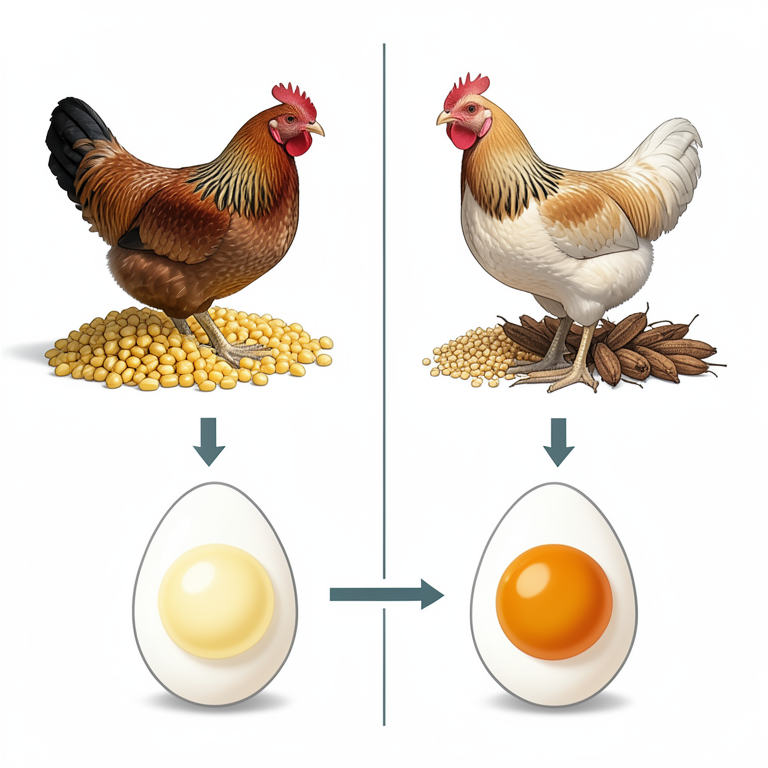
Impact of Pod Substitution
AI-generated conceptual illustration (indigenous chicken layers and Prosopis juliflora pods). It explains the idea and does not show study data.
View source evidence ↗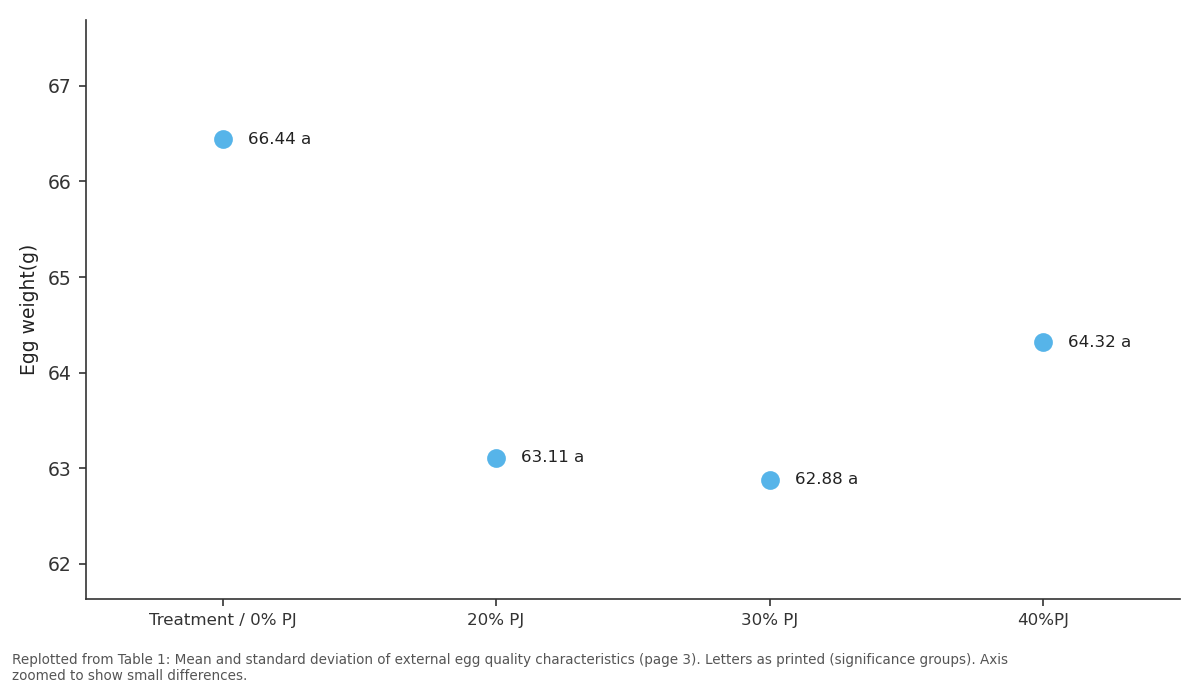
Egg weight(g): Treatment / 0% PJ vs 20% PJ vs 30% PJ vs 40%PJ
Replotted from Table 1 (page 3) of the original paper. Every bar is the paper's own table value.
View source evidence ↗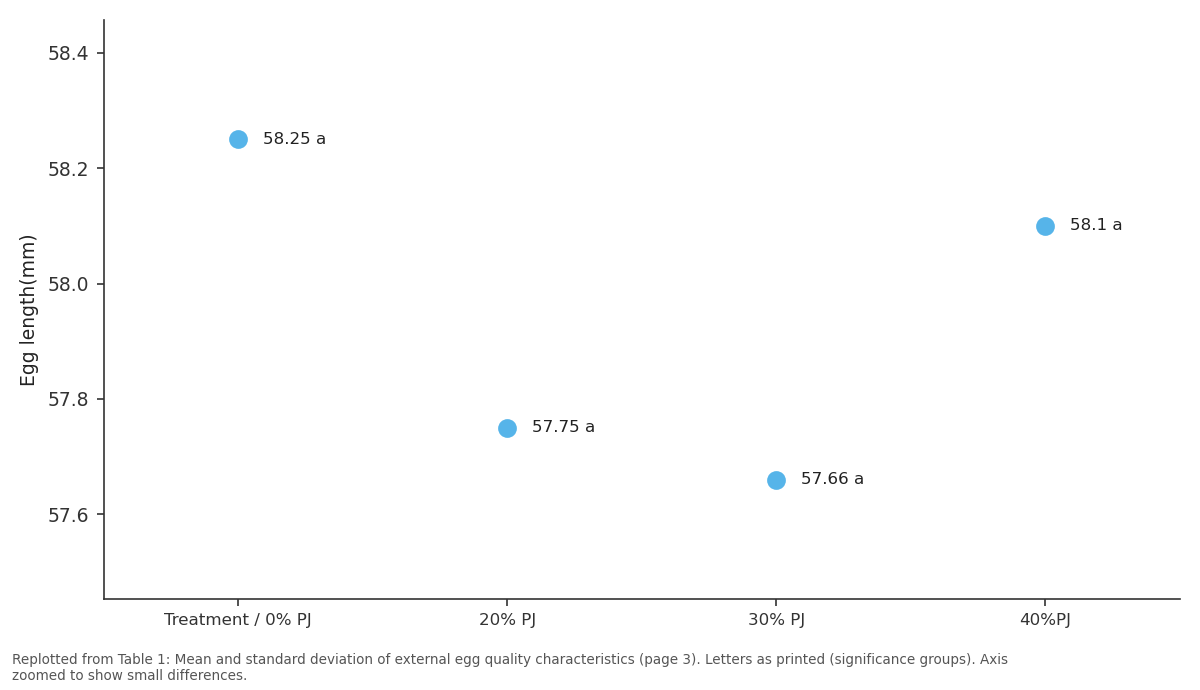
Egg length(mm): Treatment / 0% PJ vs 20% PJ vs 30% PJ vs 40%PJ
Replotted from Table 1 (page 3) of the original paper. Every bar is the paper's own table value.
View source evidence ↗Figures & tables
From the original paper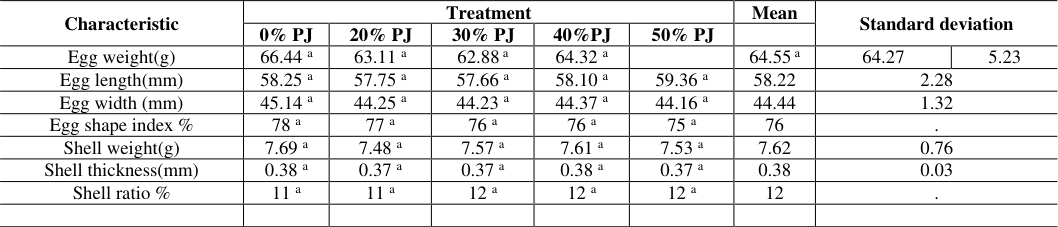 Table 1
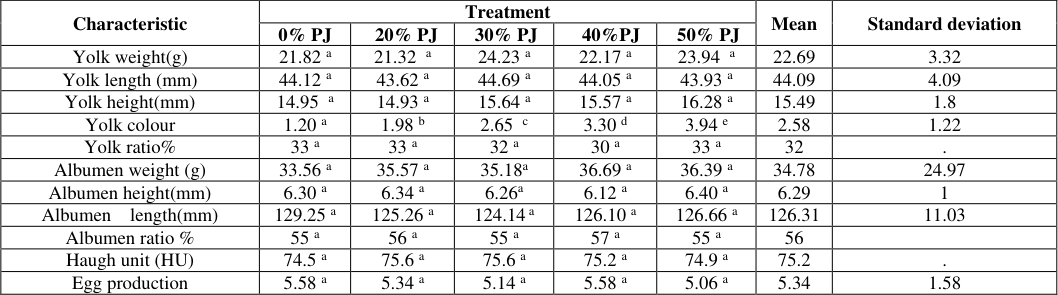 Table 2
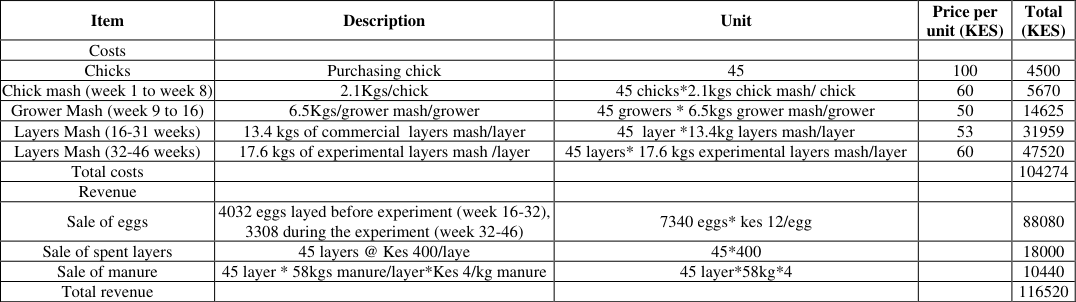 Table 3
Introduction
In Kenya, one of the biggest problems in livestock production is the availability of sufficient, standard, and reasonably priced animal feed. This is due to the usage of grains and agroindustrial waste products as components of animal feed, whose supply is influenced by precipitation. Since cereals are a key source of food for humans, their usage as animal feed leads to competition and higher costs. Investigating alternative feed ingredients is therefore essential. These substitute feed resources include various eccentric feeds, such as products from trees (Odero et al., 2015) [1] . Due to a lack of knowledge about their nutritional values, which is necessary to ascertain their feed inclusion levels, such feeds are not used efficiently in Kenya. (Donkoh and Attoh-Kotoku, 2009) [2] . Prosopis juliflora named 'Mathenge' in Kenya, is extensively accessible in Kenya's dry and semi-arid regions. Cattle, sheep, camels, buffalo, rabbits, fowl, and rodents have all been fed Prosopis juliflora pods, particularly in South America, Africa, and India. (Sawal et al., 2004) [3] . Chicken farming in Kenya is an essential source of livelihood for small-scale farmers, who provide 80% of national chicken production. (MoALF, 2011 and 2015) [4,5] Indigenous chicken farming is appealing to impoverished households compared to other livestock species due to the chickens' resilience, adaptability to rural settings, minimal initial investment, and low maintenance expenses. For households with limited resources, they provide an affordable source of animal protein. The poultry subsector boosts overall economic growth and generates jobs. Man and non-ruminants compete with one another for cereals. Pods from Prosopis juliflora can be utilized as a substitute feed source when formulating poultry diets. Prosopis juliflora pods are a sources of energy and protein.
However, Prosopis juliflora pods have high fiber content as well as other anti-nutritive factors including non-starch polysaccharides (NSP) (soluble fiber) and phytic acid (phosphorus in bound form). These anti-nutritional factors trap nutrients within the cell wall thus limiting their utilization. This is due to the absence of natural phytase and NSP hydrolyzing enzymes in poultry's digestive tract. (Mukhtar et al., 2013) [6] . This study assessed the effects of adding an exogenous NSP hydrolyzing enzyme to meals based on mature milled proposis juliflora pods on the economics and egg quality of indigenous chicken layers.
Materials and methods
Materials and methods
Permission to conduct research
The graduate ethics committee gave their approval to this study and a permit (Ref No: 579429) issued by the national commission for science, technology and innovation in Kenya.
Experimental birds and diets
In this experiment, there were 45 layers that were 32 weeks old. The experiment lasted fourteen weeks, during which time the layers were given fourteen days to get used to the new diet. Nakuru city was the source of the feed ingredients. For each treatment, nine layers were employed. The layers were fed five different treatments: 0, 20, 30, 40, and 50% prosopis juliflora pods in place of maize. In order to improve nutrient consumption and produce higherquality meat and eggs at a reduced overall cost, a premium, multi-activity feed enzyme designed especially for broiler and layer chickens was utilized. Cellulase, xylanase, betaglucanase, mannanase, alpha-amylase, protease, lipase, and phytase were among the enzymes that were included. Five isocaloric and isonitrogenous experimental diets were formulated. Microsoft excel formulas were used to calculate amounts of each ingredient that was required per treatment All treatments had a crude protein content of 17% and a metabolizable energy of 2700 kcal/kg.
Management of Experimental birds
All the layers had metallic wing tags with unique numbers for ease of identification. The birds were placed in individual cages and fed 180 grams of layers' mash per layer per day This was after an observation that they were able to finish 150 grams of layers' mash before 1700hrs during adaptation period. Each morning at 0800hrs the individual feed troughs as indicated in Figure 5 below were cleaned and residual feed weighed. Water was provided ad libitum. Eggs were collected every day at 1700hrs and recorded against the bird number.
Evaluation of egg quality
Three hundred and sixty eggs were used for analyzing internal and external egg characteristics. Thirty eggs per week for twelve weeks were randomly selected for external and internal eggs traits analysis. Seventy-two eggs per treatment were used. Initially, the number of eggs collected for analysis was assigned to each treatment. Eggs weights was then ascertained by weighing. Afterwards, the eggs' length and width were measured. In order to measure the yolk height, yolk diameter, albumen length and the albumen height, the eggs were broken on a table with a flat plate. The weight of the yolk was determined after it was separated from the albumen portion. The separation was done using a clean plastic bottle where the yolk was sucked and put on clean flat plate.
To get rid of the albumen remnants, the shells were cleaned under running water. The cleaned shells were allowed to dry for a 24 hours. Together with the shell membrane, the shells they were then weighed. Lastly, samples from equatorial, blunt, and sharp regions were measured, and the average values of these four parts were used to calculate the average shell thickness. (Tyler, 1961) [7] .
Evaluation of internal characteristics of eggs Egg weight
On a digital balance, each individual egg was weighed to the closest 0.01 grams.
Egg length and width
Digital Vernier caliper was used to measure the eggs' length (L) and width (W). The longitudinal distance between the narrow and broad ends was taken as length. The diameter of the widest cross sectional area was used to calculate the egg width.
Egg shape index
The width to length ratio multiplied by 100 was used to compute the egg shape index.as recommended by Anderson et al. (2004) [8] .
Shape Index (%) = Egg width (mm) X 100 Length (mm)
Shell weight
For twenty-four hours, the egg shells were left outdoor to dry. An electronic weighing balance was used to weigh each of the dried shells (Nordstrom and Ousterhout 1982) [9] .
Percentage shell (Shell weight X 100/Egg weight) An egg was cracked open, the shell fragments were properly rinsed and dried, and the weight of the shell was then determined using a digital balance. To get the percentage shell, the weight of the shell was computed as a proportion of the weight of the egg. Shell ratio (%) = (Shell weight / Egg Weight) x 100.
The inner shell membrane was taken out of the shell and allowed to dry for a whole day. To weigh each dry shell, a digital weighing balance was used. Using screw gauze, four portions of shells were measured for thickness: two from the ends and two from the body. The results were averaged.
Eggshell thickness (mm) = 1 piece from the bottom+ 2 pieces from the Centre + 1 piece from the top 4
Evaluation of internal characteristics of eggs Albumen and yolk length
A digital Vernier caliper was used to measure the albumen's height and length.
Albumen and yolk height
Using the caliper micrometer digital ruler, the height of the albumen and yolk was measured. Three measurements of the albumen's height were made, and the average was calculated.
Albumen quality
Using the formula 100 log (H+7.57-1.7EW0.37) provided by Haugh (1937) [10] , where H is albumen height in millimeters and EW is the measured weight of the egg in grams, the Haugh unit (H.U.), a measure of egg protein quality, was computed. The Haugh unit value is a number between 0 and 130 that can be classified as: AA quality (Firm): 72 or more, A quality (Reasonably firm): 71-60 B quality (Weak and watery): 59-31 and C: 30 or less. When measured at a temperature between 7 and 15.6 degrees Celsius. The egg's freshness is indicated by the Haugh unit.
Percentage albumen and Yolk
As recommended by (Kul and Seker, 2004) [11] , the albumen and yolk ratio was computed using each egg's weight as a percentage of the overall egg weight. This is calculated using the formulas: Albumen ratio (%) = (Albumen weight / Egg weight) x 100 and Yolk ratio (%) = (Yolk weight / Egg weight) x 100.
Albumen weight
Albumen weight (g) was calculated as: Albumen weight (g) = Egg weight-(Yolk weight + Shell weight).
Yolk quality:
The quality of the yolk is determined by two factors: Its color and the strength of the perivitelline membrane that envelops it. The yolk is more likely to break if the perivitelline membrane is weak, as it is in an old egg. Egg quality is determined in part by the color of the yolk, which is becoming more and more important. The Roche yolk color fan was used to determine the yolk color of eggs produced by layers fed the various diets. The yolk color density was identified using a sixteen-scale color index.
Visual shell defects
In order to find cracks and other flaws, eggs were candled using light. Another option is to utilize an electronic crack detector. Every egg was examined to ensure that its was clean, smooth, and crack-free.
Data analysis
SAS version 9.0 (2002) was used to analyze data on the interior and exterior properties of eggs. The Least Significant Difference (LSD) at P<0.05 was used to differentiate the treatment means that differed substantially.
Results
Results
Egg production costs and revenues
The analysis was done with the assumptions that there was no mortality meaning the forty-five chicks bought survived through to laying stage, feed prices for experimental feeds was the same, and that 80% of the hens were laying between week 16-32. These assumptions were made because the experiment started with 32 week old layers.
Benefit cost ratio BCR = 116520/ 104274=1.12 = 10.51%
Breakeven point
Where (Narushin, 1997) [12] . A number of variables, such as temperature, humidity, handling, storage, and egg age, affect the quality of eggs. (Bozkurt et al., 2012) [13] .
Internal egg qualities
Interior egg quality is based on the egg's contents. The quality of the egg's contents, includes the egg white (albumen), yolk, and air cell. This study determined the following internal egg quality traits: Yolk weight in grams, yolk length in millimeter, yolk height in millimeter, Yolk colour using the Roche scale, yolk ratio as a percentage, weight of albumen in grams, in millimeters, the albumen height, albumen length in millimeter and albumen ratio as a percentage, and the haugh unit, a metric used to quantify the protein content of eggs based on the weight and height of their thick albumen. All internal egg characteristics were not statistically different apart from the yolk colour. As prosopis juliflora pods inclusion increased across the treatments, the yolk colour intensity increased significantly. Intensely coloured yolks contain more carotenoids. The yellow, orange, and red colours of fruits and vegetables are caused by a class of naturally occurring pigments called carotenoids. The body can convert some carotenoids, called provitamin a carotenoid, into vitamin A.
The immune system, growth and development, reproduction, and normal vision all depend on vitamin A.
External egg qualities
Exterior quality is based on the egg's shell, including its cleanliness, texture, shape, weight, thickness, and color. This study evaluated egg weight in grams, egg length in millimeters, egg width in millimeters, egg shape index as a percentage, shell weight in grams, shell thickness is millimeters and shell ratio as a percentage. For all the characteristics, there was no significant different among the treatments.
The eggshell is robust enough to shield its contents from outside influences, but it is also brittle enough for the hatchling to shatter it. The eggshell gives the developing embryo calcium and facilitates gas and water exchange. The chicken industry suffers large financial losses as a result of the eggs' fragility. Defects in eggshells cause a great deal of trouble for farmers and suppliers since many eggs are dispensed with before they are sold. This is as a results of small eggs that fit the transport trays and week eggshells the break during transport. Eight to ten percent of the eggs produced each year are discarded because of shell flaws. (Macleod, Bain and Hancock, 2006) [14] . In commercial layer operations, losses from broken and damaged eggs are estimated to represent 8-11% of total egg output (Fathi et al. 2019) [15] . Hen eggshell is made up of proteins (3.5%) and calcium carbonate (95%), with trace elements making up the remaining portion. (Marie et al., 2015) [16] . The average shell thickness from this study was 0.38 millimeters. According to the thickness of their shells, eggs can be divided into three groups: thin (0.28-0.30 mm), medium (0.33-0.36 mm), and thick (0.39-0.41 mm). According to Ergun and Yamak (2017) [17] . It is our finding that the eggs produced in all treatments were strong. In general, thicker shells are stronger and less likely to break, guaranteeing the eggs' durability and safety during handling and transportation.
Economic analysis
Egg production can contribute to Kenya's economic growth, reduced poverty and created much-needed jobs. To realize this, accurate egg production analysis is required to empowers farmers to make informed decisions on cost-effective feeding practices. Some assumptions have been made in the analysis because the experiment began when the layers were 32 weeks old: 80% of layers were laying between week 16-32, there was no chick mortality, and that feed prices for the treatment diets were the same.
The analysis was also made assuming fixed costs like housing, tax, equipment, and land use. Some variable costs like electricity, labor, drugs and vaccines, disinfectants, debeaking, water, repairs, lighting and transportation were assumed in the analysis. When pods were substituted for maize at percentages of 0%, 20%, 30%, 40%, and 50%, the cost per kilogram of feed was KES 67, 62, 60,57, and 55 respectively. The five treatment diets had the same crude protein and energy that resulted in the same egg production thus prosopis juliflora pods inclusion is upto18% saving when using prosopis juliflora pods at 50% maize substitution. A farmer's main concern is whether the money from selling eggs covers the cost of feed and raising the birds. The benefit cost ratio was 1.12. This means that one can expect KES 1.12 in benefits for every KES 1 in costs. The gross margin was 10.51% which translates into a retain of KES 0.11 from each KES of revenue generated. The break-even point is the moment at which a company's total revenue and total costs are equal and there is no profit or loss. A breakeven point is indicated if the income to expenditure ratio is equal to 1. This study explored whether at peak production the business was breaking even and got an income to expenditure ratio of 1.28 which signifies an expenditure of KES 100 with a receipt of KES 128.
Conclusion
Replacing maize with prosopis juliflora pods can reduce the cost of indigenous layers feed by up to eighteen percent. Layers' meals can contain up to 50% hydrolyzed prosopis juliflora pods in place of maize without compromising the quality of their eggs. The additional benefit is that the yellow colour of the yolk intensifies as prosopis juliflora pods are increased in the layer diets across treatments
Acknowledgement
AcknowledgementsThe authors express their gratitude to the Prosopis project for funding the study. Conflict of interestThe authors declare that they don't have any conflicting interests.
Figures and tables from the paper
| Characteristic | Treatment | — | — | — | — | Mean | Standard deviation | — |
|---|---|---|---|---|---|---|---|---|
| 0% PJ | 20% PJ | 30% PJ | 40%PJ | 50% PJ | ||||
| Egg weight(g) | 66.44 a | 63.11 a | 62.88 a | 64.32 a | 64.55 a | 64.27 | 5.23 | |
| Egg length(mm) | 58.25 a | 57.75 a | 57.66 a | 58.10 a | 59.36 a | 58.22 | 2.28 | |
| Egg width (mm) | 45.14 a | 44.25 a | 44.23 a | 44.37 a | 44.16 a | 44.44 | 1.32 | |
| Egg shape index % | 78 a | 77 a | 76 a | 76 a | 75 a | 76 | . | |
| Shell weight(g) | 7.69 a | 7.48 a | 7.57 a | 7.61 a | 7.53 a | 7.62 | 0.76 | |
| Shell thickness(mm) | 0.38 a | 0.37 a | 0.37 a | 0.38 a | 0.37 a | 0.38 | 0.03 | |
| Shell ratio % | 11 a | 11 a | 12 a | 12 a | 12 a | 12 | . | |
Table text extracted from the original PDF; superscript letters are shown inline. The original table image is below.
View original table image
| Characteristic | Treatment | — | — | — | — | Mean | Standard deviation |
|---|---|---|---|---|---|---|---|
| 0% PJ | 20% PJ | 30% PJ | 40%PJ | 50% PJ | |||
| Yolk weight(g) | 21.82 a | 21.32 a | 24.23 a | 22.17 a | 23.94 a | 22.69 | 3.32 |
| Yolk length (mm) | 44.12 a | 43.62 a | 44.69 a | 44.05 a | 43.93 a | 44.09 | 4.09 |
| Yolk height(mm) | 14.95 a | 14.93 a | 15.64 a | 15.57 a | 16.28 a | 15.49 | 1.8 |
| Yolk colour | 1.20 a | 1.98 b | 2.65 c | 3.30 d | 3.94 e | 2.58 | 1.22 |
| Yolk ratio% | 33 a | 33 a | 32 a | 30 a | 33 a | 32 | . |
| Albumen weight (g) | 33.56 a | 35.57 a | 35.18a | 36.69 a | 36.39 a | 34.78 | 24.97 |
| Albumen height(mm) | 6.30 a | 6.34 a | 6.26a | 6.12 a | 6.40 a | 6.29 | 1 |
| Albumen length(mm) | 129.25 a | 125.26 a | 124.14 a | 126.10 a | 126.66 a | 126.31 | 11.03 |
| Albumen ratio % | 55 a | 56 a | 55 a | 57 a | 55 a | 56 | |
| Haugh unit (HU) | 74.5 a | 75.6 a | 75.6 a | 75.2 a | 74.9 a | 75.2 | . |
| Egg production | 5.58 a | 5.34 a | 5.14 a | 5.58 a | 5.06 a | 5.34 | 1.58 |
Table text extracted from the original PDF; superscript letters are shown inline. The original table image is below.
View original table image
| Item | Description | Unit | Price per unit (KES) | Total (KES) |
|---|---|---|---|---|
| Costs | ||||
| Chicks | Purchasing chick | 45 | 100 | 4500 |
| Chick mash (week 1 to week 8) | 2.1Kgs/chick | 45 chicks*2.1kgs chick mash/ chick | 60 | 5670 |
| Grower Mash (week 9 to 16) | 6.5Kgs/grower mash/grower | 45 growers * 6.5kgs grower mash/grower | 50 | 14625 |
| Layers Mash (16-31 weeks) | 13.4 kgs of commercial layers mash/layer | 45 layer *13.4kg layers mash/layer | 53 | 31959 |
| Layers Mash (32-46 weeks) | 17.6 kgs of experimental layers mash /layer | 45 layers* 17.6 kgs experimental layers mash/layer | 60 | 47520 |
| Total costs | 104274 | |||
| Revenue | ||||
| Sale of eggs | 4032 eggs layed before experiment (week 16-32), 3308 during the experiment (week 32-46) | 7340 eggs* kes 12/egg | 88080 | |
| Sale of spent layers | 45 layers @ Kes 400/laye | 45*400 | 18000 | |
| Sale of manure | 45 layer * 58kgs manure/layer*Kes 4/kg manure | 45 layer*58kg*4 | 10440 | |
| Total revenue | 116520 |
Table text extracted from the original PDF; superscript letters are shown inline. The original table image is below.
View original table image
References
17 in the original paper- Odero JA, Kingori AM, Guliye AY. Prosopis juliflora pods as sources of energy, protein, vitamins and minerals in livestock diets in Kenya. Egerton J Sci Technol. 2015;15:132-140.
- Donkoh A, Kotoku AV. Nutritive value of feedstuffs for poultry in Ghana: Chemical composition, apparent metabolizable energy and ileal amino acid digestibility. Livest Res Rural Dev. 2009;21(3):1-9.
- Sawal RK, Ratan R, Yadav SB. Prosopis juliflora pods as a feed resource for livestock-a review. Asian-Australas J Anim Sci. 2004;17(5):719-725.
- Ministry of Agriculture, Livestock and Fisheries. Government of Kenya Report, 2011.
- Ministry of Agriculture, Livestock and Fisheries. Economic review of agriculture, 2015.
- Mariam AEY, Mukhtar AM, Mohamed KA. The effects of feeding broiler chicks on Prosopis pod flour supplemented with combinations of microbial xylam and phytase enzymes. J Curr Res Sci. 2013;1(9):90-95. DOI: 10.1017/CBO9781107415324.004
- Tyler C. Shell strength: Its measurement and its relationship to other factors. Br Poult Sci. 1961;2(1-3):319.
- Anderson KE, Tharrington JB, Curtis PA, Jones FT. Shell characteristics of eggs from historic strains of single comb White Leghorn chickens and relationship of egg shape to shell strength. Int J Poult Sci. 2004;3:17-19.
- Nordstrom JO, Ousterhout LE. Estimation of shell weight and shell thickness from egg specific gravity and egg weight. Poult Sci. 1982;61(10):1991-1995.
- Eisen EJ, Bohren BB, McKean HE. The Haugh unit as a measure of egg albumen quality. Poult Sci. 1962;41(5):1461-1468.
- Kul S, Seker I. Phenotypic correlations between some external and internal egg quality traits in the Japanese quail (Coturnix japonica). Int J Poult Sci. 2004;3(6):400405.
- Narushin VG. The avian egg: Geometrical description and calculation of parameters. J Agric Eng Res. 1997;68(3):201-205.
- Bozkurt M, Küçükyilmaz K, Catli AU, Çınar M, Bintaş E, Çöven F. Performance, egg quality, and immune response of laying hens fed diets supplemented with mannan-oligosaccharide or an essential oil mixture under moderate and hot environmental conditions. Poult Sci. 2012;91(6):1379-1386.
- Macleod N, Bain MM, Hancock JW. The mechanics and mechanisms of failure of hens' eggs. Int J Fract. 2006;142:29-41.
- Fathi MA, Abdelghani E, Shen D, Ren X, Dai P, Li Z, et al. Effect of in ovo glyphosate injection on embryonic development, serum biochemistry, antioxidant status, and histopathological changes in newly hatched chicks. J Anim Physiol Anim Nutr. 2019;103(6):1776-1784.
- Marie P, Labas V, Brionne A, Harichaux G, Antier HC, Rodriguez-Navarro AB, Gautron J. Quantitative proteomics provides new insights into chicken eggshell matrix protein functions during the primary events of mineralisation and the active calcification phase. J Proteomics. 2015;126:140-154.
- Ergun OF, Yamak US. The effect of eggshell thickness on hatchability of quail eggs. Vet World. 2017;10(9):1114.