
Research article · 2024 · Full text
International Journal of Horticulture and Food ScienceImpact of storage techniques on the nutritional and culinary quality of sorghum grains
Volume 6(1) · Pages 150–152 · DOI: 10.33545/26631067.2024.v6.i1b.230 ↗
Research areasFood composition and propertiesSeed and Plant Biochemistry
Abstract
Author-writtenSorghum is a vital cereal crop known for its nutritional value and adaptability to diverse environmental conditions. However, post-harvest storage practices significantly affect its nutritional and culinary properties. This paper investigates how various storage techniques influence sorghum\\\'s protein, carbohydrate, and micronutrient content, as well as its cooking quality. A comparative analysis of traditional and modern storage methods highlights the advantages of advanced techniques in retaining nutritional value and improving culinary outcomes.
Summary
Source-checkedPlain-language reading of the full paper, prepared with AI and checked against the text. Each point links to the authors' own words.
Why it matters
- Sorghum is a globally significant cereal crop that serves as a primary food source for millions of people, particularly those in semi-arid and arid regions. View evidence ↗
- The crop is critical for diets in developing countries due to its high levels of protein, dietary fiber, and essential micronutrients like zinc and iron. View evidence ↗
- Commonly used traditional storage methods are insufficient for preventing biochemical degradation, moisture loss, and infestations by pests. View evidence ↗
The question
- The study aims to investigate the influence of different storage techniques on the cooking quality and the content of micronutrients, carbohydrates, and proteins in sorghum. View evidence ↗
What they did
- The authors performed a comparative analysis between modern and traditional storage methods to evaluate their impact on culinary outcomes and nutritional retention. View evidence ↗
What they found
- Hermetic storage can reduce grain losses by up to 90% by creating an oxygen-free environment that stops pest and microbial activity. View evidence ↗
- Compared to traditional methods, controlled atmosphere systems have shown a 95% reduction in the spoilage of grains. View evidence ↗
- Airtight storage systems are capable of preserving the physical integrity and nutritional content of the grain for more than 12 months. View evidence ↗
- Sorghum typically contains between 9% and 11% protein, which is one of its most important nutritional components. View evidence ↗
- Solar drying and hermetic storage safeguard nutritional integrity and safety by controlling oxygen and humidity to reduce fungal growth. View evidence ↗
- Applying chitosan coatings to sorghum grains improves their resistance to fungal contamination and helps maintain sensory and nutritional qualities over longer periods. View evidence ↗
What it means
- The authors conclude that transitioning from traditional to modern storage practices is essential for environmental sustainability, economic stability, and food security. View evidence ↗
- Widespread adoption of modern storage is hindered by the need for technical expertise, limited awareness, and high initial costs, especially in low-income areas. View evidence ↗
Visual summary
1 visualsIllustrations explain the paper; they do not show study data.
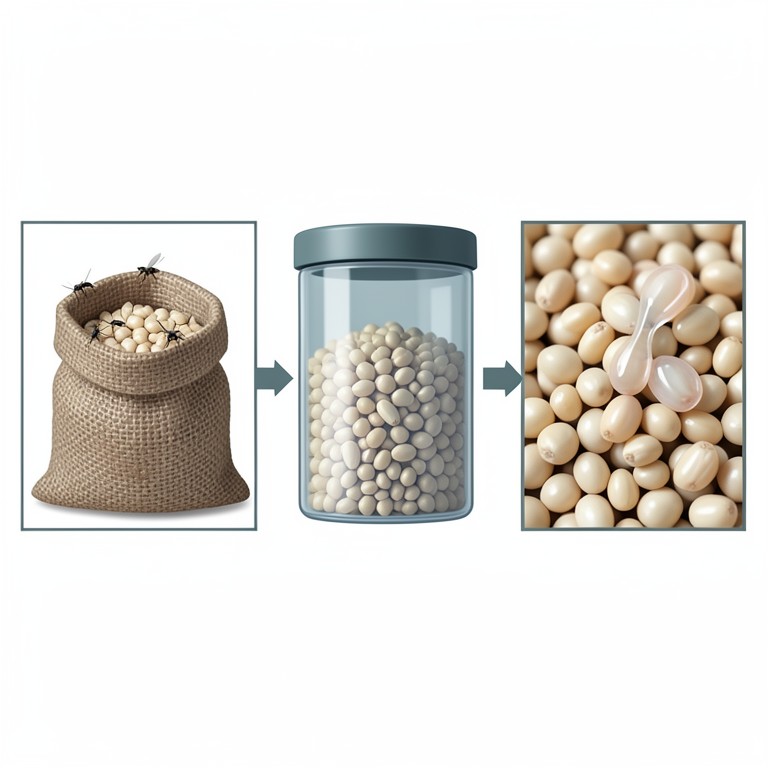
Comparison of Storage Methods
AI-generated conceptual illustration (sorghum grains). It explains the idea and does not show study data.
View source evidence ↗Introduction
Sorghum (Sorghum bicolor) is one of the most important cereal crops globally, serving as a staple food for millions, especially in arid and semi-arid regions. Its rich nutritional profile, including high levels of dietary fiber, protein, and essential micronutrients such as iron and zinc, makes it a critical component of diets in developing countries. Despite its significance, sorghum's post-harvest storage often leads to nutritional losses and alterations in its culinary properties. Traditional storage techniques, while widely used, are inadequate in preventing pest infestations, moisture loss, and biochemical degradation. Modern storage methods, such as hermetic storage and controlled atmosphere systems, promise better preservation of sorghum's quality. This paper explores the impact of storage techniques on the nutritional and culinary attributes of sorghum grains.
Nutritional Quality Parameter
The nutritional quality of sorghum grains is a vital determinant of their value as a staple food and feed resource. Sorghum is rich in macronutrients such as carbohydrates and proteins, and essential micronutrients like iron, zinc, and vitamins, making it a key crop for food security, especially in resource-limited regions. However, the preservation of these nutritional qualities during storage poses a challenge due to environmental factors, pest infestations, and microbial contamination. Sustainable storage techniques play an essential role in retaining these qualities while minimizing losses. Proteins are one of sorghum's most significant nutritional components, with a typical content ranging from 9% to 11%. Protein degradation during storage often occurs due to enzymatic activity and microbial contamination, leading to reduced digestibility and nutritional value. Advanced storage systems, such as hermetic storage, have demonstrated efficacy in maintaining protein levels by creating an oxygen-free environment that halts microbial growth and enzymatic activity (De Groote et al., 2020) [1] . This is particularly critical as protein quality directly influences the grain's usability as a dietary staple for both humans and livestock. Micronutrients, particularly iron and zinc, are vital for addressing nutritional deficiencies in regions reliant on sorghum as a primary food source. Iron is necessary for oxygen transport in blood, while zinc supports immune function and cellular repair. Traditional storage methods, prone to moisture accumulation and pest infestation, often result in the leaching or binding of these micronutrients with anti-nutritional factors like phytic acid, thereby reducing their bioavailability. Research suggests that hermetic storage systems, which maintain consistent environmental conditions, effectively prevent such degradation and retain the bioavailability of micronutrients (Shinde et al. (2022); Tefera et al., 2011) [12,2] .
Biopolymer coatings, such as those made from chitosan, further aid in preserving micronutrient stability by acting as a physical and antimicrobial barrier (Kumar et al., 2019) [3] . Carbohydrates, which constitute the majority of sorghum's caloric content, are also susceptible to degradation during improper storage. High humidity can lead to starch hydrolysis, reducing the energy content and facilitating microbial growth. Controlled atmosphere storage systems, which regulate the composition of oxygen, carbon dioxide, and nitrogen, have been shown to prevent such carbohydrate loss by creating unfavorable conditions for microbial activity (CGIAR, 2021) [4] . This ensures that sorghum retains its caloric value, which is critical for populations dependent on it as a primary energy source. Sorghum's phenolic compounds and antioxidants, including phenolic acids, flavonoids, and tannins, contribute to its health benefits by combating oxidative stress and reducing the risk of chronic diseases. However, prolonged exposure to oxygen and heat during storage can degrade these bioactive compounds. Hermetic storage and UV-blocking biopolymer coatings effectively protect these antioxidants by minimizing oxidative stress and exposure to degrading environmental factors (Williams et al., 2022) [5] . These bioactive compounds also enhance sorghum's marketability as a functional food ingredient in health-conscious markets. A critical challenge to the nutritional quality of sorghum during storage is fungal contamination, particularly by Aspergillus species, which produce aflatoxins-potent carcinogens harmful to human and animal health. Traditional storage systems, especially in humid climates, are highly susceptible to fungal infestation. Hermetic storage and solar drying techniques have been demonstrated to significantly reduce fungal growth by controlling humidity and oxygen levels, thereby safeguarding the grain's safety and nutritional integrity (Tefera et al., 2011) [2] . Furthermore, sustainable storage systems ensure the retention of sensory qualities such as texture, flavor, and aroma, which are integral to consumer acceptance. By preventing rancidity and maintaining the visual appeal of sorghum grains, these technologies preserve their marketability while also protecting their nutritional value. For example, controlled atmospheres have been shown to maintain the sensory and nutritional properties of grains during long-term storage in commercial setups (De Groote et al., 2020) [1] . In conclusion, preserving the nutritional quality of sorghum grains requires addressing challenges related to protein degradation, micronutrient loss, carbohydrate stability, antioxidant retention, and fungal contamination. Advanced storage methods, including hermetic storage, controlled atmospheres, biopolymer coatings, and solar-powered systems, have been validated in studies to effectively maintain sorghum's nutritional profile while ensuring its safety and usability (Yadav et al., 2023) [11] . These innovations not only contribute to food security and nutrition but also enhance the economic value of sorghum in global and local markets.
Culinary Properties
Sorghum has long been valued for its versatile culinary properties, making it a staple in many traditional cuisines. The grain's unique structure and composition, including its gluten-free nature, high fiber content, and dense nutritional profile, make it suitable for various culinary applications, such as porridges, flatbreads, fermented beverages, and even as a substitute for wheat in baked goods. However, its culinary properties are significantly influenced by storage methods, which impact moisture content, texture, flavor, and nutritional stability.
Traditional storage methods often fail to preserve the culinary quality of sorghum due to exposure to pests, moisture, and temperature fluctuations. These factors result in nutrient degradation, fungal contamination, and physical damage, all of which reduce the grain's suitability for food preparation. For example, fungal growth, particularly by Aspergillus species, can lead to off-flavors and the production of aflatoxins, making the grain unsafe for consumption (Tefera et al., 2011) [2] . Modern storage techniques, such as hermetic storage, address these challenges by maintaining a stable environment that prevents moisture accumulation and pest infestations, ensuring that the grain retains its sensory and functional qualities for culinary use (De Groote et al., 2020) [1] . The controlled atmosphere method is particularly effective in preserving the culinary integrity of sorghum grains. By adjusting gas concentrations to inhibit microbial activity and oxidation, this technique prevents rancidity and discoloration, both of which are critical for consumer acceptance. Biopolymer coatings, such as chitosan, further enhance sorghum's culinary properties by acting as a protective barrier against moisture and pests while preserving the grain's natural flavor and texture (Kumar et al., 2019) [3] .
Traditional vs. Modern Techniques
Traditional storage techniques, including woven bags, earthen silos, and underground pits, have been used for centuries due to their affordability and accessibility. However, these methods are highly susceptible to environmental and biological challenges that compromise grain quality. For instance, temperature fluctuations and humidity in traditional systems lead to nutrient degradation, fungal growth, and pest infestations, resulting in significant post-harvest losses (FAO, 2021) [6] . Modern storage technologies represent a paradigm shift in grain preservation. Hermetic storage, controlled atmosphere systems, and biopolymer coatings provide scientifically validated solutions to the limitations of traditional methods. Hermetic storage, for example, creates an oxygen-free environment that halts microbial and pest activity, reducing losses by up to 90% (De Groote et al., 2020) [1] . Similarly, controlled atmosphere systems maintain optimal storage conditions by regulating oxygen, carbon dioxide, and nitrogen levels, effectively preventing spoilage and nutrient loss (CGIAR, 2021) [4] . While traditional techniques rely on simplicity and local materials, modern methods integrate advanced technologies to achieve long-term grain stability. Solar-powered drying systems, for instance, reduce moisture content without relying on conventional energy sources, making them suitable for rural areas with limited electricity access. These innovations not only preserve grain quality but also align with global sustainability goals, offering a viable alternative to traditional practices A Hussen (2021) [9] .
Experimental Evidence
Experimental studies have consistently demonstrated the superiority of modern storage techniques over traditional methods. A study by De Groote et al. (2020) [1] highlighted the efficacy of hermetic storage in reducing post-harvest losses of sorghum in Africa. The study found that airtight storage systems maintained grain quality for over 12 months, preserving both nutritional content and physical integrity. Similarly, research on controlled atmosphere systems by CGIAR (2021) [4] revealed a 95% reduction in grain spoilage compared to traditional storage methods. Biopolymer coatings have also been extensively studied for their role in grain preservation. Kumar et al. (2019) [3] demonstrated that chitosan-coated sorghum grains exhibited improved resistance to fungal contamination and retained their nutritional and sensory qualities for extended periods. These findings underscore the potential of biopolymer technologies to enhance grain storage while minimizing environmental impact. Another experimental study focused on solar-powered drying systems, showing that these systems effectively reduced grain moisture to safe levels, preventing fungal growth and spoilage. These systems were particularly beneficial in regions with high humidity and limited access to electricity, providing an energy-efficient solution for grain storage.
Discussion
The transition from traditional to modern storage techniques is essential for addressing the challenges of post-harvest losses and ensuring the long-term viability of sorghum as a staple crop. While traditional methods have served their purpose in resource-limited settings, they fail to meet the demands of modern agricultural systems, which prioritize food safety, quality, and sustainability. Modern storage technologies not only address these shortcomings but also provide scalable solutions that can be adapted to diverse agricultural contexts. The integration of modern techniques has a profound impact on the culinary, nutritional, and economic value of sorghum. Hermetic storage and controlled atmosphere systems preserve the grain's sensory and nutritional qualities, ensuring its suitability for various culinary applications. These methods also reduce the risk of aflatoxin contamination, safeguarding public health and enhancing the marketability of sorghum grains. Environmental considerations further support the adoption of modern storage methods. By minimizing reliance on chemical fumigants and incorporating renewable energy sources, these technologies align with global sustainability goals and reduce the ecological footprint of grain storage. Moreover, their scalability and adaptability make them accessible to smallholder farmers and large-scale agribusinesses alike, promoting equity and inclusivity in agricultural development. However, challenges remain in the widespread adoption of these technologies. High initial costs, limited awareness, and the need for technical expertise pose significant barriers, particularly in lowincome regions. Policymakers, researchers, and agricultural stakeholders must work collaboratively to address these challenges through subsidies, education programs, and investments in storage infrastructure.
Conclusion
Sustainable storage techniques represent a transformative approach to preserving sorghum grain quality while addressing the limitations of traditional methods. By integrating innovative solutions such as hermetic storage, controlled atmospheres, and biopolymer coatings, modern storage systems ensure the long-term stability of sorghum's culinary, nutritional, and economic value. Experimental evidence underscores the effectiveness of these methods in reducing post-harvest losses, preserving sensory qualities, and enhancing food safety. The shift from traditional to modern storage practices is critical for achieving food security, economic stability, and environmental sustainability. While challenges to adoption remain, targeted interventions in policy, education, and technology development can facilitate the transition to sustainable storage practices. By embracing these innovations, stakeholders can ensure that sorghum continues to play a pivotal role in global agricultural systems, supporting livelihoods and improving nutrition for millions worldwide.
References
14 in the original paper- De Groote H, Kimenju SC, Likhayo P, et al. Hermetic storage technologies reduce post-harvest losses of maize and sorghum in Africa. Food Security. 2020;12(3):435-446.
- Tefera T, Kanampiu F, De Groote H, et al. The metal silo: An effective grain storage technology for reducing post-harvest losses in Africa. International Journal of Pest Management. 2011;57(3):177-186.
- Kumar R, Gupta A, Sharma S. Antimicrobial properties of chitosan coatings for grain storage. International Journal of Biological Macromolecules. 2019;132:124130.
- Williams P, Okoye F, Adebayo A. Impact of storage methods on the nutritional quality of cereals in subSaharan Africa. Journal of Agronomy and Food Science. 2022;14(4):345-360.
- Murdock LL, Margam V, Baoua I, et al. Agricultural storage losses: Issues and solutions. Plant Health Progress. 2012;13(1):1-7.
- Negash A, Amare T, Mekonnen T, et al. Post-harvest loss and quality deterioration of grain legumes in Ethiopia: A review. Cogent Food & Agriculture. 2021;7(1):1-12.
- A Hussen. Impact of grain storage method on sorghum grain quality in Ethiopia: A review. Journal of Current Research in Food Science. 2021;2(1):40-45
- Yadav AK, Chandra S, Kumar T, Puja, Mudgal D, Kumar V. Status of vegetable processing and value addition. J Curr Res Food Sci. 2023;4(1):40-48.
- Shinde EM, Gajmal DB, Giri SA. Health and immunity boosting sorghum properties and its applications in food industry: A review. J Curr Res Food Sci. 2022;3(2):104-108.
- Opara LU, Mditshwa A. A review on the role of packaging in securing food system: Adding value to food products and reducing losses and waste. African Journal of Agricultural Research. 2013;8(22):26212630.
- Hailu G, Tolera A. Assessment of traditional storage practices and grain loss caused by insect pests on farmstored maize in selected regions of Ethiopia. African Journal of Agricultural Research. 2016;11(40):39994006.
- Reddy MB, Love M. The impact of food processing on the nutritional quality of vitamins and minerals. Advances in Experimental Medicine and Biology. 1999;459:99-106.
- Manandhar G, Milindi P, Shah A. An overview of the post-harvest grain storage practices of smallholder farmers in developing countries. Agriculture. 2018;8(4):57.
- Udomkun P, Wiredu AN, Nagle M, et al. Innovative technologies to manage aflatoxins in foods and feeds and the profitability of application: A review. Food Control. 2017;76:127-138.