
Research article · 2024 · Full text
International Journal of Veterinary Sciences and Animal HusbandryValorization of chicken processing by products into protein rich dog biscuits
Volume 9(4S) · Pages 147–150 · DOI: 10.22271/veterinary.2024.v9.i4sc.1597 ↗
Research areasProtein Hydrolysis and Bioactive PeptidesAnimal Nutrition and PhysiologyMeat and Animal Product Quality
Abstract
Author-writtenA study was carried out to assess the quality of dog biscuits incorporated with chicken processing by products. Two types of biscuits were prepared. One was control and the treated was chicken skin incorporated biscuits. Prepared biscuit physicochemical, nutritional and dog acceptability studies were conducted. A significant difference (p
Summary
Source-checkedPlain-language reading of the full paper, prepared with AI and checked against the text. Each point links to the authors' own words.
Why it matters
- The population of pet dogs in India is growing rapidly, with an expected increase from over 33 million in 2023 to more than 51 million by 2028. View evidence ↗
- Chicken skin is a significant slaughterhouse byproduct, making up between 8% and 20% of the total chicken carcass weight. View evidence ↗
- Despite being underutilized, chicken skin is a valuable source of collagen, protein (8–12%), and fats (30–40%) including n-3 and n-6 fatty acids. View evidence ↗
The question
- The researchers aimed to develop dog biscuits incorporating chicken meat and skin and evaluate their nutritional value, physical properties, and acceptability by dogs. View evidence ↗
What they did
- Two biscuit types were formulated: a control containing 50g of minced chicken meat and a treated version containing 25g of minced chicken meat and 25g of minced chicken skin. View evidence ↗
- The biscuit dough was shaped and baked in a preheated hot air oven at 160 °C for 25 to 35 minutes. View evidence ↗
- Dog acceptability was tested using a panel of 12 adult dogs of various breeds and sizes. View evidence ↗
What they found
- The spread factor of the biscuits decreased significantly from 70 in the control group to 68.57±0.04 in the chicken skin incorporated biscuits. View evidence ↗
- The protein content was significantly lower in the treated biscuits (16.62 ±0.14%) compared to the control biscuits (20.45±0.32%). View evidence ↗
- The fat content was significantly higher in the treated biscuits (18.23±0.12%) than in the control biscuits (16.65±0.13%). View evidence ↗
- Treated biscuits showed a significantly higher ash content (3.08 ±0.04%) compared to control biscuits (2.98 ±0.02%). View evidence ↗
- The treated biscuits had a significantly higher gross energy value (4949 ±0.16 Kcal/Kg) than the control biscuits (4763±0.35 Kcal/Kg). View evidence ↗
- Dogs showed a significantly higher interest to eat the treated biscuits (score 4.83) compared to the control biscuits (score 4.66). View evidence ↗
- There was no difference in the dogs' approach to the biscuits, with both control and treated groups receiving a maximum score of 5.00. View evidence ↗
What it means
- The authors conclude that chicken skin can be successfully incorporated into dog biscuits as it is well-accepted by dogs. View evidence ↗
- The authors recommend utilizing chicken skin in pet nutrition to reduce environmental impact and provide a healthy alternative source of protein and fat. View evidence ↗
- The authors state a need for further research to study the specific fatty acid profile, particularly omega-3 fatty acids, in biscuits containing chicken skin. View evidence ↗
Visual summary
3 visualsIllustrations explain the paper; charts are replotted from the paper's own table values.
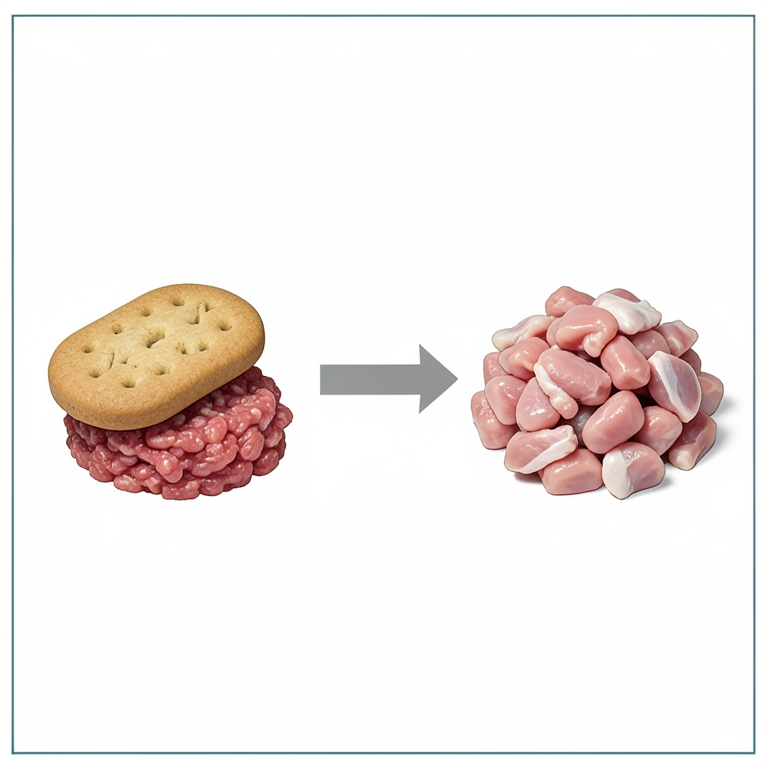
Biscuit Formulation Comparison
AI-generated conceptual illustration (dog biscuits and raw chicken meat and chicken skin). It explains the idea and does not show study data.
View source evidence ↗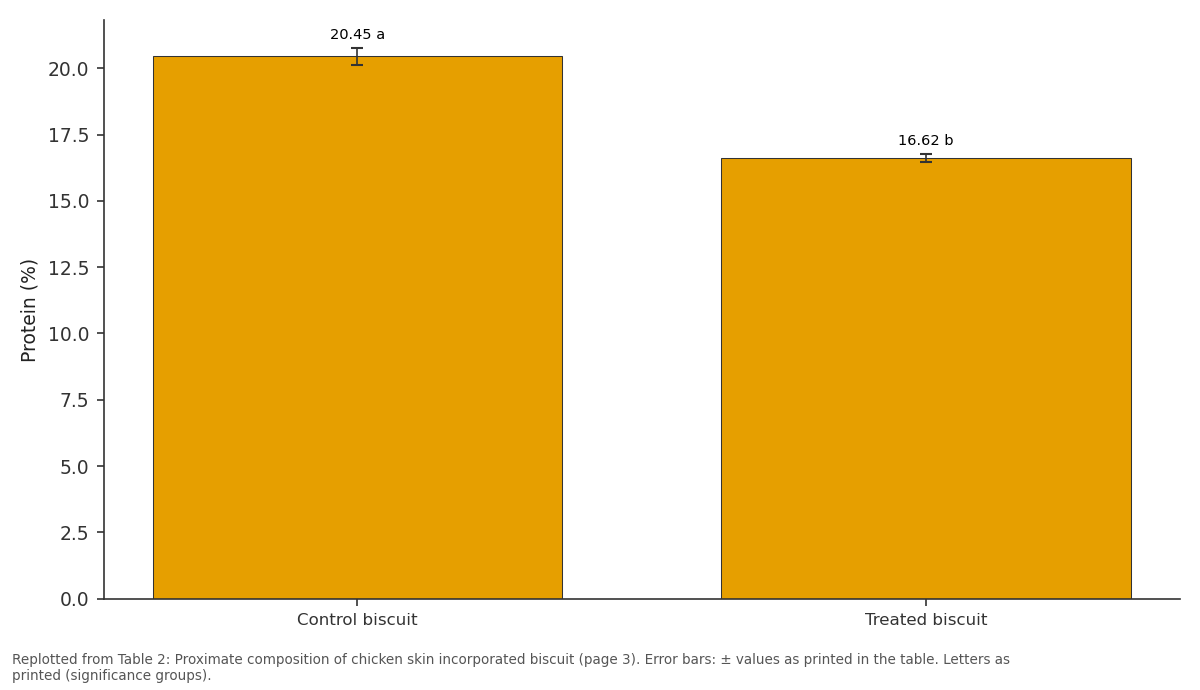
Protein (%): Control biscuit vs Treated biscuit
Replotted from Table 2 (page 3) of the original paper. Every bar is the paper's own table value.
View source evidence ↗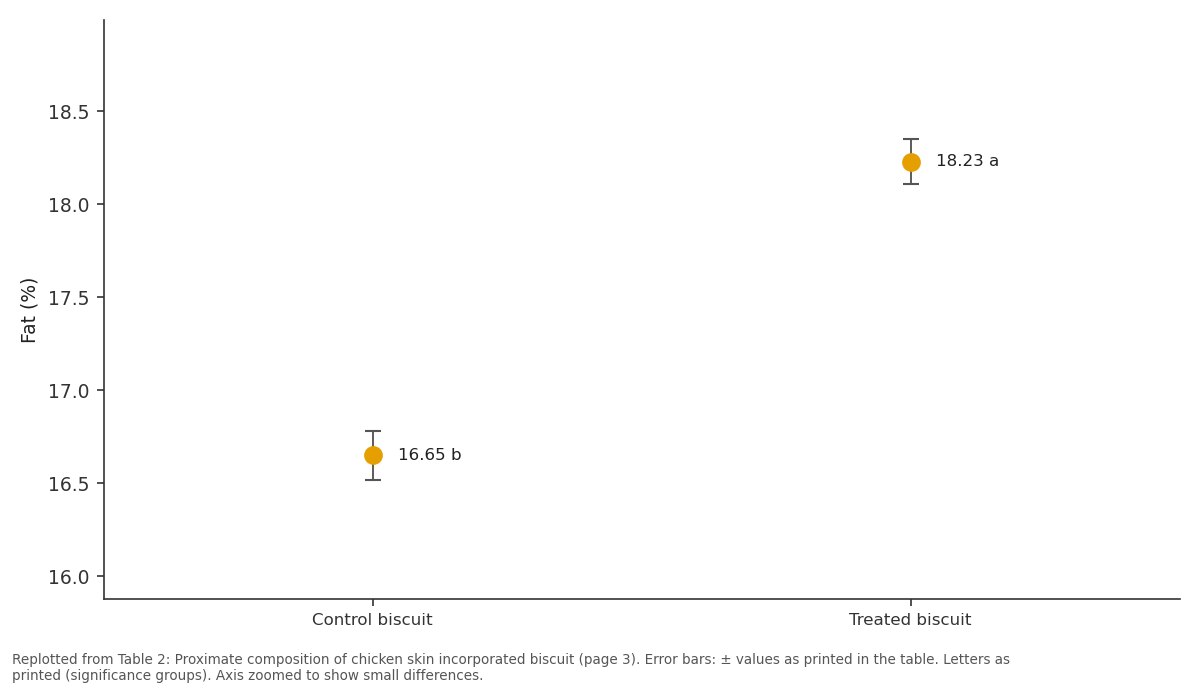
Fat (%): Control biscuit vs Treated biscuit
Replotted from Table 2 (page 3) of the original paper. Every bar is the paper's own table value.
View source evidence ↗Figures & tables
From the original paper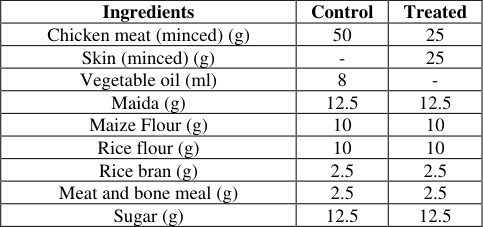 Table 1
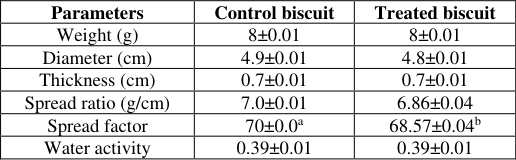 Table 2
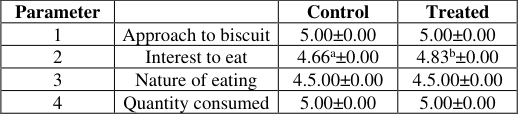 Table 3
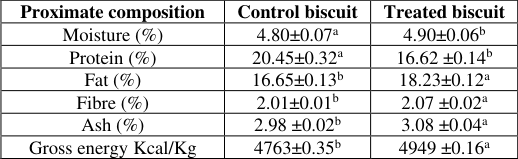 Table 2
Introduction
Pet animals are defined as animals that are kept for a person's company or for entertainment at home. Pets play an important role in human life and human health (Day 2016) [5] . The overall population of pet dogs in India was over 33 million in 2023. The population is likely to reach more than 51 million by 2028. The growth in the number of pet dogs has led to an increase in pet food sales across the country. Pet owners as consumers remain largely price conscious. They are however, becoming increasingly focused on the health and wellness of their pets and are spending more on pet dietary supplements and better-quality pet food (Schleicher, 2019) [19] . There has been a noticeable shift in pet owners' nutritional preferences, which is reflected in the demand for dry dog food among dogs (White et al., 2016) [22] . The pet food market has continued to grow, with an impressive average annual expansion rate of 2.6% during the previous three years (Kepinska-Pacelik and Biel, 2021) [8] . Biscuits are a type of dog treat that are typically produced from wheat flour and baked and slowly dried in an oven. Research has shown that dogs are naturally drawn to sweet and umami flavors, making them highly desirable in dog food and treats (Yarmolinsky et al., 2009) [24] . The nutritional value of dog treats can vary depending on their ingredients and processing methods (Morelli et al., 2018) [15] . Vinothraj et al. (2020) [21] studied that Consumer's preference for quality attributes of chicken meat-An application of conjoint analysis. The results revealed that the ideal characteristic of chicken meat should be type (broiler bird), appearance (without skin) and form of meat (curry cuts). One of the chicken slaughterhouse by-products with the highest impact is chicken skin, which represents between 8 and 20% of chicken carcass weight (Heydarpour et al., 2006) [7] . Chicken skin is a major byproduct of the poultry industry. It is usually underutilized despite its composition, containing 30-40% fat with high concentrations of n-3 and n-6 fatty acids and 8-12% protein, which makes it a good source of collagen. The present study aimed to develop chicken meat and skins incorporating dog biscuits and evaluate their physicochemical, nutritional and dog acceptability studies.
Materials and Methods
Materials and Methods
Raw materials
Raw materials like broiler Chicken meat and skin, Fresh refined wheat flour (maida), Maize Flour, Rice flour, Rice bran, Meat cum bone meal, Sodium bi carbonate, sugar powder were procured from the local market.
Preparation of skin mince incorporated biscuits
The deboned chicken meat and skin kept at refrigeration temperature (4±1 °C) before mincing through a meat mincer and then thoroughly kneaded for preparation of chicken meat and skin mince incorporated biscuits. Two types of biscuits were prepared by using different levels of chicken meat mince (CMM), chicken skin mince (CSM), refined wheat flour (maida), sugar, shortening and other ingredients as given in the Tables 1. All the ingredients were mixed in the bowl mixer for 2-3 minutes to make homogenous emulsion. Then the prepared emulsion was made in to desired shape at the end. The shaped emulsion was then dropped into steel trays and baked in preheated hot air oven at 160 °C for 25-35 min or till golden brown. Then ready biscuits were cooled and packed in low density polyethylene (LDPE). The prepared biscuits physical properties, proximate composition and dog acceptability of biscuits were studied.
Physical properties of biscuits
The diameter and thickness of six biscuits was measured using ruler & Vernier caliper and average values were recorded (AACC 2000) [2] . The spread ratio was calculated by dividing diameter with thickness.
Diameter
Six biscuits were placed edge to edge and total diameter (D) was measured in cm by using a ruler. The biscuits were rotated at an angle of 90° for duplicate reading. This act repeated twice, and average value of D was noted in cm.
Thickness
Six biscuits were placed on top of one another and total height was measured in cm with Vernier caliper. This practice was repeated thrice to get an average value and results were recorded in cm as thickness (T).
Spread factor
Spread factor (SF) was determined from D and T by employing subsequent formula.
Water activity
The Water activity measurement was conducted by measuring the baked product after 45 minutes and the result were recorded.
Nutritional analysis
The moisture, fat, protein, crude fibre and mineral content of prepared biscuits are determined by standard AOAC (2000) [2] methods.
Dog acceptability
The palatability assessment test was conducted as per Poppi et al. (2022) [16] with necessary modification. The biscuit palatability test was carried out with a panel of 12 adult dogs, male and female, of different breeds and sizes, belonging to different pet owners. The feeding trials were replicated three times. The dog biscuits were fed to the dogs at after one to two hours of normal feeding time. The reaction of the dog towards the biscuits was observed. The observation was made, giving stress towards the approach to biscuits, interest to eat, and nature of eating. The observation was recorded on a scorecard. Control and treated biscuits were analyzed and scored on a 1-5 scale. The biscuits evaluation was carried out by using the scorecard adopted by Kuleswan et al. (2017) [10] with necessary modification.
Result and Discussion
Physical properties of biscuits Physical properties of chicken skin incorporated biscuit are presented in Table 2. It was observed, the diameter of cookies decreased gradually from 4.9 to 4.8 cm with broiler skin incorporated biscuits. There were no significant changes in the thickness of control and treated biscuits. The spread ratio of cookies decreased significantly from 7.0 to 6.86 with broiler skin incorporated biscuits. The spread factor of cookies decreased from 70 to 68.6% with broiler skin incorporated biscuits. Significantly reduced spread ratio and spread factor observed in broiler skin incorporated biscuits.
| Proximate composition | Control biscuit | Treated biscuit |
|---|---|---|
| Moisture (%) | 4.80±0.07a | 4.90±0.06b |
| Protein (%) | 20.45±0.32a | 16.62 ±0.14b |
| Fat (%) | 16.65±0.13b | 18.23±0.12a |
| Fibre (%) | 2.01±0.01b | 2.07 ±0.02a |
| Ash (%) | 2.98 ±0.02b | 3.08 ±0.04a |
| Gross energy Kcal/Kg | 4763±0.35b | 4949 ±0.16a |
Table text extracted from the original PDF; superscript letters are shown inline. The original table image is below.
View original table image
| Parameters | Control biscuit | Treated biscuit |
|---|---|---|
| Weight (g) | 8±0.01 | 8±0.01 |
| Diameter (cm) | 4.9±0.01 | 4.8±0.01 |
| Thickness (cm) | 0.7±0.01 | 0.7±0.01 |
| Spread ratio (g/cm) | 7.0±0.01 | 6.86±0.04 |
| Spread factor | 70±0.0a | 68.57±0.04b |
| Water activity | 0.39±0.01 | 0.39±0.01 |
Table text extracted from the original PDF; superscript letters are shown inline. The original table image is below.
View original table image
Reduced spread ratio and spread factor of cookies were attributed to the fact that composite flours of wheat and soy apparently form aggregates with increased number of hydrophilic sites available for competing, for the limited free water in cookies dough (Mc Watters 1978; Yamazaki et al.
1977) [11,23] . Mohammadnezhad, S., and Farmani, J. (2022) [14] reported that Chicken skin gelatin showed higher viscosity, foaming capacity, bloom value, and storage modulus than the commercial bovine gelatin. Moreover gelatin and fat from chicken skin can be considered as a valuable byproduct from the poultry industry.
Proximate composition of biscuits
There was a significant difference for the levels of moisture, lipids, ash and caloric value (Table 3). Moisture was significantly lower (4.90%) and had higher ash content (3.08%) in biscuits incorporated with chicken skin. The variation in biscuits' moisture may be related to the chicken skin used, as seen in Table 4, that is, this is visible from the results shown. The moisture value recorded in this study was with the safe moisture content that has no adverse impact on the shelf life of the developed products. This may be because a high baking temperature reduces sample moisture content. Also, it can be inferred that the higher moisture content may due to the higher lipid content present in chicken skin incorporated biscuit, making it difficult for these biscuits to lose moisture. The result also indicated significant improvements in fat contents in the treated biscuit compared to the control samples. The increases in fat content were due to the high-fat content of chicken skin. Poppi et al. (2022) [16] reported that pet biscuits made with the inclusion of three flours. The treatments were chicken viscera flour (CVF), commercial Nile tilapia flour (FF) and mixed fish flours of several species (FVF). The average crude protein value was 18.43%. These values are lower than those found in the pet biscuits of this current study, whose average crude protein value was 16.62%. Melini et al. (2017) [13] reported that pet biscuits made with carob and cotyledon flour had 10.7 to 13.3 g 100 g - 1 crude protein. Furthermore, the authors mentioned pet biscuits enriched with 5% fish flour had a crude protein content of 10.10 g 100 g -1 . It can be observed that the lipid content (18.23%) of these biscuits made with chicken skin was significantly higher than the control biscuits. This may be due to the higher fat content of the chicken skin (30%-40%). Chug 2015 [3] revealed that the texture of biscuit was greatly dependent on the level of the fat and sugar in the biscuits. Among the biscuits made in the current study, treated biscuits had a significantly higher caloric value (494.90 kcal 100 g -1 ) compared to control biscuits (476.30 kcal 100 g -1 ). According to Santos, Lima, Madruga, and Silva (2020) [18] , chicken skin has an unsaturated fatty acid content greater than 65%, highlighting the presence of oleic and linoleic acid. In addition to these, other fatty acids of nutritional importance such as eicosapentaenoic acids and docosahexaenoic acids have also been identified (Dalziel, Kliem, & Givens, 2015) [4] . Therefore, there is a need to study the fatty acid profile in pet biscuits with the inclusion of chicken skin, mainly associated with the omega 3 series fatty acids.
| Parameter | — | Control | Treated |
|---|---|---|---|
| 1 | Approach to biscuit | 5.00±0.00 | 5.00±0.00 |
| 2 | Interest to eat | 4.66a±0.00 | 4.83b±0.00 |
| 3 | Nature of eating | 4.5.00±0.00 | 4.5.00±0.00 |
| 4 | Quantity consumed | 5.00±0.00 | 5.00±0.00 |
Table text extracted from the original PDF; superscript letters are shown inline. The original table image is below.
View original table image
Dog acceptability
The new food product is only considered a success if the end consumerthe petenjoys and readily consumes the food. Food is accepted by a pet dog and measured in terms of its attractiveness and consumption. Taste, aroma, texture, nutrition, and environment are the key attributes that profoundly influence the feeding experience. All these attributes are emotionally connected, from the pet's reaction to what is offered in their bowl to the pet parent's perception of how their pet enjoyed their meal. [6] developed a palatability study with small, medium and large dogs and observed that diets containing higher levels of crude protein had better palatability results, both in terms of consumption and preference. Knight and Satchell (2021) [9] also stated that high levels of crude protein in dog diets interfere with palatability, digestibility and faeces quality. In addition to the high crude protein content, some authors mention that high fat content also contributes to palatability results, as a preference for moist or semi-moist foods (Meineri et al., 2021; Samant et al., 2021) [12,17] . Souza et al. (2022b) [20] in their study tested different levels of carcass flour inclusion with Nile tilapia head residues. These ingredients were included in a toothpick treat for dogs. The authors reported that there was a decreasing preference for dogs as the level of inclusion of fish flour in these treats increased. With the inclusion of fish flour, according to these authors, there was a reduction in the snacks' protein content. Probably the inclusion of fish flour has contributed to the reduced pet snack palatability. Therefore, it was a very different result from the one observed in the study, with the pet biscuits with the inclusion of fish flour and poultry viscera, the authors did not find any difference in the crude protein content, nor in the palatability between the biscuits, being able to be included any of the flours analyzed in the study.
Conclusion
To minimize environmental impact, as well as to bring a healthy alternative, it would be relevant to utilize chicken skin differentiated applicability as protein and fat sources in animal nutrition, especially for pets. When included in the pet industry, it enriches them nutritionally without altering their organoleptic aspects. Based on the study results, dogs accepted incorporating chicken skin in the dog biscuits formulation.
Acknowledgement
AcknowledgementThe authors are thankful to the Tamil Nadu Veterinary and Animal Sciences University, Chennai, India for funding and providing facility to carry out this research work.
Figures and tables from the paper
| Ingredients | Control | Treated |
|---|---|---|
| Chicken meat (minced) (g) | 50 | 25 |
| Skin (minced) (g) | - | 25 |
| Vegetable oil (ml) | 8 | - |
| Maida (g) | 12.5 | 12.5 |
| Maize Flour (g) | 10 | 10 |
| Rice flour (g) | 10 | 10 |
| Rice bran (g) | 2.5 | 2.5 |
| Meat and bone meal (g) | 2.5 | 2.5 |
| Sugar (g) | 12.5 | 12.5 |
Table text extracted from the original PDF; superscript letters are shown inline. The original table image is below.
View original table image
References
21 in the original paper- Chugh B, Singh G, Kumbhar B. Studies on the optimization and stability of low-fat biscuit using carbohydrate-based fat replacers. Int J Food Prop. 2015;18:1446-1459.
- Dalziel CJ, Kliem KE, Givens DI. Fat and fatty acid composition of cooked meat from UK retail chickens labelled as from organic and non-organic production systems. Food Chem. 2015;179:103-108.
- Day MJ. Human-animal health interactions: the role of one health. Am Fam Physician. 2016;93:345-346.
- Hall JA, Vondran JC, Vanchina MA, Jewell DE. When fed foods with similar palatability, healthy adult dogs and cats choose different macronutrient compositions. J Exp Biol. 2018;221(14)
- Heydarpour F, Amini B, Kalantari S, Sadraddin, Akbari A, Heydarpour P. Mean percentage of skin and visible fat in 10 chicken carcass weights. Int J Poult Sci. 2006;6:4347.
- Kępinska-Pacelik J, Biel W. Microbiological hazards in dry dog chews and feeds. Animals. 2021;11(3):631.
- Knight A, Satchell L. Vegan versus meat-based pet foods: owner-reported palatability behaviours and implications. PLoS One. 2021;16(6)
- Kuleswan PS, Vasudevan T, Prajwal VNS, Gunasekaran P. A study on the effect of physico-chemical characteristics, palatability and storage quality of kibbles incorporated with slaughterhouse byproducts for canine. Int J Livest Res. 2017;7:228-237.
- McWatters KH. Cookie baking properties of defatted peanut, soybean and field pea flour. Cereal Chem. 1978;55:853-863.
- Meineri G, Candellone A, Tassone S, Longato E, Pattono D, Russo N, et al. Effects of fresh mechanically deboned meat inclusion on nutritional value, palatability, shelflife, microbiological risk and digestibility in dry dog food. PLoS One. 2021;16(4)
- Melini F, Melini V, Luziatelli F, Ruzzi M. Current and forward-looking approaches to technological and nutritional improvements of gluten-free bread with legume flours: a critical review. Compr Rev Food Sci Food Saf. 2017;16(5):1101-1122.
- Mohammadnezhad S, Farmani J. Rheological and functional characterization of gelatin and fat extracted from chicken skin for application in food technology. Food Sci Nutr. 2022;10(6):1908-1920.
- Morelli G, Fusi E, Tenti S, Serva L, Marchesini G, Diez M, et al. Study of ingredients and nutrient composition of commercially available treats for dogs. Vet Rec. 2018;182(12):351.
- Poppi A, Oliveira G, Casetta J, Goes E, Gasparino E, Marques D, et al. Nutritional evaluation and palatability of pet biscuits for dogs. Braz J Food Technol. 2023;26.
- Samant SS, Crandall PG, Arroyo SEJ, Seo HS. Dry pet food flavor enhancers and their impact on palatability: a review. Foods. 2021;10(11):2599.
- Santos MMF, Lima DAS, Madruga MS, Silva FAP. Lipid and protein oxidation of emulsified chicken patties prepared using abdominal fat and skin. Poult Sci. 2020;99(3):1777-1787.
- Schleicher M, Cash S, Freeman L. Determinants of pet food purchasing decisions. Can Vet J. 2019;60:644-650.
- Souza ML, Penha BG, Oliveira GG, Gasparino E, Granzoto GH, Casetta J, et al. Stick type snack for dogs with inclusion of different levels of carcass meal with tilapia head. Braz J Dev. 2022;8(4):29992-30010.
- White GA, Ward L, Pink C, Craigon J, Millar KM. Who's been a good dog? Owner perceptions and motivations for treat giving. Prev Vet Med. 2016;132:1419.
- Yamazaki WT, Donelson JR, Kwolik WF. Effects of flour composition on cookie diameter. Cereal Chem. 1977;54:352-360.
- Yarmolinsky DA, Zuker CS, Ryba NJP. Common sense about taste: from mammals to insects. Cell. 2009;139:234-244.
Cited by 1
From OpenAlex, OpenCitations and reference lists read by Scinovex
- Slaughterhouse bio-waste in canine pet biscuits: nutrition, palatability and consumer acceptance
S Gokulraj, R Ramani, Clement Ebenezer Henry, R Jayanthi, C Vasanthi, V Jayalalitha · International Journal of Veterinary Sciences and Animal Husbandry · 2026
Slaughterhouse biowaste, often underutilized or improperly disposed of, poses environmental and health hazards. Considering this, a study was conducted to develop canine biscuits formulated by replacing 10% vegetable oil with a 10% composite of slaughterhouse waste: sheep/goat offal (1% tripe, 0.5% spleen) and poultry offal (1% intestine, 2.5% gizzard, 5% liver). While difference in moisture levels between treatment and control remained non significant, the biowaste-incorporated biscuits showed significant increase in crude protein (11.20 ± 0.35%), ash (2.60 ± 0.12%), crude fiber (2.83 ± 0.13%