
Research article · 2024 · Full text
International Journal of Advanced Biochemistry ResearchProtein profiling of adzuki bean [Vigna angularis (Willd.) Ohwi & Ohashi] genotypes grown under inorganic, organic and Zero Budget Natural Farming
Volume 8(4) · Pages 250–255 · DOI: 10.33545/26174693.2024.v8.i4d.945 ↗
Research areasAgricultural pest management studiesPhytase and its ApplicationsFood composition and properties
Abstract
Author-writtenFifteen genotypes of adzuki bean grown under inorganic, organic and Zero Budget Natural Farming (ZBNF) condition of Himachal Pradesh were analyzed for protein banding pattern on polyacrylamide gel through SDS-PAGE. The organic, inorganic and ZBNF banding pattern showed significant variability in molecular weight and its ranged from size 11.8 kDa - 139.5 kDa, 11.7 kDa - 131.5 kDa and 10.6 kDa - 96.9 kDa, respectively. The protein banding profiles of adzuki bean genotypes was scored and subjected to cluster analysis using Unweighted Pair Group Method and Arithmetic Mean (UPGMA) for dendrogram grouping. The dendrogram generated from the SDS-PAGE profiles grouped the inorganic, organic and ZBNF genotypes into two major clusters i.e. Cluster-1 (genotypes grown under inorganic systems) and Cluster-2 (genotypes grown under organic and ZBNF systems). The present study demonstrates that genotypes grown under ZBNF system exhibited some distinct protein bands of low molecular weight (10.6 kDa, 12.2 - 12.5 kDa, 13.0 - 13.8 kDa and 17.3 - 17.7 kDa) belong to 11S and 2S globulins than genotypes grown under inorganic and organic system. Hence, the biochemical characterization revealed more specific discrimination among the genotypes grown under inorganic, organic and ZBNF system.
Summary
Source-checkedPlain-language reading of the full paper, prepared with AI and checked against the text. Each point links to the authors' own words.
Why it matters
- Modern agricultural practices involving the indiscriminate use of chemical fertilizers and pesticides have negatively impacted soil quality and crop ecosystems. View evidence ↗
- Zero Budget Natural Farming (ZBNF) is considered an effective farming approach to address agricultural challenges. View evidence ↗
The question
- The study aimed to explore the genetic diversity and protein profiling of adzuki bean genotypes grown under inorganic, organic, and ZBNF systems due to a lack of existing comparative literature. View evidence ↗
What they did
- The experiment used a randomized block design conducted during the 2018-2019 Kharif season in Palampur, India. View evidence ↗
- Total seed proteins from the 15 genotypes were extracted and analyzed using Sodium Dodecyl Sulfate Polyacrylamide Gel Electrophoresis (SDS-PAGE). View evidence ↗
- Cluster analysis and dendrogram construction were performed using the Unweighted Pair Group Method and Arithmetic Mean (UPGMA). View evidence ↗
What they found
- Genotypes grown under ZBNF showed 18 protein bands, whereas those grown under inorganic and organic systems showed 14 bands. View evidence ↗
- Protein molecular weights ranged from 11.8–139.5 kDa (inorganic), 11.7–131.5 kDa (organic), and 10.6–96.9 kDa (ZBNF). View evidence ↗
- ZBNF genotypes exhibited distinct low molecular weight protein bands (10.6 kDa, 12.2–12.5 kDa, 13.0–13.8 kDa, and 17.3–17.7 kDa) absent in inorganic and organic systems. View evidence ↗
- ZBNF genotypes had 7 intense protein bands, compared to 5 intense bands each for inorganic and organic genotypes. View evidence ↗
What it means
- The authors conclude that SDS-PAGE is a useful tool for understanding genetic diversity and phylogenetic relationships across different production systems. View evidence ↗
- The study demonstrates that ZBNF systems produce distinct low molecular weight protein bands belonging to 11S and 2S globulins. View evidence ↗
Figures & tables
From the original paper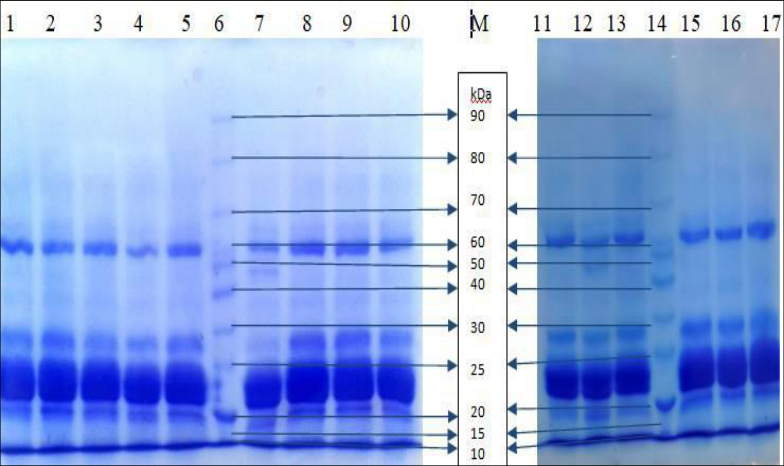 Figure 1
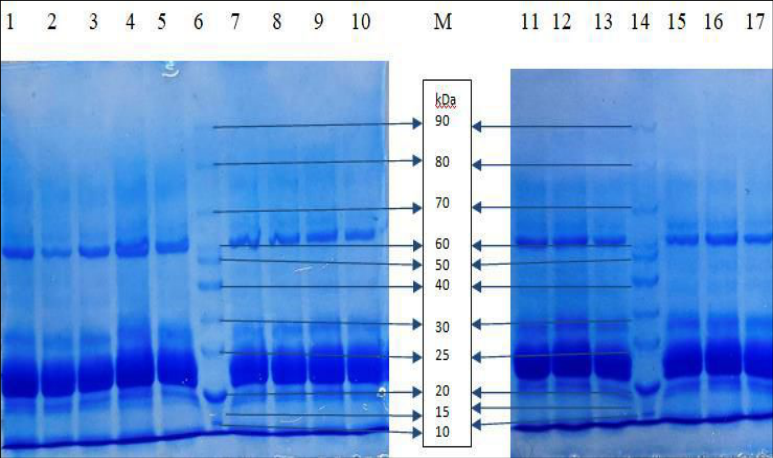 Figure 2
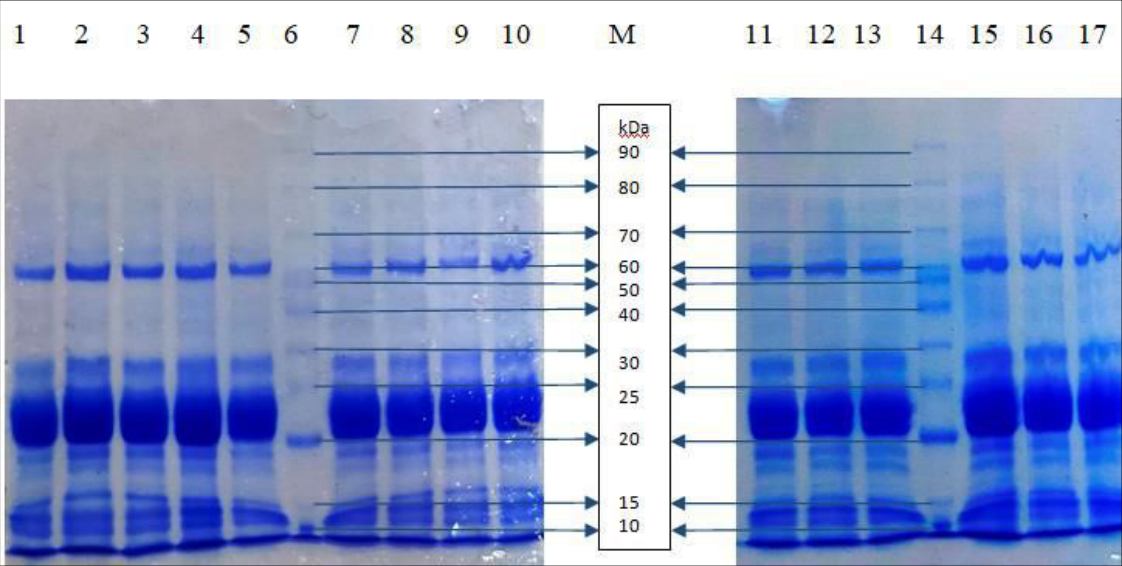 Figure 3
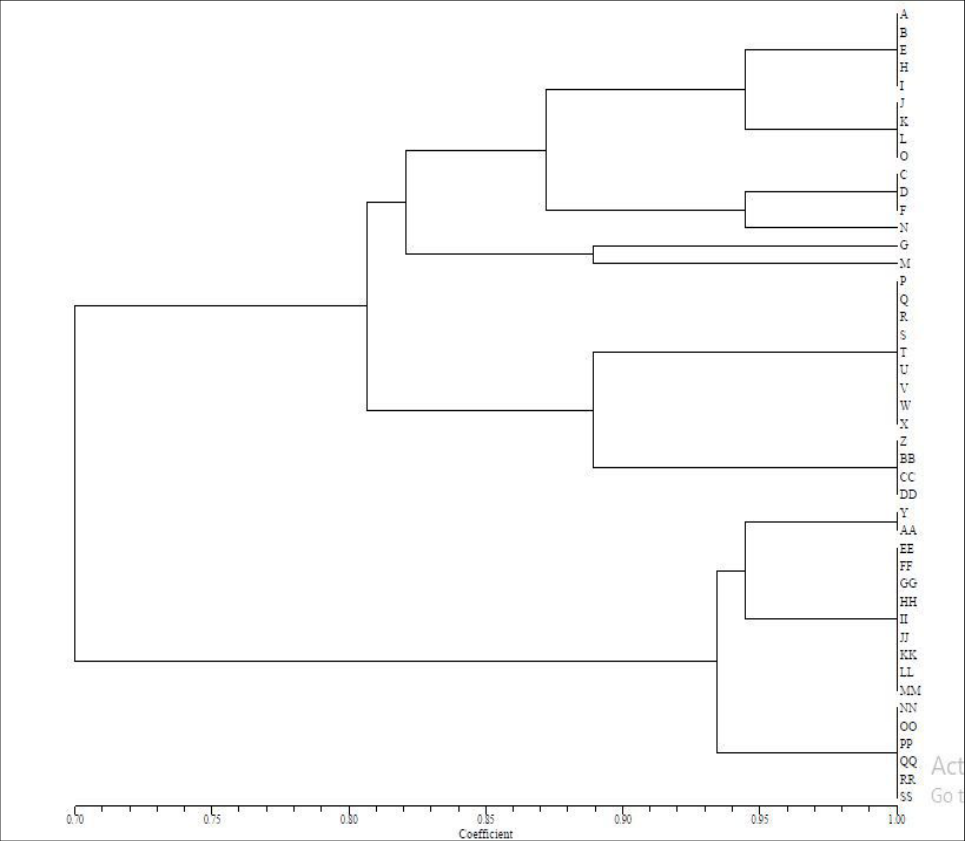 Figure 4
Introduction
Adzuki bean [V. angularis (Willd.) Ohwi & Ohashi] commonly known as azuki and small red beans is an important food legume crop. It is mostly grown under a wide range of climate conditions including warm temperate, tropical regions, short growing season and dry conditions. The growth of the adzuki bean is similar to that of the other edible beans. It is native to the North-Eastern part of China and grown in more than 30 countries. Based on characteristics of seed size and colour, genetic factors, cultivar type, cultivation and harvest time, climate and region where it was cultivated, there are several numbers of varieties of adzuki beans present. In Japan it has been used as an ingredient in traditional confections and sweet desserts, such as wagashi, youkan, manju and amanatto (Gohara et al., 2016) [3] . Genetic diversity or genetic variation is one the most applied subjects being adapted by popular researchers of the world. The presence of genetic diversity /variation within organisms, especially in plants is key for the plant breeding purpose. It can be determined by using various approaches like morphology, electrophoresis and DNA based analysis. Among the various biochemical techniques, electrophoresis by Sodium Dodecyl Sulfate Polyacrylamide Gel Electrophoresis (SDS-PAGE) is one of the most convenient and consistent methods for exploring the protein patterns of plant because of the significantly independence of seed protein on various factors like environmental, rationality and adaptability (Sher et al., 2020) [11] . It is considered to be a universal technique for separation and estimation of proteins on the basis of size and molecular weight (Pavlova et al. 2017) [9] . Seed protein patterns obtained by SDS-PAGE have been effectively used to resolve the total proteins, to observe inter and intra specific diversity, phylogenetic relationships and to study the genetic similarity index of crops (Jukanti et al., 2017) [6] . In the present day agriculture imbalanced and indiscriminate use of chemical fertilizers, growth regulators, pesticides for enhancing crops has negatively affected the soil quality and crop ecosystem. Gradual increase in costs of crop production has become a major cause of distress in the farmers. Double the farmer's income by 2022 is a big challenge to the scientists and researchers, to achieve this objective of the Union Government recently; Zero Budget Natural Farming (ZBNF) is being known to be the best farming approach (Verma et al., 2018) [12] . Naturally grown organic food products without synthetic insecticides and fertilizers are being observed as more healthier and safer than the inorganic food products. Adzuki beans are also included in beans which are one of the foods that are produced under organic farming. Presently, adzuki beans have attracted attention because of their considerable health benefits and functional components. Major biochemical component of adzuki beans proteins which have beneficial effects on human health. The available literature lacks the information on the comparison of protein profiling of adzuki bean genotypes grown under inorganic, organic and ZBNF systems. Therefore, in the present study efforts were made to explore the genetic diversity and protein profiling of inorganic, organic and ZBNF adzuki bean genotypes by SDS-PAGE
Materials and Methods
Materials and Methods
Plant material and treatments
The field experiment was conducted in randomized block design (RBD) during Kharif season of 2018-2019 at the Experimental-Farm of the Department of Organic Agriculture and Natural Farming, CSK Himachal Pradesh Krishi Vishvavidyalaya, Palampur (India). The fifteen adzuki bean genotypes were raised on Randomized Complete Block with three replications grown under three production systems i.e. inorganic (NPK was applied @20:40:20 kg/ha at the time of sowing), organic (Vermicompost (VC) was applied @5tonns/ha) and ZBNF (Ghanajeevamrit (A paste was prepared by using 100 kg mixture of local cow, buffalo and goat dung, 1 kg Jaggery, 2 kg of pulse flour, handful of soil from bund of farm and 5 liters of cow urine. The paste was allowed to ferment for 48 hrs. in shade. The fermented paste was then dried under sunlight with stirring using a wood stick to form fine particles) was applied as basal dose @40kg/ha along with the spray of 10% concentration of Jeevamrit (Fresh local cow dung (10 kg), aged cow urine (10 liters), Jaggery (2 kg), pulse flour (2 kg) and a handful of soil from the bund of farm were added in a barrel containing 200 liters of water and stirred in clockwise direction)). In the Zero Budget sowing Jeevamrit spray was done at the interval of 15 days till the physiological maturity of the crop. The sowing was done on 30 th May, 2018. The plot size was 6m×30cm×2. Samples were used for protein profiling during the year 2018-2019.
Protein extraction and Protein profiling
Total seed proteins of 15 genotypes grown under three different production systems i.e inorganic, organic and ZBNF were extracted. Weighed 0.5g oven dried mature seed sample of adzuki bean transferred it in a pre-chilled pestle and mortar under ice-cold condition, added 10 ml Sodium Phosphate buffer (0.1 M, pH 7.2), 25µl β-mercaptoethanol and polyvinylpyrrolidone (12 mg) then ground it, the content was centrifuged at 18,000 rpm for 10 min. The supernatant was collected and kept at -20 °C for further protein profiling of adzuki bean genotypes by SDS-PAGE as described by Laemmli, 1970. The molecular weight of the proteins was estimated by using Benchmark TM unstained protein Ladder (Thermo Fisher Scientific, Invitrogen Bioservice Pvt. Ltd., Bangalore, India) ranging from 10-220 kDa which was used as a standard. The electrophoretic gel was prepared on polyacrylamide gels. The mixture of polyacrylamide contained 5.0 ml 30% acrylamide, 5.0 ml of 1.5 M Tris-HCl buffer (pH 8.8), 0.2 ml of 10% SDS, 9.7 ml of double distilled water, 100 µl of 10% APS and 6.75 µl of TEMED. The protein was solubilized on 1x volume of reducing sample buffer (1.25 ml of 0.5 M Tris-HCl (pH 6.8), 1.0 ml of glycerol, 2.0 ml of 10% SDS, 0.2 ml of βmerchaptoethanol, 1.0 mg of bromophenol blue and final volume made up 5.0 ml with double distilled water). The 10μl protein sample of each genotype was loaded into the well of stacking gel contained 1.33 ml of 30% acrylamide, 2.50 ml of 0.5 M Tris buffer (pH 6.8), 0.2 ml of 10% SDS, 6.00 ml of double distilled water, 100 µl of 10% APS and 13.5 µl of TEMED. SDS-PAGE were run on constant 60 V for 3 hrs. and stained by Coomassie brilliant blue R-250 staining.
Phylogenetic data analysis
The protein data matrix and construction of a dendrogram was done according to 'Unweighted Pair Group Method and Arithmetic Mean' method using the online dendrogram construction utility, Dendro UPGMA (https://usuaris.tinet.cat/debb/UPGMA/ Garcia-Vallve and Puigbo 2002) [2] . Bands were marked as '1' and '0' based on their presence or absence respectively. The Jaccard similarity coefficient was calculated using a binary matrix generated by the SDS-PAGE profile.
Results
Results
Protein profiling
The molecular weight of the proteins was calculated on the basis of relative mobility of the protein in the marker. The SDS-PAGE analysis showed remarkable variability in the banding pattern (Figure 1 to 3). The present study revealed the presence of low, medium as well as high range molecular weight proteins and phylogenetic relationship.
Discussion
The present study revealed that among three different systems (inorganic, organic and ZBNF) in adzuki bean genotypes. Genotypes grown under organic system, one new distinct protein band (51.1 to 55.8 kDa) was detected (Figure 2), however it is missing in genotypes grown under inorganic condition, this result was accordance with Selvakumar et al., (2012) [10] who have reported one new induced protein band detected in black gram in response of bio-fertilizers, whereas in grown under ZBNF system, detected some distinct protein bands of low molecular weight (10.6 kDa, 12.2 to 12.5 kDa, 13.0 to 13.8 kDa and 17.3 to 17.7 kDa), which were not found in genotypes grown under either in inorganic or organic system (Figure 3). These different resolved protein bands mainly belong to 11S and 2S globulins as seed storage protein (Malviya et al., 2008 and Hammed et al., 2012) [10,4] . Similarly, based on the banding pattern grown under the ZBNF system detected a total number of 18 bands as compared to adzuki bean genotypes grown under inorganic and organic conditions. Phylogenetic analysis in present study demonstrates that dendrogram generated from the SDS-PAGE profiles of adzuki bean genotypes grown under inorganic, organic and ZBNF condition formed two major clusters i.e Cluster-1 (genotypes grown under inorganic system) and Cluster-2.
The second cluster (including the genotypes grown under organic and ZBNF system) was further sub-divided into two sub-clusters. Genotypes grown under ZBNF system total 7 numbers of intense bands detected, although inorganic and organic system genotypes had a total number of intense bands 5 in each. Chen et al., (2017) [1] have reported 4 intense bands in adzuki bean as molecular weight of 59, 46, 28, and 25 kDa grown under inorganic system and present investigation more or less similarity with this findings as five intense bands with molecular weight ranged from 17.8 to 19.3 kDa, 26.3 to 25.4 kDa, 51.3 to 51.9 kDa, 14.7 to 15.0 kDa and 15.5 kDa.
Conclusions
Based on present study it can be concluded that SDS-PAGE technique if done efficiently can be a useful tool to understanding the genetic diversity and phylogenetic relationships among genotypes grown under three different production systems i.e. inorganic, organic and ZBNF. The present study also demonstrates that genotypes grown under ZBNF system exhibited some distinct protein bands of low molecular weight (10.6 kDa, 12.2 to 12.5 kDa, 13.0 to 13.8 kDa and 17.3 to 17.7 kDa) ) belong to 11S and 2S globulins than genotypes grown under inorganic and organic system.
Figures and tables from the paper
References
12 in the original paper- Chen Z, Wang J, Liu W, Chen H. Physicochemical characterization, antioxidant and anticancer activities of proteins from four legume species. Journal of Food Science and Technology. 2017;54:964-972.
- Garcia-Vallve, Puigbo P. DendroUPGMA: A dendrogram construction utility [Internet]. 2002. Available from: https://usuaris.tinet.cat/debb/UPGMA/
- Gohara AK, Pereira de Souza AH, Gomes STM, Evelázio de Souza N, Visentainer JV, Matsushita M. Nutritional and bioactive compounds of adzuki beans cultivars using chemometric approach. Ciencia e Agrotecnologia. 2016;40:104-113.
- Hameed A, Qureshi M, Nawaz M, Iqbal N. Comparative seed storage protein profiling of mung bean genotypes. Pakistan journal of botany. 2012;44:1993-1999.
- Hanis MY, Hasnah H, Dang TN. Total phenolic content and antioxidant capacity of beans: organic vs inorganic. International Food Research Journal. 2017;24:510-517.
- Jukanti AK, Dagla HR, Kalwani P, Goswami D, Upendra JM, Kalia RK, et al. Grain protein estimation and SDS-PAGE profiling of six important arid legumes. Legume Research. 2017;40:485-490.
- Laemmli UK. Cleavage of structural protein during the assembly of the head of bacteriophages T4. Nature. 1970;227:680-685.
- Malviya N, Nayak S, Yadav D. Characterization of total salt soluble seed storage proteins of grain legumes using SDS-PAGE. PGR New letter. 2008;156:50-56.
- Pavlova AS, Dyudeeva ES, Kupryushkin MS, Amirkhanov NV, Pyshnyi DV, Pyshnaya IA. SDSPAGE procedure: Application for characterization of new entirely uncharged nucleic acids analogs. Electrophoresis. 2017;0:1-5.
- Selvakumar G, Reetha S, Thamizhiniyan P. Response of biofertilizers on growth, yield attributes and associated protein profiling changes of blackgram (Vigna mungo L. Hepper). World Applied Sciences Journal. 2012;16:1368-1374.
- Sher K, Nisar M, Subhan M, Hazrat A, Muhammad A, Hanci F, et al. Protein profiling of indegnous common bean through SDS-PAGE. Bioscience Research. 2020;17:688-698.
- Verma S, Chandel RS, Kaushal R, Yankit P, Sharma S. Soil quality management through Zero Budget Natural Farming. ICAR news: A Science and Technology Newsletter. 2018;24:8-9.