
Research article · 2024 · Full text
International Journal of Agriculture and NutritionInnovations in the fortification of bread with plant-based proteins
Volume 6(1) · Pages 85–87 · DOI: 10.33545/26646064.2024.v6.i1b.143 ↗
Research areasPhytase and its Applications
Abstract
Author-writtenThe escalating demand for plant-based dietary options, coupled with the global challenge of malnutrition, has propelled the food industry towards innovative solutions. One such promising avenue is the fortification of bread with plant-based proteins. This review delves into recent advancements, methodologies, and the potential health implications of integrating plant-based proteins into bread products. By examining the sourcing, technological challenges, consumer acceptability, and nutritional outcomes, this article aims to provide a comprehensive overview of the current state and future prospects of fortified bread products.
Summary
Source-checkedPlain-language reading of the full paper, prepared with AI and checked against the text. Each point links to the authors' own words.
Why it matters
- The food industry is seeking innovative solutions due to a global challenge of malnutrition and an increasing demand for plant-based diets. View evidence ↗
- Fortifying bread with plant-based proteins aims to improve the nutritional profile and protein content of a universally consumed staple food to meet global dietary needs. View evidence ↗
- Plant-based proteins from seeds, nuts, grains, and legumes provide essential minerals, vitamins, fibers, and amino acids. View evidence ↗
The question
- The paper aims to synthesize and critically evaluate recent innovations regarding the fortification of bread using plant-based proteins. View evidence ↗
What they did
- The authors conducted a review examining nutritional outcomes, technological challenges, sourcing, and consumer acceptability of plant-based protein integration in bread. View evidence ↗
What they found
- Grains, such as barley, amaranth, and quinoa, make up 25% of sources and are valued for providing all nine essential amino acids. View evidence ↗
- Nuts and seeds (such as flaxseeds, chia, and almonds) contribute 20% of the protein sources and enhance the bread's antioxidant and omega-3 fatty acid content. View evidence ↗
- Novel sources, including microalgae, spirulina, and hemp seeds, account for 25% of the protein sources used in fortification. View evidence ↗
- The addition of protein-rich ingredients can negatively impact gas retention and dough elasticity, which are necessary for bread softness and volume. View evidence ↗
- To maintain flavor and texture, producers use hydrothermal processing, enzyme treatment, emulsifiers, or hydrocolloids. View evidence ↗
- Microencapsulation is used to mask bad flavors, extend shelf life, and improve micronutrient bioavailability by encasing nutrients in a protective shell. View evidence ↗
- High-Pressure Processing (HPP) preserves nutritional quality by using non-thermal pasteurization to inactivate enzymes and pathogens. View evidence ↗
- 3D food printing allows for precise fortification and the creation of tailored nutrient profiles based on individual needs. View evidence ↗
What it means
- The authors conclude that fortifying bread with plant-based proteins is a dynamic innovation that provides significant sustainability and public health benefits. View evidence ↗
- The complexity and cost of microencapsulation technology may hinder its adoption in low-resource settings. View evidence ↗
- High investment costs for equipment make High-Pressure Processing (HPP) less accessible to small-scale producers. View evidence ↗
Visual summary
1 visualsIllustrations explain the paper; they do not show study data.
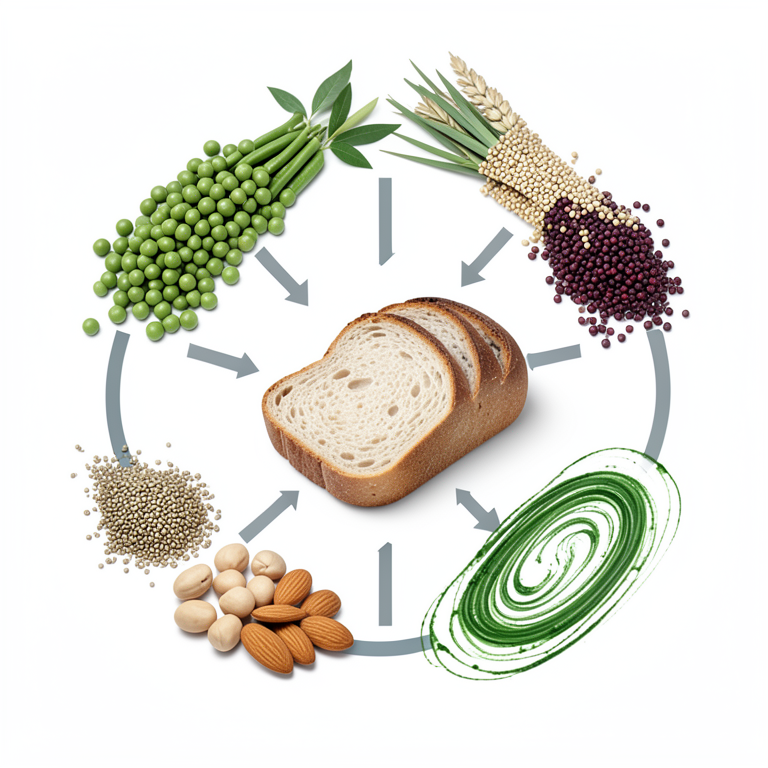
Distribution of Plant-Based Protein Sources
AI-generated conceptual illustration (wheat bread loaves and plant-based protein sources). It explains the idea and does not show study data.
View source evidence ↗Figures & tables
From the original paper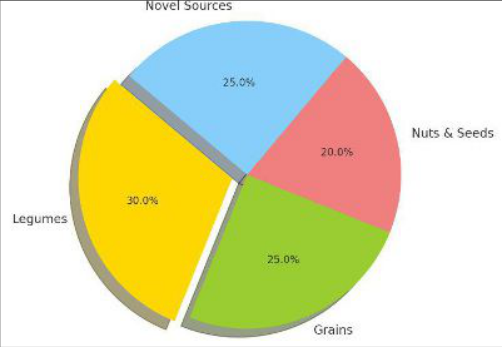 Figure 1
Introduction
The fortification of bread with plant-based proteins embodies a transformative approach in the realm of food science, addressing contemporary dietary needs and environmental concerns. This innovative practice merges nutritional enhancement with sustainability, aiming to elevate the health benefits of one of the world's most universally consumed staple foods. The main objective of fortifying bread with plant-based proteins is to increase the protein content and improve the nutritional profile of bread products, making them more aligned with the dietary needs of a diverse and growing global population. This endeavor not only seeks to cater to the increasing consumer preference for plant-based diets but also to address the urgent need for sustainable food production practices that minimize environmental impact (Hoehnel A, et al., 2019) [1] . The move towards plant-based protein fortification in bread is driven by several key factors: the rising awareness of the health, environmental, and ethical implications of animal-based protein consumption; the global challenge of protein-energy malnutrition; and the growing prevalence of lifestyle-related diseases. Plant-based proteins, derived from sources such as legumes, grains, nuts, and seeds, offer a rich array of essential amino acids, fibres, vitamins, and minerals. Their incorporation into bread can significantly enhance the nutritional value of this widely consumed food, providing benefits such as improved heart health, weight management, and reduced risk of chronic diseases (Jeske S, et al., 2018) [2] .
Main objective
The main objective of this paper is to critically evaluate and synthesize the latest innovations in the fortification of bread with plant-based proteins.
Fortification of bread with plant-based proteins
Fortifying bread with plant-based proteins involves integrating protein-rich plant-based ingredients into traditional bread recipes to enhance their nutritional value, particularly their protein content. This process aims to cater to the growing consumer demand for healthier, more sustainable dietary options while maintaining the sensory qualities that make bread universally loved. Among the diverse sources of plant-based proteins are legumes like peas, chickpeas, and lentils, which are not only rich in protein but also fiber, vitamins, and minerals, contributing to the bread's nutritional density and improving its profile in terms of essential amino acids (Day L, et al., 2013) [3] .
Grains such as quinoa and amaranth are also favoured for their complete protein profiles, containing all nine essential amino acids necessary for human health, and can be milled into flour and used in bread formulations. Nuts and seeds, including almonds, chia, and flaxseeds, offer additional benefits as they are high in protein, healthy fats, and other bioactive compounds that can enhance the bread's nutritional content. These ingredients can significantly improve the bread's content of omega-3 fatty acids and antioxidants, promoting heart health and overall well-being. The incorporation of these plant-based proteins into bread requires careful consideration of their impact on the dough's texture, taste, and baking properties. Protein-rich ingredients can affect the dough's elasticity and gas retention, which are crucial for achieving the desired bread volume and softness. Techniques such as enzyme treatment, hydrothermal processing, and the use of hydrocolloids or emulsifiers are often employed to address these challenges, ensuring that the fortified bread retains its appealing texture and flavor. Furthermore, the process of fortification must navigate the balance between enhancing nutritional value and maintaining consumer acceptability (Nachay K, et al., 2019) [4] . This balance involves managing the flavours and textures introduced by plant-based proteins to ensure they complement the bread without overwhelming its traditional characteristics. Consumer preferences for natural, cleanlabel products have also guided the development of fortification strategies that prioritize minimal processing and the use of whole-food ingredients. As the food industry continues to innovate, the fortification of bread with plantbased proteins represents a key area of growth, driven by consumer interest in healthier eating options and the environmental benefits of plant-based diets. This evolving field promises to deliver products that are not only nutritious and sustainable but also enjoyable, meeting the needs of consumers looking for wholesome, plant-forward dietary choices (Kleba SA, et al., 2018) [5] .
Fig 1: Fortification of bread with plant-based proteins
The diagram provides a visual representation of the distribution of plant-based protein sources used in the fortification of bread, segmented into four categories: Legumes, Grains, Nuts & Seeds, and Novel Sources. This distribution underscores the multifaceted approach to enhancing the nutritional profile of bread, a staple food consumed worldwide, through the incorporation of diverse plant-based proteins. Legumes, which account for the largest segment at 30%, are a prime source of plant-based proteins for bread fortification. This category includes peas, lentils, chickpeas, and beans, known for their high protein content, essential amino acids like lysine, and additional benefits such as fiber, vitamins, and minerals. The prominence of legumes in this diagram highlights their nutritional value and versatility in bread formulations, offering a balanced amino acid profile that complements the inherent proteins in bread. Grains make up 25% of the sources and include quinoa, amaranth, and barley, among others. These are particularly valued for their complete protein profile, containing all nine essential amino acids, and their contribution to the bread's overall texture and flavor. Grains also bring a variety of micronutrients, such as B vitamins and minerals, enhancing the bread's nutritional density. Nuts and seeds, contributing 20%, are rich in protein, healthy fats, and other bioactive compounds like antioxidants. Almonds, chia seeds, and flaxseeds not only boost the protein content but also enhance the fatty acid profile of bread, offering omega-3 fatty acids which are beneficial for heart health (Rosell CM, et al., 2019) [10] . Their inclusion in bread fortification strategies underscores the aim to improve nutritional outcomes and cater to specific dietary needs, such as gluten-free diets. Novel sources, also making up 25%, include unconventional but increasingly popular protein sources like hemp seeds, spirulina, and other microalgae. These sources are recognized for their high-quality protein, containing all essential amino acids, and for their unique nutritional profiles rich in vitamins, minerals, and antioxidants. The exploration of novel sources reflects the ongoing innovation in food technology and nutrition science, aiming to diversify the protein sources in bread fortification and address sustainability concerns (Lai WT, et al., 2017) [8] .
Innovations in the fortification process
Innovations in food fortification processes have evolved significantly, aiming to address nutritional deficiencies globally, improve public health outcomes, and meet the increasing consumer demand for nutritionally enhanced foods. These advancements have been particularly important in tackling micronutrient malnutrition, often referred to as "hidden hunger," by enriching staple foods with essential vitamins and minerals. Microencapsulation involves encasing nutrients within a protective shell to preserve their stability and control their release. This technique has been widely studied for its application in fortifying foods with volatile or sensitive nutrients, such as omega-3 fatty acids, vitamins, and minerals that might otherwise degrade during processing or storage. Microencapsulation addresses several challenges in food fortification, including improving the bioavailability of micronutrients, masking undesirable flavors, and extending shelf life. However, the cost and complexity of the technology pose challenges for widespread adoption, particularly in low-resource settings. Nanotechnology involves manipulating substances at the molecular or atomic level to enhance the bioavailability and solubility of nutrients. This approach has been applied to fortify foods with micronutrients like iron, zinc, and calcium. The potential of nanotechnology in fortification lies in its ability to overcome limitations of traditional fortification methods, such as poor solubility and absorption of micronutrients. However, concerns over the long-term health effects of nanoparticles and regulatory challenges remain. Genetic modification and biofortification aim to increase the nutrient content of crops through genetic engineering or selective breeding. This strategy targets the root of micronutrient deficiencies by enhancing the nutritional profile of staple crops. Genetic modification and biofortification offer sustainable solutions to micronutrient deficiencies. However, public acceptance, ethical considerations, and the need for comprehensive safety assessments pose significant challenges. High-Pressure Processing (HPP) is a non-thermal pasteurization technique that can be used to preserve the nutritional quality of fortified foods by inactivating pathogens and enzymes without the use of high temperatures, which can degrade sensitive nutrients. HPP presents a promising method for preserving the nutritional integrity of fortified foods. The main limitation is the high investment cost for HPP equipment, making it less accessible for small-scale producers. 3D food printing offers unprecedented control over food composition, enabling the precise fortification of foods with tailored nutrient profiles. This technology allows for the customization of food based on individual nutritional needs. Studies exploring the use of 3D food printing for creating nutrient-dense snacks have shown promising results in terms of precision and customization. For example, 3D-printed snacks with tailored proportions of protein, fiber, and vitamins have been successfully produced for specific dietary requirements. While 3D food printing holds great potential for personalized nutrition and fortification, challenges related to cost, scalability, and the development of suitable "food inks" remain.
Conclusion
The exploration of innovations in the fortification of bread with plant-based proteins reveals a compelling intersection of nutrition science, food technology, and consumer health.
As global dietary patterns shift towards plant-based eating for health, environmental, and ethical reasons, the fortification of staple foods like bread with plant-based proteins stands out as a significant advancement. This approach not only addresses the nutritional deficiencies prevalent in various populations but also aligns with the sustainable food production and consumption goals. The integration of plant-based proteins into bread involves overcoming various challenges, including maintaining the sensory qualities of bread, ensuring the bioavailability of fortified nutrients, and addressing consumer acceptance. Innovations such as microencapsulation, high-pressure processing, and the use of novel protein sources, including legumes, seeds, and algae, have demonstrated considerable promise in enhancing the nutritional profile of bread while preserving its taste, texture, and shelf life. Moreover, these fortification strategies reflect a broader trend towards personalized nutrition, where foods are tailored to meet individual dietary needs and preferences. As research continues to advance, the potential for 3D food printing and nanotechnology in creating customized, nutrient-dense bread products could further revolutionize the field. However, the successful implementation of these innovations requires careful consideration of regulatory standards, cost implications, and the environmental impact of sourcing and processing plant-based proteins. Collaboration among scientists, industry stakeholders, policymakers, and consumers is essential to navigate these complexities and ensure that fortified bread products are accessible, affordable, and acceptable to a wide audience.
In conclusion, the fortification of bread with plant-based proteins represents a dynamic area of food innovation, offering significant benefits for public health and sustainability. As we move forward, continued research and development, along with an open dialogue between all stakeholders, will be key to maximizing the potential of these innovations. This endeavor not only promises to enrich our diets with essential nutrients but also to contribute to a more sustainable and health-conscious food system.
Figures and tables from the paper
References
6 in the original paper- Hoehnel A, Axel C, Bez J, Arendt EK, Zannini E. Comparative analysis of plant-based high-protein ingredients and their impact on quality of high-protein bread. Journal of Cereal Science. 2019;89:102816.
- Jeske S, Zannini E, Arendt EK. Past, present and future: The strength of plant-based dairy substitutes based on gluten-free raw materials. Food Research International. 2018;110:42-51.
- Day L. Proteins from land plants-potential resources for human nutrition and food security. Trends in Food Science & Technology. 2013;32(1):25-42.
- Nachay K, Malochleb M. Ingredients solve product development challenges. Food Technology. 2019;73:53-85.
- Orhevba BA, Salaudeen HO. Optimisation of the production process of bread fortified with soya protein ısolate and fonio flour blend. International Journal of Agriculture and Food Science. 2022;4(2):26-36. DOI: 10.33545/2664844X.2022.v4.i2a.95
- Lai WT, Khong NM, Lim SS, Hee YY, Sim BI, Lau KY, et al. A review: Modified agricultural by-products for the development and fortification of food products and nutraceuticals. Trends in Food Science & Technology. 2017;59:148-60.
Cited by 8
From OpenAlex, OpenCitations and reference lists read by Scinovex
- Fortified and functional foods: Trends, innovations, and their public health impact for future nutrient enrichment ↗
Md. Sakhawot Hossain, Md Abdul Wazed, Suvasish Das Shuvo, Zakia Sultana, Mst. Sultana Akhter Preya, Hafsha Khanom et al. · Journal of Agriculture and Food Research · 2025
Global malnutrition remains a critical public health challenge, necessitating innovative solutions to improve nutrient intake and health outcomes. Functional fortified foods, which incorporate essential vitamins, minerals, and bioactive compounds into commonly consumed foods, have emerged as a promising strategy to combat micronutrient deficiencies. This review addresses the process of development, evidence base, and public health relevance of fortified foods and…
❝ 29PDF - Nutritional characteristics and sensory aspects of pan bread fortified with different quantities of Chlorella vulgaris powder ↗
Rehab F. M. Ali, Ayman Mohammed El-Anany, Mona S. Almujaydil, Reham M. Algheshairy, Raghad M. Alhomaid, Hend F. Alharbi · Food Chemistry Advances · 2025
• CVP demonstrates a remarkable nutritional profile, characterized by high protein (53.65%). • The addition of CVP into bread formulations significantly enhances the protein, fat, fiber, and ash contents. • The sensory evaluation of developed bread samples with the inclusion of CVP at levels of 2–6% indicates a high overall acceptability among consumers. The current study aimed to investigate the…
❝ 6PDF - Micro nutrients and fortification of food commodities ↗
Ibrahim Jamil, Musab M Eltayeb, I Aezah · International Journal of Pharmaceutical Research and Development · 2025
Increasing of micronutrients in food commodities to improve the nutritional values of foodstuff is common practice these days. Fortification of food items with micro minerals has multiple health benefits. It important to study the status of these essential trace elements and vitamin in food items to avoid overload. The effect of deficiency or low intake of micronutrients in human population
- Studies on development technology of ragi beetroot fortified biscuits
Abhilasha Balu Shingote, Bhagyashree Krishna Gosavi, Dhiraj Satish Jamdar, Soham Milind Date, Shantanu Balasaheb Arekar · International Journal of Agriculture and Food Science · 2025
This research investigates the formulation of nutrient-dense ragi beetroot-fortified biscuits utilizing beetroot pomace and extract to enhance their physicochemical, sensory, and nutritional attributes. Ragi (finger millet), a gluten-free cereal, is abundant in calcium, iron, and fibre, whereas beetroot is rich in iron and antioxidants, rendering it an appropriate component for fortification. The study evaluated standardized biscuit formulations with varying ratios of ragi flour, refined wheat flour, and beetroot pulp. Sensory properties were evaluated on a 9-point hedonic scale revealed that
- Protein digestibility and glycemic response of detarium gum fortified cereal-based noodles ↗
Emma Johansson, Henrik Andersson, Lars Lindgren, Karin Nyström, E. Karlsson · International Journal of Clinical Biology and Biochemistry · 2025
The study investigates the potential of Detarium microcarpum seed gum (DG) as a functional ingredient to improve the protein digestibility and glycemic response of cereal-based noodles. The primary objectives were to assess the effects of DG incorporation on the cooking quality, protein digestibility, and glycemic index (GI) of wheat-sorghum composite noodles. The study also aimed to evaluate the sensory acceptability…
- Agronomic fortification of wheat (Triticum aestivum L.) using biosynthesized zinc nanoparticles
S. Nazma, T. Sudha, D.P. Biradar, PU Krishnaraj, S Chandrashekhar, H Ravikumar · International Journal of Research in Agronomy · 2024
Research was carried out at the Green Nanotechnology Laboratory, University of Agricultural Sciences, Dharwad, Karnataka, with a specific emphasis on the biosynthesis of zinc nanoparticles using Pseudomonas and actinobacteria. The zinc nanoparticles were biosynthesized and characterized through UV-Visible spectroscopy, Particle Size Analyzer (PSA), Scanning Electron Microscope (SEM), (EDX), X-Ray Diffraction (XRD) and Fourier Transform Infrared Spectroscopy (FTIR). After biosynthesis and characterization of the nanoparticles (NPs), a field study was conducted to fortify the wheat crop using bi
- Zinc biofortification: Strategy for improving yield and nutrition in fruits
Gayatri Verma, Yamini Sharma · International Journal of Agriculture Extension and Social Development · 2024
In the face of global malnutrition, biofortification of fruit crops is a promising technique to enhance nutritional quality. Micronutrient deficiencies and poor dietary quality affect many worldwide. Recent advancements in molecular biology expedite breeding processes to selectively enhance nutritional traits while preserving desirable agronomic characteristics. Integrating conventional breeding, molecular biology, agronomic practices, and post-harvest interventions, biofortification initiatives can improve nutritional quality, human health outcomes, and sustainable food systems. Agronomic int
- A study on the addition of moringa leaf powder and quinoa flour in chapati dough for enhanced nutritional value
Mariana Fernández, Diego González · International Journal of Advanced Chemistry Research · 2024
The study aimed to evaluate the nutritional enhancement of chapatis by incorporating moringa leaf powder (Moringa oleifera) and quinoa flour (Chenopodium quinoa), focusing on improving protein, fiber, vitamins, and minerals. The specific objectives included assessing the impact of these functional ingredients on the nutritional composition and sensory attributes of chapatis, as well as determining the optimal proportion of moringa leaf powder and quinoa flour for fortification. Three chapati formulations were prepared: (1) control chapati (100% wheat flour), (2) chapati with 5% moringa leaf po