
Research article · 2025 · Full text
International Journal of Agriculture and Food ScienceStudies on development technology of ragi beetroot fortified biscuits
Volume 7(5) · Pages 179–186 · DOI: 10.33545/2664844x.2025.v7.i5c.394 ↗
Research areasPolysaccharides Composition and Applications
Abstract
Author-writtenThis research investigates the formulation of nutrient-dense ragi beetroot-fortified biscuits utilizing beetroot pomace and extract to enhance their physicochemical, sensory, and nutritional attributes. Ragi (finger millet), a gluten-free cereal, is abundant in calcium, iron, and fibre, whereas beetroot is rich in iron and antioxidants, rendering it an appropriate component for fortification. The study evaluated standardized biscuit formulations with varying ratios of ragi flour, refined wheat flour, and beetroot pulp. Sensory properties were evaluated on a 9-point hedonic scale revealed that formulation T3 was most acceptable overall. Nutritional analysis demonstrated that the increase in beetroot content elevated water retention and moisture levels while enhancing the mineral content of the biscuits. The incorporation of ragi increased the amount of proteins and amount of fibre content of the biscuits while reducing fat content. The optimized biscuit formulation means proximate composition values were moisture (1.86%), fat (20.54%), protein (6.50%), ash (1.01%), crude fibre (0.59%), and carbohydrates (69.38%). The microbial analysis confirmed the stability of the biscuits during the storage period, ensuring product safety. These findings indicate the potential of beetroot-fortified ragi biscuits as a functional, nutrient-rich bakery product that addresses consumer demand for healthier food options. This research elucidates opportunities for the utilization of underutilized crops in value-added foods to promote nutritional security.
Summary
Source-checkedPlain-language reading of the full paper, prepared with AI and checked against the text. Each point links to the authors' own words.
Why it matters
- Ragi and beetroot are suitable for food fortification because ragi provides calcium, iron, and fiber, while beetroot contributes iron and antioxidants. View evidence ↗
- There is an increasing consumer demand for health-conscious and low-calorie food products. View evidence ↗
- Biscuits are a highly convenient and widely consumed bakery product, making them an effective vehicle for delivering nutritional supplements. View evidence ↗
The question
- The study aimed to develop nutrient-dense biscuits fortified with ragi and beetroot to improve their nutritional, sensory, and physicochemical properties. View evidence ↗
What they did
- The researchers tested five formulations (T0 to T4) with varying ratios of refined wheat flour and ragi flour, while T1 through T4 all contained 10 units of beetroot pulp. View evidence ↗
- Sensory properties were evaluated by a panel of 25 students and professionals using a 9-point hedonic scale. View evidence ↗
- Chemical composition, including moisture, protein, fat, ash, and crude fiber, was analyzed following AOAC (2005) standard procedures. View evidence ↗
What they found
- Based on the 9-point hedonic scale, formulation T3 was found to be the most acceptable overall in terms of sensory properties. View evidence ↗
- Moisture content increased with beetroot fortification, rising from 1.51% in the control (Tc) to 2.36% in formulation T4. View evidence ↗
- Fat content decreased as beetroot levels increased, dropping from 22.76% in the control to 18.34% in T4. View evidence ↗
- Protein content improved with fortification, increasing from 5.40% in the control to 7.65% in T4. View evidence ↗
- The ash content, indicating mineral presence, increased from 0.80% in the control to 1.24% in T4. View evidence ↗
- Crude fiber content increased from 0.42% in the control to 0.80% in T4. View evidence ↗
- The control sample (Tc) exhibited the highest spread ratio, indicating it expanded the most and was the thinnest among the samples. View evidence ↗
What it means
- The authors conclude that beetroot-fortified ragi biscuits are a practical, nutrient-dense functional food that meets the demand for healthier eating options. View evidence ↗
- The authors suggest that future research should explore different storage settings, processing methods, and fortification levels to further optimize quality. View evidence ↗
Visual summary
3 visualsIllustrations explain the paper; charts are replotted from the paper's own table values.
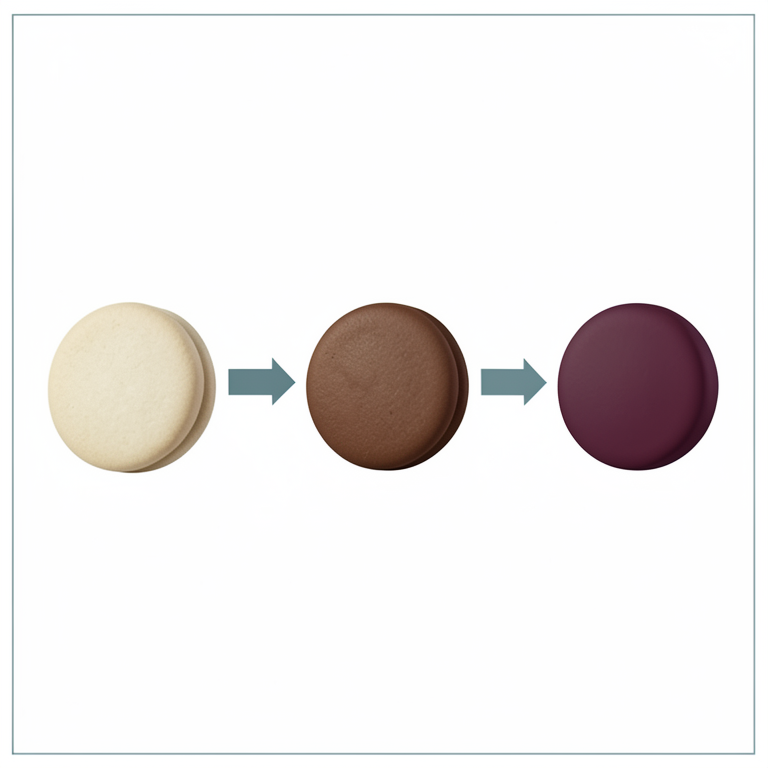
Biscuit Formulation Comparison
AI-generated conceptual illustration (ragi and beetroot fortified biscuits). It explains the idea and does not show study data.
View source evidence ↗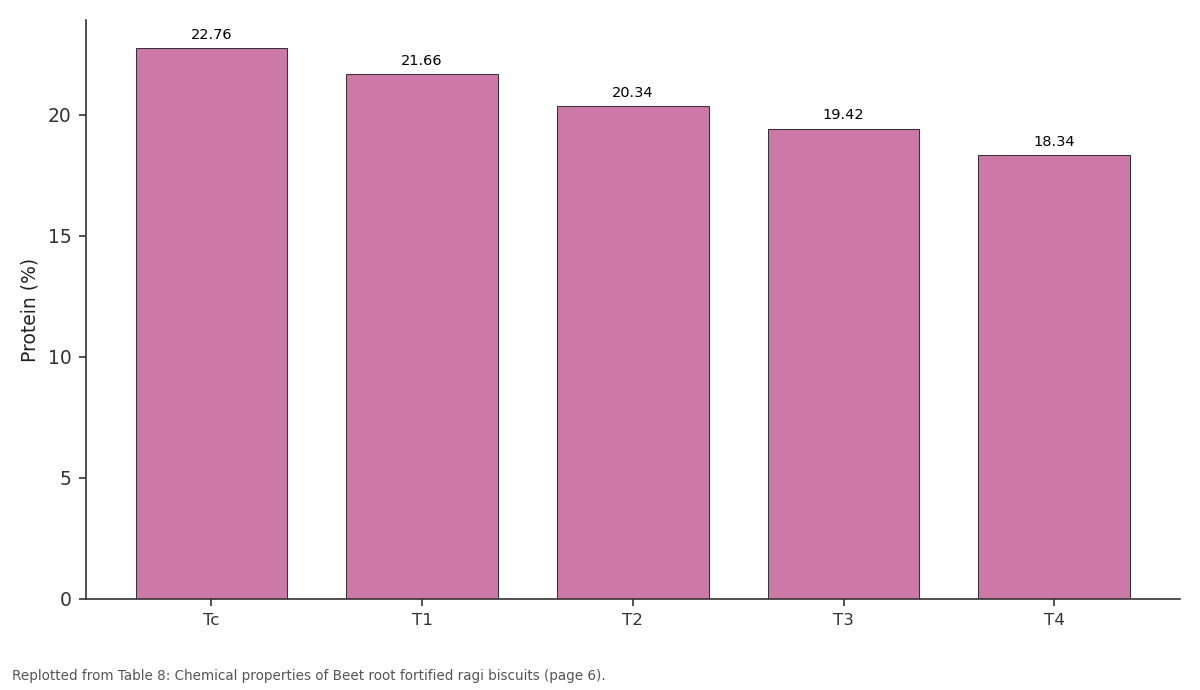
Fat (%): Tc vs T1 vs T2 vs T3 vs T4
Replotted from Table 8 (page 6) of the original paper. Every bar is the paper's own table value.
View source evidence ↗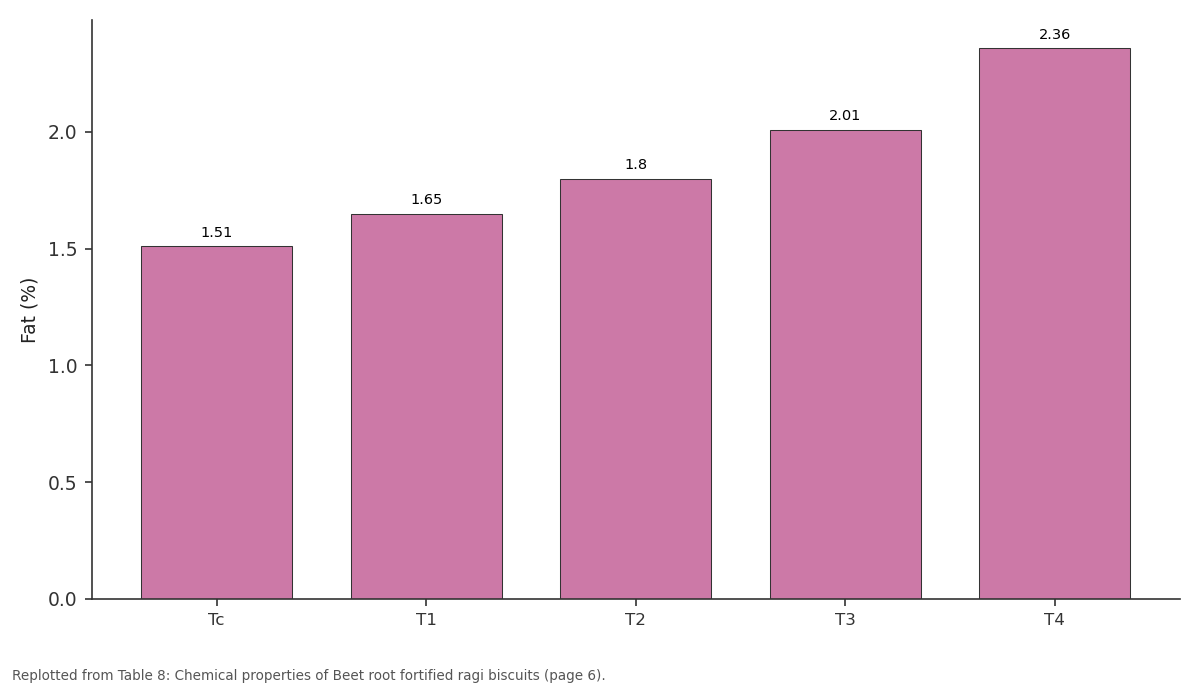
Moisture (%): Tc vs T1 vs T2 vs T3 vs T4
Replotted from Table 8 (page 6) of the original paper. Every bar is the paper's own table value.
View source evidence ↗Figures & tables
From the original paper Table 1
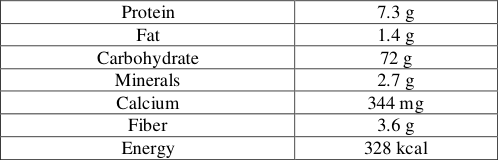 Table 2
 Table 3
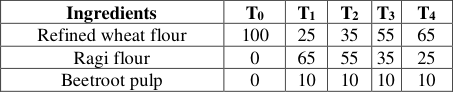 Table 4
 Figure 1
 Table 5
 Table 6
 Table 7
 Table 8
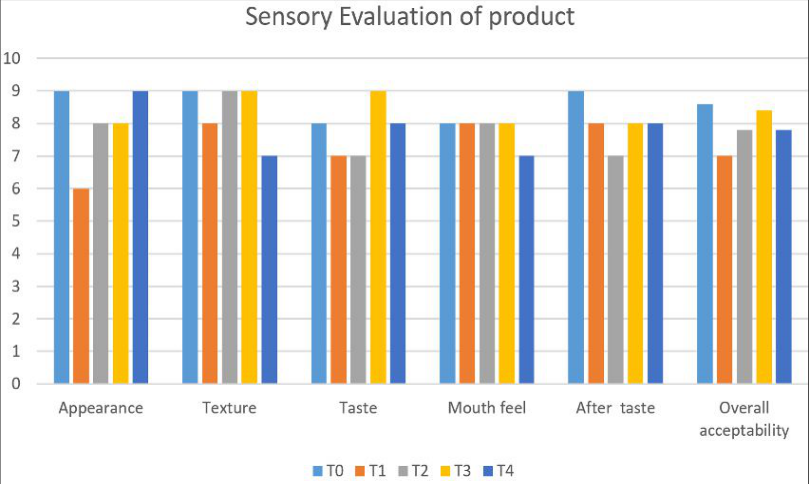 Figure 2
Introduction
Millets may have been the first cereal grain eaten in residential settings and are among the earliest foods known to humans. Millets are tough, small-seeded grasses that thrive in arid regions as in areas with limited soil fertility and minimal moisture availability. Millets are distinct from other cereals due to a shared set of traits. Millets can tolerate relatively poor soils, thrive in arid environments, and need minimal outside assistance. They serve as a staple food and offer higher nutritional value compared to other cereals. Millets are still a staple crop in many homes, and India is the world's largest producer. (Nagaraja et al. 2024) [19] Whole millets can last for more than two years if stored correctly. Since millet protein does not contain gluten, it cannot be used as a stand-alone component in baked goods, which are usually created from cereal flours combined with other ingredients. Furthermore, customers in the food, beverage, and cosmetics sectors are moving toward better lifestyles, which is driving up demand for low-calorie, health-conscious products. Evolving eating habits demonstrate greater awareness and inventiveness in cooking techniques, in contrast to the past when people stuck to basic meals such chapattis, rice, lentils, corn, and millet with little variation. (Nielsen et al. 2016) [21] . Ingredients are now essential to the food industry because of this shift, which enhances and adds satisfaction to the eating experience. Food ingredients are a focus of study and development to improve taste and visual appeal because food nowadays is about more than just sating hunger; it's also about the flavours that enrich the experience. Nowadays, bakery goods are widely used in India and are favoured and adored by nearly everyone, regardless of age or social status. The nation's economic growth and the improvement of people's health are significantly influenced by the bakery industry.
International Journal of Agriculture and Food Science https://www.agriculturaljournals.com (Pop et al. 2019) [22] . As seen by the more than 2.5-fold rise in bakery product output over the past 20 years, bakery goods are getting more and more popular in India. Three million tons of bakery goods, including bread, cookies, and cakes, are produced in India. Bakery products are demanded more and more all over the world because urbanization is growing rapidly and also women employment in industries as well as public sectors is spiking. Bread, rolls, sweet dough products, biscuits, cookies, crackers, biscuits, doughnuts, pastries and cakes are common bakery products, consumed widely throughout the world. The per capita consumption of various bakery products is over 100 kg in western developed nations. (Baker et al. 2014) [5] . Due to shifting demographics, government regulations, and market preferences, nutritional enrichment is currently of importance. The industry is becoming conscious of the need for nutrient-dense food items as a result of these considerations. One strategy to satisfy the demand for nutrient-dense foods, especially baked goods, is to take protein supplements. The bakery goods' nutritional value is widely acknowledged. High-quality non-wheat flours are being used to enhance the products. In order to counteract the protein deficiency that is common around the world, bakery items can be an effective means of delivering the additional proteins to the intended people.
One of the most well-liked and extensively consumed processed foods in India are biscuits, which are ready to eat, affordable, and easy. An estimated 10 lakh tons of cookies are produced year by both the organized and unorganized sectors, with a growth rate of roughly 5-7 percent for the general variety and 20-40 percent for the cream and fancy kinds (Galla et al., 2014) [9] . According to Narender et al.
(2007), the average person in India consumes 8 kilogram of cookies annually, compared to 15 kg in wealthy nations.
Ragi
In portions of India and eastern and central Africa, finger millet (Ragi, Eleusine coracana) is a staple grain. Protein, iron, calcium, phosphorus, fiber, and vitamins are all abundant in it. The iodine concentration is thought to be the greatest of all the dietary grains, while the calcium content is higher than that of any cereal. In addition to having the highest quality protein, ragi also contains phosphorus, vitamin A, vitamin B, and necessary amino acids (Gopalan et al., 2004) [10] . Ragi is therefore a healthy food for growing children, expectant mothers, elderly individuals, and patients. (Tadele, 2019) [26] . [14] [10] The biggest amount of calcium, antioxidants, and phytochemicals are found in ragi, which facilitates easy and gradual digestion. As a result, it effectively lowers blood glucose levels in diabetic individuals. Because of the fibers' bulk and slower rate of digestion, we feel fuller and consume less calories, which may help us avoid consuming too many calories. Because of its low sugar content and gradual release of glucose and sugar into the body, ragi is therefore regarded as the perfect diet for those with diabetes. Traditionally, fermentation or malting are used to process ragi (Anamika Gautam and Vandana Sati, 2019) [3] . Finger millet's digestibility, sensory appeal, and nutritional value are all enhanced by malting, which also has a noticeable effect on reducing anti-nutrients. Finger millet has better malting qualities than other millets and is ranked second only to barley malt. Malting has several advantages, including the synthesis of lysine and tryptophan, the development of vitamin C, and an increase in phosphorus availability. Weaning food, quick mixes, beverages, and pharmaceutical goods are all made from malted and fermented ragi flour. Nutritional composition of cookies is high because of Ragi is the rich source of calcium it is also having protein, fat, carbohydrate, minerals, fibers etc. Ragi is also having medicinal uses. It is use for weigh control in weight losing. Is also use for bone health because it is rich in calcium which helps in strengthening bones. It also helps to control blood sugar level in condition of diabetes. Ragi is also used for controlling the body fat or cholesterol.
Beetroot
Commonly referred to as "chukander", beet root (Beta vulgaris L.) is mostly grown in India for its vegetable and juice qualities. It is a crop that grows every two years. It yields on an average about 31.45 t/ha of roots. The roots are blood red in color with thin skin. It is a direct sown crop, which can be harvested in 120-130 days. It grows up to 40 to 52cm in height. The nutritional benefits of beet root are very well known. Each 100g of pulp contains 7.96% sugar, 9.96% carbohydrates, 1.68% protein, and 6 mg of vitamin C. Additionally, it is a great source of iron, calcium, magnesium, copper, phosphorus, and sodium. Beta-carotene and other carotenoids are found in the beet root's green, leafy portion, which is also nutritious. [13] Compared to spinach, the green leaves of the beetroot plant contain more iron. The most widely used beet roots are deep red in color and can be eaten raw or cooked and used in salads or juice (Grubben and Denton 2004) [12] . According to reports, beet root powder has therapeutic benefits, especially for enhancing blood quality and digestion (Priti Jain et al., 2017; Delgado Vargas et al. 2000) [15,7] . It is the most potent food source for human health in general. Compared to practically all other vegetable juice powders, it detoxifies the body more quickly and effectively. Few individuals incorporate it into their daily diet, despite the fact that it is well known for its therapeutic properties and restorative health benefits. Beet root powder can be used to make beet root juice quickly at any time. Finally, entire present project was carried out on "Studies on Development of Technology for Production of Beet Root Fortified Ragi Biscuits" was carried out because ragi is good source of calcium and iron which help to increase bone density and increase hemoglobin of blood so as nutritional point of view ragi should require to exploration in value added product that is biscuits because biscuits are one of most widespread bakery product and which is most convenience to consumers. finger millet can be used in different food formulations for making value added products due to its well-balanced protein profile and gluten free properties. Even though this millet's consumption pattern is unique and will remain so, it is crucial that it be made more widely known. Additionally, creating foods that are palatable to the general public can aid in encouraging the consumption of this millet. (Vinay et al. 2021) [27] . Another interesting and innovative approach behind this project is that addition of beet root pulp into ragi biscuits because beet root is good source of iron and riboflavin which help to control chelosis, hence finally it should be concluded that ragi and beet root has good nutritional profile however consumers are not utilizing such ingredient directly hence it should converted into value added product that is beet root fortified ragi biscuit that is more convenience to consumer as well as has good nutritional profile.
Materials and Methods
Materials: Required materials like ragi flour, fat, sugar, beetroots etc. are purchased from local supermarket of Loni Kalbhor. The equipment and chemicals were availed from School of Food Technology, MIT ADT University, Pune (MS).
Analytical methods:
In accordance with the methodology provided by (AOAC, 2005), the grains were analyzed for their chemical composition, specifically moisture, protein, fat, ash, and crude fiber. The findings of the duplicate nutrient analyses were presented on a dry weight basis.
Proximate analysis:
Samples' various chemical characteristics, including their moisture content, ash, fat, protein, and total carbohydrates, were examined. Three duplicates of each determination were made, and the average value was used to represent the results.
Total carbohydrate
Total carbohydrate content of the samples was determined as total carbohydrate by difference that is by subtracting the measured protein, fat, ash and moisture from 100 phenol sulphuric acid method as given by AOAC (2005).
Ash
Churning the sample over an electric heater and drying it at 100 o C. Ash was then heated to 550 degrees Celsius for five hours in a muffle furnace. This formula was used to calculate it: Weight of Ash % Ash = × 100 Weight of sample
Spread Ratio
The spread ratio was determined by dividing the biscuit's diameter by its thickness.
Diameter of biscuit Spread Ratio = Thickness of biscuit
Diameter of biscuit Spread Ratio = Thickness of biscuit
Ragi's kernel weight in thousands (grams)
After counting the 1000 ragi grains, the weight of the thousands of kernels was measured in grams using a weighing scale.
The measuring cylinder was filled with 25 milliliters of toluene, and then 1000 grains were added. The toluene's increased volume was measured in milliliters, or thousand kernel volume.
Bulk density of ragi grains calculated by dividing mass of grains sample by volume of grains sample.
Mass of Grain Sample (grams) Bulk Density =
Volume of Grain Sample (millilitres)
Angle of repose (degrees) of Ragi
A pile of ragi grains was poured on a paper. The height of the pile from the base was measured. Then the radius of pile was noted. The formula given below was used to calculate the angle, Height of the grain pile Angle of repose = tan -1 Radius of grain pile
The 50 gm of ragi flour was taken and immersed into the water. Then excess water was removed and saturated sample weighed. WAC was calculated by using the formula, Final weight of saturated sample-initial weight of dry sample WAC (%) = × 100 Initial weight of dry sample Weight(g) and Length(cm) of beetroot Weight of beetroot measured by laboratory weighing balance and length was measured by scale.
Colour and shape of beetroot
Colour and shape of beetroot was observed visually.
Edible index and Waste index of beetroot
The edible and waste portion were separated using peeler and knife. Nutritional analysis Nutritional analysis for moisture content, crude protein content, crude fat, ash was determined by standard procedure given by AOAC (2002) [4] , while total carbohydrate was determined by standard procedure using phenol and sulphuric acid AOAC (1990). A panel of 25 people, including postgraduate students and professionals from the School of Food Technology at MIT ADT University in Pune, conducted the sensory evaluations. The 9-point hedonic scale was used to assess the sensory perception. (Meilgaard, et al. 1999) [17]
Results and discussion
The purpose of the current study was to investigate potential ways to improve the nutritional content of the product using beetroot powder and ragi flour, and to see how it affects the nutritional and sensory qualities. The findings from the current study are displayed under several pertinent topics.
Ragi's physicochemical characteristics:
The physical properties of grains have a significant impact on the design of processing equipment and the advancement of processing technology, as well as the quality of the finished products. Type, variety, moisture content, quality, and degree of contamination all affect the crops' bulk density (g/ml) and angle of repose (degree). Designing the final product and determining how to use it requires a thorough understanding of physical quality attributes. The physical attributes of various individual grains can influence the quality and use of the final product. Liman and associates (2012). The information on physical attributes is shown in Table. It was observed from table that the average weight of beetroot was observed to be 180 gm, whereas length and diameter were measured by using Vernier calliper which gives idea about the wholesomeness of the roots and the length and diameter was found to be 16.25 cm and 5.43 cm respectively. These results were in good agreement with the results reported by Zealous and Zabady (2009) [28] . The edible and waste index of beetroot was found to be 91.03 per cent and 8.07 per cent respectively. The shape and colour was observed visually and the shape of beetroot was found to be round whereas colour was dark red. Similar results reported by Kumar, (2015) [13] . With an emphasis on weight, width, thickness, and spread ratio for each of the various treatments (Tc, T 1 , T 2 , T 3 , and T 4 ), the table displays the Beetroot Fortified Ragi Biscuits' physical characteristics. The biscuits' weight varies by treatment, averaging 6.90 g and ranging from 6.59 g (T 3 ) to 7.13 g (T 4 ). T 4 has the largest weight, suggesting a potential increase in moisture retention or substance binding. With a mean diameter of 40.78 mm, the biscuits' diameters range from 40.38 mm (T 2 ) to 41.03 mm (T 4 ). The tiny fluctuation indicates that the therapy had little effect on biscuit spread.
Physical properties of beet root fortified ragi biscuits
There is greater variance in the thickness, with T 4 having the highest value (4.83 mm) and Tc having the lowest (4.15 mm). The average thickness is 4.52 mm, suggesting that some treatments cause the thickness to increase. The spread ratio, which accounts for biscuit expansion, is computed as the diameter to thickness ratio. With a mean of 9.07, Tc has the largest spread ratio (9.86), while T 4 has the lowest (8.49). A thicker biscuit with less expansion is indicated by a smaller spread ratio. The control sample (Tc) has the highest spread ratio, meaning it expands the most and is relatively thinner. The values of spread ratio are consistent with the values given by (Drakos et al. 2019) [8] .
International Journal of Agriculture and Food Science https://www.agriculturaljournals.com The chemical characteristics of Beetroot Fortified Ragi Biscuits are shown in the table, which also examines important nutritional elements for each of the several treatments (Tc, T 1 , T 2 , T 3 , T 4 ). With a mean of 1.86%, moisture gradually rises from 1.51% (Tc) to 2.36% (T 4 ). The rise implies that beetroot fortification increases moisture retention, which could have an impact on shelf life and texture. With an average of 20.54%, the fat content drops as the amount of beetroot rises, from 22.76% (Tc) to 18.34% (T 4 ). The diluting effect of beetroot, which has less fat but more fibre and moisture, could be the cause of this decrease. With fortification, the protein content rises from 5.40% (Tc) to 7.65% (T 4 ), with a mean of 6.50%. This implies that an enhanced protein profile is a result of beetroot or other formulation additives. With a mean of 1.01%, the ash content increases from 0.80% (Tc) to 1.24% (T 4 ). Because beetroot is mineral-rich, this suggests that the fortified biscuits have a higher mineral content. With a mean of 0.59%, crude fibre rises from 0.42% (Tc) to 0.80% (T 4 ). The increased fibre content aids in digestion and implies that beetroot fortification enhances biscuits' fibre profile. With an average of 69.38%, the carbohydrate content is rather constant among treatments, ranging from 69.02% (Tc) to 69.62% (T2). The small changes show that adding beetroot has little effect on the amount of carbohydrates. The values are consistent with (Rabie et al. 2022) [29] . Beetroot fortification lowers fat content while increasing protein, fibre, and mineral content. Increased moisture content may have an impact on shelf life and texture. The biscuits are more nutritious since the ash content attests to the existence of additional minerals. These biscuits are a healthier option because of the increased crude fibre, which indicates better nutritional advantages. All 4 samples T 0 , T 1 , T 2, T 3 and T 4 the scores for colour and appearance were 9, 6, 8, 8 and 9 respectively. For T 0 , T 1 , T 2, T 3 and T 4 the scores for texture parameter are 9, 8, 9, 9 and 7 respectively. For samples T 0 , T 1 , T 2, T 3 and T 4 the scores for taste parameter are 8, 7, 7, 9 and 8 respectively. For samples T 0 , T 1 , T 2, T 3 and T 4 the scores for mouthfeel parameter are 8, 8, 8, 8 and 7 respectively. For samples T 0 , T 1 , T 2, T 3 and T 4 the scores for after taste parameter are 9, 8, 7, 8 and 8 respectively. For samples T 0 , T 1 , T 2, T 3 and T 4 the scores for overall acceptability parameter are 8.5, 7, 7.8, 8.4 and 7.8 respectively. Similar observation with respect to attributes appearance, texture, taste, mouthfeel, aftertaste and overall acceptability of ragi beetroot fortified biscuit were reported by (Rathod et al. 2020) [25] .
Chemical properties of beet root fortified Ragi biscuits
Chemical properties of beet root fortified Ragi biscuits
Packaging material used
Packaging material used
Conclusion
The possibility of using nutrient-rich ingredients to improve the nutritional profile of commonly consumed bakery items is highlighted by the current study on the production of beetroot-fortified ragi biscuits. Beetroot adds vital elements like iron and antioxidants, and ragi, which is well-known for its rich calcium, protein, and fibre content, makes a great base ingredient. A formulation including these elements was successfully standardized by the study while retaining desired textural and sensory qualities. The addition of ragi and beetroot enhanced the biscuits' protein, fibre, and mineral content, making them a healthier option than traditional types, according to the physicochemical and nutritional study. According to sensory evaluation, panellists found the developed biscuits to have the best possible taste, texture, and appearance. The biscuits' shelf durability with appropriate packaging was further supported by microbial examination, which showed that they were microbiologically stable during the research period even when kept at room temperature. The use of ragi and beetroot in baked goods offers a promising way to address nutritional deficiencies, especially in populations that are susceptible to calcium and iron deficiencies, especially in light of the growing demand for functional foods. Future studies can investigate various fortification levels, processing methods, and storage settings to further maximize the quality. To sum up, beetroot-fortified ragi biscuits are a novel, practical, and nutrient-dense functional food product that satisfies contemporary consumer demands for healthier eating options.
Acknowledgement
AcknowledgmentsWe extend our sincere gratitude to Prof. Dr. Anjali Bhoite, I/C Principal, School of Food Technology, for her invaluable guidance, constructive feedback, and continuous support throughout this research. Her expertise and insights have been instrumental in shaping the direction of this study. We would also like to express our appreciation to School of Food Technology, MIT ADT University, Rajbaug Campus, Loni Kalbhor, Pune for providing the necessary and facilities to conduct this research. Special thanks to our colleagues and peers for their encouragement and helpful discussions, which enriched our understanding of the subject matter. We would also like to express gratitude towards all the lab technicians and non-teaching staff for their valuable support and cooperation. Lastly, I am deeply grateful to my family and friends for their unwavering support, motivation, and patience during this research journey. Their belief in my abilities has been a constant source of inspiration.
Figures and tables from the paper
| Protein | 7.3 g |
|---|---|
| Fat | 1.4 g |
| Carbohydrate | 72 g |
| Minerals | 2.7 g |
| Calcium | 344 mg |
| Fiber | 3.6 g |
| Energy | 328 kcal |
Table text extracted from the original PDF; superscript letters are shown inline. The original table image is below.
View original table image
| Ingredients | T0 | T1 | T2 | T3 | T4 |
|---|---|---|---|---|---|
| Refined wheat flour | 100 | 25 | 35 | 55 | 65 |
| Ragi flour | 0 | 65 | 55 | 35 | 25 |
| Beetroot pulp | 0 | 10 | 10 | 10 | 10 |
Table text extracted from the original PDF; superscript letters are shown inline. The original table image is below.
View original table image
| Treatment | Weight (g) | Diameter (mm) | Thickness (mm) | Spread ratio |
|---|---|---|---|---|
| Tc | 6.88 | 40.93 | 4.15 | 9.86 |
| T1 | 7.01 | 41.01 | 4.76 | 8.61 |
| T2 | 6.90 | 40.38 | 4.21 | 9.5 |
| T3 | 6.59 | 40.59 | 4.56 | 8.9 |
| T4 | 7.13 | 41.03 | 4.83 | 8.49 |
| Mean | 6.90 | 40.78 | 4.52 | 9.07 |
Table text extracted from the original PDF; superscript letters are shown inline. The original table image is below.
View original table image
| Sample | Moisture (%) | Fat (%) | Protein (%) | Ash (%) | Crude fibre (%) | Carbohydrates (%) |
|---|---|---|---|---|---|---|
| Tc | 1.51 | 22.76 | 5.40 | 0.80 | 0.42 | 69.02 |
| T1 | 1.65 | 21.66 | 5.90 | 0.88 | 0.48 | 69.33 |
| T2 | 1.80 | 20.34 | 6.63 | 1.05 | 0.56 | 69.62 |
| T3 | 2.01 | 19.42 | 7.02 | 1.12 | 0.68 | 69.57 |
| T4 | 2.36 | 18.34 | 7.65 | 1.24 | 0.80 | 69.59 |
| Mean | 1.86 | 20.54 | 6.50 | 1.01 | 0.59 | 69.38 |
Table text extracted from the original PDF; superscript letters are shown inline. The original table image is below.
View original table image
References
28 in the original paper- AACC. Approved methods of the American Association of Cereal Chemists. 10 th Ed. St. Paul, MN: AACC, 2000.
- A.O.A.C. Official methods of analysis. Washington, DC: Association of Official Analytical Chemists, 1990.
- Gautam A, Sati V. Development of value added product with ragi and analyse the mineral content. Food Science Research Journal. 2019;10(2):149-153.
- AOAC. Official Methods of Analysis of AOAC International. 16 th Ed., 5 th rev. Gaithersburg, MD: AOAC, 2002. Method 930.15.
- Baker P, Friel S. Processed foods and the nutrition transition: Evidence from Asia. Obesity Reviews. 2014;15(7):564-577.
- Shadang C, Jaganathan D. Development and standardization of formulated baked products using millets. International Journal of Research in Applied, Natural and Social Sciences. 2014;2(9):75-78.
- Vargas DF, Jimenez AR, López PO. Natural pigments: Carotenoids, anthocyanins and betalains-characteristics, biosynthesis, processing and stability. Food Science Nutrition. 2000;40(3):173-289.
- Galla NR, Pamidighantam PR, Karakala B, Gurusiddaiah MR, Akula S. Nutritional, textural and sensory quality of biscuits supplemented with Spinacia oleracea L. International Journal of Gastronomy and Food Science. 2017;7:20-26.
- Gopalan C, Rama Shastri B, Balasubramaniam S. Nutritive value of Indian foods. Finger millet. J Natl Inst Nutr. 2004;3:210-227.
- Gopalan C, Ramasastri BV, Balasubramanian SC. Nutritive value of Indian foods. Hyderabad: National Institute of Nutrition, Indian Council of Medical Research, 2004.
- Grubben GH, Denton OA. Plant resources of tropical Africa 2. Vegetables. PROTA Foundation, Wageningen; Backhuys, Leiden; CTA, Wageningen. 2004;8(5):785-796.
- Gull A, Jan R, Nayik GA, Prasad K, Kumar P. Significance of finger millet in nutrition, health and value added products: A review. Journal of Environmental Science, Computer Science and Engineering and Technology. 2014;3(3):1601-1608.
- Hassan ZM, Sebola NA, Mabelebele M. The nutritional use of millet grain for food and feed: A review. Agriculture & Food Security. 2021;10:1-14.
- Jain P, Gupta AK, Pathak MK, Khanna N. Effect of process conditions on the physicochemical properties of fermented beet root juice powder produced by spray drying. International Journal of Current Microbiology and Applied Science. 2017;6(12):4209-4216.
- Liman L, Thomas JH, Donghai W, Jeff DW, Scott RB. Characterization of sorghum grain and evaluation of sorghum flour in a Chinese egg noodle system. Journal of Cereal Science. 2012;55(1):31-36.
- Meilgaard M, Civille GV, Carr BT. Sensory evaluation techniques. 3 rd Ed. Boca Raton, FL: CRC Press LLC, 1999.
- Shehata MEM. Influence of fortification of biscuits with Hyphaene thebaica flour on quality attributes, biochemical parameters and histological examination of pancreas in diabetic rats. Journal of Home Economics. 2020;36(1):47-70.
- Nagaraja TE, Parveen SG, Aruna C, Hariprasanna K, Singh SP, Singh AK, et al. Millets and pseudo cereals: A treasure for climate resilient agriculture ensuring food and nutrition security. Indian Journal of Genetics and Plant Breeding. 2024;84(1):1-37.
- Raju PN, Rao KH, Devi NL. Preparation and evaluation of high protein biscuits containing whey protein concentrate. Journal of Food Science and Technology. 2007;44(5):532-535.
- Nielsen KE. Health beneficial consumer products-status and trends. In: Developing food products for consumers with specific dietary needs, 2016, p.15-42.
- Pop AD, Rus G, Drența RF. Modelling and simulation of technological factors in bakery industry. In: Advances in Manufacturing Engineering and Materials: Proceedings of the International Conference on Manufacturing Engineering and Materials (ICMEM 2018), 18-22 June, 2018, Nový Smokovec, Slovakia. Springer International Publishing, 2019, p.531-538.
- Sishagn S, Lewoye S. Innovations in the fortification of bread with plant-based proteins. Int. J. Agric. Nutr. 2024;6(1):85-87. DOI: 10.33545/26646064.2024.v6.i1b.143
- Ramashia SE, Gwata ET, Taylor MS, Anyasi TA, Jideani AIO. Some physical and functional properties of finger millet (Eleusine coracana) obtained in subSaharan Africa. Food Research International. 2018;104:110-118.
- Rathod MS, Patharkar SR, Rathod BM. Standardization of beet root fortified ragi biscuits. Journal of Pharmacognosy and Phytochemistry. 2020;9(1):17741777.
- Tadele Z. Orphan crops: Their importance and the urgency of improvement. Planta. 2019;250:677-694.
- Vinay GM. A comparison study on nutritional, textural and sensory evaluation of biscuits made from millet. International Journal of Science and Research (IJSR). 2023;12(11):1278-1282.
- Zaalouk AK, Zabady FI. Physical and mechanical properties of table beet affecting the design of diggers. Misr Journal of Agricultural Engineering. 2009;26(1):409-417.
- Rabie MM, Ghoneim GA, Youssif MRG, Shemis HME. Physico-chemical and sensory properties of biscuits fortified with red table beetroot (Beta vulgaris) powder. Current Science International. 2022;11(2):174183.