
Research article · 2023 · Full text
International Journal of Horticulture and Food ScienceDesign of experimental lily plantation in Sundarbans
Volume 5(2) · Pages 53–55 · DOI: 10.33545/26631067.2023.v5.i2a.187 ↗
Research areasAgricultural and Environmental Management
Abstract
Author-writtenAn experiment is conducted in the Sundarbans delta region to determine if lilies can be successfully grown in the area. The experiment used a uniformity trial approach to evaluate the quality of the soil, and the results show that the coastal weather, frequent cyclonic storms, humid climate, and soil condition had little to no effect on the plantation. The statistical analysis of the data collected from the plantation site shows that all the plants have matured simultaneously, indicating that plantation of lilies in the Sundarbans Delta is environmentally feasible.
Summary
Source-checkedPlain-language reading of the full paper, prepared with AI and checked against the text. Each point links to the authors' own words.
Why it matters
- Lilies are typically found in northern hemisphere temperate regions and are not native to deltaic environments. View evidence ↗
The question
- The study aimed to determine if lilies could be successfully grown in the Sundarbans delta region. View evidence ↗
What they did
- The researchers used a uniformity trial design to evaluate the quality of the soil for lily growth. View evidence ↗
- Lily seeds were sown in clusters at regular intervals, achieving a germination rate of nearly 90%. View evidence ↗
- The experimental setup consisted of a row of 11 clusters spaced 1 meter apart in a straight line. View evidence ↗
- The plantation was grown for 5 years without the application of any manure or fertilizer. View evidence ↗
- A Chi-Squared test for goodness-of-fit was used to determine if the survival rate was similar across all clusters. View evidence ↗
What they found
- The resulting lily stems grew densely with an average height between 2 and 2.5 feet. View evidence ↗
- Each cluster averaged approximately 10 adult stems, with each stem producing 3 to 5 blooms. View evidence ↗
- Statistical analysis failed to reject the null hypothesis, indicating that the number of mature lily stems per cluster was effectively equal. View evidence ↗
- The study found that soil conditions, humid climate, coastal weather, and frequent cyclonic storms had little to no negative effect on the plantation. View evidence ↗
What it means
- The authors conclude that planting lilies in the Sundarbans Delta is environmentally feasible based on the 5-year survival rate and statistical analysis. View evidence ↗
Visual summary
2 visualsIllustrations explain the paper; charts are replotted from the paper's own table values.
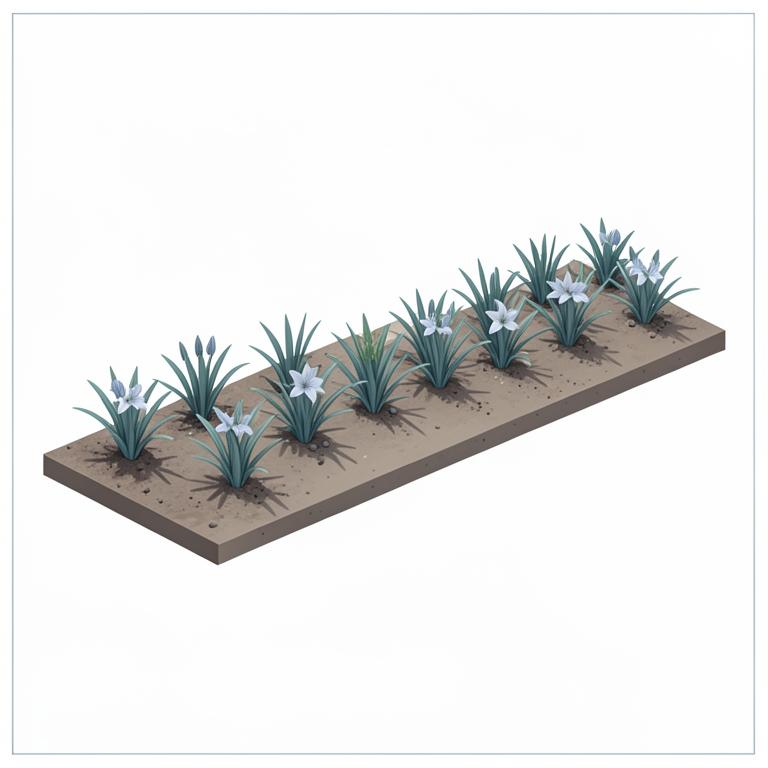
Experimental Layout
AI-generated conceptual illustration (lily plants in a coastal soil plot). It explains the idea and does not show study data.
View source evidence ↗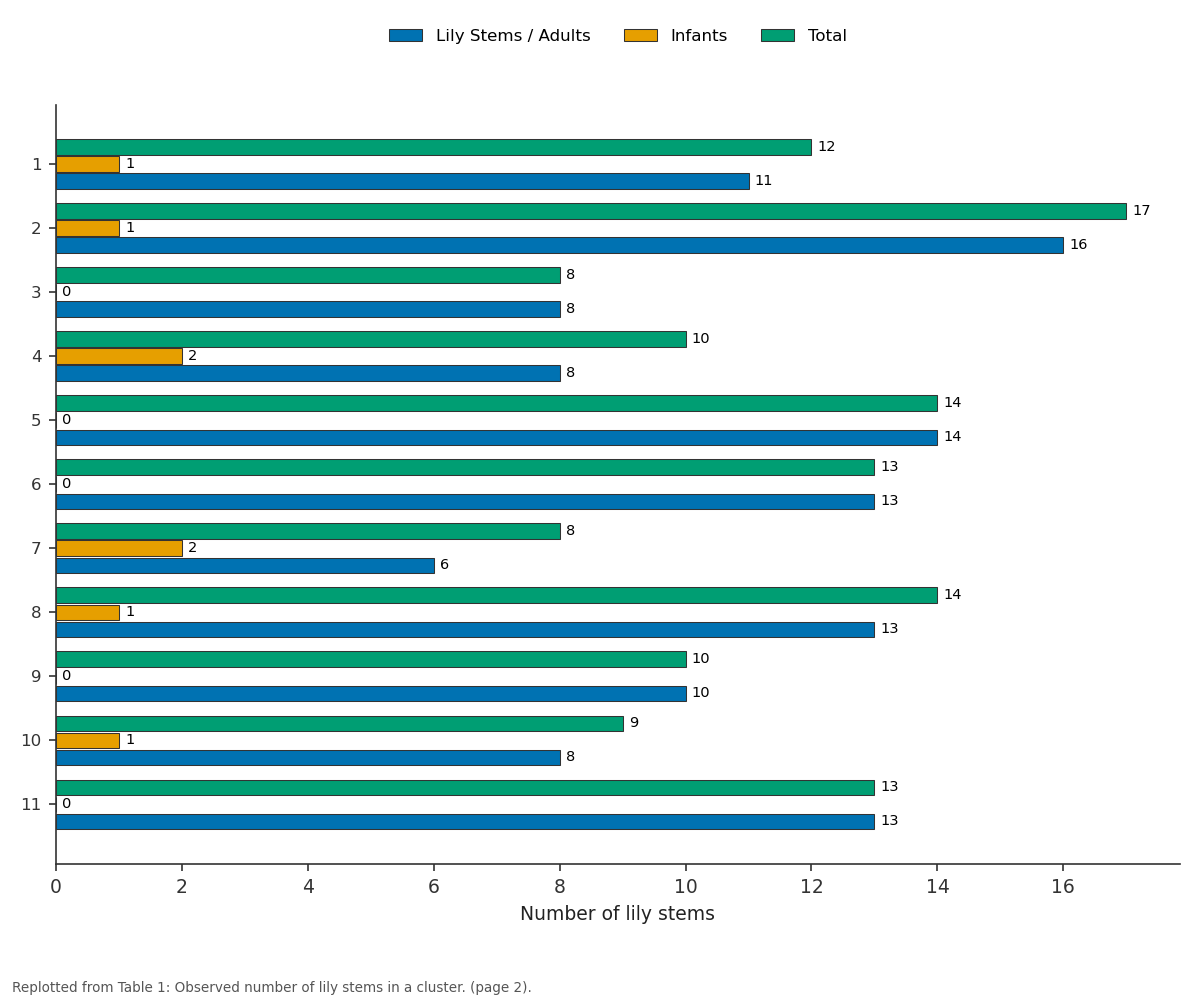
Lily Stems / Adults and Infants and more: 1 vs 2 vs 3 vs 4 vs 5
Replotted from Table 1 (page 2) of the original paper. Every bar is the paper's own table value.
View source evidence ↗Figures & tables
From the original paper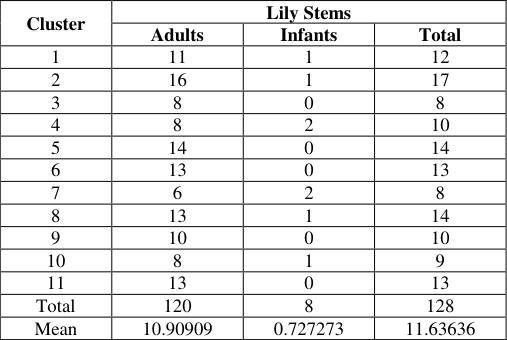 Table 1
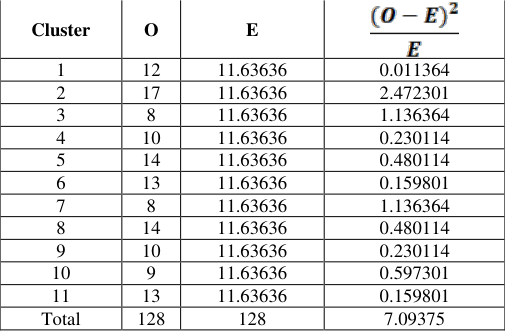 Table 2
 Figure 1
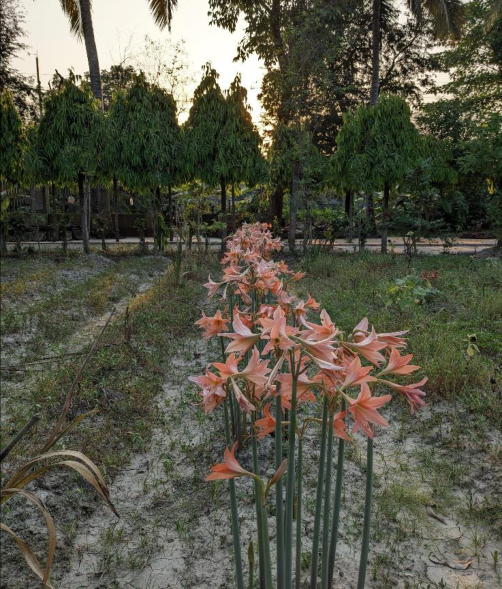 Figure 2
Introduction
Once in full bloom, the peach-pink coloured lily flowers are truly a sight to behold [1] . Such a site can be seen on a small plot of land in the Kakdwip region of the Sundarbans delta [2] . The experiment was designed to mimic a uniformity trial. For context, a uniformity trial is an experiment that is conducted to ascertain the quality of the soil. Only a single variety of crops are used, and the type of treatment (fertilizer or manure) utilized is also one or none. Fertility contour maps are thereby created by computing the yield of different regions of the plot [3] . To remove biases, a fallow [4] row running through the middle of the plot was selected for the experiment. Lily seeds, sown as clusters at regular intervals (Figure 1), germinated with a germination rate close to 90% [5] . No treatment had been applied to the soil when sowing the seeds. Despite intensive care, some saplings were trampled upon by local stray dogs, cranes, and birds. Care of the plantation was also impossible during waterlogged monsoon seasons, and frequent cyclonic storms [2,6,7] . At present, the lily stems cluster densely together, attaining an average height of 2-2.5 feet. The row consists of a total of 11 clusters. Around 10 adult stems (Table 1) can be found in each cluster on average, each stem apexing into 3-5 lily blooms (Figure 2). The plantation, now, reveals a dense and stable flowering "lilygarden" having attained maturity after 5 years of growth period. The application of statistical methods for a feasibility study is necessary to determine the environmental impact on the existing plants. Each cluster houses approximately 12 lily stems (Table 1). And the straight-line distance between the clusters is 1 m (Figure 1). For the entire 5 years of its lifetime, the plantation has not been treated with any fertilizer or manure. A lack of nutrients in the soil as well as an unsuitable climate may have different physicochemical effects on the clusters. To determine if all the clusters exhibit similar survival rate, statistical methods such as a test for goodness-of-fit pertain to the present study.
| Cluster | Lily Stems | — | — |
|---|---|---|---|
| Adults | Infants | Total | |
| 1 | 11 | 1 | 12 |
| 2 | 16 | 1 | 17 |
| 3 | 8 | 0 | 8 |
| 4 | 8 | 2 | 10 |
| 5 | 14 | 0 | 14 |
| 6 | 13 | 0 | 13 |
| 7 | 6 | 2 | 8 |
| 8 | 13 | 1 | 14 |
| 9 | 10 | 0 | 10 |
| 10 | 8 | 1 | 9 |
| 11 | 13 | 0 | 13 |
| Total | 120 | 8 | 128 |
| Mean | 10.90909 | 0.727273 | 11.63636 |
Table text extracted from the original PDF; superscript letters are shown inline. The original table image is below.
View original table image
Results and Discussion
The Chi Squared (χ 2 ) Test for Goodness of Fit is performed to test the null hypothesis ) that the number of lily stems is the same in each cluster against the alternative hypothesis that the null is not true.
The test statistic is given by where in The test statistic follows a distribution with degrees of freedom [8] . To test the hypotheses, both the adult and infant stems are considered together as mature plants to avoid complicacy of the computation.
The calculated value comes out to be 7.09375 (Table 2). At α = 0.05 level of significance, the critical value of for (k -1 = 11 -1 =) 10 degrees of freedom. Therefore, . Based on the observed data, the test fails to reject the null hypothesis at the given level of significance. That is, the number of mature lily stems per cluster may be considered equal.
| Cluster | O | E | — |
|---|---|---|---|
| 1 | 12 | 11.63636 | 0.011364 |
| 2 | 17 | 11.63636 | 2.472301 |
| 3 | 8 | 11.63636 | 1.136364 |
| 4 | 10 | 11.63636 | 0.230114 |
| 5 | 14 | 11.63636 | 0.480114 |
| 6 | 13 | 11.63636 | 0.159801 |
| 7 | 8 | 11.63636 | 1.136364 |
| 8 | 14 | 11.63636 | 0.480114 |
| 9 | 10 | 11.63636 | 0.230114 |
| 10 | 9 | 11.63636 | 0.597301 |
| 11 | 13 | 11.63636 | 0.159801 |
| Total | 128 | 128 | 7.09375 |
Table text extracted from the original PDF; superscript letters are shown inline. The original table image is below.
View original table image
Conclusion
Generally found in the temperate regions of the globe in the northern hemisphere, lilies are not native to the deltaic region. Lilies thrive under the sun. The alkaline soil of the Sundarbans along with the moist coastal climate [2] was a major concern of the experiment. However, the test for goodness of fit performed on the data collected from the plantation site of lilies reveals that all the plants have matured simultaneously. A failure of the test would have implied that each cluster could not support an equal number of lily plants. A large variance in the number of stems recorded in each cluster would have led to such a failure. However, the experiment shows that the coastal weather, frequent cyclonic storms, humid climate, and soil condition had little to no effect on the plantation leading to a hypothetical equality in the number of stems in each cluster with a high germination rate. Backed by the 5 years of survival of the plants in the present experimental setup, the result obtained from the statistical analysis provides solid ground for concluding that plantation of lilies in the Sundarbans Delta is environmentally feasible.
References
5 in the original paper- Yamagishi M. How genes paint lily flowers: Regulation of colouration and pigmentation patterning. Scientia Horticulturae. 2013;136:27-36.
- Sanders HG. A note on the value of uniformity trials for subsequent experiments. The Journal of Agricultural Science. 1930;20(1):63-73.
- Baradwal H, Ghosh A, Kumar A. Ecological restoration of degraded lands with alternate land use systems improves soil functionality in semiarid tropical India. Land Degradation & Development. 2022;33(7):10761087. DOI: https://doi.org/10.1002/ldr.4225
- Nasimova ZH, Tashpulatov YS, Mukumov IU. Methods for Initial Propagation of Species and Varieties of Ornamental Lily (Lilium L.). Student Science in 2023. Samara, Russia; c2023.
- Das NR. Missing Fishing Trawlers in Sundarbans. Indian Science Cruiser. 2022;36(5):39-41.
Cited by 9
From OpenAlex, OpenCitations and reference lists read by Scinovex
- Farmer field school approach for scaling experimental lily-based cropping systems in tidal coastal belts
Md. Arifur Rahman, Farida Begum, Hasan B. Alam · International Journal of Agriculture Extension and Social Development · 2025
Tidal coastal belts in South Asia, especially the Sundarbans and other low-lying deltaic regions, represent some of the most ecologically fragile and agriculturally challenging landscapes. These areas frequently face tidal flooding, salinity intrusion, waterlogging, cyclonic disturbances, and limited access to freshwater, all of which collectively reduce agricultural productivity and restrict diversification options for smallholder farmers [1-3]. Traditional rice-based systems continue to underperform due to increasing soil salinity, unstable hydrological conditions, and poor soil structure, c
- Morpho-physiological responses of lily cultivars to salinity in experimentally designed coastal plantations
Nimal Perera, Chamari Jayasingh, Ruvini Liyanage · International Journal of Biology Sciences · 2025
Salinity is an increasingly pervasive abiotic stress in coastal plantations, posing serious constraints on the cultivation of ornamental and floricultural crops such as lilies (genus Lilium). Prior investigations on cut-flower lily hybrids have revealed that salt stress significantly impairs growth, morphophysiological traits, chlorophyll fluorescence, and flower quality [1][2]. However, the responses of different lily cultivars under experimentally designed coastal field conditions, where saline water intrusion and soil salt buildup prevail, remain poorly characterised. In this research, we e
- Yield and quality performance of lily cultivars under structured plantation designs in the coastal Sundarbans zone ↗
Thandar Win, Aung Min Latt, Khin Su Hlaing · South Asian Journal of Agricultural Sciences · 2025
Lilies (Lilium spp.) are globally important bulbous ornamentals valued for their premium cut flowers, yet their productivity and spike quality are highly sensitive to suboptimal soil and microclimatic conditions, particularly salinity in coastal landscapes [1-4]. In recent years, intensive research on salt stress in lilies and other ornamentals has revealed substantial genotypic variation in tolerance and identified key physiological and…
❝ 0PDF - Essential oil yield and aroma profile of lilies grown under different experimental plantation designs in coastal India ↗
Ananya Patel, Sanjay Kumar Das, Rina Begum · American Journal of Essential Oils and Natural Products · 2025
The genus Lilium, known for its ornamental appeal and fragrance, has gained attention for its essential oil production, which holds potential for industrial applications in aromatherapy, cosmetics, and perfumery. However, despite the economic importance of lilies, especially in coastal regions of India, there is a significant gap in knowledge regarding the effects of experimental plantation designs on essential oil yield…
❝ 0PDF - Therapeutic garden models using lilies: Translating experimental plantation designs into healing hospital landscapes ↗
Mamadou Bassirou Traoré, Aminata Coulibaly, Moussa Diallo · International Journal of Nursing and Health Sciences · 2025
The use of essential oils as insecticides has garnered increasing interest due to their natural origin and environmental sustainability. This paper explores the synergistic effects of essential oil blends in enhancing insecticidal activity, particularly focusing on mosquito control. Essential oils, derived from plants such as Eucalyptus, Lavender, Citronella, and Lemongrass, have demonstrated varying degrees of efficacy against mosquitoes, a key
- Phytochemical profiling and anti-inflammatory potential of lilies cultivated under sundarbans coastal conditions ↗
Ko Ko Gyi, Aye Aye Myint, Kyaw Kyaw Tun · The Pharma Innovation · 2025
Liliaceae, particularly the Lilium genus, has been a focus of botanical and pharmacological research due to its wide-ranging medicinal properties. This genus includes species such as Lilium candidum and Lilium lancifolium, which have demonstrated anti-inflammatory, antioxidant, and antimicrobial effects in various studies [1, 2]. While these lilies are known for their therapeutic potential, there remains limited research on the phytochemical…
❝ 0PDF - Effect of plantation design and microclimate on the phytochemical spectrum of selected lily organs ↗
Maria Fernández, Aminul Islam, Rehana Sultana · International Journal of Pharmacognosy and Life Science · 2024
This research explores how plantation design (row spacing, plant density, orientation) and microclimate (light interception, air?flow, temperature, humidity) influence the phytochemical spectrum of distinct organs (bulb, stem, leaf, flower) of lilies cultivated under coastal conditions. The genus Lilium is richly endowed with secondary metabolites steroidal saponins, flavonoids, alkaloids, phenolic glycosides known for antioxidant, anti-?inflammatory and antimicrobial activities [1]. Plantation layout…
❝ 0PDF - Preformulation studies of standardized lily extract obtained from experimentally designed field trials ↗
Karma Tenzin Dorji, Sonam Choden Wangmo, Jigme Phuntsho · National Journal of Pharmaceutical Sciences · 2024
Lilies (Lilium spp.) are well-known for their ornamental and medicinal value, primarily due to bioactive metabolites such as flavonoids, phenolic acids, terpenoids, and alkaloids. These compounds exhibit a range of therapeutic properties, including antioxidant, antimicrobial, and anti-inflammatory effects. Coastal ecosystems, such as the Sundarbans, subject plants to unique stressors like salinity, tidal inundation, and high humidity, which can significantly alter
- Geo-spatial mapping and experimental design optimization for lily cultivation under coastal salinity stress ↗
Amina Nyambura, E. Z. Ochieng, Kamau Mwangi · International Journal of Multidisciplinary Trends · 2024
Lily (Lilium spp.) is an economically important cut flower and bulb crop whose expansion into coastal production zones is increasingly constrained by progressive soil and water salinization driven by sea-level rise, tidal ingress, and erratic rainfall patterns. Salinity stress alters osmotic balance, disturbs ion homeostasis, and suppresses photosynthetic efficiency, leading to substantial yield and quality losses across many crop species