
Research article · 2024 · Full text
International Journal of Geography Geology and EnvironmentImpact of climate change on various aspects of human sphere
Volume 6(1) · Pages 238–241 · DOI: 10.22271/27067483.2024.v6.i1d.225 ↗
Research areasClimate Change and Health ImpactsClimate Change, Adaptation, MigrationClimate Change and Environmental Impact
Abstract
Author-writtenThe impact of climate change on human life is multifaceted and far-reaching, affecting various aspects of our existence. Elevated global temperatures contribute to more frequent and intense heatwaves, resulting in heat-related illnesses and even fatalities. Changes in precipitation patterns lead to droughts, floods, and altered water availability, impacting agriculture, water resources, and food security. Rising sea levels pose a threat to coastal communities, causing displacement and loss of infrastructure.Extreme weather events, such as hurricanes and wildfires, are becoming more prevalent and severe, causing widespread destruction and economic losses. Climate change influences the spread of infectious diseases, posing risks to public health. Disruption of ecosystems and loss of biodiversity further jeopardize the delicate balance of nature, affecting ecosystems' ability to provide essential services.These environmental changes, coupled with social and political consequences like migration, conflicts over resources, and economic instability, create a complex web of challenges for humanity. Climate change exacerbates existing vulnerabilities and inequalities, disproportionately impacting marginalized communities. Addressing these issues necessitates global collaboration, sustainable practices, and the urgent mitigation of greenhouse gas emissions to build resilience and adapt to the changing climate.
Summary
Source-checkedPlain-language reading of the full paper, prepared with AI and checked against the text. Each point links to the authors' own words.
Why it matters
- Climate change has a broad and complex impact on many different areas of human existence. View evidence ↗
- The effects of climate change are not uniform, as they worsen existing social inequalities and hit marginalized groups the hardest. View evidence ↗
- The 'human sphere' is a holistic concept encompassing the various systems, such as health, economy, and infrastructure, that sustain human civilization and are susceptible to climate disruption. View evidence ↗
The question
- The paper aims to examine how climatic changes influence and potentially disrupt the essential systems that support human life and society. View evidence ↗
What they did
- The author uses a holistic approach to analyze the interconnected environmental, social, and economic factors affected by climate change. View evidence ↗
What they found
- Increased global temperatures cause more frequent heatwaves and ecosystem shifts, leading to heat-related illnesses and changes in farming. View evidence ↗
- Shifts in precipitation and temperature patterns alter the spread and prevalence of vector-borne diseases, such as those carried by ticks and mosquitoes. View evidence ↗
- Agricultural productivity and crop viability are threatened by changing weather patterns, which can lead to economic instability and food shortages. View evidence ↗
- Environmental pressures, including sea-level rise and agricultural failure, drive human migration and can trigger conflicts over limited resources. View evidence ↗
- Altered precipitation patterns can reduce the availability of freshwater, causing water scarcity in specific regions. View evidence ↗
- Climate-driven changes to ecosystems lead to habitat destruction, which puts numerous plant and animal species at risk of extinction. View evidence ↗
What it means
- The author concludes that managing climate change requires a dual strategy of mitigation to reduce emissions and adaptation to adjust to existing changes. View evidence ↗
- The author recommends global, national, and local collaboration to implement sustainable solutions and build societal resilience. View evidence ↗
Visual summary
1 visualsIllustrations explain the paper; they do not show study data.
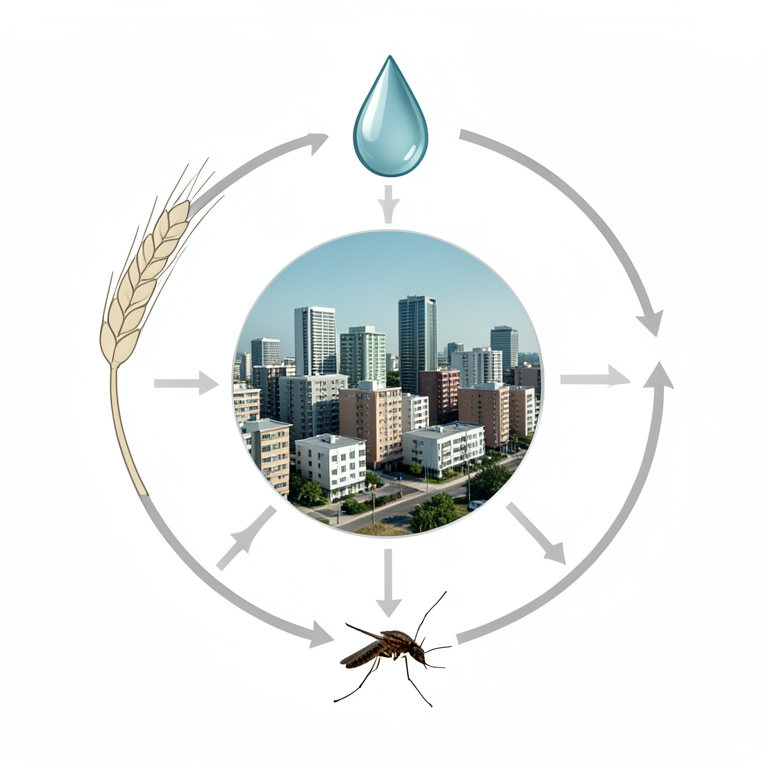
The Interconnected Human Sphere
AI-generated conceptual illustration (human civilization infrastructure and ecosystems). It explains the idea and does not show study data.
View source evidence ↗Introduction
The term "human sphere" typically refers to the various aspects of human life, society, and civilization. It encompasses the complex interplay of human activities, culture, social structures, economies, and environmental interactions. In the context of discussions about climate change, the human sphere refers to the areas of human life and society that are affected by climate change impacts. This includes but is not limited to health, agriculture, economies, infrastructure, water resources, biodiversity, and social and political dynamics. Understanding the impacts of climate change on the human sphere involves examining how changes in the climate can influence and, in some cases, disrupt the systems and processes that sustain human life and civilization. It involves recognizing the interconnectedness of environmental, social, and economic factors and how they collectively shape the conditions under which people live. In essence, the human sphere is a holistic concept that considers the totality of human existence and its interaction with the environment.
Understanding the basic concepts
Before discussing the main topic lets understand about the following concepts.
Climate: Refers to the long-term patterns and averages of weather conditions in a particular region over an extended period, typically 30 years or more. It encompasses a variety of atmospheric elements such as temperature, humidity, precipitation, wind, and atmospheric pressure. Climate provides a more comprehensive understanding of the typical weather conditions in a given area, as opposed to short-term variations that characterize daily or seasonal weather.
Climate change:
Refers to significant and lasting changes in the Earth's climate patterns over an extended period.
It involves alterations in temperature, precipitation, wind patterns, and other climatic elements on a global or regional scale. Climate change can manifest as both natural variations and human-induced alterations to the Earth's climate system.
Global warming:
Refers to the long-term increase in Earth's average surface temperature due to human activities, primarily the release of greenhouse gases into the atmosphere. The Earth's surface temperature is determined by the balance between the energy it receives from the sun and the energy it radiates back into space. Human activities, such as the burning of fossil fuels (coal, oil, and natural gas), deforestation, and certain industrial processes, have significantly increased the concentration of greenhouse gases in the atmosphere. These gases trap heat, leading to a warming effect known as the greenhouse effect.
Greenhouse effect is: A natural process that warms the Earth's surface. It occurs when the sun's energy reaches the Earth's atmosphere, some of which is reflected back to space and the rest is absorbed and re-radiated by greenhouse gases. The absorbed energy warms the atmosphere and the surface of the Earth. While the natural greenhouse effect is essential, human activities, particularly the burning of fossil fuels and deforestation, have increased the concentration of greenhouse gases in the atmosphere.
Impact of Climate Change on Various Aspects of Human Sphere
Climate change has wide-ranging impacts on various aspects of the human sphere, affecting everything from the environment and health to economies and social structures. Here are some key areas where climate change has notable effects:
Environmental Changes
Environmental Changes
Economic Impact
Agriculture: Changes in temperature and precipitation patterns can affect crop yields and the viability of certain crops, leading to food shortages and economic instability. Impact: Changes in temperature, precipitation, and disease vectors affect the spread of infectious diseases. Consequences: Increased incidence of vector-borne diseases, heat-related illnesses, and compromised food and water safety. Infrastructure: Rising sea levels and extreme weather events can damage infrastructure, leading to increased costs for repairs and maintenance. Impact: Changes in temperature, precipitation, and disease vectors affect the spread of infectious diseases. Consequences: Increased incidence of vector-borne diseases, heat-related illnesses, and compromised food and water safety. Insurance Costs: Increased frequency of extreme weather events can lead to higher insurance costs and economic losses. Impact: Changes in temperature, precipitation, and disease vectors affect the spread of infectious diseases. Consequences: Increased incidence of vector-borne diseases, heat-related illnesses, and compromised food and water safety.
Biodiversity Loss
Habitat Destruction: Changes in temperature and ecosystems can lead to the loss of habitats, threatening many plant and animal species with extinction.
Disruption of Ecosystems: Climate change can disrupt ecosystems and their delicate balances, affecting biodiversity and the services ecosystems provide to humans. Impact: Changes in temperature, precipitation, and disease vectors affect the spread of infectious diseases. Consequences: Increased incidence of vector-borne diseases, heat-related illnesses, and compromised food and water safety.
Water Resources
Availability: Changes in precipitation patterns can affect the availability of freshwater resources, leading to water scarcity in certain regions. Quality: Rising temperatures can affect water quality, making it more challenging to maintain safe and clean water supplies. Impact: Changes in temperature, precipitation, and disease vectors affect the spread of infectious diseases. Consequences: Increased incidence of vector-borne diseases, heat-related illnesses, and compromised food and water safety.
Food Security
Crop Yields: Changes in temperature and precipitation can impact the productivity of major crops, affecting global food supplies and prices. Availability and Distribution: Climate change can disrupt food production and distribution, leading to food shortages and increased food insecurity. Impact: Changes in temperature, precipitation, and disease vectors affect the spread of infectious diseases. Consequences: Increased incidence of vector-borne diseases, heat-related illnesses, and compromised food and water safety.
Solution and Conclusion
Addressing the impact of climate change on various aspects of human life requires a multi-faceted approach that involves both mitigation (reducing greenhouse gas emissions) and adaptation (adjusting to the changes that are already occurring). Here are some solutions to reduce the impact of climate change on different aspects of human society:
Energy Production and Consumption
Transition to renewable energy sources such as solar, wind, and hydropower to reduce reliance on fossil fuels. Improve energy efficiency in buildings, transportation, and industrial processes. Promote the use of electric vehicles and public transportation.
Agriculture and
Agriculture and
Health and Well-being
Strengthen public health systems to address the health impacts of climate change, including heat-related illnesses, vector-borne diseases, and food insecurity. Enhance early warning systems for extreme weather events to minimize their health impacts. Promote urban planning that prioritizes green spaces and reduces heat island effects.
Infrastructure and Urban Development
Incorporate climate resilience into infrastructure design and planning, including flood defenses, sea level rise adaptation, and resilient building codes. Foster compact, transit-oriented development to reduce reliance on cars and decrease greenhouse gas emissions from transportation. Retrofit existing infrastructure to improve energy efficiency and resilience to extreme weather events.
Biodiversity and Ecosystems
Protect and restore ecosystems such as forests, mangroves, and coral reefs that provide valuable services such as carbon sequestration, flood protection, and habitat for wildlife. Promote sustainable land management practices that conserve biodiversity and enhance ecosystem resilience. Implement policies to combat illegal logging, poaching, and habitat destruction.
International Cooperation and Governance
Strengthen global cooperation on climate action through mechanisms such as the Paris Agreement and international climate funds. Provide support to developing countries to help them mitigate and adapt to climate change. Encourage collaboration between governments, businesses, and civil society to accelerate the transition to a sustainable, low-carbon future.
By implementing these solutions and fostering collaboration at the local, national, and international levels, we can reduce the impact of climate change on various aspects of human society and build a more resilient and sustainable future for all.
References
0 in the original paperCited by 11
From OpenAlex, OpenCitations and reference lists read by Scinovex
- Why Sustainability Still Fails in a Technologically Advanced World: A Reflection on Sensing, Intelligence, and Climate Communication for a Sustainable Future ↗
Raquel Castro Madureira, Filipa Brandão, Marlene Paula Castro Amorim · IEEE Microwave Magazine · 2026
❝ 1 - Undergraduates’ climate change awareness through physical activity: Self-efficacy as a moderatoris ↗
Miftakhul Jannah, Adiwignya Nugraha Widhi Harita, Reza Asep Adi Purnomo, Rigan Ahmad Ubaidillah, Rizky Putra Santosa, Siti Jaro’ah et al. · SHS Web of Conferences · 2025
The challenge of climate change is an issue that must be addressed both now and in the future. Physical activities that are environmentally friendly, such as walking and cycling, are not only beneficial for health but also have the potential to raise awareness about climate change. This study aims to analyze the effect of physical activity on climate change awareness…
❝ 1PDF - Addressing the interconnectedness challenges of climate change and women’s Health: A gendered perspective
Kaberi Gogoi, Smita Rani Saikia · International Journal of Agriculture Extension and Social Development · 2024
Climate change's effects on health, such as increased exposure to heat, poor air quality, extreme weather events, changed vector-borne disease transmission, diminished water quality, and decreasing food security, differ between men and women due to biological, social, and cultural factors. Climate change threatens to exacerbate current gender-based health disparities in India, which is experiencing fast environmental change. The incorporation of a gendered perspective into existing climate, development, and disaster-risk reduction policy frameworks can reduce negative health effects. Climate r
- Bridging the gap: Integrating climate mitigation and adaptation strategies for sustainable future ↗
Sujoy Goswami · International Journal of Advanced Mass Communication and Journalism · 2025
Nowadays, at the forefront of policies and plans of national, international, and European levels stand the sustainable development and adaptation to climate change. Under a worst-case scenario, response to climate change may result in retrogression, which goes against the ideas of sustainable development because it increases the amount of greenhouse gases emitted while making certain populations more vulnerable. This would
- Influence of the hydrological cycle on climate variability and change ↗
Ginni Rani, Prachi Kaushik, Bhumi Shekhawat · International Journal of Multidisciplinary Trends · 2025
The importance of water on earth cannot be underestimated. Water is transported throughout the whole Earths climate system and affects every constituent along the way. The climate and hydrological systems on earth are delicately interconnected forming a complex feedback loop. Amendments in any one system unavoidably trigger changes in the other. Witnessed climate changes, along with anticipation from climate models,
- Climate change and reproductive health of women: A review of emerging risks for women ↗
D. V. Singh · International Journal of Reproduction Gynaecology and Obstetrics · 2025
Reproductive system of a woman is regulated by hormones which control the various processes in her life such as menstruation, pregnancy, childbirth and menopause. These processes largely govern the life of a woman. A woman’s reproductive health is an indication of her overall health. An optimal reproductive health is significant for a woman as it empowers her to live a
- The everyday impact of climate change on our lives: A comprehensive review
Shanurasab K Nadaf, VR Yadahalli, Bebijan Nadaf · International Journal of Research in Agronomy · 2025
Climate change, once perceived as a distant environmental concern, has become a pressing reality that affects daily life in profound and pervasive ways. This review explores how rising temperatures, extreme weather events, and shifting ecosystems directly influence our health, food and water security, livelihoods, housing, education, and social well-being. From increased respiratory illnesses and water shortages to disrupted work routines and cultural practices, climate change reshapes the fabric of our everyday experiences. Drawing on recent research and real-world examples, the article highl
- Climate change and its impact on dietary behavior in Iraq
Imad Salim Hossi · International Journal of Agriculture and Food Science · 2025
Climate change is one of the major threats to the health and overall well-being of all living organisms (plants and humans) (Talat Alhothali et al., 2021). Although the physical and biological effects of climate change are well established, the human dimension, particularly the dynamic connection to eating behavior, is not well understood. Consistent increased temperature, water shortage and weakened agricultural yield have been of a great concern for Iraq during the last four decades (T. Osama Al-Taai et al., 2017). In turn, these threats to food availability and cost have led migration from
- Impact of digitalization on sustainable development amidst geopolitical risks ↗
S. Vazeed Pasha · International Journal of Applied Research · 2025
This study examines how digitalization influences sustainable development amid rising geopolitical risks. Using Environmental Performance Index (EPI) and Human Development Index (HDI) as proxies, the analysis evaluates the role of macroeconomic indicators, digital economy measures, and the Global Geopolitical Risk Index (GPRI). Findings show that digitalization enhances environmental performance and socio-economic development in both developed and developing countries, while geopolitical
- Narrating vulnerability: Climate fiction and adaptation in Robinson’s The Ministry for the Future ↗
Neelam Chauhan, Rafat Khanam · International Journal of Research in English · 2025
Climate change, also known as the climate crisis or climate emergency, is a global threat to nations' economic, environmental, political fabric, causing insecurity and endangerment. This crisis is exacerbated by environmental cataclysms like hurricanes, cyclones, floods and coastal erosion, which in recent times have become more severe and frequent, highlighting the extent of human intervention in the earth's degradation. Addressing
❝ 0Found by Scinovex - Intervention of climate change on zoonotic, infectious and vector borne disease: Concept and evidence review
Shubham Jayeshbhai Gajera, Kajal A. Pradhan · International Journal of Biology Sciences · 2024
Every aspect of society, including health, is anticipated to be impacted by climate change. The global burden of infectious disease is being negatively impacted by climate change, posing a challenge to health security. Most people on the planet are vulnerable to infectious diseases that are pathogenic and whose life cycles are influenced by environmental variables in various physical stages, such as soil, water, and air. In addition to reviewing the state of the art in terms of research on how climate change may impact the spread of zoonotic, infectious, vector-borne illnesses and this study p
Social and Political Consequences
Displacement and Migration: Rising sea levels, extreme weather events, and changing agricultural conditions can lead to displacement and migration of populations, potentially leading to conflicts over resources. Conflict: Climate change can exacerbate existing social and political tensions, contributing to conflict over resources such as water and arable land. Impact: Changes in temperature, precipitation, and disease vectors affect the spread of infectious diseases. Consequences: Increased incidence of vector-borne diseases, heat-related illnesses, and compromised food and water safety.