
Research article · 2025 · Full text
International Journal of Agriculture and Food ScienceClimate change and its impact on dietary behavior in Iraq
Volume 7(11) · Pages 253–262 · DOI: 10.33545/2664844x.2025.v7.i11d.966 ↗
Research areasClimate Change and Health ImpactsTransboundary Water Resource ManagementDietary Effects on Health
Abstract
Author-writtenClimate change is one of the major threats to the health and overall well-being of all living organisms (plants and humans) (Talat Alhothali et al., 2021). Although the physical and biological effects of climate change are well established, the human dimension, particularly the dynamic connection to eating behavior, is not well understood. Consistent increased temperature, water shortage and weakened agricultural yield have been of a great concern for Iraq during the last four decades (T. Osama Al-Taai et al., 2017). In turn, these threats to food availability and cost have led migration from rural to urban areas, with an increased risk of food insecurity and malnutrition. Although influences of climate change on food production are reported elsewhere, the emphasis of this report is the nexus between climate change, human health and eating behavior.
Summary
Source-checkedPlain-language reading of the full paper, prepared with AI and checked against the text. Each point links to the authors' own words.
Why it matters
- Climate change represents a significant threat to the health and general well-being of both humans and plants. View evidence ↗
- For the past forty years, Iraq has faced critical challenges including rising temperatures, water shortages, and declining agricultural yields. View evidence ↗
- Threats to the cost and availability of food have driven migration from rural to urban areas, increasing the risk of malnutrition and food insecurity. View evidence ↗
The question
- The study aims to explore the connection between climate change, human health, and dietary behaviors. View evidence ↗
What they did
- The author conducted a comprehensive survey of existing literature and available samples to analyze the topic. View evidence ↗
What they found
- Meteorological data indicates that over 98% of recent years have experienced temperatures higher than the 1981-2010 normal. View evidence ↗
- Annual rainfall in the MENA region is less than 166 mm, significantly lower than the global average of 860 mm. View evidence ↗
- Agriculture accounts for approximately 66% of the water demand in the region. View evidence ↗
- Foodborne infections are estimated to cause 200,000 deaths every year globally. View evidence ↗
- Family farms are critical for food security as they provide 70% of the food supply. View evidence ↗
- Economic decline at the family level typically leads to a decrease in priority regarding the nutritional value and healthiness of daily food intake. View evidence ↗
What it means
- The author recommends that Iraq improve rural infrastructure and welfare, specifically by increasing access to education and clean water. View evidence ↗
- The author suggests establishing an agricultural R&D center focused on reducing greenhouse gas emissions. View evidence ↗
- The relationship between motivation and actual dietary behavior remains an area that requires further exploration. View evidence ↗
Visual summary
1 visualsIllustrations explain the paper; they do not show study data.
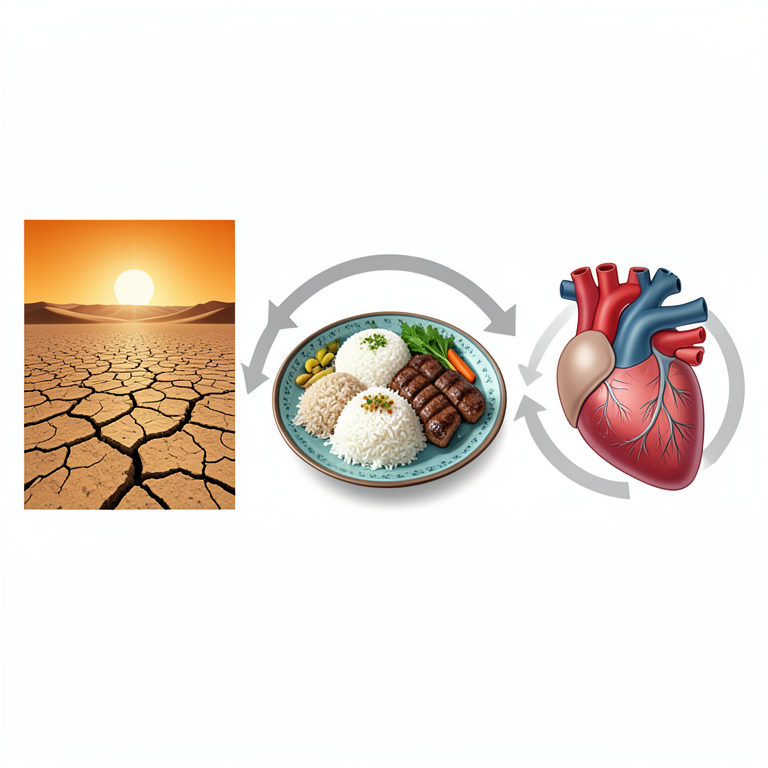
The Nexus of Climate and Diet
AI-generated conceptual illustration (Iraqi landscape, traditional Iraqi food plate, and a human heart). It explains the idea and does not show study data.
View source evidence ↗Introduction Overview of Climate Change
Climate is the average weather in a place over many years. It is affected by atmospheric conditions including temperature, humidity, air velocity, rainfall, and solar radiation over a long-term period. Understanding temperature behavioral is important to analyze climate change in any part of the world. Iraq P atterns Hot desert climate with very hot and dry summers and mild to rainy winters, and some spring dust/sand-winds (T. Osama Al-Taai et al., 2017) [2] . Climate change refers to any long-term change in the climate. When fundamental components of the climate, like the average temperature, change substantially, it is a change in the climate. Different research works have reported local temperatures for the Twentieth century, the latest period with available global data. The use of the term climate change became more common, although it all but disappeared from public discussion in the United States during the 1990s, when in response to a recommendation by the World Meteorological Organization (WMO) and the United Nations Environment Programmed (UNEP) the Intergovernmental Panel on Climate Change (IPCC) was established (WMO 1988) to join scientists and policy makers from around the world to assess information in the scientific and technical literature related to all significant components of the issue of climate change. Today, climate change is recognized to be any long-term change in the average or variability of the climate over overall extended periods of time, in particular over several decades. Temp erasure is one of the most important meteorological elements -not only because it influences directly many mete urological parameters such as atmospheric pressure, wind, evaporation and humidity, but also because e its variations make the weather. There's something gay about a complex subject that's not fully understood. The primary scientific challenge is identifying the cause, which can be due to natural variability but possibly are human-induced changes to the atmosphere. The biggest problem today is the fact that climate change ties back to the industrialization of society that has resulted in the rise of the greenhouse gas concentration in the atmosphere, and thus potentially changing the climate of the Earth. In the context of Saudi Arabia, food consumption patterns have great relevance to the environment and are therefore key options to combat climate change. A study of 280 respondents reported that increased climate change knowledge was positively associated with vegetable and vegetable oil intake, while higher climate change concern International Journal of Agriculture and Food Science https://www.agriculturaljournals.com was negatively associated with intakes of red meat, white meat, margarine and soy products. Response level (Awareness and concerns) of higher higher was statistically significantly associated with male sex, higher income and education status, and government employees. Most notably, more participants reported a higher consumption of nonclimate-friendly relative to climate-friendly foods. These key messages are of particular importance to public health bodies seeking strategies for promoting healthy and more climate-friendly consumption patterns in their bid to mitigate climate change. The study provided the first exploration of Saudis' awareness of impacts of climate change on food choices and their perceptions, thus providing baseline information to develop future research, and initiatives to foster sustainable diets in Saudi (Talat Alhothali et al., 2021) [1] .
Climate Change Effects in Iraq
There has been a warming trend in Iraq with the last decades and that the trend will increase in future (T. (Osama) Al-Taai et al., 2017) [2] . This warming along with precipitation change has intensified droughts, water shortage and desertification (Al Ameri et al., 2019) [3] . Consequences are the drainage of agricultural soils and decrease of the underground water needed to drain lakes and marshes, due to the rise of temperatures over the long-term average. Anthropogenic activities are but in an orbit around these consequences: agenda-based removal of the socio-economic texture of the country, destruction of nature in an obvious manner, ever lasting ecological damages caused by heating oil or leaded gas consumption and bad pollution in the form of the wrong waste management (A. Al-Dabbas et al., 2015) [4] .
Temperature Increases
The key reason that we have more droughts than in the past that leads to food shortages and food disappearing is temperature, and so temperature is motivating the change in what people eat. This climatologic network has revealed increasingly severe climate changes in Iraq since the beginning of the 1950s, which have had two kinds of negative effects upon economic and social factors. Radar imagery (Figure ) for the period 1982-2012 also corroborates the increase in mean annual temperature across Iraq (T (Osama) Al-Taai et al., 2017) [2] . Building on these findings, a searchlight is shed on hydro chemical characteristics of surface and ground water and implications of climate change (A. Al-Dabbas et al., 2015) [4] . Some Meteorological Organization date shows on more than 98 percent of recent years have been hotter than the 1981-2010 normal temperature. Global warming has serious implications for life in general, for agriculture that influences economic and social relations, human food pattern and lifestyle.
Water Scarcity
The countries within the MENA region are already arid or semi-arid regions and experiencing acute water shortage and would be even more water scarce in the future as a result of climatic changes. Iraq is situated in the Middle East with an area of 433,970 km 2 and lies in a water stressed area (Al-Ansari et al., 1970) [5] . As a result, a number of methods such as RWH are projected as potential solution to overcome the coming shortfall. In this regards, tested suitability of macro rain-water harvesting based on forecasted monthly time-series of future rainfall under climatic scenarios A2 and B2 over the 2020-2099 at Sulaimaniy area. It revealed that average actual runoff would decrease due to climate change, corresponding with the predicted reduced precipitation in the future, and that water availability in the area would reduce.
Water availability in the Middle East and North Africa (MENA) region is very low due to the arid-to-semi-arid climate (Raju Suresh Gaware, 2024) [19] . The rain falls mostly in the winter months and annual rain is less than 166 mm, which is fairly low relative to the global average (860 mm). Therefore, in many countries of the region the yearly renewable surface freshwater per head amounts to less than 500 m 3. Agriculture makes up approximately 66% of the demand. With the prohibiting policies in these countries, they are seeking to close the gap between the demand and the supply. Water use shift from agriculture to domestician sectors are pondered as well since farmland uses 90% water.
Then, if such a transfer occurs between these sectors in Iraq, the internal water supply will be increased from 109 to 136.270 Mm 3 /year, which constitutes in range 1-60% of the true demand. However, food self-sufficiency may still be assumed to be restricted as such a transfer should consider further constraints like reliance on food import, available arable land, social and economic conditions so food security.
Agricultural Impacts
Agriculture suffered the impact of climate change and was closely associated with water (C. Nelson et al., 1970) [6] .
Altering hydro-climatic conditions will have serious implications for food production, security, and human action. Agricultural production is particularly sensitive to temperature and precipitation variations due to the water and crop/herd specific need of irrigation water (crop specific water and irrigation need). All kinds of crops / vegeta bles have a best temperature and precipi tation requirement, but if they are frequently beyond these two kinds of limits, they may lead to the abnormal change of production and quality. Additional stresses include limited availability of arable land and irrigation water, which become more challenging with alterations in temperature and precipitation. Climate change, including altered precipitation patterns, will affect the amount and quality of water available for agriculture with attention given to greater wateruse efficiency in irrigation systems. Studies have highlighted the close relationship between climate shocks and household food consumption in Burkina Faso, as the effects of climate events can persist for more than two years and lead to various market mechanisms subsequent to the initial shock of supply. A major climatic disturbance -reflective of temperature and rainfall change is anticipated to lead to declines in intake of multiple food groups and loss of food security. Food production, food access, and food utilization, and ultimately food access and utilization, are affected by climate change, with production being a key driver of food access and utilization changes. The price of rice, wheat, maize, and soybean is projected to increase markedly by 2050 owing to population growth, higher income, and the demand for energy crops, a rise to be compounded by climate change. Adverse impacts on crop productivity are projected globally for major crops in Sub-Saharan Africa and South Asia, and for wheat and soybean in East Asia and Pacific, while some crops show slight increase under certain conditions eg, rice and maize in some areas). All countries would have more serious risks in the developing world than in the developed world in both climate scenarios, without considering additional effects from pests, diseases or extreme weather events.
Cultural Aspects of Eating Behavior
Culture has a powerful impact on eating even though its impact on food behavior is frequently unrecognized. Eating is an everyday social practice that differ across the globe as reflected through cultural habitus, in which norms, values, sociopolitical climate and environmental context are embedded. It has been demonstrated that avenues to knowledge are all 'cultured' through language and media, and how the response to climate change is 'culturally responsive' (Talat Alhothali et al., 2021) [1] .
There are five aspects in any effective system of food instruction: food, preparation, eating, way of life, and environment. The food dimension refers to the types of food that a person eats, preparation refers to the cooking methods, consumption represents social context of food consumption, life-style has to do with when food is eaten in one's daily routine, and the environment is the consequences of eating in a particular setting. Schools, parents and local authorities should promote education from the early years. Quality of diet, dietary habits and food preparation methods are already causing public health challenges and an effective and efficient education system can help address these challenges (Khalid Sabeeh et al., 2022) [7] .
Traditional Diets
The traditional diets of Iraq were a result of the population's survival and breeding, cultural beliefs and dietary habits and Arab religious and tribal customs and laws and climatic conditions. Tribal food culture was predominantly rural, and in southern Iraq was frequently laden with dates, rice and lamb. Turkey, grain, chickpeas, onions, leeks, spinach, carrots, zucchini, cucumber, and tomatoes soon followed, and Iraq's valve-enhanced flatlands were perfect for cultivating rice. The Islamic dietary law, ḥalāl was strictly adhered to; non-ḥalāl animals including pigs, snakes, chameleon and crocodiles, lobsters and mussels were refused. Smaller animals like frogs and scorpions were largely not eaten, and Islamic fasting (ṣawm) was especially prevalent during the month of Ramadan. Considering the significance of accessible food in climate adaptation dialogue and the scarcity of research that attends to the effect of climate variables on the eating habits of Iraqis, the interconnections between culture, climate and food preparation provide a useful reference to begin with (T (Osama) Al-Taai et al., 2017) [2] . Food was usually taken towards the end of the day and breakfast mainly included soft bread soaked in water and a little salt (Jones Saronga et al., 2016) [8] .
Food Security
People can obtain food security at three highest levels of food security (Zarei, 2017; Grilli et al., 2015): Food security at the individual level or household level refers to the availability of food and one's access to it, a condition of food security. Food security status is moderate in Iran, food security in Iran is vulnerable to threats of varying features (Javadi et al., 2022) [9] . Food availability and access are the main components of food security and they are affected by the impacts of climate change like changes in precipitation and temperature. Some recent researches have analyzed the economic consequences of climate change for agricultural sector of Iran, and in particular for crop yield and production, particularly of wheat.
Influence of Climate Change on Agriculture
The six main dimensions of food systems (i.e., production, distribution, exchange, access, utilization, and stability) are influenced primarily by climate change. These impacts are unevenly distributed and are projected to increase in severity in the form of food scarcity, decrease in trade, lack of resources, and food safety. Measuring these effects involves detailed knowledge of impacts with climate change and uncertainty, and of socioeconomic status and adaptation strategies: there is still a long way to go in this field. Table 1 describes direct effects of CC for food systems.
Agricultural production -defined here as the amount and diversity of food produced or harvested -relies on access to, as well as the availability of, natural and physical resources, such as land, labour, and capital. It is determined by natural resources, agro-ecological conditions, technology, institutions and input use (including fertilizer, energy and water). Soil, water and vegetation are central components in natural resources. Per capita food production is converted to average per capita caloric intake on the basis of the structure and efficiency of food distribution systems, and the access to food through markets and other non-market channels such as subsistence production and food aid. Climate change can affect the availability of food both directly through the impact on the production systems and indirectly by disrupting the distribution and exchange processes. Food accessibility; including physical and economic, can be impacted through changes in production systems, prices, wages, terms of trade (Shahbaz Farooq et al., 2022) [10] .
Crop Yields
Early pessimistic estimates of climate change impacts on agriculture focussed on the difference between impact on tropical/subtropical zones, where decreased production was expected, and impact on temperate zones, where dates of sowing would move forward to benefit the extended growing season associated with a warming. Iraq is already a thirsty country with the climate in many of its subregions bound under the grip of some of the world's most significant growth constraints (the Middle East, North Africa and Sub-Saharan Africa). Previous studies have showed that changes in water availability which are intensified at higher temperatures, generally decrease crop productivities and that irrigation-dependent regions suffer the greatest losses. Both climate scenarios considered forecast more precipitation over land. One of these scenarios, NCAR, suggests an increase in internal renewable water resources while the other, CSIRO, shows a decrease in the region's waters (C. Nelson et al., 1970) [6] . In warmer temperatures crops need more water in a given area, inducing more water stress. Irrigation reliability increases under NCAR and decreases under CSIRO, causing irrigated yield to decrease (with CSIRO having significantly larger and more widespread decreases). Since Iraq's agriculture is already irrigated, the CSIRO estimate may be more typical. Taken together with the impacts of increased demand on water availability, already scarce natural resources in Iraq will be a significant constraint to development.
Livestock Management
Animals are an essential food source worldwide (Bahadur Rahut and Ali, 2018) [11] . Cattle vulnerability to climate change risk plays an extremely critical role in future food security and agricultural policy in developing economies. Given that the consumer demand for meats and other livestock commodities grows quickly with incomes, climate-change impacts and coping strategies will likely have impacts beyond the livestock sector. The effects on livestock keepers, rural households, and even consumers could be catastrophic, since smallholder farmers provide the bulk of consumed livestock in many developing countries. The local exposure of the cattle herd to the global climate change stress (Fig 1) suggests that climate change could directly affect the production of livestock, such as the through the decline of pasture and grazing quality and availability (Brouillet & Sultan, 2023) [12] . The ways that climate-change drivers may impact livestock locally and the potential disruption that may occur with the meat supply chain highlights the vulnerability of livestock to global change. Supply chain disruption will also hurt livestock, potentially resulting in limited supply and rising prices. The worldwide alarm regarding climate change suggests that risk management and the precautionary approach need to be adopted in the management and adaptation of supply chains' resilience and in the dynamics of livestock production and consumption. As demand grows in response to population increases and urbanization and as pressure on the environment and declining productivity are likely to prevent the livestock sector from meeting local demand, elucidation of the role of risk reduction strategies for sustainable growth, poverty reduction and food security in animal-production becomes important. Climate change worsens many manifestations of stress and the frequency of extremes, of which the two main in many areas are temperature and drought. Water supplies in developing countries are limited for farming and many areas of crops and livestock are still rain-fed. Extended drought reduces water supplies, grazing and livestock with no grazing, increases the risk of livestock diseases, thus threatening income, livelihoods and food security. With their increased exposure to climate change, they have no choice but to minimize risk through various forms of coping.
Nutritional Implications
Malnutrition, including under nutrition as well as overweight and obesity, is an important public health problem worldwide. The problem of malnutrition and its type in Iraq was highly fluctuated over the decades (Khalid Sabeeh et al., 2022) [7] . Iraq has suffered a decline in food availability since 1990 and especially since the 1991 Gulf War. Parts of the country are still reeling from a depressed economy, crippled public health system and displacement due to warfare. This is reflected in the fact that nutritional disorders stunting and wasting increased in the 90s. The Iraqi government started to implement food ration distribution, but current violence, health system corruption and lack of, or access to, available services are the main obstacles to nutrition service delivery, particularly since the 2003 war. Primary nutrition services and food security were also impacted when the COVID-19 pandemic first hit Iraq in 2019. There is strong awareness about the importance of not further increasing childhood overweight from all over the country. However, modifications of dietary habits could aggravate the existing situation in the short term and increase the prevalence of related non-communicable diseases in the long term, emphasising the importance of additional research and intervention.
Changes in Nutritional Quality
Iraq has faced dramatic nutrition problems in recent years. After the 1990-1991 Gulf War, severe sanctions were imposed on the Iraqi economy, with catastrophic implications for health and nutrition. Sanctions have reduced Iraq's economy to a virtual standstill, with disastrous results for vital social services such as health, education, clean water and sanitation facilities." (Khalid Sabeeh et al., 2022 [7] . These shocks led to years of food insecurity, with a rapid and prolonged increase in the prevalence of diseases like stunting and wasting among children under five years of age. With no similar assistance coming, the Iraqi government has resorted to distributing food baskets to help fulfill those nutritional needs. Yet conflict is a further challenge to nutrition in the region, with continuing military operations and mass population displacements. A decline of health infrastructure, decrease of government funding for health, and security barriers have led to a decrease in access to life-saving health-care services from 2003. Following the COVID-19 pandemic, there was a significant reduction in access and quality of nutrition services at primary-health-care facilities. Second, Iraq is proceeding on a path which is unlikely to result in an increase in childhood overweight. At the same time, also the accompanying changes in diet may cause an increase in the diseases of affluence. In response to these challenges, Iraq is committed to decreasing childhood stunting, anemia among women of reproductive age, low birth weight, and wasting, and increasing the rate of exclusive breastfeeding in line with international targets for healthy and sustainable diets.
Nutritional Deficiencies
Malnutrition refers to health conditions due to insufficient ingestion, assimilation, or utilization of nutrients (Khalid Sabeeh et al., 2022) [7] . These inadequacies are often a result of poor access to a varied diet, infections, or use of nutrients by the body at an inappropriate time. Typical shortcomings include short falls in protein, energy, iron, folic acid, vitamin A; the differences in body requirements of certain nutrients, limited storage capacity and uneven efficiency of physiological mechanisms all contribute to the latter. Nutritional needs vary with the level of activity, growth needs, presence of disease, and nutrient absorption. Malnutrition is a significant global public health challenge and includes the fate of under nutrition and overweight/obesity. The onset of the Gulf War in 1991 led to a dramatic deterioration in the health of the population, as people lost access to essential medicines and the nation was under military attack. As a result, malnutrition with stunting and wasting, vulnerability to nutrition-related infectious diseases and micronutrient deficiencies became evident. In response to severe acute food insecurity in the 1990s and early 2000s, the Government of Iraq established a rationing system. But, over the country there has been a breakdown in health services, especially after the aftermath of wars and the COVID-19 pandemic, making it difficult to offer necessary medical care. Iraq will also ensure there is no increase in childhood overweight as it is believed that alteration in nutrient intake pattern might result in increased load of NCDs in their adult life. The global targets now are to reduce stunting, anemia in women of reproductive age, low-birth-weight, wasting in children <5 years, and childhood overweight by 2025. The Iraqi government works to meet these goals through improved policies and interventions. A review of essential nutrition indicators in children under five years of age and of micronutrient deficiencies in women provides an overview of the current nutrition status among the Community in Iraq. Rising awareness of these measures facilitates the government to achieve food and nutrition related SDGs leading to better health of the nation.
Socioeconomic Factors
Several aspects determine the impact of climate change on human dietary behavior (Talat Alhothali et al., 2021) [1] . These go far beyond the more direct, physiological effects of climate change on production, stability, and access to agricultural goods. Another important effect on foodconsuming patterns in human societies is that of their social and demographic conditions. Individual specific characteristics, such as family income and formal education, can substantially affect eating behavior, especially when adverse climate situation interacts with disadvantage social groups. Societies that suffer insecurity, instability and underdevelopment are more vulnerable to such potential, and food-consumption patterns can be just as unhealthy and unbalanced (E. Brown & C. Funk, 2008) [13] . Most broadly, human communities are affected by climate change to the extent that they are vulnerable in socioeconomic terms. "If economic conditions only are to blame here, then the capability to process any extreme event -a drought, a flood -is eroded, plus its ability to cope with social stresses such as malnutrition or food-borne diseases. At the individual level, the availability and accessibility as well as affordability of healthier food options are a separate major issue themselves. As the income of a family shrinks, the first thing to go is usually the concern about the nutritional value, or the healthiness of what foods are ingested on a daily basis. These patterns of less balanced diet are at least generative of other conditions in themselves, for example overweight or obesity or the development of metabolic diseases; these in turn may compound the classic kind of vulnerabilities-gaps spawned by poverty.
Economic Stability
Climate change affects food security in direct and indirect ways through its economic implications. Shifts in the pattern of rainfall and temperatures impact crop yields, and simulations suggest that in the majority of climates, pressure on wheat and rice yields are expected to increase. As the crops are staple of the domestic market, reduced production affects the availability of the food (Javadi et al., 2022) [9] . Policies limiting wheat imports (or failing to curb high food prices) worsen it, as this restricts access to food. Recommendations to sustain and improve strategic crop production include doing research on drought-and heattolerant varieties, changing planting dates, shifting to modern irrigation technology, and improving farming practices. • Governments should embed climate change implications into macro food planning especially with respect to food inflation. It would take more specific data to get a handle on the weather's effects on food security.
Migration Patterns
The nexus between climate change and migration is complex, proofed as a myth. However, rural household level information for the Middle East and North Africa (MENA) region indicates that these are commonly-held perceptions about changing climate patterns and that they are generally reflective of observed changes and climate model outputs. These perceptions range beyond the period of observation and there is awareness of more erratic rainfall and higher temperatures in the past. Furthermore, the families complain of increased drought, resulting in the rampant outbreaks of livestock diseases, extreme soil erosion, crop failures, and lack of water. While some blame colder temperatures and more rain in recent years (a few say the climate is overall getting better), these views are in the minority. The common perception is that the climate has been degrading so an environment no longer exists to maintain secure livelihoods in crop-based agriculture. This transition is particularly pronounced for food crops such as potatoes, wheat and rice, and for many other crops that are highly sensitive to water deficits and extreme temperatures (Wodon & Liverani, 2014) [14] .
Public Health Concerns
The decline in air quality necessitates fast responses to protect the human life (Talat Alhothali et al., 2021) [1] . Human health effects are the result of direct calorific changes (Stewart, 2021; Wong et al., 2022) or from effects on food safety and the spread of communicable disease, with increased heat-and food-related mortality (Khalid Sabeeh et al., 2022) [7] . In light of anticipated climate change impact on agriculture, planners and policymakers need to focus on measures to uphold food availability and most importantly accessibility. Both at the level of quality and quantity, food safety regulations should adapt to account for factors that are affected by altering climate. Worldwide, the focus on undernutrition since the 1970s and subsequent fall in child mortality are good news, even when matched against rising levels of overweight and obesity. However, projections forecast an increase in malnutrition resulting from such climatic changes. These concerns compound other unresolved food quantity and quality challenges that are the root causes of serious human health threats.
Foodborne Illnesses
When becoming the victim of disease that comes from pathogen-infected food preventing the spread of the pathogenic disease through foodborne infections is of the utmost priority for public health and safety, as well as for the food industry itself. An increasing number of epidemiological and experimental studies suggest climatemediated impacts on pathogens, particularly foodborne and waterborne pathogens. Weak natural and constructed infrastructure in many poorer countries also increases the health consequences of climate indicators such as rising temperature. Disease-related pathogens linked to climate sicken at least 2 billion people annually with diarrheal diseases. Mass outbreaks of foodborne infections occur in relation to heatwaves and heavy rainfall and the resulting floodings. Substantial climate variability and gradual shifts in the global pattern of foodborne pathogens forebode longterm disturbances to an already overstretched global food supply system and public health infrastructure (R. Lake & C. Barker, 2018) [15] . Water and food borne pathogens are climate sensitive to rainfall and temperature. A drought may in some instances be potentized by heavy rainfall so that a doubling of annual precipitation results in as much as a sixfold increase in diarrheal disease. Higher temperature, heavy and extreme precipitation are favourable for food and waterborne pathogens. Some of these pathogens are more organism-friendly during vegetative cycles (presence or lack of sunlight, high temperatures promoting sporulation or the vegetative cycle, presence and ability to colonize in gut as vegetative cells). The vegetative cycle elongates with a rise in temperature, leading to a wider window between eating the offending food and becoming symptomatic. The global food system industrializes, homogenizes, centralizes, accelerates, and therefore must ever more strictly control, including (entailing) even the toxicological destruction of entire classes of food production and products, regardless of the exact human-toll toxicology takes. Foodborne diseases demonstrate the extent and chic with which interconnectedness is played out these days. In which case globalization rapidly spreads indigenously acquired microorganisms and these become perceived as planetary threats. Adaptive measures integrate any link in the chain from farming techniques to appropriate forage, treatment of livestock, the better care and conditions in which they are kept and the storage tanks and their design and manufacture, refrigeration, transport, packaging, the setting of temperatures and their optimal levels, hygiene in the outlets (with organs or fur), and the frequency and strictness of the checks, in short integration of many control points. Climate change and its cascading effects (fresh water shortages coupled with dry and water logged periods, growth and intensification of water reclamation and irrigation efforts, etc) will increase the selective pressure for present pathogens and the classes of new pathogens. The vast majority of pathogens that pose significant public health problems are either foodborne or waterborne pathogenic microorganisms, directly or indirectly. Some of the remaining ones are themselves infective by the foodborne or waterborne route and these central infections may be considered as optima of microbial fitness and hence be particularly sensitive to environmental perturbation. Arguably, the most significant question regarding the state of knowledge at the present time is whether or not endemic and epidemic foodborne diseases (usually the human itself is their prime vector, with infected animal populations, foods, water, etc., being potential sources), will wane, wax or remain status quo in a warmer and more extreme geoclimatic arena. By the best guesses of most, there will be large moves. The effects will be most marked in temperate latitudes where global warming, precipitation and interhuman contact are projected to rise but will also be present in tropical and polar regions, with the burden of disease felt most in the globe's poorest countries in the tropics. Death by food infection is killing 200,000 people annually. Foodborne listeriosis, campylobacteriosis, cryptosporidiosis, norovirus and shiga toxin-producing Escherichia coli outbreaks have increased internationally in recent years. Pathogen contaminated water is commonly a source of foodborne pathogens, which contaminate primary foodstuff or irrigation networks. It can also provide habitats favorable for the breeding of, and spread of, foodborne diseases to humans. Repeated consumption of hazardous lunches may result in food poisoning. Daily Time-Temperature time scenarios regarding to Food Safety: Daily related illnesses indicate that it may also increase the likelihood of being hospitalized on the nation economy.
Mental Health Effects
Human-induced climate change leads to increased temperature and extreme weather events, which entail destruction of landscapes and settlements as well as risks to human health such as malnutrition, disease, forced migration, and struggle over natural resources. The WHO lists climate change as one of the most pressing and largest health threats to physical and mental well-being across the globe. Mental health effects of climate change are discussed with reference to the pandemic known as common mental disorders (depression and anxiety), the single largest contributor to global disability and one of the top global diseases. Susceptibility to disease and limited access to healthcare for psychiatric disorders and suicide in the context of extreme weather constitute the risk factors. Effects of climate-related events as flooding, drought and wildfires are trauma exposure and associated feelings of grief, helplessness and anxiety resulting in post-traumatic stress disorder, substance misuse and suicidal thoughts. Beyond this immediate impact, heightened probabilities of violence, aggression, conflict events, social detachment, and migration have also been documented. In addition to the effects of extreme weather events on mental health, concern about the long-term planetary crisis surrounding climate change has emerged as a focus of psychological distress. This distress may be considered a bio-psycho-social syndrome, related to perception of and concern regarding potential climate change threats, rather than actual climate change impact. The cognitive aspects of psychological stress are evidenced by climate-change-related worry, rumination or obsession, often in combination with negative emotions: guilt, fear, cognitive dissonance, grief, and/or despair. If the level or duration of pain surpasses the individual's capacity for adaptation, mental health can be impaired, typically expressed as sub-clinical or clinical functional impairment across several areas. First evidence also links climate-related burdens in mental health with depression, anxiety, posttraumatic stress disorder, stress, and insomnia. Mild and moderate mental health impairment can theoretically be alleviated with individual-or community-based coping strategies, while severe mental health problems necessitate psychological or psychiatric treatment. Climate-change related distress is thus particularly worrying in light of the rising prevalence of common mental disorders and especially harmful for people with pre-existing mental health diagnoses (Gebhardt et al., 2023) [16] .
Adaptation Strategies
Adaptation to climate change in crop and food production should be done with consideration of farmers' perceptions, attitudes, and the practised strategies (Al Dirani et al., 2021) [17] . The difficulty will be also to come with technical answers but to make that farmers are able to, and want to do that. Social-ecological challenges such as those related to the need for stress-tolerant varieties, and sustainable farm management that can increase food production under such harsh conditions, are key components of society. A number of practices, such as crop diversification, inter-cropping, early-maturing cultivars, drought-resistant crops, soil management, water harvesting, or efficient water use practices that are followed by farmers can reduce or prevent climate-related risks. Although soil and water conservation represent possibly efficient tools to increase yields in vulnerable areas like the Mediterranean basin, the fact that its success depends on long-term commitment might result in low adoption. Integrated crop-livestock systems increase income, productivity, and resilience through the management of land, labor, water, and energy resources. Agricultural adaptation is fundamentally about noticing threats and then choosing to take action to avoid or minimize their impact, however, not all possible adaptations are available to a farmer due to resource constraints, information access, socio-political organization, or beliefs. The comprehension of such dimensions is crucial so that anticipatory policies that are movements towards adaptation and food security can be developed.
Sustainable Agriculture
The world's agriculture and food systems are being pushed to their limits by climate change. Increased temperatures and shift in precipitation pattern decrease yield of major crops, facilitate to spread of weed and pesticide, and have possibility of crop failure (Loschko and Dijkshoorn, 1970). The effects are especially severe in the developing world, where farming is still a dominant source of income. Despite this upbeat reading of humanity's prospects, the world's four most important food cropsrice, wheat, corn and soybeansare experiencing declines in yield as a result of extreme heat, which has in turn contributed to spikes in food prices, threatening the calorie supply and the welfare of billions of people. Sustainable adaptation practices are essential for family farms which account for 70% of the food supply and have low level of willingness to adopt innovations (Al Dirani et al., 2021) [17] . Smallholders in Central Beak, Lebanon, perceived and are adapting to higher temperature and reduced rainfall and have adopted mixed cropping, soil conservation, crop rotation, intercropping, and water harvesting practices. However, an increase in adoption of such sustainable practices has a negative relationship on food security, with trade-offs and low resilience to coping capacity. Proactive measures will involve policies that encourage climate-smart technologies, improve extension services, remove credit constraints, and facilitate crop insurance. The needs for local production, and especially for family farms, are crucial during global disruptions like the COVID-19 pandemic, which has highlighted the fragility of global supply chains. There is also the need for managed use of water. More work needs to be done to scale up the recycling of wastewater, soil mulching, drip irrigation and rainwater harvesting.
Community Resilience
Community resilience is the term used to describe the potential of communities to support each other and to have the capacity to live with change (climate change, natural disaster, war) without losing the things they value. In Lebanon, repeated exposure to political instability, environmental destruction and climate related stressors, has boosted research attention to community-based and participatory developmental approaches. Some recent studies have looked at how smallholder farmers perceive the changes in climatic variables, including rainfall and temperature, related to CC and how they have increased their adaptations with significant consequences on household food security (Al Dirani et al., 2021) [17] . These studies all identify that the reduction in household food security indices is an occasioned, immediate effect of climate change. An understanding of how farmers respond to climate pressures is a first step in developing interventions that are context specific to regions that support sustainable adaptation futures. As a result, small family farmers have gained renewed attention as the cornerstone of local food provisioning and as leading players in community resilience in the Middle East.
Policy Recommendations
To counter the impacts of climate change, Iraq will need to pursue a number of policy recommendations. The need for improvement in the welfare and infrastructure among the rural community through the availability of clean water as well as education is eminent. An agricultural R&D center would also need to be set up, with the task of developing ways to cut GHG emissions. Create energy restrictions and promote the use of renewable energy, and national campaigns immediate to net zero. Regular monitoring and recording climate change influences, in order to assess and adopt adaptive concepts, should have to be initiated (Talat Alhothali et al., 2021) [1] .
Government Initiatives
Iraq's climate change is characterized by increasing rate and intensity, which can pose a threat to human food supply, food industry, and agriculture (C. Nelson et al., 1970) [6] . In the light of this, the Iraqi government has devised some of the methods and procedures to eliminate such environmental problems and to maintain and conserve the natural capital (T. (Osama) Al-Taai et al., 2017) [2] .
International Cooperation
Iraq is part of the international community that is working to develop regional and global action for environmental protection and enhancement. The country has not, however, formulated and promulgated a highly detailed set of procedures within which these expanded programs are to operate. Iraq actively engages in regional and international cooperation via the Ministry of Foreign Affairs and other ministries, with various technical departments and an Environment General Directorate. The state has been involved in reconstruction programs via UN operational development program technical cooperation and United Nations Environment Programmed (UNEP) regional office. In recent years, Iraq has tried to enhance the Commitment of cooperation between UN Environmental Programmed and international organizations in the field of environment and sustainable development. Multilateral agreements and treaties and regional environmental conventions The Ministry of Foreign Affairs in Iraq, is responsible for signing and ratifying multilateral environmental agreements and for coordinating their implementation. The country is a signatory to numerous international treaties and conventions, as well as regional protocols pertaining to regional efforts in the country such as the International Centre for Modern Arid Agriculture. Iraq is also engaged in regular open environmental sessions and committees at the level of the UN General Assembly and is actively involved in coordinating with neighboring countries, as well as other regional countries and entities, in support and assistance to the environment and cooperation, (T. Al-Taai et al., 2017) [2] .
Real-World Applications
Climate change has profound impacts on social demands, including access to food, to drinking water, or to energy. For example, Africa, with 1.2 billion people dependent on rainfed agriculture, is not well able to cope with altered rainfall patterns and water availability (E. Brown & C. Funk, 2008) [13] . Climate-induced changes in agricultural productivity also influence the competitiveness of different production areas, with consequent impact on real-life supply chain and trade structures. The development of real world market linkages permits the examination of the real level effects of agricultural trade shocks and price changes that emerge in 40 many regional trade and market potential scenarios (C. Nelson et al., 1970) [6] .
Geographic Insights
North Iraq from latitudes of 36°N and up is characterized by disparate climatic categories. Together, they provide a variety of growing conditions. The north is mostly moderate-humid, very humid, semi-arid to semi-humid, and temperate in the climatic categories of C1 or C2. Vegetation is plentiful and includes numerous grasses, trees and even forests in the north of the continent. Climates can vary significantly depending on the latitude due to solar radiation rate and, to a lesser extent, with soil type and surface properties. Central-southern stations: Few stations exist between the central and southern parts of Iraq, and the common climate is also stable under all categories. The alluvial plains across which the Tigris and Euphrates wind are remarkably flat, adding to the regularity of landscapes across the regions.
Cross-Regional Comparisons
Climate change has changed the composition of Iraqi air and the temperature over the country to the highest levels since the middle of last century. Internal geographic climatic comparisons in the country show different impacts and bring the hardest impact against drought and food security (T. Osama Al-Taai et al., 2017) [2] . Iraq covers six climatic classes by the Köppen-Geiger classification (Ghazi Mutar et al., 2016) [18] . The northern regions, located at approximately 36°N latitude, include types BSh, BSk, Csa, Cfa, Dsa, and Dwa and the central and southern zones are classified as BWh and BSh. Such variability is mainly due to latitude driven changes in solar energy input and is influenced by texture and topogrphy. Indeed, the flat, rolling, and low land terrain of central and southern Iraq, from the lower Tigris-Euphrates delta to the foothills of the Western cordillera, has more consistently similar climatic conditions. Successful adaptation requires insight into such cross-regional climate and air quality variability.
Emerging Research Avenues:
In the last decades, the Maghreb Region (Algeria, Morocco and Tunisia) has played a key role at the geopolitical level by attracting several business and political players. This continued focus emphasizes the pressing need to know and to predict climate evolution in this region, where it is very challenging future sustainable development. With the release of greenhouse gas emissions there will be climate change, which means that temperature levels and evapotranspiration intensity will be higher. This climatic change will be likely to strenuously affect the water resource availability in semi-arid areas such as the Maghreb. To feed the agronomical model, meteorological inputs were produced with a combined RCM-GCM model which had been forced by the A1B IPCC scenario for the period 1971-2030. The simulated future water resources revealed a decrease trend during the meanwhile period, in the three basins of their availability, which confirms the impact of climate change in the water resources on availability in the Maghreb (Mohammed, 1970) [20] .
Long-term Investigative Studies
A long-term investigation was employed to examine the trend of temperature and the impacts of temperature on climate change in the period 1982-2012 in Iraq. Temperature has a direct impact on daily life, health, and work, as well as other fundamental factors such as atmospheric pressure, wind, evaporation and humidity. For both analyses, three Iraqi cities, Mosul, Baghdad and Basrah, were selected as they were located in different geographical areas. The study is part of efforts to map climate change and forecast drought risk in the future. Temperature, one of the main climatic factors, has impact on a lot features of the climate. Climate change is a longterm change in climate patterns that has come to be recognized in a specific area over the past few decades as a result of deep ecological impacts. A widely used definition by the Intergovernmental Panel on Climate Change (IPCC) is a change in the state of the climate that can be identified (e.g., by using statistical tests) by changes in the mean and/or the variability of its properties and that persists for an extended period, typically decades or longer, whether the variation is due to natural variability or as a result of human activity. The importance of climate change is imperative due to its considerable impacts on natural processes and human activities (T. (Osama) Al-Taai et al., 2017) [2] . A second direction of inquiry is about the relationships between sociodemographics, dietary practices, awareness, and concern on climate change in Saudi Arabia. For this purpose, a systematic online survey was conducted with 280 respondents. The findings show that people with a stronger understanding and more concern about climate change are more likely to be male, have a higher income, have higher levels of education, and have worked for the government. Those who are more informed about climate change eat more vegetables and vegetable oils, while the concerned eat less red meat, poultry, margarine and soy products. Climatefriendly products have lower intake than non-climate friendly substitutes among the respondents (Talat Alhothali et al., 2021) [1] . Name a solution to climate change that has positive impacts on human health, biodiversity, and the environment while also being one of the most robust actions in combating climate change? A diet change. Increasing awareness, healthy dietary practices and environmentfriendly food talents is an emergency to safeguard the planet and to avoid the effects of climate change, while promoting better health. These conclusions, representing the first quantitative evaluation of Saudi stakeholder perceptions of interaction between climate change and food choice, clarify the nuanced relationship between diet and climate consequences.
Collaborative Interdisciplinary Frameworks
Cooperative interdisciplinary strategies are necessary to tackle interdependent local, regional, and global challenges that stem from climate change and the environment. Researchers and applications experts whose work bring them into the intersection of these fields will need to collaborate closely to develop a much deeper understanding of the challenges faced and techniques to adapt or mitigate these. This is critically important in low-income countries and emerging economies and in hot, dry urban environments, where a process is vital to delivering a level of sustainability that does not remove the spirit and identity of a place. Strategically targeted interventions will increase resilience for existing populations. One of the premises that need to be considered is that a vision is constructed from the exploration of the existing context, challenges, and priorities.
Conclusion
Novelty of the study the relationship between climate change and human behaviors has been widely disseminated and researched. Not only does climate change impact humans' physical environment, but it also increasingly plays a role in human behavior. The behavior of eating is one of those and, in our opinion, it is a very relevant but sometimes not well taken into account one. HAVING CONSIDERED food as one of the fundamental needs of man. Further, food and associated behaviors produce a significant proportion of greenhouse gases emissions. The research about the influence of climate change on eating behavior is highly important for sustainable food production and healthy lifestyle. ‚ although it may be argued that, of all human (eating) behaviors, eating is the most prone to affect from changes in climate because people directly and immediately adjust their eating in response to changes, rather than ‚ for example ‚ waiting until the marketplace adapts (T. (Osama) Al-Taai et al [2] . Due to pressing demand, greater emphasis and research attention has more recently been focused on the influence of climate change on eating behavior. Literature also suggested that eating behavior of individuals could be influenced by climate change and its associated environmental conditions like carbon emission, temperature, and water and air pollution etc. 1.2 Globalingsings and cases under this title also indicate that not only if the affairs of the world have the actions of climate change or climate conditions such as drought, or flood, etc. but also climate environs may affect how a human feels and also it affects the mood or mood mode and it changes people's food intake and choice eventually. Although explorations have been done regarding how climate-change related factors influence eating patterns, very limited literature has empirically and comprehensively addressed the influence of climate change on human eating behavior. This is what this study attempts to change. Therefore, the paper performed a comprehensive survey of the justifications provided in the literature together with samples. Numerous variables characterize climate change and human eating behavior as potential mediators; an integrated working model has been developed and is showcased. By analytical and synthetic methods, logically this study could significantly contribute to the comprehension of the human pro-environmental behaviors which can be delayed or ignored. Awareness of climate change may be associated with increased intention to adopt pro-environmental eating behaviors, but the relationship between concern and behavior is more strongly supported in the general than the dietary domain. For this context, the issue on how motivation and behavior are linked remains to be explored. In response to ambiguities, the question remains whether climate change-motivated proenvironmental eating behaviors would be maintained over the long term (Talat Alhothali et al., 2021) [1] .
References
19 in the original paper- Talat Alhothali G, Almoraie NM, Shatwan IM, Aljefree NM. The contribution of sociodemographic factors and dietary behavior to climate change awareness and worry in Saudi Arabia. NCBI. 2021.
- Osama T, Al-Taai O, Al-Rukabie JS, Abdalkareem HI. Monthly and annual temperature analysis and the acute effects of climatic change in Iraq from 1982-2012. 2017. [PDF].
- Al Ameri IDS, Briant R, Engels S. Drought severity and increased dust storm frequency in the Middle East: a jump response in the post-2000 era from downwind lakebeds. 2019. [PDF].
- Al-Dabbas MA, Al-Zubaidi AA, Al-Khafaji R. Climate changes effect on hydrochemistry of Razaza Lake and Rahaliya-Shithatha springs, Central Iraq. 2015. [PDF].
- Al-Ansari N, Abdellatif M, Zakaria S, Mustafa YT, Knutsson S. Benefits of using macro RWH technique in North East Iraq. 1970. [PDF].
- Nelson GC, Rosegrant MW, Koo J, Robertson R, Sulser T, Zhu T, et al. Climate change: effect on crop agriculture and adaptation cost. 1970. [PDF].
- Khalid Sabeeh H, Hussein Ali S, Al-Jawaldeh A. Amidst crisis, Iraq making progress towards global nutrition targets. NCBI. 2022.
- Saronga NJ, Mosha IH, Kessy AT, Ezekiel MJ, Zizinga A, Kweka O, et al. "I eat two meals a day": the impact of climate variability on eating patterns among rural households in Rufiji District, Central Tanzania. 2017. [PDF].
- Farooq MS, Uzair M, Raza A, Habib M, Xu Y, Yousuf M, et al. Future research needs to mitigate the adverse impact of climate change on food security: a review. NCBI. 2022.
- Rahut DB, Ali A. Climate change and risk-coping response: evidence from Pakistani livestock. NCBI. 2018.
- Brouillet A, Sultan B. Future cumulated climate-related stressors in the West African livestock system. NCBI. 2023.
- Brown ME, Funk C. Food security under climate change. 2008. [PDF].
- Wodon Q, Liverani A. Introduction to climate change and migration in the MENA region. 2014. [PDF].
- Lake IR, Barker GC. Climate change and foodborne pathogens and disease in high-income countries. NCBI. 2018.
- Gebhardt N, Schwaab L, Friederich HC, Nikendei C. The role of mental health diagnosis in relation to climate change knowledge and pathos. NCBI. 2023.
- Al Dirani A, Abebe GK, Bahn RA, Martiniello G, Bashour I. Climate change adaptation practices and household food security in the Middle East: small family farms in Central Bekaa, Lebanon. NCBI. 2021.
- Mutar AG, Basheer FS, Al-khuwaylidee IKR. The climate of the Iraq region. 2016. [PDF].
- Gaware RS. Impact of climate change on various aspects of human sphere. Int J Geogr Geol Environ 2024;6(1):238-241. DOI: 10.22271/27067483.2024.v6.i1d.225
- Mohammed R. Evaluation of the impact of climate change on future water resource availability in arid climatic regimes. 1970. [PDF].