
Research article · 2023 · Full text
International Journal of Agriculture and Food SciencePreparation and quality evaluation of sweet potato (Ipomoea Batatas) flour biscuits
Volume 5(2) · Pages 20–24 · DOI: 10.33545/2664844x.2023.v5.i2a.141 ↗
Research areasFood and Agricultural Sciences
Abstract
Author-writtenSweet potato is one of the most edible winter snacks, boiled or usually roasted and eaten. Sweet potatoes are nutritional, packing a good quantum of vitamin A, vitamin C, and manganese into each serving. This research study aims to investigate the preparation, quality evaluation, and standardization of flour and biscuits derived from sweet potato (Ipomoea Batatas). The nutritional composition, including proximate analysis, was also determined. Furthermore, the sensory attributes were evaluated by a panel of trained experts with a 5-point hedonic scale rating. In this trial, sweet potato flour was incorporated with wheat flour in a ratio of 20%, 30%, and 50% Along with other elements from which three samples were made. Statistical analysis of the sensory data showed Sample C received higher scores and the nutritional analysis of the biscuits revealed that Moisture content was found (14.0%), Total ash content was (2.94%), Carbohydrate content was (57.0%), Fat content was (18.0%), Protein (8.10%), Dietary fibre was (1.92%), Total sugars (15.4%) and Total Starch was (39.4%). Overall, this study provides valuable insights into the preparation, quality evaluation, and standardization of flour and biscuit derived from sweet potatoes. The findings contribute to the implementation of this nutritious tuber in food processing industries and encourage the development of innovative and health-promoting food products.
Summary
Source-checkedPlain-language reading of the full paper, prepared with AI and checked against the text. Each point links to the authors' own words.
Why it matters
- Sweet potatoes are highly nutritious tubers containing significant amounts of manganese, vitamin A, and vitamin C. View evidence ↗
- Due to their ability to grow in poor soils and various climates with short maturity times, sweet potatoes have great potential as a staple food in developing countries. View evidence ↗
- Sweet potato (SP) flour is considered a low-cost alternative to imported wheat flour for the production of pâtés and snack foods. View evidence ↗
The question
- The study aimed to standardize the preparation and evaluate the quality of flour and biscuits made from sweet potato. View evidence ↗
What they did
- The researchers used abrasion-free, red-pink sweet potatoes sourced from a local market in Hyderabad, Telangana, India. View evidence ↗
- Three biscuit samples were created by incorporating sweet potato flour with wheat flour at ratios of 20%, 30%, and 50%. View evidence ↗
- A panel of twenty judges used a 5-point hedonic scale to evaluate the biscuits' appearance, aroma, flavor, texture, taste, color, and overall acceptability. View evidence ↗
- Sensory data were analyzed using ANOVA to determine significant differences (p ≤ 0.05), with results reported as means ± standard deviations from triplicate experiments. View evidence ↗
What they found
- Sample 3, which contained 50% sweet potato flour, received the highest sensory scores across all attributes, including taste, texture, and overall acceptability, compared to Samples 1 and 2. View evidence ↗
- The nutritional analysis of the selected biscuits showed 57.0 g/100 g carbohydrates, 39.4 g/100 g total starch, 18.0 g/100 g fat, 14.0 g/100 g moisture, 8.10 g/100 g protein, 15.4 g/100 g total sugars, 2.94 g/100 g ash, and 1.92 g/100 g dietary fiber. View evidence ↗
- The pH of the sweet potato biscuits increased slightly from 7.0 to 7.37 over the course of the storage study. View evidence ↗
What it means
- The authors conclude that combining sweet potato flour with wheat flour is nutritionally advantageous because it balances the high carbohydrate and fiber content of sweet potatoes with the protein from wheat. View evidence ↗
- The study successfully demonstrated that wheat flour can be replaced with sweet potato flour to create high-quality biscuits with improved nutritional value. View evidence ↗
Visual summary
3 visualsIllustrations explain the paper; charts are replotted from the paper's own table values.
Substitution Effect on Sensory Quality
AI-generated conceptual illustration (sweet potato flour biscuits). It explains the idea and does not show study data.
View source evidence ↗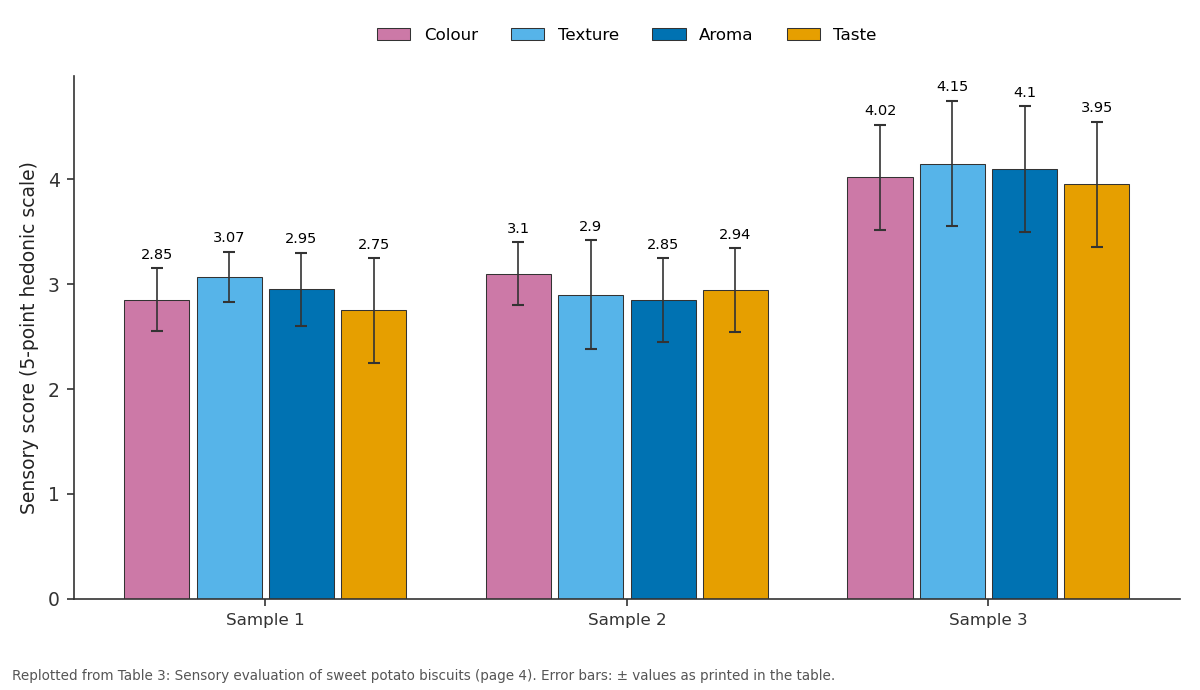
Colour and Texture and more: Sample 1 vs Sample 2 vs Sample 3
Replotted from Table 3 (page 4) of the original paper. Every bar is the paper's own table value.
View source evidence ↗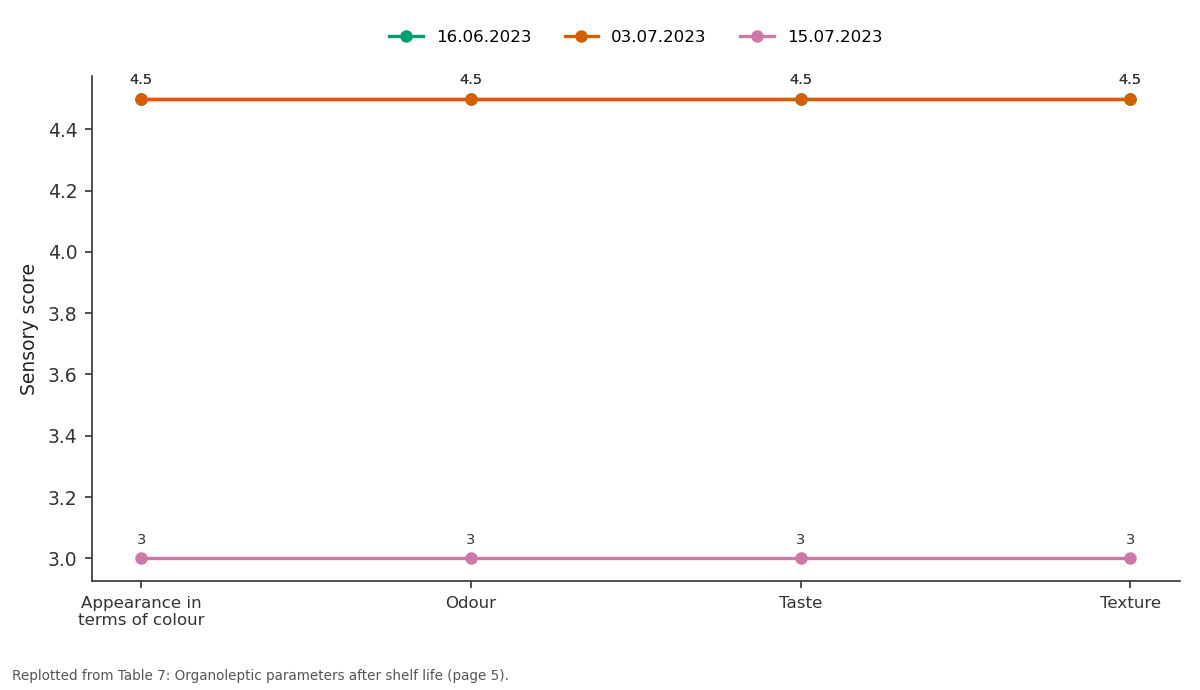
16.06.2023 and 03.07.2023 and more: Appearance in terms of... vs Odour vs Taste vs Texture
Replotted from Table 7 (page 5) of the original paper. Every bar is the paper's own table value.
View source evidence ↗Figures & tables
From the original paper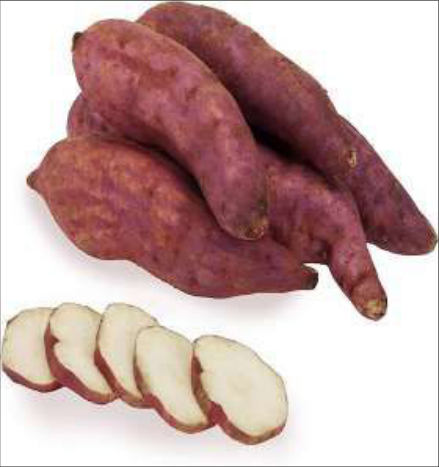 Figure 1
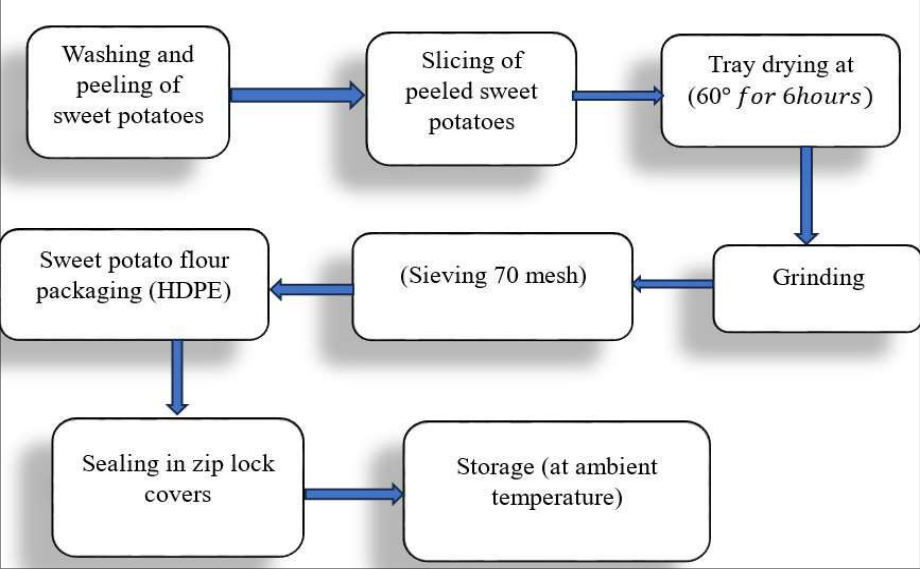 Figure 1
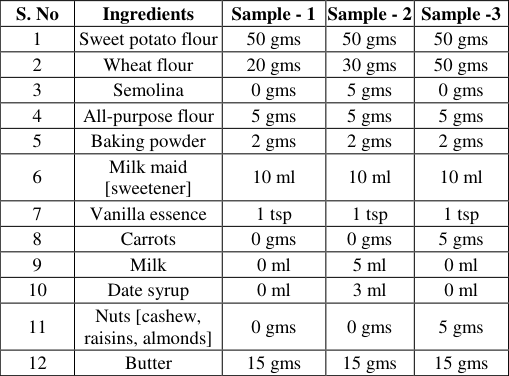 Table 1
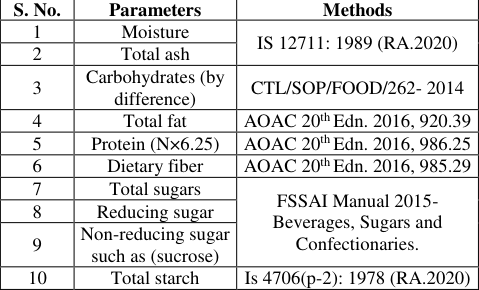 Table 2
 Table 3
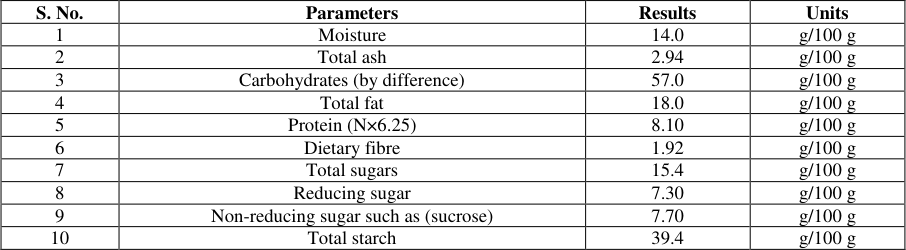 Table 4
 Table 5
 Table 6
 Table 7
Introduction
The sweet potato (Ipomoea batatas (L.) Lam.) Is a stiff, sweet-tasting root vegetable that belongs to the Convolvulaceae family? The statistical data of the United Nations Food and Agriculture Organization (FAO) shows that sweet potato is the fifth and the seventh most important food crop in developing countries and the world. Further than 130 million tons of sweet potato are produced annually of which over 95% of the crop is produced in Asia developing countries. The sweet potato has come well established with a large eventuality for, and to be used as a staple food in developing nations due to its short maturity time, capability to grow under different climatic conditions, and fairly poor soils (Nguyen Van Toan 2018) [2] . The flour can be stored for 6 months or further in sealed holders. It can be used as a cover for wheat flour in the following quantities: 100% in white gravies, 25-50% in eyefuls, galettes, and flatbreads, and 15-20% in viands. SP flour would be retailed as a low-cost volition to imported wheat flour, especially for snack food and pate directors. Small flour product and use trials were made using original kinds. Important specialized exploration on SP flour carried out in developing country institutions has concentrated on product expression using SP flour rather than on effective, low-cost, small-scale processes to produce the flour. Sweet potato-grounded products are of high quality and could contend with being products in the request (Srivastava S et al., 2012) [1] . Sweet potato is a member of the Convolvulaceae family, and it is a dicotyledonous root vegetable plant with large starchy, sweet-tasting, tuberous roots. Besides the tubers, the young leaves and shoot are also consumed sometimes as greens. Sweet potato (Ipomoea batatas) is the only member of the over 1,000 species of the Convolvulaceae family and the approximately 50 genera that is of significant importance, some others are used locally, but many are actually poisonous. Potato is the world's most widely grown tuber crop and the fourth largest food crop in terms of fresh produce after rice, wheat, and maize the potato has capabilities for a salutary role in world food product, owing to its status as a cheap and generous crop, which can be raised in a wide variety of climates and locales sweet potato contain complex carbohydrates, beta-carotene (a provitamin A carotenoid), manganese, vitamin C, vitamin B6, dietary fibre and potassium. Pink, yellow and green varieties are also high in beta-carotene (Onabanjo O.O, Ighere Dickson A, 2014) [3] . The processing of sweet potato into starch generates by products which is currently very limited in use. The solid residue produced from the bounce birth process contains the rich of fibre, which can be recovered by several processes including a milling and sieving process to produce salutary fibre. therefore, the end this exploration was to study the effect of rate of orange fleshed sweet potato (OFSP) flour, bounce, and residual flour on the organoleptic characteristics and physicochemical of biscuits (E S Harahap et al, 2020) [5] .
Materials and Methods
Materials and Methods
Materials
Slightly red-pink sweet potatoes of a variety without any abrasion were reaped from the local market in Hyderabad city Telangana state India. The sample was stored in a zip lock cover on the shelves of the lab at ambient temperature until its use. Below are the other ingredients purchased from local supermarkets in Hyderabad which are used for baking biscuits: Wheat flour, baking powder, Butter, Milkmaid (sweetener), Semolina, Date syrup, Milk, Carrots, Dry fruits (almonds, cashew, raisins), Vanilla essence, less quantity of all-purpose flour.
Sweet potato flour biscuits formulation
Three differences in formulations percentage will be changed with the following items used in making cookies as well as a variety of quantities used to develop standard recipes. Replicated trials were done, and one sample is concluded based on taste, texture, colour, appearance, aroma, flavor, and overall acceptability.
Sensory evaluation
The consumer acceptance of three different samples of biscuits was evaluated by twenty judges. The biscuits were served on white disposable plastic plates and tissue papers were provided for cleaning. Samples were coded with different colour and the sample order was randomized. The panel was asked to evaluate the biscuits. Colour, taste, flavor, texture, aroma, appearance and overall acceptability of the biscuits using a 5-point hedonic scale.
Statistical Analysis
Data gained from sensory evaluation were subjected to analysis of variance. Results were presented as means ± standard deviations of triplicate experiments. It was statistically calculated by ANOVA by establishing a significant difference at p≤ 0.05.
Nutritional Evaluation
The Nutritional evaluation of the premier-selected sample was analysed as follows
Microbial analysis
Microbial analysis such as shelf life and total plate count was carried out for 30 days of the study by the procedure followed by the Indian Standard method. When compared to the other ratios that were similar to the control sample, the colour ratings of biscuits made with 50% sweet potato flour were at their highest. As a result, adding sweet potato flour at a level of 50% increased the sensory qualities, specifically the texture, flavor, colour, appearance, aroma, taste, and general acceptability Sweet potato flour was added to the developed biscuits, improving their nutritional value
Results and Discussions 3.1 Sensory evaluation
Results and Discussions 3.1 Sensory evaluation
Nutritional Analysis of sweet potato flour biscuits
The nutrition analysis of selected samples has a carbohydrate of 57.0 g/100 g, 8.10 g/100 g of protein, 14.0 g/100 g of moisture, 2.94 g/100 g of ash, 18.0 g/100 g of fat content, 1.92 g/100 g of dietary fiber, Total sugars 15.4 g/100 g, Reducing sugars 7.30 g/100 g, non-reducing 7.70 g/100 g, total starch content 39.4 g/100 g (Table 4).
| S. No. | Parameters | Results | Units |
|---|---|---|---|
| 1 | Moisture | 14.0 | g/100 g |
| 2 | Total ash | 2.94 | g/100 g |
| 3 | Carbohydrates (by difference) | 57.0 | g/100 g |
| 4 | Total fat | 18.0 | g/100 g |
| 5 | Protein (N×6.25) | 8.10 | g/100 g |
| 6 | Dietary fibre | 1.92 | g/100 g |
| 7 | Total sugars | 15.4 | g/100 g |
| 8 | Reducing sugar | 7.30 | g/100 g |
| 9 | Non-reducing sugar such as (sucrose) | 7.70 | g/100 g |
| 10 | Total starch | 39.4 | g/100 g |
Table text extracted from the original PDF; superscript letters are shown inline. The original table image is below.
View original table image
Conclusion
In this study, the replacement potential of wheat flour with sweet potato flour in biscuits to improve nutritional values and the development of new recipes to make good quality biscuits from sweet potato were successfully and thoroughly investigated. According to the sensory evaluation scores, the results of biscuits produced from sweet potato flour were significantly good sensory score. The selected sweet potato biscuits were found to be highly nutritional, and the selected sample was also found to be absent in microbiological parameters after one-month study. It was found that sweet potato contains a limited amount of protein, although rich in dietary fiber content and carbohydrate, so a successful combination with wheat flour for biscuit production would be nutritionally advantageous.
Figures and tables from the paper
| S. No | Ingredients | Sample - 1 | Sample - 2 | Sample -3 |
|---|---|---|---|---|
| 1 | Sweet potato flour | 50 gms | 50 gms | 50 gms |
| 2 | Wheat flour | 20 gms | 30 gms | 50 gms |
| 3 | Semolina | 0 gms | 5 gms | 0 gms |
| 4 | All-purpose flour | 5 gms | 5 gms | 5 gms |
| 5 | Baking powder | 2 gms | 2 gms | 2 gms |
| 6 | Milk maid [sweetener] | 10 ml | 10 ml | 10 ml |
| 7 | Vanilla essence | 1 tsp | 1 tsp | 1 tsp |
| 8 | Carrots | 0 gms | 0 gms | 5 gms |
| 9 | Milk | 0 ml | 5 ml | 0 ml |
| 10 | Date syrup | 0 ml | 3 ml | 0 ml |
| 11 | Nuts [cashew, raisins, almonds] | 0 gms | 0 gms | 5 gms |
| 12 | Butter | 15 gms | 15 gms | 15 gms |
Table text extracted from the original PDF; superscript letters are shown inline. The original table image is below.
View original table image
| S. No. | Parameters | Methods |
|---|---|---|
| 1 | Moisture | IS 12711: 1989 (RA.2020) |
| 2 | Total ash | |
| 3 | Carbohydrates (by difference) | CTL/SOP/FOOD/262- 2014 |
| 4 | Total fat | AOAC 20th Edn. 2016, 920.39 |
| 5 | Protein (N×6.25) | AOAC 20th Edn. 2016, 986.25 |
| 6 | Dietary fiber | AOAC 20th Edn. 2016, 985.29 |
| 7 | Total sugars | FSSAI Manual 2015- Beverages, Sugars and Confectionaries. |
| 8 | Reducing sugar | |
| 9 | Non-reducing sugar such as (sucrose) | |
| 10 | Total starch | Is 4706(p-2): 1978 (RA.2020) |
Table text extracted from the original PDF; superscript letters are shown inline. The original table image is below.
View original table image
| Parameter | Colour | Texture | Aroma | Taste | Appearance | Flavour | Overall Acceptability |
|---|---|---|---|---|---|---|---|
| Sample 1 | 2.85±0.3 | 3.07±0.24 | 2.95±0.35 | 2.75±0.5 | 2.77±0.41 | 3.17±0.49 | 3.22±0.34 |
| Sample 2 | 3.1±0.3 | 2.9±0.52 | 2.85±0.4 | 2.94±0.4 | 2.62±0.5 | 2.82±0.4 | 2.95±0.5 |
| Sample 3 | 4.02±0.5 | 4.15±0.6 | 4.1±0.6 | 3.95±0.6 | 4.12±0.65 | 3.97±0.6 | 4.17±0.7 |
Table text extracted from the original PDF; superscript letters are shown inline. The original table image is below.
View original table image
| S. No | Parameters | Units | 16.06.2023 | 03.07.2023 | 15.07.2023 | Specified Limits |
|---|---|---|---|---|---|---|
| 1 | Total viable count | Cfu/ml | 0.1×10 | 0.42×10 | 0.51×10 | Max 50 |
| 2 | Coliform | Cfu/ml | 0.1×10 | 0.35×10 | 0.49×10 | <10 |
| 3 | E. coli | Cfu/ml | Absent | Absent | Absent | Absent |
| 4 | Salmonella | Cfu/ml | Absent | Absent | Absent | Absent |
| 5 | Staphylococcus aureus | Cfu/ml | absent | Absent | Absent | Absent |
| 6 | Yeast | Cfu/ml | 0.1×10 | 0.1×10 | 0.1×10 | Max 2 |
| 7 | Mold | Cfu/ml | 0.1×10 | 0.1×10 | 0.1×10 | Max 2 |
Table text extracted from the original PDF; superscript letters are shown inline. The original table image is below.
View original table image
| S. No | Parameters | 16.06.2023 | 03.07.2023 | 15.07.2023 | Specified limits |
|---|---|---|---|---|---|
| 1 | Appearance in terms of colour | 4.5 | 4.5 | 3 | 3 to 5 |
| 2 | Odour | 4.5 | 4.5 | 3 | 3 to 5 |
| 3 | Taste | 4.5 | 4.5 | 3 | 3 to 5 |
| 4 | Texture | 4.5 | 4.5 | 3 | 3 to 5 |
Table text extracted from the original PDF; superscript letters are shown inline. The original table image is below.
View original table image
References
5 in the original paper- Srivastava S, Genitha TR, Yadav V. Preparation and quality evaluation of flour and biscuits from sweet potato. Journal Food Process Technology. 2012;3(12):1-5.
- Van Toan N, Anh VQ. Preparation and improved quality production of flour and the made biscuits from purple sweet potato. Journal of Food and Nutrition. 2018;4:1-14.
- Onabanjo OO, Ighere DA. Nutritional, functional and sensory properties of biscuit produced from wheatsweet potato composite. Journal of Food Technology Research. 2014;1(2):111-121.
- Mais A, Brennan CS. Characterisation of flour, starch and fibre obtained from sweet potato (Kumara) tubers, and their utilisation in biscuit production. International Journal of Food Science & Technology. 2008;43(2):373-379. https://doi.org/10.1111/j.1365-2621.2007.01652.x
- Harahap ES, Julianti E, Sinaga H. Utilization of orange fleshed sweet potato flour, starch and residual flour in biscuits making. In IOP Conference Series: Earth and Environmental Science. 2020;454(1):012120.
Cited by 12
From OpenAlex, OpenCitations and reference lists read by Scinovex
- Quality evaluation of innovative buttermilk biscuits produced from orange-flesh sweet potato flour infused with coconut ↗
Ronnie Ramsaran, Vidya de Gannes, Gaius D. Eudoxie · Frontiers in Food Science and Technology · 2024
Introduction This study was undertaken to evaluate a value-added innovative buttermilk biscuit made from orange flesh sweet potato (OFSP) flour, infused with coconut. It underscores the importance of food utilisation through alternatives to wheat flour contributing to food and nutrition security amidst evolving global challenges. The objectives of this study were: to investigate the effect of different levels of OFSP…
❝ 3PDF - Stability of commercial packaged fried foods in Ouagadougou during storage ↗
Tienbnoma Sandrine Ouedraogo, Frédéric Anderson Konkobo, Poussian Raymond Barry, Mamounata Diao, Samson Guenné, Roger Dakuyo et al. · Food and Humanity · 2025
❝ 2PDF - Visualization of latent fingerprint using sweet potato (Ipomoea batatas) powder on nonporous surface: A new approach ↗
Jothiswaroobini, Keerthi · International Journal of Forensic Medicine · 2025
The most common techniques for finding the latentprints is powder dusting, which contains chemicals that could be harmful to the environment and human health. so Investigating the natural and environmentally suitable substitutes is necessary as sustainability gains more attention. In this Sweet potatoes (Ipomoea batatas) are the starchy root vegetables, It is a well-liked food crop all around the world
- Enzymatic pathways in sweet potato (Ipomoea batatas) starch synthesis: A biochemical perspective
James Kamau, Esther Njiru · International Journal of Advanced Biochemistry Research · 2025
Starch is a critical carbohydrate stored in the tubers of sweet potato (Ipomoea batatas), providing energy reserves essential for plant growth and human consumption. This study investigates the enzymatic pathways involved in starch biosynthesis in sweet potato, focusing on key enzymes such as ADP-glucose pyrophosphorylase (AGPase), starch synthase, branching enzyme, and debranching enzyme. We also explore how environmental factors, including temperature, light, and nutrient availability, influence enzyme activity and gene expression across different developmental stages. The results show that
- Analysis the youngster preference towards the uses of Internet Banking: Special reference to Ludhiana District ↗
Harmanpreet Kaur · Asian Journal of Management and Commerce · 2025
To gain the understanding in respect using Internet banking of Ludhiana district customers, the study was conducted on respondents taken of the age of 18-38 from urban and rural areas of Ludhiana district. The study used 200 respondents to analyse the perception towards Internet banking. The major findings reveal that urban respondents are doing more banking transactions through Internet banking.
- Genomic and proteomic approaches for understanding sweet potato (Ipomoea batatas) tuber formation ↗
Sofía Torres, Javier Fernan · International Journal of Molecular Biology and Biochemistry · 2025
Sweet potato (Ipomoea batatas) is a vital crop with significant nutritional and agricultural importance. The formation of storage roots, commonly referred to as tubers, plays a crucial role in the plant's growth and reproduction. Despite its agricultural relevance, the molecular mechanisms underlying tuber formation remain complex and multifaceted. Recent advancements in genomic and proteomic technologies have provided valuable insights into
- Biological benefits of sweet potato flour: Impact on biscuit nutritional quality and health benefits
Thandiwe N Moyo · International Journal of Biology Sciences · 2025
This study evaluates the impact of substituting wheat flour with sweet potato flour in biscuit formulations, focusing on nutritional enhancement, glycemic index modulation, and sensory acceptability. Sweet potato flour, derived from both orange and purple-fleshed varieties, was incorporated at varying levels (10%, 20%, 30%, and 40%) into biscuit recipes. Nutritional analyses revealed significant increases in dietary fiber, total phenolic content, and antioxidant activity, particularly at higher substitution levels. Glycemic index measurements indicated a reduction in blood sugar response, with
- Post-harvest handling and storage techniques for maintaining nutritional quality in sweet potato (Ipomoea batatas)
Mariana López, Carlos García · International Journal of Agriculture and Nutrition · 2025
Sweet potato (Ipomoea batatas) is an essential root crop with high nutritional value, including significant amounts of vitamins, minerals, dietary fiber, and antioxidants. However, its post-harvest handling and storage conditions significantly impact its nutritional quality, shelf life, and market value. This paper explores the effects of various post-harvest handling and storage techniques on the retention of nutritional qualities such as antioxidant activity, vitamins (particularly beta-carotene), and minerals. Through a review of current literature and experimental data, we discuss methods
- Biometric and physicochemical characterization of Capsicum chinense commercialized in the interior of Goiás, Brazil ↗
Luiz Cláudio Kehdi Guimarães, Osvaldo Ramos de Oliveira, Júlia Mayumi Pereira Fuzinaga, Vinicius Eduardo Farias Silva, Gabriela de Oliveira Silva, Kemylle Rodrigues Faria et al. · International Journal of Pharmacognosy and Pharmaceutical Research · 2024
Pepper reflects the ethnic diversity and richness of Brazil's food traditions. The Capsicum chinense species, cultivated by small producers, generates jobs and contributes to the economy of family farmers. In this context, this study aimed to perform the biometric and physicochemical characterization of Capsicum chinense commercialized in the interior of Goiás, Brazil. Fifty intact and ripe fruits were collected in
- Nutritional and health benefits of Cassava cookies ↗
Grace Njeri · Journal of Pharmacognosy and Phytochemistry · 2024
Cassava (Manihot esculenta Crantz) is a starchy tuber crop widely grown in tropical regions. Its use in cookies offers a gluten-free alternative with various nutritional benefits. This review highlights the nutritional composition of cassava, its health benefits, and its incorporation into cookies. The potential of cassava cookies to address dietary needs, including celiac disease and other health concerns, is explored,
- Enzymatic profiles and antioxidant activity in sweet potato (Ipomoea batatas) during Processing ↗
Rajendra Rai · International Journal of Bioscience and Biochemistry · 2024
Sweet potato (Ipomoea batatas) is widely recognized for its nutritional benefits, including its high content of vitamins, dietary fiber, and antioxidants. The processing of sweet potato significantly alters its enzymatic activity and antioxidant properties. This study explores the effects of different processing techniques, such as boiling, roasting, and drying, on the enzymatic profiles and antioxidant activity of sweet potato. The
- The impact of sweet potato flour on the texture and shelf life of biscuits ↗
Lorenzo Rossi · International Journal of Chemical and Biological Sciences · 2024
The rising demand for gluten-free, nutrient-dense, and functional foods has led to an increased exploration of alternative ingredients in bakery products. This study investigates the impact of sweet potato flour (SPF) on the texture and shelf life of biscuits. A comparative analysis was conducted by substituting wheat flour with varying percentages of sweet potato flour (10%, 20%, and 30%) to