
Research article · 2025 · Full text
International Journal of Biology SciencesBiological benefits of sweet potato flour: Impact on biscuit nutritional quality and health benefits
Volume 7(3) · Pages 56–58 · DOI: 10.33545/26649926.2025.v7.i3a.460 ↗
Research areasGeochemistry and Geologic MappingGeological Modeling and AnalysisElectrical and Electromagnetic Research
Abstract
Author-writtenThis study evaluates the impact of substituting wheat flour with sweet potato flour in biscuit formulations, focusing on nutritional enhancement, glycemic index modulation, and sensory acceptability. Sweet potato flour, derived from both orange and purple-fleshed varieties, was incorporated at varying levels (10%, 20%, 30%, and 40%) into biscuit recipes. Nutritional analyses revealed significant increases in dietary fiber, total phenolic content, and antioxidant activity, particularly at higher substitution levels. Glycemic index measurements indicated a reduction in blood sugar response, with the 30% substitution yielding the most favourable results. Sensory evaluations demonstrated that biscuits with up to 30% sweet potato flour were well-accepted, while higher levels led to decreased acceptability due to alterations in taste and texture. These findings suggest that sweet potato flour is a viable ingredient for producing nutritionally enhanced biscuits with potential health benefits.
Summary
Source-checkedPlain-language reading of the full paper, prepared with AI and checked against the text. Each point links to the authors' own words.
Why it matters
- There is a growing consumer demand for baked goods that incorporate functional ingredients to provide both health benefits and good taste. View evidence ↗
- Sweet potatoes are a promising ingredient for health-conscious foods because they are naturally rich in antioxidants, fiber, and vitamins A and C. View evidence ↗
- Due to their low glycemic index, sweet potatoes are digested slowly, which helps in maintaining stable blood sugar levels. View evidence ↗
The question
- The study aims to evaluate how substituting wheat flour with sweet potato flour affects the nutritional profile and potential health benefits of biscuits. View evidence ↗
What they did
- The sweet potato flour used in the study was produced by milling and drying both purple-fleshed and orange-fleshed varieties. View evidence ↗
- The researchers tested four substitution levels of sweet potato flour (10%, 20%, 30%, and 40%) against a control group of 100% wheat flour biscuits. View evidence ↗
- Nutritional quality was measured using AOAC methods for proximate composition, the enzymatic-gravimetric method for fiber, the Folin-Ciocalteu method for phenolics, and DPPH/ABTS assays for antioxidant activity. View evidence ↗
- The glycemic index was measured using an in vitro simulation of human digestion to track glucose release over time. View evidence ↗
- Trained assessors used a 9-point hedonic scale to evaluate the biscuits' flavor, texture, color, and overall acceptability. View evidence ↗
What they found
- Increasing the amount of sweet potato flour led to a significant increase in the dietary fiber content of the biscuits. View evidence ↗
- Biscuits made with sweet potato flour showed an increase in protein content and a slight increase in fat content. View evidence ↗
- The highest antioxidant capacity was observed in biscuits with a 40% substitution of sweet potato flour. View evidence ↗
- Biscuits containing sweet potato flour had a significantly lower glycemic index compared to those without it. View evidence ↗
- Panelists well-accepted biscuits with up to 30% sweet potato flour, but acceptability of taste and texture declined at the 40% substitution level. View evidence ↗
What it means
- The authors conclude that a 30% substitution of wheat flour with sweet potato flour provides the best balance between improved nutrition and consumer acceptance. View evidence ↗
- The authors state that future research is needed to explore the long-term effects of these biscuits on weight control and blood sugar management. View evidence ↗
Visual summary
1 visualsIllustrations explain the paper; they do not show study data.
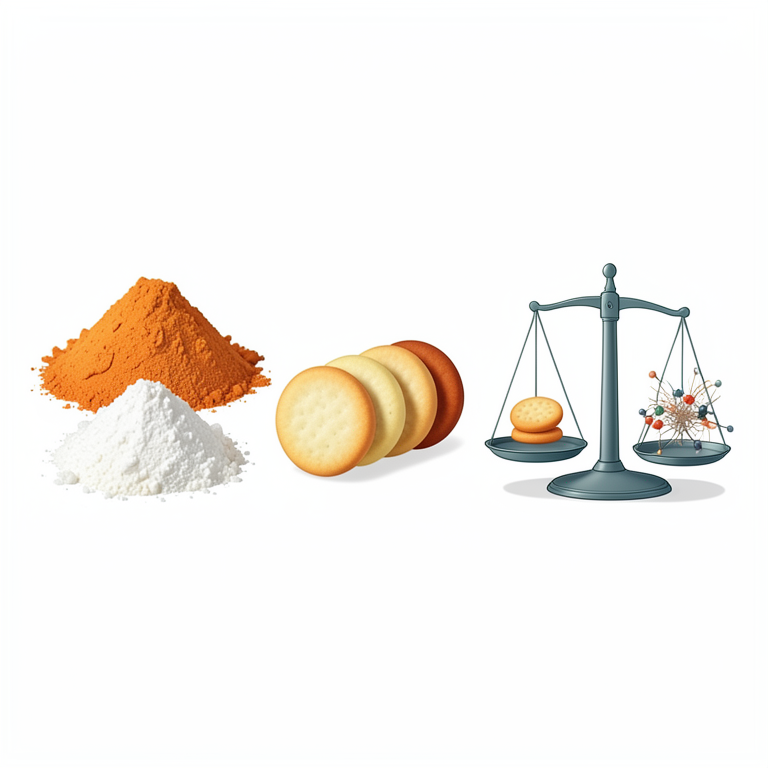
Substitution Trade-off
AI-generated conceptual illustration (sweet potato flour and wheat flour biscuits). It explains the idea and does not show study data.
View source evidence ↗Introduction
The integration of functional ingredients into baked products has gained substantial attention as consumers become more health-conscious and seek alternatives that offer both nutritional benefits and superior taste. Among such alternatives, sweet potato (Ipomoea batatas) flour has emerged as a promising ingredient, especially due to its nutritional richness and potential health advantages. Sweet potatoes are naturally high in essential nutrients such as fiber, vitamins A and C, and various antioxidants, which are important for maintaining good health. This study explores the impact of substituting wheat flour with sweet potato flour in biscuits, aiming to evaluate how such substitution affects the nutritional profile of biscuits and their potential health benefits. By incorporating sweet potato flour, which is known for its low glycemic index and high fiber content, this research seeks to offer insights into improving the quality of baked goods while simultaneously providing health-promoting benefits.
Rich in Antioxidants
Sweet potatoes are an excellent source of antioxidants, particularly beta-carotene, which the body converts into vitamin A. Vitamin A plays a critical role in maintaining healthy vision, skin, and immune function. The antioxidant properties of sweet potatoes help combat oxidative stress, reducing inflammation and the risk of chronic diseases such as heart disease and cancer. Purple sweet potatoes contain anthocyanins, a type of antioxidant that has been linked to reduced inflammation and improved brain function. Studies suggest that consuming anthocyanin-rich foods may help protect against neurodegenerative diseases like Alzheimer's.
Supports Digestive Health
Sweet potatoes are high in dietary fiber, particularly soluble fiber. Fiber is essential for maintaining good digestive health as it helps promote regular bowel movements, prevent constipation, and maintain a healthy gut microbiota. Additionally, the fiber in sweet potatoes aids in stabilizing blood sugar levels and improving satiety, making it a great food for weight management. A medium-sized sweet potato contains about 4 grams of dietary fiber, which is roughly 15% of the recommended daily intake for an adult. This fiber helps bulk up stool and supports overall digestive health.
Improves Immune Function
Sweet potatoes are rich in vitamin C, an essential nutrient that supports the immune system by promoting the production of white blood cells and enhancing their ability to fight infections. The high vitamin C content in sweet potatoes also helps in the absorption of iron, further boosting immune function. The orange-fleshed sweet potato, in particular, contains high levels of vitamin C, which helps to reduce the duration and severity of cold symptoms. Regular consumption of sweet potatoes can thus contribute to a strengthened immune system.
Promotes Healthy Skin
The high levels of beta-carotene in sweet potatoes not only benefit vision but also contribute to skin health. Betacarotene acts as a natural sunscreen, protecting the skin from UV damage and premature aging. Vitamin A also supports skin cell turnover, ensuring that the skin remains youthful and vibrant. Consuming sweet potatoes regularly can improve skin complexion, reduce wrinkles, and protect against sun damage due to their antioxidant content, which fights free radicals that accelerate skin aging.
Regulates Blood Sugar Levels
Sweet potatoes have a relatively low glycemic index (GI), meaning they are digested slowly and cause a gradual rise in blood sugar levels. This makes them an excellent choice for people with diabetes or those seeking to maintain stable blood sugar levels. The fiber and complex carbohydrates in sweet potatoes contribute to this slow digestion process. Studies have shown that sweet potatoes can help improve insulin sensitivity and lower the risk of type 2 diabetes. The high fiber content helps prevent sudden blood sugar spikes, making sweet potatoes a suitable option for individuals managing diabetes.
Literature Review
Sweet potato flour is increasingly recognized for its nutritional advantages (Okoye et al., 2022) [3] . It contains significant amounts of dietary fiber, particularly soluble fiber, which is known for improving digestive health and lowering the risk of cardiovascular diseases. Additionally, sweet potato flour is rich in antioxidants, including carotenoids such as beta-carotene, which contribute to reducing oxidative stress and may help in the prevention of chronic diseases such as cancer and heart disease. Studies have demonstrated that substituting a portion of wheat flour with sweet potato flour increases the dietary fiber and antioxidant content of biscuits, enhancing their health benefits. While sweet potato flour enhances the nutritional value of biscuits, it also maintains desirable sensory attributes, which is a key factor in consumer acceptance. Previous research on the incorporation of sweet potato flour into baked goods has focused primarily on its effects on the texture, taste, and nutritional composition of products like cookies and cakes. The findings consistently suggest that sweet potato flour improves the fiber content of baked products, which helps with digestion and provides a feeling of fullness, potentially contributing to weight management. Furthermore, sweet potato flour is considered an excellent alternative for people with gluten sensitivity or celiac disease, as it is naturally gluten-free. However, one challenge faced in using sweet potato flour in bakery products is its potential to alter the sensory qualities such as texture and flavor. The extent of these changes depends on the proportion of sweet potato flour incorporated into the product.
Hypotheses
• H₀: There is no significant difference in the nutritional quality, antioxidant activity, or glycemic index of biscuits made with sweet potato flour compared to biscuits made with traditional wheat flour. • H₁: Substituting wheat flour with sweet potato flour enhances the nutritional quality, increases antioxidant activity, and lowers the glycemic index of biscuits.
Methodology 4.1 Sample Preparation
Sweet potato flour was prepared by drying and milling both orange and purple-fleshed sweet potatoes. Wheat flour was substituted with sweet potato flour at 10%, 20%, 30%, and 40% levels in biscuit formulations. Control biscuits were prepared using 100% wheat flour.
Nutritional Analysis
Proximate composition, including moisture, ash, protein, fat, and carbohydrate content, was determined using standard AOAC methods. Dietary fiber content was measured using the enzymatic-gravimetric method. Total phenolic content was assessed using the Folin-Ciocalteu method, and antioxidant activity was evaluated through DPPH and ABTS assays (Rao & Kumar, 2018) [6] .
Glycemic Index Measurement
The glycemic index of the biscuits was determined using an in vitro method, simulating human digestion, and measuring the glucose release over time (Zhang et al., 2017) [6] .
Sensory Evaluation
A panel of trained assessors evaluated the biscuits for attributes such as color, texture, flavor, and overall acceptability using a 9-point hedonic scale.
Results and Discussion
The nutritional analysis revealed a marked increase in fiber and protein content in biscuits made with sweet potato flour.
As the percentage of sweet potato flour increased, the fiber content rose significantly, making the biscuits a better source of dietary fiber. Furthermore, the protein content also increased in the sweet potato flour biscuits, although the fat content also showed a slight increase, which was expected due to the inherent fat content of sweet potato flour.
The antioxidant activity of the biscuits also improved with the addition of sweet potato flour. Biscuits containing 40% sweet potato flour showed the highest levels of antioxidant capacity, which can be attributed to the carotenoids and other phytochemicals present in sweet potatoes. This finding aligns with existing research that highlights the antioxidant properties of sweet potato flour and its potential role in reducing oxidative stress and inflammation in the body.
The glycemic index of the biscuits was significantly lower for those containing sweet potato flour. This suggests that the incorporation of sweet potato flour may help in managing blood sugar levels, making it a suitable option for individuals with diabetes or those at risk of developing the condition. The lower glycemic index is likely due to the high fiber content and the complex carbohydrates in sweet potato flour, which are digested more slowly than the refined carbohydrates in wheat flour. Sensory evaluation results indicated that biscuits with up to 30% sweet potato flour substitution were well accepted by the panelists. However, the taste and texture became less acceptable with higher levels of sweet potato flour, particularly in the 40% substitution biscuits. This suggests that while sweet potato flour can enhance the nutritional quality of biscuits, it may alter the sensory attributes beyond a certain level, making it important to balance health benefits with consumer preferences.
Conclusion
The incorporation of sweet potato flour into biscuit formulations has a significant positive impact on their nutritional quality, offering enhanced fiber, protein, and antioxidant content. Additionally, the biscuits made with sweet potato flour exhibited a lower glycemic index, suggesting potential health benefits in managing blood sugar levels. However, there is a limit to the amount of sweet potato flour that can be added without negatively affecting the sensory qualities of the biscuits. A 30% substitution level appears to be the optimal balance between nutritional enhancement and sensory acceptability. These findings indicate that sweet potato flour can be a valuable ingredient in biscuit production, offering both improved nutritional value and potential health benefits.
Recommendations
Future research should focus on exploring the long-term health benefits of consuming sweet potato flour-enriched biscuits, particularly with regard to blood sugar management and weight control. Additionally, broader consumer acceptance studies are necessary to determine the most acceptable formulations for mass production. Furthermore, research could explore the incorporation of sweet potato flour in other baked goods and processed foods to further investigate its versatility and potential health-promoting effects.
References
8 in the original paper- Oji M, Asogwa S. Nutritional composition of biscuits from wheat-sweet potato composite flour. Food Res Int. 2020;129:508-514.
- Sharma P, Kumar V. Health benefits of sweet potato flour. Int J Food Sci. 2019;12(4):111-118.
- Okoye JI, Egbujie AE, Okechukwu CO. Quality assessment and sensory acceptability of bread produced from wheat, ground bean and sweet potato flour blends. J Curr Res Food Sci. 2022;3(2):41-49. https://doi.org/10.33545/26649926.2025.v7.i3a.460.
- Nweke F, Nnadi M. Antioxidant and nutritional properties of sweet potato flour. J Agric Food Chem. 2021;22(3):556-562.
- Yamaguchi T, Zhang H, Nakano Y, Kato M. The role of sweet potato in antioxidant activity in food systems. Food Chem. 2018;239:252-259.
- Rao A, Kumar S. Sensory and nutritional analysis of biscuits containing sweet potato flour. J Food Qual. 2018;40(6):710-719.
- Zhang L, Li W, Huang Q, Wang X. Glycemic index of sweet potato-based products. Food Res Int. 2017;91:221-227.
- Kausar SM, Anil B, Harshitha MN. Preparation and quality evaluation of sweet potato (Ipomoea batatas) flour biscuits. Int J Agric Food Sci. 2023;5(2):20-24.