
Research article · 2023 · Full text
International Journal of Veterinary Sciences and Animal HusbandryThe effect of ratio combination and binders on the digestibility of mesquit (Prosopis Juliflora) leaves and pods
Volume 8(4) · Pages 158–163 · DOI: 10.22271/veterinary.2023.v8.i4c.585 ↗
Research areasPolysaccharides Composition and ApplicationsRuminant Nutrition and Digestive PhysiologyFood composition and properties
Abstract
Author-writtenProsopis juliflora has long been used as a leguminous tree forage. However, the availability of high concentrations of tannins has hindered its usage. The study aimed at determining the most digestible ratio combination of P. Juliflora (PJ) leaves and pods and the effect of wood ash and bentonite on their digestibility. Therefore, in-vitro digestibility (IVD) trials were conducted on PJ leaves and pods (PJLP) at ratios of 0:100, 25:75, 50:50, 75:25, and 100:0 for 96 h with and without treatment. Gas produced was recorded at intervals of 0, 3, 6, 9, 12, 24, 48, 72, and 96 h. The results showed that the ratio combination significantly affects the digestibility of PJLP. It also showed that wood ash and bentonite affect the digestibility of PJLP at different ratios. It was concluded that the use of binders enhanced the digestibility of PJLP. However, they significantly positively affect pods compared to leaves.
Summary
Source-checkedPlain-language reading of the full paper, prepared with AI and checked against the text. Each point links to the authors' own words.
Why it matters
- Small ruminant production is hindered by protein sources that are often expensive, seasonal, or of poor quality, making leguminous tree forages a viable alternative. View evidence ↗
- Prosopis juliflora is a nutritious, evergreen forage, but its use as a protein source is limited by high concentrations of tannins, particularly in the leaves. View evidence ↗
- Tannins reduce protein availability by forming complexes; therefore, affordable natural binders are sought to replace expensive synthetic ones. View evidence ↗
The question
- The research aimed to identify the most digestible ratio of P. juliflora leaves and pods and evaluate how wood ash and bentonite affect this digestibility. View evidence ↗
What they did
- Samples of P. juliflora leaves and pods from Baringo County, Kenya, were ground through a 1 mm sieve and mixed in ratios of 0:100, 25:75, 50:50, 75:25, and 100:0. View evidence ↗
- The study used bentonite at a rate of 20g/kg and wood ash at 400g/kg as tannin binders. View evidence ↗
- In-vitro digestibility was measured by recording gas production at intervals up to 96 hours in a water bath maintained at 39±0.5°C. View evidence ↗
What they found
- Among the ratio combinations, the 25% pods and 75% leaves (PPL25:75) ratio was the most digestible, while the 75% pods and 25% leaves (PPL75:25) ratio was the least. View evidence ↗
- When used individually, P. juliflora leaves (PL100) showed significantly higher digestibility than pods (PP100). View evidence ↗
- Untreated leaves were more digestible than those treated with binders, with untreated leaves producing 22.74 ml of gas at 24 h compared to 21.07 ml for wood ash and 18.79 ml for bentonite. View evidence ↗
- For pods, wood ash was more effective than bentonite, producing 32.95 ml (24 h) and 38.61 ml (48 h) of gas, compared to 30.42 ml and 33.91 ml for bentonite. View evidence ↗
- At a ratio of 75% pods and 25% leaves, bentonite-treated samples were the most digestible (35.21 ml at 24 h), followed by wood ash (26.94 ml), with untreated samples being the least (21.32 ml). View evidence ↗
What it means
- The authors concluded that while bentonite and wood ash are less effective at improving the digestibility of P. juliflora leaves, they are more effective for the pods. View evidence ↗
- The authors state that bentonite is effective at 20 g/kg, but wood ash performs better at its higher concentration of 400 g/kg. View evidence ↗
Visual summary
1 visualsIllustrations explain the paper; they do not show study data.
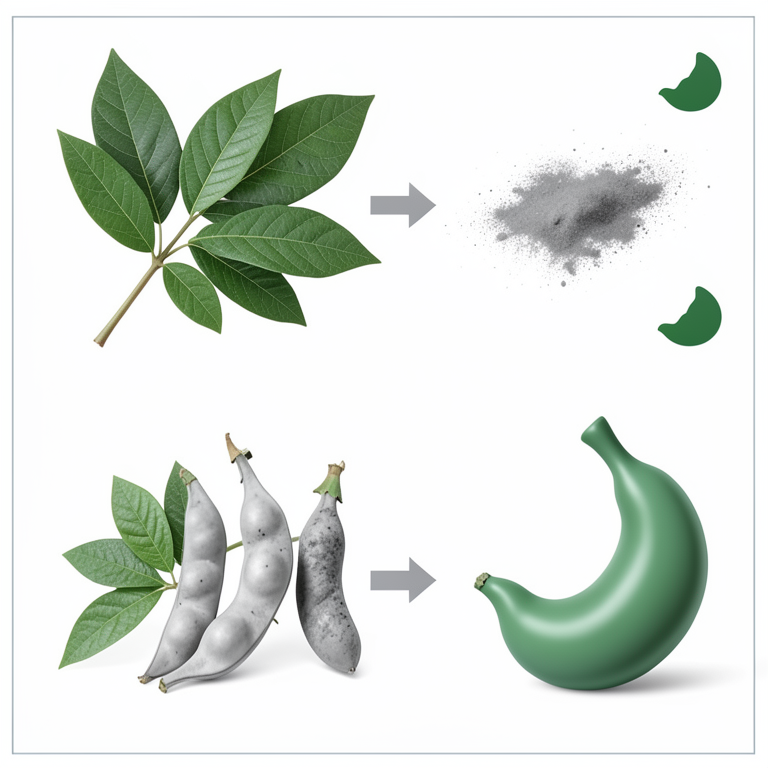
Effect of Binders on Plant Parts
AI-generated conceptual illustration (Prosopis juliflora leaves and pods). It explains the idea and does not show study data.
View source evidence ↗Figures & tables
From the original paper Table 1
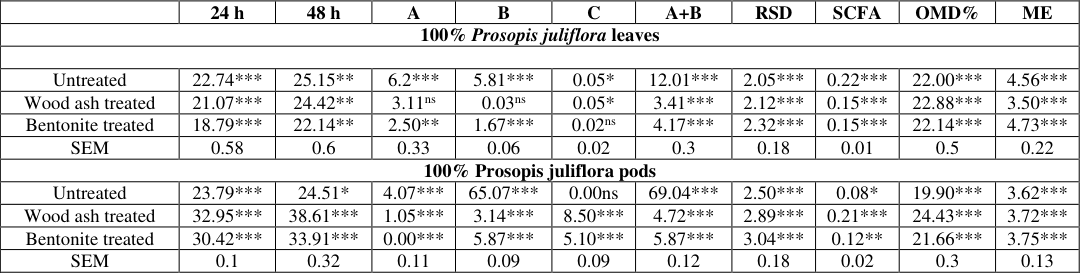 Table 2
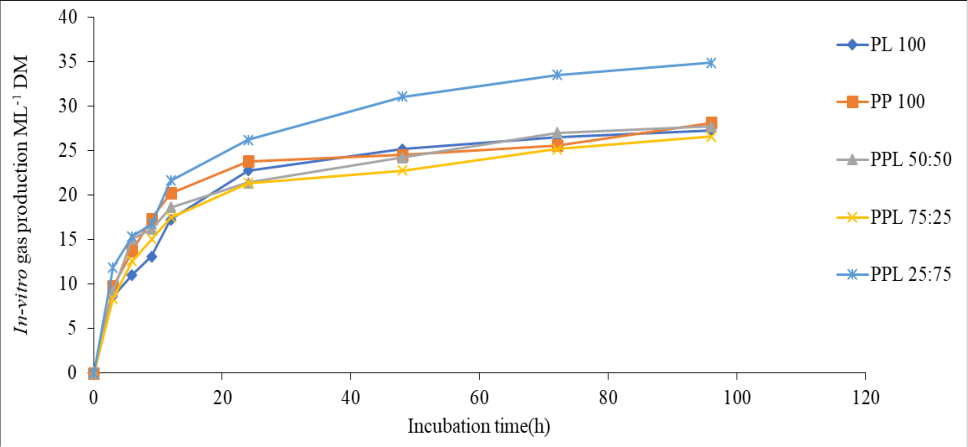 Figure 1
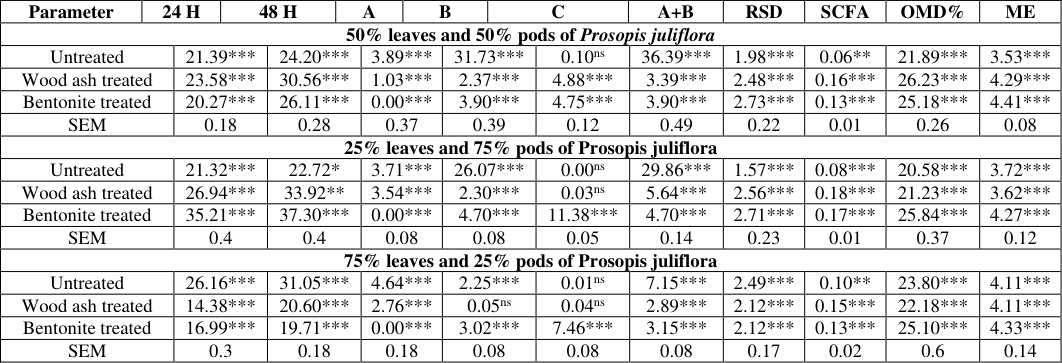 Table 3
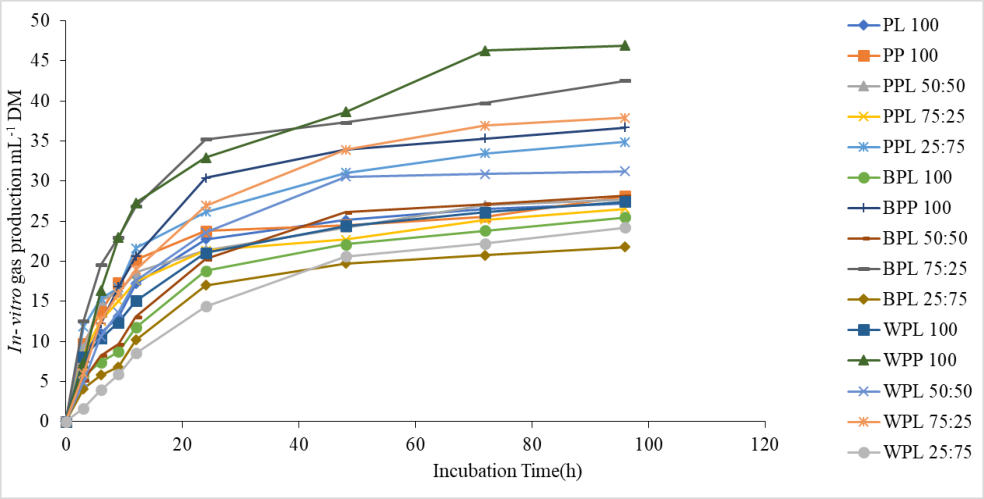 Figure 2
Introduction
The inadequate, costly, seasonal, and poor-quality protein sources coupled with the changing climatic conditions are the major hindrances to small ruminants' production [15] . Leguminous tree forages are a better alternative to this problem. They have relatively high mineral, organic matter, and crude protein content. Apart from that, they are drought resistant. These attributes make them supplements to reduce the effects of expensive, seasonal, and low-quality forages [16] . P. juliflora is one of these tree forages. It is evergreen, available throughout the year, and nutritious. However, the high tannin content more so in the leaves has hindered the efficient utilization of this forage as a protein source. The tannins bind to proteins forming complexes that interfere with their availability to the animal [20] . Natural, local, affordable, and readily available tannin binders can be used to minimize the effect of tannins in this forage and replace the expensive synthetic binders. [10] Recommend further research on these natural tannin binders as a replacement for synthetic binders which are also detrimental to the environment. This will enhance the adoption and usage of these leguminous forages. Wood ash and bentonite were used as tannin binders in this research. More than 90% of Kenyans depend on either charcoal or wood for cooking, furthermore, 6-10% of wood is converted to wood ash [3,4] . Potassium Carbonate, a major component of wood ash, forms a strong alkaline with high adsorption capacity, called lye when mixed with water. This solution binds the tannins when soaked with feeds. Bentonite was proven by [8] to be as effective as polyethene glycol (PEG) in tannin binding. It is a clay of high cohesiveness that has been used in softening vegetables, and wine fining, as a face mask for removing toxins from the body, and as the most effective in-vivo aflatoxin binder [9] . In-vitro digestibility trials were conducted in the laboratory to determine the most digestible ratios of PJLP, and the effect of bentonite and wood ash on the digestibility of these ratios. The trials were carried out for 96 h and gas produced was recorded at intervals of 0, 3, 6, 9, 12, 24, 48, 72, and 96 h. The calculations were carried out using [7] formulae and then fit into a model that [17] developed to determine the most digestible sample based on the gas produced.
Materials and Methods
Materials and Methods
Study site
The experiments were undertaken at Egerton University, main campus, in the Animal Science laboratories. It is located in the sub-county of Njoro, the County of Nakuru, Kenya. It is approximately 25 kilometres to the southwest of Nakuru town and 5 kilometres from Njoro centre. The GPS coordinates are 0°22'11.0"S and 35°55'58.0" E, and the latitude and longitudes are 0.369734 °S, and 35.932779 °E respectively. The altitude above sea level is approximately 1800 metres, and receives average 900-1,200 mm of rainfall annually, with average daily temperatures ranging between 17 °C-22 -°C (Egerton University Meteorological Station, 2019).
Source of materials
Mature pods and leaves were collected from Marigat Sub-County, Baringo County, Kenya, and transported to Egerton University. Marigat Sub-County is located at 0° 20'N and 35 ° 37'E and approximately 20 Km from both Lake Baringo and Bogoria. It lies at 1080 m above sea level and receives rainfall of 700-950 mm per year with peaks in April/May and July/August but generally erratic, while the annual mean temperature is 23ºC [5] .
Preparation of samples for analysis
P. juliflora leaves and pods samples were sourced from Marigat sub-county in Baringo County by either stripping off or shaking PJ trees and shrubs in homesteads, grazing areas, and wild ones. This was undertaken in the dry months of December to January. The samples were spread out to dry, sorted out, and packed in sacks. Afterwards, they were transported to the Animal Nutrition laboratory of Egerton University for analysis. They were incubated for 6 h in an incubator set at 60°C for complete drying, afterwards, they were ground to pass through a 1 mm sieve. They were then packaged in airtight containers after weighing and mixing them at ratios of 0:100, 25:75, 50:50, 75:25, and 100:0. Bentonite was used at the rate of 20g/kg, and wood ash was mixed thoroughly, sieved to remove foreign particles and used at 400g/kg in the analysis.
Data collection
Data collection was carried out to determine the most digestible ratio of P. juliflora leaves and pods, and the most effective binder on their digestibility. Gas produced was recorded at intervals of 0, 3, 6, 9, 12, 24, 48, 72, and 96 h in ml. The cumulative gas production technique model as developed by [17] was used to determine the best ratio after calculation using [7] formulae. The ratios used were 0:100, 25:75, 50:50, 75:25, and 100:0 for PJLP, wood ash, and bentonite. The animal handling procedures were approved and certified by the Ethical Clearance Committee, Egerton University, and permitted by the National Commission for Science and Innovation (NACOSTI), Kenya.
In-vitro gas production
Preparation for this exercise began a day earlier. The required instruments and samples were put together, and the samples were milled to go through a 1 mm mesh. Later, 200 mg of the samples were weighed in duplicate into clearly marked 100 ml glass syringes. The following morning, the water bath was refilled to the required level, the thermostat heater was switched on, then allowed to heat to 39°C. The thermo-flask was then filled with warm water to keep warm. Approximately 500 ml of rumen fluid was collected from two donor goats before feeding and 15 minutes before the digestibility trial began. The collection of rumen fluid was carried out using a vacuum pump and a stomach tube. They were inserted in the rumen as described by [13] , then kept in the warm thermos flask. The obtained rumen fluid was filtered using two layered cheesecloths to acquire strained rumen fluid that was kept in the warm thermo-flask and continually pumped with CO 2 to maintain an anaerobic environment. A colourless buffer mineral medium continuously flushed with CO 2 was added into the fluid to emulate the action of saliva at 1:2 (v/v) ratio. The syringes containing samples, and the blank ones were filled with approximately 30 ml of the buffer medium containing rumen fluid and swirled gently to expel bubbles. Thereafter, the clips were tightly closed before the solution was well mixed with the feed samples. More air bubbles were expelled from the syringe and the exercise stopped before the solution went into the inlet which was tightly closed using rubber bands. The syringes were then inverted, and the initial reading was recorded at time = 0 before they were placed into a water bath whose temperature was at 39±0.5 o C for 96 h. Gas production readings were recorded at specific intervals of 0, 3, 6, 9, 12, 18, 36, 48, 72, and 96 h. After each reading, the syringes were carefully swirled to efficiently mix all floating samples with the solution. When gas produced went past 70 ml, it was evacuated by pushing the piston inwards until the red marker on the piston went to 40 ml or below and recorded to enhance efficient gas production. The clips were then closed and the syringes placed back in the water bath. The entire digestibility procedure followed the Menke technique developed by [11] . After the data collection exercise, net gas produced was arrived at by deducting mean blank value from gas produced by all the samples from the total increase in volume. To determine the degradability of P. juliflora leaves and pods at different ratios and when binders are added, [17] model was then applied and the values fit in the formula: Y= a + b (1-e -ct ) Where: Y = volume of gas produced with time (t). a = initial gas produced. b = gas produced at incubation at time t. c = rate of gas production (hour). (a+b) = potential extent of the gas production. e = standard error. t = incubation time.
Determination of Organic Matter Digestibility, Metabolizable Energy and Short Chain Fatty Acids
Organic matter digestibility, Metabolizable Energy, and Short Chain Fatty Acids contents were approximated after undertaking an in-vitro digestibility trial of the samples using the formulas for roughages described by [11] ; SCFA (m mol/200 mg DM) =0.0222 GP-0.00425, Where GP is 24 h net gas production (ML/200 mg DM), OMD% =18.53+0.9239* (gas production at 48 h) +0.0540*CP, and ME (MJ/kg DM) = 2.2 + 0.1357 × Gas produced (ml/200 mg DM) + 0.0057 × CP (g/kg DM) + 0.0002859 × EE 2 (g/kg DM), for roughages, Where GP is 24 h net gas production (ML/200 mg DM).
Statistical Analysis
The outcome of the digestibility trial was subjected to a threeway analysis of variance (ANOVA) using a generalized linear model (GLM) of SAS version 9.4. The means were separated using Tukey's honest significance difference (HSD) test at p<0.05 level of significance.
Results
The in-vitro digestibility (IVD) of P. juliflora leaves and pods at ratios of 100:0, 75:25, 50:50, 25:75, and 0:100 vary greatly (Table 1 and Fig. 1). Gas production at 24 and 48 h in ml/200mgDM clearly show these variations. PPL25:75 (26.16 ml at 24 h and 31.05 ml at 48 h) has a higher digestibility, and PPL 75:25 (21.32 ml at 24 h and 22.72 ml at 48 h) was the least digestible. P. juliflora leaves are more digestible when untreated than when treated (Table 2 and Fig. 2). Untreated leaves have the highest digestibility at 24 h (22.74 ml) unlike wood ash treated (21.07 ml) and bentonite treated (18.79). Treated pods have higher digestibility than untreated pods (Table 2 and Fig. 2). Wood ash performs better in enhancing the digestibility of pods with 32.95 ml and 38.61 ml gas production at 24 h and 48 h respectively compared to bentonite which produces 30.42 ml and 33.91 ml of gas at 24 and 48 h respectively. At a 50:50 ratio combination of PJLP, wood ash has a significantly higher effect on digestibility (Table 3 and Fig. 2). Untreated PJLP produces 21.39 ml and 24.20 ml of gas at 24 h and 48 h respectively. When treated with wood ash, this increases to 23.58 ml and 30.56 ml at 24 and 48 h respectively. Bentonite reduces the digestibility at 24 h (20.27ml) but increases at 48 h (26.11 ml) At an inclusion level of 75% pods and 25% leaves, bentonite has a significantly greater effect on PJLP than wood ash while untreated PJLP is the least digestible (Table 3 and Fig. 2). The rate of gas production at 24 and 48 h are 35.21 ml and 37.30 ml for BPL75:25, 26.94 ml and 33.92 ml for WPL75:25 and 21.32 ml and 22.72 ml for PPL75:25. At an inclusion level of 25% pods and 75% leaves, untreated PJLP has a higher digestibility compared to wood ash and bentonite treated samples at 24 and 48 h (Table 3 and Fig. 2). PPL25:75 has a gas production level of 26.16 ml at 24 h and 31.05 ml at 48 h and WPL25:75 had the lowest digestibility rate producing 14.38 ml and 20.60 ml of gas at 24 and 48 h respectively.
| Parameter | 24 H | — | 48 H | — | A | — | B | — | C | — | A+B | RSD | SCFA | OMD% | ME |
|---|---|---|---|---|---|---|---|---|---|---|---|---|---|---|---|
| 50% leaves and 50% pods of Prosopis juliflora | |||||||||||||||
| Untreated | 21.39*** | 24.20*** | 3.89*** | 31.73*** | 0.10ns | 36.39*** | 1.98*** | 0.06** | 21.89*** | 3.53*** | |||||
| Wood ash treated | 23.58*** | 30.56*** | 1.03*** | 2.37*** | 4.88*** | 3.39*** | 2.48*** | 0.16*** | 26.23*** | 4.29*** | |||||
| Bentonite treated | 20.27*** | 26.11*** | 0.00*** | 3.90*** | 4.75*** | 3.90*** | 2.73*** | 0.13*** | 25.18*** | 4.41*** | |||||
| SEM | 0.18 | 0.28 | 0.37 | 0.39 | 0.12 | 0.49 | 0.22 | 0.01 | 0.26 | 0.08 | |||||
| 25% leaves and 75% pods of Prosopis juliflora | |||||||||||||||
| Untreated | 21.32*** | 22.72* | 3.71*** | 26.07*** | 0.00ns | 29.86*** | 1.57*** | 0.08*** | 20.58*** | 3.72*** | |||||
| Wood ash treated | 26.94*** | 33.92** | 3.54*** | 2.30*** | 0.03ns | 5.64*** | 2.56*** | 0.18*** | 21.23*** | 3.62*** | |||||
| Bentonite treated | 35.21*** | 37.30*** | 0.00*** | 4.70*** | 11.38*** | 4.70*** | 2.71*** | 0.17*** | 25.84*** | 4.27*** | |||||
| SEM | 0.4 | 0.4 | 0.08 | 0.08 | 0.05 | 0.14 | 0.23 | 0.01 | 0.37 | 0.12 | |||||
| 75% leaves and 25% pods of Prosopis juliflora | |||||||||||||||
| Untreated | 26.16*** | 31.05*** | 4.64*** | 2.25*** | 0.01ns | 7.15*** | 2.49*** | 0.10** | 23.80*** | 4.11*** | |||||
| Wood ash treated | 14.38*** | 20.60*** | 2.76*** | 0.05ns | 0.04ns | 2.89*** | 2.12*** | 0.15*** | 22.18*** | 4.11*** | |||||
| Bentonite treated | 16.99*** | 19.71*** | 0.00*** | 3.02*** | 7.46*** | 3.15*** | 2.12*** | 0.13*** | 25.10*** | 4.33*** | |||||
| SEM | 0.3 | 0.18 | 0.18 | 0.08 | 0.08 | 0.08 | 0.17 | 0.02 | 0.6 | 0.14 |
Table text extracted from the original PDF; superscript letters are shown inline. The original table image is below.
View original table image
| — | 24 h | 48 h | A | B | C | A+B | RSD | SCFA | OMD% | ME |
|---|---|---|---|---|---|---|---|---|---|---|
| 100% Prosopis juliflora leaves | ||||||||||
| Untreated | 22.74*** | 25.15** | 6.2*** | 5.81*** | 0.05* | 12.01*** | 2.05*** | 0.22*** | 22.00*** | 4.56*** |
| Wood ash treated | 21.07*** | 24.42** | 3.11ns | 0.03ns | 0.05* | 3.41*** | 2.12*** | 0.15*** | 22.88*** | 3.50*** |
| Bentonite treated | 18.79*** | 22.14** | 2.50** | 1.67*** | 0.02ns | 4.17*** | 2.32*** | 0.15*** | 22.14*** | 4.73*** |
| SEM | 0.58 | 0.6 | 0.33 | 0.06 | 0.02 | 0.3 | 0.18 | 0.01 | 0.5 | 0.22 |
| 100% Prosopis juliflora pods | ||||||||||
| Untreated | 23.79*** | 24.51* | 4.07*** | 65.07*** | 0.00ns | 69.04*** | 2.50*** | 0.08* | 19.90*** | 3.62*** |
| Wood ash treated | 32.95*** | 38.61*** | 1.05*** | 3.14*** | 8.50*** | 4.72*** | 2.89*** | 0.21*** | 24.43*** | 3.72*** |
| Bentonite treated | 30.42*** | 33.91*** | 0.00*** | 5.87*** | 5.10*** | 5.87*** | 3.04*** | 0.12** | 21.66*** | 3.75*** |
| SEM | 0.1 | 0.32 | 0.11 | 0.09 | 0.09 | 0.12 | 0.18 | 0.02 | 0.3 | 0.13 |
Table text extracted from the original PDF; superscript letters are shown inline. The original table image is below.
View original table image
| Parameter | 24 h | 48 h | A | B | C | A+B | RSD | SCFA | OMD% | ME |
|---|---|---|---|---|---|---|---|---|---|---|
| PL100 | 22.74*** | 25.15*** | 6.2*** | 5.81*** | 0.05ns | 12.01*** | 2.05*** | 0.22*** | 22.00*** | 4.56*** |
| PP100 | 23.79** | 24.51* | 4.07*** | 65.07*** | 0.00ns | 69.04*** | 2.50*** | 0.08** | 19.90*** | 3.62*** |
| PPL50:50 | 21.39*** | 24.20*** | 3.89*** | 31.73*** | 0.10* | 36.39*** | 1.98*** | 0.06* | 21.89*** | 3.53*** |
| PPL75:25 | 21.32*** | 22.72** | 3.71*** | 26.07*** | 0.00ns | 29.86*** | 1.57*** | 0.08** | 20.58*** | 3.72*** |
| PPL25:75 | 26.16*** | 31.05*** | 4.64*** | 2.25*** | 0.01ns | 7.15*** | 2.49*** | 0.10** | 23.80*** | 4.11*** |
| SEM | 0.48 | 0.35 | 0.29 | 0.12 | 0.05 | 0.44 | 0.24 | 0.02 | 0.49 | 0.20 |
Table text extracted from the original PDF; superscript letters are shown inline. The original table image is below.
View original table image
Discussion
The IVD of PJLP was positively and negatively affected by the different ratio combinations of PL100, PP100, PPL 50:50 PPL75:25, and PPL25:75. The rate of digestibility was significantly higher when PJLP was combined at the rate of 25% pods and 75% leaves (PPL25:75) than when used individually (PL100 and PP100). However, the other two ratio combinations (PPL50:50 and PPL75:25) negatively affected the digestibility of PJLP, significantly reducing the performance. The digestibility of leaves (PL100) was also found to be significantly higher than that of pods (PP100). The good performance of PPL25:75 can be attributed to the higher OMD (23.80%) compared to the other ratios. PL100 follows closely in terms of OMD at 22% making it the second most digestible sample. PL100 is also higher in ME and SCFA at 4.56 MJ/Kg DM and 0.22 m mol/200 mg DM respectively compared to PP100 which has a lower OMD (19.9%), ME (3.62 MJ/Kg DM) and SCFA (0.08 m mol/200 mg DM). The higher digestibility of leaves to pods can be attributed to the higher crude protein content in leaves (21.6%) compared to the pods (11.4%) [2,14] . According to [18] , the higher the protein content in a feed, the better the digestibility in ruminant diets. This is because proteins act as an energy source for microorganisms in the rumen thus enhancing fermentation. This is despite the high condensed tannins and crude fibre in leaves as described by [1] . When binders are introduced on PJ leaves, the untreated leaves still stand out having a higher digestibility (22.74 ml at 24 h and 25.15 ml at 48 h) compared to the treated leaves (WPL= 21.07 ml at 24 h and 24.42 ml at 48 h; BPL=18.79 ml at 24 h and 22.14 ml at 48 h). PL100 has higher SCFA indicating that the binders interfere with SCFA content in PJ leaves. According to [19] , diet-SCFA are very essential to the rumen microbiota, they uphold the reliability of the rumen epithelium, and maintain the microbial rumen's homeostasis. This can explain the higher digestibility of untreated leaves compared to treated ones. The digestibility of PJ pods is significantly enhanced on treatment. The digestibility of the pods is much better with wood ash than with bentonite treatment. Fig. 2 shows that wood ash-treated pods perform significantly better than all the other samples. This shows that pods perform much better on treatment than leaves. The figure also shows bentonite-treated pods and leaves at 75% and 25% respectively coming second in terms of digestibility. This shows that leaves perform better when untreated, but pods perform much better when treated. The significant effect of wood ash on the digestibility of pods concurs with the findings and conclusions of [12] that wood ash is very convenient in minimizing the detrimental effects of tannins and the higher the concentration the more the effectiveness. At 50:50 PJLP concentration, wood ash still performs significantly much better (23.58 ml at 24 h and 30.56 ml at 48 h) than untreated (21.39 ml at 24 h and 24.20 ml at 48 h) and bentonite treated (20.27 ml at 24 h and 26.11 ml at 48 h) samples. This can be attributed to its higher OMD (26.23%), SCFA (0.16 m mol/200mg DM), and ME (4.29 MJ/Kg DM) concentrations than PPL50:50 and BPL50:50. It is worth noting that it is at this combination of PJLP that OMD of wood ash treated samples is highest. When PJLP are combined at a ratio of 75% pods and 25% leaves, bentonite-treated samples have a significantly higher digestibility (35.21 ml at 24 h and 37.3 ml at 48 h) than wood ash treated (26.94 ml at 24 h and 33.92 ml at 48 h) and untreated (21.32 ml at 24 h and 22.72 ml at 48 h) samples. Bentonite-treated PJLP also has the highest OMD of 25.84% which is the highest for all bentonite-treated samples, and ME of 4.27 MJ/Kg DM at this ratio combination. At 25% pods and 75% leaves, the untreated sample is still more digestible (26.16 ml at 24 h and 31.05 ml at 48 h) than treated samples (WPL25:75=14.38 ml at 24 h and 20.60 ml at 48 h; BPL25:75=16.99 ml at 24 h and 19.71 ml at 48 h). Bentonite was found to be as effective as PEG by [8] . [6] , when experimenting on green and dried Acacia cyanophylla leaves found that on soaking them for 6 h in wood ash solution (180 to 200 g per litre of water), the concentration of condensed tannins was minimized by 44.8% and 58.2% respectively. In this trial, 400 g/l of wood ash was used and the result showed that, when it is combined with pods at this rate, the performance is much better than all the other samples, both treated and untreated as shown in Fig. 2. This finding seconds the conclusions of [12] that wood ash oxidizes even phenolics of lower molecular weight. It might also be that the pods have fewer low molecular weight phenolics than the leaves.
Conclusion
It was concluded that IVD of PJLP is affected by ratio combination. They were more digestible when used individually except at a ratio of 25% pods and 75% leaves. Treatment using wood ash and bentonite also affected the digestibility of P. juliflora leaves and pods. Leaves are more digestible when untreated than when treated with either wood ash or bentonite, while pods are much more digestible when treated with wood ash than when untreated or bentonite treated. Therefore, bentonite and wood ash are less effective on PJ leaves but are more effective with the pods. Bentonite is a very effective binder at the recommended concentration of 20 g/kg, but wood ash performs much better than bentonite at a higher concentration of 400 g/kg.
References
14 in the original paper- Ali AS, Tudsri S, Rungmekarat S, Kaewtrakulpong K. Effect of Feeding Prosopis juliflora Pods and Leaves on Performance and Carcass Characteristics of Afar Sheep. Agriculture and Natural Resources. 2012;46(6):871-881. https://li01.tcithaijo.org/index.php/anres/article/view/243001
- AL-Kharabsheh BN, Arbili MM, Majdi A, Ahmad J, Deifalla AF, Hakamy A. A Review on Strength and Durability Properties of Wooden Ash Based Concrete. Materials 2022;15:7282. https://doi.org/10.3390/ma15207282
- Bailis R, Ghosh E, O'Connor M, Kwamboka E, Ran Y, Lambe F. Enhancing clean cooking options in peri-urban Kenya: A pilot study of advanced gasifier stove adoption. Environmental Research Letters. 2020;15(8):084017. https://iopscience.iop.org/article/10.1088/17489326/ab865a
- Ben Salem H, Nefzaoui A, Makkar HPS, Hochlef H, Ben Salem I, Ben Salem L. Effect of early experience and adaptation period on voluntary intake, digestion, and growth in Barbarine lambs given tannin-containing (Acacia cyanophylla Lindl. foliage) or tannin-free (oaten hay) diets. Animal Feed Science and Technology. 2005;122(1-2):59-77. https://doi.org/10.1016/j.anifeedsci.2005.04.009
- Boisen S, Fernández JA. Prediction of the total tract digestibility of energy in feedstuffs and pig diets by in vitro analyses. Animal Feed Science and Technology. 1997;68(3-4):277-286. https://doi.org/10.1016/S0377-8401(97)00058-8
- Kemboi F, Ondiek JO, King'ori A, Onjoro PA, Museti JLK. Effects of Polyethylene Glycol (PEG 6000) and Bentonite Clay Incorporation in Selected Local BrowseBased Diets on the Performance of Small East African Goats. International Journal of Veterinary Sciences and Animal Husbandry. 2021;6(5):43-47. https://orcid.org/0000-0001-9544-0778
- Lukić I, Horvat I. Moment of Bentonite Addition, CoAddition of Tannins, and Bentonite Type Affect the Differential Affinity of Pathogenesis-Related Grape Proteins towards Bentonite during Fermentation. Foods. 2020;9(11):1534. https://www.mdpi.com/2304-8158/9/11/1534
- Makkar HPS. Effects and fate of tannins in ruminant animals, adaptation to tannins, and strategies to overcome detrimental effects of feeding tannin-rich feeds. Small Ruminant Research. 2003;49(3):241-256. https://doi.org/10.1016/S0921-4488(03)00142-1
- Menke KH, Steingass H. Estimation of the energetic feed value obtained from chemical analysis and in vitro gas production using rumen fluid. Animal Research and Development. 1988;28:7-55. https://cir.nii.ac.jp/crid/1573668925633603328
- Olafadehan OA, Okunade SA. Fodder value of three browse forage species for growing goats. Journal of the Saudi Society of Agricultural Sciences. 2018;17(1):4350. https://doi.org/10.1016/j.jssas.2016.01.001
- Ondiek JO, Ogore PB, Shakala EK, Kaburu GM. Feed intake, digestibility, and performance of growing small East African goats offered maize (Zea mays) stover supplemented with Balanites aegyptiaca and Acacia tortilis leaf forages. Basic Research Journal of Agricultural Science and Review. 2013;2(1):21-26. https://www.semanticscholar.org/f1d54b67c06d01370df1 e775cdb9a7bc22b47a1c
- Ørskov ER, McDonald I. The estimation of protein degradability in the rumen from incubation measurements weighted according to the rate of passage. The Journal of Agricultural Science. 1979;92(2):499-503. https://doi.org/10.1017/S0021859600063048
- Putri EM, Zain M, Warly L, Hermon H. Effects of rumen-degradable-to-undegradable protein ratio in the ruminant diet on in vitro digestibility, rumen fermentation, and microbial protein synthesis. Veterinary World. 2021;14(3):640. https://www.ncbi.nlm.nih.gov/pmc/articles/PMC8076479
- Shen H, Xu Z, Shen Z, Lu Z. The regulation of ruminal short-chain fatty acids on the functions of rumen barriers. Frontiers in Physiology. 2019;10:1305. https://doi.org/10.3389/fphys.2019.01305
Cited by 2
From OpenAlex, OpenCitations and reference lists read by Scinovex
- Wood Ash Detoxification Improves the Feeding Value of Prosopis juliflora Pods as a Partial Substitute for Conventional Concentrate Feed in Goats ↗
Yisehak Kechero, Adugna Yadeta Tolera, Asmamaw Zafu, Ajebu Nurfeta · SSRN Electronic Journal · 2026
❝ 0PDF - Effect of substituting concentrate mix with wood ash-treated Prosopis juliflora pod on growth performance and carcass yield of Afar goats ↗
Mesay Guyo, Asmamaw Zafu, Adugna Yadeta Tolera, Ajebu Nurfeta, Yisehak Kechero · Cogent Food & Agriculture · 2026
❝ 0PDF